Wednesday, 25 December 2013

IT'S CHRISTMAS!

Hello there, Winter reader. This is June!Andrew speaking, wishing you a very Merry Christmas firmly out of the way of the season.

Hopefully the second half of the year hasn't brought me into any depressive lapses, destructive tendencies or world-shattering catastrophies. And the same for you, too.

So, like every year, I invite you to get the hell off my website and spend time with your families and friends on the one day of the year that you're obligated to do so. Trust me, you'll thank me for it in the end.

Thanks. Merry Christmas.

Monday, 23 December 2013

Review: Doctor Who Classic: The Horror of Fang Rock

http://farm2.static.flickr.com/1173/1314340069_da86e11e8a_o.jpg
The Doctor talks to the Rutan.
Doctor Who - Season 15, Story One - The Horror of Fang Rock
Written between 23rd and 30th June 2013

The new producer's first story, a rushed replacement for the original draft of Terrence Dicks' State of Decay (which would later be used in Season 18), does very little to differentiate itself from the old regime in terms of tone, gore or intent. This is not a bad thing, however, as it's a good-old Terrance Dicks script that knows what it's doing and, along with managing to be one of the first "kill 'em all" stories, is one of the most tense and atmospheric that I've seen in this run so far.
     The Doctor and Leela happen upon a foggy lighthouse on their way to Brighton, and as they arrive one of the three lighthouse keepers is killed by a mysterious monster. As a yacht runs aground and the small crew come inside, the monster begins picking people off faster than The Doctor can work out what it is. It takes the form of Luddite keeper Reuben, and after that The Doctor discovers it to be a Rutan, one of the enemies of the Sontarans who are losing their war and who plan to conquer Earth. The Doctor blows up the lighthouse with the Rutan inside and he and Leela go off on their merry destructive way.
     The atmosphere that Dicks creates using the foggy shores of the lighthouse's stretch of rock encouraches upon the story, making the situation of those trapped there ever the more dangerous. Rather wisely, we don't see the Rutan until the third episode, where its appearance as a wobbly green blob does the story absolutely no favours. The aim was to create a fearsome and strange alien race that the Sontarans themselves would have feared in battle, and the result is an alien whose various machinations leave its true nature confused. An alien killing a man offscreen is no more scary than jumping out on someone and realising they're in a different room.
https://blogger.googleusercontent.com/img/b/R29vZ2xl/AVvXsEj_HxPgj163Lnu4jApwUpro1hsJbfKwjpYDDhD0f6EJTI4mb-oLFdT2yWGuKPvEZW4HKjQqtQAa23V08wNEfOPWInZBOHOp_UUpb7vTFYhf2jhDs4CzuupitefxKsGTHRFvGReu-boJWok/s320/vlcsnap-2009-11-16-18h16m15s70.png
Leela's still badass, however. At least some things don't change.
     The story's guest cast throw in an extra subplot about something or other that I didn't really follow, and which had very little do with the rest of the story. It felt injected into the story to give it something to do toher than to just have an alien killing people in a lighthouse, which as the basis for a hammer horror story is great, but otherwise it's pretty shit. While the performances of the initial three guest characters were enough to make me feel a little sad when they were inevitably offed, I got a bit of a tired Big Brother feeling when they had throw some more in just to keep things happening.
     I know I shouldn't keep shitting on people's beloved Classic episodes like this. There are those who herald this particular story as incredibly tense and powerful and a really great start to the era. But it didn't say anything to me, it just felt like the same thing we'd been getting for the previous three years where classical allusions were used to pad out an underdeveloped original idea. The Horror of Fang Rock is okay, and I enjoyed its first two episodes, but after a while it just really began to bore me in a way that Doctor Who never should.

Thanks.

NEXT WEEK: Doctor Who predicts that weird episode of The Magic School Bus in The Invisible Enemy.

Friday, 20 December 2013

Overview: Doctor Who Classic: Season 14

http://media.tumblr.com/tumblr_lqgvyhBOa21qe5le9.jpg
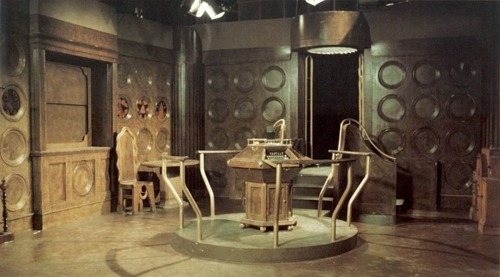
I want to marry this TARDIS set.
Doctor Who - Season 14
Written 9/6/13

The last year of Hinchcliffe and Holmes is by far their strongest, providing a series of six stories that pull out all of the stops. It is the year of the gorgeous wooden TARDIS interior (which disappears after this season due to the set warping in storage), of Sarah Jane's departure, of the companionless adventure, and then of Leela, Chris Boucher's impressive and innovative companion idea that sends the show tumbling into a different direction. It was also the season of gore and horror, even more so than its immediate predecessor.
http://basementrejects.com/wp-content/uploads/2012/11/doctor-who-the-masque-of-mandragora-sarah-jane.jpg
Sarah Jane gets two last decent adventures.
     A combination of grandiose settings and a decent budget mean that aesthetically, the series is on its strongest foot for a couple of decades. Everything from the impressive medieval mock-ups at Port Merion and the multi-layered Panopticon set to the model/greenscreen sandminer and the many streets and sewers around the Fleet River - they're all great. The season's only special-effects failure comes in the form of the Tesh, who are the first of Four's underwhelming baddies and begin a tradition that next season's Invasion of Time will continue with great vigour.
     There was a rather unfortunate pattern in the season's villains, wherin a person or persons were influenced by a great and powerful figure from beyond. Mandragora, Eldrad, The Master, Xoanon, Taren Capel, Magnus Greel - it's a clear pattern, typical perhaps of the era but a tad tiresome on close consecutive viewings, especially as it's a bit difficult to write "maniacal" six different times and have it be fresh every time. For the record, the best of the mad villains were Eldrad and Xoanon, the former being presented in a sympathetic light for the majority of its appearance in the story and the latter have a complex psychological reasoning behind its actions.
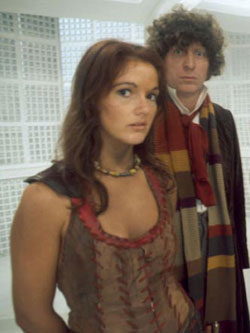
     Sarah Jane's departure in The Hand of Fear was a sad event, and it got chance to sink in during the season's unique companionless episode, The Deadly Assassin. Leela's dynamic with The Doctor, while missing the characteristic cuteness of that he had with Sarah Jane, does show a lot of promise and as a character she is certainly more impressive than her "something for the Dads" reputation would lead you to believe. By the end of the season, all memory of Sarah Jane is gone, and while the future is uncertain, there's the hope that Leela's story will see her develop quite well. (Yes and no on that front...)
http://www.podwits.com/wp-content/uploads/2012/01/BFDrLeela.jpg
Leela's introduction to the series is
quite promising.
     Cue the standard bests-and-worsts paragraph. Although it's remarkably difficult, I would pick... The Masque of Mandragora as my favourite story of the season. Yes, some of the other stories are cool - The Deadly Assassin comes in a very close second place as the only story of the season I'd even seen before this runthrough. But Masque has this sense of fun to it all that I find lacking in huge quantities elsewhere. It's all good to hear the legends of Gallifrey or the great quips in Victorian London, but quite fundamentally it's a balance between good characterisation and humour that keeps me coming back. And so on that front, my least favourite story of the season was The Talons of Weng-Chiang, which takes itself far too seriously for its own good and manages to offend 1.6 billion people.
     The Hinchcliffe/Holmes era is a study in contrasts. Extravagent yet realistic. Violent yet morally sound. Comedy duos next to kidnapped teenage girls. While it's heralded as the show's golden era (this season for me especially,) I did feel like there was something missing from the overall picture. The humour of The Deadly Assassin and the political satire that run through it - those relevant little points that make Who meaningful are smothered when you take whole plot references from Hammer Horror classics. The future of the show at this point is strangely uncertain, but there is something that can be assured - it has the chance to just be Doctor Who again.

Thanks.

Wednesday, 18 December 2013

Review: Lost 1.25: Exodus (Part Three)

http://images1.wikia.nocookie.net/__cb20100613125625/lostpedia/images/d/df/Dus4.jpg
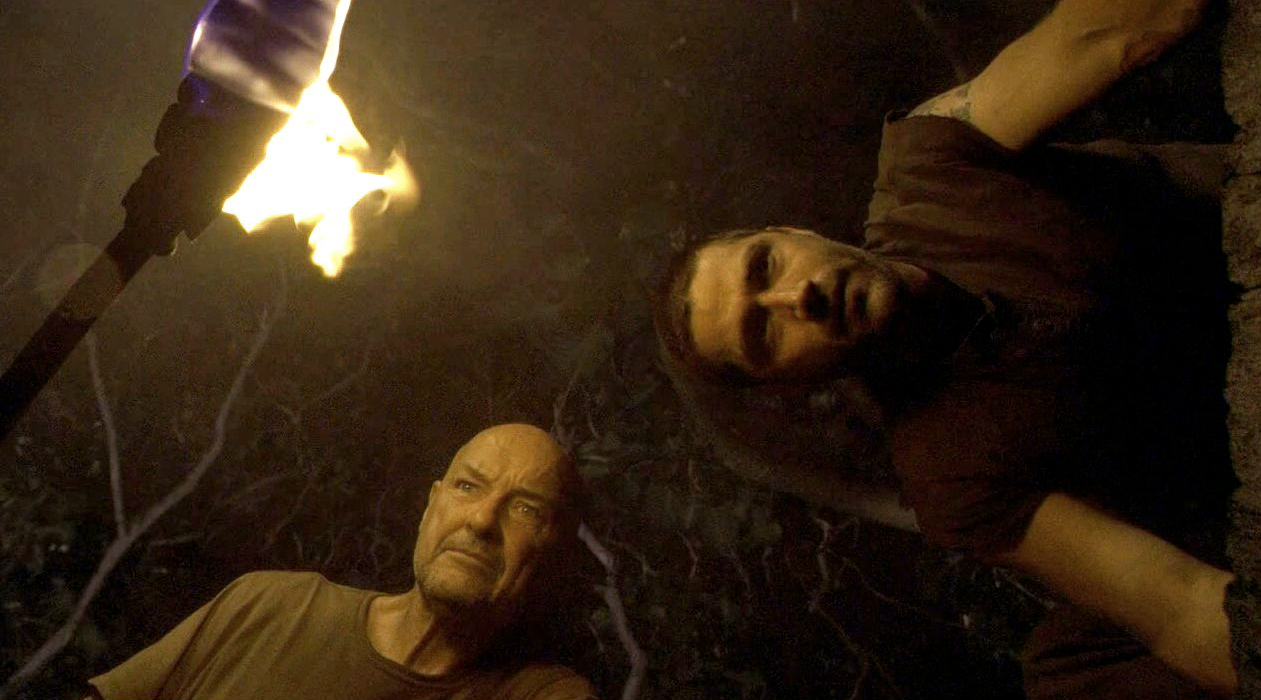
Locke and Jack look down the Hatch in an iconic shot.
Lost - Season One, Episode Twenty-Five - Exodus (Part Three)
Written 14/6/13

Lost's cliffhanger ending was a barnstorming climax, pulling off one of Lost's irresistible hooks and carrying the series to new heights. As the death and despair was contrasted with a few moments of happy relief, our intrepid heroes were presented with a bleak scenario that pushes us into the awesomeness of Season Two, with the questions being presented to us: what the fuck is down the Hatch, who was the beardy guy on the boat, and why does Josh Holloway's hairstyle keep changing?
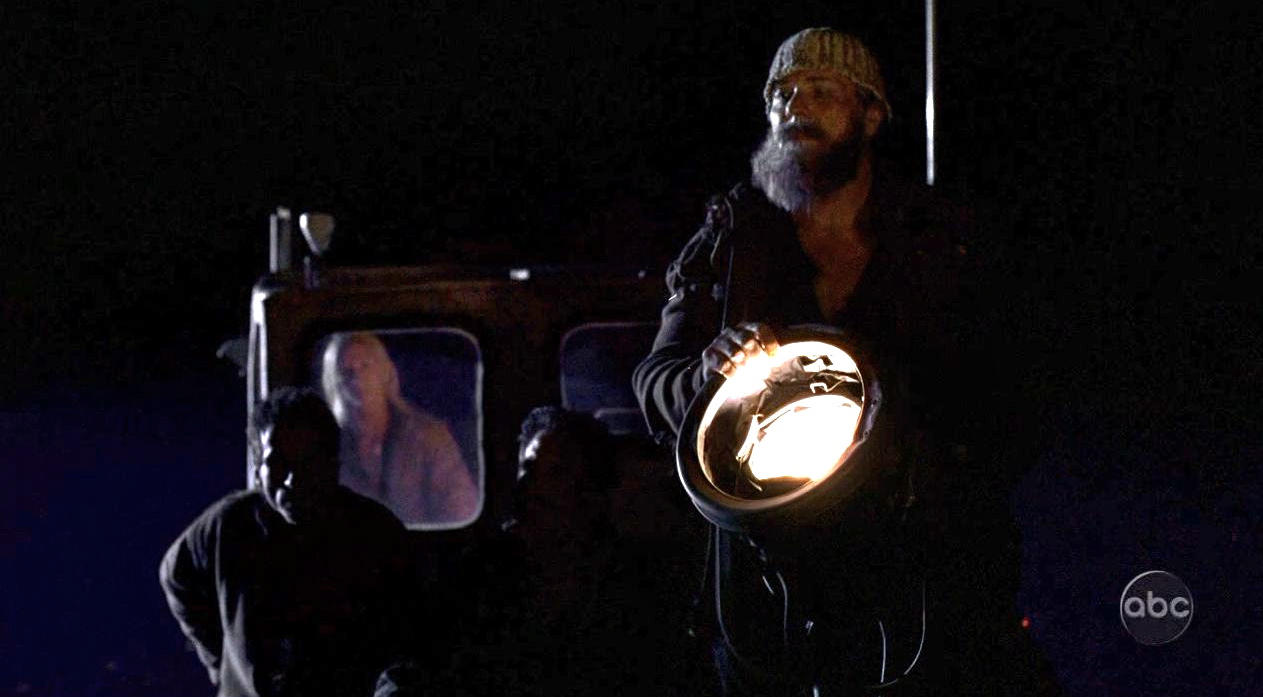
     The crew from the Black Rock were chased through the jungle by The Smoke Monster in his first visual appearance, and a conversation between Jack and Locke afterwards reveals just how much the latter has been taken by this island faith spiel. Despite Hurley's objections to blowing the hatch due to its serial code being The Numbers, they blow it up anyway. The raft found a boat with a beardy fisherman, but it turned out that they were The Others and they kidnap Walt, blowing up the Raft in the process. Sayid and Charlie get back Aaron (pronounced Air-on by Charlie for some fucking annoying reason) and Charlie begins his steep descent into dick-dom when he insults the clearly troubled Rousseau.
     Walt's kidnap was mainly down to the fact that the producers had realised that Malcolm David Kelly was going through puberty, and that the amount of growth he'd undergone in a year or so wouldn't make sense in a series where fans can tell you what precise date each episode happened on. While it was devastating when put next to their recent reconciliation and I think that was done very well, this is the first step to what I would consider to be the wasting of both of these characters. Next season would continue to see decent development, but the only black member of the cast would then go on to become the hated traitor.
http://images2.wikia.nocookie.net/__cb20090823153532/lostpedia/images/0/00/1x24_TheOthers.jpg
Beardy Guy (Or Tom as I know him) comes to steal Walt.
      The scene between Jack and Locke after the Monster attack is quite telling, and the themes espoused here run over into the first few episodes of Season Two as Locke's faith gives him the annoying habit of challenging Jack to do crazy shit. It creates a conflict between the two that provides some really great moments, as well as providing an unintentional dilemma for the viewer. I want to support Locke because in general he's earnt the right to be a dick for a bit and Jack takes a bit too much joy in it, but on the other hand philosophically I'm on Jack's side. My problem is that the argument between the two isn't fairly represented, and as such Jack comes off as a bit of an idiot. (But that's later, don't worry, he's great here.)
      And thus this 25 week trek comes to a close, as we leave the show on an uncertain note in its plotting and a very confident note in its quality, as the show promises to develop in ways the early audiences in 2004 couldn't possibly have imagined. As a finale, the episode and the two preceeding it summed up the first season like nothing else, and while it didn't answer our core mysteries, it didn't need to. This first season has been absolutely smashing, and I really can't wait to get started on the second at the start of 2014!

Thanks.

NEXT WEEK: CHRISTMAS! Matt Smith drops out and some other person (I'm writing this from June, remember, oh, I do hope it's not a skinny white male again...) is gonna replace him. Funtimes.

Monday, 16 December 2013

Review: Doctor Who Classic: The Talons of Weng-Chiang

http://www.wearysloth.com/Gallery/ActorsB/tve1343-19770226-98.jpg
Li H'sen Chang would probably be a cool character
if it wasn't a blatant use of Yellow-facing.
Doctor Who - Season 14, Story Six - The Talons of Weng-Chiang
Written 9/6/13

Phillip Hinchcliffe had been given the boot by the BBC in 1977 because of the gore in his era, culminating in a Mary Whitehouse complaint about the drowning cliffhanger in The Deadly Assassin and various other moments. For his last story as Producer, the duo raised the bar and managed to fit in every dark theme they could possibly think of, carrying allusions from all sorts of great British Literature as a last magnificently twisted send-off.
     Which is unfortunate, as one of the things the story is known for outside of the fandom is for just how ridiculously racist it manages to be. The villains are an Asian street-gang in Victorian London, brainwashed into worshipping a mad time-traveller, and who are led by the less stereotypical but equally as offensive Li H'sen Chang, who is played in a fairly transparent yellowface and silly accent by white actor John Bennett. While the various racist remarks made throughout the story can be attributed to the time, and there are some anti-racist sentiments here or there (Chang sarcastically deadpanning, "Of course, I know we all look alike"), the overall tone of Yellow Peril and the fact that The Doctor himself is making jibes in the wrong direction makes for an incredibly uncomfortable experience in some parts.
     If you can manage to look past that part of the serial, then the allusions to other stories make themselves clear. There are heavy, heavy references to Arthur Conan Doyle, Sherlock Holmes and the historical atmosphere surrounding those stories - most obviously seen in The Doctor's adoption of a deerstalker and a cape. Unusually for a six-parter, the story is almost entirely free of padding and a lot of the story's time and effort goes into building atmosphere, and building dread around Phantom-of-the-Opera villain Magnus Greel and his twisted cyborg-pupped assistant Mr. Sin as they kidnap underage girls and prostitutes in order to absorb their life essence and keep Greel alive.
http://www.wearysloth.com/Gallery/ActorsR/tve15051-19770226-98.jpg
Deep Roy under heavy prosthetics as Mr. Sin.
     This week's guest cast are a varied bunch, the most memorable certainly being the exciting duo of Jago and Litefoot, a theatre owner and a pathologist who manage to find their way together and have in spin-off materials become something of a Classic Series Torchwood team. Deep Roy is terrifying as the disturbing Mr. Sin, and despite the horrendous racism of his casting in the role John Bennett does a great job as Li H'sen Chang. I was much less impressed with Magnus Greel, who follows a string of ranting madmen in the Hinchcliffe era, none of which besides maybe Morbius ever really come up to scratch.
     Talons finishes the season and leaves the show in a very different state than to when it arrived. I fail to see the problem that so many people had with the violence in the Saward Era when stories like these in the show's so-called "Golden Years" did far worse with little message to back it up. The story is well made, and on the whole I enjoyed it, but the crippling racism that only reveals itself in hindsight is enough to make me want to avoid this story. Farewell to Hinchcliffe, and on to the Williams years!

Thnaks.

NEXT WEEK: We meet the enemy of an enemy who is not our friend in The Horror of Fang Rock.

Thursday, 12 December 2013

Review: Voyager 1.16: Learning Curve

http://images4.wikia.nocookie.net/__cb20080329162016/memoryalpha/en/images/7/70/Chell_explains_Kazleti_design.jpg
Tuvok is usually a cool badass. This week he's a tit.
Star Trek Voyager - Season One, Episode Sixteen - Learning Curve
Written 16/6/13

For reasons currently unknown to science, US Voyager broadcaster UPN decided to hold back four episodes from the end of Season One - Projections, Elogium, Twisted and The '37s, chronologically. Robbing the season of the episode written as its finale, we instead end on this slightly unimpressive bottle episode about minor characters. Its plot is somewhat silly and odd, and due to that it has barrells of charm which, despite its total about-turn in tone since last week's episode, still manages to make me raise a smile.
      Janeway get pissy when a former Maquis crewman's repair-work temporarily messes up her Holonovel, and she tasks Tuvok with training four Maquis crew members to conform to Starfleet rules. This includes, in Tuvok's world: ridiculously extensive training sessions where he increases the gravity on the decks, draconian uniform rules considering the fact that they're 70,000 lightyears from home, and picking on shy people. Tuvok ends up unintentionally going to Neelix for help, and as a result Tuvok's methods get better, allowing him to be more flexible. His recruits gang up to save him when there's an incidence in the cargo bay, and it turns out that everyone learnt something after all.
     The problems affecting this ship in this episode were caused entirely by Neelix. How about that that, eh? I don't think I've ever heard of a more ridiculous Star Trek premise than a starship being infected by cheese-borne bacteria, but this is Voyager, so there you go. The episode's namby-pamby, everyone-learns-a-lesson attitude makes it feel a little more Saturday-morning-cartoon than serious science fiction, and this feels especially baffling when one considers that this is one of the last few episodes in the early seasons that discuss the Maquis/Starfleet divide.
I did that gif I mentioned.
Makes a fun reaction gif for all the family!
Another gif, I know! Mine this time.
     And, on that issue, this episode highlights my position on the matter. Despite some badass points by Chakotay (as seen giffed here), I do think that some of the Starfleet rules are pretty shitty. Of course, living on a starship which seems to be able to fall apart when you press the wrong button means that there has to be a certain amount of discipline, but when it comes to things like dress code (I'm sure that hair-band will really affect the functioning of the ship, Tuvok) I agree with the former Maquis crewmembers in saying that, hey, fuck that. I understand what a draconian dress code feels like, and it feels a bit shitting in this futuristic world of great possibility and wonder that all individuality amongst those responsible for that society's representatives in the galaxy is stripped from them.
     Learning Curve should not have ended the season, as it leaves us with a Voyager whose future is uncertain and off. Had I been watching in 1995, I would have probably wondered what the hell had just happened to my show. As a low-budget episode (it re-uses the same tiny set on ten different occasions, man.) it's fair enough that we're not expecting some high-concept sci-fi or even some tense action and suspense, but they could have at least chosen to end on a decent fecking episode. What about last week, or episode seventeen, Projections, which is a brilliant ep and happens to be my favourite of the next season? Learning Curve is quirky little episode that was Screwed by the Network, and doesn't bode well for people's attitudes towards the show in years to come.

Thanks.

IN TWO WEEKS: It's Boxing Day. Why not start a new season of Voyager?

Wednesday, 11 December 2013

Review: Lost 1.24: Exodus (Part Two)

http://images2.wikia.nocookie.net/__cb20090823153322/lostpedia/images/9/93/1x24_ScienceTeacher.jpg
Arzt knew this would all just... blow up in his face.
Lost - Season One, Episode Twenty-Four - Exodus (Part Two)
Written 13/6/13

So, yada yada, standard disclaimer about my pedantry meaning that this episode wasn't really meant to be assessed by itself etc.. In Season One's penultimate hour, we of course set up the plot threads that will carry over into the third and final part, as well as into the beginning of the only slightly more brief run of Season Two. There were less moments of cuteness and joviality as this time the stakes were raised, with trouble for everyone in pretty much every subplot. In other words, it's finale time, baby.
     While trying to show the main cast how to handle dynamite at the Black Rock, Dr. Arzt is ironically and hilariously blown up. Rousseau leaves the Black Rock early and takes a shortcut, getting back to the beachcamp in time to steal Claire's baby Aaron from her arms, leading Claire to have a flashback that will only be adressed next season. The Raft run into a log and the rudder breaks; Sawyer impresses by diving out to save it, but Michael finds the gun that Jack gave him for security. While on the hunt for Rousseau, heading towards the black smoke, Charlie and Sayid go past the Beechcraft where Boone was injured, and Charlie discovers the seventy-bajillion bags of heroin inside. The remaining survivors assemble at The Caves, as the team from the Black Rock trek back through the jungle.
     The flashbacks this time were a little less cheery, as cheery as such flashbacks could be. We find out that the cute scene at the airport with Jin and Sun was underlined by the fact that Jin found out he was being stalked by Mr. Paik's hitmen and that his plan to escape with Sun in LA wouldn't work. Charlie wrestled a groupie for the bag of cocaine he was snorting from in the first few episodes. Alongside similar conversations in the main plot, we saw Michael at the airport ringing his mother to tell her that he doesn't feel capable of looking after Walt.
http://images2.wikia.nocookie.net/__cb20090818144919/lostpedia/images/c/c3/1X24-JinFlashback.jpg
The scariest thing about Mr. Paik's associates is their
terrible dress sense.
     It seems to be a running theme in Season One that almost universally, Claire attracts weirdos. First Ethan with his dead-eyed staring, then post-Amnesia there's the slightly overbearing Charlie who's read her diary and has affections for her that she's too forgetful to remember reciprocating, and then now we have the perfectly in-character and understandable but still obviously weird actions of Rousseau, who we find out still believes that her daughter is a baby, despite the fact that she was kidnapped 16 years prior. (As, if you've been with me since I did Season Four, you know we meet her eventually.)
     The big shit happens next week, but this week pushed up the stakes just that little bit to shove us into finale territory before our world is torn apart. It's great that even when it's trying to be all action-packed and fun Season One never ceases to focus on the characterisations and there are plenty of subtle little moments and actions that transform LOST into something more brilliant than even the script would suggest. It's all quite mind-blowing, to be honest.

Thanks.

NEXT WEEK: Guess. It's Exodus (Part Three). The last episode of Season One and the last LOST review of 2013!

Monday, 9 December 2013

Review: Doctor Who Classic: The Robots of Death

http://images3.wikia.nocookie.net/__cb20080519160915/tardis/images/6/6d/Deathro.jpg
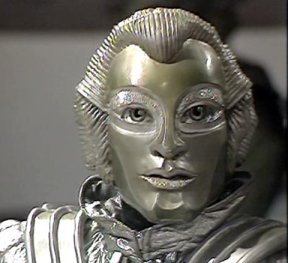
The robot design is gorgeous. They are really wonderful.
Doctor Who - Season 14, Story Five - The Robots of Death
Written 8/6/13 

The Robots of Death begins my push into what is a considerably unfamiliar territory for me in regards to the show, one which will last until the end of Leela's tenure. My expectations were quite high, the story having been worked out as the most popular story when the results of several Gallifrey Base fan polls were averaged earlier this year for their fourth special Timelash section. Did it live up to expectations? Well, I think so. The are an odd few repeated Doctor Who standards that I didn't like, but it was quite captivating when it wanted to be.
     My journey into the unknown was somewhat tempered by this episode's plot, which struck me as rather familiar. I soon realised that this story reminds me of Voyage of the Damned, and the similarity in plot almost certainly has me thinking that RTD was a bit naughty when he wrote that story. A society that runs on angelic-faced mechanoids who rebel due to exterior evil control. I think Robots of Death is a lot cooler in that regard, with awesome POV shots and the strange serial-killer-esque trademarks that they leave behind. Even if the "corpse marker" disks do look a hell of a lot like bike reflectors.
     The episode's guest cast were surprisingly diverse, with two women and two minorities (who are unfortunately consecutive victims of the robots, but at least not the first). There's a certain charm to them all, even if the identity of the main villain is quite hilariously unsubtle. This lack of surprise (mainly due to a process of elimination) follows another of the story's main issues - how often it curtails to Doctor Who stereotype. Hey, The Doctor and Leela arrive just as someone is murdered, I wonder if they'll take the blame. Oh, they do, what a surprise.
     The direction, production and acting all came up to the plate, with the impressive set designs and the iconic design of the Robot masks being most memorable. The flexibility of the Robot mask to display the story's theme of Uncanny Valley and "Robophobia" is shown by the fact that it's used both for the killer Robots and the docile spy robot D84, who ends up being quite cute and saves the day with a heroic sacrifice. It almost made up for the fact that the villain wasn't very well-developed, turning out to be a prior-unheard of background character masquerading on the mining ship for purposes unknown. (Like, if you want a robot revolution, do it at the Robot HQ or something, not on a mining ship in the middle of nowhere).
http://2.bp.blogspot.com/-AFkSXNQrJRU/UW1_8nng6hI/AAAAAAAAK1E/vzeOVg_6Sco/s1600/protectedimage.php.jpg
Leela is cracking on nicely.
     I think what's most impressive here is the world-building, which is some of the most elaborate in Who so far, allowing us an understanding of the culture which creates and lives with these robots through some choice dialogue and a series of minor-cast characterisations which make everything evidence. The idea of robophobia (the nickname of Grimwade's Syndrome, jokingly named after future director/writer Peter Grimwade who complained about doing Robot stories) is very well explored, and for 1977 it's a pretty in-depth examination of the reasons for what we now call the Uncanny Valley effect, in which lack of body language and secondary characteristics makes humans uncomfortable with realistic facsimiles.
     The Robots of Death is not as perfect as I had expected it to be, but of course the expectations of fan reputation are rarely the source of any full excitation. One of my small tiny issues with the Tom Baker era thus far is that any themes are hidden deep behind many layers. Perhaps I am a little stupid, and I need my obvious moral themes spat at me like in The Two Doctors or The Happiness Patrol. The Robots of Death is a fun story and I enjoyed it immensely, though, and nothing that I've come up with to fault it is ever really going to dent that.

Thanks.

NEXT WEEK: The most racist episode in the Classic Era. I paint my face yellow for The Talons of Weng-Chiang.

Thursday, 5 December 2013

Review: Voyager 1.15: Jetrel

http://images2.wikia.nocookie.net/__cb20071010224043/memoryalpha/en/images/8/82/Ma%27Bor_Jetrel_and_Neelix.jpg
Jetrel and Neelix have impassioned debate about the events
of the Haakonian/Talaxian war.
Star Trek Voyager - Season One, Episode Fifteen - Jetrel
Written 16/6/13

It's episodes like these that made me love Star Trek, and that made me consider reviewing Star Trek on this blog at all. I knew that reviewing episodes like these would present a challenge - not because of difficult subject matter, but in justifying just how detailed and human and brilliant Star Trek can really be when it writes a decent, two-sided dilemma. Episodes that make you think - they're the best ones. That's true not just because of this episode's in-universe allegories, but also in the unusual source it takes its real-world comparison from.
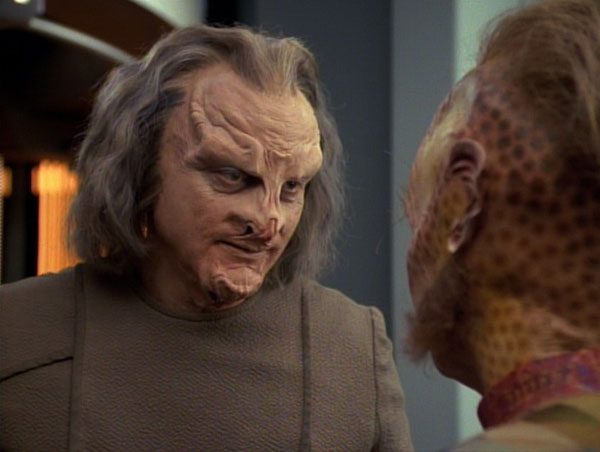
     Voyager is met by Dr. Jetrel, a Haakonian scientist known by Neelix's people, the Talaxians, as the development of a superweapon which atomised the populated moon of Rinax during a war. Neelix is angry and initially refuses to see him, but Jetrel claims that Neelix, like himself, has contracted a form of long-term radiation sickness due to having returned to the moon to look for survivors. The two spend a great deal of time discussing the politics surrounding the event, with Jetrel remorseful and defensive of his core scientific philosophies, while Neelix talks of memories of charred survivors and grapples with his own sense of guilt about being a conscientious objector. Eventually, it is revealed that Jetrel's remaining life's work has been to attempt to use transporter technology to reconstitute the dead Talaxians in the moon's atmosphere. It fails, but for his efforts Neelix forgives Jetrel on his deathbed.
     Star Trek has used World War II allegories before, especially in DS9 where the Cardassian Occupation reflects the German occupation of Poland, death camps and all. Jetrel is clearly channelling criticism of the Atom Bombs, although this time with our "protagonist" side being Japan and the episode's "villain" being the side representing the US. It's very refreshing to see something like that, and the episode's anti-war attitudes are only helped by the outstanding performances from Neelix's Ethan Phillips and Jetrel's James Stoyan. Despite being a character I usually find irritating, it's episodes like this once in a blue moon where Ethan Phillips really goes for it and despite his attitudes here and elsewhere I can really feel for him from one of his monologues. Similarly, Jetrel is one of the best-characterised guest stars in the first season, and I adore his character and the way it's executed.
http://voy.trekcore.com/gallery/albums/1x15a/jetrel_001.jpg
Neelix's experiences and his own guilt cause him
some realistic conflict for a change.
     My only objection to the episode is the penultimate act, which I find somewhat oddly placed and somewhat insulting to the episode's themes. The science of the episode I can excuse - the technobabble used in the bomb apparently turns people's cells into little fission reactors, blowing them up, but a regular bomb will have the same end result without all the crazy. Jetrel's plan to reconstitute people from atomic remains is... baffling, both in and out of universe.
    In-universe, it raises a billion ethical questions - if this is possible, then why not bring anyone back from the dead? Why not use replicators to make new people? And, fundamentally, how would bringing billions of people back to life (onto a planet that's probably already overpopulated) make up for the total destruction of a planet's surface, the mental and physical scars on all the veterans and upon the culture of the Talaxians? Out of Universe, it would have had a great deal more dramatic potentcy if the surprise at the end was that he was going to die, and it was left up to the audience to decide whether Neelix (and they) forgave him or not. Instead, we're given a standardly Voyager "give 'em hope then dash 'em down" ending.
     I really do love Jetrel and I think it is the best episode of Season One, hands down. Voyager so rarely gets episodes like these in the early stages, it's wonderful when they do come along. And I know I sat that a lot, because if I remember I probably said that in Cathexis too. And in Faces. It's been a long day. Jetrel is a perfect use for Neelix and an almost perfect examination of allegories surrounding Hiroshima and Nagasaki, portrayed with competant double-sided arguments and impassioned characterisations that mostly leave it open-ended enough for us to think about the issues at hand for ourselves. And that, quite frankly, is my definition of brilliant science fiction.

Thanks.

NEXT WEEK: Season One comes to an unexpected end as some minor characters we'll never see again undergo a Learning Curve.

Wednesday, 4 December 2013

Review: Lost 1.23: Exodus (Part One)

http://images2.wikia.nocookie.net/__cb20100416023925/lostpedia/images/e/e6/The_Raft_2.JPG
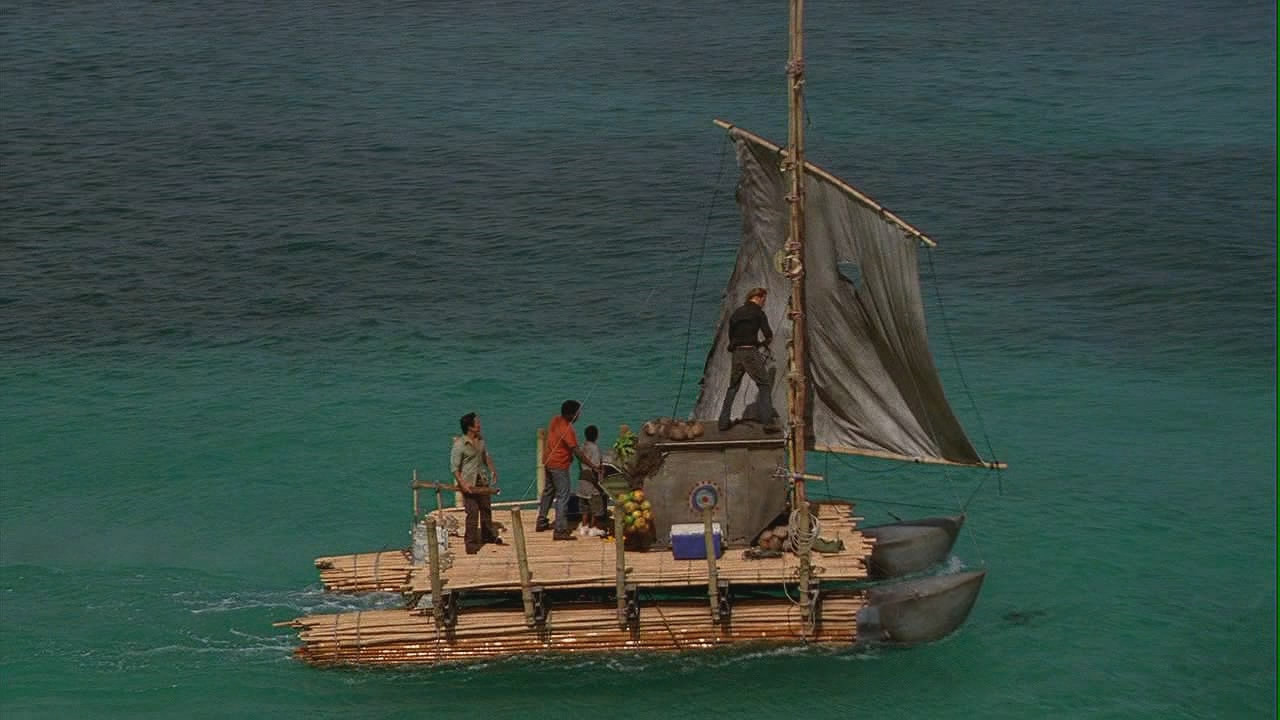
Raft ahoy!
Lost - Season One, Episode Twenty-Three - Exodus (Part One)
Written 12/6/13

The finale is finally upon us, and as the guiding hand of episode-by-episode centricity is lifted, the show expands into that creative space in a way which somewhat unintentionally smugly shows just how much our characters and their relationships have developed over the past five months or so. As Exodus bridges the journey from Season One's character blitzfest over to Season Two's focus on the mystery of the thing, we get plenty of both nods back to what the series has managed to do and of what's to come.
     The main-island plot saw focus on all characters. Danielle Rousseau wanders into camp with news that The Others, the Island's mysterious other inhabitants, stole her baby in '89 and are coming to steal people again now. Micheal's boat is damaged when everyone pitches in to try and set it off, but Sawyer earns his place aboard by making it a new mast. With the threat of enemy invasion coming from the mysterous plume of black smoke, Jack and his team go off into the jungle with Rousseau and annoying guest character Dr. Arzt (whom you may remember from Dr. Linus.) to find the "Black Rock", which to their surprise (and unfortunately not mine,) the oft-mentioned Black Rock is in fact an old slaving ship shipwrecked in the jungle. As they arrive there, the boat sets sail, off to uncertain futures.
     The episode's flashbacks are also multi-themed, littered here or there with no underlying theme. That isn't an issue, though, as they're all to just before the flight and a lot of them gain the little poignancy they have from the things that we've learnt over the course of the series. In their Sydney hotel room, Walt screams at Michael and says he isn't his father. At the airport, Jin and Sun sit down for a coffee while Sun tries to ignore patronising Americans she's not supposed to be able to understand. In the bar, Jack meets Season Two regular (and one of my favourite characters, fuck the haters) Ana-Lucia Cortez. Sawyer (named here as James Ford) is given his reason for flying - he's being deported after headbutting an Australian politician.
http://images3.wikia.nocookie.net/__cb20110130224630/lostpedia/images/d/de/Normal_exoduspart1-204.jpg
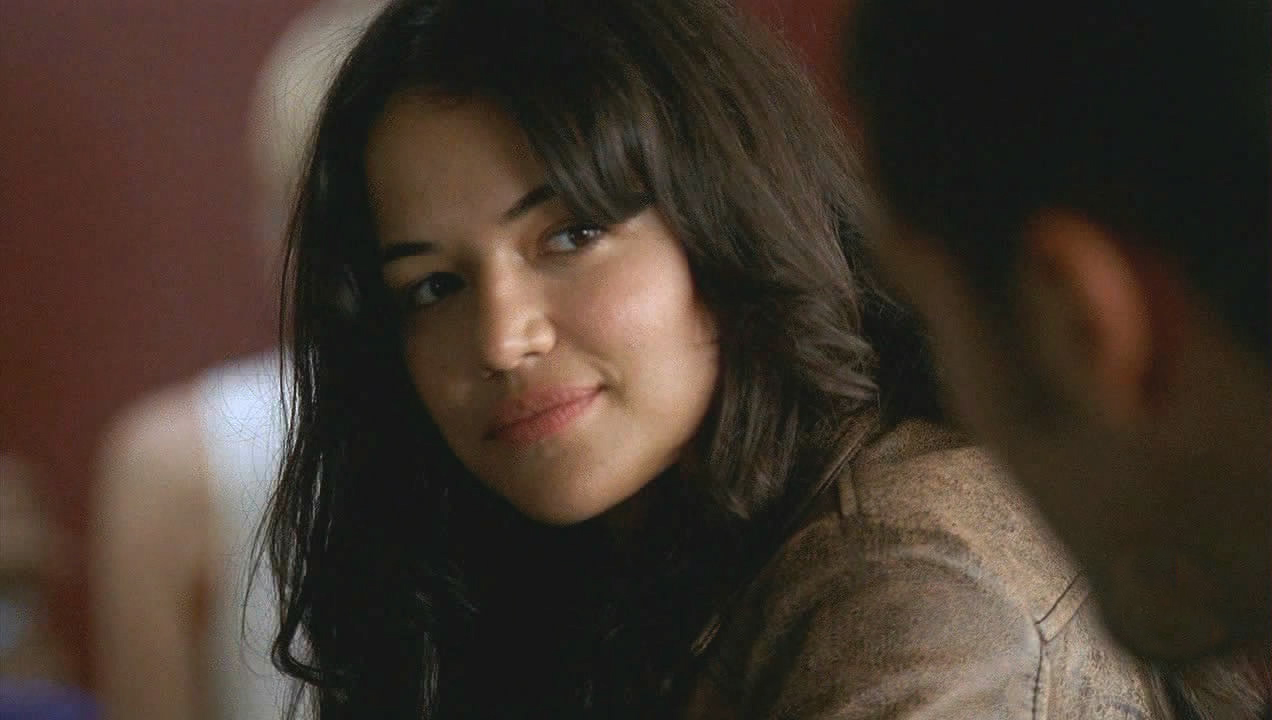
This picture isn't indicative of the episode as a whole,
but any excuse to get Ms. Cortez on my blog is a good one.
     Here and there were specific character moments that I really loved. As well as Jin and Sun reconciling after their stint not talking to one another, there was a heart-wrenching scene that has to be one of my favourites from the whole season. With Sawyer chopping wood and preparing to go off on the raft, Jack comes and says goodbye, believing this to be their last encounter. Sawyer, unwilling to let Jack go without telling him, reveals slowly the story about how he met Christian in Sydney (as we saw in Outlaws) and how goddamn proud his father was of him. It's a moment that showed how both of the characters had changed, and defined their relationship for the next season.
     As is Nostalgia Filter tradition (or this blog's tradition, anyway,) I'm going to review next week's two-hour episode as two seperate reviews. As we head into that, I think it's fair to say that the finale so far is a resounding success. I think it's quite nifty how it capitalised on the successes of the first season while managing to make me, someone who's already seen the next seasons, really excited about what's to come. I think that's only going to increase after we meet the devastating cliffhangers in a forthnight's time, and next week's plot strands that point the show in a fun new direction.

Thanks.

NEXT WEEK: This was Part One. So next week it's Exodus Part Two. Fairly logical, really.