Showing posts with label Prologue. Show all posts

Wednesday, 2 July 2014

Prologue: Lost: Season Three

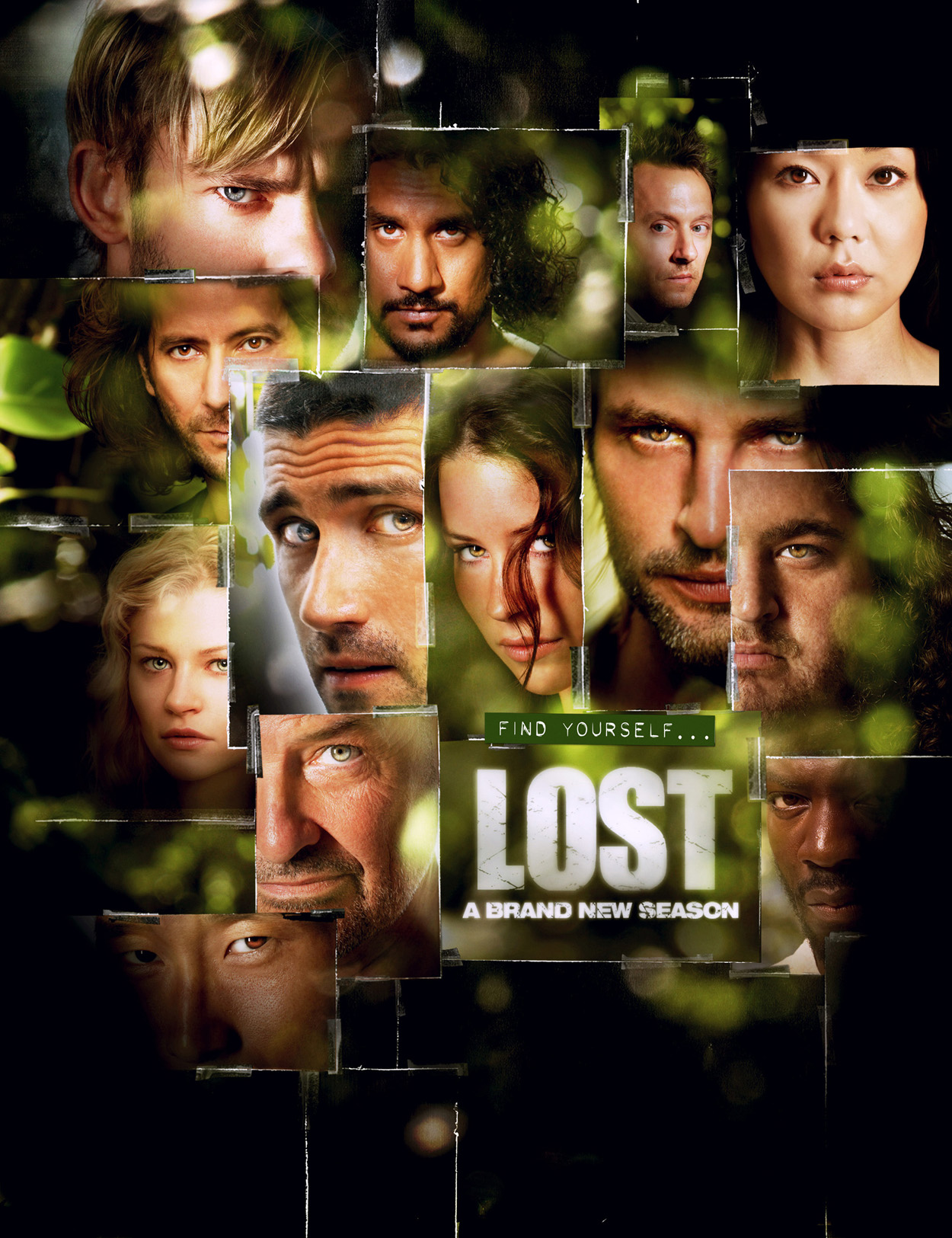
http://static2.wikia.nocookie.net/__cb20060916080235/lostpedia/images/8/82/Sea3promo.jpgWritten 1/2/14.

So - to my final season of Lost reviews. Season Three is not anyone's favourite really, as it flashes up and down between some of the best episodes of the show so far and some of the worst. Such greats as Not In Portland and The Man Behind The Curtain, contrasted with the drecks that are Stranger in a Strange Land and Exposé. It was a season of production decisions and mistakes made on the part of the writers - mistakes which, when confounded by next year's Writer's Strike, led to the show's planned end three seasons later.
     On paper, the season doesn't sound so divisive. It begins with an in-depth look into The Others' society as our kidnapped threesome of heroes is kept in the Hydra, a Dharma station on a small sub-Island. Henry Gale, now called Ben, is leading the show while Jack makes liasons with an Other named Juliet, played by new cast member Elizabeth Mitchell. Elsewhere, Desmond is having visions of the future, and a strange woman parachutes onto the Island, claiming to be from a freighter of people sent there to rescue them.
     I'm keeping this short and sweet, as I'm a bit out of practice. I'm not quite sure what I feel about Lost's third season, as it's the one I've had the least exposure too and it marks a very clear boundary between what the show was in its first two seasons and the very different show that it would become starting in Season Four. I suppose I'm just hoping that I'll enjoy it, and that I'll have something to say about some of its less favourable hours, some of which are worse than the low points of Season Six.

Thanks.

Wednesday, 8 January 2014

Prologue: Lost: Season Two

http://movista.files.wordpress.com/2010/12/lost-season-2-cast.jpg
Season Two's cast.
Written 18/6/13

I suppose these prologues are a little bit redundant now, but there's no problem with a little bit of redundancy here or there. Lost's core focus shifted a great deal between the first and second seasons, with the character-based groundwork that Season One layed down allowing the mythos of the show to take a much more active role, as well as facilitating the introduction of a number of new cast members, the majority of which unfortunately didn't last very long past it.
     Season Two introduces the Dharma Initiative, one of the show's biggest mythos points and the damn setting for most of Season Five. It also thus introduces Desmond, who is awesome. This all arrives with the opening of the Hatch to reveal the Swan, a Dharma Initiative station whose fashioned interior and mysterious contents form the backbone for a lot of the season, and help to define it with its own identity. Personally, I love the set and everything that goes with it, and thus its destruction at the end of the season is just heartbreaking for me on a number of levels.
     Elsewhere we have Season Two's unique look at the Tailies, the survivors of the plane's Tail Section who feature a host of interesting characters, the best being Ana-Lucia and Eko. Ana-Lucia is one of the best-written female characters I think I've ever seen in US TV, and despite her haters (of which she has many for some unfathomable reason), I really love her. Mr. Eko is one of my favourite LOST characters, due to the sheer complexity behind him and his badass exterior that hides a tragic and desperate past. His best moment comes at the beginning of the next season, but Season Two gives him plenty of memorable stuff to do as well.
     We're in the big leagues now, boys and girls. Get excited.

Thanks.

Monday, 12 August 2013

Prologue: Star Trek (Overall)

The Original Series lineup.
Written 5/5/13

Star Trek is one of those shows where there is very little middle-ground. You're either a fan, or you're not. The show was arguably the originator of modern fandom, fertilised by its extensive continuity and the sheer weight of it. Doctor Who may hold the record for longest-running sci-fi franchise, but in terms of material it's about a literal week's worth of TV behind Star Trek, with over 700 episodes over 28 seasons of five different shows, as well as twelve movies in two different continuities.
    It first began in the late 60s, alongside Patrick Troughton's Doctor. Gene Roddenberry had a utopian vision of the future, a society in which humanity had abolished nationality, race and economy and had instead joined together in humanistic harmony in order to travel across the stars. Still wanting to display some contempory issues, Roddenberry used alien races as analogues for 1960s political powers. Humans were the US, Vulcans were Europe, the Klingons were the USSR, the Romulans were Communist China and so on. The series focussed around the USS Enterprise and its crew, led by Captain James Kirk (William Shatner) and First Officer Spock (Leonard Nimoy) as they boldly went where no man had gone before.
     Like Doctor Who in the UK, the Original Series of Star Trek gained a cult following in the US psyche. However, much sooner than its British counterpart, the fans of Trek were maligned into a sub-class of nerddom - the Trekkies. The image became one of obsessive fans pouring over a hokey old TV show with bad special effects - a show that was cancelled after four seasons. This didn't much change when Roddenberry and several other key figures revived the show in 1987, as Star Trek: The Next Generation. The show breathed new life into the franchise, with Captain Jean-Luc Picard (Patrick Stewart) becoming the franchise's new face.
     If you ask an everyman, The Original Series and The Next Generation are probably what is seen as "Star Trek". But after the success of Next Gen, several more shows were created. In 1993, we saw the advent of space-station-based Deep Space Nine, which was more focussed on long story arcs. In 1995, they replaced  TNG with Voyager, a show that followed a ship whisked away to the other side of the Galaxy and making the journey home. Both had different ensemble casts and both had their strengths and weaknesses. Deep Space Nine and Voyager are my two favourite Star Trek shows, and I'll be reviewing both of their premiere seasons.
Patrick Stewart heads up the Next Generation lineup.
     After Voyager ended, the production team tried to reinvent the show by setting their next spin-off, Enterprise, as a prequel to the Original Series. The result was a show that had a hell of a lot of problems, and while it improved near the end, the show's earlier shortcomings saw it cancelled in 2005 after four seasons. With the last continuous Trek movie airing in 2002, we entered a Wilderness period, only broken by the J.J. Abrams reboots. (Which I've already spoken on elsewhere.)
     In a few weeks time, I'll begin my reviews, on Thursday, of the first season of Star Trek Voyager. If you're interested, I'll see you there.

Thanks.

Wednesday, 19 June 2013

Prologue: Lost: Season One

Three seasons down, but I haven't even covered half of Lost. The reduced season length after 2008 came due to the Writers' Guild of America Strike, and venturing before then is a much more committed endeavour. The first season of Lost is 25 episodes (or 17 hours when adjusted for adverts) long, which basically means that I'll be posting these until the end of the year. Which is fun for everyone, I'm sure.
     There are no grand ancient plots and scheming villains here - just the simple story of a few weirdos trapped together on a desert island, all of whom are hiding deep-seated psychological issues with a 100% chance of somehow relating to one or more of their horrible parental figures. Of course that does mean that a lot of my favourite characters haven't arrived yet, but there's another tone of storytelling, something much more granular, that makes it feel a lot more whole than the rushed final seasons.
     There's also the presence on the production team of a certain nerd idol by the name of J.J.Abrams, who I'll be talking about in a couple of articles this Summer when I touch upon my love of Star Trek. Consider this a first go before we proceed. :) Oh, and of course, spoilers as usual. I've reviewed the end of this series before it's beginning, so don't be surprised if I give anything away.

Thanks.

Wednesday, 2 January 2013

Prologue: Lost: Season Six

I spent a hell of a lot of time complaining about this one, didn't I? To the point at which I said that I would never, on any condition, go back and discuss Season Six. This season was the only one I saw on original transmission, and it was also the one I was the most looking forward to. Everything I'd read about, everything I knew about the series - this was the culmination of it. I could see these characterisations unfold and then climax in the most powerful way. All of those excellent sci-fi ideas would surely come to a head and this would be the best and most fun piece of US TV ever!
     Perhaps my expectations were too high, but that doesn't excuse the direction that Season Six took into the lazily supernatural. I find nowadays that this annoys me more than Ashes To Ashes because, despite the precedent in LOST for weird and wonderful things happening that defy normal physics, it did all of these rather god-y things and expected us to like it and accept it and embrace it with open arms as if this had been a series about a quaint little church group from the South Downs.
     I find LOST hard to review, as I do most American TV, because it is so different from my normal fare and the serialised nature means that it's hard to find something new to say each week beyond the superficial. Hopefully Season Six will be different, as I examine the paths that our characters have taken over the past six seasons and see whether the series did them well, or let them down. There will also probably be lots and lots of Jack-hate, because that's how I roll now. See you there.

Thanks.

Wednesday, 11 January 2012

Prologue: Lost: Season Five

LostSeason5Poster.JPGNext week I begin reviewing the fifth season of Lost, one of the most well-produced dramas on US TV in the Noughties. I'll be reviewing it at the same time as the Nineteenth and Twentieth seasons of Doctor Who, which I'm doing not only for the sake of organisation but also because I think that comparing attitudes to science fiction across a 25 year divide will be interesting for you.
       Season Five doesn't have as big of a reputation as Season Four, mainly because it spent a lot of its time in timey-wimey situations. It managed, in its own way, to be paradoxical - not only in content but in that it featured more spiritualist elements while definitely heading in a more sci-fi direction. The first half of the series dealt with the Oceanic Six having to return to the Island for untold reasons, as well as the rest of the survivors jumping around in time. The second half of the series decends into stupid somewhat as both sides end up in 1977 with the Dharma Initiative, and evil demon The Man In Black takes on the appearance of the deceased Locke.
      I started watching Lost at the end of Season Five, after an extended Wiki Walk around Lostpedia got me interested in the series. Season Six, the final season, was not the best place to start. For me it was a total let-down; the ending was a load of spiritualist bull that had been masquerading as science-fiction for three months of my life. To have that turned around, to just have it melt away into something as vapid and as stupid as that ending... it didn't seem real. These problems in the series began here, in Season Five. I'm covering the series not only to continue on from the brilliant Season Four, but also to salve myself and find the exact point where it all went awry.

Thanks. See you next week.

Saturday, 7 August 2010

Prologue: Lost: Season Four

Before I start to review Series  Season Four of Lost, I thought I'd get abit of background in. S4 was produced at the time of the Writers Guild of America Strike, which affected shows across America. This meant that character background and certain iportant scenes had to be dropped, and left over for the next season.
         Despite this, Season Four is the second-favourite amongst fans, after the revered Season One. It's not hard to see why - a basic, centralised storyline, the partial fulfillment of the show's aims and a heavy emphasis on more scientific explanations.
        Unlike brief British series, one doesn't just skip through series with American shows. Season Four has 14 episodes, the shortest season of Lost. And starting Monday, I'll be reviewing one episode every day, culminating on Monday 23rd.
        At the end of Season Three, the survivors faced off the Others, who they'd been fighting since Season One. They succeeded, and we got what we thought was a flashback, a staple of the series. However, the shock cliffhanger was that this was in fact a flash-forward,and that at some point Jack and Kate get off the island.

Thanks.

Saturday, 31 July 2010

Prologue: Red Dwarf: Series Seven and Eight


As there was a hiatus between my covering of Series Six and Seven, so was there a hiatus between their broadcast. The five years between Series Six and Seven saw a number of large changes for Red Dwarf.
            The producing/writing partnership that founded the series was known as Grant Naylor, bringing together the comedy writers Rob Grant and Doug Naylor, who wrote several other series together. However, after Series Six, Rob Grant left to pursue other projects. This left Red Dwarf’s television story firmly in the hands of Doug Naylor, who had quite a different idea of where he wanted the series to go.
            Actors also found other priorities. Hattie Hayridge left permanently after her hiatus in Series Six, with Norman Lovett from Series One and Two coming in to replace her. Chris Barrie had found success with his other series, The Brittas Empire, and so only agreed to film in half the series. Series length was increased; Each series used to consist of six half-hour episodes, while the new series would be eight forty-five minute episodes. The budget was bigger, much bigger, and with the advances that half a decade had brought, it was better filmwork as well.
            It’s a terrible shame then, that Doug Naylor’s grasp of what amounts to humour is paramount to that of a small fruit fly. The new series was not only blatantly leaching on the past, it wasn’t funny. And that was the greatest crime of all.
            Regardless, two series were made and I’m going to review them. Most episodes of these two series aren’t considered canon, especially with the more status quo approach of the Back To Earth specials, but they aren’t that good either.
            On another note, I’m also going to start reading and reviewing the series of four Red Dwarf books that, while not truly following the series, do include more of their scenes and seem to contain what the producers would have ideally done had they had the time or the money. Infinity Welcomes Careful Drivers and Better than Life were both written under the name of Grant Naylor; After the split, both producers wrote their own sequels to Better than Life; Doug Naylor’s Last Human and Rob Grant’s Backwards.

Thanks