Showing posts with label Bad Sci-Fi. Show all posts

Wednesday, 10 September 2014

Review: Lost 3.9: Stranger In A Stranger Land

http://img4.wikia.nocookie.net/__cb20100504135322/lostpedia/images/a/ac/3X09Achara.jpg
This just in - the writers of this episode are using outdated
race tropes from 1950s war films. From Wikia
Lost - Season Three, Episode Nine - Stranger In A Stranger Land
Written between 3/3/14

Here we are. This is the bigg'un, the one I've been waiting for. A Lost episode with such a bad reputation that it did quite literally end the show, albeit with some very fancy padding. (About 64 episodes' worth, in fact). Even after some of the worst recesses of the final season, Stranger In A Stranger Land ticks so many boxes on the "why did you do this?" sheet that its reputation is assured. At the same time, the episode didn't strike in me the kind of inspired fanboy rage that plagues me in the later seasons - I can see why the writers might have thought that any part of this episode was a good idea. But, coming after two absolute crackers, that just doesn't cut it.
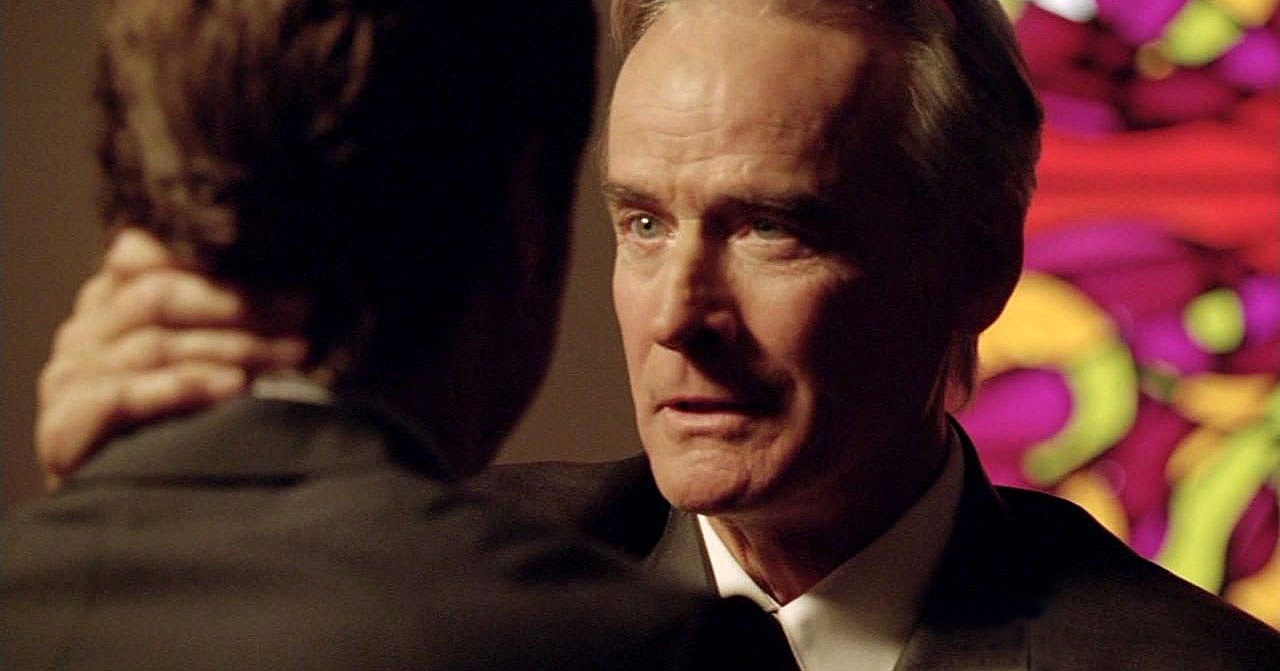
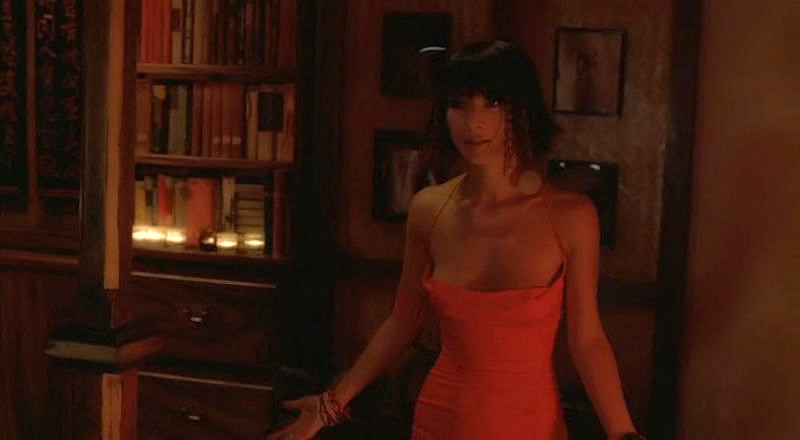
     The worst aspect of the episode for me is the flashback which takes up a fair chunk of the running time and is a shockingly backwards instance of Yellow Fever, in which Jack is the handsome white male travelling in the mysterious orient, before being seduced by a skimpy-clothed asian woman whom he uses and abuses in order to manipulate her magic power of "seeing people", before she gives him a tattoo in Chinese despite living her whole life in Thailand. Given this show's slightly more sensitive looks at Korea and Iraq, the fact that the writers of this episode see Thailand as fair-game for horrendously rascist stereotypes is just weird to me - as is the fact that Jack's an abusive Mighty Whitey dickbag who stalks and then assaults someone, and whom we're meant to feel sorry for when that comes back to bite him in the ass.
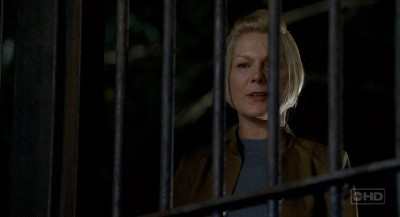
     Not that the main story was much better, and given that it signalled a major change for Jack's storyline that was difficult to reconcile. We see that Ben's stitches are infected, and at the same time Juliet is being tried by The Others for killing Danny Pickett. Her judge is Isabel, a swarthy woman played by Diana Scarwid, and who is never seen or mentioned again after this episode. Jack is forced to promise to be Ben's carer (seeing as Ethan was the only qualified surgeon The Others had) in exchange for leniency in Juliet's sentence, which apparently means that The Others instead brand her with a funny symbol. (Which again, is never mentioned again.) In one of the episode's few good developments, we saw that The Others were returning to their base on The Island, which makes me happy because The Barracks is one of my favourite Island locations. And then there was a third storyline running along with Kate, Sawyer and Alex's boyfriend Karl, where they rowed back to The Island, moaned, had a nice chat about stars, moaned, and argued incessantly.
http://img2.wikia.nocookie.net/__cb20070225190655/lostpedia/images/4/40/3X09_IsabelCage.jpg
Isabel is an Other bigshot - but she's never seen again.
From Wikia
      Ignoring that stupid fucking flashback story, the main problem I had with the story in the present was that it felt as though a lot of undevelopped ideas were being thrown around - and that's not really what Lost is supposed to do. After eight weeks of hearing nothing about The Others' justice system, suddenly this group of advanced, enlightened people becomes a savage society that practices capital punishment. Not to mention Isabel, who you think we'd have met at some point in the last eight weeks if she was that important. Nopt helping matters is the fact that Michael Emerson and Elizabeth Mitchell are acting their little hearts out to try and make this material work. And the guy that plays Karl clearly isn't aware that he needs to do anything like that. Even though he does. He really, really does.
     Stranger In A Stranger Land finishes this segment of The Others' plot, and gets us away from that tiresome Hydra Island set and one step closer to 1970s Dharma architecture. But it's main plotlines were segmented and when they weren't boring, they were contradictory to everything that came before and after. And the killing blow to the whole mess is Jack's flashback, which not only fits exactly nowhere in his flashback timeline, but which is some of the most horrendously offensive TV that Lost would produce until what they did with Sayid in Season Six. It's just not on, and it's the antithesis of what Lost should be representing.

Thanks.

NEXT WEEK: Hey! Did you know that Hurley is unlucky? No? Well, we find out some more when the news comes in that Tricia Tanaka Is Dead

Thursday, 3 April 2014

Review: Voyager 2.15: Threshold

http://voy.trekcore.com/gallery/albums/2x15/threshold_003.jpg
This is not going to end well...
From Trekcore
Star Trek Voyager - Season Two, Episode Fifteen - Threshold
Written 9/8/13

Where do we come from? Where are we going? How many times do we have to talk about having mutant lizard babies together before it becomes creepy? All these questions and more were asked by this charming episode which, in the words of its author Brannon Braga, is a "royal, steaming stinker". While I don't find Threshold outwardly offensive in the way that other famously bad episodes of things are, I do strike it from my personal canon because it's a lot easier to watch if you assume that none of it has any long lasting effect, and conveniently the series never talks about anything that happened in this episode ever again.
     Tom Paris is trying to exceed something called the Transwarp Barrier, which supposes that reaching a speed of "Warp 10" will give you infinite velocity and thus let you experience the entire universe at once. His simulations are successful thanks to a suggestion from Neelix - as is his first trial run, which brands him a hero. However, after the trial run he begins mutating wildly - first with veins everywhere and organs appearing and disappearing, but soon he mutates into a reptilian creature with God-like ambitions. The mutant kidnaps Janeway and flies off at Warp 10, causing her to mutate as well. The Doctor reveals that the form he has mutated into is on the "natural course" for humanity's evolution, and that he has simply mutated early. Tuvok and Chakotay track the two down - they are now lizards and, as it turns out, have had three lizard offspring. The two are returned to their normal selves and have awkward banter about having sex with one another.
      So... I'm assuming I don't have to tell you how silly the whole "travelling really fast makes you mutate" thing is, right? Right. That said, it is not the most ridiculous offense against Science in the episode, which is the famous Brannon Braga misunderstanding of what evolution is. He would later get this wrong again in Enterprise and cause that show's captain to commit a genocide because there was a species that was "evolutionarily better" than another. See, evolution is a slow, gradual process that occurs across generations, because it's a quite abstract thing that relies upon the likelihood that an organism with certain traits will be more likely to reproduce or not due to those traits. It's not randomly mutating into a lizard. And unless something goes seriously weird, humanity's immediate evolutionary future will not be reptilian. Plus, how the fuck did Janeway!Lizard have kids in three days? And, more fucking importantly, why can't the ship just use Warp 10 anyway to get home and then have The Doctor fix everyone? That's one massive plot hole right there.
http://www.treknologic.com/wp-content/uploads/2013/05/salamander21.jpg
...not for anyone. From Treknologic
     It's clear from many scenes that this episode was an attempt to develop Paris' character, with the feeling that after his big showy entrance in Season One that the show had drifted on onto other characters. The problem is that a lot of what he says here doesn't match up with what we've seen in previous episodes - describing how everyone thought he was great in High School and how his father always believed in him. That's pretty much the exact opposite of how he's been presented in the rest of the series, with a bitter relationship with Daddy not helped by repeated run-ins with the law. It may have been believable had it not been paired with such a silly and unpleasant plot but it's not that good anyway.
     One important thing to note though was that Threshold didn't make me angry. I didn't feel offended by it, and despite its well-earnt reputation as the worst episode of Star Trek ever made, there are worse to come in Enterprise and, if you'll excuse my snobbery, in the Abramsverse. It was more a tale of misguidedness - misguided character beats put to a misguided concept, executed to within an inch of its life. It just so happens that these were so misguided that everything that actually happened in this episode has been struck from the Star Trek canon like in no other episode. I for one, remembering those Janeway/Paris lizard baby, am very glad for that fact, even if I wish that the episode had just had a bit more thought behind it.

Thanks.

NEXT TIME: We meet sad slimey psychopath Suder in Meld.

Thursday, 27 March 2014

Review: Voyager 2.14: Alliances

http://images3.wikia.nocookie.net/__cb20100123114760/memoryalpha/en/images/7/76/MabusJanewayKazons.jpg
Janeway gets pally with the Trabe, who need to check
their privilege. From Wikia
Star Trek Voyager - Season Two, Episode Fourteen - Alliances
Written 9/8/13

I've been very kind to Voyager over the apst few weeks, sining its praises and wondering what the hell of this negative air was about. And then I reached Alliances, and despite my excitement for yet another tiresome Kazon episode, I really had expected something to happen in the overall plot. In Alliances, Voyager has the opportunity to open up into a level of complexity that its sister DS9 wielded so well - a chance to open up to more stories that were politically relevant, relationships that were politically relevant and analogous to those in the other series but framed in a different way. And, as you can tell my by tone, Voyager squanders this not only thoroughly and completely, but with a strange sort of pride and gusto that left me with a bitter taste in my mouth.
     After another battering from the Kazon, a crew member dies, and several Maquis crewmembers chirp up again about needing to use different tactics. That includes Chakotay, who makes a personal appeal to the Captain that they have to ally themselves with one of the Kazon factions in order to secure themselves and prevent more attacks. Janeway, after some stubbornness, reluctantly agrees - she reaches out to the clan that Seska has allied herself with, while Neelix goes after one I've never heard of. Negotiations fail with Maje Cullah because he's a sexist bastard, while Neelix gets involved in a prison-break held by members of a race called the Trabe. A representative gets very pally with Janeway and reveals that his race used to hold the Kazon in ghettos before they rebelled - but that was a generation ago, and none of those alive now support their persecution. He suggests bringing all of the faction-leaders together for a meeting to discuss peace, but when they do get together, it turns out that the Trabe were being little treacherous shits and were trying to kill all of the Kazon leaders. Janeway gives up on politics and gives a "rousing" speech in which she says that they now have to stick to Federation principles no matter what.
      Alliances, in its concession towards Maquis ideas being used in Voyager's command structure, opens up a little peephole to a well of potential for the series to exploit. Having Maquis crewmembers makes it very easy to imagine a ship structure that straddled the lines between Federation morality and Maquis pragmatism, making allies and enemies in unknown territory and allowing us access then to a whole host of new races and then possibly new main characters as a result. It would be a more realistic scenario by far, and it would deliver a great big dollop of meaty moral ambiguity to a series currently stuck in lazy optimism. I hate the ending of this episode, I actually thoroughly hate it because it's so motherfucking predictable and it ends up painting Janeway in a bad light when just because some murderous assholes fucked up her plan, she's now going to ignore the very real fact that you can't run an efficient judicial hierarchy 70,000 lightyears away from home.
http://voy.trekcore.com/gallery/albums/2x14/alliances_141.jpg
Voyager attempts to ally with Cullah and Seska.
From Trekcore
     That said, I did admire the episode's attempts to try. Seska and Cullah always form a fun double act even if it feels like some kind of weird prime-time soap opera whenever they're on screen. Cullah's sexist bullshit was handled very well, with both Janeway and Seska verbally kicking his ass.The examination of the Trabe's persecution of the Kazon as a reason for their eventual uprising, while trying to fall analogous to the white persection of every other god-damn race on the planet, ended up being a little insulting. I mean, it sorta implied that all persecuted peoples who rebel against their persecutors are naturally violent, evil people. Which is a really quite horrible thing to imply, and it stinks of how little this episode was actually thought out.
     Voyager could have made revolutionary steps in plotting any time it wanted - that's not the issue here, even though I am slightly disappointed that in its early days the show very much felt like a take-off of Next Generation. The issue is that Voyager is so often adept at dangling good things in our faces and then throwing them away - it doesn't seem to know the value of change in its storyline and instead here glorifies the status quo as if it's this holy, wonderous thing instead of the bane of every viewer's existence. This episode was a bit like Merlin in that regard. Maybe that's why I was so angry and bitter at it. I should have to feel angry and bitter at Star Trek - I love Star Trek, but thi episode just pushed too many of the wrong buttons.

Thanks.

NEXT WEEK: Fuck. It's the only non-canon episode in the entire Franchise. We do well not to try and cross Threshold.

Monday, 27 January 2014

Review: Doctor Who Classic: The Invasion of Time (Revisited)

See here for my previous look at this story.

https://blogger.googleusercontent.com/img/b/R29vZ2xl/AVvXsEgaIe3aUqLJ9LuyN_RM98qqom5tJ5v5qYDFkp962VjM1MZqt8m7xpcBjCV9DHgPqr2d3oDJVsLYtJSNvBJjBxCPU73MKVW9lHboqr0zfttUwvPngmDMVLxeUk77qxeIu7s9Z8Aq06_G1ypi/s400/Picture+9.jpg
The Doctor pretends to go evil for some sheets of foil.
From Cathode Ray Tube
Doctor Who - Season 15, Story Six - The Invasion of Time (Revisited)
Written 16/7/13

What to say about this story? Well, I had originally wantd to try and write an article on this story for Celebrate, Regenerate, but I couldn't find a single thing that I actually liked about the story. I mean, that's a bit of hyperbole, really. It's two and a half hours of Doctor Who, there are some things that I can find here and there. But as an overall experience, The Invasion of Time so fails in every single one of its aims that it reaches a point which waivers dangerously between hilarity and tragedy. And that's not a good thing, it's never a good sign when I can't tell whether I outright hate the story or love it in a So-Bad-It's-Good way. Usually it's a little more clear cut.
    The first four episodes are bad enough on their own - a concept play where we're led along the garden path by The Doctor's apparently dark turn, which is never hinted at until the second episode and so we're left thinking that The Doctor is a total and utter tit for a week. Plus, the aliens he's apparently helping are some of the most weak and lily livered in the show's history - the Vardans, whom, while awesomely powerful in principle, are pathetic in execution. I've followed some pretty crappy looking monsters in my time as a fan, but I will not accept a monster who is literally a sheet of tin foil with a strong irish accent. Their humanoid forms are even less impressive, looking like bored versions of the Great Gazoo with a great deal less screen presence. I can understand your budgetary limitations and at a stretch I might even accept the tin foil in the same way I accept the same in Timelash. But the acting is just so poor. It really is, there's no escaping that.
     The last two episodes are where the serial really goes to shit, with all semblance of plot thrown out of the window in favour of running around the TARDIS corridors for a bit being chased by Sontarans. As is Invasion of Time practice, this is the worst execution they ever saw, with crumbling costumes hiding actors who have been for some reason directed to put on strong cockney accents. After four episodes which might have been simply mediocre on their own, the final two drag it out into a dull slog which you pray might sometime end. It's so random that they have to break open the by-this-time-tired book of Who mythology, essentially pulling the get-out-of-jail-free card by having The Doctor shoot the Sontarans out of existence and then forget all memory of it.
Hey, it's the guy from The Android Invasion!
From the BBC
     In my original review, I talked a bit about Gallifrey, and that's important too. After the fan uproar at seeing the mighty mythology brought down to something a bit more human, going to Gallifrey was dangerous ground, especially when the budget was in the state it was. Instead of the wonderfully complex, multi-layered sets we saw previously, the civilisation is reduced to a series of blandly coloured corridors occupied by about three people, and then some location filming outside which instead of exploring Gallifreyan society and customs only serves to raise more and more questions.
     This story stands as Leela's last, and it's a damn shame after this season and a half that a character so previously well-developed manages to be kicked out with such a bullshit excuse. Leela falls in love with Andred, a minor character whom she barely speaks to over the course of the story and whom she has so little chemistry with it felt weird to see them even holding hands. It's not something that Leela would do, there's no continuity in the characterisation that after being shown the wonders of the civilised world with Leela that she would choose to settle down with a guard. Plus her presence in this story at all sends a bad word back to the Hand of Fear, where humans aren't allowed on Gallifrey. It's almost as if everything this story does is towards fucking up Season 14.
     And now to the few spits and spots I do like. John Arnett's Borusa is fandabydozy, and is quite wonderfully playful in his trickery as he guides The Doctor around Gallifreyan politics. The scenes between him and The Doctor play out very differently to Borusa's last incarnation, and at a stretch I would say that it's a tiny bit better. I also happen to like the roaming around the inside of the TARDIS, no matter how nonsensical the location filming in Hospitals and Swimming Pools happens to be. It's playfully done and it doesn't look too tacky, and while the TARDIS interiors we see in JNT's tenure (which are remarkably consistent in appearance) are my favourite, I love the recursion and randomness that this serial feels fit to provide to fill up the last two episodes.
The Doctor is made President.
From Basement Rejects
     So, not a total washout. At the end of the day there's no-one I can really blame for this story, and I feel bad for it because the show was struggling with its cash and it is genuinely a miracle that the story was even made. After all the work that went into ensuring that the show made the screen, I think the whole story is imbued with a wonderfully shoddy charm. When I began this runthrough, The Invasion of Time was one of my least favourite stories. Given some of the crap I've seen, I can at least say that The Invasion of Time is entertaining, and given all the trouble it faced in production I find that something of a wonderful miracle.

Thanks.

NEXT WEEK: We meet Romanadvoratrelundar Fred Romana's first incarnation in The Ribos Operation.

Monday, 20 January 2014

Review: Doctor Who Classic: Underworld

http://1.bp.blogspot.com/-_6oewbxddcY/UXCY6su13TI/AAAAAAAAK7Q/pqEKjfWBsv4/s400/doctor-who-underworld-minyans.jpg
Star Trekkin', cross the universe.
Doctor Who - Season 15, Story Five - Underworld
Written between 18th and 19th July 2013

Doctor Who presents us with another solid tip for future writers - never borrow from Greek Legends. Nobody thinks it's particularly clever to borrow from some of the oldest stories of modern civilisation, and the parallels rarely translate well to modern situations. Between Underworld and its spiritual successor The Horns of Nimon's love of Theseus and the Minotaur, Greek myth is pretty much blacklisted as an influence until someone can do it properly.
     In the ideas department, Underworld doesn't start off bad - The Doctor and Leela meet the Minyans, a race of aliens whom The Time Lords tried to help out millions of years ago, leading to endless war and the anihilation of their planet. A survey mission of these tired immortals ends up on a planetoid run by another sect of Minyans whose ancient religion has led them into an oligarchical rule, forcing The Doctor to help the original mission escape and be on their way to their final desination, a new planet for them to settle on.
     The trouble with writing a story about a society of immortals is that Immortals are boring. Even the Time Lords stop at 13 lives and tend to get old quite often, just to make things more relatable. The civilisation on the planetoid, with its dictatorships and strangely dressed guards, is a poor show on last week's and managed to lose my interest entirely. What kills the story, though, is the sets - or lack of. The sets that we do see are universally bland and uninspiring, and the rest of the story in the planetoid features wobbly model work and HUGE amounts of unnecessary CSO. They obviously couldn't afford to location shoot, and the result means tons of static, unconvincing shots of people running around a greenscreen. I was more convinced by Time-Flight.
http://www.doctorwhoreviews.co.uk/4Y_files/Underworld%20(2).jpg
"Once I caught a gumblejack this big."
     I'm not really at a point where I can fully rip this story a new one, as by about the second episode things got so bad that I barely registered the rest. Underworld is a story that tries to use CSO to cover up its lack of budgetary concerns - it tries to pull of the impossible. If your budget is this low, then someone please for the love of god write a Bottle Episode where there're only a few characters on one or two sets. Don't try to attempt an epic story where the direction is going to drawn out and terrible, the setting is going to yank you out of the story like a newborn being pulled from the safety of its mother's womb and where I can't remember what's happened in the past ten minutes because I probably fell asleep.

Thanks.

NEXT WEEK: The Invasion of Time, which is at least better than this story.

Saturday, 12 October 2013

Review: Atlantis 1.3: A Boy Of No Consequence

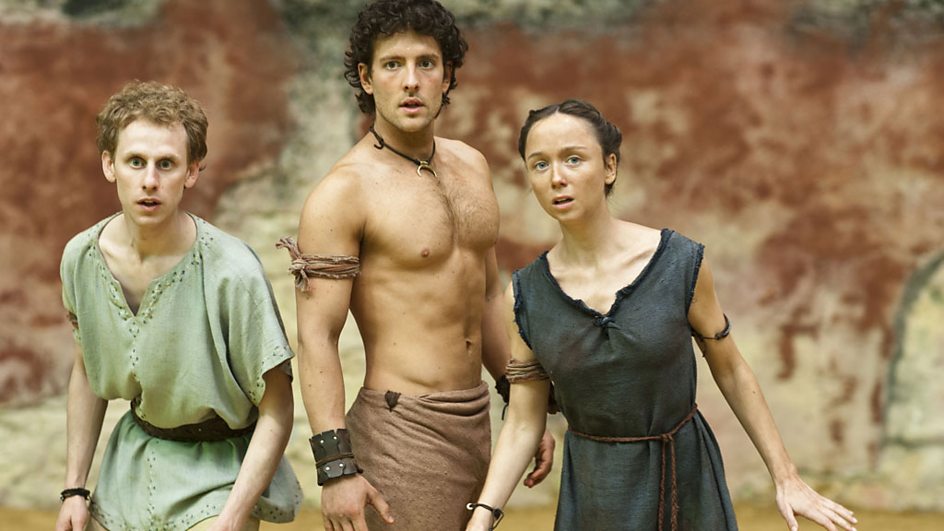
http://ichef.bbci.co.uk/images/ic/944x531_b/p01hs152.jpg
What's the point of writing funny captions any more, eh?
Okay, I give up on being a serious critic on this show. There's just no point, it's clearly not trying to actually do anything or say anything, and it falls into so many cliches that despite the few attempts at plot we glimpsed throughout this week's debacle, it never came to anything because of the show's faith in its super-mega-awesome protagonist and its refusal to write any character who isn't a cardboard cutout. It's effortlessly sexist in the way that it only presents women who fit into the four great archetypes of "innocent, evil, matronly or sexy" and, most annoyingly, uses certain female characters simply as devices rather than imbuing them with any actual agency.
     So, the plot, of what there was. Jason gets in trouble doing daring do and Pinky and Perky get thrown in after him for no reason. Alexander Siddig's phoned-in performance (a perfectly understandable one given what a fantastic actor he is) tells us that Minoan justice is trial-by-bull, where prisoners are required to use greenscreen to pretend to leap over a bull which is unnecessarily angry in an oddly Roman arena. A plucky young girl named Elpis gives a lock of hair to Morgana-expy Queen Pasiphae in exchange for her freedom, but she's evil evil evil so it doesn't happen and Hercules is forced to use his masculine wiles to convince his girlfriend to get Medusa (from last week) to foil the old Queen's voodoo magic and save the day. Pasiphae is evil, Ariadne is boring, Jason is boring, Pythagoras has no reason to exist and I think my favourite character was the bull.
     I am a veteran of the Merlin years, when in 9 cases out of 10, the show would confirm whatever cliches you could predict, be it within seconds of your predictions or, in my unfortunate case, years. Atlantis brought that painful feeling back as I was able to see exactly what developments would happen as soon as they were mentioned, with the sole exception of the return of Medusa, which for me serves very little purpose beyond the BBC's clear attempt to appeal to the Tumblr crowd and get everyone "shipping" when in reality trying to imagine Mark Addy as a fantastic casanova is more difficult to imagine than him accomplishing the Twelve Trials. 
     The lack of mythology in this week's story was not in its favour, as the wonderful shiny glow of classroom nostalgia about learning Greek Myths and Legends left actual characterisation in its stead, resulting in a series of ill-thought-out guest characters and a focus on our main cast which made it painfully clear just how underdeveloped they still are. The crappy greenscreen effects for the bull-jumping was okay for the most part, but on occasion the mixture of the hilariously bad effect and the fact that this was an attempt by the show to appear epic left the episode a laughing stock, and not in an enjoyable way. In the crappy, why am I still watching this show sorta way. Then I remind myself that I watch this show to write angry articles about it, and I shut up.
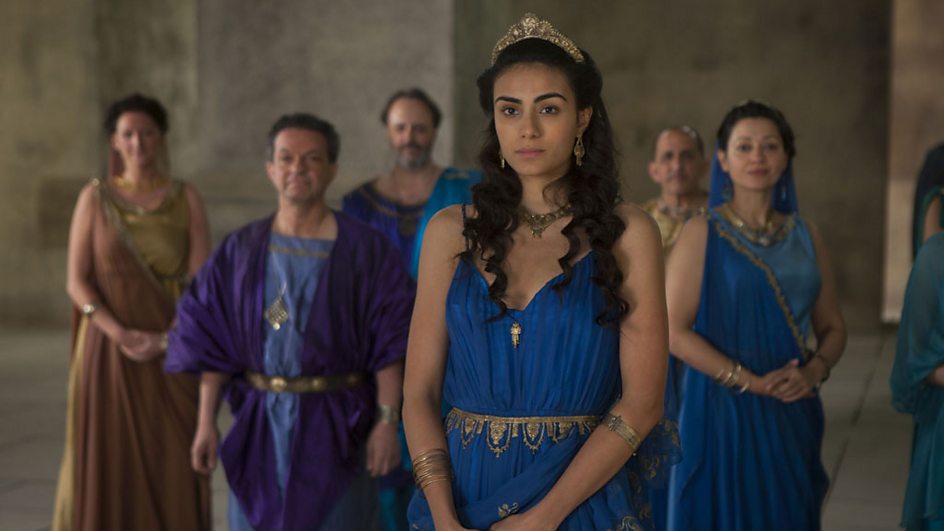
http://ichef.bbci.co.uk/images/ic/944x531_b/p01hs0ql.jpg
I mean, the lack of effort put into Ariadne's character is just
appalling. Seriously. This is disgraceful.
     Still. Within fifteen minutes of this week's episode, I had resolved to never watch Atlantis again. I go on and on and fucking on in my pre-written reviews of other TV shows about how the first few episodes are about getting it right and hooking the viewer in. Atlantis could have pushed the Time Travel aspect, it could have actually made reference to injustices (and justices) in Greek society that are different from Jason's supposed home, there could be background manipulations and political intrigue and a million different plots more interesting than the three we've been left with over this fortnight. Instead, we are given a show with boring characters, cliched plots, an atmosphere broken by repeated obliterations of my disbelief and a publicity drive which is more interested in getting people to "ship" these bland archetypes than it is actually engaging them.
     I haven't been this entertainingly angered by a TV Show since Pramface.

Thanks, I suppose.

NEXT WEEK: In an epic Twist of Fate, it turns out that reference to Pramface is a damn-sight more accurate than I ever, ever wanted it to be...

Monday, 23 September 2013

Review: Doctor Who Classic: Revenge of the Cybermen

http://upload.wikimedia.org/wikipedia/en/e/ec/Revenge_of_the_Cybermen.jpg
Cybermen, it would seem, in name and appearance only.
Doctor Who - Season 12, Story Five - Revenge of the Cybermen
Written 17/5/13

The raging fanboy in me wants to scream and shout about how this story was obviously written by some quack who had no idea what a Cyberman was, what it was supposed to be about and how to write a decent story featuring them. That is, however, unfair. This unintended finale to the season (due to the real finale being moved to the beginning of Season 13 that September) was rather frustratingly written by Gerry Davis, the Cybermen's co-creator. That situation is one of many comparisons that can be made to the later story Destiny of the Daleks, which is similarly shoddy in its script and its aesthetic.
     Returning to Nerva after their excursion to Skaro, the transmat deposits them a little earlier than they expected, leaving the three to wait a while until the TARDIS can make its way back in time. They find the ship being used as the Nerva Beacon, a space station surrounding Jupiter, designed as a lighthouse to warn ships about a new moon, Voga, the Planet of Gold. A group of Cybermen, relics of a recent Cyber-War that led to their defeat due to their inherent weakness to Gold, arrive and attempt to blow up the planet to prevent their resources being used again. It doesn't work. The TARDIS arrives and the three hop off, with a message from the Brigadier asking urgently for them to return to Earth.
     The Cybermen in this story are as far from the original premise as I think it's possible to get. This is especially contentious for me; as of writing, it was only a week ago that we were given the Borgy-borg-borg Cybermen and told they were perfect again. While not as misled as that, the Cybermen here are probably even worse. Instead of their emotionless cyborg selves, we're presented with the odd paradox of more robotic creatures who simultaneously sound more human, to the extent that my immersion is totally fucked. I look at a Revenge!Cyberman and I see a shouty man in a boiler suit, because that's the way it's played. The previously stealthy Cybermats are here portrayed by silver draught exuders, too.
https://blogger.googleusercontent.com/img/b/R29vZ2xl/AVvXsEjXHceeUqKMELo-ZkWWPwstrDvDX89nSCyX1nsAaeU60PSweImLYCHW3c2EwJil_GlMRpiduNQKc1CeJvbFCWDh57tMI0_EEoHNo4rScQ6mq0ItLDHOPYfMbh9CFAXZLgGEvacMCi7IK8s/s1600/vogans.jpg
The Vogans are a decent Trek-style plastic forehead species.
     I found the portrayal of the native Vogans by far the more interesting part of the story, their inner politics regarding their past with the Cybermen providing a cool segment of the story that would have done well had it been developed enough. I could possibly see the episode revolving around them exclusively, the with the Cybermen simply a fond memory. As well as the Vogans, the use of the Nerva Beacon tied the season together nicely, even if it was a move made exclusively to save on budgetary concerns.
     The return of the Cybermen after six years away is a dramatically disappointing one. As opposed to the attempt made to revitalise the Daleks in the previous story, the Cybermen here are cheapened and unloved, treated as bland megalomaniacal villains that could occur in any sci-fi setting. There could be any villain present in this story - any villain at all, and it might just be higher in my expectations as a story with a few okay concepts. But to once again take the name "Cybermen" robs the story of any grace, and it will go down in Who lore as that one time where The Cybermen were done completely and utterly wrong.

Thanks.

NEXT WEEK: After I sum up the season on Friday, I finish this little arc with the beginning of the next season, Terror of the Zygons.

Monday, 15 July 2013

Review: Doctor Who 4.12/13: The Stolen Earth/Journey's End

http://tvmedia.ign.com/tv/image/article/895/895510/the-stolen-earth-20080801011855745.jpg
Davros sounds a lot like that Circus guy...
Doctor Who - Season 30, Episodes Twelve and Thirteen - The Stolen Earth/Journey's End
Written 23/4/13

I'm gonna get this out of the way quickly. This two parter is one that I have a whole bucketload of contempt for, and unlike The End of Time, I don't even have the kind of grudging respect for it earnt over time and battles hard fought. As far as I'm concerned, this is one of the worst season finales that the show has ever done. Maybe not fundamentally, catastrophically bad by itself, but as a matter of opinion I just find it to be complete and utter tosh. And, with that in mind, we can begin.
     RTD had already informed Moffat of his decision, and while the public remained unawares we did get a small clue when this finale had cameos that basically summarised the entire RTD era to date. Fresh from the first series of Sarah Jane Adventures and the second series of Torchwood, Rusty incorporated his spinoffs into the main show, as well as bringing back all of his past companions save Adam Mitchell and giving us our fourth finale return with Julian Bleach's stab at Davros. It was, at the time, a fan's wet dream. To me, right here, right now, it feels a lot more like a bad fan-fiction, with the expected level of coherancy.
     Let's not bother with the semantics - let's get to the beefy issues. After a moderately coherant first half, disappointingly not-epic Shadow Proclamation and irritating attempts by Rose to be badass aside, we reach the pinacle of our story, where our thoroughly deified lovers finally meet, and Rusty gets a twitch and decides to cash it in on the ratings by pulling a joke regeneration sequence. I wasn't just shocked, I was pissed. It's one thing pulling that shit back in 1984, but this is the Noughties, the tabloid press sticks their nose into every nook and cranny. We knew there wasn't going to be a proper regeneration, so all it amounted to was unnecessary hysterics. This is Doctor Who, Rusty. You don't abuse the tradition of Regeneration like that, he doesn't get to frivolously pop one out when he feels like it.
http://suuuz.files.wordpress.com/2012/08/4x12-the-stolen-earth-screencaps-doctor-rose-badwolf-tenth-rose-3543632-624-352.jpg
"I tried being a Call Girl for a while, didn't work out."
     And that of course leads on to the horrendous 10.5. But we'll leave that for now, that's gonna come later, no, we've gotta talk about the whole Children of Time thing. See, mad Dalek Caan from New York popped back into the Time War (idk how, it's never explained) and came out a little worse-for-wear, but with a Dalek cruiser strapped to his jacksy. Ever since he's been prattling about the Doctor, his return and the way that he turns his companions into weapons, which is adequately displayed through the use of two magical Macguffins which his companions use to threaten the Daleks, including the Osterhagen Key (a German invention, featuring a perception of Germany straight out of Cold War propaganda with actual German language that's as shoddy as you can really get). The Osterhagen Key is a worldwide suicide bomb that destroys the planet when two people turn a key somewhere. Cos that's clever.
     Threatening the Daleks leads onto Davros' little tyrannical speech against The Doctor, telling him about how really he's a total douchebag, uh huh, and that ending the Time War and having such violent companions is totally the same as destroying everything in reality and he should totally feel bad about it. Sorry, not buying it - despite the lovely teary montage of every almost every guest character who's died since The End Of The World, The Doctor doesn't really have much of a role in their deaths. That's why it's a heroic sacrifice, it happens anyway, and it's to save lotsa people instead of just him, this isn't some kind of Doctor Who fan club in space who are jumping in front of buses and then saying he inspired them to do it. I'm all for talking down the Doctor, especially when we have the most deified Doctor ever surrounded by his cringey girlfriend and his supercute companions, but this just wasn't the way to go.
http://blogs.discovermagazine.com/badastronomy/files/2008/07/doctorwho_donna.jpg
Ta-ra, pet.
     Did I just call Ten.5 "supercute"? Probably. The creation of a human clone from The Doctor's severed hand thanks to a single touch to the glass of the casing by Donna was the point in 2008 where I began to question my devotion to the show that I'd followed like a religion for several years. It was too whack for me to jack. While duplicates would later become rather sickeningly common in the Moffat era, in the RTD Era it still stunk of the lowest kind of sci-fi silliness, and reduced the finalé to this otherwise okay series into soap opera mush. The ending, where the human Ten is banished from this world for the genocide of the Daleks (i.e. destroying the hateful killing machines whose only continual purpose is to destroy the universe) and then used as a human sex toy for Rose to bonk until she dies just cemented what a ridiculous turn of events had just transpired. (I apologise if that came out a little crass, I'm looking into it.)
     Plus, it meant that what happened to Donna actually, you know, happened. Just like in Doomsday, Rusty spent the whole episode repeating that someone was gonna die, and then he chickened out at the last second and instead of dying we just had Donna's memory wiped. This wasn't some great avant-garde decision, or some striking dramatic blow. It was an attempt at tragedy, sure, but instead of empathy I just felt wronged. Donna's entire character, her entire damn story, was about the transformation from someone who focussed on the trivial into someone acutely aware of her own being and self-importance. A woman who screamed at the world finally hearing it echo back. To erase her memories is to defile Donna's character, to stain the memory of what was one of the best companions of NuWho for the sole reason that she was the only female companion who hasn't at one time wanted to bonk him.
http://img.gawkerassets.com/img/17mtr3x3n4m0qjpg/ku-xlarge.jpg
The point in Friends where the audience gasps.
     I often find myself comparing this finale to Dimension In Time, and the comparisons are, I feel, warranted. It's all very well and good having a massive cross-over, and it's a fun thing in general. But if your mechanism for doing that creates a script with such stupid leaps in logic and really abuse of what the show stands for, then you change your script and you cull the strays. As a last outing for our continuous Who series, following a consistent run over four years, it was a fittingly epic finale, but in acheiving that atmosphere it sacrificed common sense. The following year would see the four specials, the end of RTD's tenure, the series of Torchwood that never was, and the transition to the current showrunner. This isn't quite the end of my RTD reviewing, but it's damn close.

Thanks.

NEXT WEEK: The audience wishes they could have been on the Planet of the Dead!

Wednesday, 15 May 2013

Review: Lost 6.17: The End

If you haven't seen this episode, then do not for the love of God try to read this review. Not only will a lot of what I'm saying not make a lot of sense, but I'll also be spoiling a hell of a lot, because I've got a lot to get off my chest.

http://images1.wikia.nocookie.net/__cb20100524042205/lostpedia/images/2/2f/6x17TheEnd.png
The series does end with some beautiful cinematic symmetry.
Lost - Season Six, Episode Seventeen - The End
Written 17/3/13
"You can let go now."

I'm not going to sit here and say that I spent six years waiting for this finale. This isn't exactly an Ashes To Ashes thing we have going on here - I only started watching/keeping up with Lost while the fifth season was just finishing. I had never seen John Locke in his original body, I've still never seen the Swan station and yet I was really fascinated by the depths that I felt the show could go to with not just its characterisations but its ideas. It's often said that there are two types of fans of Lost - those invested in the characters, and those invested in the concepts at hand. I've always been more of the latter type of the viewer, and I shouldn't really have been so surprised at the fact that the finale wasn't really something that catered to my tastes.
     At its heart, the finale is one of the most straightforward scripts that the show's ever produced. Hero goes with bad guy, does something dangerous, hero kills bad guy, sacrifices himself to reverse said something dangerous and then everyone meets up in the afterlife and lives happily ever after. That's it. No twists, no turns. Well, not many. Even the nature of the Flash-sideways as an afterlife is obvious come Happily Ever After for those paying significant attention. I have problems with both the main island plot of the finale and with the Flash-sideways, so I'll be covering them separately just to probe the depths of why I feel that this finale is fundamentally disappointing.

Main Island
http://images4.wikia.nocookie.net/__cb20100604232734/lostpedia/images/2/21/Desmondintothelight.jpg
The Heart of the Island is a shitting cork in the ground.
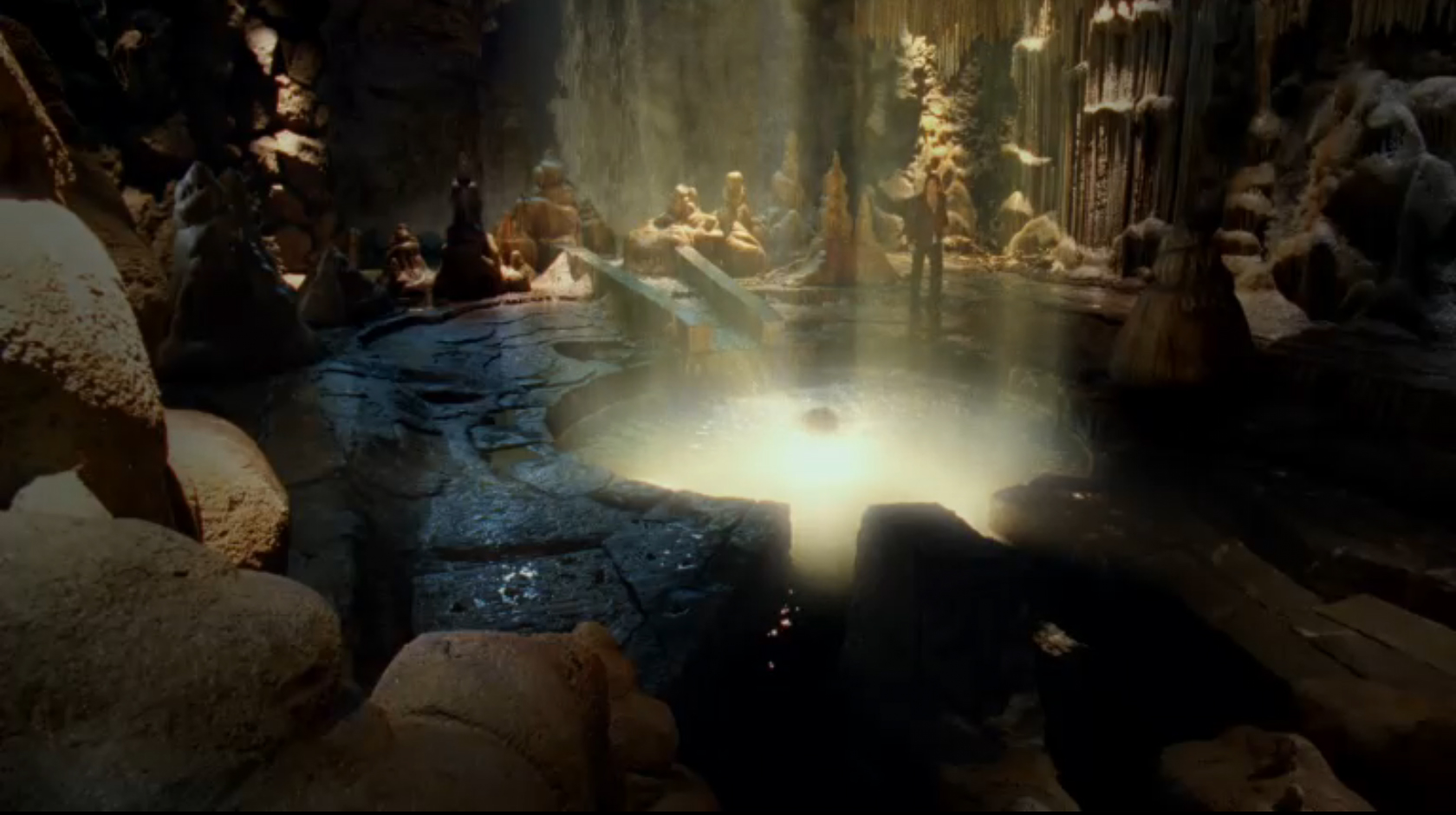
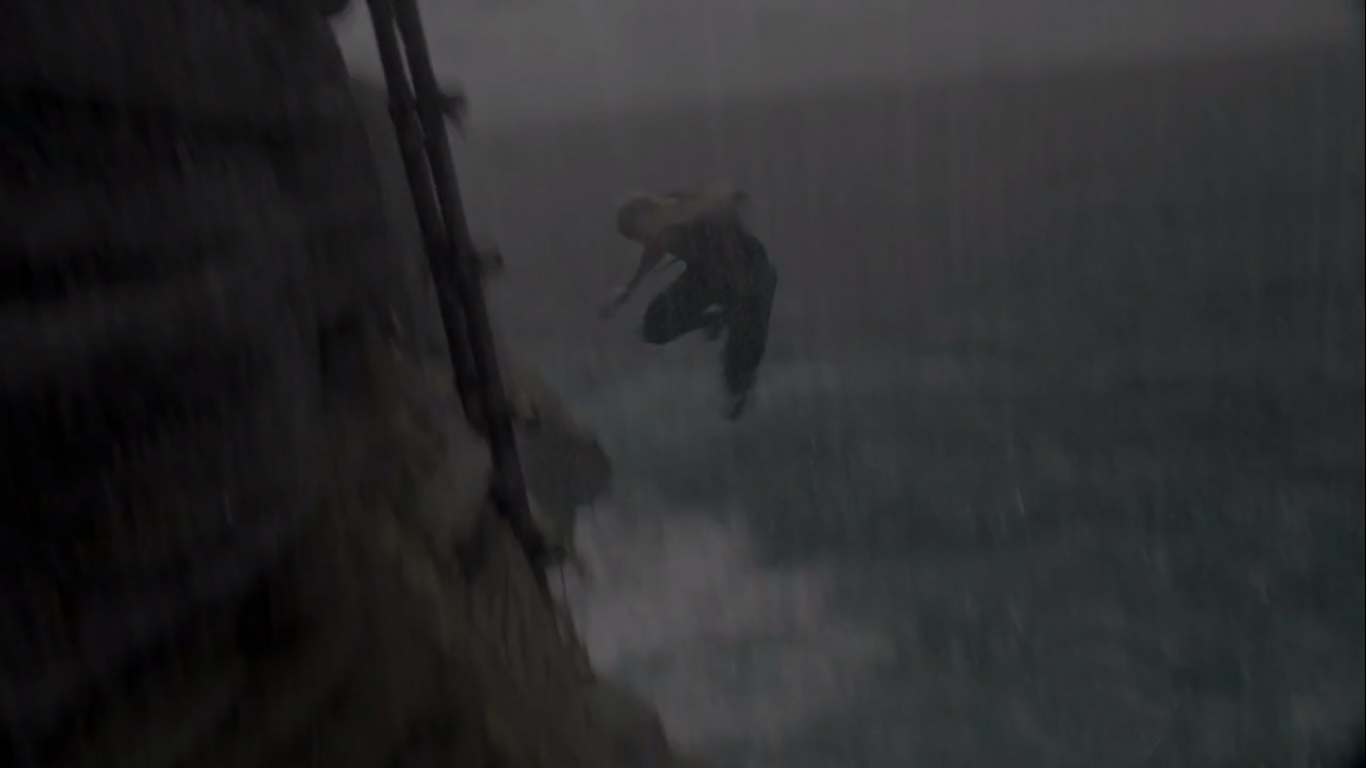
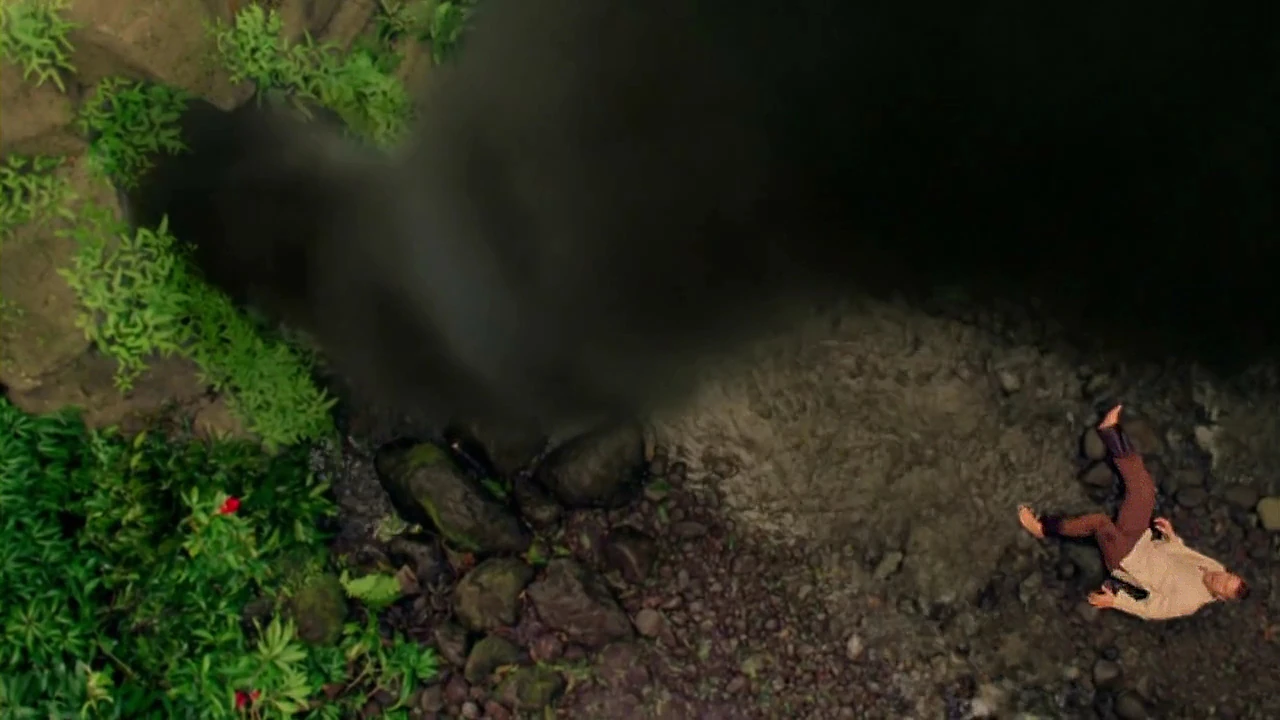
Let's start with the Heart of the Island and such. So after spending the season desperate to leave the Island, and asserting that he needs the candidates to be dead to do that, The Man In Black changes tack and decides to use Desmond to destroy the Island. He aims to do this by... by pulling a Styrofoam cork out of the ground. This somehow causes the Island to start sinking into the ground, but it also has the unfortunate side-effect of rendering both Jack and MIB mortal, allowing Jack and Kate to beat the crap out of him before shooting him and kicking him off a cliff. Jack then sacrifices himself by saving Desmond and putting the cork back in, dying in the bamboo groves just as everyone else (besides Hurley and Ben, who've stayed behind to do the Jacob job, and an unfortunate Desmond) flies away on the Ajira plane.
     Simple plot holes tear this plot apart. Aside from the obvious disappointment of all of the show's mystery and wonder being reduced to a fucking cork in the ground, we also have the baffling decisions made by MIB. This couldn't have been his original plan - he tried to have Desmond killed a couple of episodes back, you remember. And the only reason Desmond was on the Island was because Jacob's last failsafe was to use him to sink the Island in order to kill MIB and stop him from leaving for good. MIB's complex reasons for being the man he is are shuffled aside for blind cackling villainy as he decides to destroy the Island, with no way of getting off it. It really just doesn't make any sense, and it's frankly insulting that the final conflict between the two sides was handled with such lack of coherence.
http://images1.wikia.nocookie.net/__cb20100606125421/lostpedia/images/3/3e/6x17GoodbyeNamelessOne.jpg
MIB falls to his death.
     So that's the logical, "where are my answers" part of me thoroughly annoyed. And then there's the little bit of me that likes the characters, and we have to look at what happens here. There's so much time spent in the island plot fussing around Jack, the MIB and silly corks that the long history of the show barely gets a mention. There are a few sentences of consideration of Kate and Claire's relationship, but mostly it just gets turned into several long action scenes with far too little sense behind them. Hurley becoming the new Protector wasn't a surprise, and it was nice to see his character vindicated in that that it is, as well as allowing Ben the position of power he so craved in a way that allowed him to make up for his transgressions.
     But the common argument in defence of the finale was that it was supposed to be the conclusion of all the character arcs and so there wasn't much room for dramatic funtimes. And that can be said of Jack, whose movement from man of science to man of faith, however much it irks me to see, is clear and concise throughout the series and through this finale. Goody for him. The rest of the characters can apparently settle for the half-assed character resolutions provided by the Flash-Sideways verse, whereas in the actual timeline we're left with a vague, "flying off into the sunset" ending for the majority and a "how the fuck do I get off this island" ending for Desmond. (Not that that's any different from the rest of the series, really.)

Flash-Sideways
http://images3.wikia.nocookie.net/__cb20100606120748/lostpedia/images/7/76/6x17JulietSawyerRemember.jpg
Sawyer and Juliet find one another again.
Despite me saying how easy it was to recognise the true nature of the Flash-Sideways, the 13-year-old me had absolutely no idea that we'd get dumped with a purgatory ending. Mainly because I was excited about the use of what I thought was a parallel universe plot, which would have been awesome, but also because Ashes to Ashes had ended with a similar ending two days prior and I'd basically been shattered by it. I'd always been mildly aware of some of Lost's more religious elements, but I certainly wasn't expecting the final season to turn into a biblical battle between Jesus and the Devil with a meetup in Heaven afterwards.
     I am not perhaps as angry now as I was then at the mere presence of religious themes in the finale, especially as Lost has a much greater precedent for them than Ashes To Ashes ever did. What gets me nowadays about the flash-sideways is the crazy-as-shit internalised logic. All of the problems with the sideways timeline stem from its inception - that this is an afterlife somehow created by these people. But like in Ashes To Ashes, that begs the question - what the hell is everyone else doing there? The point is clearly supposed to be that these random few people apparently have such a cosmic significance that they have ultimate control over the afterlife, which is bullshit. Don't even get me started on characters like David, who vanish from existence the moment their connecting character is awakened.
     That interpretation itself, despite being the one given by the episode, doesn't match up either. The characters are still suffering for what they did in Reality - some of the characters' lives are better, but some of them are worse as well. The idea of what makes a perfect afterlife for someone is entirely subjective, and it's not entirely clear who's been deciding which of the characters gets what. You could argue that it's all according to some Universal Morality, but that's bullshit because such a thing does not exist - especially not in a series like Lost, where moral polarity has always been lambasted by the ambiguity of the characters.
http://images2.wikia.nocookie.net/__cb20100528113605/lostpedia/images/9/92/6x17_AnAlternateMotherAndSon.jpg
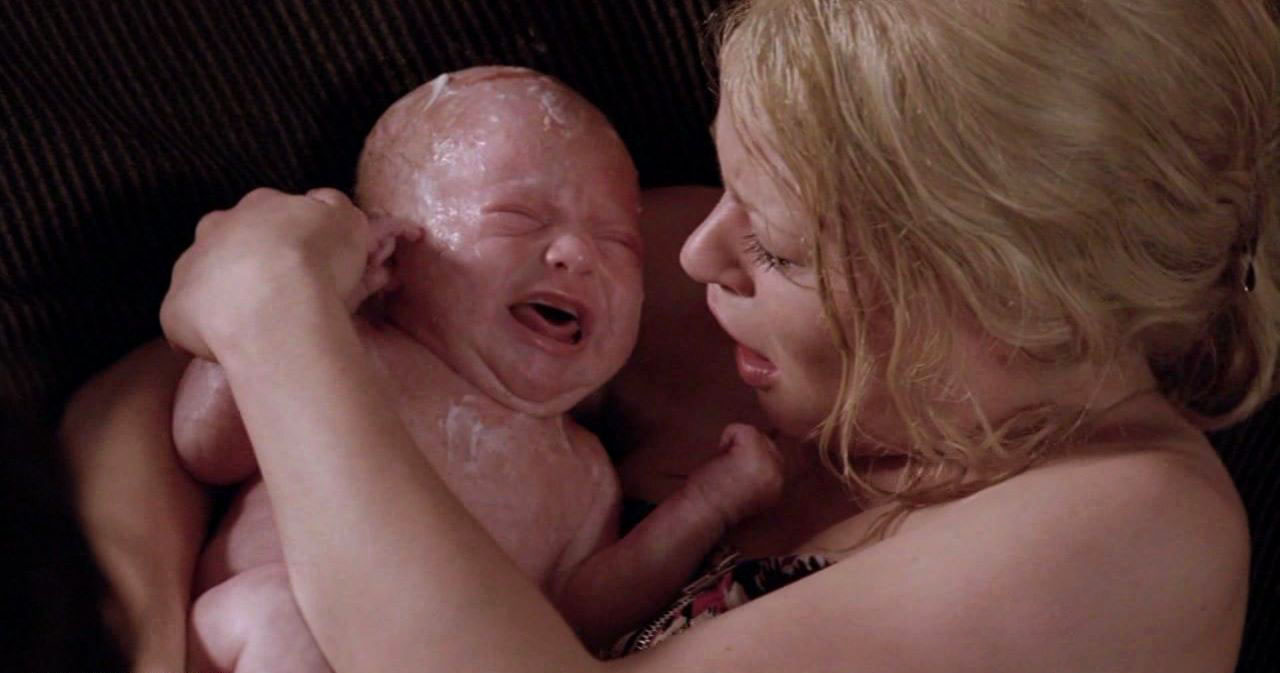
Aaron gets born. Again. As if one childbirth wasn't traumatic
enough.
     My prime example is probably Sayid. He spent his entire adult life looking for the love of his life, Nadia, who was then killed by Jacob in order to bring Sayid back, whereafter he ended up dying, being resurrected by the MIB, going crazy for a week and then turning into the good equivalent of a suicide bomber. Yet in his afterlife, he spends the vast majority of his non-awakened time suffering and having to watch Nadia marry and have children with his brother. Followed by his "soul mate" being Shannon of all people, whom he had a fling with in Season One. It doesn't match up.
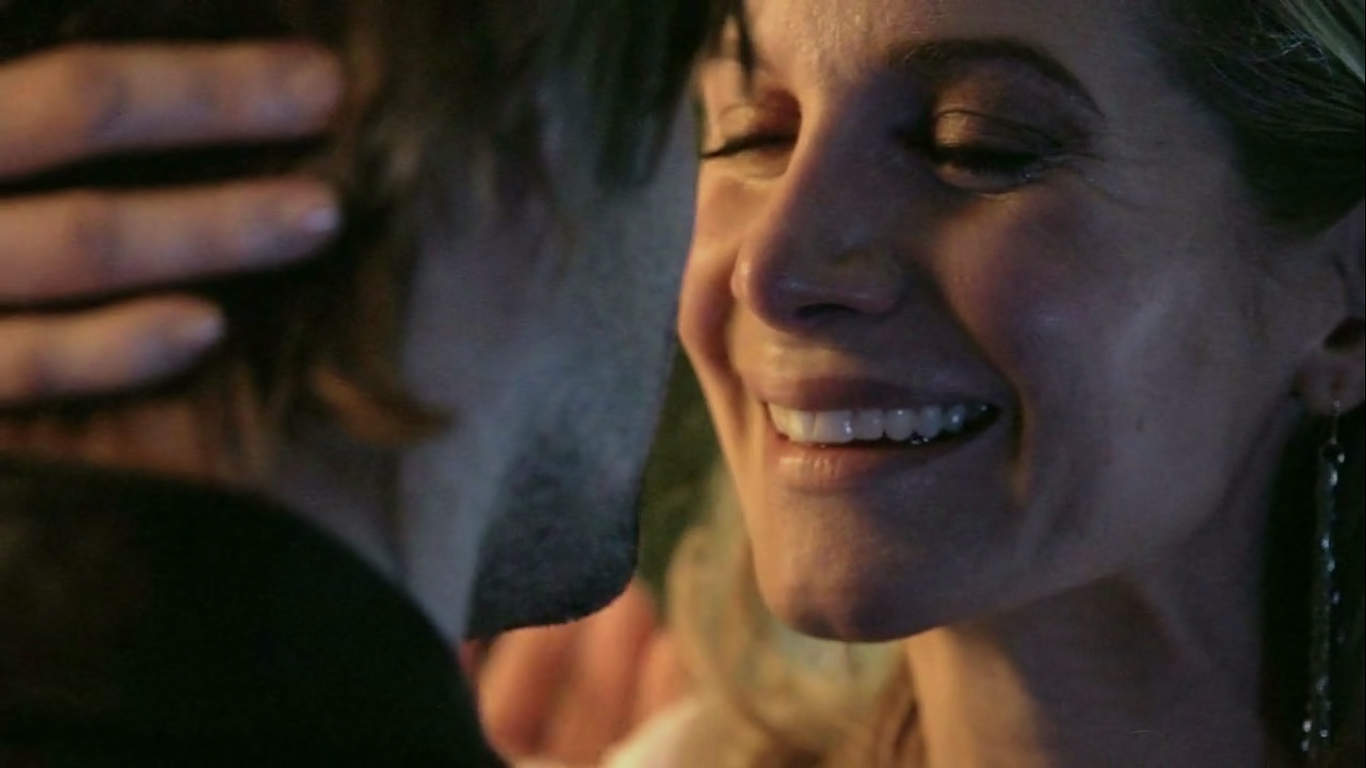
     However. And here comes the smidgen of praise. There were a few moments in the flash-sideways that really did come together and act as remembrance to some of the show's past, even if they did bring up a few more logical inconsistencies. Claire giving birth to Aaron at Charlie's concert (implying that Aaron has to spend part of the afterlife in his mother's womb and must pass on as an infant), Sayid saving Shannon, and most importantly for me, Sawyer and Juliet meeting once again. Their reunion scene gives me happy tears.

Conclusion
http://images2.wikia.nocookie.net/__cb20100531125004/lostpedia/images/d/d6/6x17_FatherAndSon.jpg
"Christian Shepherd". I should have seen this coming.
Despite all that gumph, I do think that The End is entertaining, at least. Its religious elements and the logic of some of its claims are fundamentally silly and for me it was a fatally unsatisfying end to such a wildly diverse yet fascinating TV Show. While we got a lot of wonderful, heart-felt moments that did pay homage to the series' best times, we also had to suffer through a lot of bullshit and plot holes inbetween. I never expected the finale to be perfect, and I know that it couldn't have answered every question and satisfied every character. But I wish that it had been braver, said new things, taken more risks. I wish that I was disappointed by something that would later be seen as a hidden masterpiece, rather than something that was all flash at the time with very little to offer after the fact.
     But really this finale had one role in mind, and it's clear from the final scenes in the Church what that role was. Despite how patronising it may feel, the writers are giving us as the viewers a clear message - no matter how much you enjoyed watching Lost, however much you loved or hated the characters, that this was the end, and that it's important to move on without it. For those who watched this show from the beginning, I assume that that's a much more powerful message, and even if you forget all of my nitpicks, the finale manages to deliver that message with all the potency it feels that it deserves. And the ability to do that is what this awesome, awesome show will be remembered for.

Thanks.

NEXT WEEK: The epilogue to our tale, as we meet The New Man In Charge. (Tis gonna be a shorter article, the special is only about five minutes long. I might use the rest of that article to discuss my future with Lost on this blog.)

Wednesday, 1 May 2013

Review: Lost 6.15: Across The Sea

http://images1.wikia.nocookie.net/__cb20100512180630/lostpedia/images/b/b7/6x15_TheHeartOfTheIsland.jpg
Five and a half seasons, all for a hole in the ground.
Lost - Season Six, Episode Fifteen - Across The Sea
Written 10/3/13

The side of the Lost fandom desperate for answers had waited patiently to get some decent background for Jacob and The Man In Black and their long feud. A week after the painful events of The Candidate, the writers explored this with one of the series' few whole flashback episodes. Across The Sea contains no original material with any of the main cast, and instead takes us back 2000 years to give us a backstory that feels ripped straight from Biblical lore.
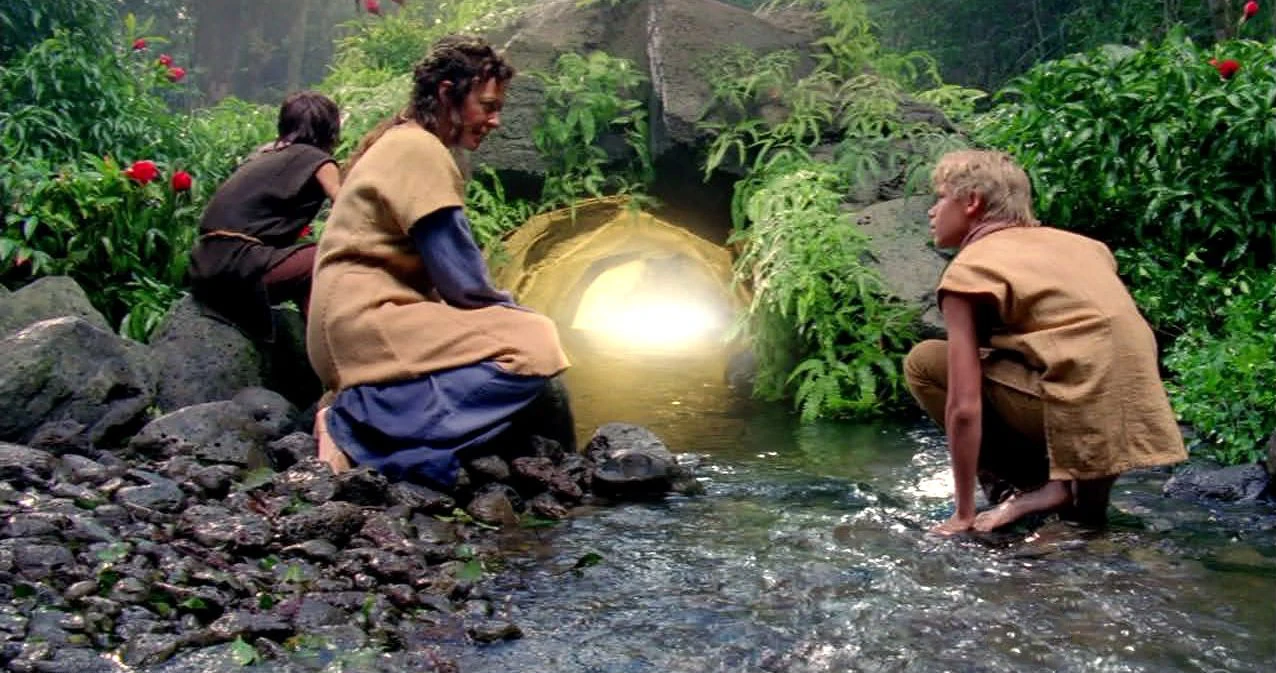
     A Roman woman washes up on the island, gives birth to twins, and is then brutally killed by a strange woman. The woman takes the two boys, Jacob and his unnamed brother (who likes to wear black), and raises them as their Mother. She tells Jacob and the Boy In Black that they're there to protect The Source, a light at the heart of the island in a magical cave. While Jacob is a certifiable Mommy's boy, his brother rejects Mother's attempts to smother the truth about his origins and wants more than anything to leave the island. He goes off to live with another group of crash survivors, and when he creates the Donkey Wheel to leave the Island, Mother is implied to go all Smokey and kills everyone besides him. Angry that his crazy mother has squandered his dreams, he kills her in a fit of rage. In retaliation, Jacob throws his brother into the Light, turning him into the Smoke Monster.
     To understand a lot of the reasons why the magic light at the heart of the island annoys me so much, you have to remember what Lost was originally about. It was a group of being coming together in weird and unusual circumstances - it was a battle between science and faith, between the explainable and the inexplicable. And after all this time, the reason why it all happened, was because Jacob wanted some people to replace him as the protector of a magical light in the ground. It's just... silly. So silly that it feels insulting - after five or so seasons of compelling storytelling, all of that anguish was fobbed off on a magic light?
     But it's more than that, too. At the time I didn't understand why, after the MIB's evil actions, we were given a story that so obviously made us sympathise with him in the past. The MIB is a dude who was denied the simple right of knowing about his past, his home. He's someone who has felt out of place for over 2000 years. He's also inqusitive, curious. He embodies all the traits in this episode that I can sympathise. Jacob is a gullible, gormless bastard who, despite having the same upbringing as his brother, doesn't question her once. There's not even the hint of teenage rebellion, he just goes on to be a psychopathic man-child who carries out his insane foster mother's beliefs to the letter because he wants to.
http://images4.wikia.nocookie.net/__cb20100512130960/lostpedia/images/d/dc/6x15_HereComesTheMonster.jpg
You're telling us that Smokey is because some guy
was thrown into said hole in the ground?
      Credit where credit is due to the cast of this episode, especially the recurring guest stars Mark Pellegrino and Titus Welliver. Welliver especially manages to portray an MIB that contains both the madness that he would later go on to inhabit and the frustration of his upbringing. It's hard not to think that that the actors were on board with my interpretation of the episode, especially as Pellegrino's Jacob is a lot more gormless without the 2000 years of chessmastery. Allison Janney's Mother also sells every line with a conviction that makes the silliness of the script shine through nicely.
     Across The Sea takes the mythology of this wonderful series and gives it an enormously silly bent while appearing to take it entirely seriously, not seeming to realise that it's painting the heroes and villains in very different lights. Thanks to Across the Sea, I sat through the final few episodes rooting for the MIB to win. Even if MIB getting off the island as Smokey would have caused a lot of problems, they were caused almost directly by the actions of both Mother and Jacob, and for me that just screwed the series up in quite a fundamental way. It was grandiose in its ambitions, but all it did was cause problems for the series that it didn't give itself enough buffer room to recover from.

Thanks.

NEXT WEEK: Jacob returns one last time to tell us What They Died For.

Monday, 4 February 2013

Review: Doctor Who 2.11: Fear Her

Much like Queen Bess, this blog has two birthdays - December 7th, which denotes my first published review, and today, which denotes the actual creation of what was then Audenshaw Reviews. I usually put less pathos on the second for various stupid reasons, but this year it's happened to fall on one hell of an episode. So, as we celebrate my three-year-long hobby, we also take a look at one of the most universally hated stories in NuWho this side of Love and Monsters. (Which I reviewed last Summer, so no complaining.)

The real ceremony somehow managed to be cooler
than this.

Doctor Who - Season 28, Episode Eleven - Fear Her
Written between 13th and 18th of January 2013

It's hard to put a finger on what exactly went wrong with Fear Her. The concepts, at least at the beginning, are fundamentally sound, but they tap into several things which are quite risky - mainly making reference to future cultural events and by having a large part of the episode revolve around a child actress. Fear Her's irreverent jabs at the 2012 London Olympics, and Matthew Graham's "Power of Love" solution, push a story that was already pretty lightweight into the dark, demonic depths of mediocrity. And that's pretty much the worst crime you can come up with for a show like this.
     Because really, there's nothing that's too bad about this episode. Ten and Rose are still a little smug here or there, but they're generally tolerable for the most part, especially with some small moments between them discussing The Doctor's past. The main beef of the episode comes from Abisola Agbaje, who plays Chloe Webber. While I'm sure that she's a lovely girl in reality, her acting is piss-poor and it's no surprise that Fear Her was the only thing she ever did. Her line reads are unconvincing and she turns what could be the rather scary prospect of an alien-possessed little girl into something innately laughable. It's probably a fault of the direction and just the general environment, but this story hinged around having a competent child actor and unfortunately that just wasn't the case.
     The story follows The Doctor and Rose as they land in 2012 London, on a small cul-de-sac in which children have been disappearing. It's the run-up to the Olympics, which will be passing the street in a few days. They find in one of the houses a small girl named Chloe Webber, with the power to absorb people into drawings. She's been possessed by an isolus, a space-dwelling plant that has been seperated from its mother and its four billion brothers and sisters, and so is using its amazing reality-bending powers of loneliness to get new friends. Just when they think everything's sorted, a series of stupid mistakes gives Chloe the chance to draw The Doctor, leaving Rose to have to stop her from drawing the entire world. Eventually, Rose is able to use the passion and spirit of Olympic fever to restart the Isolus' pod, and the creature returns home.
      The idea at the core of the story is one that I'm not very happy with, if only, ironically, for its lack of imagination. We're supposed to accept that these tiny little wisp-like creatures have the power to morph reality in quite a profound way, and yet can't even get a tiny spaceship off the ground. I suppose the idea of it all is that this is an alien race powered by love, which is a nice thought but doesn't exactly help me to maintain my suspension of disbelief. It's a bad idea, badly executed, and next to the sub-par acting it causes the story to spiral into the mess that it becomes.
Klow-ee Webbah
     Three years ago I started this blog because I wanted to have a place to write about things without feeling like I was being one of those annoying Facebook people. Now, I’m still here, still writing, perhaps not what I thought I’d be writing about, but regardless at the end of a mountain of work which is longer than most short books. (And, in hindsight, I wish I’d used the time to do that instead.) When I look back, I wonder whether it’s all bee worth it. Nobody has really ever read any of my reviews except out of a strange feeling of pity, and the only commenters here are few and far between. It is simply, in the end, a question of whether I should continue writing even when I know that nobody is ever going to injest it. And the answer, resoundingly, is yes. Because it lets me contribute something, no matter how small. And for me, at least, that's important. Fear Her wasn't the worst story in Who history, but it had such flaws on every level that at the end of the day, it might as well be.

Thanks.

This review is dedicated to my friend Asher, who passed away on the 17th January. She was someone whose extraordinary kindness and good humour made me the man I am today, and my sympathies are still with her family and closest friends. May she rest in peace.

Monday, 31 December 2012

Review: Doctor Who Classic: The Horns of Nimon

Happy New Year, everyone. 

Soldeed has just read this review. And he's very cross.
Doctor Who - Season 17, Story 5 - The Horns of Nimon
Written 6/10/12. 

I like Bad Doctor Who. I'm a sucker for the bad acting, bad design choices and downright terrible plot holes, and nothing makes me laugh quite like an absolute catastrophe. Time-Flight is a camp classic, Time and the Rani makes me laugh like nothing else and Timelash, well, that's just awesome. So when I heard of this story's horriffic reputation as the shodily made filler for an story that was never produced (Shada), I was looking forward to ending the series on a camp high note of mischeivous fun. What more can a man ask for? A lot more, it would turn out. My responses as I go through Tom's era, however topsy turvey I may be doing it, aren't encouraging, and this story pretty much nearly wiped out any enthusiasm I had for it.
     The best thing in the story is the semi-villain, Soldeed, played by Graham Crowden. He stands as a Minos in a story filled with badly executed references to Greek Mythology, and the campyness with which he plays the role delivers the story's few laugh-out-loud moments. Of course most reviewers would criticise these lines, rightly, as some of the worst deliveries in the program's long history, but for me they came as a few glorious moments of entertainment in 100 minutes of solid tedium, stupidity and disappointing lack of effort. Crowden at least seems to know how bad the serial is, and seems to be hamming it up just so he can get something out of it, and if I was in the position (and I have been in similar positions in the past) I couldn't blame him.
     The story's main influence is Theseus and the Minotaur, the six tributes from Anthea being sent by Minos (Soldeed) through the Labyrynth to feed the Minotaur (The Nimons). I can see where this is coming from, and it would be a decent base for a story if it wasn't so shoddily executed. On the face of it, the story's adaptations to the Doctor Who format could be seen as rather clever - K9 is used as the ball of golden wool to guide the way back through the maze, the maze is constantly changing its dimensions to avoid people escaping; it could have been something quite innovative. But it's acted and directed in such a lacklustre style that doesn't even attempt to provide any sort of tension or excitement... I just got bored. I very rarely get bored by Who, this is a new thing for me.
So much fiddling around in the TARDIS for no
reason in this season...
     If there was a cutting off point between hope and despair for me while watching this story, it came in the third episode. There was a shot that lingered rather unnecessarily upon the back of the Nimon's head, and when the actor reached up, the helmet came half-off. Why was that left in? Why didn't they catch that in the recording and do it again from a different angle? It wasn't even that long a scene! All it amounts to is the fact that obviously the producers on this story didn't actually care. At all. The reason for this is probably that Adams was driving through the story so he could get to his "masterpiece" story Shada - a story that, due to another one of Who's famous strikes, was never made. Nevertheless, it feels like such a bad work ethic - it doesn't matter that this one comes out crap, the next one'll be fine. No, that's not how it works. You need to put effort into every single one of your stories. The Art Department definitely tried their damned hardest every single time, I don't blame them, but I do blame this story's lacklustre acting, directing, music and most of all, the damn script editor for not ironing out the creases.
     I came into Horns of Nimon hoping that it would be bad in the right way for me to get the most out of it, but even on that front it disappointed. It had a few decent ideas that would have worked well, but their executions as well as the overall execution of a poor script meant that this project was doomed from the very beginning. As it stands, this story alone is enough to see why Graham Williams would go on to leave the position of Producer and hand it over to one of the crew, John Nathan Turner, who would go on to make Who more powerful, insightful and at least, when it was bad, more fun than this.

Thanks for nothing, Nimon.

NEXT WEEK: I pick up where I left off with Tennant and look at Girl In The Fireplace.

Monday, 24 December 2012

Review: Merlin 5.12-13: The Diamond of the Day

I'm sorry. I'm emotional right now, and I shouldn't really get emotional at a show like Merlin. I was never particularly fond of it, but it was like that little nick you have in the edge of your desk that you're not quite sure is very good for your writing surface but that you feel a bit empty without. I never expected Merlin to be good but I did have this tiny niggling hope that it would all turn out in the end. I can, of course, trust these asshat writers to completely dash that hope, and while in some respects this finale was everything we've asked for, in others it was a cop-out of truly epic proportions that has made sure this seires will go the same way as its spiritual predecessor, the terrible Robin Hood.
Merlin gets old for no reason.
     Morgana, now in the knowledge that Emrys has been Merlin this whole time, marches her forces towards the battlefield of Camlan, where Arthur is prophecised to die. She's used a magic slug to suck away Merlin's powers, forcing him to leave the battle and go to the Crystal Cave. There he has a chat with his spirit Dad and, while watching Arthur's forces go bravely to Camlan, he looks into the light and is recharged as an old man for some reason. On the battlefield, Mordred stabs Arthur with a magic sword and gets Excalibur to the gut in return, but Merlin's deus ex machina isn't in time to save him. He ages down and explains to Arthur all about his magic. As they try to make their way to a place where Arthur can be healed, Arthur slowly comes to terms with Merlin's loyalty and bravery over the past five series. They meet Morgana, whom Merlin stabs with Excalibur, but then despite Kilgarrah's help, Arthur dies in Merlin's arms and Gwen becomes Queen. And then Merlin is a hobo in the Present. Or something.
     Morgana and Mordred worked well together, but their characterisations were completely shoved to the side to make way for the main plot. I was suprised that Merlin has never done the "protagonist loses his powers" thing before, and I was a bit disappointed that it couldn't have had an episode of its own to pan out instead of being sidelined into the end Prophecy, which itself hasn't had the right buildup because of that stupid four weeks of Brainwash!Gwen.
     Merlin telling Arthur was, I'll admit, well done. Arthur reacted how he really would react in that situation, and it was good to see them smoothing over their own ignorance of character development so that Arthur could finally come to appreciate all that Merlin has done for him. It seems an eon ago that this was a cheesy monster-of-the-week show in the vein of Smallville, and this was the confirmation of just how far Merlin has come. And then, then there was something else. Something that told me the exact opposite.
     There were many ways for Merlin to end. The one we all expected, the one that made the most sense, was the one in which Arthur would go on to rule, with Merlin by his side, and create a more free and just kingdom for all. It's something we've taken as granted over these past five years, that while the plot may be swerving away from the Legend, that we'd always end up there by this episode. The writers don't know when to just do what needs to be done, and so for whatever stupid reason, they chose to end the series by having Arthur die and Merlin live forever watching over his body. And that really, really just angered me to the point of blind rage.
Morgana gets a pretty shit death, to be honest.
     I was fine when Lancelot snuffed it. When Mordred randomly grew up far faster than he should have. I was ok when Uther's death was handled in the worst possible way, and I was less annoyed when Merlin himself went out of his way to stop Magic being accepted. But to end the series with Arthur dying, with the added circumstance that he is pretty much gone forever, and that Gwen will reign and will probably have the same views on magic that Arthur had... it's pretty much the biggest fuck you that the writers could come up with without actually saying it.
     After five years, I'm glad to say that the finale was, for the most part, enjoyable. It had good characterisations, good story, nice themes... until, regretfully, the last ten minutes. Those last ten minutes took everything I ever liked about Merlin and threw it all away, choosing to go out on an ending that was less appropriate than anything that LOST or Ashes To Ashes could ever accomplish. The end of the BBC's series of high-quality, Saturday tea-time Family Dramas has come at the cost of the last bit of integrity that Merlin ever had, and it's a horrifically tragic way for it to go.

Thanks.