Showing posts with label Opinion. Show all posts

Friday, 13 July 2018

Shadow of War-Bore: Fight Pits, Shadow Wars and How To Kill An Ending

Very mild spoilers for Middle Earth: Shadow of War up ahead, but hopefully no major plot twists.

The game's final act devolves into siege and defence missions.
Shadow of Mordor took a lot of people by surprise; a game that broke a long trend of poor video game adaptations set in the world of Middle Earth, and which combined elements of other popular franchises to create something greater than the sum of its mechanics. After briefly dismissing it on PC because it didn't run very well, once I got the game on PS4 I was addicted - I poured over 50 hours into that sucker, and eventually had to tell myself to stop. Over time the longing wavered, but recently I decided to soak up those last few trophies and soon I was back in love. Middle-Earth: Shadow of Mordor is an incredibly fun time simply because it does a lot right at once - an immersive and well-crafted world, the genius Nemesis system, and movement and fighting mechanics that are easy to get good at and hard to master.

So I was excited when, in 2017, the sequel, Middle-Earth: Shadow of War hit store shelves. Not soon after launch the game was mired in controversy over its predatory lootboxes and microtransations, and I decided not to purchase the game until I could do so without sending anything to Warner Brothers. As of May 8th, the mechanism for those microtransactions has been removed from the game entirely, with an overall of the game and its final act coming later this week. I picked up the game a few days ago and, breezing through the story, I find myself wading through Act 4: The Shadow Wars. This, over all other things, will be the topic of this article. I could talk about the game's differences in tone, its new clunky mechanics and its major divergences from Tolkien, but none of those things have sapped the joy from my spirit as much as the game's final chapter.

One of Shadow of War's biggest selling points was the restructuring of its Orc hierarchy from a loose oligarchy of five warchiefs into a series of Fortress siege-and-defence missions, with each related mission requiring the input of a lot of time and resources. After the game's major twist in Act 3, the rest of the game become a long series of these missions, as the forces of Sauron repeatedly attempt to take the four fortresses that protagonist Talion has conquered. If the required fortresses are defended, the stage progresses; if they are taken, then progress is linked to taking the fortress back. The most efficient way to take back a fortress is to remove the Warchiefs and replace them with your own, allowing you to waltz in and take it back in a breeze.

Fight Pit missions are unskippable and boring to watch, and yet
form a backbone of maintaining your army.
A big feature of both games is the ability to take Orcs you have brainwashed to your side and have them ingratiate themselves with an enemy Warchief in order to betray them down the line. In Mordor, this was accomplished by having said Orc succeed in one of the game's standard "Nemesis" missions, in which they would have a fine feast, or ambush an enemy camp, or hunt a beast. While those styles of mission still exist in War, the act of making your Orcs into spies has now fallen to the Fight Pit missions. Fight Pit missions pit one Orc against another in a three-minute unskippable cutscene, and while mostly harmless at first are easily the worst thing about this game once in the Shadow Wars. Act 4 of the game requires you to defend your fortresses from 20 individual assaults, and each failure to defend adds a siege to that number. I am seven sieges in, and I failed five of them for various reasons. As a result, I have sat through over 90(!) of these Fight Pits in siege preparation alone, not counting the ones I watched in Act 2, or the challenge fights you inexplicably have to finish in order to have a full roster of Warchiefs to defend your fortress properly.

The ending of Act 3 was a shocking twist and, had the credits rolled on an uncertain future for Talion, it still would have made for a fun and engaging addition to the series. Shadow Wars feels tacked on and trite; the narrative talks of Talion fighting for decades to disrupt the armies of Sauron, but it feels more like the game stretching out playtime in a way which isn't fun and isn't dynamic. Manipulating the Nemesis system in Mordor was part of the fun of the game; it was engaging and even when I had to grind through it for a trophy, it was still a good time. Preparing for a siege in War is a dull slog. My most efficient method of removing all of the Warchiefs is to give each of them two Spy Bodyguards, which usually sees me watching twelve Fight Pit cutscenes in a row and then doing six identical Betrayal missions in a row. I then have to watch six more Fight Pit cutscenes to install my Warchiefs, hoping that at some point I didn't recruit too many Orcs and the game had suddenly decided to wipe one of my Spies from existence for no reason. (This happened three times.) This lasts up to an hour, at which point you are on to the next siege, and the next threat of tedium.

Of course, this is simply the most efficient method of preparing for these sieges. You could finish off the Warchiefs by doing their individual missions, which while still repetitive do offer more of a challenge. But even with these missions, you still have to sit through six fight pits, and you miss out on the few benefits that the Fight Pits have - weeding out the weaker Orcs in your army and buffing the ones who make it through. It is stupid that these missions are so beneficial and yet so damn tedious. Not only did the developers artificially extend the runtime of their game with this exploitative and soporific crap, they made the best mechanism to traverse it literally the most boring thing in the game. The controversy around Shadow Wars and microtransactions has enveloped this game's potential, and for the majority of players their experience ended either after having sat through this monotonous void of fun, or having given up somewhere along the line, dejected and disappointed. At the moment, that last one is me - I will go no further.

I don't even know if that counter does anything...
I really wanted to love War as much as its predecessor. Ironically, Mordor saw me playing long after the main story had ended because I enjoyed the gameplay so much. Now here with War I feel like I'm in a limbo state - not particularly enjoying myself, but still invested in seeing this thing through that I can't stop. On the way, I'm finding that the length of Shadow Wars is not its only problem. All of the little shortcuts that War has made in terms of its variety of Orcs, its ambient dialogue, it all gets highlighted when being repeated over and over again. Shadow of War doesn't just manage to kill its own ending; it manages to make a good game painful to sit through. I will not finish Shadow Wars. And you shouldn't either.

Thanks.

Monday, 28 December 2015

TV Shows I Watched In 2015

It's that time again, folks. Here is a list of the shows that I watched this year, some of which I watched live as they came this year, and some of which I just happened to binge and thought I'd mention here. Spoilers everywhere.

This image is, in itself, a spoiler. Unless you don't
watch the show. Image from sidekickreviews
Game of Thrones - Season 5, HBO/Sky1
Written 15th August.

Another season of Game of Thrones went by, and along with it another series of controversies, odd character decisions and an unhealthy obsession with victimising women. The show managed to cover pretty much all of the most recent two novels in G.R.R Martin's A Song of Ice and Fire book series while also going more heavily off-book than ever before. This led to, as in last season, a lot being left out, as well as characters being moved around, killed off and generally manipulated in such a way as to confound anyone who knew the plot of the books.
    The best and most amazing storyline was also the one that went most off-book - fresh off the heels of killing his father, Tyrion Lannister is smuggled to the continent of Essos and is encouraged by his saviour Varys to seek out Dragon Queen Daenerys Targaryen. Along the way he is kidnapped by exiled servant of the Queen, Jorah Mormont, who happens to be heading in the same direction. Unlike in the books, however, Tyrion actually makes it, leading to several scenes of Daenerys and Tyrion together. A lot of the frustration with Dany's storylines in the first four seasons was their loose connection to the plots going on in Westeros, and getting to see Tyrion in that part of the world made the mythology tie together more physically - as well as putting my two favourite characters onscreen at once.
"Bring it." From Wikimedia
     Over in controversy corner, and the show continued its trend from last season of exploiting violence towards women and girls. Sansa, who at this point in the books has stopped doing anything, is shipped over to her home in Winterfell, where she becomes the wife and plaything of the disgusting Ramsay Snow. After spending four seasons building her up and delivering her the agency she always wanted, her character was derailed in a plotline designed to act as a redemptive arc for the tortured Theon Greyjoy. This culminated in a horrific rape scene, thankfully not showing the act but regardless framing the scene by making us watch Theon's face as we hear Sansa's terrified screams. This carries forwards to the storyline in the North, where, again off-book, Stannis Baratheon decided to use his daughter for a blood magic ritual, and again we get to watch his face as we hear his daughter's genuinely blood-curdling and upsetting screaming. The list of reasons why this doesn't make sense is long, but notably: killing his daughter makes half of his mercenary army rout the field; his wife kills herself because of her guilt; and now the guy who believes himself the "rightful king" has no heirs whatsoever. Which is why it didn't happen in the books.
     Now with the death of Jon Snow (or not, it's an uncertainty carried over from the book), and a great deal of material not covered by the series (leaving a few notable holes), the future of Game of Thrones is uncertain. HBO has guaranteed that the show will get another two seasons in order to conclude its story, and they've apparently been given notes from Martin himself. Despite all of the horrible ways that David Benioff and D.B. Weiss like to hurt female characters and mess up the story, I still enjoy Game of Thrones, and I want to see it get better.

Rick's group approaches the Alexandria Safe Zone.
From Wikia
The Walking Dead - Seasons 5B and 6A, AMC/Fox
Written between 15th August and 27th December.

The fifth season of The Walking Dead, now finished, can only be described as... sedate. Which is an achievement, for a show which is pretty sedate anyway. 5A had a few interesting moments, but its story progression was fairly slapdash and lacked focus. That lack of focus continued into the second half of the season, with Beth's death glossed over with the death of brilliant supporting character Tyreese. Thankfully, the season picked up again, following our characters into the Alexandria Safe Zone. Seeing our characters back into a suburban environment was really interesting, and would have been even better if they hadn't bogged it down with an off-book romantic subplot. I did however love Rick's descent back into savagery - it felt like a logical progression that after he killed two entire groups (the Claimers at the end of 4B and the Hunters in the middle of 5A) he would flip out upon being asked to trust a group of people who had stayed out of the whole thing. The final scene of the half-season, with Morgan finally meeting Rick again after two seasons, was the icing on the cake.
     I think one of my problems with The Walking Dead, starting this year, was the fact that there appears to be no end in sight. That's not a specific problem with TWD - this occurs in all fiction in this genre, with a number of different possible endings, none of which are going to be very satisfying. It doesn't really help that the show, like Game of Thrones, is adapting its source material somewhat faster than it can be produced. Five years into the show, we're seven years into the comics, and that's not even taking into account the extra plots grafted onto the show's canon. The thing that saved Lost's last few seasons was a definite ending point, and that gave the series a sense of purpose going forward, and a guarantee of sorts that everything would come to a head. Season Five proved that this is exactly what The Walking Dead needs, and what it currently sorely lacks.
     That was, of course, until the beginning of the Sixth Season in the Autumn, at which point the show suddenly shot up a gear. Having spent 5B establishing the people of Alexandria, their politics and the threat of a chaotic group known as The Wolves, 6A set about providing key character development, juicy plots and a refreshing pace. By far the saving grace of this season was the arrival of Morgan, whose philosophical differences with the rest of the cast allowed for some realistic conflict that didn't just descend into painful, "it's inevitable that we're all going to die" nonsense. It also provided quite possibly my favourite episode of the entire show, the phenomenal parable that is, "Here's Not Here" which has Morgan in the spotlight. With these things in mind, I'm a lot more confident about the show's future, and I hope that this movement out of mediocrity lasts for a long time.
Insert joke about the West Coast here.
From Forbes

Fear The Walking Dead - Season 1, AMC
Written 3rd September.

For some critics, this six-part miniseries preceding Season 6A of the parent show travelled far too slowly. I am not one of those critics. There is a certain lackadaisical pace to Fear which it has inherited from The Walking Dead, but there are several things it holds in its favour - characters we haven't been slugging it with for five years, the new concept of watching the apocalypse happening from the start, and the sense of tension as society slowly collapses. So much of The Walking Dead consists of wandering around empty countryside, with tension only mounting when the characters decide to explore an abandoned structure or something like that - here, the tension is constantly building as the world basically crumbles around our knowing protagonists. And that, for me at least, is more worth tuning in for than seeing what weird thing Rick is gonna do this week.

Hey Nicky, you so fine, you so fine you blow my mind
Hey Nicky! From zimbio
Orange Is The New Black - Season 3, Netflix
Written 15th August.

Where do I begin? I tried my best to avoid the hype train on this Netflix series set in a women's prison, mainly because I expected I'd have a great deal of Hype Backlash. Now that I have seen it... what was I thinking? This show is just as awesome as everyone said it was! Originally focusing around rich white girl Piper Chapman and her year in prison on drug-possession charges, the series opens up into a lots-and-lots-of-characters ensemble drama which takes the format of Lost (main plot in the present with an character-specific flashback each episode) and puts it into a format which is deliberately designed around binge-watching. It also manages to portray important issues like LGBT rights, trans discrimination, police and government corruption, sexual abuse and many more in a responsible and innovative manner. (With the exception of the show's solid refusal to say the word "bisexual".)
    I love this show for so many different reasons. The characters are all well developed, with everyone (except Dee, fuck Dee) getting several shades of grey to their characterisations. My favourite character is probably Red, played by the amazing Kate Mulgrew (better known as Captain Janeway). While I actually did enjoy Piper's story in the first season, I agree with the common idea that her storyline is less interesting as time goes on, and I think it's a sign of great writers that the show evolved to focus on a wider set of characters. I'm really looking forward to Season Four and I'm glad that I finally joined the bandwagon.
Sarah and her clones face off against Project Castor.
From screenrant

Orphan Black - Season 3, BBC America
Written between 16th August and 3rd September.

Despite some shaky moments, the third season of Orphan Black continued to demonstrate Tatiana Maslany's immense talent. The appearance of male clones played by Ari Millen threw several new factions into the mix, and proved to take the series in directions that were both positive and negative; positive in that the male clones allowed our sisters to finally discover their genetic origin and advance the mytharc, and negative because these new male characters just weren't as interesting as the pre-developed relationships. This made the beginning of the season feel a little messy, and the varying subplots didn't really mesh together until the very end.
     This season's main theme, tied into all of its storylines, was the importance of family - both actual family relationships and those forged in friendship. Alison ran for head of the local Schools board, funding it by running drugs through her mother's soap shop. Pregnant Helena was captured by the male clones (Project Castor to contrast the female Project Leda) and eventually rescued by Sarah. Sarah and her adopted mother Siobhan then followed several clues in order to find both Castor and Leda's genetic origin - Kendall Malone (Alison Steadman), Siobhan's birth mother, a genetic chimera with strands of male and female DNA.
     Season 3 was messy in places, and it didn't really find its footing until a few episodes in. But it's still not a series that can really be faulted. Tatiana Maslany is still the best actress working on television today, no question, and that didn't change. I can't really complain about the uselessness of the Castor storyline from the beginning of the season, or the random new love interest given to Cosima, when everything with T-Mas was so brilliant. From the discovery of the genetic original, to the introduction of new clone Krystal, the treatment of Rachel as she recovered from a pencil to the eye, and the amazing silliness of Alison's drug business, I kept finding something to love. I can't wait for Season Four.

Gemma Chan as Mia. From Channel Four
Humans - Series 1, AMC/Channel 4
Written 6th September.

By far this year's biggest surprise was the C4/AMC coproduction Humans, adapted from a Swedish series about an alternate Present Day in which human-like robots known as Synths have taken a valuable place in human society. Originally a focused character drama looking as the Hawkins family, the show spiralled out into a rich mythology and backstory while never losing that skill with its characters. In rifling through all of the ways in which robots have been treated in science fiction, the show managed to develop its cast of humans and sentient synths as a large set of distinct, well-developed and sympathetic by Episode Two. Add in phenomenal acting turns by Katherine Parkinson, Colin Morgan, Gemma Chan and newcomer Lucy Carless, and you've got one of the best newcomer shows of the year. (See here for my longer article on the show.)

These are two attractive people. From ibtimes
Outlander - Season 1, Amazon Prime/Starz
Written 6th September.

Carrying on the recent rise in online-only shows, this year I also watched the first season of Outlander, a show only available in the UK via Amazon Prime's exclusive premium on-demand service. Adapted from the series of books by Diana Gabaldon, the show follows 1940s army nurse Clare Randall as she is thrown back in time to 18th Century Scotland. There she is taken in by the Clan Mackenzie, a local lordship in opposition to the British throne, and she falls in love with the strapping Jamie Fraser. Forced to fight the evil ancestor of her 1940s husband, she must find a way to get home.
     Outlander often struggles with its balance of historical drama and sci-fi leanings. Like its obvious protegĂ© Life On Mars (which actually succeeds the publishing of the books which inspired the show), it's often difficult to remember the fact that Clare is displaced out of time, at least once the "Fish-out-of-water" humour runs dry. Luckily, the plot is well-placed enough that a lot of the time you don't much care, and those sci-fi elements do raise their heads again. I did find a lot of the show's nudity and sex scenes a tad excessive (this show has more nudity than Game of Thrones, although it's usually a lot less bloody and violent) and I found it questionable that the two main villains of the this first season were both implied to be gay (and the same was not true of any other character.) But despite concerns, there's something strangely compelling and relaxing about the escapades of Clare Randall, especially in the second half of the season, when the series' mytharc begins to bear fruit.

Even on the poster it looks like she doesn't wanna be here.
From the BBC
Doctor Who - Series 9, BBC1
Written 27th December.

After being pleasantly surprised by Series 8, I had a lot of hope for my favourite show. Moffat was still here, of course, but there was something of a development in his writing style that seemed to me to be less about making offensive jokes and more about actual character development. Series 9 was very much one step forwards, two steps back. A lot of Moffat's old tropes returned, including an arc which didn't really go together very well, and the habit of retconning important parts of Doctor Who's history. However, the show did go the extra mile in taking some steps in new directions, especially when it came to the Time Lords.
     The most notable differences in this season came with the show's new format and aesthetic. Most all but two of the episodes in the season were organised as two-parters, which brought to mind the format of the Sarah Jane Adventures. I had hoped that it would allow a lot of the stories to become more developed, as they were approaching the length of Classic serials, but that didn't really come to pass as a lot of the time each individual part had a very different tone, pace and occasionally writers than the other half, meaning there was something of a lack of tonal consistency. This tied into another aesthetic shift for the show, with Moffat falling back into his misguided desire to make the show "cool" and "modern", exchanging the Sonic Screwdriver for a gaudy set of sunglasses and Peter Capaldi's Pertwee-esque costume for a hoodie and trainers. And the less we talk about that electric guitar, the better.
     Clara finally got to leave this series, although they had to ruin it again by giving us a passable if noble departure, followed up by a less believable resurrection and an open-ended departure off into space. Series 8 had her developing from a normal-ish human being into a character somewhat obsessed with taking on the responsibilities and identity of The Doctor, and that development did continue here, albeit a great deal more slowly. Unlike the previous season, which presented this as a noticeable flaw which Clara really shouldn't be working towards, this year it was just an accepted fact about who she was, including during both of her exits. I like that she carried on that development, but I still think that it would have been so much better to just let her leave in Last Christmas like she was supposed to.
I am going to break that guitar. From BBC America
      And, finally, this year was struck with a number of arcs and recurring characters. From the second episode we got not-so-subtle mentions of "The Hybrid", a retconning Time-Lord prophecy which spluttered to an unsatisfactory ending in the finale. Part of that developing arc was the reoccurring face of Maisie Williams as Ashildr/"Me", who didn't really impress in the role, with the exception of a more subtle turn in The Woman Who Lived. These recurring aspects did tie the season together into a cohesive whole, but the result didn't really gel very well because of the vast changes in tone and the fact that most of it is brushed aside for an arc with the Time Lords in the finale.
     For a series that tried very hard to be different, it's a shame so much of it failed in the execution. For the first time we got two female writers and both of their episodes were slated by fandom, even though they were two of the best episodes of the season. The Zygon two-parter, while dangerously stupid in its politics, was at least trying to be relevant and interesting science fiction. There's a sense of stuttering, of a car failing to start repeatedly. The question is, can Doctor Who recover before it burns out the clutch? And, if rumours are to be believed, is next year the last outing for both Capaldi and Moffat?

At least Miko's story turned out not to be as terrible as I thought.
Heroes Reborn - Season 1, NBC
Written between 30th October and 27th November.

I had a lot on the table for Heroes Reborn. Despite a lot of my misgivings about its parent series, I was still of the opinion that it could have really done with one final season to conclude the story and the journeys of these characters, as well as to explore that last cliffhanger in which the existence of Evolved Humans (now "Evos") is now a public matter of fact. When Reborn began I wasn't very impressed with the the way it reused a lot of the same character archetypes and themes to say a lot of the same things, but as the series went on I began to see how tightly the story has been written, avoiding a lot of the pitfalls that Heroes itself often fell into.
       Instead of acting as yet another cycle of Heroes' repeating storyline, the focus of the series around the aftermath of an orchestrated terrorist attack means that this Universe feels a lot more adult, with characters having to face the consequences of their actions as and when they happen. There are enough old faces to make the show still feel like you're watching Heroes, but for the most part the injection of new blood has very much updated the show, developing it past its mid-noughties chic and neatly avoiding a lot of the stink that the show had picked up by its fourth season. Its biggest improvement is in its time-travel story, which manages to be very tight-knit and cohesive, dotting all the is and crossing the ts to make an exciting and yet perfectly logical sequence of events.
     I wish I could have reviewed this week-on-week, but I really didn't have the energy to do so. I'd also have liked to see how it ended - but for some stupid reason NBC have decided to leave the final three episodes of the season in January, ending this year's run with an awkward filler episode and completely demolishing any and all momentum that the show has. People are not going to tune in in January to finish this thing off, and if they do, all of the tension will just be gone. It feels a little like NBC want to sabotage this show and make sure that Heroes doesn't end up coming back full time, and that's a real shame, because once this little mini-series got going, it really deserved a fair chance.

Luther is captivating but running out of ideas. From the BBC
Luther - Series 4, BBC1
Written 27th December.

Erm... Hi? I've loved Luther since it started, I think it's an amazing, unique take on the detective genre which combines gruesome villains with a charismatic lead, playing off of a number of detective show cliches while never actually feeling held down by them. It fell into a nice format of four hour-long episodes in two rhyming couplets, which worked, keeping the character's intensity in short bursts. The third season ended on an open-ended but satisfying moment, keeping it open for star Idris Elba's desire to take the series to cinemas. That's what makes this incredibly short two-parter seem a little... well, weird is the word. It's nice to see you, Luther, but why is this such a flying visit?
     Given the brevity of the series, I was expecting something huge from the two-parter, something which would fundamentally change the format of the series. While we shifted some of the cast around, replacing Warren Brown with Rose Leslie and starring a brand new messed-up killer who eats his victims and then leads the police to each of them with a trail of identity papers. It was a balance of moments both introspective and painfully tense, but it didn't really have the barnstorming, triumphant surge which made Luther work - there needs to be the catharsis that comes with watching Luther beat the shit out of someone. The second half also wandered off into very strange territory, and even with Luther's extraordinary stories it stretched my sense of disbelief. I would have much preferred that this be the first two episodes of a brand new series instead of this strange "event" show which didn't really feel like it made that much of a lasting impression.

This show would be at the top if this was a "Top 11 Shows" list.
From denofgeek
Jessica Jones - Season 1, Netflix
Written 27th December.

A late addition to this list, but I couldn't talk about 2015 without mentioning Jessica Jones, the latest of the Marvel spin-off TV shows appearing on Netflix. Running alongside the series of blockbuster films and two TV shows on Disney's ABC channel, Marvel moved its vast Cinematic Universe over to Netflix earlier this year, with the 13-episode series Daredevil starring Charlie Cox. I wasn't really interested in that series, but I was interested in Jessica Jones, a series about a superhero-turned-private-eye starring Kristin Ritter and David Tennant. And let's get this out of the way, because it's going to be the most controversial thing I say on this list - Jessica Jones is the best thing that the MCU has produced.
     The main themes behind Jessica Jones , are incredibly important, as they discuss a topic very rarely addressed in mainstream media - female agency. Jones' main villain, Kilgrave, is a super villain whose ability lets him make anyone do whatever he wants them to, and he used this to both physically and psychologically abuse Jessica for a number of years. The series doesn't shy away from the language surrounding the topic - Kilgrave is a rapist, he's a murderer, and he's also the most charming person in the room. The show is a testament to both Ritter and Tennant - Ritter for portraying the anger and strength of a survivor of abuse, Tennant for managing to deliver the most realistic portrayal of an abuser I've ever seen on television.
     But the brilliant thing is that those issues aren't the be-all and end-all - there are a lot of amazing action scenes, some great mysteries and intrigues, a heart-breaking romance subplot that doesn't feel insultingly shoehorned in. There's a charming noir feel that the series maintains with very little effort, but it also feels modern and engaging and almost beyond clichĂ©. Of all the shows on this list, this is the one that I have to recommend the most highly - it's clever, consistent, breathtaking in its topics and just one of the best TV shows to come out in 2015.

Thanks.

Sunday, 29 November 2015

Fate of the Cybermen: The Cybermen of NuWho

Written 1/10/15.

This is Cyberman Month, where we've been looking at the original five black and white stories featuring Mankind's cyborg nemesis. I've also covered the five other Cyberman stories from the Classic Series, under Phillip Hinchcliffe in 1975 and later John Nathan Turner through the 80s. But what of the Cybermen now in the revival of the show? I've certainly covered all of the episodes, but it's often harder without hindsight to pinpoint the design and story changes which have brought the Cybermen from the swinging 60s into modern living rooms. So, in this article, I will be examining the history of the Cybermen in NuWho, and wondering where they might go from here.

This was in fact the first publicity image
of the Cybusmen. I love the head tilt.
The Cybusmen - 2006-9
Seen in: Rise of the Cybermen/Age of Steel, Army of Ghosts/Doomsday, Cyberwoman, The Next Doctor

Russell T Davies waited until the second series of the revived show to bring back the Cybermen, spending his first season giving a similar treatment to the Daleks. While they were made shiny gold and layered in a number of different political metaphors, the Cybermen were given an entirely new origin story. Instead of originating on Earth's twin planet Mondas, the Cybermen of an alternate universe originated on Earth itself, created by a disabled human scientist, John Lumic, who wished not only to end human pain and suffering, but also to prolong his own life and unite the world under the brand of his company, Cybus Industries.
     These Cybermen are strong, and sturdy, their design featuring a more angular face and a headplate which from behind recalls a roman helmet. Much was made of the Cybermen's reduction to "stampy metal robots," in the fan consciousness at the time, but this is somewhat unfair - if anything, these Cybermen harken back to the "boiler-suit" design from the middle three Sixties stories, except this time with a budget to fully execute the idea. While their voice was fairly memorable and well done (ta to Nicholas Briggs), they were imbued with a few new catch-phrases indicative of the change in their overall philosophy - "Delete", "Upgrade" and similar phrases likening their thoughts to computer software.
     That change in philosophy is a distinctly modern one. The original Cybermen were a reactionary fear to the use of cybernetics in medicine - artificial hearts, artificial limbs. They were the whole concept of prosthesis medicine taken to a logical extreme, in which a person's entire body is replaced and thus, in the eyes of Kitt Pedler and Gerry Davis, so is the soul. RTD's Cybermen - or the "Cybusmen" as fans call them - are an attempt to apply the same method to capitalism, more specifically to companies like Apple. Rise of the Cybermen sees everyone on the Alternate Earth owning a Cybus Industries "earpod" which downloads information directly into people's brains, and from this we can see the Cybusmen as a particularly heavy-handed message to not let corporations tell you what to think and what to feel.
Of course Chris Chibnall would give a Cyberman a metal bra
and heels. Talk about fetishes.
     But allegory aside, one area where I think that the Cybusmen excel over their previous incarnations is the fear and paranoia that they produce. Conversion between human and Cyberman was only actually seen in a single story of the Classic Series - the often derided Attack of the Cybermen. With the Cybusmen, we see the population of London marching into factories, waiting outside little cubicles, and then wandering in as their brain is surgically extracted from their body and placed into a Cybus Industries shell. It's obviously not as gory as I'm making it sound, but the whole idea of extracting and reprogramming the brain rather than slowly switching body parts means that becoming a Cyberman is an act of complete and utter dehumanisation. Some of my favourite moments from the Rise/Age two-parter came when the Cybermen ended up for one reason or another referring to their former selves, especially the Parallel Jackie Tyler, which just hits you as a gut-punch that this person, while not dead, is irreversible changed. It's fantastic.
     The Cybusmen within Series Two were at their most effective. I was glad that the show used them sparingly, and used them to influence a large part of the show's ongoing mythos. While Cyberwoman was quite, quite ridiculous, it had all of the body horror, all of the adult fears about losing the ones you love, and it also presented the whole idea of a single Cyber-conversion unit as a terrifying thing. While their execution in The Next Doctor was a little more experimental and weird, I think it was still an interesting use of the concept, and I can't really think of anything more awesome to do with your cybernetic guys than to stick them in Victorian England and make them create a slave-driven steampunk mecha. Oh. Yeah.

Hold on... that's a Preacher gun. From the Parallel Universe.
The Cybusmen never even wielded those, this is ridiculous.
The Fake Cybusmen - 2010-11
Seen in: The Pandorica Opens, A Good Man Goes To War, Closing Time, Nightmare In Silver (briefly).

Moffat's first move upon taking the show was to hoist a major redesign onto the Daleks, who had to be included at least once per year in order to fulfil the BBC's contract. However wise that decision was given that as of writing we just had a massive Dalek episode and not a single "New Paradigm" Dalek actually appeared, it led to the apparent explanation that the Cybermen couldn't be redesigned, because the budget had gone towards the new Daleks and the new Silurians. Why bother to bring them back, then, if it's going to be a continuity nightmare? Ha. Moffat doesn't care about keeping continuity within the show as he runs it, only in making references to Classic Who in some bizarre effort to please the fanbase.
     In this period of the Cybermen's history, there was a motion to distance the show from their alternate-universe origin, with the idea being that the Cybermen we were seeing were the originals from our Universe. However, the only concessions made to this were the removal of the "C" plate in the centre of their chests, and the fact that they now apparently have vast fleets of interstellar spacecraft that The Doctor can blow up as and when he pleases. Their catchphrases have changed as well, with at least one Cyberman screaming the Borg cry of "Assimilate" and for some ungodly reason having tentacles in its head. At least one fan theory espouses the idea that some of the Cybusmen remained in our universe at the end of Doomsday and found some of our Universe's guys, who decided to copy the design in the name of style.
Skulls are more funny than scary, particularly when they start
chattering at you. What's it going to do, bite you to death?
     The show attempted to make these Cybermen better in Closing Time, an episode which somehow managed to be the most disappointing thing in Series Six - no mean feat, I'll tell you. They had them skulking under a department store, kidnapping people, converting them and making the use of Cybermats for the first time since 1975. But, of course, they had to spoil it by having the Cybermen's weakness to emotion (admittedly weaponised by both The Invasion and The Age of Steel) become so absurd that the sound of a child crying for his father became enough to melt solid steel.
     It says a lot about the Moffat era that they simply didn't care enough to try and work out what these Cybermen were all about. There's no ideology behind them, no basis in any form of metaphor or idea, they are just cut-and-paste villains who borrow a lot of their catch-phrases from The Borg. Which, when you mention it, goes to describe our next lot...

Some Cybermen face designs look happy, others sad. These
are in a state of constant dumb surprise.
The Iron-Man-Borg-Lovechild - 2013-Present
Seen in: Nightmare In Silver, Time of the Doctor, Dark Water/Death In Heaven

The excitement when I saw the publicity photos for Nightmare In Silver was just ridiculously high. I love the Cybermen, and I love Cybermen stories, at least in principle. Every time there's a new Cybermen story or redesign I tell myself that this time, it's going to be good. It's going to work, there's going to be a point to them again. The Cybermen are best when they are both A.) working off of your fears about being robbed of your humantiy and B.) working as a metaphor for some aspect of ourselves that is leading us down a bad path. The best Cyberman stories have these elements, be it the original fear of medical technology in The Tenth Planet, of unguarded militarism in The Invasion, or of dehumanising Capitalism in Rise/Age. The most recent incarnation of the Cybermen? They are completely gone. Any hint of being about something is gone, and the Cybermen are now mostly just empty villains.
      Their initial appearance in the romance-novel-sounding Nightmare In Silver brings with it a lot of promise. Their design is given a technical upgrade when a "Cyber-mite" (evidently an evolved version of the Cybermats) absorbs and reverse engineers a newer piece of technology. The Cybermen which result from this have super-speed (an ability seen in a single sequence in their very first appearance and then never again) as well as the ability to both adapt to energy weapons as they're being fired upon and to assimilate people using tiny organisms. In other words, the Borg. I make this comparison a lot on this blog, and that's because it's perfectly warranted, especially after that episode., While the idea of a plague which could rob you of your humanity is still pretty scary in principle, it lacks the body-horror and deeply personal elements which make the Cybermen effective.
Death In Heaven returned some body horror to the Cybermen,
even if it went about it in a weird way.
     Ignoring the ridiculous wooden Cybermen of Time of the Doctor (fuck that episode, seriously), their next appearance was in last series' finale, Dark Water/Death In Heaven, where they have become tools of The Master. This two-parter did good and bad things with the concept. On the one hand, the whole idea of downloading the minds of the human race and resurrecting them in robotic shells is key to what made the Cybusmen work, and so that was really effective. What wasn't effective was this whole business of these new Cybermen apparently having an entire human corpse inside them, which seems to go against the entire idea of having them now so easily transferred via a "Cyber-virus". Why attempt to forcibly combine the two ideas, when the whole "downloading people" thing is scary enough? Having people actually rise from their graves as Cybermen with their original bodies and suggesting that one of them is The Brigadier is effing ridiculous. It made the episode funny rather then terrifying, which as is the case with Capaldi's stuff so far, it was a hair's breadth from being.

The Future

There were accusations flying around during the Wilderness years that any interesting things that could be done with the Cybermen had already been done, and not just in the show, but in the extensive material from the Expanded Universe. Then, Rise/Age appeared, an adaptation of the audio Spare Parts, which was an origin story for the Cybermen of our Universe, similar in style to the way that Genesis of the Daleks had breathed new life into the metal pepper pots by revealing their history and ideological purpose. Whether or not you believe that everything good from Rise/Age came from Marc Platt and Spare Parts, I don't think that there is a Cyberman story which better combines a really good origin for the Cybermen, a set of body-horror moments which scare and unsettle, with what is a fairly decent adventure story.
The one on the right has discovered that her husband Gerald
is having an affair with the pool boy, and the one on the left
was the one trying to cover it up.
     There are so many possible stories that you could develop using the Cybermen from either Universe which would be fulfilling to a purpose of some sort, and genuinely fun at the same time. We don't need a full history lesson a la Attack to explain where they've come from - if necessary, just stick in some minor background dialogue, because the people who notice that stuff will love it and people who don't will love the story for being a good story. The Cybermen have always been for me the dark mirror of humanity, always a vision of what we may become, either literally or in metaphor. It's what makes them so powerful to me, and why after all these years, they're the ones I remember the most. I bought Earthshock, I bought Attack, because the most exciting thing for me about rewatching The Five Doctors over and over again was watching the many different ways the Doctor defeated the Cybermen. One can only hope that there will come a story good enough to inspire that same devotion and love in future generations.

Thanks.

Thursday, 3 September 2015

Hold back (the) River!

I feel so sorry for Alex Kingston because she's amazing actress,
given suchterrible stuff to work with. But hey, it pays the bills.
Image from The BBC
In recent news, River Song is coming back to Doctor Who. You'll know if you followed my reviews of the last season that I've really given up on being excited about new stuff from this show, prefering to be pleasantly surprised by any good stuff that manages to slip through Moffat's tight grip. While Series Eight was messy in places, had a lot of flawed relationships and had a worrying theme of "faith defying science", it did seem like it was trying to have some fun ideas and concepts, and I often found myself enjoying it despite its silliness.
     One of the things that made Season Eight bearable was the absence of River Song, once an interesting and promising concept character who now stands as the personification of everything wrong with Steven Moffat's writing. I went into detail a bit with this in my article "The Best Laid Schemes Of Mice And Moffat", but I'll recap here. River Song was initally presented in her "final" episode, as a potential future friend/love interest of The Doctor. What that turned into was River being a "psychopath" assassin essentially kidnapped from Amy Pond's womb as a baby, raised specifically to murder The Doctor, who nevertheless falls in love with him upon first meeting him because of how cool he is. She is then forced into an Astronaut suit to kill him anyway (which is ridiculous, because why train her to be a willing killer if she's forced into it anyway, anyone could have manned that suit) and "kills" him. Except she doesn't, because it's just a robot facsimile of him. Despite this, The Doctor (and the Universe, and herself) insist that she spends the majority of the rest of her life in prison for killing The Doctor. The Doctor treats this prison as her home, picking her up and dropping her off here, even though she apparently has the ability to come and go as she pleases. And at one point we meet her ghost. Huh.
     Suffice to say that River Song is a total mess. Her concept was robbed from the character of Bernice Summerfield in the Expanded Universe (a tactic Moffat uses a lot), her dialogue is filled with bizzare non-speak and cliches designed to make her "mysterious" or "sexy", while her behaviour is informed by some insulting concept of what Moffat defines as a "psychopath" (see also Mary Morstan in Sherlock) and her character really exists for no other reason than to loosely tie together Moffat's stories. Seeing as that particular brand of ridiculousness belongs back in Eleven's era, and the show did seem to be trying to move away from that, I think that it's a huge disappointment to see her character return yet again. Nothing good is going to come of this, I'm telling you.

Thanks.
Monday, 19 January 2015

TV Shows I Watched In 2014

Last year I delivered a Top Ten Shows list, which I very much enjoyed. For one reason or another, 2014 didn't see me watching that many shows from this year alone, and saw me more on the catch-up thanks to Netflix. So, in the spirit of fairness, here are the fiction-based TV Shows that I watched in 2014 that came out in that year.

Game of Thrones - Season Four, HBO/Sky 1

Game of Thrones' fourth season saw a sea of controversy and intrigue, as the plot developments moved onto the second half of G.R.R. Martin's third novel in his Song of Ice and Fire series, A Storm of Swords. Much as its fellows over at The Walking Dead, GoT is attempting to follow the plot of the books while keeping things fresh for those who've already read them, as well as imprinting its own stamp on the series. Whether this has been successful or not is up to debate, but the general feeling that I left the series with was that many opportunities had been missed and several plot elements were twisted to gain a much more problematic bent than in the original text.
http://img4.wikia.nocookie.net/__cb20140130192027/gameofthrones/images/1/17/Pedro-Pascal-as-Oberyn-Martell-Indira-Varma-as-Ellaria-Sand_photo-Helen-Sloan_HBO.jpg
Oberyn and Ellaria, this season's standout characters.
Shame they were so short-lived. From Wikia
      The biggest controversy (spoiler warning), came in the season's third episode, Breaker of Chains, in which anti-hero/anti-villain Jaime Lannister raped his twin sister Cersei as she mourned over the death of their son, Joffrey, in the previous episode. While disgusting enough in the book, the fact that the series decided to make this a non-consensual act and then proceed to never bring it up again left a bad taste in my mouth, and highlighted a lot of the other moments in the show when the producers had chosen to include more on-screen rape and sexual violence than was in the book to begin with. While this had calmed down by the end of the season, we were still given more of the same in the completely show-original scenes at Craster's Keep where villain Karl Tanner (an admittedly fantastic performance by Burn Gorman, Torchwood) used and abused a village of women already brought up in a life of incestuous torture. It's a strange thing that GoT brings sentences like that up.
     However, there were some fantastic moments this series which helped to balance out the controversy. The appearance of Pedro Pascal's firey bisexual Prince Oberyn Martell became an absolute scene-stealer whenever he was on screen, especially as he tread carefully around the politics surrounding King's Landing. The main plot in the South, with the death of Joffrey and Tyrion's trial for murder, didn't get quite the development it could have, but it came to a fantastic head in the penultimate episode. Some of Tyrion's motivation for his actions in the finale has been removed from the show's text, and that made his motivations less clear, but Peter Dinklage is still the stand-out actor of the show. Add in fantastic developments for Sansa and other characters, and GoT is still worth coming back to every year.
http://blogs-images.forbes.com/erikkain/files/2014/10/twd-morgan.jpg
It's telling that the most exciting thing I found in 5A was
a few brief shots of Morgan. From Forbes

The Walking Dead - Seasons 4B and 5A, AMC/Fox

AMC's zombie drama seems to have been daring out into more experimental territory, and simultaneously bringing in higher and higher viewing numbers. After spending the first half of its fourth season in tense action at The Prison, the second half moved into a strange direction, breaking the ensemble cast up and focusing on groups of 2-3 people at a time as the characters escaped The Prison and headed down the tracks to Terminus, a promised land. Mixing in plot developments from Volumes 9-11 of the Comic series, the season had two stand-out episodes. The Grove saw badasses Carol and Tyreese escorting the deranged Lizzie and her younger sister Mia, and the eventual consequences when Lizzie tries to prove her theory that Zombies are just like other people. The season finale, A, felt in its second half like a bit of an anticlimax, but dealt with a certain brutal scene in the comics with a fantastic level of poignancy and horror.
     After Season Five had mopped up the cliffhanger from the previous show, the plot developments seemed to take a weaker turn. A major stepping-stone plot from the Comics was dealt with by the third episode, leaving the rest of the season to deal with long-winded flashbacks and a show-original plot based on Beth which ended (spoiler warning) with Beth's death. While the episodes preceeding the event were enjoyable enough, Beth's death comes at the end of the episode after everything has reasonably been resolved, and thus has started to poke a big hole in the show's suspension of disbelief. I'm still a Walking Dead fan, but the second half of Season Five needs to find a little more tension and make a little more progress toward's the show's eventual move to D.C.

http://www.doctorwhotv.co.uk/wp-content/uploads/clara-capaldi-danny-series-8.jpg
How little I care. (Yet still watch, albeit with a
month delay.) From Wikia
Doctor Who - Series 8, BBC1

Moffat is still here. That should say enough; while his writing is not as intensely unpleasant as it was the end of Matt Smith's tenure, there are still bumps here and there, and even that aside, the show is fast becoming stale under his leadership - and that's not just from my Tumblr-driven social justice background, that seems to be an increasing sentiment amongst fans too. By this point Moffat has had the job for about as long as RTD did, except that he isn't cutting his losses and will continue to be showrunner at least until the end of this year (and, he threatens, for even longer.)
     While I haven't finished my individual reviews of this season, I do have a good grasp of my basic problems. Clara, despite how much the series tries to build her up, has an arc which is either incredibly subtle or just tellingly hollow, which follows her seperation from The Doctor and her personality taking on a more destructive form of The Doctor's role. The problem with this was that it came bundled up in the relationship with Danny Pink, not only tying up her development into a man for no reason, but also forcing a relationship which, upon deeper inspection, is unhealthy and unbelievable. Peter Capaldi is doing his absolute best with what he's got, and despite The Doctor's new asshole persona I still think that Capaldi's Doctor knows what he's doing more than Smith's did. But in using his character differently in each episode, the series treads all over its attempts to present continuous themes, and the result is a season of uneven episodes.
     By the end of the season I'd found ways of looking past my problems with the show and at least enjoying it on a surface level - the finale two-parter was especially good in that regard, as for all it did to confuse and stretch Doctor Who canon, it managed to stay true to the (admittedly thin) characterisations and do so in an entertaining way. I used to hope that Doctor Who could become better - but now it seems to want to settle for middle-of-the-road. Tonally, Series 8 makes me think more "Adian Hodge's Survivors" than "Saturday night blockbuster", and you know my feelings on that.


http://38.media.tumblr.com/da50e4b562573ef8561ccfa312b1fd1d/tumblr_n72s7gg5lQ1rgvfxho1_r1_500.gif
Rachel Duncan... smiling...
From orphanblack.tumblr
Orphan Black - Series 2, BBC America

My darling, my precious. There are shows I might enjoy more on television, but from my position as a critic I can't think of a show which is just as good as Orphan Black is on every level - acting, themes, plot structure - it's just an amazing, juggernaught of a show. The second season didn't just carry on the plot from the first season, it ramped it up by including a number of new characters and plotlines which only deepened and en-richened the shows universe and characters. Most of this is thanks to the tireless efforts of star Tatiana Maslany, this season playing five clones regularly, and two more in guest spots. The distinct characterisation that Maslany gives to each of her characters and the seamless way she has them interact with and imitate each other is a masterpiece of acting ability, and I can honestly say I've never seen anything like it.
     Season Two's main theme, alongside its intrigue and conspiracy, seemed to be on the positions of women in society, with each of the clones playing a different role and the show really focussing on the clones' attempts to regain their agency after it was robbed from them by a number of organisations. It also followed religious extremism, the rights of the individual, and gave a sensitive if out-of-the-blue look at transgender issues by examining how the clones' dilemma has affected a transman clone, Tony Sawicki.
http://cdn.bbcamerica.com/brightcove/16764841001/201406/1848/16764841001_3613698256001_BBCAmerica-OrphanBlackS2-InsideLook-E208-Tony-30-WebTeam-H264-Widescreen-1920x1080-vs.jpg?pubId=16764841001
Tony Sawicki. Tatiana gives him all the respect the
role demands. From BBC America
     I could go into a lot of detail with how each of the main characters developed, but the most impressive to me was Rachel Duncan, a clone introduced at the eleventh hour in the first season who very quickly developed a very emotionally complex backstory and motivation - a tragic villain who has faced as much if not more suffering than the main characters, but who has been driven to believe that the company who created her and the other clones has to maintain its power. There's an amazing scene near the end of the season where, out of the blue, we see Rachel smile for the first time, and it's so both forced and jubilant that the result is scary and sad. Tatiana Maslany has smiled so many times on this show, but she managed to turn this one into the season's most powerful scene.
     Orphan Black's third season may just be its last, whether because the ratings haven't been that good or simply as a matter of narrative necessity - with this much happening in each episode, it seems sensible to know that you have an end in sight. But if that is the case, I can say that I will severely miss this show - and I hope that Maslany goes on to even more success.

http://i3.mirror.co.uk/incoming/article3484297.ece/alternates/s2197/In-The-Flesh-BBC3.jpg
Kieren and Amy both had tragic moments in the finale.
From The Mirror
In The Flesh - Series 2, BBC3

A couple of days prior to writing, In The Flesh was cancelled. This is a crime against television. Like Orphan Black, In The Flesh is a fantastically written show with not only amazingly strong character development, but also brilliant representation for female and minority characters, and themes surrounding prejudice, war, society and love. While the second season of the show wasn't as condensed as the original three-part miniseries, the show used its extra three hours to tell a story in a larger universe, with a stronger plot arc, more time to invest in its characters and an ending which felt absolutely shattering but at the same time thematically perfect.
     BBC3 has made a number of questionable decisions over the past few years, and that is probably a contributing factor to the channel's eventual disappearance later this year. It is frustrating, however, to note that shows like Jack Whitehall's asinine chatshow Backchat was safely renewed and moved into BBC2, while provocative, relevant dramas like In The Flesh (and to some extent The Fades) were thrown by the wayside. And to think I was annoyed about White Van Man. Luckily, In The Flesh has a massive fandom and the current twitter hashtag has provoked claims that Netflix may take the series up. Watch this space.

Sherlock - Series 3, BBC1

http://flavorwire.files.wordpress.com/2013/12/sherlock_watson.jpg
This whole show is just so dodgy.
From Flavorwire
One of the benefits of this not being a Top Ten is that I can include Sherlock at all. While it wasn't here for long, broadcasting as it did on three consecutive weekends at the very start of the year, Sherlock's third season made its odious presence known. Sherlock series are always quite brief, so I can sum up this series' three episodes as follows: Okay, Fairly good, Horrendous. Moffat's sexism and lack of narrative tact is always more refined in Sherlock, tempered only by the good natures of Mark Gattis and Steven Thompson, but not even they could fix the waste of film that is His Last Vow. On one hand assassinating the character development of Mary Morstan and dehumanising her in the most digusting ways possible and on the other hand giving suspension of disbelief a kick in the shins and throwing it in a ditch, this season's development from okayish into pure arse made me lose any faith that Sherlock will develop beyond Moffat's personal mouthpiece.

Elementary - Series 1&2a, CBS

http://cdn2-www.craveonline.com/assets/uploads/2013/02/file_205539_0_Elementary_117.jpg
Holmes and Joan have an amazing relationship that
is refreshingly platonic, instead focusing on trust and
friendship. From craveonline
I completely forgot about this one, but I did actually watch it, and I did end up having strong feelings about it. I suppose that was my issue with CBS' Elementary - it's a great show with some clever ideas, well-thought-out mysteries and decent character development that takes its more flashy British counterpart and wipes the floor with it. The problem for me as a viewer, aside from the lengthy seasons, was that in this form Elementary was a bit too much like the standard police procedural. Each episode ends up so focused on the mystery itself that, while there is very strong character development, it happens over a longer period of time.
     I binged the first series and the first half of the second all the way back in January, so I am a bit hazy, but if I had to mention my favourite bits it would probably be any moment of the show with Natalie Dormer. That woman is an artist. Both in-show and out.

And that was this year. Some TV was fantastic, some of it was tragic, and some of it mixed the two in a way which was confusing for everyone. See you guys next year.

Thanks.

P.S. Waiting until 20:14 to post this...

Monday, 8 December 2014

A musing on five years

My current locale...
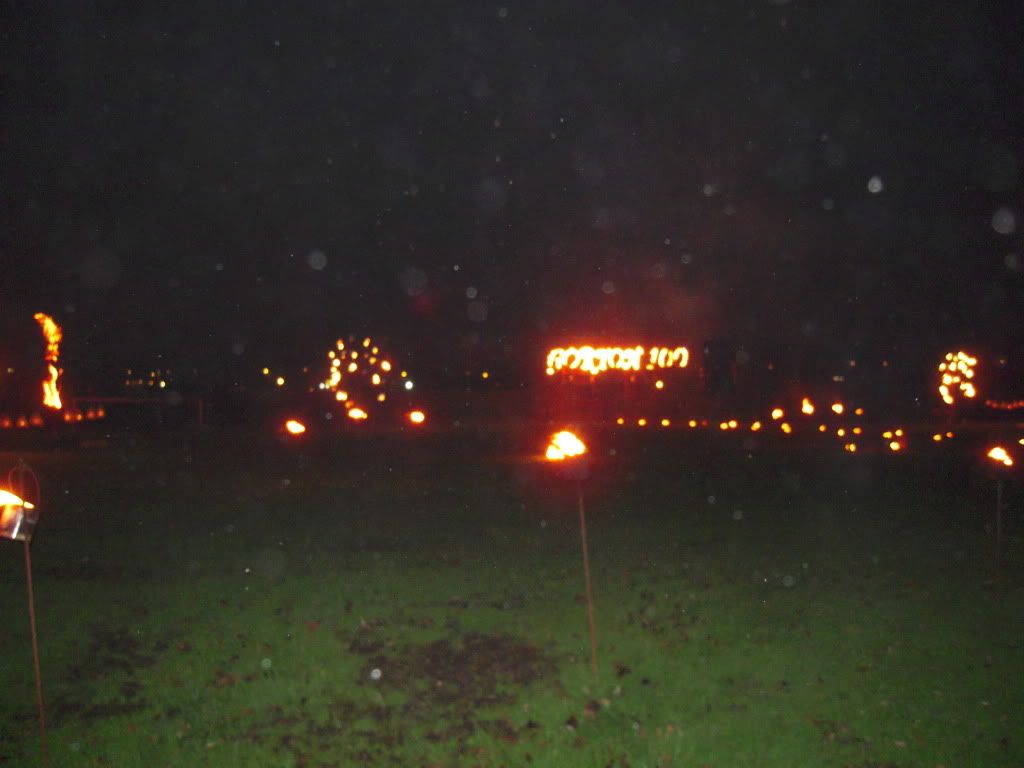
Five years ago today, I wrote an article about a set of fireworks. Gorton is a small area in the south of Manchester, and for the first few years of my life it was the place I called home, before me and my family moved to the marginally more scenic town of Droylsden in Tameside. Of course for my parents, it had had more permanence. At least, I guess so. That's the only reason I can think of as to why we attended those fireworks in the first place. Had I not attended those fireworks, I would not be on this website typing as I am now.
     Blogger is something of an archaic platform to work with. It wasn't exactly hip and trendy when I started using it in 2009, but it was a fair bit more popular than it is now, in an age where all of your blogging needs can be better suited by Wordpress or Tumblr. But then again, popularity was never my main aim - it was an attempt to express opinions about stuff. To a teenager bristling with opinions, an opportunity to do that in a space with few people will challenge you is a very attractive option. Once I started writing regularly I advertised my blog on social networks for a while, hoping to gain an audience like that of the blog that inspired me, Dan's Media Digest. But there's a reason why he's just been shortlisted for a "UK Blog of the Year" award and I've not written anything in months.
     Nostalgia Filter, or as it was once called, Audenshaw Reviews, is at its most fundamental a procrastination aid. Writing about something, making a project of it, is a task I used to set for myself - both because I enjoyed it, and because it felt satisfying to do something productive. As a result, I've I've ended up writing a short book. Taking a very rough average, I have a wordcount of about 900 words (for a standard length review, sometimes I find less to talk about, sometimes more.) Extrapolating that out for the 802 posts I've tagged as either "Review" or "Opinion", and that comes to 721,800 words. That's seven novels. In the past five years I've written seven novels. Except they weren't novels. They were blog posts about TV shows and films. (Note to self - the word blog isn't in the blog's internal spellchecker dictionary.)
gorton 100 fireworks photo: Gorton 100 Fireworks 048.jpg
A photograph from the event that inspired it all.
(Original owner unknown, please comment if
you want credit.)
     In the past five years, I've done my GCSEs, my A-Levels and the first term of the first year of my degree. I've performed in four stage productions, had a total of 63 articles published in external publications and have posted the word "Thanks" 934 times. (Including this one.) In that time I've watched over 700 hours of television and film in order to review it here, and then countless more hours after that to write up the damn things, with a minimum of about 45 minutes for each one to write it up. Which if you calculate it forward again means that I've spent a bare minimum of 601 hours writing here. That's almost a month.
      Time gets away from us so quickly. Right now this is the longest thing I've written for the blog in months. What began as a place for an arsey teenager to mouth off without being ridiculed by his peers has become something I'm immensely proud of, and something I regret not having done more with. I had planned for so long that this would be the end of this blog - something frightening for me to see as I look at the little (1) next to my "Scheduled Posts". But I don't think it is the end. Not yet.
     For hopefully not the last time,

Thanks.

Saturday, 28 December 2013

My Top Ten Shows of 2013

Written 23/12/13.

This year I have watched a lot of TV. This was basically my dedicated catch-up year, and I've been watching so many more US shows that I've just neglected through the years. However, British TV has been quite good this year too. To make things fair, I won't make mention of the ridiculous amounts of stuff from previous years that I've catched up on this year, and focus on things that aired in 2013 (as well as giving each season a cheeky rating out of ten stars.) 

10.) The White Queen (Starz/BBC) ★★★★★☆☆☆☆☆

Following in the footsteps of The Tudors, our latest attempt at a medieval regal drama adapted the best-selling but controvertial set of books by Phillippa Gregory which attempted to put a feminist focus on the Wars of the Roses and examine the politics of three particular women - Elizabeth Rivers, wife of Edward IV; Margaret Beaufort, the mother of Henry Tudor who manipulated court to bring him to power; and Anne Neville, the wife of Richard III who helped him rise to the position of power he stood in prior to the Battle of Bosworth Field.
      The adaptation aspect of the production meant that quite a bit of the plot tended on the side of silliness, with some of the characters being possessed of real-world psychic powers and the way that the series is eminently Ricardian in its bias, instead blaming the disappearance of the Princes In The Tower as a political move suggested by Margaret Beaufort. Despite the weird way that it chooses to deiver its history, the cast of characters are all quite well developped and there isn't a dull performance among them - my favourites being Aneurin Barnard as the slimy Richard III and Amanda Hale as Margaret Beaufort, a character who I rooted for throughout the entire series as she played the Yorkist and Lancastrian sides against one another in order to allow her own illegitimate son to the throne.

9.) Shigeki no Kyojin (Season 1) ★★★★★★☆☆☆☆

SIE SIND DAS ESSEN UND WIR SIND DIE JAEGER! Yes, it's everyone's favourite "trendy" anime series, with its fair share of depression, depression and depression with a side helping of badass teenagers and the devastation at the discovery that yes, yet another of your favourite characters has been mercilessly eaten by mindless homicidal giants. That said, SnK's worldbuilding and characterisation is absolutely second-to-none, and the fact that it's one of the few anime series I've seen which isn't deeply problematic in its attitudes to women is icing on the cake.
     Shigeki no Kyojin pretty much introduced me to the entire genre of Anime, which before had simply been, "those weird Japanese cartoons." And while they're still cartoons that are simulatenously weird and Japanese, the sheer depth with which SnK develops its post-apocalyptic world, the themes and characters within it and the mytharc behind it all, just blows me away. It's not something that I really ever get excited about, but when it is on and holds my interest it's always a fascinating and wonderful experience.

8.) Misfits (E4, Series 5) ★★★★★★★☆☆☆

Misfits had a really dodgy fourth series, and the show had been steadily declining since its peak in 2009-10. However, with its cast list finally set down in stone after constant shifting, the fifth season promised a large arc that would see the show through to a suitable conclusion, and for the best part that happened, with a season which was easily the best since that golden period. The characters were more thoroughly explored, the arc was well-built if a little anticlimatic at the end and it was certainly more funny than Series Four ever managed to be.
      I think the problem with Misfits was that after the second series, it began to very much drift away from its initial brief - that of a superhero-based sitcom seen through the "gritty" filter of Skins-esque TV. The powers were a factor behind our character's problems, and they added a fantastical elements to the characters' already outlandish personalities. The newer characters and their powers weren't as tailor-made, and the result was a series where the only useful or commonly-used power of the bunch was the strange one where Alex buggered people and stole their powers from them.
     However, whatever happened to it, I will miss that bit of grey superhero cheese on my TV every autumn, and I am quite honestly sorry that Misfits is at an end at all. Apparenty Howard Overman has a film written and the series is left open for more adventures in the future, but for now I wish the show and its legacy a sad goodbye.

7.) The Walking Dead (AMC, Seasons 3B and 4A) ★★★★★★★☆☆☆

Stuff... and things. Having caught up on The Walking Dead this year and having watched a series go from being an ethralling and atmospheric commentary on humanity to a prison-based runaround with a cartoonish villain (down to the eyepatch), I was a little apprehensive about the fourth season of AMC's post-apocalyptic drama. It seems that the production team for this show changes around so often that its tone is very rarely consistent, but the first half of the fourth season presented a show confident in its desire to both honour its comic book origins while simulatenously making its own brave decisions.
      The result was the plague storyline, which drove our characters to the limit in an interesting and game-changing way while a back-door look at the Governor at the end of the season tied up Season 3's loose end and prepared the show for a new start after an achingly long 24 episodes in the Prison. The checklist of things that needed to be done to get the series back on its feet meant that this half of the season didn't feel very consistent, but I for one am very much looking forward to the series' return in February 2014.

6.) Being Human (BBC, Series 5) ★★★★★★★☆☆☆

Like its strangely connected cousin Misfits, Being Human in 2013 was setting down a new cast after quite a few changes as well as recovering from a dodgey fourth season. Toby Whithouse's comedy drama had its final season reduced in length in a wonderfully symmetrical way, with a plot which led the series away from its hilariously mundane premise and into full on anti-apocalypse warfare tied in with buddy comedy. A little bit like Fawlty Towers. Except that every other guest is Satan.
     Most notable of all the episodes this year was the finale, which was one of the best finalĂ©s so far this decade, presenting a horrifying scenario in which The Devil analysed each of our characters in turn, tempted them and then set them down in a miracle scenario which may or may not be everything they've ever wanted. It was a summary of all the show's themes, from the capacity of redemption to the bare bones of what makes someone human. While it ended on an uncertain note, the show's final series did it justice in ways that not a lot of other shows can boast about in the past few years.

5.) Luther (BBC, Series 3) ★★★★★★★★☆☆

It's been two years since the last series of Neil Cross' fantastic drama, and unfortunately again this was to be the final one. Following the previous series' trick of two two-part stories forming four episodes in total, this time around we had a fantastic arc which led to quite a few dramatic moments culminating in the death of Luther's closest companion and the triumphant return of villainess Alice Morgan to lead Luther off into TV Movie territory.
     With writing as brilliant as ever and Idris Elba's acting as nuanced as I've ever seen it, the rest of the series' poignant arcs and creepy, creepy villains made Luther quite simply one of the best shows on TV this year. I've come to view Luther as something of an anti-Sherlock, in the way that it approaches so many things in ways that Sherlock, the far more popular show, could never hope to do with as much success. Luther has a range of well-written women and racial minorities, while Sherlock, written by Moffat and Gattiss, can only write bland archetypical women and demonises its single PoC character at ever turn.
     These shows need to stop ending, seriously. I hope there aren't any other final series' on this list.

4.) Cabin Pressure (BBC Radio 4, Series 4) ★★★★★★★★★☆

I'm cheating again, I know, but I really couldn't think of any other contemporary show and I've loved Cabin Pressure so much this year that it would have been criminal not to put it on the list. John Finnemore's talent for witty dialogue, flexible storytelling and powerful characterisations has been the radio show into a confident final series, one which will culminate in a one-off special at the beginning of next year. The final series saw the development of the relationship between MJN Owner Caroyln and suave pilot Herc, and the attempt by Benedict Cumberbatch's Martin to get a new (paid) job with Swiss Airways.
     This series' penultimate and ultimate episodes, Xinzhou and Yverdon-les-bains, are two of my favourite episodes in all of Cabin Pressure. Xinzhou is the quiet tale of the four main characters simply sitting in their snowed-in aircraft on a Chinese runway for a whole night, and yet it produces such fantastic comedy throughout that it's barely noticeable that it's an obvious bottle episode. Yverdon-les-bains, in which Martin gets his interview, has a lot of references back to the first episode of the show and ends on a cliffhanger which, despite being a mundane enough statement on its own - "They're going to get back to me," - is loaded with enough subtext and intrigue to sink a battleship. Or ground an airplane, in fact.

3.) In The Flesh (BBC, Series 1) ★★★★★★★★★☆

Hot on the heels of Being Human's finale, this excellent three-part series examining prejudice and love in rural Yorkshire was everything we needed, especially when funnelled through the brilliant, brilliant concept of sentient zombie-hood. The main focus was on rehabilitated zombies Kieren Walker, his former zombie-friend Amy Dyer and his secret gay lover Rick Macy, all of whom died in various circumstances which not only inform their post-mortem outlook on life but on how the prejudiced community of one small Yorkshire town. The show is heart-wrenching and thoughtfully written, and I really would reccomend you catch it somewhere, even given the fact that a new, longer series is coming next year.

2.) Game of Thrones (HBO, Season 3) ★★★★★★★★★★

What is there to say about G.R.R. Martin's epic fantasy other than, if you aren't watching it, why the hell not? It's a ridiculously well-written, well-performed and well-directed piece of television fantasy for the new decade, and the third series, adapting the first half of the third book in the Song of Ice and Fire saga, has been the best yet. And now I'm left in an awkard position because if I spoil this series in any way, you really aren't going to get the best out of it. So I'll stop here and say this - just go and see it if you haven't. Because Game of Thrones is some smashing television and in my eyes it can only get better.

1.) Orphan Black (BBCA, Season 1) ★★★★★★★★★★

A massive surprise for me this year, as this show wasn't even on my radar. But, surprisingly enough, my favourite new show of 2013 is Orphan Black, the brilliantly acted sci-fi mystery in which Tatiana Masleny single-handedly demonstrated how ridiculous her acting talent really is. As well as convincingly portraying six (or more) very different personalities over this first season, she also had to act out each clone pretending to be all of the others, due to the show's habit of putting the clones' similarity in appearance to good use. The result is a show where I am honestly baffled when I look at the cast list - simply because I can't believe that these varied characters with all of these different emotional states are played by the same person. And a show that can do that after one season is more than worth this year's top spot.


 ------------------------------------------

So that's 2013's television. I hope you've enjoyed reading this article, and I hope you've enjoyed my reviews over this past year. For news about what's coming in 2014, look for my post about that on New Year's Day.

Thanks.
P.S. I would have maybe put Season Five of Breaking Bad on here, but I'm not quite there yet, so no can dosies.