 |
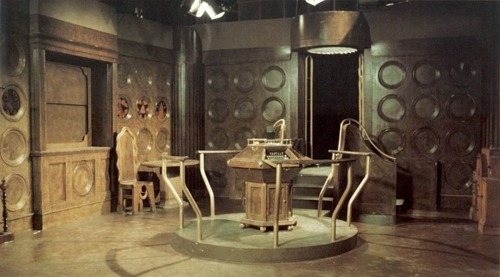
| I want to marry this TARDIS set. |
Written 9/6/13
The last year of Hinchcliffe and Holmes is by far their strongest, providing a series of six stories that pull out all of the stops. It is the year of the gorgeous wooden TARDIS interior (which disappears after this season due to the set warping in storage), of Sarah Jane's departure, of the companionless adventure, and then of Leela, Chris Boucher's impressive and innovative companion idea that sends the show tumbling into a different direction. It was also the season of gore and horror, even more so than its immediate predecessor.
 |
| Sarah Jane gets two last decent adventures. |
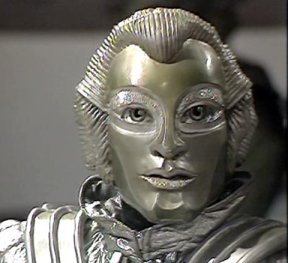
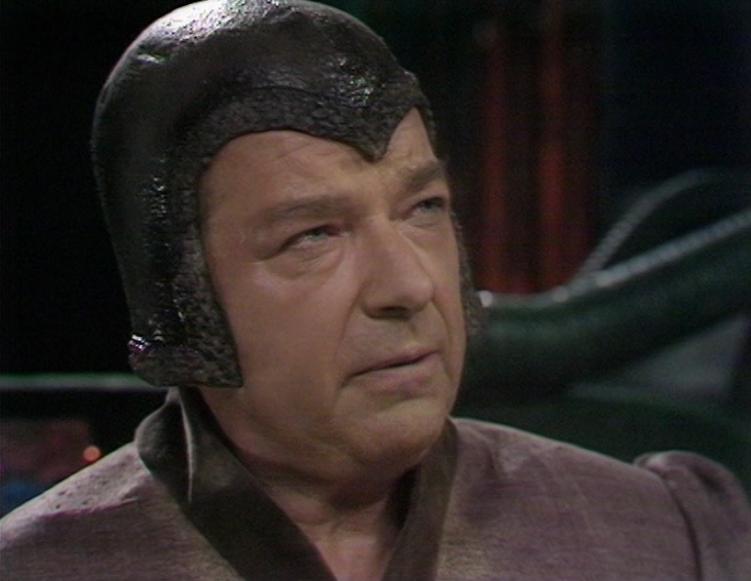
There was a rather unfortunate pattern in the season's villains, wherin a person or persons were influenced by a great and powerful figure from beyond. Mandragora, Eldrad, The Master, Xoanon, Taren Capel, Magnus Greel - it's a clear pattern, typical perhaps of the era but a tad tiresome on close consecutive viewings, especially as it's a bit difficult to write "maniacal" six different times and have it be fresh every time. For the record, the best of the mad villains were Eldrad and Xoanon, the former being presented in a sympathetic light for the majority of its appearance in the story and the latter have a complex psychological reasoning behind its actions.
Sarah Jane's departure in The Hand of Fear was a sad event, and it got chance to sink in during the season's unique companionless episode, The Deadly Assassin. Leela's dynamic with The Doctor, while missing the characteristic cuteness of that he had with Sarah Jane, does show a lot of promise and as a character she is certainly more impressive than her "something for the Dads" reputation would lead you to believe. By the end of the season, all memory of Sarah Jane is gone, and while the future is uncertain, there's the hope that Leela's story will see her develop quite well. (Yes and no on that front...)
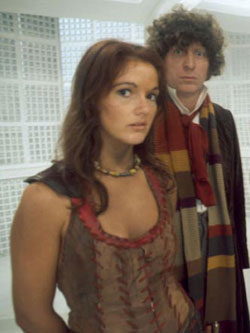 |
| Leela's introduction to the series is quite promising. |
The Hinchcliffe/Holmes era is a study in contrasts. Extravagent yet realistic. Violent yet morally sound. Comedy duos next to kidnapped teenage girls. While it's heralded as the show's golden era (this season for me especially,) I did feel like there was something missing from the overall picture. The humour of The Deadly Assassin and the political satire that run through it - those relevant little points that make Who meaningful are smothered when you take whole plot references from Hammer Horror classics. The future of the show at this point is strangely uncertain, but there is something that can be assured - it has the chance to just be Doctor Who again.
Thanks.