Saturday, 5 October 2013

Opinion: Orphan Black

http://www.tvtyrant.com/wp-content/uploads/2013/05/OrphanBlack-Blog-1-1024x576.jpg
It's a none-hokey Clone plot! From tvtyrant
Couldn't leave this one alone.

BBC America's cross-Atlantic drama Orphan Black made its UK landfall on BBC Three two weeks ago, after a successful run in the US. Set in TV-Toronto and aiming for a Miracle-Day-esque combination of UK writing and US production values, the series follows a series of clones who aim to discover where they come from, who made them and why they're all being slowly assassinated. The focus is on British clone Sarah Manning, who must make the decision between exploring the conspiracy around her birth and in taking care of her foster family and estranged toddler.
     While the show's clone pot is nothing special, Tatiana Masleny's performance as around three or four different clones in the same episode (often within the same scene), as well as her performance of Sarah who then pretends to be her other clones, is one of the most remarkable I've seen in a while. While the Canadian actress' accents often slip and slide, she accomplishes certain feats which from an acting perspective are astounding. The way that one actress can create personalities and mannerisms for six different characters as well as portraying how each of those characters would go about impersonating one of the other six is just astounding. It's not too much of a stretch for me to say that she is probably one of the best actresses I've ever seen.
      While Maslany's ridiculously good performance is proably what you're tuning in for, the show's developing background mystery does play off the various characterisations of her clones in order to create a fairly interesting show. So far the show's plot has dipped and dived in a number of directions, but I'm fairly confident that the show can deliver on its premise and create a slice of cross-Atlantic TV that actually works for once. And I'm really glad that someone has managed to make that happen.


Thanks.

Thursday, 3 October 2013

Review: Voyager 1.6: The Cloud

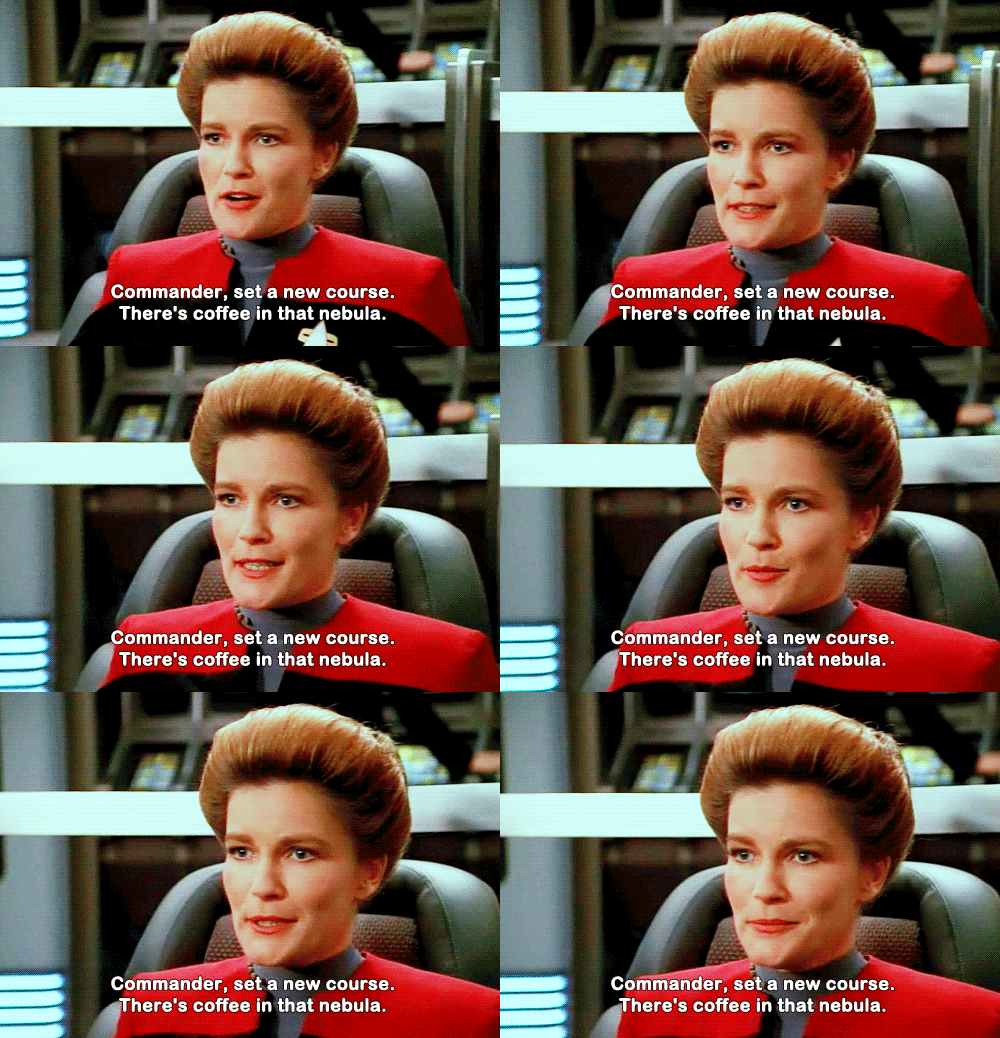
I know, a gif on Nostalgia Filter! Totes amazeballs.
Star Trek Voyager - Season One, Episode Six - The Cloud
Written 31/5/13

The Cloud is most definitely a breather episode, although seeing as Voyager is arguably a breather series this poses something of a dilemma - how, exactly, can one become even more thin and jovial than Voyager usually is? The Cloud manages this with what I suppose might be called success, and is probably the closest that any of the Treks have come to being a space sitcom. Not to say that this is bad, of course, as Voyager trying to be funny is at least better than when it does so unintentionally.
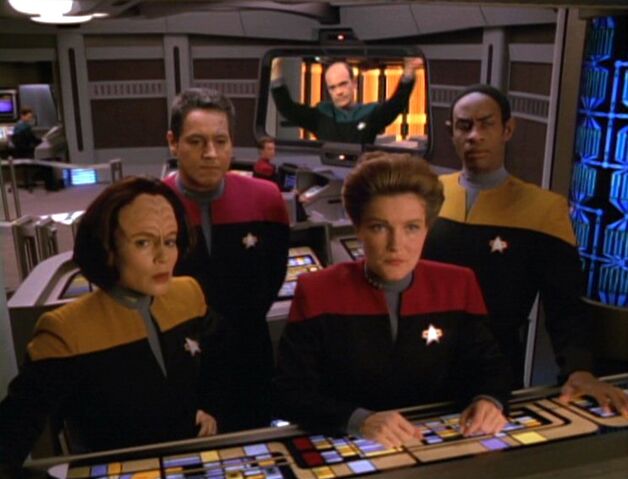
     Due to a power shortage that's stopping Janeway from getting her damn coffee, she orders the ship into a suspicious-looking nebula that might have some technobabbly particles. The nebula fights back, and after Voyager fights her way out it's shown that the nebula is a life-form. Distressed that they may have hurt it, they go back in and seal the wound, feeling chuffed with themselves at the end. Along the way, The Doctor is snarky to hilarious levels, Neelix is a whiny prick (just the norm, really), Janeway tries to socialise with the crew and goes on a Native American "vision quest", and we're introduced to Season 1+2 haunt Sandrine's, one of Paris' favourite holoprograms.
     The series prided itself on its inclusivity - female captain, African American Security officer, Native American First Officer, Latin American Chief Engineer, Asian-American Ensign. However, the way that Voyager treated Chakotay and his Native American roots did sometimes feel a little suspect. Take this, for instance. Chakotay was born on Earth in the 24th Century, and yet because he's Native American in ethnicity (or we're told he is; the actor is Mexican-American) he has all this wonderful mystical Spirit Guide stuff. Why can't he be like Tuvok and B'elanna and simply exist and be represented instead of being forced to display all of these stereotypes about a culture whose treatment in the USA has been and often continues to be horrendous.
File:The Doctor tries to get attention.jpg
Doctor-based comedy hijinks.
     But, perhaps I'm getting a little too serious for what was supposed to be a light outing. So onto Janeway's character in this episode, which introduces a great number of recurring traits that will define her for at least 33% of the series run. (The other thirds are "psychotic madwoman" and "staunch starfleet officer") This episode I don't think introduces but certainly codifies her obsession with coffee, and the line before the title sequence, "Commander, set a new course - there's coffee in that nebula!" is just delivered so perfectly. Her quaint attempts to socialise with the crew, especially the gormless Harry (who reveals this week that he can... remember what if feels like to be in the womb...) who wants to invite her to eat with the gentiles.
     The Cloud is a relief episode with little to be relieved from besides any actual tension. The explorations into some of our characterisations and the insinuation that the Voyager crew have quirky day-to-day lives help to develop Voyager into the comfort TV that it would later become, and I can't really complain about that. Mindless mush it may be, but it's vaguely enjoyable mindless mush and if you don't like it when Janeway totally puts down Neelix's whining then there's nothing really I can do for you.

Thanks.

NEXT WEEK: Voyager nearly has a chance to get home! I wonder how that one will turn out! We see if the suspension of disbelief required for next week's episode could fit through the Eye of the Needle.

Wednesday, 2 October 2013

Review: Lost 1.14: Special

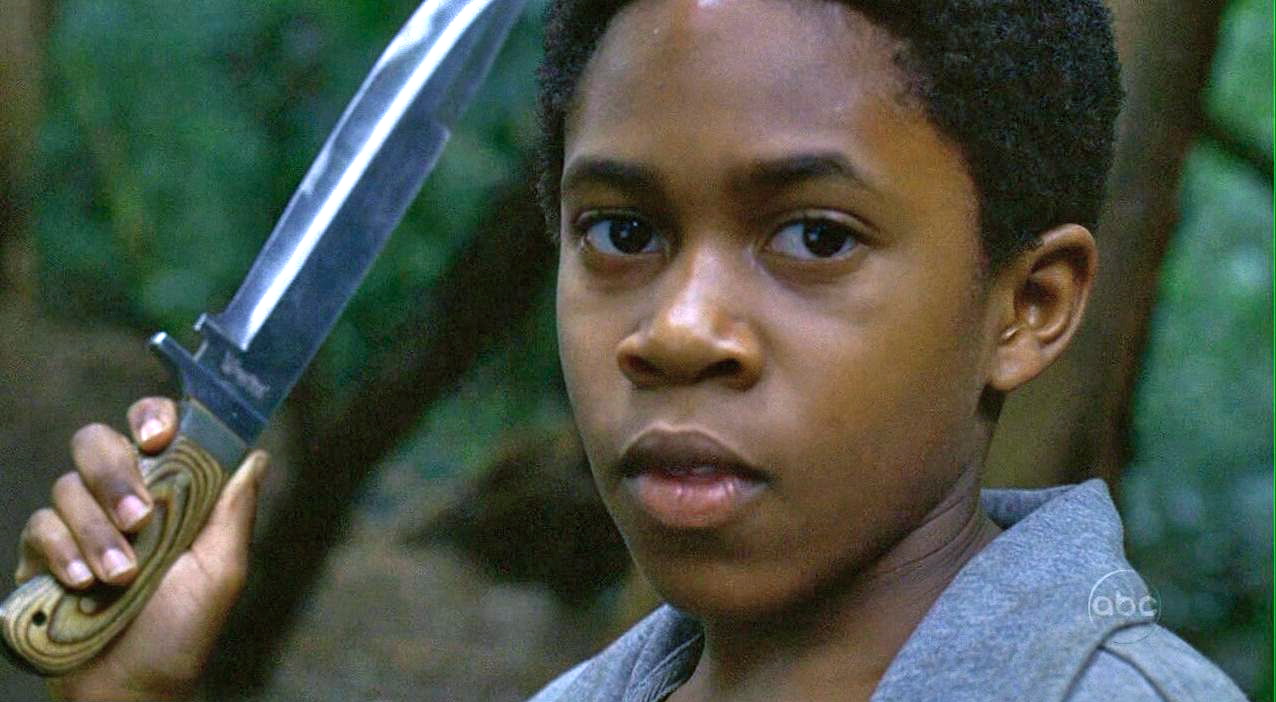
http://images1.wikia.nocookie.net/__cb20090625160658/lostpedia/images/1/1a/Waltknife.jpg
Walt displays his super knife-throwing skills.
Lost - Season One, Episode Fourteen - Special
Written 28/5/13

Michael Dawson and his unfortunate story within Lost as a whole initially stands out from the group as the only example where Lost's favourite trope, that of parental issues determining personalities, is shown from the parent's perspective. Like a lot of the other centric episodes, Special presents us with a character's problematic nature and then attempts to redeem them in the second half, which this episode does magnificently with a cute-as-fuck resolution that makes me ever more sad at what happened to these two characters.
     Flashbacks leading to just before the flight show us how Walt was born into a successful relationship which then broke apart when Michael's loss of work led wife Susan to take Walt away to Amsterdam (and later to Sydney) and to shack up with Brian Porter, a man who then adopts his son. Throughout their breakup Michael continues to feel fatherly responsibility towards Walt despite not having any of the ability. Soon after Brian becomes uneasy about Walt's seemingly morbid nature, his mother dies and Brian, shirking out on the adoption, offers Walt and Vincent the dog into Michael's custody. To avoid Walt from feeling betrayed by his step-dad a few days after his mother died, Michael takes the flack and says that it is he who wants to take Walt to live in New York.
     On the Island, Michael's restlessness and increasing frustration with how Walt has turned to the dangerous Locke as a father figure led to him deciding to build a raft, attempting to engage Walt's interest in its construction but just managing to drive him further away. Charlie reads Claire's diary and discovers to his deight that before she was kidnapped she was beginning to have feelings for him. Vincent runs off into the woods and Walt becomes cornered by a Polar Bear, but he is eventually saved by Locke and Michael in a settling of their differences. While out scouting for Vincent, Locke and Boone find Claire walking in the woods, disoriented.
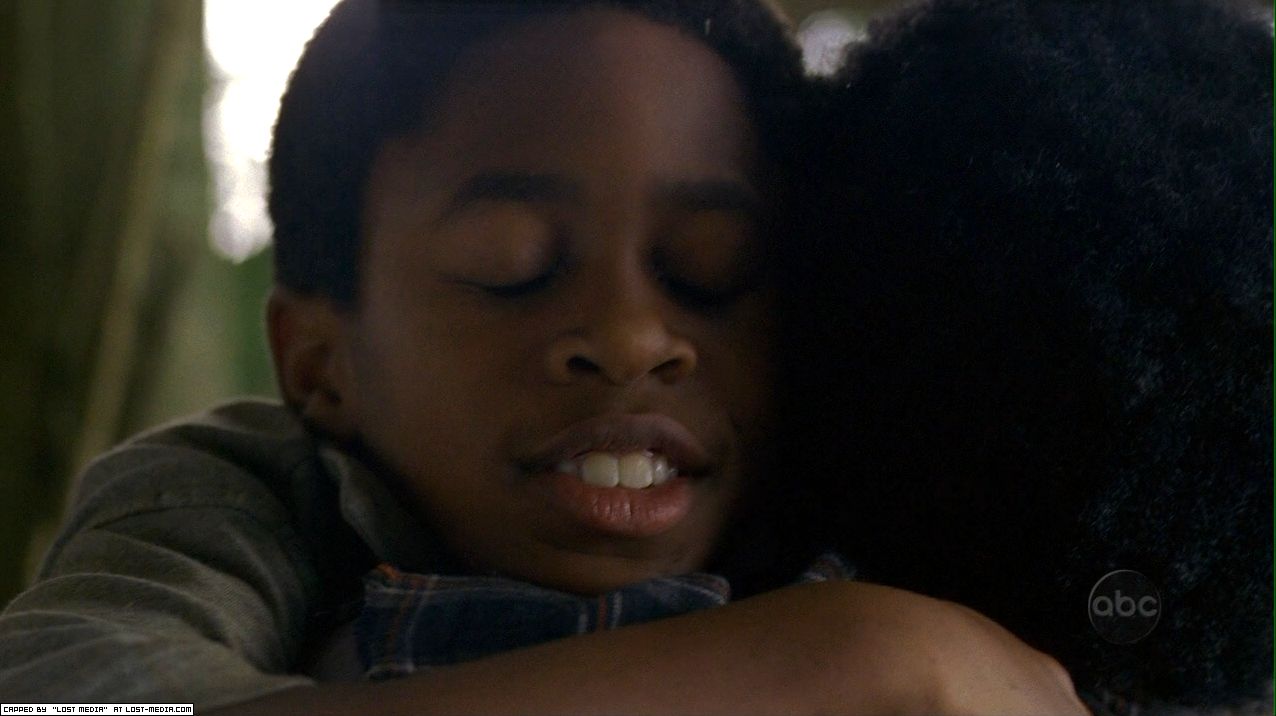
http://images2.wikia.nocookie.net/__cb20100707203032/lostpedia/images/2/25/Special586.jpg
Walt and Michael reconcile.
     One of the problems with this kind of episode format wherin we are turned against a character and then redeem them with newfound information in both the flashbacks and the present story (a la Confidence Man from a month or so ago) is that for the majority of the episode Michael's actions in the present seem ridiculously unbalanced. It's difficult to remember sometimes that 99% of their relationship has taken place on the Island, and that despite his battles for custody, Michael has no idea how to actually parent. His willingness to protect Walt both from the Polar Bear (which is a brilliant scene and one of my favourites in a while) and from the betrayal of his step-father is what sets him apart as one of the show's more complex characters at this stage in the game.
     Special takes a character whose presence had often been annoying one (WAAAAAAAALLLLTTT!!!) and gives it that typical Lost do-over that makes it into a powerful and very well-written relationship between a son getting over the loss of his mother and a father who despite his previous confidence has no idea how to care for him properly. I wish they hadn't put in all the stuff about Walt's supposed abilities, because the moment they decided that the character had to go they left that on the cutting room floor, but overall it's one of the best episodes of this format so far.

Thanks.

NEXT WEEK: A Charlie episode. Ethan gets got and Charlie acts creepy around an amnesiac Claire. It's that old gem, Homecoming.

Monday, 30 September 2013

Review: Doctor Who Classic: Terror of the Zygons

http://static.tvtropes.org/pmwiki/pub/images/zygons_3776.jpg
The squid-like Zygons are an excellent design.
Doctor Who - Season 13, Story One - Terror of the Zygons
Written 24/5/13

It's doing the 80s first that's done it. I'm used to extravagance and silliness, of charm overriding visual flair. This week's story, designed to be the final story of the previous season, ends the Arc that began in Robot, and features some of the series' most popular one-time monsters. So popular, in fact, that they're due to make an appearance in the 50th Anniversary story. A story ambitious in both its ideas and its geographical scale, there's very little that you can flaw about Terror of the Zygons. Well. Unless you're picky, which I most certainly am.
     Responding to the Brigadier's time-space message he received at the end of Revenge, the Doctor discovers that UNIT have popped up to Scotland, and are investigating the destruction of three North Sea oil rigs. The Doctor is initially bored, but his interest is piqued when the attacks seem to be coming from a mechanical source. Slowly, they uncover the plot of the shape-shifting Zygons, who intend to use the Skarasen (a dinosaur-shaped cyborg used to explain the Loch Ness Monster) to subjugate Humanity. Once all is settled, Harry Sullivan decides to stay behind on Earth, and The Doctor and Sarah continue their travels.
     The story begins on a very slow note, with any attempt at tension-building rather spoiled by a mixture of loud bagpipe music at inopportune moments. One would expect a monster like the Zygons to be used for a tired Changeling-substitution plot, but rather more is made of the uncertainty of who may or may not be one, leading to great horror moments like the first cliffhanger wherein one seems to appear from nowhere to strange Sarah Jane. These moments save the story from its weaker moments, of which there are a surprising number given the story's high reputation.
http://upload.wikimedia.org/wikipedia/en/thumb/6/62/Skarasen.jpg/250px-Skarasen.jpg
I think I prefer The Myrka.
     Carrying on the story's paradoxical nature, it has some of the best and worst alien design of the season. The Zygons are truly magnificent (the z key on my keyboard is seeing more use in this article than it has in ages) with their slightly octupoidal design allowing for actor flexibility while still looking completely alien and intimidating. Their organic technology adds an extra squick factor, and it's odd that such a well-designed and memorable monster was never seen again. On the other hand, we have the Skarasen, which seems to borrow a prop from Season 11's unfortunate Invasion of the Dinosaurs and is thankfully the last use of stop-motion dinosaurs in Doctor Who, which may have been acceptable in the early Seventies but drags the whole story down here.
     Terror of the Zygons for me is a story that I find very difficult to truly like. I find the early story's chattering about oil rigs and mystical Scottish landlords with second-sight a tad tedious, not helped by the fact that the Zygon plot only really becomes apparent in the last episode. The Skarasen is laughable and its appearance threatens to rob it of all credibility. But at its heart it contains a tremendously memorable and well-executed set of main villains, and a penultimate 70s outing for UNIT that leaves it in good spirits as the show's true independence from the old style begins.

Thanks.

NEXT WEEK: I've no idea what happens in next week's story... it's Planet of Evil.

Saturday, 28 September 2013

Review: Atlantis 1.1: The Earth Bull

I'm beginning to wonder if all this "Saturday Teatime Drama" business is particularly worth it any more. Steven Moffat's "cool" scheduling has done its best to remove the genre's arguable originator from its lofty position, and historical series trying to match that position have all been fundamentally flawed. A year after the horrendously misguided Merlin ended its five-year run, two of its producers and one of its better writers have come together again to mangle Greek myth, what with the entire mythological history of the British Isles having been totally and completely mined out.
http://ichef.bbci.co.uk/images/ic/944x531_b/p01gw6zg.jpg
JASON! JASOOON! From The BBC
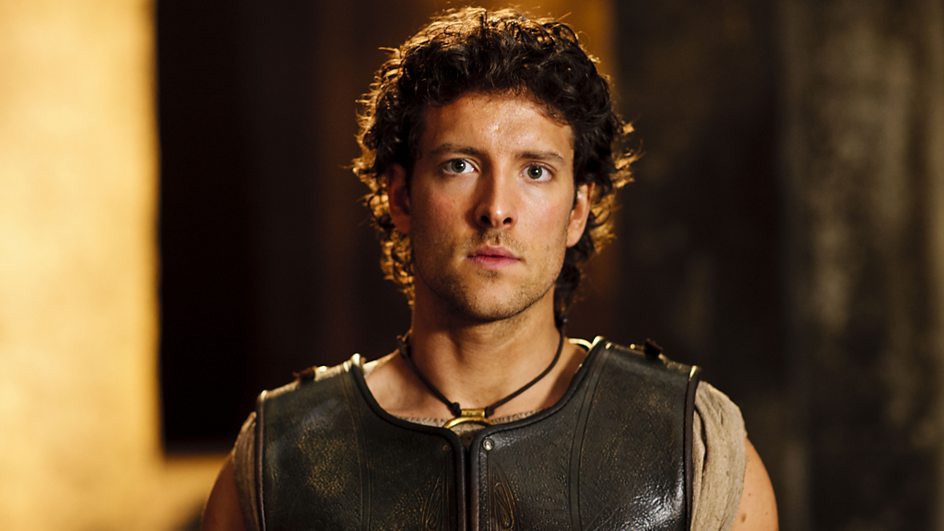
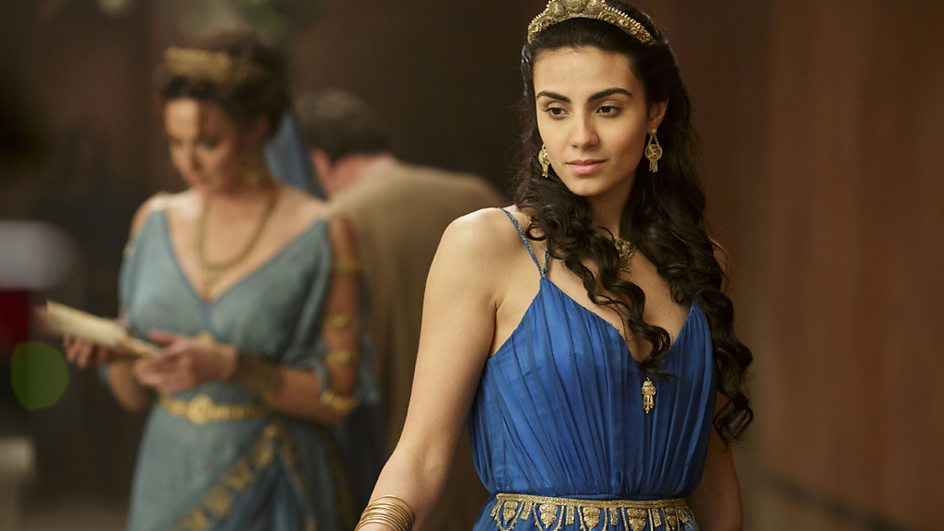
     The premiere began by giving me hope, setting us up in the present day with Jason (Jack Donelly) going underwater to find the remains of his father's expedition. We were then placed firmly in Merlin's "just go with it" methodology as we were expected to hold our suspension of disbelief as our Jason was dragged through a time-portal into Ancient Atlantis, which was apparently occupied by Caucasian or slightly-Asian-looking people who all spoke perfect English in a variety of regional accents. Amongst the misplaced historical celebrities to be found in the cast are Pythagoras (Robert Emms, War Horse), Hercules (Mark Addy, Game of Thrones) King Minos (Alexander Siddig, Star Trek: Deep Space Nine) and his daughter Ariadne (Aiysha Hart).
     The episode rips its plot from Theseus and the Minotaur, wiping our poor old Theseus from the mythological timeline and replacing him step-by-bloody-step with Jason, who doesn't seem to question the odd world around him. The plot itself was a fairly standard adventure affair, with a few attempts here or there to hint at some overshadowing mysteries which couldn't be more obvious if they tried. (Such as the fact that Minos is most definitely Jason's father, and the Oracle his mother.) What bugged me the most about the whole affair was how quickly our premise was delivered. It was so haphazard and silly that it hardly got a chance to breathe before our valient heroes were off re-writing the bloody Plutarch.
     I may be expecting too much of a premiere, but what felt very lacking was any actual characterisation beyond the same archetypes that allowed Merlin to rattle on without doing anything for a good three seasons. We have our dashing hero who is the son of the King (in my predictions at least), assisted by a vaguely nerdy dude and an old mentor, guided by a mysterious magical being and who must use his skills to fight mythological beings. The only difference is that the Arthur/Merlin dynamic of master/servant and the mystery provided by the Fascade are instead replaced by Jason being just wonderful and brave and having no real character flaws at all.
http://ichef.bbci.co.uk/images/ic/944x531_b/p01gw6tr.jpg
Let me guess, the obvious love interest is the obvious
love interest. From The BBC
     Most of all, I think one of my biggest pet peeves with the episode is its lack of self-awareness. Great mythological background or no, Jason is still a 21st Century guy - that's supposed to be used in order to allow the audience to identify with him as he journeys into this strange new world. He should know what's going on, have some vague knowledge of the myths he's re-enacting. Yet the only references made to the fact that he's from the future come very early on, are used for cheap jokes about how maths is boring and fat people are funny, and then are thrown completely aside for useless heroic daring do.
     I missed Merlin over this gap, you know, if only because it's so rarely that I get something so genuinely disappointing week after week. It makes the good episodes better and the worse episodes more tolerable, something that Atlantis seems to have mastered far more quickly than its Arthurian brother. At the present rate I do wonder if Atlantis is really what anyone needs at the moment, and whether it's even possible with its loose set-up for it to match the few highs that Merlin actually managed to reach, but it certainly wasn't a boring 45 minutes and I'd much rather have something to complain about for 13 weeks than be left without.

Thanks.

NEXT WEEK: A girl named Medusa... I certainly hope they're not going to try re-enacting how she got her snakes. (Look it up.) It's A Girl By Any Other Name.

Friday, 27 September 2013

Overview: Doctor Who Classic: Season 12

http://www.doctorwhoreviews.co.uk/4A_files/Robot%206.jpg
I like to think that Harry was a little piece of UNIT
that The Doctor could carry around with him.
Doctor Who - Season 12
Written 21/5/13

Returning to Classic Who has been exceedingly enjoyable. That was helped, by no end, by the fact that Season 12 is just so marvellous. Tom Baker's Doctor, even from his first few appearances, exudes a constant fun demeanour that finds ways to transform average scripts into instant Classics. The Holmes and Hinchcliffe era is oft considered a Golden Era for Doctor Who, and for very good reason.
     One of the best things about Season 12 is probably the attempt to rekindle the continuity that existed between episodes in the early Hartnell Era, where serials didn't really exist and the show was managed on an episode-to-episode basis with individual episode titles. While the season doesn't go that far, the six stories produced as part of this season (including next season's premiere, Terror of the Zygons) follow a continuous plot from Harry's entry into the TARDIS in Robot to his departure at the end of it. There are plot elements that end up spanning the entirety of the arc, including the re-occurrence of the Nerva space station, humanity's escape from Earth in the future and The Doctor's messy divorce from UNIT.
     Harry Sullivan goes through a half-decent amount of character development as the series progresses, from chauvinist ass in The Ark In Space through to loyal and brave friend come Genesis of the Daleks. I don't think that the character is a particularly memorable one, as the continuity makes his trip on the TARDIS feel remarkably short, but he is a nice enough presence while he's here. Ian Marter, the guy who played Harry, would later go on to become a big Who novelisation writer and was still working with the show up until his unfortunate death in 1986.
http://thiswastv.files.wordpress.com/2013/02/doctor_sarah.png
Sarah-Jane remains the constant companion for a while yet.
     My favourite story of the season is the fun runaround that is The Sontaran Experiment, which continues the ideas from The Ark In Space except with a fun romp around Dartmoor. Vying for the Best story is probably a tie between the gory Ark In Space and the absolute masterpiece that is Genesis of the Daleks. My least favourite story of the season is most definitely Revenge of the Cybermen, which is misguided at best and utterly deluded at worst about not only its star villains but the competency of its writing.
     One thing I have noticed is that Tom Baker's stuff hasn't drawn out the same level of sheer emotion in me as the JNT era (and the stuff immediately surrounding it) does. Perhaps because at this point everything is fine and dandy - there really aren't any big examples of backroom politics gone wrong, and the people in charge of the show knew what they were doing and just did it well. If anything can be said of this era so far, it's that there is some consistency to it, even when the standards slip below what we've come to expect.

Thanks.

Thursday, 26 September 2013

Review: Voyager 1.5: Phage

http://images1.wikia.nocookie.net/__cb20070525193622/memoryalpha/en/images/5/5b/Neelix_isotropic_restraint.jpg
Neelix spends the episode immobilised. :)
Star Trek Voyager - Season One, Episode Five - Phage
Written 22/5/13

This week we encounter Voyager's first decent new idea, and despite its clunky execution, the centricity of The Doctor (and the incapacitation of Neelix) most definitely makes this a stand-out. There's gore, a funky alien species, and a lovely old moral quandary to go with it. It's really the first episode to mesh with me on almost every level, and while it isn't perfect it's well on its way to getting somewhere close.
      While out looking for traces of Dilithium (Star Trek's favourite magic substance), Neelix is attacked by an alien whose weapon steals his lungs. Teleported to sickbay, The Doctor is forced to improvise, and exploits the fact that holograms can be made solid to create a pair of holographic lungs for Neelix to breathe with. Voyager hunts the alien ship into an asteroid containing a mirror-like effect. Neelix is a whiny, jealous little shit even while contained within a restraint. They discover which ship is the real one and Janeway discovers that the aliens are the Vidiians, a species affected by a flesh-eating virus that has led them to develop a culture around the scavenging of organs from other species. While Neelix's lungs are already transplanted into someone else, the Vidiians advanced technology does allow them to take one of Kes' lungs and use that to save Neelix's life. Oh joy.
     If I haven't yet expressed my distaste for Neelix's character, then my abject joy at seeing his incapacitation in this episode should fill you in. As I said, even in his restraints he manages to be annoying - firstly with the subjective sorta stuff, his quirky complaints about the Sickbay not having a sufficiently pretty ceiling and all. And then there's the subplot with Kes and Tom. See, for the first three seasons (the ones that Kes is in), the team decided that it would be fun to have a love-triangle thang going on between Neelix, Kes and Ensign Paris, driven by both Kes and Paris' assignments to Sickbay and similar duties. This is spurred on by Neelix being an absolute Jerkass every time the two so much as even talk in his presence, claiming that it's for Paris' benefit when we see plenty of times that Kes and Paris really are just good friends and that Kes, for reasons still unknown to science, really did love Neelix up until the point where she just couldn't take his bullshit any more.
https://blogger.googleusercontent.com/img/b/R29vZ2xl/AVvXsEiIpLS2jYP3r2UthqPVPADRWr3ITUPHk1VcA2T0Tw4ZBD_1sFQ7IDDiMxrrHg1stw9o3gqgyu1HbRuPuk5lqmatSD9sP18zjaGvm0IFfWhgKxjwcoXdcS5d8ydLgn6Uwjr0SfUVeg-f33yH/s1600/Phage_234.jpg
The Vidiians are relatively sympathetically portrayed here,
and rightfully so. But they'll be back.
     The Doctor, by far the most interesting character on the show and not just because of his wonderfully co-incidental name, gets another good showing here, beginning to expand outside of his programming when he finds a way to save Neelix's life and manages to tolerate his existence for a day or so without wanting to have a convenient sickbay accident. He and Kes have a wonderful friendly chemistry together, a sort of father-daughter thing, and in these early stages it's one of the better written relationships on the show. He helps to inspire her in her medicinal knowledge, while she inspires him to advance his programming and become more human.
     While the main plot of Phage may, like many of its contemporaries, be a bit thin on the ground, I do think that the character dynamics made it fun enough to bypass it. It's enjoyable on several different levels, and it's that final push that Voyager needs to really get going towards its better moments. It had a cool concept, decent characterisations (for characters we both love and hate) and managed to hold itself together quite well. If only we got to see Neelix in agony every week, Voyager would be perfect television.

Thanks.

NEXT WEEK: Voyager gets swallowed by a space cloud. Or something. See you next week, in The Cloud.

Wednesday, 25 September 2013

Review: Lost 1.13: Hearts and Minds

http://images3.wikia.nocookie.net/__cb20061123164418/lostpedia/images/b/b3/1x13_locke_boone.JPG
Locke tries to give Boone an experience.
Lost - Season One, Episode Thirteen - Hearts and Minds
Written 21/5/13

This episode was rather better than it appeared on first inspection. Covering what felt like a wider spectrum of ideas with multiple characters rather than honing in on its centric character, the very hateable Boone, the episode rounded up certain characters' deceptions - the ones they hold with those they love, and the ones they hold with themselves.And it worked, unequivocally.
     Boone is jealous of Sayid and Shannon, and Locke notices. When Boone wants to address the concerns that the camp is having over Boone and Locke not actually catching any boar (because they're secretly going out to the Hatch) by confiding in his sister, Locke knocks him out, ties him up and drugs him. Sayid discovers that compasses don't seem to work properly on the Island. While working with her at her Allotment, Kate discovers that Sun can speak English and promises not to tell Jin. Hurley tries to get Jin's help, and in exchange for eating one of Jin's sea urchins, Jin catches and cleans a fish for him. Boone escapes his bonds when he hears Shannon screaming, and he finds her tied up. She is killed by the Monster soon after, dying in Boone's arms, but when he finds and confronts Locke he discovers that it was all a hallucination.
     In Boone's flashbacks, we go back to before the plane - Boone is pulled to Sydney by a phone call from his sister (revealed thankfully in this episode to be of no blood relation) who he believes is in an abusive relationship. He pays $50k to her boyfriend to get him to back off, but later discovers that she was conning the money from him and that her previous "abusive relationships" were similar cons. Drunk, she later confronts him in his hotel room over the fact that he is in love with her. They have sex, but afterwards she asks him to pretend it never happened, leading to his feelings of frustration as we see on the Island.
http://images2.wikia.nocookie.net/__cb20070902123258/lostpedia/images/e/e5/1x13_BooneShannonBryan.jpg
Boone learns of Shannon's con.
     Ian Somerhalder is a great actor, simply in how much he works how stupid Boone can be. I really don't think we're meant to like him at all - there's obviously an attempt at some kind of redemption arc with quite a number of characters, but Boone and Shannon's are the most obnoxious in their early stages. Boone's lengthy torture and the realisation of his relief when he believed that his sister had died (and that he didn't have to face his feelings for her any more) made him a rounder character in the space of a few minutes, and I think that was expertly done.
     Elsewhere, it's nice to see Sun and Jin's characters integrating more into the main cast, giving Yunjin and Daniel Dae Kim a bit more to do with their time. Jin and Hurley's escapades on the beach were funny, even if I resented the fact that once again Hurley was used as the "haha look a fat dude" comic relief. Sun's secret and the discussion of it will be picked up on again in about a month's time. Overall, I think it was good that we were afforded storyline progression for two characters who generally don't have a major role to play in the series' plot.
     Hearts and Minds was a decent exploration of a few of the characterisations, not fully taking on the whole hatch plot while realistically depicting the confusion that would arise surrounding it. It saw the integration of two isolated characters into the main cast and redemption of one of the first season's most prolific irritations from a gormless load into a rounded human being. Really, any series that can do that has proven its credentials a thousand fold - I just wish that this could have happened before all of the crap that Boone brought to the series beforehand.

Thanks.

NEXT WEEK: Wherein the writers make us wonder why Walt is so Special and then pretend down the line that it never had any plot significance...

Monday, 23 September 2013

Review: Doctor Who Classic: Revenge of the Cybermen

http://upload.wikimedia.org/wikipedia/en/e/ec/Revenge_of_the_Cybermen.jpg
Cybermen, it would seem, in name and appearance only.
Doctor Who - Season 12, Story Five - Revenge of the Cybermen
Written 17/5/13

The raging fanboy in me wants to scream and shout about how this story was obviously written by some quack who had no idea what a Cyberman was, what it was supposed to be about and how to write a decent story featuring them. That is, however, unfair. This unintended finale to the season (due to the real finale being moved to the beginning of Season 13 that September) was rather frustratingly written by Gerry Davis, the Cybermen's co-creator. That situation is one of many comparisons that can be made to the later story Destiny of the Daleks, which is similarly shoddy in its script and its aesthetic.
     Returning to Nerva after their excursion to Skaro, the transmat deposits them a little earlier than they expected, leaving the three to wait a while until the TARDIS can make its way back in time. They find the ship being used as the Nerva Beacon, a space station surrounding Jupiter, designed as a lighthouse to warn ships about a new moon, Voga, the Planet of Gold. A group of Cybermen, relics of a recent Cyber-War that led to their defeat due to their inherent weakness to Gold, arrive and attempt to blow up the planet to prevent their resources being used again. It doesn't work. The TARDIS arrives and the three hop off, with a message from the Brigadier asking urgently for them to return to Earth.
     The Cybermen in this story are as far from the original premise as I think it's possible to get. This is especially contentious for me; as of writing, it was only a week ago that we were given the Borgy-borg-borg Cybermen and told they were perfect again. While not as misled as that, the Cybermen here are probably even worse. Instead of their emotionless cyborg selves, we're presented with the odd paradox of more robotic creatures who simultaneously sound more human, to the extent that my immersion is totally fucked. I look at a Revenge!Cyberman and I see a shouty man in a boiler suit, because that's the way it's played. The previously stealthy Cybermats are here portrayed by silver draught exuders, too.
https://blogger.googleusercontent.com/img/b/R29vZ2xl/AVvXsEjXHceeUqKMELo-ZkWWPwstrDvDX89nSCyX1nsAaeU60PSweImLYCHW3c2EwJil_GlMRpiduNQKc1CeJvbFCWDh57tMI0_EEoHNo4rScQ6mq0ItLDHOPYfMbh9CFAXZLgGEvacMCi7IK8s/s1600/vogans.jpg
The Vogans are a decent Trek-style plastic forehead species.
     I found the portrayal of the native Vogans by far the more interesting part of the story, their inner politics regarding their past with the Cybermen providing a cool segment of the story that would have done well had it been developed enough. I could possibly see the episode revolving around them exclusively, the with the Cybermen simply a fond memory. As well as the Vogans, the use of the Nerva Beacon tied the season together nicely, even if it was a move made exclusively to save on budgetary concerns.
     The return of the Cybermen after six years away is a dramatically disappointing one. As opposed to the attempt made to revitalise the Daleks in the previous story, the Cybermen here are cheapened and unloved, treated as bland megalomaniacal villains that could occur in any sci-fi setting. There could be any villain present in this story - any villain at all, and it might just be higher in my expectations as a story with a few okay concepts. But to once again take the name "Cybermen" robs the story of any grace, and it will go down in Who lore as that one time where The Cybermen were done completely and utterly wrong.

Thanks.

NEXT WEEK: After I sum up the season on Friday, I finish this little arc with the beginning of the next season, Terror of the Zygons.

Friday, 20 September 2013

We Will Rock You?

Yeah, this is happening.

Be prepared for some jimble jamble about my school production of We Will Rock You in late December.

Thanks.