Showing posts with label DW13. Show all posts

Friday, 8 November 2013

Overview: Doctor Who Classic: Season 13

http://www.doctorwhoreviews.co.uk/4F_files/Terror%20of%20the%20Zygons%201.jpg
The Doctor begins the season with a Scottish theme.
Doctor Who - Season 13
Written 28/5/13

Hinchcliffe and Holmes, now free from the pre-ordained stories set down by the previous show-runners, had their chance to shine. Their Gothic influences really began to shine through, and their statement against the continual presence of UNIT made most definitely known as this is the final season to feature them until Season 26, a good thirteen years later. As such with the Gothic theme, many stories are lifted from more classical allusions, and good deal of them feature psychopaths and their henchmen.
     For some reason, the characterisations felt very different to the previous season. While the loss of Harry once again gave Sarah Jane the prime companion position, her development since her first season seems to have taken her down an odd route. The confident, staunchly Feminist icon that so defined Pertwee's final season seems to have given way to a classic Who screamer who runs around in pjamas. Luckily, she does have the incredible knack of saving The Doctor at least once a serial, which is generally a positive thing. The Doctor himself spent far too many serials acting grumpily, the worst being his totally uncharacteristic taciturnity in The Pyramids of Mars.
     The season's villains followed three main trends - opportunistic alien invaders, transformative substances and insane evil geniuses. These are all of course taken from standard literature - the third being a given in Who at large but especially prominent here, and the second being taken from Dr. Jekyll and Mr. Hyde. On the one hand I am tempted to scream about the season's clear lack of originality, and go on some mislead diatribe about how the popularity of this season in the fandom shows an underlying self-loathing due to the rejection of the show's own new ideas. But then I take another sip of my tea and realise that it's the way these themes are so well transcribed to what it a Saturday tea-time show that makes it so ingenious.
     I will admit that I found the first three serials of the season to be a little lacklustre. Terror of the Zygons and Pyramids of Mars, although fan favourites, were not stories that I really enjoyed. With Zygons it was due mainly to a malaise from all the bagpipe music and the terrible special effect used for the Skarasen. Pyramids was a little more overall negative; I just found it to be overwhelmingly boring despite itself, and didn't see any redeeming features beyond the decent execution of the villain by the end. The second story, Planet of Evil, suffered from several poor design choices all rolled into one. My favourite story of the season by a country mile is The Android Invasion, whose sheer sense of fun and mystery is exactly what I love about the show.
http://stuartreviewsstuff.files.wordpress.com/2012/09/bm5.jpg
The Doctor mindbends with Morbius four serials before
we finally see Gallifrey.
     The comfortable days of Four and Sarah are almost over, and in these six stories we see an attempt by the new producers to properly stamp their influence on the series with as little fuss as possible. There may be a few stories which aren't to my tastes, but there is an undeniable sense of professionalism that runs through the season and even if you don't agree with the borrowing of story themes from classical literature, you have to admit that Season 13 has some of the most memorable and iconic villains and stories in the entire Classic era.

Thanks.

Monday, 4 November 2013

Review: Doctor Who Classic: The Seeds of Doom

https://blogger.googleusercontent.com/img/b/R29vZ2xl/AVvXsEgMpE4-1PS4nYE9yr_LSmo3-9eGIGY69U-zgQl6saycSmFGEa-Va2z7MFejAxn2PRvAVsjkdO3OMnjkyc95js6V0fKTht4FJhEiHE2aS5XXK5BRpYt5-BifpjN0yD3x9wXfYJPgCCUnpd0/s1600/Seeds+of+Doom.jpg
The Doctor is attacked by a hard-line Carnivore.
Doctor Who - Season 13, Story Six - The Seeds of Doom
Written 28/5/13

As is the tradition for the vast majority of his era, this season ends with a six-parter, a straightforward story that uses the well-worn sci-fi trope of evil man-eating plants come to reclaim the Earth. There's nothing particularly special about the serial besides the quality of its execution, which incorporates a delightfully insane Big Bad, a famous-faced Anti-hero and the last appearance of UNIT for the next 13 years. The UNIT era of setting every other story in an ancient manor or a scientific research facility is about to come to a swift end, and Seeds feels like a worthy tribute.
      While on an expedition in the Arctic, three scientists discover what appears to be an alien seed pod. The pod opens while The Doctor and Sarah are en route to examine it, and it infects one of the research team, turning him into a planty humanoid monster. The Doctor recognises it; it is a Krynoid, an infectious alien plant with a murderous hatred for animals that can control the plantlife surrounding it. Although the first Krynoid is destroyed, another seed pod is found and, due to the machinations of stooge Corby, it ends up in the hands of fanatical plant devotee Harrison Chase. The new pod infects another scientist and Chase is posessed by its influence, but The Doctor summons UNIT and they manage to destroy the creature with short-range missiles before it does too much damage.
      As far as plant stories go, I really can't think of a sillier premise. I know that's kind of the point - that plants are angry at us for taking advantage of their resources - but there really is nothing sillier than seeing someone attacked by a hedge. One of the only stories of the JNT era that I dislike is Terror of the Vervoids, which is a plant story (although it has a few other ridiculous features that drive it into the murky depths). The Seeds of Doom, however, is the Who story I would hold up as a successful example of this plot, simply for how devoted it is to wringing the fear and paranoia out of the situation. If the plants are attacking, then of course being trapped within the largest plant collection in England is going to be shit-scary.
https://blogger.googleusercontent.com/img/b/R29vZ2xl/AVvXsEj_kj3-TuXkGW9QKFYxiKjIWR_FCappLOrSHMjF3j3PIKs9aUWbDC1rff_H53z7Sky5309s-H8UqUXx1dLVyapEL_HWGp728Rl_HLOeI-wZQzYwy7f6PYDq7hMhAkbdVZQWyJn7rb0Gr6Jp/s400/small_krynoidondahouse.png
Always water your Geraniums...
     Helped, of course, by this week's master-and-servant duo Chase and Corby. Corby, played by John Challis (Only Fools and Horses' Boycey), develops from dangerous villain at the beginning of the story into a reluctant anti-hero as he is forced to question the wisdom of allowing the Krynoid to wreak havoc upon Animalia. Chase (Tony Beckley) is a fun main villain and, comparisons to Uma Thurman's Poison Ivy aside, has a marvellous decent into madness that may even rival that of last week's Solon.
    Season 13 has thoroughly redeemed itself. After a run of three stories that really didn't do much for me, the last 16 episodes balanced a fun streak with well-executed concepts, getting us good and ready for the next season, where the comfortable era of Sarah Jane comes to an end after three and a bit years. The Seeds of Doom, the first of Baker's six-part finalés, doesn't fall into the six-parter trap of going all saggy in the middle and manages to sustain the evil plant concept with much vigour.

Thanks.

NEXT WEEK: One hopes the acting isn't as wooden as the new Console Room... it's Season 14, and The Masque of Madragora.

Monday, 28 October 2013

Review: Doctor Who Classic: The Brain of Morbius

http://www.bbc.co.uk/doctorwho/medialibrary/images/misc/timelords/time_lord_morbius.jpg
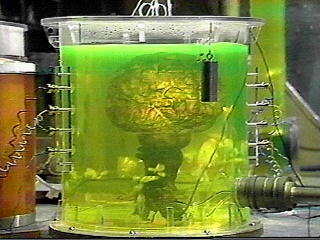
Solon fights with his creation.
Doctor Who - Season 13, Story Five - The Brain of Morbius
Written 28/5/13

After weeks of hype backlash threatened to write-off this season for me, at last I have found a story which in my mind matches its reputation. Sure, the gothic themes and obvious literary allusions are still there, but there's a subtlety to this script that takes a standard Frankenstein plot and gives it all sorts of other twists and turns. The benefit of having Robert Holmes as your script editor is mainly that there are lots of scripts like this one...
     While still trying to get back to UNIT HQ (there's more continuity in Classic Who than I realised) the TARDIS is drawn away by the Time Lords to the planet Karn, which is in Gallifrey's planetary neighbourhood. There he finds the ancient Sisterhood of Karn, equal in mental might to the Time Lords and bezzie mates with them thanks to their useful supply of the Elixir of Life, as well as famous Earth neuroscientist Solon. The surgeon is a servant of the ancient Time Lord tyrant Morbius, and plans to use The Doctor's head to top a Frankenstein-esque body to house Morbius' still-living mind. Working with the Sisterhood, The Doctor and Sarah manage to foil their plot, and while Morbius is placed into a sentient body he is thrown off of a cliff by the Sisterhood.
     There are several complex characterisations in Morbius that really set it apart from the rest of the series. Solon's obsession and his conflict between scientific rigour and the service of his master as portrayed brilliantly by Phillip Madoc, who is the best of the guest cast. His double-act with Igor parallel Condo provided a great deal of much-needed humour, and together they formed some of the episode's best moments. The Sisterhood of Karn felt like a realistic culture, and their leader Maren a tragic matriarch.
http://speakertoanimals.files.wordpress.com/2010/10/brain-of-morbius2.jpg
Morbius, doing a Future!Lister cosplay...
      The story has many ties back to the Doctor's mythology, which at this point in the series was only sparsely explored, with the Time Lords popping up here and there to put The Doctor on trial or make him do their bidding. Here there are some of the first references to the High Council and to Gallifreyan politics. In that respect it felt like a nice warm-up for the mythology-heavy Deadly Assassin in a few stories time. One aspect I didn't like was the controvertial "Faces" scene, in which six faces intended to be those of the Doctor's incarnations prior to Hartnell are shown. (This being before the whole 13 limit thing.)
     The Brain of Morbius is an instant Classic, and more than deserves it reputation. It doesn't just spin the classical allusions, but delivers a uniquely Who strand of madcap genius, makeshift gore and a pair of power-mad geniuses. The tale of Morbius' descent into madness as assisted by the desperate and cunning Solon provides some of the most well-executed villainy in the entirety of Four's era. Which is good. Probably.

Thanks.

NEXT WEEK: Plants. Bloody plants, again. Never trust 'em, that's what I say. Who the hell decided to plant The Seeds of Doom?

Monday, 21 October 2013

Review: Doctor Who Classic: The Android Invasion

http://images3.wikia.nocookie.net/__cb20061115063154/tardis/images/5/5b/Androidinvasion.jpg
How much cooler can Doctor Who get?
Doctor Who - Season 13, Story Four - The Android Invasion
Written 27/5/13

It's a little bit sad, really, that it's taken til this point in the season to find a story that I truly enjoyed. Sure, Terror of the Zygons and The Pyramids of Mars may have their merits, but this era's penchant for Gothic depressiveness leaves me with something of a bitter taste in the mouth. The Android Invasion has both a newfound sense of levity and a commitment towards new ideas, taking mystery and humour and wrapping them together in a tasty little ball. At one point I almost found myself calling it "Moffat done well," except for the fact that he probably doesn't like this story. (And at least three or four percent of my love for it comes from how Fandom tends to treat it.)
     The Doctor and Sarah believe they've landed in the quaint country village of Devesham, but something is amiss - there are armed, hooded men in the woods and the village seems abandoned. A deliciously slow reveal sees the village repopulated and the discovery of an astronaught, thought lost but in fact kidnapped and brainwashed by the Kraals, who have recreated the village and space-centre in order to plan their invasion of Earth using Android duplicates.
     There's a sense of fun in the script, with The Doctor out of his grumpy mood and finally having real chemistry with Sarah Jane again. Our villains aren't the forebearers of great myths, they're not almighty beings who are plotting to destroy the planet or the universe or such. They're just aliens rather maniacally trying to find a new homeworld. The use of Androids in this story is done rather well - a lot like the Androids of Tara, the duplication is played more for drama than for comedy, which means that it works just about perfectly. Put together with a nice country setting and a half-decent rocket control centre, and we're talking gold.
http://www.kasterborous.com/wordpress/wp-content/uploads/2010/dw-s13-androidinvasion1.jpg
Sarah saves the Doctor from being dissolved.
    The story also features one of my favorite cliffhangers of the Tom Baker era thus far, in which The Doctor discovers the duplicate Sarah and we see her face fall off as she's knocked to the ground. It's a brilliantly chilling moment and is one of many that I love. A man climbing out of a pod and strangling Sarah Jane, the Stepford-esque nature of the Androids in their confusion at the Doctor and Sarah Jane's presence, the scene in which The Doctor comes face to face with his armed duplicate. It's a treasure trove of great moments.
     I really fail to see why anyone can dislike this story, really. It was by far the most fun I've had this season - and that doesn't seem as though it's going to change any time soon, seeing as next week we've got a Frankenstein analogue and the week after it's a Triffids one. The concept behind android duplicates may not be particularly original, but the slow-burning mystery of the episode's premise was well-executed enough that it complemented the witty banter and made by far the most enjoyable serial of the season.

Thanks.

NEXT WEEK: Where the production team decide to do more retconning in a single scene than Moffat managed to do in 45 minutes... it's The Brain of Morbius.

Monday, 14 October 2013

Review: Doctor Who Classic: The Pyramids of Mars

http://www.doctorwhoreviews.co.uk/4G_files/Pyramids%20of%20Mars%201.jpg
Kneel before Zod! Sutekh!
Doctor Who - Season 13, Story Three - The Pyramids of Mars
Written between 26th and 27th May 2013

Hallelujah, calls the chorus of the Fandom. For how great in its majesty is the all-mighty Pyramids of Mars, which verily is the bestest story of them all. Or something. The level of love and devotion that the fandom gives to this story is ironic for the theme surrounding overzealous devotion. At times there was a certain Hype Backlash that threatened to turn me against this story, but I had warmed up to it by the end and I can certainly understand why so many people adore it.
     While trying to return to the Brigadier (with a grumpy Doc wanting to hand in his resignation), the TARDIS is pulled off course and arrives seventy years too early. In the priory that existed before the UNIT Headquarters were built, the two discover the machinations of the ancient Osiran Sutekh (aka Set) who, trapped inside a Pyramid in Egypt, has used his sheer mental powers to control archaeologist Professor Scarman into building a rocket to destroy the Martian power source that keeps him trapped. The Doctor realises that Sutekh would ravage the Solar System if he was released, and so plays a game of sabotage as he tries to defeat him.
     Gabriel Woolf's Sutekh is an impressive villain, with his iconic mummy-robot servants combining a simple design with a sly effectiveness. In true Hinchcliffe and Holmes style, the episode takes a lot of its cues from the horror of Gothic Classics, here especially evoking the Edwardian fascination with all things Egyptian. The final few moments, where Sutekh almost escapes but is trapped in a time bubble by The Doctor, is almost a cop-out, but the build-up in the rest of the episode is enjoyable enough to make up for that.
http://images3.wikia.nocookie.net/__cb20120518051635/tardis/images/2/25/Sarah_rifle.jpg
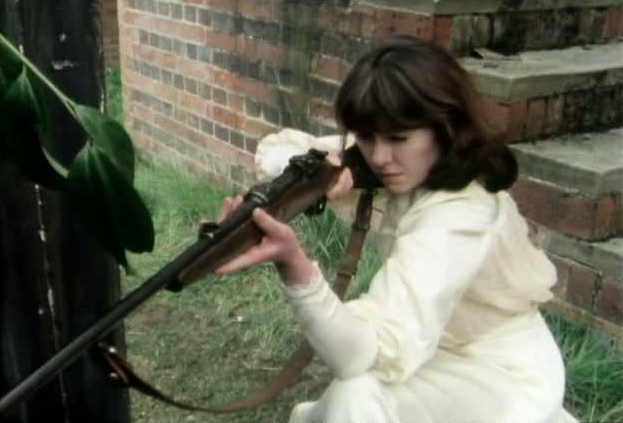
Sarah Jane is a great shot.
      Although... it does take a bloody long time to get going. The first episode is filled with a great deal of tedium as we face negative stereotypes surrounding people from the Middle-East, especially with an Egyptian man playing the piano forebodingly and then cursing white people as unbelievers who need to be destroyed and chanting in Egyptian verse. Plus, there's the annoying factor of the Doctor's character, which seems to have been written with a Four who is as grouchy and grumpy as in the worst moments of his taciturn predecessor.
     I think the problem I'm having in adjusting to 70s Who is the lack of exploration of socio-political allegories (or bat-shit crazy production decisions). The Pyramids of Mars is a standard, very-well made adventure, and from the perspective of a child at the time watching, it's a story that channels a lot of cool Gothic themes and has a villain that make even The Doctor scared. After all the hype that surrounded this story throughout my childhood and entry into the fandom, it's certain that it wouldn't live up to expectations, but it was at least a story that came close.

Thanks.

NEXT WEEK: Harry Sullivan and Benton make one last appearance. Or do they? Yes, they do. It's The Android Invasion. 

Monday, 7 October 2013

Review: Doctor Who Classic: Planet of Evil

If I could send one message into the past, it would be to the Doctor Who writing teams across the 70s and 80s, to tell them that antimatter does not work like that.


https://blogger.googleusercontent.com/img/b/R29vZ2xl/AVvXsEgcaAgnusgo8HcOK3KHTZCzoNnybWYc6rdaM08XoySeqYj-9R8wfK1PuR6WWrBW-1H2-wp-AWgiQelotBDUPr88hbreaZdxgba9PILhyphenhyphenVoA-0sU65GGSjwI8Ycd5Jt3VL7-YYadtIXAayQ/s1600/vlcsnap-2012-06-12-16h59m42s48.png
The victims of the Anti-man.
Doctor Who - Season 13, Story Two - Planet of Evil
Written 25/5/13

I can say that Planet of Evil was a story I found quite infuriating. What attempts were made to create a chilling, tense plot were squandered very quickly by a fatal combination of mumbo-jumbo sci-fi and characters as thunderously stupid as they get on Who. What it all boils down to is a rather basic story, borrowing lightly from classics like Jekyll and Hyde and contributing, as the mediocrity of its title entails, very little.
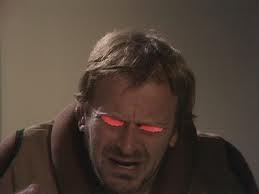
     The Doctor and Sarah encounter the remains of a science expedition to the planet Zeta Minor, on the edge of the known Universe. There Professor Sorenson hopes to exploit naturally occuring antimatter in the planet's ores to create an energy source that will restart the dying star of Monastra, the planet currently at the centre of a grand Human Empire. A ship comes to pick them up, finding Sorenson as the only survivor and blaming The Doctor and Sarah for everything under the sun. As they try to fly away from the planet, it pulls them back, wanting to reclaim the antimatter that has worked its way into Sorenson's system and transformed him into a horrific "Anti-man".
     Antimatter in reality is a form of matter whose properties in relation to forces are the opposite. Equal amounts of matter and antimatter are created when pure energy is turned into matter, which then equalises because matter and antimatter annihilate one another on contact.The script follows a wonderful Who tradition of completely misunderstanding what antimatter is by acting as if it's some kind of mutagenic radioactive material and that there's an antimatter universe somewhere that people can walk around in and come back for tea and crumpets later.
http://images3.wikia.nocookie.net/__cb20120405153261/tardis/images/b/bf/Redeyeplanetofevil.jpg
Sorenson's transformation.
     The episode's guest cast contained a surprising number of actors from previous stories, the most jarring being the final appearance of Who favourite Michael Wisher (aka Davros). Prentis Hancock's Controller Salamar is the episode's most notable guest star, however, simply for how desperately annoying he is. There seems to have been an attempt to see his slow decent into psychosis, but what results is a character who seems absurdly paranoid from the off, adding him to a roster of Who characters who see a man in a strange scarf and assume he's a mass murderer.
      The best thing about the episode is probably its early jungle setting, which was constructed in studio and, with the assistance of some well-used film, looks really convincing as an alien environment. The exotic brilliance of Zeta Minor's landscape is sadly poorly used on the big scale, with the action for the vast majority of the story moving to a set of bland spaceships with drab gray walls that wobble when you walk past them.
     Planet of Evil tries to be something more, but the dull Jekyll and Hyde endplot combined with a series of poor choices in both scripting and execution of classical horror ideas made what could have been a creepy story into something of a bore-fest for me. This may be a period of Who that is fondly remembered by a generation of fans, but for me as a first-time viewer Planet of Evil is as boring and unmemorable as Doctor Who can ever really be for me.

Thanks.

NEXT WEEK: The so-called best story ever... we take a sight-seeing tour to The Pyramids of Mars.

Monday, 30 September 2013

Review: Doctor Who Classic: Terror of the Zygons

http://static.tvtropes.org/pmwiki/pub/images/zygons_3776.jpg
The squid-like Zygons are an excellent design.
Doctor Who - Season 13, Story One - Terror of the Zygons
Written 24/5/13

It's doing the 80s first that's done it. I'm used to extravagance and silliness, of charm overriding visual flair. This week's story, designed to be the final story of the previous season, ends the Arc that began in Robot, and features some of the series' most popular one-time monsters. So popular, in fact, that they're due to make an appearance in the 50th Anniversary story. A story ambitious in both its ideas and its geographical scale, there's very little that you can flaw about Terror of the Zygons. Well. Unless you're picky, which I most certainly am.
     Responding to the Brigadier's time-space message he received at the end of Revenge, the Doctor discovers that UNIT have popped up to Scotland, and are investigating the destruction of three North Sea oil rigs. The Doctor is initially bored, but his interest is piqued when the attacks seem to be coming from a mechanical source. Slowly, they uncover the plot of the shape-shifting Zygons, who intend to use the Skarasen (a dinosaur-shaped cyborg used to explain the Loch Ness Monster) to subjugate Humanity. Once all is settled, Harry Sullivan decides to stay behind on Earth, and The Doctor and Sarah continue their travels.
     The story begins on a very slow note, with any attempt at tension-building rather spoiled by a mixture of loud bagpipe music at inopportune moments. One would expect a monster like the Zygons to be used for a tired Changeling-substitution plot, but rather more is made of the uncertainty of who may or may not be one, leading to great horror moments like the first cliffhanger wherein one seems to appear from nowhere to strange Sarah Jane. These moments save the story from its weaker moments, of which there are a surprising number given the story's high reputation.
http://upload.wikimedia.org/wikipedia/en/thumb/6/62/Skarasen.jpg/250px-Skarasen.jpg
I think I prefer The Myrka.
     Carrying on the story's paradoxical nature, it has some of the best and worst alien design of the season. The Zygons are truly magnificent (the z key on my keyboard is seeing more use in this article than it has in ages) with their slightly octupoidal design allowing for actor flexibility while still looking completely alien and intimidating. Their organic technology adds an extra squick factor, and it's odd that such a well-designed and memorable monster was never seen again. On the other hand, we have the Skarasen, which seems to borrow a prop from Season 11's unfortunate Invasion of the Dinosaurs and is thankfully the last use of stop-motion dinosaurs in Doctor Who, which may have been acceptable in the early Seventies but drags the whole story down here.
     Terror of the Zygons for me is a story that I find very difficult to truly like. I find the early story's chattering about oil rigs and mystical Scottish landlords with second-sight a tad tedious, not helped by the fact that the Zygon plot only really becomes apparent in the last episode. The Skarasen is laughable and its appearance threatens to rob it of all credibility. But at its heart it contains a tremendously memorable and well-executed set of main villains, and a penultimate 70s outing for UNIT that leaves it in good spirits as the show's true independence from the old style begins.

Thanks.

NEXT WEEK: I've no idea what happens in next week's story... it's Planet of Evil.