Tuesday, 26 January 2016

Review: Voyager 4.1: Scorpion, Part II

Jeri Ryan finally appears as Seven of Nine
Star Trek Voyager - Season Four, Episode One - Scorpion, Part II
Written between 26/1/16.

The first half of Scorpion was designed as an apology to the fans, giving them a proper Borg episode after the incredible misfire that was Unity. Like Scorpion's spiritual predecessor The Best of Both Worlds over on TNG, the two halves of this story were written months apart, with the second half being adjusted to meet with fan reactions to the first. The main changes became very obvious - the arrival of Seven of Nine as a way to bring in a horny-teenage-boy demographic and shake up the cast, and the decision that instead of finally killing off Garratt Wang's Harry Kim for good, they would ask Kes actress Jennifer Lien to leave the series. Scorpion, Part II ended up being the episode which saved Voyager from complete and total ratings mediocrity, and ensured that it would reach seven seasons.
       The truce continues and Janeway and Tuvok begin working on the weapon with the Borg which will help them to destroy Species 8472. The Borg want to partially assimilate them to enhance communication, but Janeway makes a different bargain - choose one Borg to represent them, or the deal if off. Said Borg chosen is the intimidating Seven of Nine, a human girl assimilated by the collective when she was a small child and has spent the past 18 years as a drone. Eventually the Borg Cube that they are all stationed on is forced to destroy itself to stop a Bioship from attacking Voyager, and so Janeway, Tuvok and the Borg take a ride on Voyager, with the Borg assimilating one of the Cargo bays as part of their "truce". Seven of Nine eventually hijacks the ship and takes it into Species 8472's home dimension, Fluidic Space, revealing that the entire war was due to a Borg invasion of their space in an attempt to assimilate Species 8472 for their genetic diversity. The weapon is deployed and upon the Borg's betrayal most of them are blown out of an airlock - except Seven, who they manage to separate from the Collective by force.
       This episode didn't carry as much of the tension of its first half, although it did rather admirably carry on the themes between Janeway and Chakotay, this time focussing a lot more on Chakotay as he is forced to take command in Janeway's incapacity and the rift it creates between them. I loved the animosity that very quickly developed between Chakotay and Seven, with Seven standing in for what Chakotay considers to be Janeway's worst decision, and the bitterness he has over the fact that he feels obligated to continue following her (slightly crackers) plan until the last possible moment. The scene near the end where Janeway recovers and confronts him over his disloyalty was an incredibly strong moment for Voyager the show in general, finally managing to portray with high drama the conflict between Federation and Maquis philosophy, the problems this causes between two people clearly with love and affection for each other, and the way that each must compromise their values in order to keep things running. It's a dynamic that would make Deep Space Nine proud.
Harry Kim... lives? What the hell?
     Elsewhere, a lot of the character work was also shifted over to Kes and Seven of Nine, with the latter sitting as a big obvious neon sign saying "LOOK THIS CHARACTER IS IMPORTANT." (Well, that and the fact that Jeri Ryan's name had replaced Kes' in the opening sequence.) Seven immediately gives a good impression, with Jeri Ryan managing to admirably catch the spirit of the Borg with a commanding screen presence which makes you want to learn about her story and her character. It was this presence which would make Season Four (and arguably the rest of the show) work so well. I've not done gushing about Seven of Nine, not by a long shot. On the other hand there was Kes, with her magical abilities both serving as some slight character development for her an as the episode's main form of exposition about Species 8472 and their impending threat.
     Part of me knows that this episode isn't as classically "good" as it's first half - there's a lot more focus on action rather than the well-developed character drama, the plot sort of just floats around, and Harry Kim lives. But the arrival of Seven of Nine and the immediate shake-up it has on the cast of characters is incredibly interesting to me, and it puts this episode onto the map of the series as a whole.

Thanks

NEXT WEEK: We carry on the story of Seven of Nine and say a sad farewell to Kes in The Gift.

Saturday, 23 January 2016

Review: Voyager 3.26: Scorpion

Star Trek Voyager - Season Three, Episode Twenty-Six - Scorpion
Written 23rd January 2016.

The idea of reviewing Star Trek was always a very daunting one to me when I started here on Nostalgia Filter, mainly because a lot of the context which I had for these shows was from having watched them back when I was a kid. Star Trek was a relatively new addition to the pantheon, and as well as being a more long-winded US show it also had seven seasons. I told myself that I might review it, but that if I did, it might make sense to stop at the end of the third season. That's not going to happen,  but I thought it was important to mention anyway.  Scorpion, like many end-of-third-season episodes for these shows, is something of a game changer, opening up many new avenues for the show and, for a time, taking us out of the doldrums.
Species 8472 are the show's most alien species yet.
     Voyager is about to enter Borg Space - the massive home territories of the Borg, a race of cyborgs who seek only to assimilate and destroy. (We met them back in Unity.) The crew are very tense, planning to continue their journey home via "The Northwest Passage", a thin corridor of space unvisited by Borg Ships due to Technobabble. Being passed and ignored by an armada of Borg Ships, they're later confused to find that all of them have been destroyed by a bizarre species of non-humanoid creatures who use biological ships and who telepathically tell Kes that, "The weak will perish." While exploring an abandoned bio-ship, Harry Kim is attacked by one of the species, and his body starts to be enveloped by toxic vines. The alien race, known only by their Borg designation of Species 8472, turns out to be basing itself in the Northwest Passage, emerging through a wormhole from a place known as Fluidic Space. Debating how to proceed, Janeway consults a Hologram of her idol Leonardo Da Vinci, and decides to make an important decision - to make an alliance with the Borg.
     This episode is often called the Best of Voyager, and it's easy to see why. Voyager often lost a lot of points on the consistency of its characterisation, to the point where even Kate Mulgrew was on board with the fan theory that Janeway had some form of bipolar disorder. This episode sets up a character play between Janeway and Chakotay, in three scenes which explore all aspects of their relationship - the first showing their almost romantic admiration and devotion to one another, the next showing Chakotay's role as an advisor and advocate, and the last showing the ideological divides between them that separate Federation and Maquis. The issues of the episode are discussed thoroughly, and we aren't driven by the narrative to necessarily agree with either of the two on their stances on the Borg Alliance. It's not in-depth characterisation as Voyager often does; instead, it's utilising those characters for the good of the plot, and it works marvellously.
     One of the episode's hallmarks that set it apart from the season it's about to finish is the sense of tension woven through the script. This is before the days when Voyager would go around blowing up Borg cubes willy nilly, and there's a feeling that everyone involved is terrified, either at the possibility of inevitable assimilation, the new possibility of destruction by Species 8472, or the prospect that their 67 year journey will have to be postponed even further to find some way around Borg Space. This comes across in everyone's tone - there is still some mild humour, but everyone feels more alert and the idea that the Borg does this to Voyager lends them an amazing sense of gravitas.
Janeway negotiates with the Borg. I'm actually impressed at
that badassitude.
       This balances out the other side of the episode, the introduction of Species 8472. Their introduction here presents them almost as the "new" Borg, a new villain for the series to hook itself on. Unfortunately they wouldn't get to use them this way (having only two appearances after this two-parter, the latter of which saw them going to great lengths to make peace), but right here it works immensely well - the sheer alienness of the 8472 and their (as yet) unexplained hostility towards our Galaxy, their living ships and their immune system, which is so powerful it can destroy Borg nanoprobes. It was a really interesting concept which was, at least initially, fairly well executed, and the added threat they present manages to make the Borg that more interesting an enemy.
     Scorpion isn't my favourite episode of Voyager - they tend to be the more stand-alone character pieces or great, well-executed concepts. As a piece of serialised television, though, taking Voyager into the next stage of its evolution, Voyager's attempt to reach the heights of TNG's Best of Both Worlds manages not just to reach its target, but excel it and take the show into a brand new direction. Scorpion marks the beginning of a string of amazing Voyager episodes, and I look forward to taking on Season Four with fresh eyes and fresh enthusiasm. And to see Seven of Nine, of course.

Thanks.

NEXT TIME: We rejoin the conflict and meet Jeri Ryan's Seven of Nine in Scorpion, Part II.

News: Steven Moffat to regenerate into Chris Chibnall

Chris Chibnall will be showrunner by 2018.
Image from hypable
Yesterday was the home of a slew of news about the future of Doctor Who, with the main wonderful fact being that Steven Moffat, after producing his seventh season as showrunner in 2017, will be standing down from the position. His replacement will be Chris Chibnall, a man who on this blog has always had very mixed press - sometimes a powerful dramatic writer, but when writing for Doctor Who his scripts tend to be disappointments. The same news article in Radio Times later specified that there won't be any new Doctor Who on our screens until Christmas this year, which is disappointing even if it makes some sense.

Chris Chibnall is the writer of amazing ITV Drama Broadchurch and its short-lived American remake Gracepoint, the UK version of Law and Order, as well as some good episodes of Life On Mars, and a crappy Starz version of Merlin called Camelot retold for an adult audience. In terms of Doctor Who, Chibnall was the showrunner for the first two seasons of Torchwood, which are in my opinion the best of that show's run, producing great episodes like Countrycide, End of Days, and the heart-wrenching Adrift. On the parent program, however, he wrote less inspiring stuff - 42, The Hungry Earth/Cold Blood, Dinosaurs On A Spaceship and The Power of Three.

Chibnall's first three stories fell into the trap of trying to mass-produce an ensemble cast that we cared about, with his ability to do so decreasing with every attempt, from the genuinely likable crew of the space station in 42 to the caricature-laden pastiches that filled the screen in Dinosaurs on a Spaceship. He also got a lot of focus in the "September Season", essentially writing Amy and Rory's arc over that period and writing prequel and sequel shorts which attempted to show them living a life of domesticity. He had some very strong concepts and usually managed to execute them well, but overall his ability with characters was sub-par. His work also, like Moffat's, occasionally contains a few sexist undertones, although thankfully with far more fewer frequency and less sheer revelry.

I'm not entirely sure where the show is going to go, so I'm not being optimistic or pessimistic either way. Chibnall would not have been my first choice; if you remember, the first thing I wrote about Doctor Who on this website was "Chris Chibnall is a bastard." (Something I later redacted, as it's fairly libelous.) I can go on all day about how a female showrunner would have been progressive and great, or we could have Toby Whithouse, whose episodes I love, but I think that's a bit pointless right now. All I can say is that I'm glad Moffat is finally leaving the reigns, and allowing NuWho to extremely belatedly leave its second era.

Thanks.

Thursday, 14 January 2016

Always and Forever: A Tribute to Bowie and Rickman

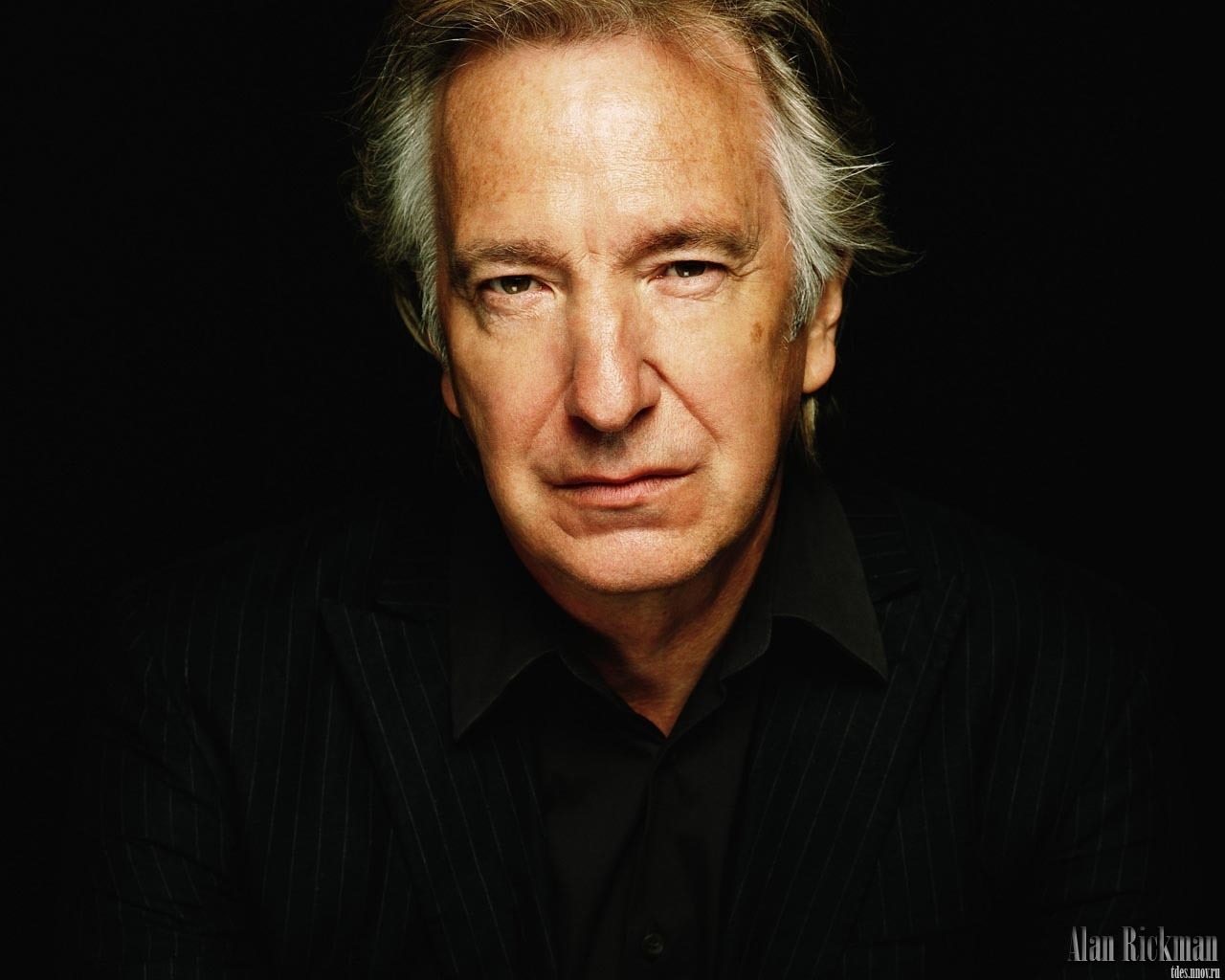
On the 21st February 1946, a boy was born in the London town of Acton, and was later named Alan Rickman. Almost a year later, just a few miles away in Brixton, another boy was born called David Jones. He would later change his last name to David Bowie. Both of these names are obvious and, of course, you may already know by now that they passed away from cancer on the 14th and 10th of January this year, respectively.

Usually I wouldn't comment on celebrity deaths. Lots have come and gone as this blog has existed - a whole host of Doctor Who stars, Christopher Lee, Robin Williams - I can't name them all, because I don't remember everyone who dies. You can't remember that. What you do remember is the good times. And boy, did we have some.

David Bowie was a musical godsend, a fashion icon and one of the most innovative, continually reinventing artists in British popular culture. His bizarre fashions have gone on to uniquely shape not only our culture, but Global culture, and his songs have entered the public record as classics that rival the Beatles in popularity. Even till his last days, Bowie was releasing regular albums and dealing in the avant-garde. Years after the heydey of his biggest 70s and 80s hits, they formed an integral part of my childhood and my teenage years, and I and many others would not be the same without him.

Alan Rickman originally decided to pursue acting once he left University. However, at almost 40 years old he decided to join RADA and train professionally - and almost overnight, with the role of villain Hans Gruber in Die Hard, he became a Hollywood sensation. His unique voice, hair and incredible poetic wit carried his career and work from strength to strength, leading to role in both Hollywood films and an impressive array of work back in the UK, including cult classic Love, Actually and, of course, the career-defining role of Professor Severus Snape in the Harry Potter franchise which, for many including myself, was his first appearance on television. Rickman was a cultural treasure, and someone who you kind of just assumed would be here forever.

The past few days have been a bit of a gut-punch, not just here but around the world. I don't particularly pretend to have any kind of significance in these matters, but I needed to make tribute to two men who helped to define who I am and did the same for multiple generations of people.

Thanks.

Friday, 8 January 2016

Review: Voyager 3.25: Worst Case Scenario

Thank you, Tuvok. At least someone understands. *cough*
Star Trek Voyager - Season Three, Episode Twenty-Five - Worst Case Scenario
Written between 7th and 8th January 2016

Back when this show started, the main conflict set down by the writers was the struggle between Voyager's remaining crew and the Maquis rebels that they had been forced to work with. The Maquis were created and placed into Next Generation and Deep Space Nine just to set the show up, but the conflict between the crews was more or less dropped by the end of the first season. From then on, it would only be discussed in episodes that flashbacked to the first season, and this is the first time that happened. I don't know whether it's too early in the show's life for it to become self-aware, but the tone of the episode does feel slightly like it's closing the door on those old tensions, and throwing one last bone to the storylines that ran through the show's first two seasons.
     We open on what looks like Chakotay planning a mutiny, with B'Elanna playing the part of a Starfleet ensign going along with the rebellion. Janeway and Paris leave the ship in a shuttle, and Chakotay rounds up the remaining Starfleet crew and offers them an ultimatum. The real Paris then walks in and it turns out that this whole thing is a Holodeck program created by an unknown author. We see a couple of scenarios where Tom and B'Elanna try different things in the program, until eventually Tom reaches the end of the story. Tuvok reveals that the program was originally created by him as a security measure in the case of mutiny back in the early days of the show. With Tuvok's help, Tom is given permission to finish the program's story, but it turns out that the program had been booby-trapped by Voyager villain Seska before she died, and Tuvok and Tom are forced to explore the holographic Voyager and avoid being killed while Janeway works on getting them out.
     This is the first outing for two recurring types of Voyager episodes - "romp about in Voyager's past" episodes, and "Alternate Character Fun" episodes. Both of them happen about once a season, and allow the writers and cast to spend some time working with very different characters than they usually would. For what it's worth, I really enjoyed the segments set in Voyager's potential past, especially because for me it fit a lot more with the characters outlines in the pilot. We're given some hints in Resolutions as to why Chakotay basically just capitulated to Janeway straight away, but it never really made sense to me, and seeing him take the first opportunity to take control (and trying to do so without killing anyone) felt really satisfying. Also, despite how slightly one-note she can sometimes be, it was great to see Seska again, in her penultimate appearance on the show.
Oh, Seska. Don't remind me of the Kazon arc, please.
     Therein lies the episode's main appeal, then. What else is here though? There's a strange segment in the episode between the fun hypothetical scenarios and the finale with Seska's revenge in which Tuvok and Paris debate narrative method, and the difference between writing for the art and writing for an audience. It came out of nowhere but I actually found it really interesting, and I would have liked it if the episode had ran this theme throughout the episode. Usually episodes of TV Shows which are about writing are called cliché because it's writers who are writing them, but there's only one other story with that theme in all of Voyager so it wouldn't have gone amiss here. It might have been difficult to work it in with the episode's concept, but that's their job, not mine.
     Part of me doesn't want to find fault with Worst Case Scenario, because it's such a fun poke back at those early days of the show that it builds a lot of good will with me very quickly. At the same time though, the climax with the Seska hologram feels a little forced, and you end up taking a fairly interesting story about narrative structure and the rights of the author and turning it into a silly run-around. Despite this though, it just feels like an important event, and one episode before the arrival of the Borg as the show's main villains, it perhaps feels appropriate that the show finally leaves its old self behind in an entertaining and tongue-in-cheek way.

Thanks.

Thursday, 7 January 2016

Review: Voyager 3.24: Displaced

Herp-a-derp, coming ta steal yo spaceship.
Star Trek Voyager - Season Three, Episode Twenty-Four - Displaced
Written 7/11/16

Back at the end of Season Two, Voyager was overwhelmed by their main enemies, the Kazon. This was used as a way of escalating the tension of the situation, as that trope often is, as it showed Voyager being brought to a point of desperation. As ridiculous as the Kazon were, they had the help of traitor Seska to work their way onto the ship, and you believed that they were capable of this one final triumph. In this week's episode, a random, badly-dressed race of aliens manages to overwhelm Voyager in the space of less than 20 minutes. Talk about lowering the stakes as you go along. The feeling you get after finishing Displaced is a feeling that none of this should have happened, and you're not quite sure how it did.
     Tom and B'Elanna are arguing (with much sexual tension) when a silly-hatted alien suddenly appears before them, claiming to not know where he is. The crew discover that Kes disappeared at the same time, and from then on there appears to be a teleport swap of Human and Nyrian every nine minutes. Although Janeway has a gut feeling about there being "something wrong here", everyone is taken aghast when, of course, the Nyrians take over Voyager. As B'Elanna is beamed over, we find that the crew of Voyager have been placed inside an artificial environment suited to their needs. Slowly, the crew begins to build weapons and find gaps between the environments that the Nyrians have created, and with The Doctor's help they take over the Nyrian's spacecraft, teleporting all of them into a cold environment and threatening them with hypothermia unless they send everyone home.
     One of my problems with this episode is that I don't believe the Nyrians as a species. This faction of Nyrians employs the swapping-out method because it's easier to deceive people than to outright attack them. In order to carry out this "humane" method, they built a giant space station capable of holding thousands of prisoners indefinitely, using tons of power to maintain different environments and atmospheres. We never meet the Nyrians again so I can't imagine that they're a huge empire with limitless power - so it seems so strange that they would burn up so many of their resources when they could just use their magical somehow-gets-past-Voyager's-shields transporters to beam people into space. Voyager starts its rebellion and overruns their space station in the course of an hour or two in-show, and the idea that our heroes managed what dozens of other species couldn't also rubs me the wrong way. It's not very believable, is my point. And it's also difficult to be caught up in the tension of an episode where Voyager is overrun when you don't find the villains intimidating, and it's inevitable that they'll lose at the end of the episode.
Technically speaking, this is a B'Elanna episode. Technically.
     The only really important character notes in this episode were between Tom and B'Elanna. It felt a little bit like a retread of the events of Blood Fever in that respect, as they didn't really go over anything more interesting than the fact that B'Elanna gets angry and Tom uses humour as a defence mechanism, both of which we already knew and didn't really need spelling out to us. It was nice to see them continuing to build up the relationship between those two, which would later go on to become "official" in Season Four, but it felt so irrelevant to the rest of the episode's plot that it might as well have been a bit of an afterthought. Elsewhere, we had a nice out-of-the-blue scene between Chakotay and Tuvok where they reminisced about their time at the academy.
      Promising so much in premise and delivering so little, Displaced is one of a long list of classic Voyager filler episodes; you could reasonably drop this episode from your marathon and not lose much beyond one slight gradiation towards the Tom and B'Elanna subplot for next season. Compared to the rest of the season it isn't a particularly bad show, and the action is well-executed, but compared to the last two episodes of this season, it really isn't anything special.

Thanks.

NEXT WEEK: Mutiny on Voyager? We revisit Season One plotlines for one last time in Worst Case Scenario.

Monday, 28 December 2015

TV Shows I Watched In 2015

It's that time again, folks. Here is a list of the shows that I watched this year, some of which I watched live as they came this year, and some of which I just happened to binge and thought I'd mention here. Spoilers everywhere.

This image is, in itself, a spoiler. Unless you don't
watch the show. Image from sidekickreviews
Game of Thrones - Season 5, HBO/Sky1
Written 15th August.

Another season of Game of Thrones went by, and along with it another series of controversies, odd character decisions and an unhealthy obsession with victimising women. The show managed to cover pretty much all of the most recent two novels in G.R.R Martin's A Song of Ice and Fire book series while also going more heavily off-book than ever before. This led to, as in last season, a lot being left out, as well as characters being moved around, killed off and generally manipulated in such a way as to confound anyone who knew the plot of the books.
    The best and most amazing storyline was also the one that went most off-book - fresh off the heels of killing his father, Tyrion Lannister is smuggled to the continent of Essos and is encouraged by his saviour Varys to seek out Dragon Queen Daenerys Targaryen. Along the way he is kidnapped by exiled servant of the Queen, Jorah Mormont, who happens to be heading in the same direction. Unlike in the books, however, Tyrion actually makes it, leading to several scenes of Daenerys and Tyrion together. A lot of the frustration with Dany's storylines in the first four seasons was their loose connection to the plots going on in Westeros, and getting to see Tyrion in that part of the world made the mythology tie together more physically - as well as putting my two favourite characters onscreen at once.
"Bring it." From Wikimedia
     Over in controversy corner, and the show continued its trend from last season of exploiting violence towards women and girls. Sansa, who at this point in the books has stopped doing anything, is shipped over to her home in Winterfell, where she becomes the wife and plaything of the disgusting Ramsay Snow. After spending four seasons building her up and delivering her the agency she always wanted, her character was derailed in a plotline designed to act as a redemptive arc for the tortured Theon Greyjoy. This culminated in a horrific rape scene, thankfully not showing the act but regardless framing the scene by making us watch Theon's face as we hear Sansa's terrified screams. This carries forwards to the storyline in the North, where, again off-book, Stannis Baratheon decided to use his daughter for a blood magic ritual, and again we get to watch his face as we hear his daughter's genuinely blood-curdling and upsetting screaming. The list of reasons why this doesn't make sense is long, but notably: killing his daughter makes half of his mercenary army rout the field; his wife kills herself because of her guilt; and now the guy who believes himself the "rightful king" has no heirs whatsoever. Which is why it didn't happen in the books.
     Now with the death of Jon Snow (or not, it's an uncertainty carried over from the book), and a great deal of material not covered by the series (leaving a few notable holes), the future of Game of Thrones is uncertain. HBO has guaranteed that the show will get another two seasons in order to conclude its story, and they've apparently been given notes from Martin himself. Despite all of the horrible ways that David Benioff and D.B. Weiss like to hurt female characters and mess up the story, I still enjoy Game of Thrones, and I want to see it get better.

Rick's group approaches the Alexandria Safe Zone.
From Wikia
The Walking Dead - Seasons 5B and 6A, AMC/Fox
Written between 15th August and 27th December.

The fifth season of The Walking Dead, now finished, can only be described as... sedate. Which is an achievement, for a show which is pretty sedate anyway. 5A had a few interesting moments, but its story progression was fairly slapdash and lacked focus. That lack of focus continued into the second half of the season, with Beth's death glossed over with the death of brilliant supporting character Tyreese. Thankfully, the season picked up again, following our characters into the Alexandria Safe Zone. Seeing our characters back into a suburban environment was really interesting, and would have been even better if they hadn't bogged it down with an off-book romantic subplot. I did however love Rick's descent back into savagery - it felt like a logical progression that after he killed two entire groups (the Claimers at the end of 4B and the Hunters in the middle of 5A) he would flip out upon being asked to trust a group of people who had stayed out of the whole thing. The final scene of the half-season, with Morgan finally meeting Rick again after two seasons, was the icing on the cake.
     I think one of my problems with The Walking Dead, starting this year, was the fact that there appears to be no end in sight. That's not a specific problem with TWD - this occurs in all fiction in this genre, with a number of different possible endings, none of which are going to be very satisfying. It doesn't really help that the show, like Game of Thrones, is adapting its source material somewhat faster than it can be produced. Five years into the show, we're seven years into the comics, and that's not even taking into account the extra plots grafted onto the show's canon. The thing that saved Lost's last few seasons was a definite ending point, and that gave the series a sense of purpose going forward, and a guarantee of sorts that everything would come to a head. Season Five proved that this is exactly what The Walking Dead needs, and what it currently sorely lacks.
     That was, of course, until the beginning of the Sixth Season in the Autumn, at which point the show suddenly shot up a gear. Having spent 5B establishing the people of Alexandria, their politics and the threat of a chaotic group known as The Wolves, 6A set about providing key character development, juicy plots and a refreshing pace. By far the saving grace of this season was the arrival of Morgan, whose philosophical differences with the rest of the cast allowed for some realistic conflict that didn't just descend into painful, "it's inevitable that we're all going to die" nonsense. It also provided quite possibly my favourite episode of the entire show, the phenomenal parable that is, "Here's Not Here" which has Morgan in the spotlight. With these things in mind, I'm a lot more confident about the show's future, and I hope that this movement out of mediocrity lasts for a long time.
Insert joke about the West Coast here.
From Forbes

Fear The Walking Dead - Season 1, AMC
Written 3rd September.

For some critics, this six-part miniseries preceding Season 6A of the parent show travelled far too slowly. I am not one of those critics. There is a certain lackadaisical pace to Fear which it has inherited from The Walking Dead, but there are several things it holds in its favour - characters we haven't been slugging it with for five years, the new concept of watching the apocalypse happening from the start, and the sense of tension as society slowly collapses. So much of The Walking Dead consists of wandering around empty countryside, with tension only mounting when the characters decide to explore an abandoned structure or something like that - here, the tension is constantly building as the world basically crumbles around our knowing protagonists. And that, for me at least, is more worth tuning in for than seeing what weird thing Rick is gonna do this week.

Hey Nicky, you so fine, you so fine you blow my mind
Hey Nicky! From zimbio
Orange Is The New Black - Season 3, Netflix
Written 15th August.

Where do I begin? I tried my best to avoid the hype train on this Netflix series set in a women's prison, mainly because I expected I'd have a great deal of Hype Backlash. Now that I have seen it... what was I thinking? This show is just as awesome as everyone said it was! Originally focusing around rich white girl Piper Chapman and her year in prison on drug-possession charges, the series opens up into a lots-and-lots-of-characters ensemble drama which takes the format of Lost (main plot in the present with an character-specific flashback each episode) and puts it into a format which is deliberately designed around binge-watching. It also manages to portray important issues like LGBT rights, trans discrimination, police and government corruption, sexual abuse and many more in a responsible and innovative manner. (With the exception of the show's solid refusal to say the word "bisexual".)
    I love this show for so many different reasons. The characters are all well developed, with everyone (except Dee, fuck Dee) getting several shades of grey to their characterisations. My favourite character is probably Red, played by the amazing Kate Mulgrew (better known as Captain Janeway). While I actually did enjoy Piper's story in the first season, I agree with the common idea that her storyline is less interesting as time goes on, and I think it's a sign of great writers that the show evolved to focus on a wider set of characters. I'm really looking forward to Season Four and I'm glad that I finally joined the bandwagon.
Sarah and her clones face off against Project Castor.
From screenrant

Orphan Black - Season 3, BBC America
Written between 16th August and 3rd September.

Despite some shaky moments, the third season of Orphan Black continued to demonstrate Tatiana Maslany's immense talent. The appearance of male clones played by Ari Millen threw several new factions into the mix, and proved to take the series in directions that were both positive and negative; positive in that the male clones allowed our sisters to finally discover their genetic origin and advance the mytharc, and negative because these new male characters just weren't as interesting as the pre-developed relationships. This made the beginning of the season feel a little messy, and the varying subplots didn't really mesh together until the very end.
     This season's main theme, tied into all of its storylines, was the importance of family - both actual family relationships and those forged in friendship. Alison ran for head of the local Schools board, funding it by running drugs through her mother's soap shop. Pregnant Helena was captured by the male clones (Project Castor to contrast the female Project Leda) and eventually rescued by Sarah. Sarah and her adopted mother Siobhan then followed several clues in order to find both Castor and Leda's genetic origin - Kendall Malone (Alison Steadman), Siobhan's birth mother, a genetic chimera with strands of male and female DNA.
     Season 3 was messy in places, and it didn't really find its footing until a few episodes in. But it's still not a series that can really be faulted. Tatiana Maslany is still the best actress working on television today, no question, and that didn't change. I can't really complain about the uselessness of the Castor storyline from the beginning of the season, or the random new love interest given to Cosima, when everything with T-Mas was so brilliant. From the discovery of the genetic original, to the introduction of new clone Krystal, the treatment of Rachel as she recovered from a pencil to the eye, and the amazing silliness of Alison's drug business, I kept finding something to love. I can't wait for Season Four.

Gemma Chan as Mia. From Channel Four
Humans - Series 1, AMC/Channel 4
Written 6th September.

By far this year's biggest surprise was the C4/AMC coproduction Humans, adapted from a Swedish series about an alternate Present Day in which human-like robots known as Synths have taken a valuable place in human society. Originally a focused character drama looking as the Hawkins family, the show spiralled out into a rich mythology and backstory while never losing that skill with its characters. In rifling through all of the ways in which robots have been treated in science fiction, the show managed to develop its cast of humans and sentient synths as a large set of distinct, well-developed and sympathetic by Episode Two. Add in phenomenal acting turns by Katherine Parkinson, Colin Morgan, Gemma Chan and newcomer Lucy Carless, and you've got one of the best newcomer shows of the year. (See here for my longer article on the show.)

These are two attractive people. From ibtimes
Outlander - Season 1, Amazon Prime/Starz
Written 6th September.

Carrying on the recent rise in online-only shows, this year I also watched the first season of Outlander, a show only available in the UK via Amazon Prime's exclusive premium on-demand service. Adapted from the series of books by Diana Gabaldon, the show follows 1940s army nurse Clare Randall as she is thrown back in time to 18th Century Scotland. There she is taken in by the Clan Mackenzie, a local lordship in opposition to the British throne, and she falls in love with the strapping Jamie Fraser. Forced to fight the evil ancestor of her 1940s husband, she must find a way to get home.
     Outlander often struggles with its balance of historical drama and sci-fi leanings. Like its obvious protegé Life On Mars (which actually succeeds the publishing of the books which inspired the show), it's often difficult to remember the fact that Clare is displaced out of time, at least once the "Fish-out-of-water" humour runs dry. Luckily, the plot is well-placed enough that a lot of the time you don't much care, and those sci-fi elements do raise their heads again. I did find a lot of the show's nudity and sex scenes a tad excessive (this show has more nudity than Game of Thrones, although it's usually a lot less bloody and violent) and I found it questionable that the two main villains of the this first season were both implied to be gay (and the same was not true of any other character.) But despite concerns, there's something strangely compelling and relaxing about the escapades of Clare Randall, especially in the second half of the season, when the series' mytharc begins to bear fruit.

Even on the poster it looks like she doesn't wanna be here.
From the BBC
Doctor Who - Series 9, BBC1
Written 27th December.

After being pleasantly surprised by Series 8, I had a lot of hope for my favourite show. Moffat was still here, of course, but there was something of a development in his writing style that seemed to me to be less about making offensive jokes and more about actual character development. Series 9 was very much one step forwards, two steps back. A lot of Moffat's old tropes returned, including an arc which didn't really go together very well, and the habit of retconning important parts of Doctor Who's history. However, the show did go the extra mile in taking some steps in new directions, especially when it came to the Time Lords.
     The most notable differences in this season came with the show's new format and aesthetic. Most all but two of the episodes in the season were organised as two-parters, which brought to mind the format of the Sarah Jane Adventures. I had hoped that it would allow a lot of the stories to become more developed, as they were approaching the length of Classic serials, but that didn't really come to pass as a lot of the time each individual part had a very different tone, pace and occasionally writers than the other half, meaning there was something of a lack of tonal consistency. This tied into another aesthetic shift for the show, with Moffat falling back into his misguided desire to make the show "cool" and "modern", exchanging the Sonic Screwdriver for a gaudy set of sunglasses and Peter Capaldi's Pertwee-esque costume for a hoodie and trainers. And the less we talk about that electric guitar, the better.
     Clara finally got to leave this series, although they had to ruin it again by giving us a passable if noble departure, followed up by a less believable resurrection and an open-ended departure off into space. Series 8 had her developing from a normal-ish human being into a character somewhat obsessed with taking on the responsibilities and identity of The Doctor, and that development did continue here, albeit a great deal more slowly. Unlike the previous season, which presented this as a noticeable flaw which Clara really shouldn't be working towards, this year it was just an accepted fact about who she was, including during both of her exits. I like that she carried on that development, but I still think that it would have been so much better to just let her leave in Last Christmas like she was supposed to.
I am going to break that guitar. From BBC America
      And, finally, this year was struck with a number of arcs and recurring characters. From the second episode we got not-so-subtle mentions of "The Hybrid", a retconning Time-Lord prophecy which spluttered to an unsatisfactory ending in the finale. Part of that developing arc was the reoccurring face of Maisie Williams as Ashildr/"Me", who didn't really impress in the role, with the exception of a more subtle turn in The Woman Who Lived. These recurring aspects did tie the season together into a cohesive whole, but the result didn't really gel very well because of the vast changes in tone and the fact that most of it is brushed aside for an arc with the Time Lords in the finale.
     For a series that tried very hard to be different, it's a shame so much of it failed in the execution. For the first time we got two female writers and both of their episodes were slated by fandom, even though they were two of the best episodes of the season. The Zygon two-parter, while dangerously stupid in its politics, was at least trying to be relevant and interesting science fiction. There's a sense of stuttering, of a car failing to start repeatedly. The question is, can Doctor Who recover before it burns out the clutch? And, if rumours are to be believed, is next year the last outing for both Capaldi and Moffat?

At least Miko's story turned out not to be as terrible as I thought.
Heroes Reborn - Season 1, NBC
Written between 30th October and 27th November.

I had a lot on the table for Heroes Reborn. Despite a lot of my misgivings about its parent series, I was still of the opinion that it could have really done with one final season to conclude the story and the journeys of these characters, as well as to explore that last cliffhanger in which the existence of Evolved Humans (now "Evos") is now a public matter of fact. When Reborn began I wasn't very impressed with the the way it reused a lot of the same character archetypes and themes to say a lot of the same things, but as the series went on I began to see how tightly the story has been written, avoiding a lot of the pitfalls that Heroes itself often fell into.
       Instead of acting as yet another cycle of Heroes' repeating storyline, the focus of the series around the aftermath of an orchestrated terrorist attack means that this Universe feels a lot more adult, with characters having to face the consequences of their actions as and when they happen. There are enough old faces to make the show still feel like you're watching Heroes, but for the most part the injection of new blood has very much updated the show, developing it past its mid-noughties chic and neatly avoiding a lot of the stink that the show had picked up by its fourth season. Its biggest improvement is in its time-travel story, which manages to be very tight-knit and cohesive, dotting all the is and crossing the ts to make an exciting and yet perfectly logical sequence of events.
     I wish I could have reviewed this week-on-week, but I really didn't have the energy to do so. I'd also have liked to see how it ended - but for some stupid reason NBC have decided to leave the final three episodes of the season in January, ending this year's run with an awkward filler episode and completely demolishing any and all momentum that the show has. People are not going to tune in in January to finish this thing off, and if they do, all of the tension will just be gone. It feels a little like NBC want to sabotage this show and make sure that Heroes doesn't end up coming back full time, and that's a real shame, because once this little mini-series got going, it really deserved a fair chance.

Luther is captivating but running out of ideas. From the BBC
Luther - Series 4, BBC1
Written 27th December.

Erm... Hi? I've loved Luther since it started, I think it's an amazing, unique take on the detective genre which combines gruesome villains with a charismatic lead, playing off of a number of detective show cliches while never actually feeling held down by them. It fell into a nice format of four hour-long episodes in two rhyming couplets, which worked, keeping the character's intensity in short bursts. The third season ended on an open-ended but satisfying moment, keeping it open for star Idris Elba's desire to take the series to cinemas. That's what makes this incredibly short two-parter seem a little... well, weird is the word. It's nice to see you, Luther, but why is this such a flying visit?
     Given the brevity of the series, I was expecting something huge from the two-parter, something which would fundamentally change the format of the series. While we shifted some of the cast around, replacing Warren Brown with Rose Leslie and starring a brand new messed-up killer who eats his victims and then leads the police to each of them with a trail of identity papers. It was a balance of moments both introspective and painfully tense, but it didn't really have the barnstorming, triumphant surge which made Luther work - there needs to be the catharsis that comes with watching Luther beat the shit out of someone. The second half also wandered off into very strange territory, and even with Luther's extraordinary stories it stretched my sense of disbelief. I would have much preferred that this be the first two episodes of a brand new series instead of this strange "event" show which didn't really feel like it made that much of a lasting impression.

This show would be at the top if this was a "Top 11 Shows" list.
From denofgeek
Jessica Jones - Season 1, Netflix
Written 27th December.

A late addition to this list, but I couldn't talk about 2015 without mentioning Jessica Jones, the latest of the Marvel spin-off TV shows appearing on Netflix. Running alongside the series of blockbuster films and two TV shows on Disney's ABC channel, Marvel moved its vast Cinematic Universe over to Netflix earlier this year, with the 13-episode series Daredevil starring Charlie Cox. I wasn't really interested in that series, but I was interested in Jessica Jones, a series about a superhero-turned-private-eye starring Kristin Ritter and David Tennant. And let's get this out of the way, because it's going to be the most controversial thing I say on this list - Jessica Jones is the best thing that the MCU has produced.
     The main themes behind Jessica Jones , are incredibly important, as they discuss a topic very rarely addressed in mainstream media - female agency. Jones' main villain, Kilgrave, is a super villain whose ability lets him make anyone do whatever he wants them to, and he used this to both physically and psychologically abuse Jessica for a number of years. The series doesn't shy away from the language surrounding the topic - Kilgrave is a rapist, he's a murderer, and he's also the most charming person in the room. The show is a testament to both Ritter and Tennant - Ritter for portraying the anger and strength of a survivor of abuse, Tennant for managing to deliver the most realistic portrayal of an abuser I've ever seen on television.
     But the brilliant thing is that those issues aren't the be-all and end-all - there are a lot of amazing action scenes, some great mysteries and intrigues, a heart-breaking romance subplot that doesn't feel insultingly shoehorned in. There's a charming noir feel that the series maintains with very little effort, but it also feels modern and engaging and almost beyond cliché. Of all the shows on this list, this is the one that I have to recommend the most highly - it's clever, consistent, breathtaking in its topics and just one of the best TV shows to come out in 2015.

Thanks.

Saturday, 26 December 2015

Review: Doctor Who 9.13: The Husbands of River Song

Ten years into the run of the Doctor Who revival, and Christmas specials have rather an odd position in the show's makeup. They can't be too dense or packed with mythology, or they'd exclude a large proportion of the audience who only watch on Christmas Day. But, despite this, both RTD and Moffat have on various occasions packed the Christmas specials with huge, important arc stories. The Husbands of River Song is a very odd attempt at both, having some elements designed for mass consumption and some rather more complicated story work related to Moffat's old messy stalwart, River Song, whose presence on the show in my mind is as welcome as a Jar-Jar Binks cosplayer in a Star Trek convention.
Can we just look at how unpretty this poster looks? It's horrid.
     The Doctor arrives on a human colony in the future at Christmastime, but ends up running into River Song and her servant Nardole (Matt Lucas, Little Britain), who don't recognise Twelve as The Doctor and instead think that he is an assassin they tasked with killing Song's genocidal cyborg husband King Hydroflax. River reveals that her marriage to Hydroflax (Greg Davies, The Inbetweeners) was a ploy to steal the space-diamond from inside his head and sell it to a high bidder, and when The Doctor physically removes the still-living Hydroflax's head from his autonomous body, it chases them into the TARDIS, which River uses to escape. She and The Doctor head off to meet her buyers on a space-ship built for rich genocidal killers, but they turn out to be adherants of Hydroflax's religion and so River is forced to crash the ship on its final destination - the Singing Towers of Darillium. Just after River works out who Twelve is, she also remembers that the Singing Towers is the location of their last night together, and it seems as though her story is about to come to a close.
     I'd made it fairly clear before that I wasn't happy about River Song coming back to the series - her story was convoluted, ridiculous and tiring. There were only so many times I could put up with River's smug caricature popping up as one of Moffat's go-to female archetypes. Strangely enough, though, that archetype seems to not be in effect here - River is a lot more clueless, a lot more fallible, even though this is supposed to be near the end of her adventures with The Doctor. While I wasn't happy that her timeline was being dragged up yet again, I did enjoy the slickness and subtlety with which the "Singing Towers of Darillium" prophecy was fulfilled - especially as that particular thread had already been rather less-than-satisfactorily explored in a DVD extra a few years ago (during the height of the show's River-mania).
     And, of course, that level of continuity made those elements of the story a little impenetrable to a lot of watchers, who certainly don't remember minor one-line mentions from a story which aired seven years ago. Despite how much Moffat and his fandom claim that the show is as strong as ever, ratings are falling steadily, and there's a growing feeling, however accurate, that "it's not as good as it was." It feels a little arrogant of Moffat for this special to unload all of this continuity on us at Christmas without batting an eyelid towards explaining those previous connections, especially as the show has been trying it's best during Capaldi's run to forget the period of the show where most of River's adventures happened.
Greg Davies works as a bumbling school headmaster, but does
not have the presence to play a genocidal alien warlord.
     Aside from that, the episode was... well, it was fine. It was harmless. The episode was clearly trying, in the bits where it wasn't asking you to consult the TARDIS Wiki, to be humourous. The problem was that the whole thing was imbued with gallows humour, from casual talk of murder, mutilation and beheadings to charming races of genocidal conquerors. This extended to the visual style too, with lots of images of exchanging heads and people literally extracting things from their brains while still conscious which, while funny in say Red Dwarf, felt very out of place for 5ish on Christmas Day. It also jarred with the main comedic thrust of the episode, a very Sarah-Jane-Adventures-style misunderstanding in which despite repeated hints, River doesn't recognise The Doctor until the pivotal moment of the climax.
     I didn't expect much from The Husbands of River Song, and I didn't get much, either. Moffat apparently wrote this episode with the intention that it be the last thing he wrote for Doctor Who - until he decided to carry on and write Series 10. I was surprised given that description that this episode wasn't even more ridiculous than it turned out to be, although I don't think I want to know what that looks like. All I know is that however much Moffat's writing has changed to become a little more subtle and little less offensive, the general meh-ness of this episode is a clear demonstration if any was needed that Doctor Who really needs, if you'll pardon the reference, a regeneration.

Thanks.

Friday, 25 December 2015

Merry Christmas!

Merry Christmas everyone!

I've come back for a bit so my writing is gonna go into a lul again. I love writing for the website so I will get back to it, but for a while I'm gonna focus on my Uni work.

This year will finish off with the Doctor Who review (hopefully today), and then with TV Shows I Watched in 2015, which will appear sometime in the new year.

Thanks.

Monday, 21 December 2015

Review: Doctor Who Classic: The War Games

Doctor Who - Season Six, Story Seven - The War Games
Written between 28th October and 11th December 2015.

The Second Doctor's time on the show was filled with lots of Base-Under-Siege stories and repetitions of famous monsters. It was a transitionary period of the show, between the crapshoot serial drama of the Hartnell Era and the more slick adventures of the Pertwee Era. In that time, Two covered a lot of really great science fiction, and so it's only fitting that his era end on this complicated, long and remarkably watchable ten episode adventure which is fun, exciting and originates a remarkable amount of lore about The Doctor's past and people. While a lot of people skip the serial's first nine episodes and focus solely on Troughton's last continuous appearance, I think that's a grave mistake to make, as the rest of the serial has a great deal to offer.
The first appearance of the Time Lords, including
Chancellor Goth.
     The Doctor, Jamie and Zoe appear to land on the Western Front, where a tyrannical General Smythe is not only sending his soldiers to their deaths but is also communicating with some alien force using the 1960s vision of Skype. When The Doctor and some of his new friends attempt to escape and find the TARDIS, they pass through fog and end up in Roman Britain, revealing the true nature of their surroundings - an alien force has trapped large numbers of humans from throughout history on an alien planet set up to mimic their time-zones, planning to create a force of disposable but incredibly capable human soldiers. This plot is the orchestration of a race known as the War Lords, led by a Steve Jobs type known as "The War Lord" and aided by a mustachioed member of the Doctor's own people, the Time Lords, known as The War Chief. Boy, that's a lot of definite articles. The Doctor initially aides an uprising within the zones, and later confronts The War Chief (who is definitely not The Master, despite how cool that would be). Eventually, as he himself is unable to bring everyone home, The Doctor does the unthinkable and calls in the Time Lords. They take him and his companions back to their home planet, wiping his companions' memories of him and sentencing him to both forced regeneration and exile on Earth.
     The first thing you notice about this episode is that the guest cast are at an amazing calibre. Everyone from minor side characters to major villains are acting their socks off here, and it all makes for an extra wonderful send-off for this era. Notable names in the first few episodes are David Savile and Noel Coleman as Lt. Carstairs and General Smythe, respectively. Savile would appear in the program later in its run, while Coleman would go on later to have a memorable role in Red Dwarf. By far the strongest guests are Edward Brayshaw's War Chief (whom I'll discuss later) and The War Lord, delivered in amazing style by Philip Madoc. Madoc's War Lord is a tour-de-force performance, effortlessly quiet and civilised yet burying a deep ruthless anger. He's got the voice of a man confident that everything in creation is following his design, and it's spell-binding.
     The War Chief is a different beast entirely. I mentioned The Master before, and it's hard not to see the resemblance - a renegade Time Lord, used to be friends with The Doctor, now teamed up with an evil race he plans to use and then double-cross, who eventually double cross him instead. Edward Brayshaw doesn't, however, have a lot of The Master's mannerisms - he isn't hammy or particularly affable. Instead, he is a shrewd and fairly pleasant businessman, and the moment he hears of The Doctor's involvement he tries to make bonds and forge alliances. It's a refreshingly enjoyable kind of villain character where you actually end up routing for them to succeed in their scheme to overthrow the greater evil, even if at the end of the day they needed to be thwarted as well.
The War Lord and the War Lord are intriguing, complex villains.
   This episode's place in the show means that a lot of people are quite confused when they come to watch it. It takes eight and a half episodes before it becomes clear that any sort of final peril will actually come upon The Doctor and his companions. This peril comes in the form of the first appearance of The Time Lords, mentioned by name according to this story's idiosyncratic race naming. The name of their planet, Gallifrey, wouldn't be mentioned at all until 1974's The Time Warrior, but this is it's first appearance as well, albeit without the detail lovingly crafted onto it by later seasons. Watching the penultimate episode of this story, I finally understood the fan outrage at The Deadly Assassin; arguably the first time we got a good look at the depths of Gallifreyan politics. That story would humanise them; here, they are mystical, otherworldly beings of almost infinite power. They are a genuinely terrifying force, Gods by another name.
     By far the most memorable thing about this story, however, is the fact that we have to say goodbye. The means of Two's departure are miserable, and the fact we see Jamie and Zoe return to their lives, their memory of The Doctor lost, is simply heartbreaking. I watched six Two serials over the course of Cyberman Month and the two Ice Warriors stories. Over that time I really genuinely came to love these guys and their cute little adventures. I can't imagine just how powerful it would be if you'd spent three years with them. I can't really say I've fully explored The War Games and its many, many charms, but I can say that even as the show careened off into a vaguely uncertain future, this story was a demonstration of just how brilliant Doctor Who really was during those great old days.

Thanks

IN TWO WEEKS: We finally make our return to the Pertwee Era with The Mind of Evil.