Tuesday, 21 April 2015

Eurovision 2015 - My Top 12

So I have this blog tag called Eurovision which I used all the way back in 2010 to discuss our national selection process, and I did so with some fairly unpleasant words at that. I really shouldn't have, because Eurovision is about coming together as a continent to do something relatively fun and frivolous. If I liked it then I love it now, and actually spend a lot of time listening to all of the songs. It's my equivalent of watching sports or racing, but with a fantastic blend of camp performances, great music and the lingering stain of sixty years' international politics. So here, in a rough order, are my top 12 songs of the 40 from this year. (I love them all, I'm just organising them for funsies.)

12 -  Hungary - "Wars for Nothing", Boggie
Do you know our earth is a mess
All the wars for nothing, it never ends

Singer Boggie reached international aclaim (apparently) after her video for the song, "Nouveau Parfum", which acted as a protest against the retouching of women in magazines and the draconian standards of beauty created by the media. This time she presents a ballad (the first on this list of a large selection of ballads this year) which acts as a cry-out for peace, a common Eurovision topic of choice. Boggie's got a great voice, and while I'm not sure "Wars for Nothing" is a winner, it's really quite pleasant and easily makes this list.

11 - Lithuania - "This Time", Monika Linkyte and Vaidas Baumila
My God, stop for a minute and think
How about we just go out for a drink?

Monika Linyte has been trying to represent her country every year since 2010; she in fact competed against fellow singer Vaidas Baumila in last year's selection. Together they present an upbeat pop song with some catchy lyrics. And a pretty cool drop. I do hope that these two see some success this year, what with how long Linkyte has been trying to reach this point, but that's a story true of a few other artists this year too.

10 - Latvia - "Love Injected", Aminata
Your love revives my soul
And I know you’ll choose it whole overall

With FKA-twigs style verses on top of a Florence-esque chorus, Aminata pours out a great chunk of her soul into "Love Injected". An economics student (and prospective pop star), Aminata's got great style and despite how strange it may seem to the modern contest, I think it could be a real contender if the wind is in the right direction. Better than last year's "Cake To Bake" anyway, as fun as that was.

9 - Austria - "I Am Yours", The Makemakes
You’re what I belong to, the one thing that feels true
Everything I could ever want

The defending champions, following up Conchita Wurst's impressive bond-theme "Rise Like A Phoenix", have chosen young band The Makemakes and their love song "I Am Yours". Aside from the obvious Jason Mraz comparisons, the song is actually quite sweet, sincere and catchy to boot. It's near impossible for Austria to win twice in a row, but The Makemakes are pretty cool and you really couldn't ask for a better act in the "probably won't win" slot. (Well, one of the "probably won't win" slots.)

8 - Germany - "Black Smoke", Ann Sophie
Two hearts are left to burn, do you know
We’re only left with smoke

My second entry from the seven entries that are automatically going through to the final, Black Smoke is a jazzy number from London-born Hamburger Ann Sophie. Written by the fantastic Ella Eyre (whose album I've been waiting for since Christmas 2013 and which won't land until August of this year. It feels odd to me, because I never would have heard about her involvement in Eurovision had the actual winner of Germany's selection program "Unser Song für Österreich" not dropped out when he was announced as winner. Questions about whether he was right to even be in the running aside, I'm glad that this song ended up being Germany's instead of yet another goddamn ballad.


7 - Norway - "A Monster Like Me", Mørland & Debrah Scarlett
To find the prince you thought you found in me
I better set you free and give you up

This one had to grow on me first. As a song on its own, Norway's "A Monster Like Me" is a fairly nice ballad, balancing Mørland's quiet poignancy with Debrah Scarlett's frankness and power. It's also got a video which becomes really quite odd at the end. Other than that though I'm struggling to have a lot to say about it - it really did sneak up on me, but of all the other dry ballads this year, this is the one which has managed to stick in my head.

6 - Belarus - "Time", Uzari & Maimuna
Time is like thunder ah-ah
Hear it like thunder ah-ah

Uzari is a Belarusian singer who's been working with Eurovision for five years, this being his first time in the hotseat. Maimuna is a Russian-born violinist who grew up in Belarus and Mali. Together they've released "Time", a song whose catchy chorus and epic verses describe the inevitability of the passage of time. Belarus' last two entries (trashy "Solayoh" and cheeky "Cheesecake") didn't have half this much class and energy, and I actually do hope that this a contender - if only for Maimuna's fantastic violin score.

5 - United Kingdom - "Still In Love With You", Electro Velvet
Don't get on the wrong train, don't fly in an old plane
Don't go out in the pouring rain, you might get wet; I'd be upset

Here in the UK it's easy to just give up on the hope of ever winning the contest. After Josh Dubovies painful entry back in 2010 put a dampener on our 2009 success, we've sent a succession of old acts with little success. Last year I was convinced we had a chance thanks to Molly and her catchy anthem "Children of the Universe", but no luck. This year, instead of finding a popular singer, the BBC appointed Electro Velvet, a primary school music teacher and a reject from last year's series of The Voice UK. Together they perform Still In Love With You, a jazzy, fast paced pop song which either plays on the stereotype of British uptightness or is just cheesy as hell. Either way, I keep finding myself humming along to it, prepared as I am for it to fail completely.

4 - Denmark - "The Way You Are", Anti-Social Media
Summer's here, winter's gone
Finally I can see the sun
Every time you walk in to the room

Fresh off their hosting last year's contest, Denmark's made-for-the-contest band Anti-Social Media presents us with a fantastic, upbeat love song of the sort that ends up being quite popular at the contest. It's really catchy, the guy at mic isn't bad looking and in last year's contest, this would have been one of the high-flyers. I'm a little conflicted on its chances this year, however, as I can't help but wonder if the sheer number of ballads shows that Europe's tastes are moving away from this sort of song. For me though, this is a serious contender, and I hope it comes somewhere high.

3 - Estonia - "Goodbye to Yesterday", Elina Born & Stig Rasta
I didn't wanna wake you up,
my love was never gonna be enough,
so I took my things and got out of the way now, girl

Last year, The Netherlands submitted the amazing "Calm After The Storm". While that had more of a country vibe, this year's Estonian entry certainly follows in its spirit, and of all the love duets on this list it's by far my favourite. This was the song that stuck in my head the first time I skimmed through all of the songs, and I found my self humming the tune to it back in March before I'd even seriously thought about this year's selections. It's a beautiful song, it's catchy-ish, and it might be a contender. Might.

2 - Belgium - "Rhythm Inside", Loic Nottet
And if we die , tomorrow
What’ll we have to show
For the wicked ways, down below
The rhythm inside is telling us

Okay, so there's been some talk that this song rips off Lorde, and I can certainly see where they're coming from - the beat certainly takes after "Royals" in its pacing - but I'm not really ready to use that to tar the song. Inbetween ethereal yet sinister verses, Nottet delivers a powerful and aggressive chorus that gets me singing along every time. It's surprising to me that a song that feels this avant-garde is coming from a runner-up on The Voice Belgique, but I'm glad that this guy has had the chance to submit a song like this. It just goes to show that despite all the ballads that this year's given us, Eurovision can still provide some interesting music.

1 - Australia - "Tonight Again", Guy Sebastian
This is one tough act to follow
Oh baby tonight’s so good
Forget tomorrow
We can do tonight again

What the hell is this? Australia is literally on the other side of the planet to Europe, how can it be part of the Eurovision Song Contest? I'm more okay with it than I sound - as a one-off arrangement for the 60th Anniversary, Australia gets to field an act in the finale, with the agreement being that they can only return next year if they win. So of course they sent Guy Sebastian, an actual pop star dude in Australia whose soul-infused "Tonight Again" has been stuck in my head for weeks. Sebastian manages to embody a lot of things in one song - he's got soul chops and he's the life of the party. I just love this song, and I actually hope it wins - if only to shake Eurovision up a bit and show that maybe this guest thing can work again in the future.

Thanks.

Monday, 20 April 2015

Review: The One I Love

File:TOIL poster.jpg
From Wikimedia
The One I Love (2014), Directed by Charlie McDowell

Spoiler Warning. If you have any intention of seeing this film, go ahead and do so before reading beyond the first paragraph of this article. This is not just my reccomendation - this was the main message given to the press upon this film's release last year, promising a provocative twist on an otherwise run-of-the-mill story about a couple - Ethan (Mark Duplass, Jeff, Who Lives At Home) and Sophie (Elisabeth Moss, Mad Men) - who go away on a retreat to try and rekindle their marriage. The promise of such a twist has been so woven into the film's marketing blurb that it's almost certain to result in disappointment from some viewers, but I certainly wasn't one of them, as much as I think the film needed some fine tuning on its Charlie-Kaufman style plot. Remember, spoilers from now.
     Ethan and Sophie have been failing to rekindle their relationship, unable to develop their relationship beyond their initial spark of passion and now reaping the unhappiness from having not moved it forward. Their new marriage councillor sends them to a retreat which seems normal at first, until both of them experience things with the other that their spouse does not remember. It seems that when one of them enters the property's guest house, they are able to interact with a doppelgänger of the other, with certain things refined and improved - Sophie's doppelgänger cooks fried breakfasts for her husband, and Ethan's is sensitive and works out. Things take a strange turn when both doppelgängers are able to leave the guest house, spiralling the film out into a bizzare sci-fi-lite plot in which it's revealed their copies are people conditioned to be like them in order to escape the house. It all gets confused from that point, until the real Ethan escapes with the woman he believes to be his real wife - and we are left to wonder whether he is right.
     I wouldn't usually put focus on a film's advertising, but the director put so much PR into the preservation of a spoiler-free experience that one must wonder where that's coming from. The One I Love's concept is something out of a Twilight Zone episode (indeed, that show is name-dropped) and the film doesn't really drop its big "twists" until about two-thirds of the way through. If you accept that McDonnell just wanted to preserve the first time experience (despite living in this age of digital free information), then it was a poor decision - said third-act twist is poorly explained and not really elaboated on - and that's okay for the purpose of the movie, it's just not something to get hyped up over. A more cynical view is that the whole thing was a marketing plot to allow the film to be advertised as a more mainstream romantic comedy instead of the quirky pseudo-thriller that it is.
     All that makes things a little awkward from the off, because despite that little bit of strangeness in its marketing, I really love this film. Duplass and Moss carry the film for pretty much its entire runtime, and play two characters who are subtly the same but different. Moss especially manages some Tatiana Maslany style subtlety whenever she gets to play her doppelgänger (mainly near the film's end.) On a textual level, The One I Love captures the necessity of renewal in long-term relationships, with both characters defeated by their inability to compromise and work towards maintaining their relationship as both of them change and grow older. If the final scene's suggestion is to be believed, then Ethan can never learn his lesson, because he now lives with a version of his wife who will change to acquiesce to his desires, and by pursuing Fake!Ethan, Sophie is now trapped in the estate for some unknown amount of time, possibly for the rest of her life.
     The supernatural idea that defines the first half the of the movie becomes its main flaw when they try to explain it - as a plot device it just exists, but the moment you try and explain its mechanics in real-world terms you start to strain suspension of disbelief. A doppelgänger producing house in the middle of nowhere is a random supernatural occurrence. Introduce elements of conspiracy and secret files and a strange, lethal force-field, and you start wanting to put people behind their existence. And the film doesn't need that, because as it stands its a good enough exploration of the central relationship. If you've not seen the film and you read this far anyway just to defy me (it's okay, I still love you, reader), go and see it. There are a few shots that linger for too long and all over the direction could have some fat cut away from it, but as an experience it's still a fantastic rollercoaster with a fairly decent message behind it.

Thanks.

Friday, 13 March 2015

Review: The Walking Dead Game: Season Two

Written between 2nd and 13th March 2015. Contains spoilers for both seasons. Like seriously, play the game before reading anything past the second paragraph.

http://www.themarysue.com/wp-content/uploads/2013/10/clementine1.jpg#geekosystem
Clementine takes centre-stage this season.
Image from themarysue.com
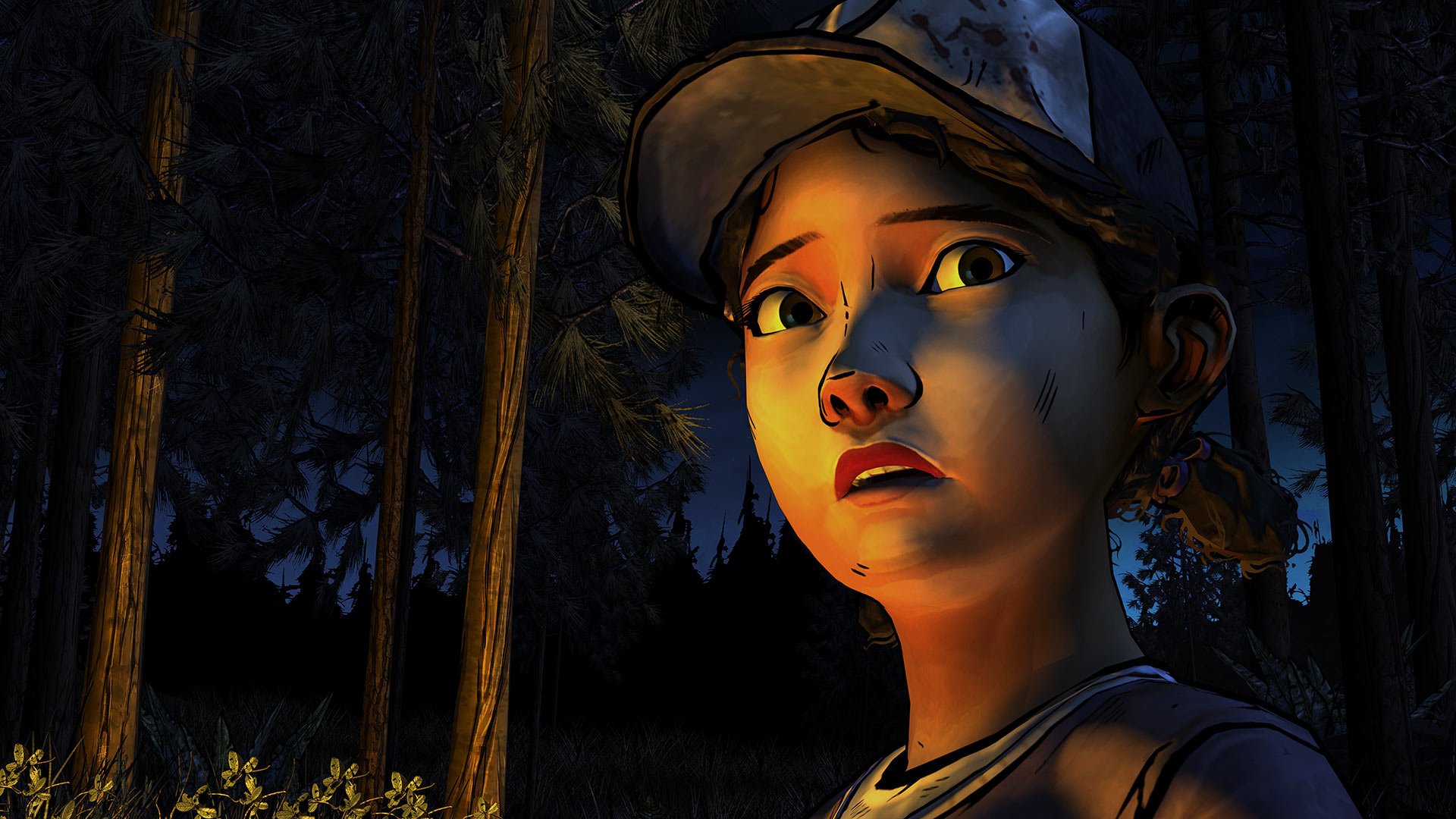
If there's one writing cliché I'm guilty of using on this blog, it's the idea of the "difficult second album." It's hard for a second outing of anything if it has to focus on living up to the expectations left by its predecessor. Season Two of The Walking Dead Game was following up a literally Bafta-winning story, and they had to carry on despite having killed off their relatable, popular main character and almost all of his friends. The game's second season does many things admirably, and mostly continues the legacy of its predecessor, but there are several areas where the game loses its way and suffers as a result. As last time, my focus will be mainly on the game's plot, but I will discuss my experience of the game's interactive dynamics. And how they made me scream at my desktop.
     What shines through as the problem with Season Two is poor writing decisions on a story level. In a game this dependant on its plot to get by, mistakes like that can disrupt the entire experience - and this time there's the weight of expectation on the game's shoulders. I'm going to get into more specifics later on, but for now I'll comment on something I noticed - some of my main criticisms of the game's poor writing can also apply to the first season. The difference is that Season Two rarely takes the time to develop the relationships between characters in the same way that the first season does, with characters either dead, doomed or emotionally cold. While some fans argue this is just the way of the zombie apocalypse, this robs the player of their connection to the characters.
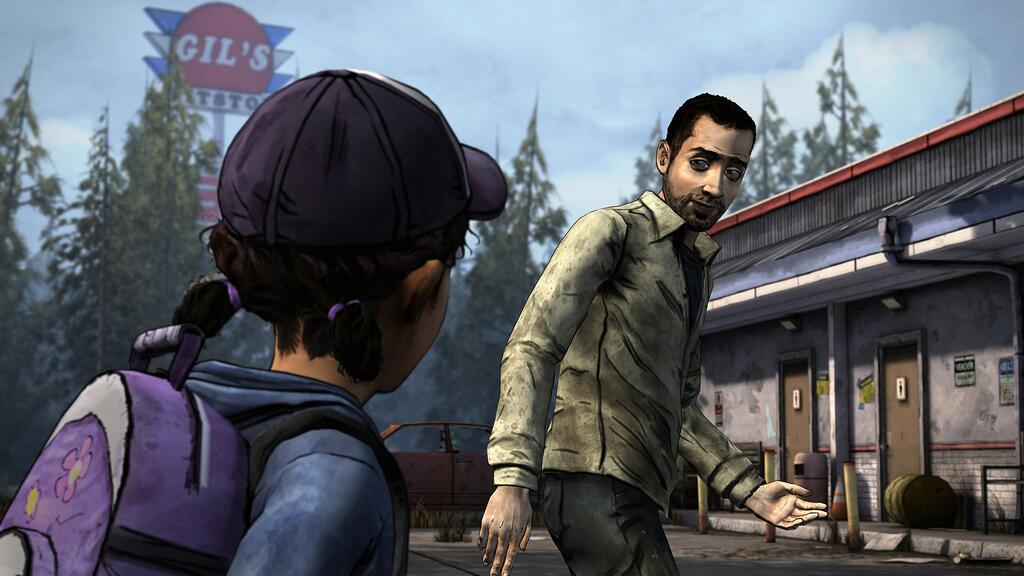
     Two years after the events of Season One, and Clementine is still travelling with Omid and Christa. After an altercation, Omid gets shot. Sixteen months pass, and Clem is seperated from Christa in a confrontation with bandits. On her own, she gets bitten by a dog and is then encountered by a group of survivors living in a cabin. After learning to trust her, she stays with them and eventually runs with them as they flee from William Carver, the man whose group they had previously separated from. After they meet up with Kenny from Season One in a ski lodge, they are eventually all captured by Carver. With the help of survivalist Jane, they escape, but on the run their group slowly loses members. One way or another, we end up with Clementine travelling with Kenny and Jane. In a surprising amount of choice, the player can either end the season travelling with Kenny, with Jane, or making it on her own.
http://img3.wikia.nocookie.net/__cb20131202031009/walkingdead/images/d/df/WDG_S2_Omid.png
Hey Clementine, I know we're two years into a zombie
apocalypse, but I'm going to leave you alone in a dark restroom
to do something with my pregnant girlfriend that I don't want
you to be in the same room for.
Image from Wikia
     Choosing to have Clementine as the player character has its ups and downs. As one of the most popular characters from the first season, it's fun to see how Clementine has changed since she was younger, and especially interesting to develop her more directly as a character using either the same philosophy that the player used in Season One, or down a completely different path. My Lee was a diplomat who knew when to be pragmatic and when to keep people on his side. My Clementine, for reasons which will become apparent, is a girl who calls everyone around her out on their bullshit. That becomes necessary because of the main downside to having Clementine as the PC - in order for the player to get to do anything, every single adult character around her is either embarassingly incompetent or just hilariously obnoxious. You do find yourself wondering why the twelve-year-old girl ends up being this group's rational head.
     Because, no matter what you choose, Clementine will be the smart one here. The Cabin survivors that the season kinda focuses around don't make a very good impression - upon finding that Clementine has a dog-bite, the group's resident doctor suggests leaving her out in a cold, exposed shed overnight without cleaning the wound, because a trained medical professional apparently can't tell the difference between a long, saliva-filled dog bite and the rounder, decaying-remains-filled Walker bite. The way the group and the personalities of its various members has been written, it's very difficult to believe that these people have survived this far - especially as this three year time skip places the game further into the apocalypse than any other media in the franchise. And I don't just mean the strange things they do to force Clementine into doing stuff, I mean the headcount on these guys - Walkers are slow and easy to kill individually, only threateningly dangerous in hordes, but the game (in both seasons) makes false tension out of a few shuffling dudes who you could literally walk away from.
     One thing that could explain how the group survived is Pete, the guy who you can choose to try and save as the end-of-episode cliffhanger to the season's premier. The fact that Pete dies either way is a small sample of this thing recurring across the season - there are about five or six characters where you can choose to save them or not, and whatever happens they die anyway. Again, same thing happened in Season One, but this time the inevitability of those characters' deaths isn't worked into the story, and they just sorta leave. This is bad enough with Pete, Sarita, Alvin and Luke, but it's especially painful with Nick and Sarah. (More on them later.) This also reflects one of the greater overall problems - your decisions may affect which scenes you see, but everything more or less happens the same until those last few scenes deciding between Kenny and Jane. And, given the game's track record, I can't help but see Clementine ending up on her own next season anyway, seeing as there's really no way that Telltale would make two or three seperate games all at once just to follow these plot threads.
http://i.ytimg.com/vi/rrJZZnHKLsY/maxresdefault.jpg
Seriously, anyone who doesn't choose [HUG KENNY] here
has a heart of stone...
      Talking of predicting next season... of course Kenny is back. In a fantastic application of "we never saw the body", Kenny appears in Episode Two, freshly bearded and filled with enough PTSD to shake a stick at. By this point the player has been used and abused by the Cabin Survivors enough to want to welcome Kenny with open arms as the last vestige of familiarity, and I found it quite laughable that the rest of the episode kept trying to set up a rivalry between Kenny and Clem's closest ally in the Cabin Survivors, Luke. Of course it really depends on whether you liked Kenny in the first season (which I know a lot of people didn't given his tendency to hold a grudge on the player if they ever sided against him), but I felt like the episode was trying to use his internal grief at the loss of his original family as some sort of argument against the player siding with him. I don't blame Kenny for being messed up - the man lost his wife and son in the space of a few hours, after they'd survived together for so long. He may be angry and irrational sometimes, but he has his priorities right, and for me that's what matters.
     Compare this to Jane. Jane is more or less a carbon copy of Molly from the first season - a hardened, pragmatist survivalist who insists on isolationism ahead of compassion at all costs. Jane believes in manipulating people to break them apart and pray on their weaknessses - she leaves a baby exposed in the cold just to try and make Kenny out to be dangerous and irrational. Going with Kenny gives you the chance to live in a safe and thriving community up in Wellington, while going with Jane leaves you living with her in an abandoned hardware store filled with supplies, constantly looking after a child. For me, at least, the game's final decision was the easiest I'd ever had to make, and even taking into account my prior knowledge of events, the lengths the game has to go to to demonise Kenny in the narrative just seems really bitter and cynical. The Walking Dead is a depressing universe, but this second season never has any moments of real levity, and the result is a really harsh and unpleasant look at humanity.
     Pushing that even further is Nick and Sarah, who share an issue with Kenny and Jane. In this universe a lot of characters have mental health issues - Jane and Kenny are both changed people because of events in their past, for example. Nick and Sarah are different though - they are both designed to be hated characters, and both characters die horribly, even after you've saved them. Although neither character explicitly says as much, it's fairly clear (at least from my perception and the perception of a lot of fans on the internet) that Nick suffers from depression and that Sarah is autistic.1 The fact that these characters were designed to be hated, the fact that their deaths end up being so gruesome and are intended to be cathartic for the player - that leaves a very sour taste in my mouth. Especially given the producers' seeming delight while discussing the inevitable death of a scared 15 year-old girl in an interview at the time. (More on that here.)
http://img2.wikia.nocookie.net/__cb20140312184745/walkingdead/images/8/81/AHD_Bonnie_Caught.png
I hope Bonnie was your favourite 400 Days character. Cos
you're pretty stuffed otherwise.
Image from Wikia
     Now, a quick aside. Between the two seasons there was released a sixth episode, a DLC called "400 Days", which gave us short glimpses of five brand new characters across the first 400 days of the apocalypse. At the end of that episode, we discovered a representative from a survivor group, and depending on your choices, particular characters would go with her or stay by themselves. (I got all five, btw. Just saying.) We were told this would pay off in Season Two - and it does! One of the characters, Bonnie, can star in four of the five episodes... except, she goes to the group no matter what you did in her chapter. The other four characters we were introduced to? If you got them to go along, they make five-second cameos in Episode Three and then die. Oh, and Bonnie can die in Episode Five, so she's for it come Season Three either way. In other words, another fantastic demonstration of the impotence of the player in their decisionmaking.
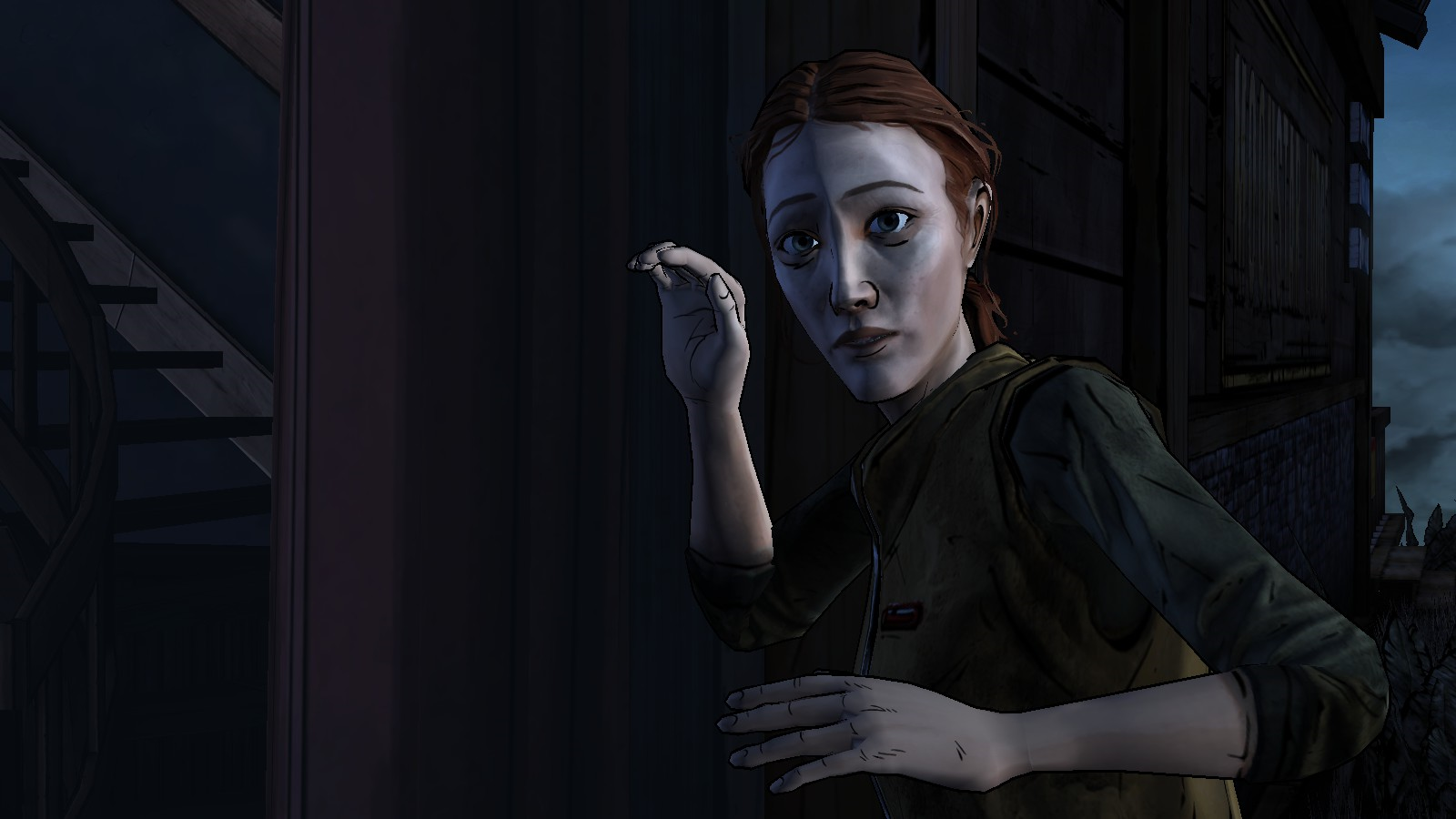
     I didn't get to cover everything in this article and I could go on ranting a lot more - about how Omid and Christa die because they decided to leave Clementine alone and randomly have sex in a disused public bathroom, how Carver decided to kidnap a bunch of random people for no reason, and how the game makes characters do irrational things near the end just to give us our end conflict. But the biggest problem is that which I've mentioned - the game insists on telling its own version of events instead of allowing the player to give events their own context. And the paint with which the game brushes its canvas is in particularly muddy colours, a sad and bitter worldview which makes you hate all of the other characters for their sheer inhumanity. It's really disappointing that a game like The Walking Dead ended up like this, and although I'm still sorta looking forward to Season Three (to just find out what the hell they do), I'm not as gripped by it as I once was.

Thanks.

1 I am not autistic, nor a medical professional, and thus have no real basis on which to actually say that Sarah is autistic. I am basing this entirely on the way I have seen people identify with the character as such, and the hurt they felt when she was treated the way she was. I apologise in advance if this offends any readers who do have autism and who do not feel that the character adequately represents someone with the condition.
    

Monday, 23 February 2015

Overview: The Walking Dead: Season One

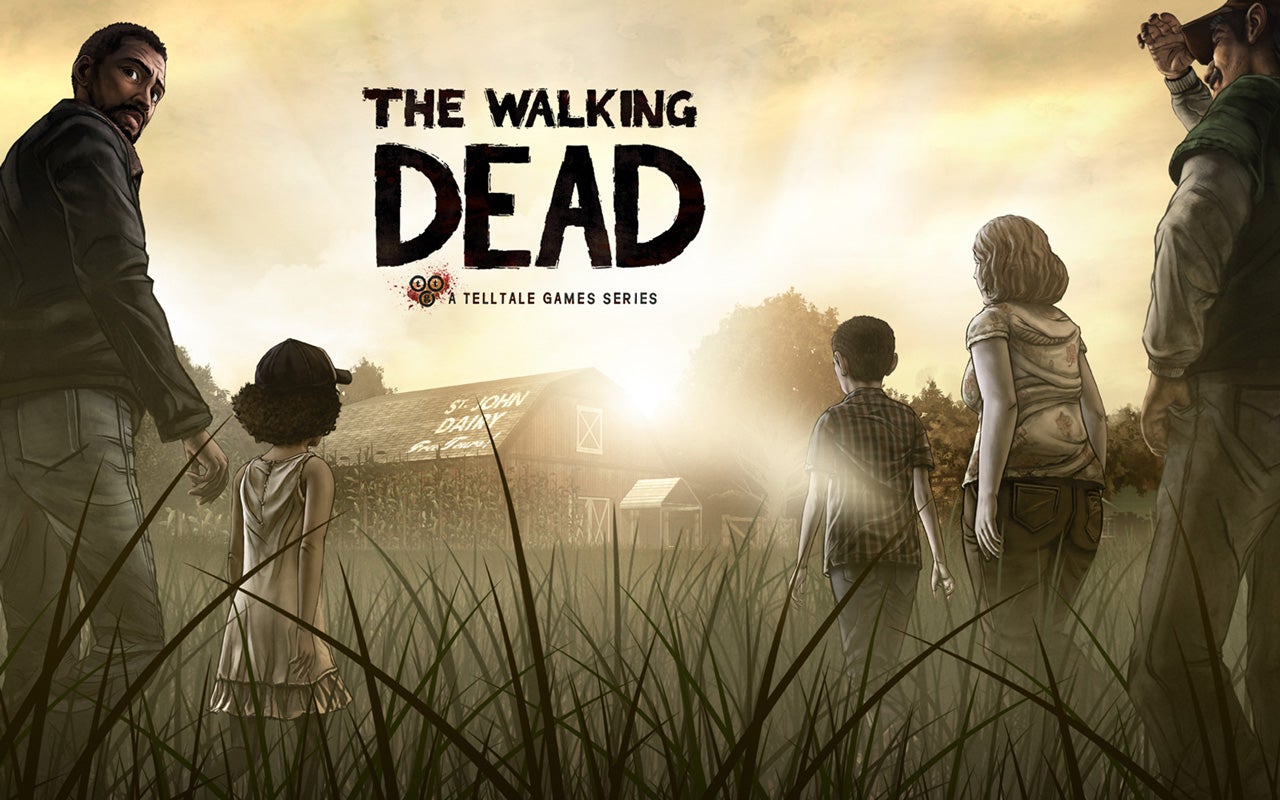
I love this shot - so much that I have the poster of this
next to my bed. From amctv
Written between 10th and 23rd February 2015.

The Walking Dead, I feel, was a bad pick for me to try and go through. I'll still write about it, don't worry, but it requires a certain acquired taste to get through, and I think I might have lost that taste a while ago. It's not in any way that the first season of the show is bad, per se - in fact it's probably one of the most true to the show's spirit. But the show has a deliberately slow pace which lends to its depressing atmosphere, and returning to the show to examine that is never a cheerful affair. Don't let that dampen this review, though - The Walking Dead's first season is the most on point, and its relative brevity is a godsend, because it allows the themes of the comic's first volume to be condensed without any extraneous baggage.
     Rick Grimes is a cop who gets shot, waking up three months later in a hospital surrounded by corpses both lying down and walking around. Taken in by a man named Morgan, he discovers that in his coma, there was a zombie apocalypse. He heads into the city of Atlanta, running into a group of scavengers whom he helps escape the infested city. It turns out that Rick's wife Lori and son Carl are at the group's main camp - as is Rick's old partner Shane, who has been having an affair with Lori once he thought Rick was dead. After their camp is overrun by walkers, the group head to the Center for Disease Control in Atlanta, and there they discover Edward Jenner, the last scientist still working on a cure. He eventually reveals that the cure is hopeless, and the group are forced to escape his compound before it self-destructs. Before they go, Jenner whispers something in Rick's ear.
     The show's premier episode Days Gone Bye is a work of cinematic art - had this been the first movie in a cinematic Walking Dead franchise, it more than would have met the standard. Despite reservations, Andrew Lincoln's British heritage is completely invisible, and he lives and breathes the character of Rick from the off, working as an effective lonely protagonist for much of the episode as he wanders silently through the ruins of the world. There are a few slow moments here or there, but overall the result is an episode whose slow pace makes the horror and gore all the more noticeable. The same effect can be seen later in the show across the first few seasons, but here is where it was done best and where it wasn't bogged down by some of the more tiresome politics between the characters.
http://upload.wikimedia.org/wikipedia/en/9/92/The_Walking_Dead,_Season_1_Cast.jpg
The cast of characters. (For this season, anyway.)
From Wikimedia
     The show borrows its ensemble cast from the comic, with a few important additions and absences. A number of characters introduced in the first volume of the comic don't appear until the third season, and the presence of The Dixon Brothers, T-Dog and several other new characters fleshes out the cast and changes the dynamic in several ways - notably, the show provides a lot more avenue for conflict between characters within the group, whereas the comics limit that conflict to between Shane and Rick. This has both good and bad points - the Dixon Brothers are some of the show's stand-out characters, especially Daryl, who despite his nature as a show original is one of its most distinctive presences even today. On the downside, Rick's family gets very much the short straw, with Lori being more actively adulterous than in the comics and Carl having gone from a sorta-cool kid to a big load on the group. (He would get better.) There's also the addition of Shane's attempted rape of Lori, original to the show, which while an intriguing addition to TV!Shane's more developed characterisation doesn't feel done in very good taste.
      I'm writing these reviews at the same time as the broadcast of The Walking Dead's fifth season - by which time it's had a lot of changes and a lot of time to find its groove. Six episodes was the perfect number to cover this introductory story arc, and as a straight-up adaptation of most of the comics' first volume, the show manages to do a fantastic job of establishing its own tone and style, following the source material but developing it and expanding the mythos of the franchise. There are a lot of arcs left unfinished after the series' end and its clear that this needs to be the start of something bigger, but as a standalone series that might have been a one-off, the show is an excellent addition to the post-apocalyptic genre.

Thanks.

P.S. It puts Survivors to shame, as hard as that might not be.

Tuesday, 10 February 2015

Review: The Walking Dead Game: Season One

I have never before covered video games on this site - my friend Tanju has, in his article on Mass Effect, but I never went there. While the medium of games is both an exciting and innovative one, I have never been anywhere near the forefront - aside from Minecraft, I tended to play PC Games from the early 00's. This Christmas I finally gave in and downloaded Steam, and with that came a few steps closer - finally playing games like Skyrim that I'd only ever seen Let's Plays of. Among these games was one of my favourite games to watch - The Walking Dead Game by Telltale Games, a point-and-click-ish interactive story set in the universe of Robert Kirkman's The Walking Dead. (The comics, not the TV Show. Which I will talk about, I promise.)
http://i.kinja-img.com/gawker-media/image/upload/s--iu-WzRpm--/814467108483821347.jpg     Unlike the vast majority of mainstream games on the market, The Walking Dead Game (hereafter The Walking Dead) and other games from Telltale Games embrace a story-heavy structure, with player interactivity restricted either to the performance of specific actions to progress the plot, or in decisions which alter the protagonists' relationships with other characters but not the overall progress of the plot. In this respect, The Walking Dead is the perfect game for me to look at - a game which pioneers the trend in the blending of cinema and gaming, and which does so fairly competently at that. I watched both seasons of the game on the internet show Video Games Awesome, a show which I've watched for a number of years, and I found the first season as entertaining to watch as it was to play, even if the latter experience came with a great deal more tension. Spoilers follow.
     You're convicted murderer Lee Everett, and you're on your way to a Georgia prison when you have a car accident. Upon waking you find yourself in the midst of a zombie apocalypse, and, meeting a little girl named Clementine you find yourself her protector. You meet with redneck Kenny and his family, eventually making your way to your family's chemist store in Macon where you meet with another small group of survivors. The group settles in at a Motor-Inn. Following a trip to a local dairy with more than milk on the menu, the group unintentionally angers a group of local bandits and they're forced to move on, with Kenny focusing on his plan to head to coastal city Savannah and find a boat - the same place Clementine's parents were last seen. You arrive in Savannah to find it ransacked and no boats to be found - what's more, Clementine is eventually kidnapped and you get bitten on your way to find her. You rescue Clementine and she helps you inside a small enclosure as Savannah is horded by zombies - and the season ends as you either succumb to your wound, or have Clementine shoot you.
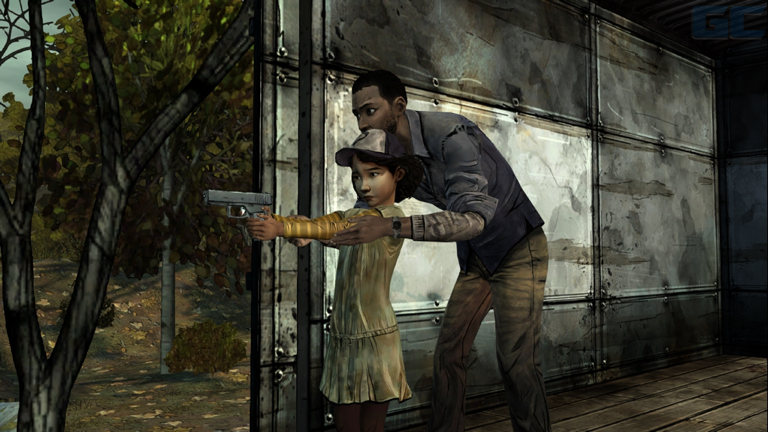
     That final moment is a heart-wrenching one for a single reason - the relationship between Lee and Clementine. No matter how much of an ass the player makes Lee, he and Clementine end up developing a strong bond, and the writing and voice-acting for these two characters makes their relationship a very appealing part of the story. This really started the trend which was later followed by Bioshock Infinite and The Last of Us of the male protagonist and the young(er) girl that he protects, and who actually affects gameplay. Here, Clementine is written as a realistic little girl, and it's so expected that the player will grow to love the character that the vast majority of the plot is aimed at finding and saving her. If the player so chooses, Lee can eventually have Clementine dispatch the season's villain, and in a compulsory scene he guides her through killing a Walker and protecting herself.
http://wpuploads.appadvice.com/wp-content/uploads/2013/10/1-1-1.png
Lee and Clementine's relationship forms the backbone
of the story.
     While the relationship between Lee and Clementine doesn't change, this isn't the same for other characters. The game sets up dichotomous views between characters and has Lee either side with one of them or ignore them, and any decision affects the way that characters will respond to Lee down the line (should they live that far.) Sometimes this affects characterisation - Kenny still bears a grudge on Lee in Episode Four should he not side with him on a particular issue in Episode One - but most of the time it makes the game feel like a more fluid and realistic experience. Sometimes there are issues with the choices' ambiguity - the choices themselves are usually three or four one-line options which you get a limited time to assess, and each often makes Lee say things contradictory to the intention of that option. (This would be abused by the writers in Season 2.)
     Sometimes the choices take more drastic changes to the plot than character relationships and contexts, with individual characters living or dying depending on the player's choice. This happens in the first episode when choosing between tech-savvy Doug or sharp-shooting reporter Carley, and in the third episode it feels like it makes a large difference, with Carley having a decent-sized subplot. However, whichever character you saved ends up being killed mid-way through the third episode in the same circumstances, and both make only small cameos in the second. Choice exists, but it is an illusion - and while the illusion is obvious, the small differences that are made to gameplay by these choices feel enough to make each player's experience sufficiently unique. The sole exception for me was later on in Episode Three, where walking-shitstorm Ben reveals to you on a fast-moving train that he has basically caused all the deaths in that episode, and you never get the option to throw him off the side.
     My favourite part of the game was sculpting the character of Lee - my Lee was diplomatic and leader-like, sided with Kenny on almost everything, but harsh when people fucked up. (*cough*Ben*cough*) Obviously there are a finite number of options for what you can do, but I found expressing my decisions through the character a very satisfying experience - especially in Episode Three, where I managed to convince Kenny to stop the train and euthanize his dying son without resorting to physical violence. The last two episodes were less interesting for me because the character development and group politics gave way to the inevitability and hopelessness of the season's endgame, but they were just as immersive and I really felt concerned for Lee and Clementine's fates.
http://img1.wikia.nocookie.net/__cb20131029182043/walkingdead/images/1/16/SFH_Preview_Ben.png
This little shit gets a dozen people killed, abandons Clem
in a time of danger, and is a character I hate more than
the season's actual villain.
     Now, for the thing I don't usually get to talk about. How does The Walking Dead Game's nature as an interactive product affect it as an experience? I'll have a lot more negative to say when I look at Season Two, but I have to say I think the blending of genres is quite well done. Aside from the decision aspect, the game plays out the plot as a point-and-click adventure, having Lee find items or find out information that allows him to overcome some obstacle. During more fast-paced scenes, Quick-Time Events are used to provide tension as well as player involvement - luckily for PC users, this tends to comprise pushing Q until you're told to push E. This mechanic is worked into the plot - often this is used when Lee is pushing close doors and such, and if he as a character is unable to complete the action, neither can you, no matter how fast your trigger finger is. The interactivity mechanic, finally, also adds some drama/catharsis to certain significant actions like executing trapped walkers or defeated villains, where it's more effective for the player to have to do it themselves.
     Season One had a few quirks here or there that made it sometimes frustrating - once or twice the game mechanics didn't pan out well, and the aforementioned ambiguity in some of the decisions which made me be more harsh or more supportive one way or another than I wanted to be. But 90% of the time the story carried itself well, and the use of the various options when it comes to the protagonist's personality and relationships with other characters means that the result is an immersive, personalised experience and an amazing story. How could it go so wrong after this?

Thanks.

PS. For those interested, I saved Carley, left Lilly, let Ben go and I finished episode four with Kenny, Omid and Christa. I didn't chop off my arm.

Wednesday, 4 February 2015

Ideas for the blog; 4/2/15

Now I've finished catching up with Doctor Who, there's something of a difficulty in moving forward with the project. I'm balancing work time with relaxation, doing a great too much of the latter, and writing here is a blend of the two that I can only really do when a number of conditions are met.

One of those conditions is having something to talk about that I actually enjoy. I love Star Trek Voyager to bits, but at the moment focusing on it and analysing it isn't exactly something I can do. Now when I watch a show from one of my DVDs it's one particular episode I remember liking, and following a narrative is given to week-to-week events, like the release of new episodes of stuff.

Which brought me round to my American shows, all of which will be coming out this year in their dribs and drabs - The Walking Dead, Game of Thrones and Orphan Black.

The Walking Dead is different enough with each season that I'm going to try and do season-by-season overviews, splitting up the more recent seasons into halves. That will tie in nicely with the broadcast of Season 5B, and it should produce a nice, say, eight articles. (Ooh, lofty ambitions.)

When Game of Thrones returns in April, I might have enough to say to write weekly reviews on each episode. Last year that was easier because I had a lot of fellow fans around; now things are a bit more lonesome, so we'll have to see.

I will be writing, trust me.

Thanks.

P.S. I totally forgot that today was the blog's actual fifth birthday. 

Friday, 30 January 2015

Review: Doctor Who 8.13: Last Christmas

Doctor Who Christmas specials are, respectively: fantastic, good, So Bad It's Good, unnecessary, overblown So Bad It's Amazing, okay-if-you-don't-think-too-hard, boring, and "Oh my god, this is the worst thing I've ever seen." Last Christmas doesn't attempt to make up for last year's travesty, and nor should it - the show's moved on from that era of terrible writing and slapdash plots. We have to focus on the era of mediocre writing now! Deciding that NuWho wasn't quite derivative enough, this week's episode is what happens when you combine Alien, Inception and, presumably, a late night of last-minute script-writing while flicking through the movie channels.
http://news.bbcimg.co.uk/media/images/79251000/jpg/_79251345_drwhochristmas2_bbc.jpg
Father Christmas, while not true to the archetype, is
surprisingly entertaining. From the BBC
     Clara is awoken by the sound of Father Christmas arriving on her rooftop. The Doctor appears, and they travel to a base on the North Pole staffed by a cast of characters, all trying to traverse a room of face-hugger possessed people. The monsters are the Dream Crabs, who can only see you if you're thinking about them, and who can put you into a recursive dream state. Just as the group is about to be cornered by them, Santa appears again with his comical elves to save the day. Clara is later attacked again and this time enters a dream state in which Danny is still alive. The Doctor enters this state to get her out of it, but the resulting knowledge reveals that the whole thing was a dream - and then again, another time. Soon the dream is finally broken, with the crew of the base returning to their old lives. The Doctor wakes up and visits Clara to find she is in her 80s. At the last second, Father Christmas appears again and reveals one last layer of dream. Clara is normal age, and the secrets are all out, so she agrees to travel with him once again.
     The two main influences on this script are Inception and Alien - not really hard to see what that means, either. The Alien thing is fairly blatant, with the film itself being discussed within the episode, and the episode blended that film's claustrophobic setting with the show's usual "Base-Under-Siege" plot. The Inception thing I'm less sure of - it's about four years late to be riding that film's coattails, and the dream-within-a-dream thing is part of the consciousness now. What's more important is how the setup is used. While the interal logic of the dreamscape was interestingly realised and intriguingly thought out, there were a few too many layers for me. By the third wake-up I was beginning to wonder if it would ever stop with the revelation. It also tied into a problem with Clara's departure, but I'll go into a bit more detail on that further down.
     The episode's weirdest concession to the Christmas spirit was the appearance of Nick Frost as Father Christmas, at first pushing the "the fiction is real" argument like back in Robots of Sherwood and then thankfully transforming him into a shared avatar of hope and goodwill within the dreamers' minds. I wasn't that confident of Frost's performance initially, but once it transformed into something more outwardly comical, his cheeky and off-kilter delivery of the cliched Santa lines actually gave me a few chuckles. At the same time, he was able to deliver a few warm moments too. The same can't be said for his two sidekicks, Ian and Wolf, who were both unnecessary - even if it was nice to see Nathan McMullen in something now that Misfits has finished.
http://ichef.bbci.co.uk/images/ic/480x270/p02f3wnw.jpg
Capaldi was on fine form and provided the best performance
of the episode. From the BBC

     Character wise, this week was a continuation of the themes from the finale, with The Doctor and Clara's mutual closing lies being revealed to one another fairly early on and going on to have an important part in the story. While it felt rather unnecessary to carry on their partnership, it was nice to see those issues actually covered, and for the rest of the episode the pair were written in a surprisingly sensitive and enjoyable manor. The scene with the aged Clara, replaying out a particular scene from Time of the Doctor, was quite heartfelt and touching, and would have made an excellent finale for the character of Clara. But Jenna Louise-Coleman decided to stay on, so that was shelved and it was just another dream. I was disappointed by that, especially as that extra layer confused the nature of the episode's supporting cast, who were all given fairly effective micro-characterisations. Despite that annoyance, Capaldi and Coleman are on top form as always, as they have been for the rest of the series.
    I'm still not fully on board with Moffat, but this episode marks the close of a season much improved on the last. It feels like Moffat and his writers have been working on their criticisms - sometimes to good effect, sometimes not. Last Christmas was that same mix of surprising quality in some places and uneasy decisions in others, but Im I'm so much more invested in these characters that I'll actually be looking forward to next season instead of just watching it out of tradition.

Thanks.

Monday, 26 January 2015

Review: Doctor Who 8.12: Death In Heaven

Okay so yeah I might have actually liked this episode.
From Wikimedia
Moffat finales do not have a good track record with me, at least not on second-viewing - I usually give them glowing reports after broadcast and then cast a more critical eye after the fact. Well, it's two months later and I've seen the episode twice, and my opinion of Death In Heaven has remained the same. The good bits are good and the bad bits are... there. That is to say, while Moffat's writing still has a number of flaws with plotting and sexual politics, this episode managed to create enough genuine character drama and characterisation that I kept with it and just rolled my eyes at the silly bits as they came around. Which means I liked this episode, in an objective sorta way.
     The Master and The Doctor are captured by UNIT before the Time Lady gets the chance to gloat, but not before the 91 Cybermen from her 3W facility in London fly up into the air and explode, creating black clouds which rain down Cyber-pollen on graveyards. Clara pretends to be The Doctor in order to fool some Cybermen into not shivving her, but she is eventually kidnapped by a Cyber-converted Danny. The Doctor is awakened, and Kate Stewart (with great reference to her father The Brigadier) reveals that he is now President of Earth, and is aboard a private jet. The Master, not kept under more security than a pair of handcuffs, sets her flying Cybermen on the plane and kills Osgood, leaving The Doctor and Kate to fall to their deaths. Clara discovers that Danny, while revived and converted, can still feel the pain he's been put through, and he asks her to turn on his inhibitor.
     The Doctor manages to fall into his TARDIS, and follows Clara's call to her location. The Master's plan is revealed - kill all of humanity, bring them back as Cybermen and then give them to The Doctor as a gift to corrupt him into being like her. He rejects her offering after some deliberation, and allows Danny the power of control over all of the Cybermen. He commands all of them to fly into the sky and explode, destroying the cloud and the Cyber threat. The Master is seemingly killed by a rogue Cybermen identified by The Doctor as The Brigadier, who also is seen to have saved Kate from falling. Two weeks later, and The Doctor and Clara meet up with one another, each telling a lie - Clara, that Danny managed to send himself back into the land of the living (he sent the child he killed in Afghanistan instead), and The Doctor that he has found Gallifrey and gone back to be President. The two hug and separate, with The Doctor subsequently being interrupted by Father Christmas.
This is a fantastic shot and it actually does what I've always
wanted - display the human element within the Cybermen.
It would have helped had they not been made into magic
microbes though. From Wikia
     Okay, last week's elephant in the room - The Master is now a woman, and calling herself Missy because, according to Moffat, "I couldn't go on calling myself The Master, could I?" Yes, you could have - Master as used by that character refers to both being "The Master of all matter" and to the fact that he claims to have a Master's degree, both of which are gender-neutral titles. Changing their title to "Mistress" adds an unfortunate connotation of subservience, especially when you add in Moffat's standard "crazy-sexy woman" tropes, this time thankfully toned down to match Capaldi's less sexual Doctor. There was also a complete avoidance of any discussion of trans issues which would be raised by a Time-Lord changing gender, with the previously all-male Master instantly adopting feminine traits and mannerisms. You could argue that it's just The Master playing up her new appearance for the fun of it, but some look at that side could have been both interesting and relevant. Despite that though, I absolutely adored Michelle Gomez' performance and thought it was entirely in-character for the Master, a blend of both the Delgado and Simm portrayals, with a hint of Ainley's ham. I really hope her character isn't dead and that we see her again.
     I've said many times here that the Cybermen are my favourite of the show's big monsters - the original form being a cautious tale about a desperate people forced to integrate themselves with their technology to survive, and then not being able to return to the same ways. RTD reinvented them fairly well, with a satire on Capitalism and consumerism, but since the Moffat era any actual lore about them has been thrown out of the window and they've been used as an interchangeable villain whose only thing is that they have no emotions, except when they do, because love and stuff. In their last appearance, I made comment that the Cybermen's new design made them a more boring cross between Iron Man and The Borg. Here the comparison to the latter gets a full-blown execution, with The Borg's converting nano-probes taking the form of "Cyber-pollen" which can somehow revive the dead. That's so obviously Bad Science there's no point in discussing it on that front. One thing the episode did do well with the Cybermen was an angle the show tried before back in Closing Time - one person using emotions to resist conversion. The scene in that episode, in which a father's love for his child is enough to melt steel, felt cheesy - here the mood was more somber and triumphant, and as the plot was more primary character based it didn't disturb the rhythm that Danny's love for Clara is what allowed him to carry on.
     As to that, we had a strong continuation of the character scenes from the previous episode. I may not be particularly enamoured with the direction of these character traits, but the fact that they've been developed continually across the series in a consistent way as opposed to the depending-on-the-writer nature of the previous season is such a breath of fresh air. The Doctor's wrestling with good and evil felt hollow earlier in the season - here he's given actual moral dilemmas, albeit ones coated in weird, OTT plotting, and his decision to put aside his differences with Danny feels more realistic for it. Clara's imitation of The Doctor, and her ultimate decision to "execute" Danny herself, follows the logical conclusion of this season's development of Clara from one of Moffat's paper-thin female characters into a defined woman who, even if she has no provenance, certainly has dimension. The lying scene at the end of the episode felt well-won and really new, and I really enjoyed having that level of genuine emotional complexity in Moffat's work. I just wish that this wasn't the second time we said goodbye to Clara, and that this was the actual ending for her tenure as fulltime companion.
I didn't think that the show could make the connection
between these two work, but in this scene it ends up being
poignant regardless of how you like the characters.
From doctorwhotv
     Cybermen aside, the main weak spot in this episode was the appearance of UNIT. Their inital appearance and quick deduction of The Master's identity felt like a return to strength, but soon the rot started to set in. Osgood, a character from Day of The Doctor who was used to both stand for and parody the show's fans, was both intelligent enough to recognise The Master for who she was but not clever enough not to ignore everything she says. Not to mention the fact that The Master has escaped UNIT custody before, and that was in less secure circumstances than tied loosely to a board. It's times like this that I wish Torchwood would make a reappearance, they knew how to get things done. Oh wow, now I'm thinking about Michelle Gomez' Master in Torchwood. That would be wicked.
     Death In Heaven, while not a cohesively good episode, was still one that I enjoyed very much. At first I thought it was just the sheer joy of seeing a well-executed Master mix with some adequately-executed Cybermen. The episode takes so many aspects from various RTD episodes that it was almost a given that I was going to enjoy it. But when I came back to the series to review it, I realised that there was something organic here, something which was genuine. Moffat writing character drama and for once actually succeeding in doing so without derailing characters, inciting huge retcons or just being an offensive ass. It wasn't perfect, but by god it was progress, and it made me feel something. And to be honest? That makes it more like Doctor Who than the show's been in a long time.

Thank.

NEXT WEEK: I can't believe I'm watching it in January, but then again, I did only see it Last Christmas.

Friday, 23 January 2015

Review: Doctor Who 8.11: Dark Water

The Doctor and Missy witness the latter's plan unfold...
(More on her next time, I promise.)
From The BBC
I was going to write this as a double-review with next week's episode, seeing as the two form the show's first two-parter since Series 6, and the plot and theme elements are quite closely connected. I decided to split it up because Dark Water negates its own premise in a reveal near the cliffhanger, and I wanted to examine the genuinely good sci-fi ideas and character drama that this episode managed to develop without it being bogged down by discussions about the return of certain classic villains. If you ignore that reveal, Dark Water is one of the most intriguing and well-written build-up stories that Moffat's ever produced. Oh, and spoiler warning from the off.
     Clara is in the middle of trying to tell Danny how she feels about him over the phone when he's rather rudely hit by a car and literally sent to the land of the dead, waking up in a bureaucratic afterlife handled by Seb (Chris Addison). Emotionally hollowed, Clara reaches out to The Doctor and tries to blackmail him into changing history, going so far as to try to destroy all of the TARDIS keys should he say no. After The Doctor discovers how far Clara is willing to go, he uses the TARDIS' memory-guidance thing from Listen to try and find an afterlife. This takes the two to 3W industries, a company who claim to have contacted the afterlife that Danny is now in. As Clara contacts Danny on the other side, The Doctor discovers that the operation is in fact a cover-up for the building of a new race of Cybermen, using the captured minds and bodies of the dead. Running the operation? A flirty Time-Lady previously introduced as Missy, who now reveals what she was once called - The Master.
     Okay, so I've mentioned before that I'm not big on the Clara/Danny relationship. It's forced, it's unnecessary and at every step it contains unhealthy elements which in reality would be a cause for concern. This episode seems to satiate people who like the relationship and those who don't, giving Clara a grand act of love but also highlighting the level of mistrust between them in life, and in death. Because of the lack of chemistry, I don't sense love from these two, but rather a friendship between two people who think that the relationship deal is what you have to do to be close to someone - it's a trap I've fallen into myself, and makes a lot more sense than the romance the episode is trying to portray. That in mind, this episode was fab for characterisations - Clara's reliance on deceit and stable elements to simply function, Danny's internal conflict which makes him demand the truth from others and yet hole up the truth behind his actions in Afghanistan, and The Doctor, who recognises both of these things and is powerless to do anything about them except try to help them be together.
Clara tries to talk to Danny across the realms.
From the BBC
     And as for that sci-fi idea, my god is that powerful. As miffed as I was about the idea of a real, planar afterlife in the Doctor Who Universe (sudden afterlife revelations rile me a bit), the idea that after death you continue to experience whatever happens to your corpse is a chilling one, even if the script gives it a little too much buildup. The revelation that this afterlife is in fact a Matrix-style supercomputer holding the consciousnesses of the dead still holds in the fridge horror, but I think it dimishes the spiritual side a little and plays into the rest of those final few minutes, which turn the episode from a slow-building suspenseful drama into Moffat's attempt to ape The Army of Ghosts/Doomsday.
     Dark Water's main flaw was that it comes packaged with a finale that only provincially has anything to do with it, and which is far more bombastic in its aims. Comparatively, it's a much slower and tense story with a great deal to say and a decent way of saying it. The character beats are flawed, true, but they're really errors carried forward and in that context they're better than anything else in Moffat's main plotlines. I may not be very highly invested in Clara and Danny's relationship, but for once in this era I recognise them doing things that people actually do - and that is glorious progress right there. Right on.

Thanks.

NEXT TIME: Dodgy gender politics, a plothole the size of Birmingham and an attempted tribute to Nicholas Courtney that doesn't go anywhere. What else, but Death In Heaven?

Thursday, 22 January 2015

Review: Doctor Who 8.10: In The Forest Of The Night

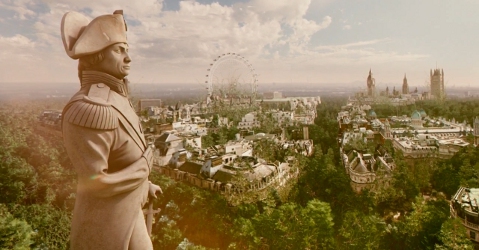
http://img3.wikia.nocookie.net/__cb20141026003845/tardis/images/8/8d/In_the_Forest_of_the_Night_(TV_story).jpg
Forested London looks awfully like Wales when you
look up close ;) From Wikia
It seems odd to me that an episode of Doctor Who can do something as audacious as cover the whole planet in an invulnerable forest which grows in one night, and still feel somewhat understated. That came from a mix of things in what a mixed up episode, albeit one with a consistently charming tone. That tone comes to our screen from the pen of writer Frank Cottrell Boyce, most famous for his twee religion-and-kids book/film Millions, which I loved as a kid, but find somewhat more difficult to accept when integrated into the current mishmash that is this show.
     The Doctor arrives in London, and lets a little girl into his TARDIS called Maebh. She's a member of a field-trip being led by Clara and Danny, who discover upon waking in The Natural History Museum discover not only The Doctor, but the fact that the entire planet's surface has been covered with a layer of trees grown all in one night. (They have no rings.) After some squabbling between Twelve, Clara and Danny, they slowly uncover the reason these trees exist - Maebh, whose psychic powers were previously dismissed as the ramblings of a mentally ill child, reveals that she can communicate with a race of ancient tree beings who rise to protect the Earth whenever life is about to wiped out by a solar eclipse. One happens, it passes over safely and Danny and Clara are left to sort out their trust issues.
     While the episode's contribution was of course the tree plot, the main developing theme was Clara and Danny's relationship - it was established last week after Clara "rejoined" The Doctor that she simply didn't tell Danny she was doing it in the first place. I highlight this relationship beat not out of genuine interest in these characters and their struggles (well, a little bit, time wears you down), but to point out the relationship's general scuzziness from both sides. Clara, following her development into The Doctor's darker character traits, has become a compulsive yet fumbling liar, trying to deceive Danny and The Doctor about her double life when there's really no reason to. Danny, while understandably frustrated by this, is also pissy about The Doctor whenever he can be, and makes demands of Clara in often patronising ways. The script tries to paint Danny as the put-upon hero by ignoring his faults whenever possible and giving him triumphant rescue scenes - whether there's a double standard at work here is up to you, but I think there is.
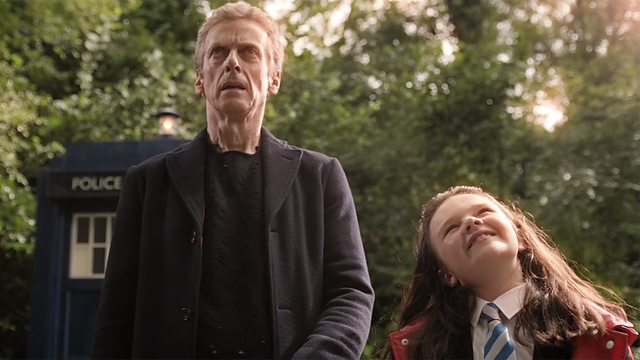
http://www.undertheradarmag.com/uploads/review_images/forest1.jpg
Unintended lesson of the week: Don't take your meds, kids,
you could save the world by doing what the voices tell you!
From undertheradarmag
     The old TV maxim "never work with children or animals" doesn't quite come into affect here - Cottrell-Boyce is used to working with child actors from back in the Millions days, and so there's a general touch of naturalism in the kids' speech patterns. That doesn't entirely make up for the inexperience and overjubilance of most child actors, but here it manages to avoid cringey, awkward dialogue in all scenes except two. (The first in which a child worryingly dismisses Danny and Clara shouting at one another as "what people do when they're in love", and the last in the strangely edited ending where Maebh's missing sister appears out of nowhere for no reason.)#
     In The Forest Of The Night tries to be a fun little tale for the kids - and my only real justification for saying that is that it follows a naturalistic logic in which, most of the time, its the children themselves working out all the answers. That in itself is not a bad thing, and there's enough actual plot in this fairy tale to justify its existence - but that content itself fell into all of the traps that this season falls into, and the main plot itself was a little too holey for my liking. An okay attempt, but at this stage in the series we should really be faced with good drama. Not with teatime misadventure.

Thanks.

NEXT WEEK: An episode named after a weird unnecessary plot device... Moffat's back at the helm in Dark Water.