
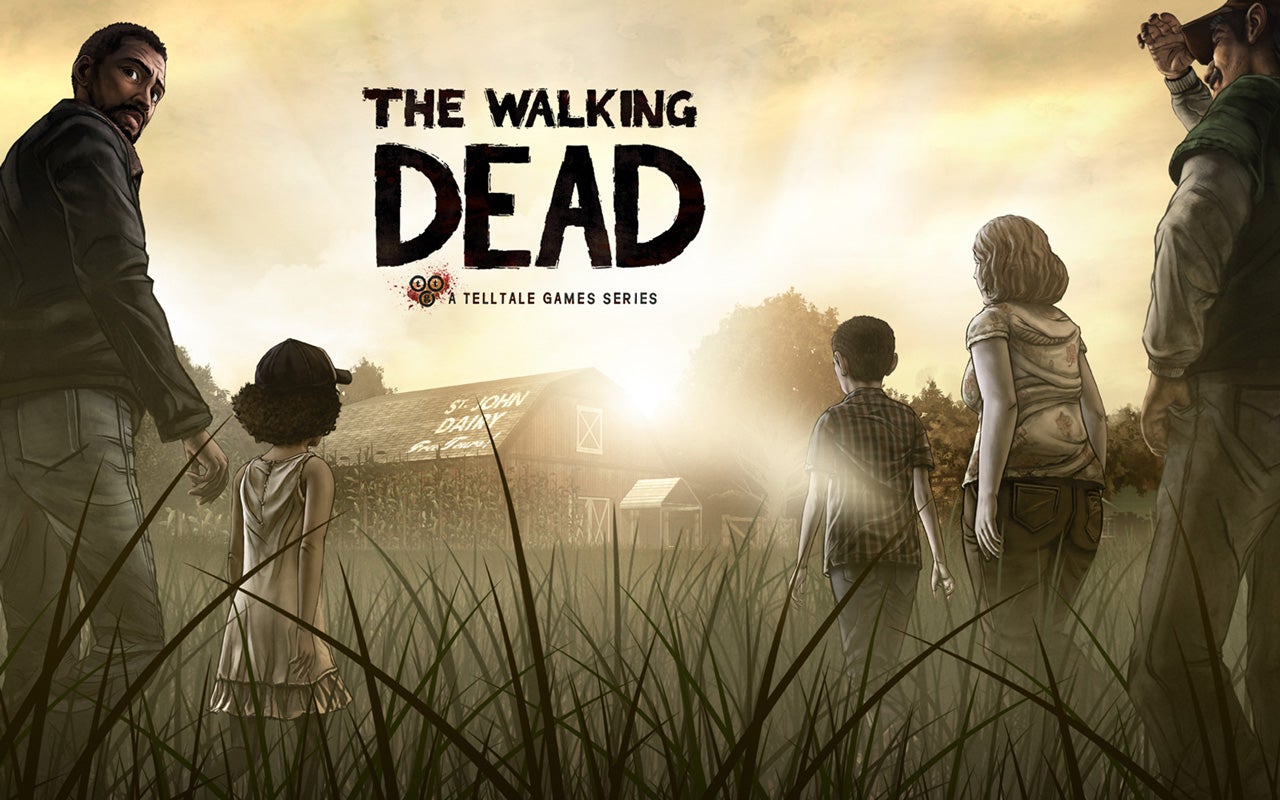
 Unlike the vast majority of mainstream games on the market, The Walking Dead Game (hereafter The Walking Dead) and other games from Telltale Games embrace a story-heavy structure, with player interactivity restricted either to the performance of specific actions to progress the plot, or in decisions which alter the protagonists' relationships with other characters but not the overall progress of the plot. In this respect, The Walking Dead is the perfect game for me to look at - a game which pioneers the trend in the blending of cinema and gaming, and which does so fairly competently at that. I watched both seasons of the game on the internet show Video Games Awesome, a show which I've watched for a number of years, and I found the first season as entertaining to watch as it was to play, even if the latter experience came with a great deal more tension. Spoilers follow.
You're convicted murderer Lee Everett, and you're on your way to a Georgia prison when you have a car accident. Upon waking you find yourself in the midst of a zombie apocalypse, and, meeting a little girl named Clementine you find yourself her protector. You meet with redneck Kenny and his family, eventually making your way to your family's chemist store in Macon where you meet with another small group of survivors. The group settles in at a Motor-Inn. Following a trip to a local dairy with more than milk on the menu, the group unintentionally angers a group of local bandits and they're forced to move on, with Kenny focusing on his plan to head to coastal city Savannah and find a boat - the same place Clementine's parents were last seen. You arrive in Savannah to find it ransacked and no boats to be found - what's more, Clementine is eventually kidnapped and you get bitten on your way to find her. You rescue Clementine and she helps you inside a small enclosure as Savannah is horded by zombies - and the season ends as you either succumb to your wound, or have Clementine shoot you.
That final moment is a heart-wrenching one for a single reason - the relationship between Lee and Clementine. No matter how much of an ass the player makes Lee, he and Clementine end up developing a strong bond, and the writing and voice-acting for these two characters makes their relationship a very appealing part of the story. This really started the trend which was later followed by Bioshock Infinite and The Last of Us of the male protagonist and the young(er) girl that he protects, and who actually affects gameplay. Here, Clementine is written as a realistic little girl, and it's so expected that the player will grow to love the character that the vast majority of the plot is aimed at finding and saving her. If the player so chooses, Lee can eventually have Clementine dispatch the season's villain, and in a compulsory scene he guides her through killing a Walker and protecting herself.
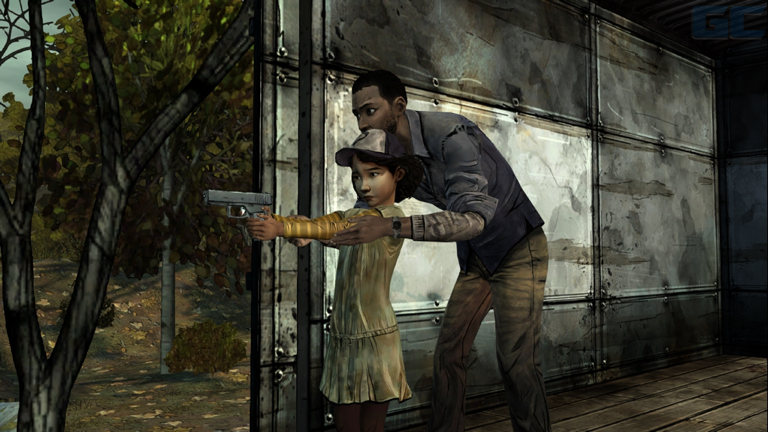 |
| Lee and Clementine's relationship forms the backbone of the story. |
Sometimes the choices take more drastic changes to the plot than character relationships and contexts, with individual characters living or dying depending on the player's choice. This happens in the first episode when choosing between tech-savvy Doug or sharp-shooting reporter Carley, and in the third episode it feels like it makes a large difference, with Carley having a decent-sized subplot. However, whichever character you saved ends up being killed mid-way through the third episode in the same circumstances, and both make only small cameos in the second. Choice exists, but it is an illusion - and while the illusion is obvious, the small differences that are made to gameplay by these choices feel enough to make each player's experience sufficiently unique. The sole exception for me was later on in Episode Three, where walking-shitstorm Ben reveals to you on a fast-moving train that he has basically caused all the deaths in that episode, and you never get the option to throw him off the side.
My favourite part of the game was sculpting the character of Lee - my Lee was diplomatic and leader-like, sided with Kenny on almost everything, but harsh when people fucked up. (*cough*Ben*cough*) Obviously there are a finite number of options for what you can do, but I found expressing my decisions through the character a very satisfying experience - especially in Episode Three, where I managed to convince Kenny to stop the train and euthanize his dying son without resorting to physical violence. The last two episodes were less interesting for me because the character development and group politics gave way to the inevitability and hopelessness of the season's endgame, but they were just as immersive and I really felt concerned for Lee and Clementine's fates.
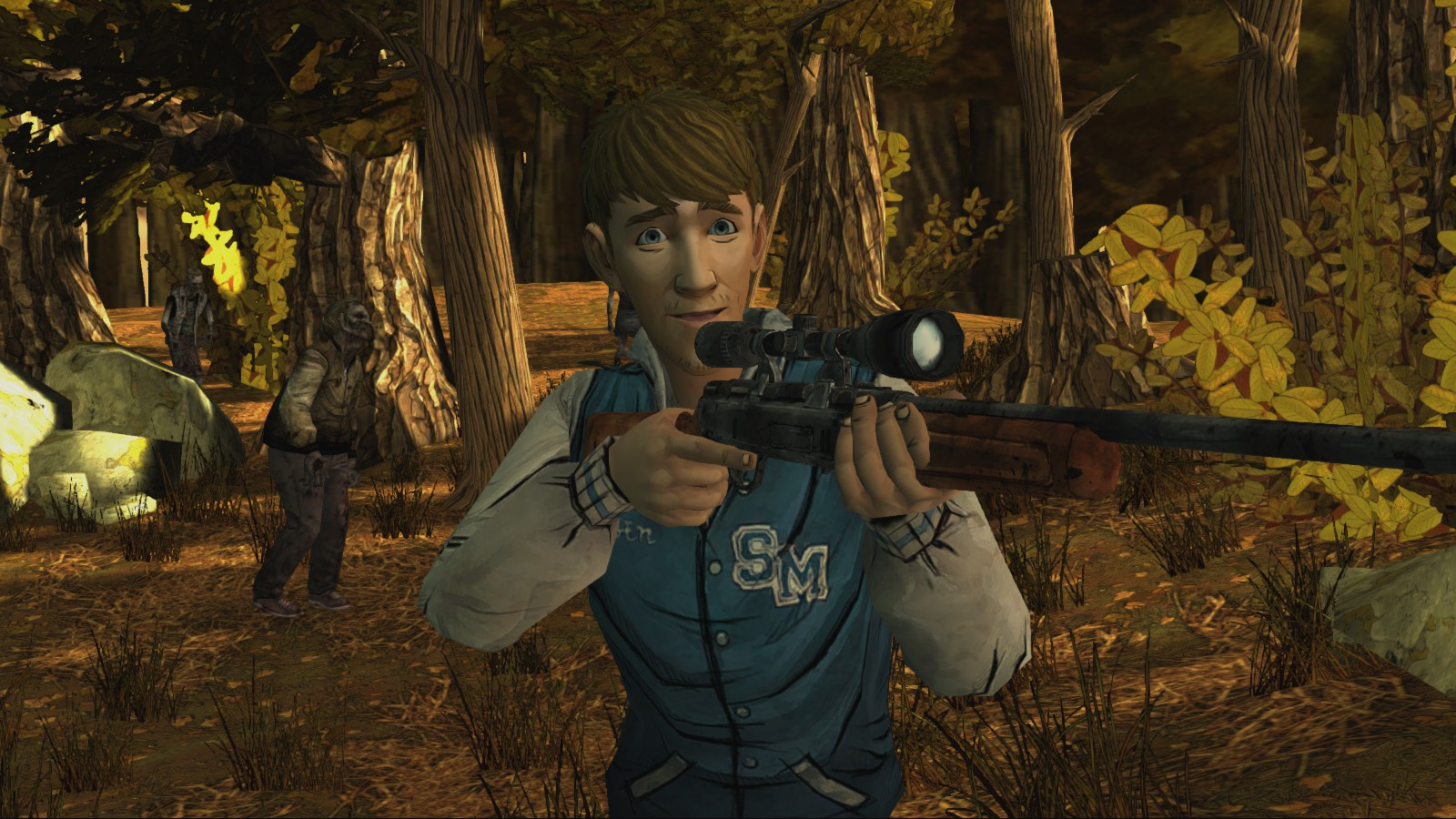 |
| This little shit gets a dozen people killed, abandons Clem in a time of danger, and is a character I hate more than the season's actual villain. |
Season One had a few quirks here or there that made it sometimes frustrating - once or twice the game mechanics didn't pan out well, and the aforementioned ambiguity in some of the decisions which made me be more harsh or more supportive one way or another than I wanted to be. But 90% of the time the story carried itself well, and the use of the various options when it comes to the protagonist's personality and relationships with other characters means that the result is an immersive, personalised experience and an amazing story. How could it go so wrong after this?
Thanks.
PS. For those interested, I saved Carley, left Lilly, let Ben go and I finished episode four with Kenny, Omid and Christa. I didn't chop off my arm.

No comments:
Post a Comment
Note: only a member of this blog may post a comment.