Wednesday, 22 January 2014

Review: Lost 2.2: Adrift

http://images3.wikia.nocookie.net/__cb20090203163912/lostpedia/images/c/c6/2x02_michael_sawyer.JPG
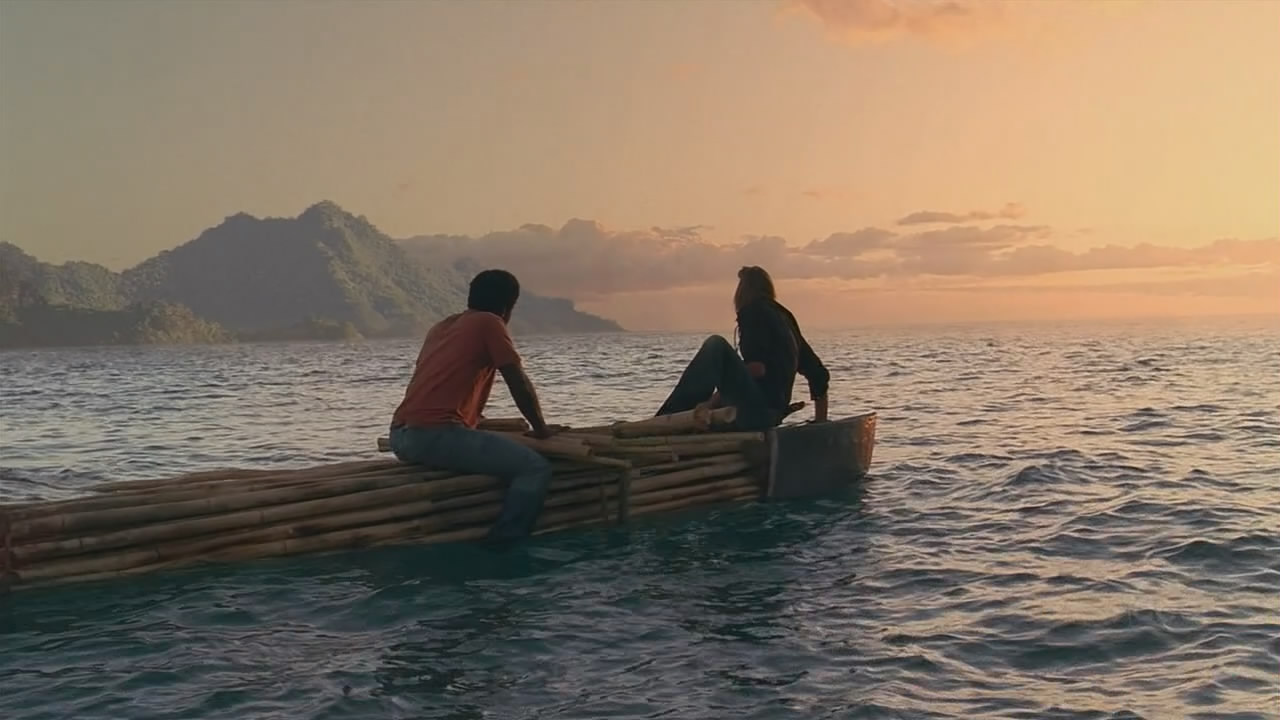
Michael and Sawyer make it back to shore after bonding.
Lost - Season Two, Episode Two - Adrift
Written 5/7/13

The season finally feels as though its getting underway, and we address the finale's plot points with the finesse that we expected of last week. Considering how little actually happened last week, the way that this episode rehashes the plot of the first episode from a different (more entertaining) perspective makes me almost feel like the first episode of this season can be ignored completely. Never a good thing, really. It's also a Michael episode - the last Michael episode before his character development in this series sees the only adult African-American in the cast turned into a villain. Funny that.
     The episode picks up from the end of Exodus, with Michael and Sawyer on the raft, with Walt kidnapped and Jin floating out to see. Michael and Saywer argue as they float on the wreckage, stalked by sharks; Michael blames Sawyer and then himself for Walt's kidnapping, whereas Sawyer recognises that the boat that The Others were using could only have come from The Island. Kate falls down the Hatch shaft and Locke goes after her. They are met by Desmond, who is paranoid and as well as asking about the survivors and whether they're "sick", he also forces Locke to input The Numbers into a machine to prevent a 108 minute countdown from reaching 0. Jack enters and we reproduce last week's cliffhanger. The raft crew come ashore and find Jin tied up, running away from mysterious people he calls "Others".
     The conversations that play out between Desmond and Locke are interesting, and hint towards the nature of his situation on the Island that won't really be explained until the season finalĂ©. Henry Ian Cuisick is a refreshing addition to the cast now that we get to see him in action for more than five minutes, and there's the intriguing question as to what happened to him to turn him from helpful runner to paranoid Island hermit. I wish that the story had advanced beyond the cliffhanger, which is really annoying if you're watching episodes in quick succession because you see it happen three times .
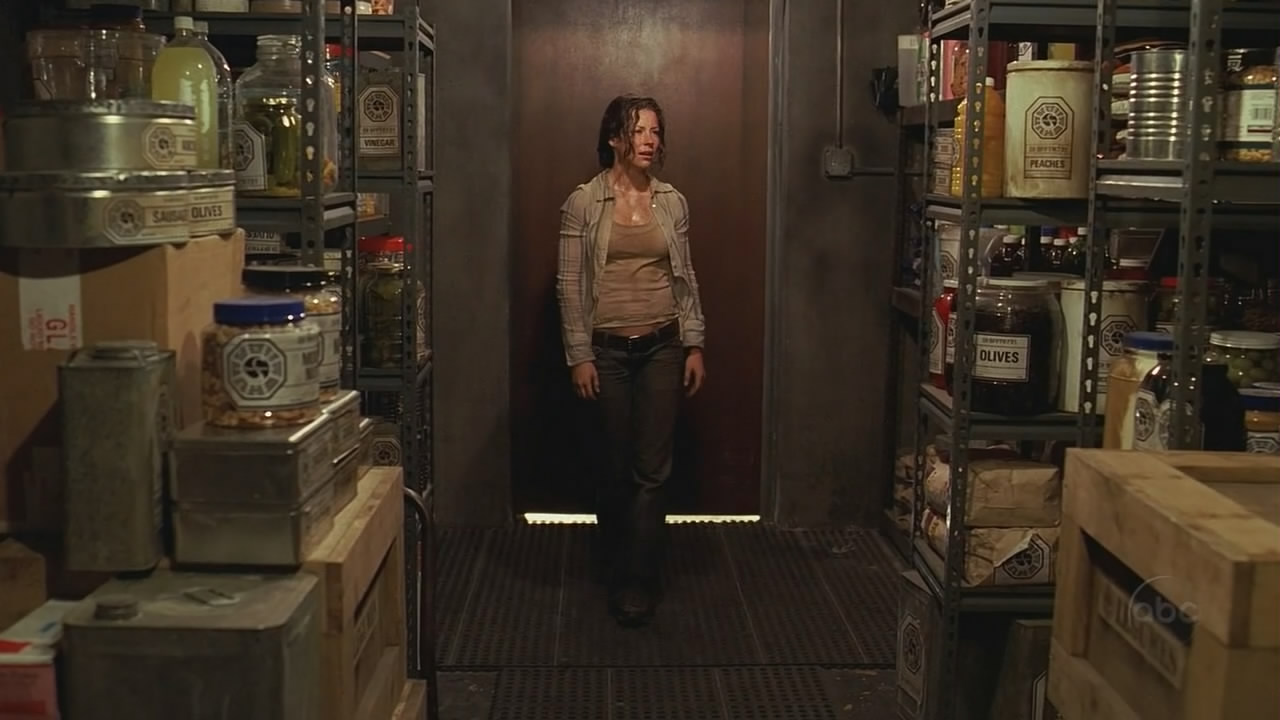
http://images2.wikia.nocookie.net/__cb20090203164144/lostpedia/images/b/b9/2x02_kate.JPG
Kate is locked in The Swan's pantry.
     The issue regarding Michael's custody of Walt and the desperation he had to maintain it, as I mentioned in my review of Special, .is one that I find fascinating. The flashback in the episode shows Michael's attempt to prevent his wife and child from going to Rome, whereafter he thinks he'll never see his son again. The defence uses the fact that Michael doesn't know much about Walt against him, but the reason why he doesn't know anything about him is because his mother Susan kept Walt out of his father's life and prevented him from being the father he wanted to be. On the other hand, she has a valid point when she says that she would be better suited to looking after him. It's a complex issue and I like that in a show.
     Adrift felt like things were getting back to the way they were supposed to be, and as we're presented with the beginnings of the Tailie storyline and all the juicy homegrown goodness that comes with it, it's clear that Lost is moving in an exciting new direction. Adrift was a signoff to the old ways, getting the last of the catching up done so that next week we can move on to see what exciting new twists the second season cna offer.

Thanks.

NEXT WEEK: It's Locke-centric, so prepare yourself for some tragedy. We find out about DHARMA and Locke's obsessions in Orientation.

Monday, 20 January 2014

Review: Doctor Who Classic: Underworld

http://1.bp.blogspot.com/-_6oewbxddcY/UXCY6su13TI/AAAAAAAAK7Q/pqEKjfWBsv4/s400/doctor-who-underworld-minyans.jpg
Star Trekkin', cross the universe.
Doctor Who - Season 15, Story Five - Underworld
Written between 18th and 19th July 2013

Doctor Who presents us with another solid tip for future writers - never borrow from Greek Legends. Nobody thinks it's particularly clever to borrow from some of the oldest stories of modern civilisation, and the parallels rarely translate well to modern situations. Between Underworld and its spiritual successor The Horns of Nimon's love of Theseus and the Minotaur, Greek myth is pretty much blacklisted as an influence until someone can do it properly.
     In the ideas department, Underworld doesn't start off bad - The Doctor and Leela meet the Minyans, a race of aliens whom The Time Lords tried to help out millions of years ago, leading to endless war and the anihilation of their planet. A survey mission of these tired immortals ends up on a planetoid run by another sect of Minyans whose ancient religion has led them into an oligarchical rule, forcing The Doctor to help the original mission escape and be on their way to their final desination, a new planet for them to settle on.
     The trouble with writing a story about a society of immortals is that Immortals are boring. Even the Time Lords stop at 13 lives and tend to get old quite often, just to make things more relatable. The civilisation on the planetoid, with its dictatorships and strangely dressed guards, is a poor show on last week's and managed to lose my interest entirely. What kills the story, though, is the sets - or lack of. The sets that we do see are universally bland and uninspiring, and the rest of the story in the planetoid features wobbly model work and HUGE amounts of unnecessary CSO. They obviously couldn't afford to location shoot, and the result means tons of static, unconvincing shots of people running around a greenscreen. I was more convinced by Time-Flight.
http://www.doctorwhoreviews.co.uk/4Y_files/Underworld%20(2).jpg
"Once I caught a gumblejack this big."
     I'm not really at a point where I can fully rip this story a new one, as by about the second episode things got so bad that I barely registered the rest. Underworld is a story that tries to use CSO to cover up its lack of budgetary concerns - it tries to pull of the impossible. If your budget is this low, then someone please for the love of god write a Bottle Episode where there're only a few characters on one or two sets. Don't try to attempt an epic story where the direction is going to drawn out and terrible, the setting is going to yank you out of the story like a newborn being pulled from the safety of its mother's womb and where I can't remember what's happened in the past ten minutes because I probably fell asleep.

Thanks.

NEXT WEEK: The Invasion of Time, which is at least better than this story.

Thursday, 16 January 2014

Review: Voyager 2.4: Elogium

http://images1.wikia.nocookie.net/__cb20121022145250/memoryalpha/en/images/1/16/Ipasaphor.jpg
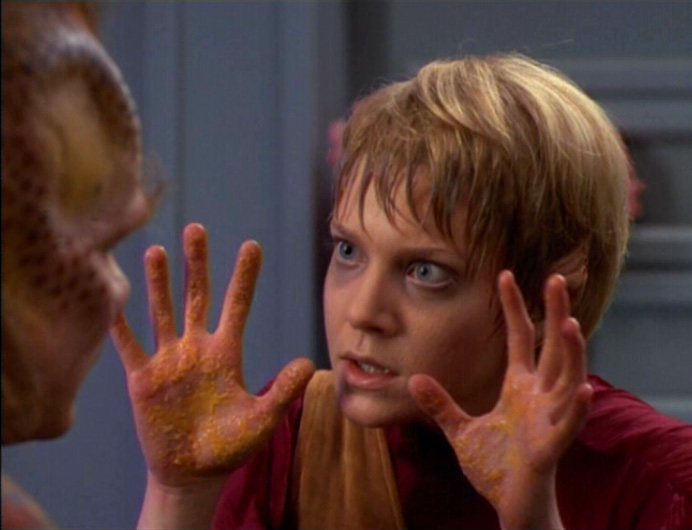
Jennifer Lien gets cheese rubbed on her hands. Or something.
Star Trek Voyager - Season Two, Episode Four (Season One, Episode Eighteen) - Elogium
Written 17/6/13

The writers are fucking weird. This is the conclusion I've come to after witnessing for the second or third time Elogium, an episode which aims for a Jetrel-style rumination on a theme and throws so much uncomfortable comedy and hijinks along the way that I'm not quite sure what to do say about it. Its intentions are certainly noble - while DS9 was content to talk about sex and sexuality, Elogium follows a different path and decides to stroke past the Abortion debate by wondering about what it means to be a parent, with under-age parenthood being a notable theme. Also, the ship gets mated with. Make of that what you will.
     The ship passes through a swarm of tiny space life-forms that attach themselves to the ship and start draining its power. At the same time, Kes starts to go through the Elogium, or Ocampan puberty, which features a number of odd features such as cravings for insects, flowers and dirt, as well as hot flushes, gooey hands, a growing sac on their back and a tongue that swells if you rub their feet. A larger life-form appears and Chakotay works out that their engines mimic the sexual pheromones of their species, and that they've become a sexual rival. Neelix panics about becoming a father with Kes, with her claiming that this is their only chance. When he works out his issues, she then too has second thoughts. They escape the swarm and Kes' condition reverses; it was caused by the swarm, and they have a chance again in the future.
     Both Kes and Neelix' worries about prospective parenthood covered a number of decent points surrounding the subject, with standardly annoying asshole Neelix worried about the core principles of looking after a child and fully prepared to treat his children differently based on their sex (he's put right by Tuvok, in keeping with good Star Trek principles) and Kes' worries about her own inexperience and the stresses upon both mother and child that her relatively under-age pregnancy would create. Had it been the 100% focus of the episode, I think it would have really broken some ground in regards to the topics that Trek can cover, and what was there was done well despite Neelix's continuing angry jealousy, possessiveness, condescension and, if this episode is to be believed, slight paedophilia. (Kes hasn't hit puberty yet.) Way to make their relationship another five ounces of creepy.
http://www.startrek.com/legacy_media/images/200306/voy-118-the-large-space-creature/320x240.jpg
The ship is involved in an alien mating ritual.
     I say it would have worked, but of course this episode had other things on its mind. The shoe-horning in of Ensign Wildman's pregnancy (a very long-term Voyager plotline) as well as the whole ship-becomes-sexual-rival thing robbed the episode of its concept's key poignancy. Plus, how the fuck did the writers come up with Ocampan pregnancy? The amount of stuff that's involved for basic reproduction is a bit silly considering that this is a basic evolutionary need, and the fact that it's claimed that their species can only produce one child per couple makes the maths a bit off. There's an atmosphere of silliness and of the absurd that fills in the rest of the episode's parenchyma, and as a result any discussion on serious allegories gets shoved firmly to the side.
     Elogium, for all of its attempts to make some small commentary on sexual maturity, parenthood and the strange reproductive systems of alien species, was doused a little by its own ambition, and the tongue-in-cheek manner which is gave its subject matter stopped it dead in its tracks from ever being as astoundingly brilliant as some of its recent predecessors. Continuing to highlight Neelix as a character when he's really this annoying is not doing the series any favours, and I tell ya this continues well into the show, pretty much up until Kes' departure and the show's sudden capacity to get a motherfucking grip.

Thanks.

NEXT WEEK: For you, Harry Kim passes into a parallel universe where everything is sunshine and roses, and he's still not happy, in Non-Sequiter. For me, well, I'm heading over to Twisted. See ya.

Wednesday, 15 January 2014

Review: Lost 2.1: Man of Science, Man of Faith

http://images3.wikia.nocookie.net/__cb20110620030511/lostpedia/images/a/ad/2x01_Jack.png
Jack faces someone strangely familiar...
Lost - Season Two, Episode One - Man of Science, Man of Faith
Written between 29th June and 1st July 2013

Say what you will, but Lost's openers are always very interesting presentation wise. It's the show's chance to flip the table and replace the curtains, to say that no matter how peripherally similar the episode may be, that some things have irreversably changed. Season Two's opener is one of the series' most famous, and despite what I feel is rather a blandly executed main-plot, the rest of it more than makes up for what is going to be a slow revving up again.
     The episode's opening moments follow a man in an underground bunker undergoing his daily routine, pushing numbers into a computer to the sound of "Make Your Own Kind Of Music." We are shown that this is the place at the bottom of the Hatch, whereafter Locke and Jack argue about whether to go down. Eventually Kate goes down and Locke follows her, followed later by Jack who discovers that Locke and Kate are being held hostage by a mad scotsman that Jack recognises. The episode's relative fame comes from how unexpected the opening is - the way it's presented makes it feel like a total non-sequitur when it arrives right after the "Previously on Lost" rehash, and the way they reveal the gorgeous set and its plot significance is genius. Shame about how humdrum the rest of the main plot is, though.
     The episode's flashback throws us straight into important Jack territory, showing us how he met his wife Sarah (whom we met in flashback during Season One's Do No Harm). Sarah is wheeled after a car accident which kills Shannon's Dad and the prognosis is not good - Jack is confident of the fact that she's never going to walk again. Christian wants him to give her a little hope, and after her jerkass boyfriend walks out on her before her operation Jack makes a promise that he will make her better again. He goes for a run, where he trips and meets a lovely Scottish man named Desmond - the guy in the Hatch - who gives him a pep talk. Jack returns and despite his reservations discovers that Sarah's paralysis has been healed and that she's gonna be fine.
http://images2.wikia.nocookie.net/__cb20090123141615/lostpedia/images/7/73/JackMeetDes.jpg
...whom he's met in a life-defining moment.
     The overall pickup from the end of the last season was pretty weak; deliberately so, I feel, in order to build up the mystery of Desmond and the hatch to near frustrating levels. I can't really expect the series to come back with a full series of character analyses while it's simulatenously trying to address the last season's cliffhangers and set up the plotlines for the weeks ahead. All I can say is that I'm glad for the fairly entertaining flashback storyline, which despite feeling like it's popped out of Holby City had the standard great stuff with Jack's wife, which provide some of his best flashbacks.

Thanks.

NEXT WEEK: We do this episode again from a different perspective, in Adrift.

Monday, 13 January 2014

Review: Doctor Who Classic: The Sun Makers

http://gillatt.files.wordpress.com/2011/12/297559.jpeg
The Collector and his high-pitched whining really get ta ya.
Doctor Who - Season 15, Story Four - The Sun Makers
Written between 17th and 18th July 2013

Taxes. Tax the rich, tax the poor. Tax the windows, tax the door. There is no more contentious issue in politics than taxation, a fundamental and vital part of any stable political system that nonetheless is open to a great deal of abuse in the wrong hands. The Sun Makers, like its spiritual successor The Happiness Patrol, throws a lot of ideas out there to write a powerful, quite jovial satire of the entire Captialist system, and it does so with a stylistic flair that feels a lot more succinct than the rest of Robert Holmes tenure. That being an important thing, considering that this was his final story as script editor.
     The Doctor and Leela accidentally land on the dwarf-planet Pluto, which has become the last resting place for Humanity after an alien-run company took control of them. People call each other "Citizen" and consider themselves as work units, slaving away at dreary existences while kept docile by the use of airborne chemicals. While initially suspected of being a terrorist, it turns out that the Company is aware of the Time-Lords and the shrewd monarch known only as The Collector can only watch as The Doctor helps lead a rebellion of the underclasses to take back Humanity's freedom.
     It's probably not that accurate to compare The Sun Makers with The Happiness Patrol - both are satiring different British political parties and the attacks in the later are much less subtle. The Sun Makers excels by itself because it is a decent adventure story anyway. Things are presented in quite the opposite way, I think, with the issue being overwork and overtaxation due to the inate problems with the Captialist system. I think the reason why I like stories with big governments and civilisations is because the potential to draw parallels to real-world issues is that much greater. And I love a story that can be cheeky like that. Especially when it manages to be so vicious about it. The episode's core focus is an attack on the Inland Revenue, who here are respresented by the Company, and while they are taken to ridiculous extremes, the parallels between the problems in this story and real-life encounters with the Tax man are not too far off.
https://blogger.googleusercontent.com/img/b/R29vZ2xl/AVvXsEj7jneJIyvn9Ouko68thaGt5qrF2se1ybvuo3cqowXvDPSgN5wpKP4gpFrFuZPT2ezQQkUOFlR_z6x-GTlAPXHM1SQsJZD0Z5vTTAjeGD-e5QIAKUXNE-6NO0fGMn9SRjV9juTkiZKQ_58/s320/vlcsnap-2009-11-23-12h54m40s164.png
The Gatherer and his funky outfit.
      The side characters representing the civilisation's underground did end up going a bit panto, and there was the constant thread of cheesy overacting weaving in and out. That isn't necessarily a bad thing, of course, but it did come off as a little weird with The Collector, a man whose only alien traits seemed to be his short stature and an annoyingly high-pitched voice which really begins to grate after a while. It is a memorable characterisation, evoking many of the qualities that the slimy Sil later would. There was a superb ability all round in the conviction that they gave towards making the concept of this futuristic Pluto into a reality.
     But really the story's killer edge is its level of humour, worked out not just by those performances but also in the absurdity of the premise. The script, like The Invisible Enemy, is focussed more towards that humour, even if a lot of the subtle themes will go straight over the kids heads in a way unlike violent or sexual references often fail to. The serial manages to coast for about ten minutes or so with The Doctor turning up simply on the humour arising from the extravagent Gatherer and his overzealous collecting.
     The Sun Makers made my classics list very easily, and for the first time in a while. It stands out in a season that stinks of mediocrity as a story that, while still suffering from the same lack of direction as the rest, is a solid satire of the present government and well-done story of revolution and freedom to boot. It has a timeless quality in its mix of humour and tragedy, a style which is typical of Robert Holmes. It would be another seven years before he'd write for the series, but his legacy would carry on as one of the best Who writers who ever lived. And if you need an example of why, The Sun Makers will do the job.

Thanks.

NEXT WEEK: Apparently it's really bad. I don't know anything else about it. We plunge into Doctor Who's Underworld.

Thursday, 9 January 2014

Review: Voyager 2.3: Projections

To give you that authentic feel, I'll be writing these reviews out of order. This is the first of Season Two's episodes that I'll be reviewing, as in the production order (the order that roughly makes sense).


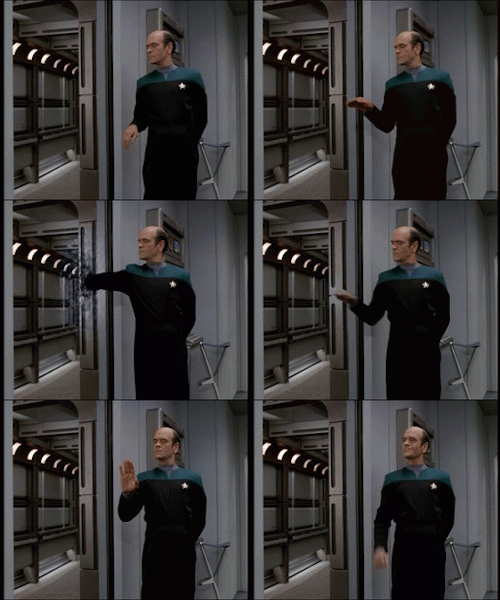
The final scene, which underscores the episode's themes of
self-identity perfectly, as the Doctor tests his own nature.
Star Trek Voyager - Season Two, Episode Three (Season One, Episode Seventeen) - Projections
Written 17/6/13.

Brannon Braga is a name we're gonna get used to on this blog, especially in the second season. Beginning as a writer half-way through the run of The Next Generation, he went on to become one of the head honchos on both Voyager and its successor series Enterprise, and is known perhaps unfairly for his more terrible outings. This, however, is not terrible - in fact, it's wonderful. Braga delivers his A-game as a mixture of profound character insights and a plot more twisty and turny than a very twisty-turny thing.
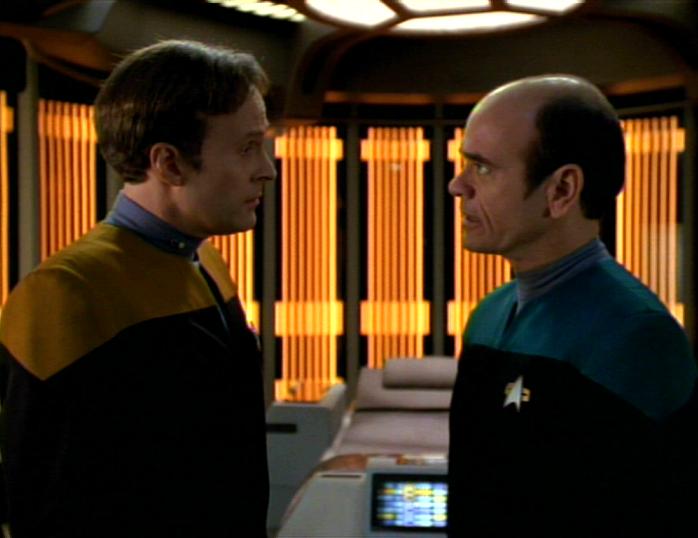
     The Doctor activates in sickbay to be told by the computer he's on an abandoned ship, attacked by the Kazon. B'elanna arrives in sickbay and fills him in, telling him that there are no projectors elsewhere on the ship. She sends him to the Bridge to help Janeway, and to the Mess Hall to help Neelix. Once he returns to sickbay, apparently bleeding, he finds that he is apparently a real person, and the rest of the crew holograms. A hologram of Barclay (a minor TNG character) appears and tells him that he's a real person in a simulation who has forgotten reality, which he demonstrates by affecting the space around them. Just as Barclay is convincing The Doctor to blow up the holographic Voyager to end the program and save his life, using a Kes-inspired Mrs. Zimmerman, Chakotay walks in and uses a similar story - except that it's The Doctor's program on Voyager malfunctioning. Eventually he is returned to reality and left to wonder the ramifications of the desires that his mind cooked up for him.
     The path of the episode takes a number of unexpected turns, but for the most part it works remarkably fluidly, the only difficult bump being a "dream-within-a-dream" fakeout near the end which feels a tad unnecessary. Before that, it's rather captivating as we move from the big and dramatic "99% of crew held by the Kazon" plotline to the equally awesome-sounding one in which the computer is expressing The Doctor's heart-felt desires through a simulation which we as viewers are unsure whether or not to believe. It's that suspension of disbelief through Voyager's tendency to hit reset that really makes it work for me.
http://images2.wikia.nocookie.net/__cb20070303023923/memoryalpha/en/images/0/06/Barclay_3.jpg
Holo-Barclay tries to convince The Doctor of his coporeality.
     Plus, Robert Picardo is great as a man having an existential crisis without having existed in the first place. The central premise that The Doctor's desires are being played out is planted through the episode, first with the more mundane untitity of ship-wide movement and greater responsibility, and then with the ability to feel like a solid human and have a wife and family. The three 24th Century Treks all have a character like this (Data, Odo and The Doctor) and The Doctor is my favourite simply through Picardo's slow progression from the Doctor's normal self into someone with a great deal more emotional investment and conflict than he thought was possible.
     Projections is an episode for the show to be proud of. Following up the excellent but oh so slightly flawed Jetrel, Projections is similar in quality and barrelled me over with just how succinct it could be. Normally twists and bizzare scenarios ruin rewatch value because you know what's gonna happen, but like good script the little nods here and there to The Doctor's innermost desires make watching the episode that second time a much more powerful experience than it would be usually. To accomplish that in a season usually so reviled is something of an awesome accomplishment, and Projections is probably my favourite Season Two episode because of it.

Thanks.

NEXT WEEK: Let's talk about sex, baby, let's talk about rubbin' your feet, let's talk about crazy alien sperm, let's talk about... Elogium. Man, it's weird.

Wednesday, 8 January 2014

Prologue: Lost: Season Two

http://movista.files.wordpress.com/2010/12/lost-season-2-cast.jpg
Season Two's cast.
Written 18/6/13

I suppose these prologues are a little bit redundant now, but there's no problem with a little bit of redundancy here or there. Lost's core focus shifted a great deal between the first and second seasons, with the character-based groundwork that Season One layed down allowing the mythos of the show to take a much more active role, as well as facilitating the introduction of a number of new cast members, the majority of which unfortunately didn't last very long past it.
     Season Two introduces the Dharma Initiative, one of the show's biggest mythos points and the damn setting for most of Season Five. It also thus introduces Desmond, who is awesome. This all arrives with the opening of the Hatch to reveal the Swan, a Dharma Initiative station whose fashioned interior and mysterious contents form the backbone for a lot of the season, and help to define it with its own identity. Personally, I love the set and everything that goes with it, and thus its destruction at the end of the season is just heartbreaking for me on a number of levels.
     Elsewhere we have Season Two's unique look at the Tailies, the survivors of the plane's Tail Section who feature a host of interesting characters, the best being Ana-Lucia and Eko. Ana-Lucia is one of the best-written female characters I think I've ever seen in US TV, and despite her haters (of which she has many for some unfathomable reason), I really love her. Mr. Eko is one of my favourite LOST characters, due to the sheer complexity behind him and his badass exterior that hides a tragic and desperate past. His best moment comes at the beginning of the next season, but Season Two gives him plenty of memorable stuff to do as well.
     We're in the big leagues now, boys and girls. Get excited.

Thanks.

Monday, 6 January 2014

Review: Doctor Who Classic: Image of the Fendahl

http://images1.wikia.nocookie.net/__cb20110510191535/aliens/images/d/d8/Fendahl3.jpg
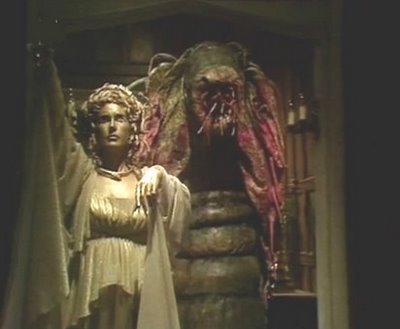
The Fendahl and her Fendahleen. From Wikia
Doctor Who - Season 15, Story Three - Image of the Fendahl
Written 6/7/13

Fendahl is a story whose outward appearance is big and foreboding and whose reputation in a time where common perception sees Who's dominance beginning to slowly slip gives it great deal of kudos. Doctor Who, even by this point, is no stranger to great foreboding forces working over millions of years, and they would continue to appear after Fendahl as well. After a story like The Invisible Enemy which was seeming to gain some jollity, Fendahl seems to throw that in the pan and get awfully serious again, for Leela creator Chris Boucher's final Doctor Who outing.
     The titular monsters are said to be the occupants of the planet that once existed between Mars and Jupiter and who escaped to Earth when it exploded and became The Asteroid Belt over 12 million years ago, hiding itself in rock and subliminally affecting humanity so as to further its purposes in the modern day, where scientist Professor Fendelman (Brian Murphy) is used by the Fendahl to return to their physical form. The Doctor and Leela happen to be popping by and, following local suspicions about The Old Religion, prevent the Fendahl's plan from succeeding.
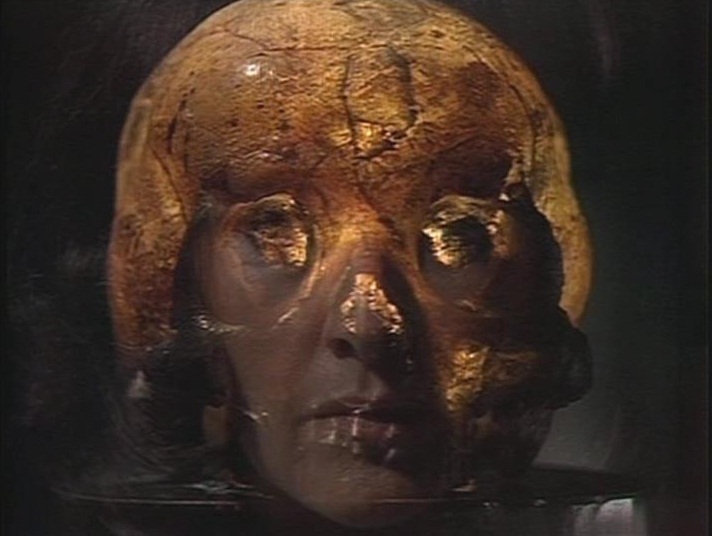
     The episode's plot is all over the place, never knowing what it's trying to do. At the beginning there's some almost sitcom-esque dialogue which actually quite enjoyable, but the mysteries that the serial slowly builds up one by one never really mesh together in a satisfying way even at the end. There's a glowy skull and a guy who's secretly speaking for the Fendahl and then there are spirit Fendahleen which are eating people alive and there's very little to say how they're related or whether we should really care. It's an apathy that comes from what I find to be a fundamentally uninspired villain. Big overarching evils are ten a penny, and while that doesn't exactly make them difficult to execute well it does mean that this story, which fails to characterise them in any meaningful way, doesn't get any points from their execution. The episode evokes pagan rituals and sacrifice with pentagrams and stuff but it doesn't feel like it's a grand overarching plan and is more indicative in my eyes of a failed attempt to grab imagery from somewhere that at the time would have been considered scary and cool. If you're going to go to full ritual sacrifice and pentagrams, why not make a Devil allegory or something like that? I'm not going to be scared of the big invisible thing just because The Doctor assures me that it's very bad indeed.
http://images3.wikia.nocookie.net/__cb20120518011030/tardis/images/f/fb/Image_of_the_Fendahl.jpg
Benedict Cumberbatch's mum... From Wikia.
     However, the story does have a number of good points. As well as the use of the symbolism of the Old Religion and all the jazz that goes along with it, the use of its characters is outstanding. The villain Maximillian Stael, determined in a sorta Cyberman-collaborator way to harness the almighty power of the Fendahl, gets quite a dark ending when, bewitched by its charms, he has the Doctor pass him a gun so that he may commit suicide rather than become a Fendahleen. Doctor Fendelman, the mad scientist throughout, turns out to be talking 100% of sense. All this comes in the fourth episode, which manages to tie things together enough for me to even make that synopsis up there, and by itself it's a decent piece of science fiction. It's a shame that the serial is so bottom-heavy in that regard.
     Before the final episode, Image of the Fendahl is a slow and sluggish whose ideas and themes threaten to collapse the thin plot holding them up. The fourth episode makes some small concessions, and overall I did enjoy the serial, but as a whole the story jumps here, there and everywhere and isn't very easy to follow. Chris Boucher's final story for the program is messy and doesn't really reflect the same level of quality as his previous two, but regardless of my disdain for the vast majority of Image of the Fendahl, it is a story that most of the fandom loves regardless.

Thanks.

NEXT WEEK: If you get too cold I'll tax the heat, If you take a walk, I'll tax your feet. It's the story of the Taxmen in The Sun Makers.

Thursday, 2 January 2014

Review: Voyager 2.2: Intiations

http://www.startrek-voyager.nl/episodes/seizoen%202/initiations.jpg
Kar assists Chakotay with avoiding booby traps.
Star Trek Voyager - Season Two, Episode Two - Initiations
Written 20/6/13

The first episode to be written for the second season, Initiation brings us in on an episode whose mission seems to be to correct a few of the mistakes made in the year prior. Thus, we are given 45 minutes to explore both Chakotay and The Kazon in a much greater level of depth than as before, perhaps providing the latter's only decent outing and strengthening the former considerably. It's an episode about fatherhood, about honour, and about how killing your immediate superior is always a good thing.
     Chakotay is out on a shuttle doing a funky ritual when he's attacked by a Kazon ship and is forced to save the occupant, a 13-year old named Kar, from an explosive death. Kar is summarily pissed, because he's been denied the glory of dying in battle and now he's been captured, he will lose the ability to gain his warrior name. The two are tractored onto another Kazon Ship, where the leader of Kar's sect tries to have Chakotay execute him. He refuses, and he and Kar escape to a local planet, where that sect's training grounds hold them stranded. As Voyager tracks Chakotay's path to the planet and runs into the Kazon, Kar bypasses new friend Chakotay's offer to let him kill him and instead kills his sect's leader, earning his warrior name and his future. Everyone lives happily ever after.
     The three prior appearances by the Kazon weren't very impressive, and very little was given about their culture other than their perpetual stupidity, shunning technology and being unable to find water despite being capable of faster-than-light travel. As they're a major Season Two villain, Initiations tries to do them some justice and presents us with a new image of Motorbike Gangs, with their territory and honour-based lifestyles. The characterisation of Kar is the first decently written Kazon in the series, helped no end by actor Aron Eisenburg, who at the time was a regular on sister show Deep Space Nine as young Ferengi Nog. It's a very good performance, and breaks the stigma of child actors quite considerably.
http://voy.trekcore.com/gallery/albums/2x02/initiations011.jpg
The Kazon go from straight-up Klingon rip-off to
Motorbike Gangs.
     Chakotay's development in this episode saw him being a little bit odd. Religious stereotypes aside, there's this general perception in Season One of Chakotay as the guy who doesn't play by the rules unless he likes them, and is willing to use his old Maquis tactics in service of Federation principles. He's the cool uncle of the crew. This episode has him trying to teach life-lessons to young Kar, and pretty much failing in everything except convincing Kar not to kill him. I thought it was a very strong set of scenes, though, as we've rarely been able to see trhis caring side of Chakotay before and his willingness to die to see Kar re-accepted into his sect was admirable.
     Initiatians revealed a series that looked to improve itself, and it did that with flying colours. The relationship between Kar and Chakotay was not portrayed with the more intimate directive style that I would perhaps have given it. But, besides that, the episode managed to portray the Kazon as an actually vaguely interesting culture for the first and if I recall correctly only time, as well as giving us some heartwarming character development for the show's cool uncle.

Thanks.

NEXT WEEK: An article I wrote several days ago. Confusing, isn't it. Not as confusing as the plot of Projections, though...

Wednesday, 1 January 2014

Welcome to 2014

Well, that last year seemed to last forever. Or at least, for a long enough time for me to write so many articles for this blog that I could drop dead now and still seem active until June. Last year I mentioned that I thought that 2013 was going to be my last year of doing this - that was for various reasons, all of which still apply, but last Summer I made a longer plan which basically means that 2014 is going to be my last year of this shindig, going up until just after I reach my fifth anniversary this December.

What's coming up in 2014? Well, some long-term US shows for one. The second and third seasons of both Lost and Star Trek Voyager will be gracing your screens every Wednesday and Thursday, with Star Trek Deep Space Nine hopefully joining them once I've done all of the Classic Doctor Who that I want to get through.

There'll also be some spendiferous Heroes overviews, as well as the new seasons of Doctor Who and, near the end of the year, a series of Best Of articles which will look at my favourite shows from over this blog's lifetime.

See you there, people. :D

Thanks.