Tuesday, 14 May 2013

Review: Pleasantville

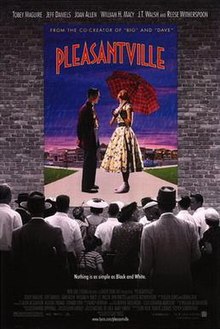
http://upload.wikimedia.org/wikipedia/en/thumb/3/39/Pleasantville_ver5.jpg/220px-Pleasantville_ver5.jpgPleasantville
1998, Written and Directed by Gary Ross
Written 21/4/13

Pleasantville is an affectionate parody of old television and its effects on our youth. Or, no, wait, it's a life-afirming tale about a young man's realisation of his mother's strong work ethic. Or it's a racism parallel that shows that prejudice can occur in any scenario. Or it's a left-wing statement about the dangers of isolationism in society. Pleasantville is all this and more - it's not an art film, persay, but it has so many different and equally valid interpretations that it's one of my favourite films almost by default.
     David (Tobey Maguire) is obsessed with his half-idealistic half-terrifying stereotypical 50's sitcom Pleasantville, which is a black-and-white world where the women always have dinner by the time the men come home from work, where children always behave and where the basketball team never lose. His twin sister Jennifer (Reese Witherspoon) is the polar opposite - vapid and obsessed with popularity and sex. After an argument, a magic TV repair man comes and sends them into the show itself, where they're forced to go along with the show's universe. Despite their differing attitudes on whether they should, they both make subtle changes to the world that escalate, leading to eruptions of colours that bring out the worst in the authoritarian establishment that made the world possible.
     This is gonna be something of a more analysis-y kind of article, because Pleasantville is the kind of film that consistently merits such treatment. In my eyes, the main focus of the film's protagonist, David, is on his journey from cynical teenager to realistic adult. In his late 90s home he thinks that the world is inherantly corrupt, and wishes that his divorced parents and awkward school life were more similar to that of Pleasantville, his idealism of course making him blind to the inherant prejudice and limitation within that system. "Gaining colour" is used as a visual metaphor in the film for having had some great epiphany or strength of emotion unusual to the norm, and David only gains his colour when he stands up for his mother figure (Betty, played by Joan Allen) instead of putting her down or avoiding the conflict, like he does with his own mother.
http://www.the-editing-room.com/img/pleasantville-e1318001124596.jpg
When David helps his "mother" obscure her face, he realises
the error of his own attitudes.
     One of the film's most surprising messages for me relates to sexuality - it would be easy to present a 1950s world that demonised sexuality, but instead it's quite tabula rasa and there's a great deal of sex positivity instead - especially towards women. The way this film treats gender dynamics is almost more well-done than the way it parallels race dynamics (which at times get a little obvious, what with the "no coloureds" references everywhere) and the way that Betty drifting away from her stagnant husband (whose cries of "Where is my dinner?" verge on the comical) and towards the artistic Bill (Jeff Daniels).
     Overall it's a look towards how we compare our society in the present with that of those presented not just on TV, but with those of the past. The look at both the utopian ideals of 1950s America and the dystopian consequences of the isolationism and prejudice needed to hold that in place mkaes Pleasantville one of the most comprehensive examinations of that era that I've seen in a mainstream film, and the result is something quite satisfying. The lesson is ultimately that optimism and pessimism are lies; that realism and the acceptance of the bad in favour of the good is the best way forward. There is no 100% right way to live your life - sometimes you have to do what you have to do, and other times it's right to pursue your dreams no matter the odds.
     Pleasantville is at times distinctly unpleasant - but only because it looks into humanity and the way it has the capacity to treat people in a way which we don't want to see. It's a perfect combination of a fun parody of film and TV universes with the inconsistencies inherant to their premise, and a powerful story marking the development of a society through pretty much all the stages of human self-discovery, prejudice and then enlightenment. It's near the top of the favourites list, and for very good reason - go out and take a look.

Thanks.

NEXT WEEK: Tom Hanks gets Cast Away.

Monday, 13 May 2013

Review: Doctor Who 4.1: Partners In Crime

Doctor Who - Season 30, Episode One - Partners In Crime
Written between 16th and 17th March 2013

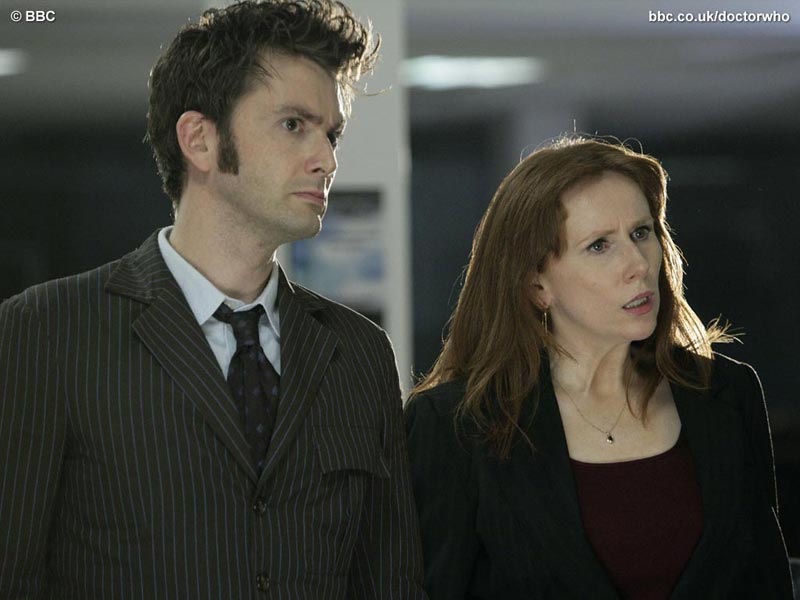
Of the three central companions of RTD's era, the one with the most developed characterisation is certainly Donna, with Martha (as you can probably tell from the ten weeks of gushing I did about her) is a very close second. Her introduction in 2006's Christmas special allows Partners In Crime a great deal of leeway, meaning that it doesn't have to do a lot of the legwork that character introductions usually do. Instead, it takes a developed Donna and puts her into a series with a new-found sense of humour that is at times both strange and wonderful.
Cute little bastards.
     Both Donna and The Doctor research into Adipose Industries, a popular weight-loss company who have been treating the problem with a "miracle pill" that they intend to roll out nationwide. Despite several near-run-ins, they both miss one another. Both independently discover that the pills bind the fat into tiny alien creatures that go walking away, and when they both stake out at the building the next day, they run into each other just as the villain Ms. Foster (Sarah Lancashire) is explaining her plan. The Doctor manages to foil Foster's plan to accelerate the production of the creatures (which would kill 1 million people) and watches as the Adipose parents take their children and drop Foster to her doom. As Donna readies to go away with the Doctor (making it clear that she's not going to be doing any of that romance nonsense) it's revealed that Rose has somehow returned.
     A lot of the press at the time focussed heavily on Billie Piper's last minute cameo, and at the time - when, I'll admit, I had a bit of a crush on her - I was amazed. However, taking a more critical view (yeah, ten NuWho reviews without much Rose bashing, must be a record), it stinks of sensationalism. Sometimes it's what people remember the episode for, when there was so much there to love besides that appearance. As I said back in my Doomsday review, Rose would become more and more bigged up by the show throughout the time she wasn't in it, and this is really the beginning of that final push towards her return and the royal mess that it created.
     Although, as I said, we've already met Donna, the episode does cue us in on her more domestic life. The mother-daughter relationship is interesting, similar to the Disappointed Father routine but with switched genders. We also get to see that Wilfred Mott from Voyage of the Damned is her grandfather, and it's great to have Bernard Cribbins in the show. Most importantly though, it's clear the Donna's characterisation has had an overhaul from when we first saw her - almost gone is the obnoxiously loud woman from the early parts of The Runaway Bride, and here we have a much more mature woman whose positive qualities (like constant inquisitiveness and unending compassion) are on clear display.
The Doctor and Donna's clearly platonic dynamic is a winner.
     Sarah Lancashire plays the villain with a suitable level of hamminess to make her enjoyable - especially when she's playing on the whole "crazy foster mother" thing. The Adipose threat isn't really all that huge on its own - the rate of production of the creatures actually allows the adipose to perhaps form a symbiotic relationship with humanity - we get to eat as much as we want and stay thin, while they get a billion new babies every evening. I suppose what Rusty was trying to do was to make some kind of commentary on modern obesity epidemics, but it led more to fat people being played for laughs rather than as a concept of aliens being able to capitalise the Western obsession with our weight.
     Playing things for laughs was noticeably more prominent in general, as we'll see across Donna's time on the show. It probably stems from Catherine Tate's comedic pedigree, but arguably her standard gawping routine has had to be toned down to make most of it work. It's that balance that creates a show that manages to provide the same level of well-written characterisations and interesting concepts while still being a great deal funnier and ultimately more irreverent. Partners In Crime is a great start to the new series and it feels, more than ever, that we're going to have a lot of fun.

Thanks.

NEXT WEEK: Karen Gillan, already? Oh wait, she's just a Roman woman. We look at timey-wimey Roman fun with The Fires of Pompeii.

Saturday, 11 May 2013

Review: Doctor Who 7.12: Nightmare In Silver

http://www.bbcamerica.com/anglophenia/files/2013/04/nightmareinsilver.jpg
I still say it sounds like a dodgy romance novel.
Neil Gaiman's The Doctor's Wife was one of a few saving graces from 2011's turbulent sixth series, and its reverance towards Who history and lore have had many hailing Gaiman as the new Moffat. The British ex-pat's love of fantasy came through in this week's Cybermen-revamping episode, although there were a few problems with the way that the story went down that prevented it from being as barnstormingly influential as Gaiman's previous episode. For from the game-changing reintroduction that the Cybermen needed, the monsters in this story felt a little more like their American counterparts, the Borg.
     Coerced into bringing along Clara's pre-teen wards, The Doctor takes young Artie and and Angie along in the TARDIS, which he takes to Hedgewick's World, a massive Alton-Towers-style theme park in the future. There he finds a worried parkmaster Webley (Jason Watkins, Being Human's Herrick) and his short friend Porridge (Warrick Davies, of Harry Potter and Star Wars fame), with their main attraction at the moment being a puppet-operated Cyberman who can play chess. An invasion of insectoid "Cyber-mites" that can absorb technology and convert people see the adaptation of a smartphone into a new, super-competant and super-agile race of Cybers. While a platoon of soldiers, led by Clara, tries to prevent the planet from becoming a new Cyberman base, The Doctor fights with a Cyber-planner consciousness that has been inserted into his brain.
     There is often great opposition in fandom to the use of child actors for anything at all. Moffat's era is especially fond of them, and as a result we are often sitting on a knife edge between a passable performance and a immersion-breakingly bad one. This was unfortunately the latter, with the addition of Artie and Angie not only rendered unnecessary for the vast majority of the episode (which they spend as unconscious slaves) but also cringingly incompetant the rest of the time. It's half-and-half script and casting on this one, which makes it all the more disappointing.
http://ichef.bbci.co.uk/images/ic/384x216/legacy/clip/p018r77s.jpg?nodefault=true
Warrick Davies (Porridge) was a strong presence, but for an
odd plot twist at the end.
     The episode came with a wealth of guest stars, none of whom were used well. Tamzin Outhwaite was wasted in her role as soldier captain, and it's quite frankly criminal to give Jason Watkins a role with such little to do. Watkins can do brilliantly cheesy and sinisterly manipulative and frighteningly savage, and sometimes he can role that all into one character. He shouldn't spend 90% of the episode on the sidelines. Warrick Davies, who got the most screen-time of the big names, was okay for the most part, but the sudden revelation of his royalty at the end felt like it was trying to squeeze in another plot unecessarily.
     The Cybermen themselves... well, I enjoyed the redesign for the most part. I worry that they may have lost their distinct identity completely now that both Moffat and Gaiman have co-opted aspects of the Borg into their physionomy that really shouldn't be there. I've said this before, and I'll say it again - The Cybermen aren't big, powerful scary robots. The scary thing about a Cyberman is its history, its former humanity. We need to be reminded that the Cybermen were human - something that the last good Cyberman story (in my opinion), Rise of the Cybermen/Age of Steel managed to hit on the head. Also, the act of conversion is an innately desperate one - it's deliberate and painful and mechanical. The Cybermen will never be scary with Borg-esque nano-bots and adaptable programming.
     I'll go a little further with this. The Cybermen from the Classic Series - cool. The Borg - cool. You try to combine the two, and it doesn't work, because they're coming from two different angles. The Cybermen's collapse into cybernetics came as something necessary for survival, the last throes of a race on the edge of extinction. They convert to survive, to continue the species - we are often reminded of their humanity by seeing people being converted, or seeing human parts in their design. The Borg are an attempt to create perfection, by amalgamating new technologies and consciousnesses into one perfect whole. Their aim in conversion is efficiency and swift propagation. You could see that these used to be unique creatures - that was what made them scary. The Cybermen in Nightmare In Silver are just shiny mind-controlling robots.
http://www.radiotimes.com/namedimage/Steven_Moffat_s_Doctor_Who_episode_guide__Nightmare_in_Silver.jpg?quality=85&mode=crop&width=620&height=374&404=tv&url=/uploads/images/original/27840.jpg
The new "Iron Man" Cybermen are Borg-like in their exection.
     There's a level, of course, of over-hyped expectations. One of the Moffat Era's favourite writers revamping a Classic monsters whose most recent appearances had left it in desperate need of a new start. But even if you try and look past those expectations and judge it on its merits... it manages to tell something of a cohesive story, but one that has the Cybermen as an immenent threat rather than as a concept or an idea. The concepts and ideas that were at play, of a set of circumstances in the future that tie into nothing we've ever seen before in the show's continuity, were so spread-out and thin by a tired mind-battle gimmick that the episode failed to find any traction. It wasn't as unwatchable or cringeworthy as it's predecessor Closing Time, it didn't live up to any of its expectations.
     I am however very curious about whatever the hell is going on next week. So good job there.

Thanks.

Thursday, 9 May 2013

Review: Torchwood 2.4: Meat

Rhys finds out the truth.
Torchwood - Series Two, Episode Four - Meat
Written 16/3/13

I'm not quite sure where the meat of this episode lies. (My only pun, I promise.) On the one hand, we have a very well-executed main plot that sees long-suffering boyfriend-cum-fianceƩ Rhys Williams (Kai Owen) upped into a main(ish) character. On the other, we have a literal Space Whale Aesop whose intentions I'm not quite sure of. Something to do with vegetarianism. The problem with vegetarian messages in sci-fi is not so much the content, which I sympathise if not fully empathise with, is rather their sheer frequency.
     Rhys owns a lorry firm, and is called when one of the trucks gets involved in a road accident. He arrives at the scene to find Torchwood investigating, and is shocked to see Gwen there. The team find alien meat, and knowing the company's origin, Jack immediately suspects Rhys. The welshman acts on his suspicions and sets up a racket with the company supplying the meat. That night he and Gwen have it out, with Gwen bringing him to Torchwood to prove to him that she does in fact catch aliens. Using Rhys's racket, they go in to the warehouse and find a massive, regenerating whale. After a gunfight, Owen is forced to euthanise the whale before it grows out of control. When Jack wants Gwen to follow protocol and retcon him, she refuses and, after realising he loves her too much to fire her, he lets it slide.
     Kai Owen has played an often unappreciated role in the series, and following a homologous progression with its parent show, he's very much been the Mickey Smith. There are times in the series where he can be a bit of a prat, but after Gwen's standard transformation from audience identification figure to One Of Them, we sorta need Rhys to be the everyman. His interactions with Gwen, and the weirdly introductory episode it creates, are nice to watch in a heart-warming way, and that's purely because Owen makes Rhys feel like such a normal person.
Everyone's having a whale of a time.
(Sorry, I know I promised, but I couldn't help myself.)
     The moral message of the episode is either, "Be careful to make sure that your sources of income are legal and ethical" or "Don't kidnap an alien and use it for meat." The setup of the caring Jack who wants to save the whale whether it's sentient or not versus the evil criminals who see the whale as just "meat" and an opportunity to start a profitable business. I will admit that it's not a topic I'm overly concerned about, but regardless I felt that it wasn't either weak enough to let us ignore it or strong enough to make us thing... it sorta just hung there without anything to give it a kick up the backside.
     Despite the aimless nature of its moral message, the episode's character moments for both Gwen and Rhys pulled it into a much more interesting shape. I'm still not sure about the Space Whale, and the use of second-rate CGI doesn't exactly help, but the episode had its heart in the right place, and as a way to introduce Rhys into the world of Torchwood it was suitably low-risk. Rhys will continue to be an important character, especially in the last two series, and this was where that influence started.

Thanks.

NEXT WEEK: Something is wrong, and even the title sequence has been fooled... but what does it have to do with Adam?

Wednesday, 8 May 2013

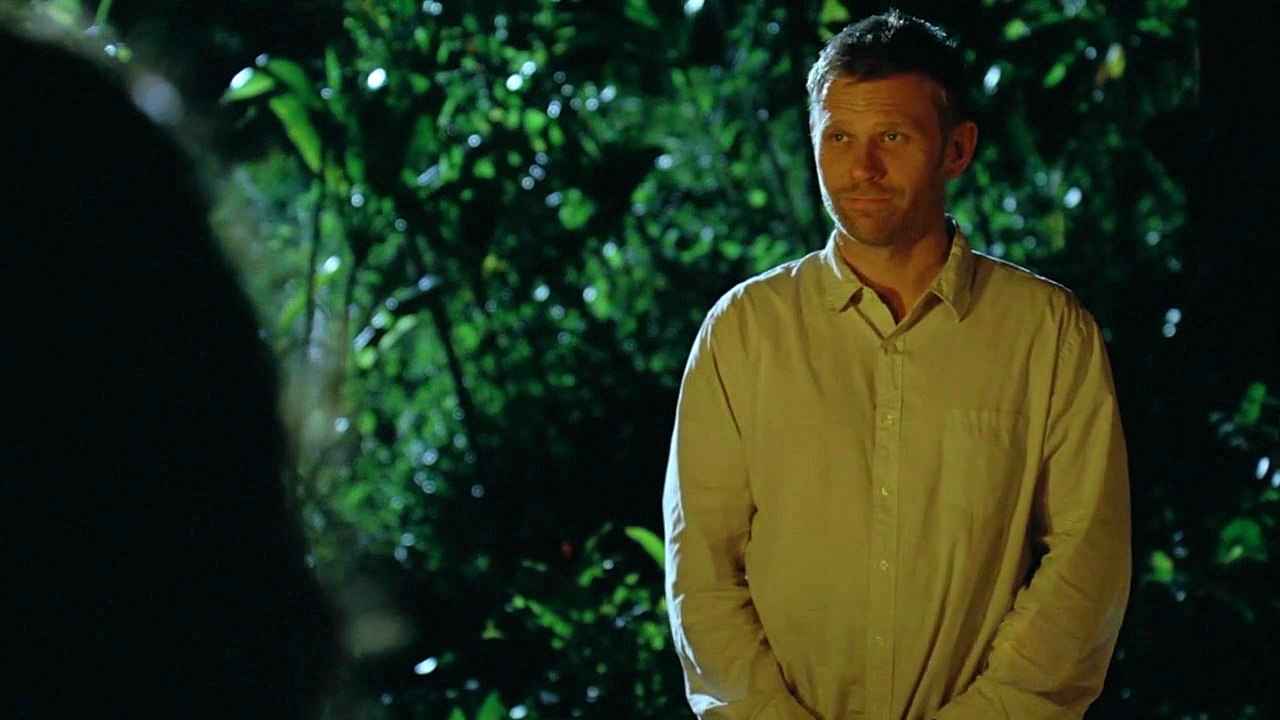
Review: Lost 6.16: What They Died For

http://images4.wikia.nocookie.net/__cb20100519110211/lostpedia/images/7/70/6x16JacobsLastHello.jpg
Hi, I'll be your Jesus archetype for this series. Time for some
hollow explanations for why I've killed hundreds of people.
Lost - Season Six, Episode Sixteen - What They Died For
Written between 15th and 16th March 2013

The title mocks the viewer. Or at least, that's how it feels to me. Two weeks after killing three major characters, one week after presenting us with a history of the show's mythos that makes us root for the villain, and now they choose to answer the fandom's outcry of, "What did they die for?" The answer, similar to organised religion in both content and reputation, is in various degrees interesting and disappointing. The good thing is that the episode managed to keep a nice balance between remembering the good stuff and furthering the bullshit, allowing our dark horse characters one last chance to shine before the finale's main character whitewash.
     On the beach, Jack saw to Kate's wounds. They all reflected upon the events of The Candidate, with Sawyer feeling guilty for touching the bomb, when MIB apparently couldn't have killed them otherwise. They began trekking through the woods, and Hurley saw a vision of Jacob as a child before encountering him as an adult that the others could see. Jacob explains to the four that he chose them as his candidates because they were flawed like him, and because he needed someone to kill the MIB once he'd died. Jack, having nothing left in his life but the Island, chooses to become the new Protector. As Sawyer puts it, "I thought that guy had enough of a God Complex already."
     You see, to me Jaxob's plan seems very much like overkill. Bringing more than one person I can understand - MIB is going to try to kill everyone deliberately brought to the island to kill him. But a passenger plane? 324 passengers were on Oceanic 815, a fair chunk of whom died on impact and the rest of whom died mainly due to the island politics that Jacob set up. I'm sure the corpses in the cockpit were a part of your "grand plan", Jacob, but it's a shitty grand plan that involves the death of 320 people. To be honest, that's worse than what you did to MIB in the first place. Also, this idea that the only reason he needs the candidates is to kill the MIB is just so maddening to me. Instead of trying to reason with MIB and apologise and make-up for the shit he did as a child, he's spent the past 2000 years bringing people to the island to try and kill him.
http://images3.wikia.nocookie.net/__cb20100519125861/lostpedia/images/7/72/6x16Widmore%27sDemise.jpg
Ben finally gets his revenge.
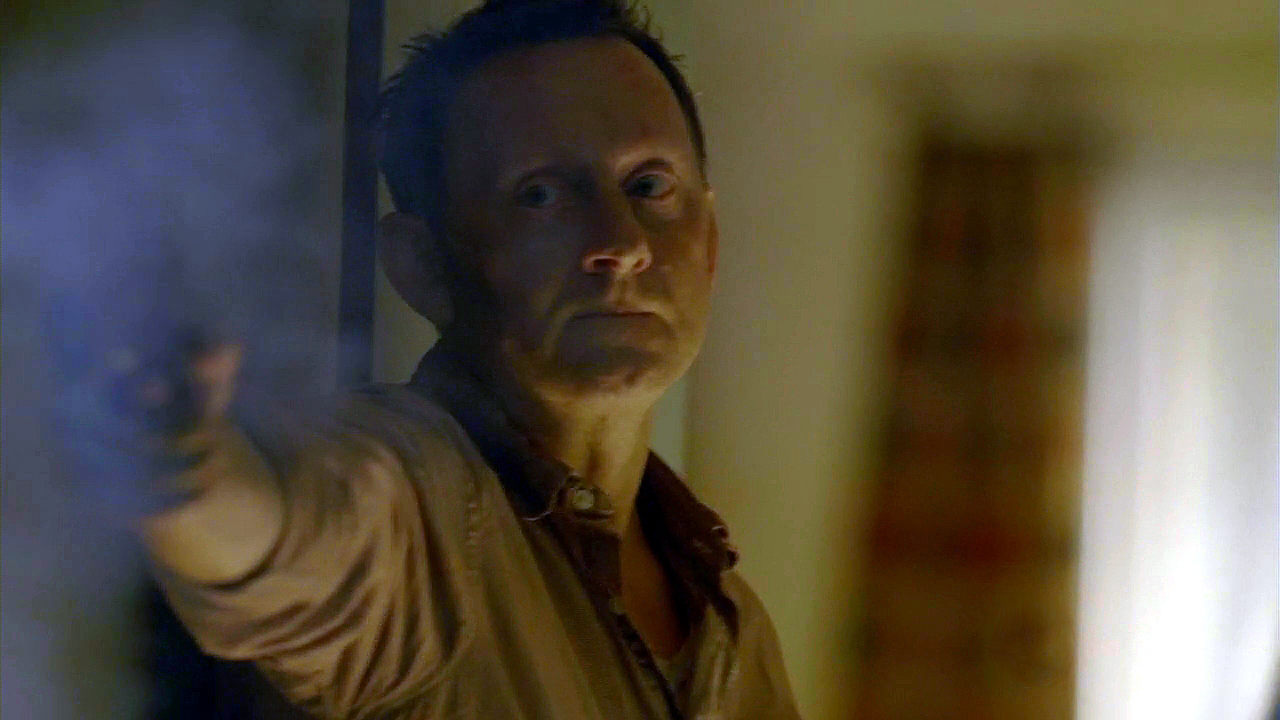
     Elsewhere, and Ben, Miles and Richard arrived at the Barracks. It's a set that I really love, and it's nice to see it one last time. They were there to get dynamite to blow up the plane, but while there they found Zoe and Widmore. Widmore and Ben argue but they're interupted by the arrival of MIB, which causes Widmore and Zoe to hide. With Miles and Richard running off into the jungle, Ben is the only one left to greet MIB, and in his bitterness at Widmore's actions three years earlier he instantly sells him out. MIB kills Zoe, and then Ben kills Widmore before he can tell MIB the information that will save Penny. Following the MIB's promise of power, Ben follows him to the Well, where they find that someone has taken Desmond.
     Ben's character beats here are incredibly well played - the quiet rage you can see as he watched Widmore take a glass of water. If I recall, Ben didn't even know that Widmore had returned to the Island - and, as he was the one who kicked him off it, he had reason to be angry. His interaction with the MIB and his final revenge upon Widmore ("He doesn't get to save his daughter") really drove home the desperation that Ben has now sunk to - his vendetta over and his power base slaughtered, he has nought left to do but follow the man who he thought he was in charge of fighting.
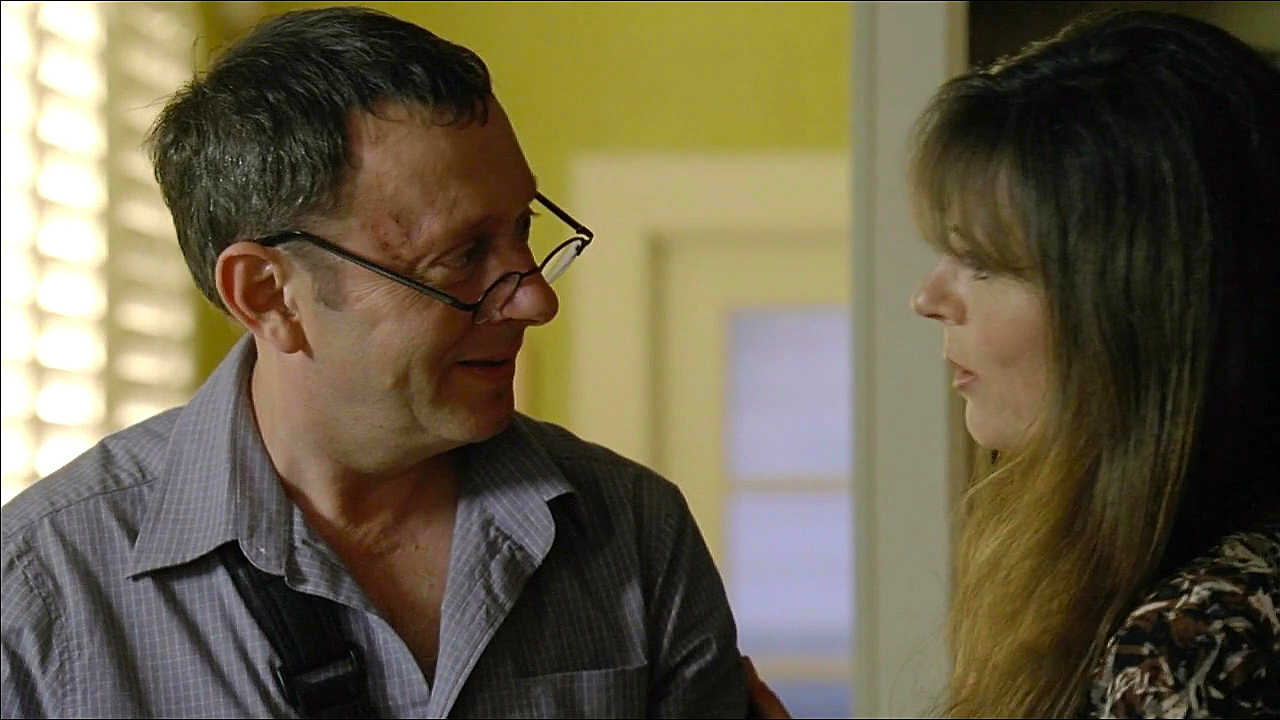
     In the flash-sideways, Desmond beat up Ben to make him remember stuff, and he then sends on the message that he wasn't trying to hurt Locke, but trying to make him "Let Go". Realising that this is what Jack said, Locke goes to the hospital and accepts the surgery. As he recovers, Ben is invited to Alex's house for dinner, where her mother Danielle tells him that he is the closest thing to a father that she's ever known. Desmond hands himself in to the cops and is taken along with Kate and Sayid to "county", where the car stops on the freeway. Ana Lucia, who is UnAware, is being payed off by Hurley, and the three prisoners are released. As Sayid goes with Hurley to pick up Christian Shepherd's coffin from the airport, Desmond gets out a dress and tells Kate that they're going to a party.
http://images3.wikia.nocookie.net/__cb20100519090712/lostpedia/images/8/8c/6x16ClosestToAFather.jpg
Ben finds redemption and praise from Danielle in the
Flash-Sideways.
     What They Died For manages to set up the finale in a way which is arguably more entertaining that the event itself, if only because of the final end to the confrontations between Ben and Widmore that we've seen since the third season. I still think Jacob's a dick, I still think MIB is one of the most awesome villains I've seen in a while, but at this point I can say that I was really, really excited for the finale. Next week I'm going to be plumbing the depths of the finale and of my problems with it and with the final season overall - and why I started reviewing Lost in the first place.

Thanks.
     

Tuesday, 7 May 2013

Review: Shutter Island

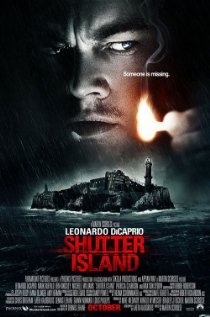
http://media.tumblr.com/tumblr_mf5rb1LT591qe79e5.jpgShutter Island
2010, Directed by Martin Scorcese
Written 19/4/13

Shutter Island is a film that means a lot to me. Not just because of how good I happen to think it is, but also because I first saw it very soon after a friend of mine passed away. While by rights I shouldn't judge a film based around situational circumstances, I found that the film's tone and execution of its quite complicated themes allowed me to take my mind off of the tragedy, while still allowing myself to go through the stages of grief. I thus thought it fitting to include this film in this series of reviews.
     The film relies on a rather large and expansive twist, which is one of the best kind - one whose execution shifts the context of the film in dozens of different ways upon repeated viewing, but whose full implications are left up to the viewer. As such, I'll just give a brief synopsis, and then you should really skip to the end if you haven't seen the film. Seriously, go see it, it's awesome. I'll give you a spoiler warning, don't worry. This is a film where the twist isn't just added onto the end, but instead it forms a main segment of the premise and is woven throughout the narrative and direction.
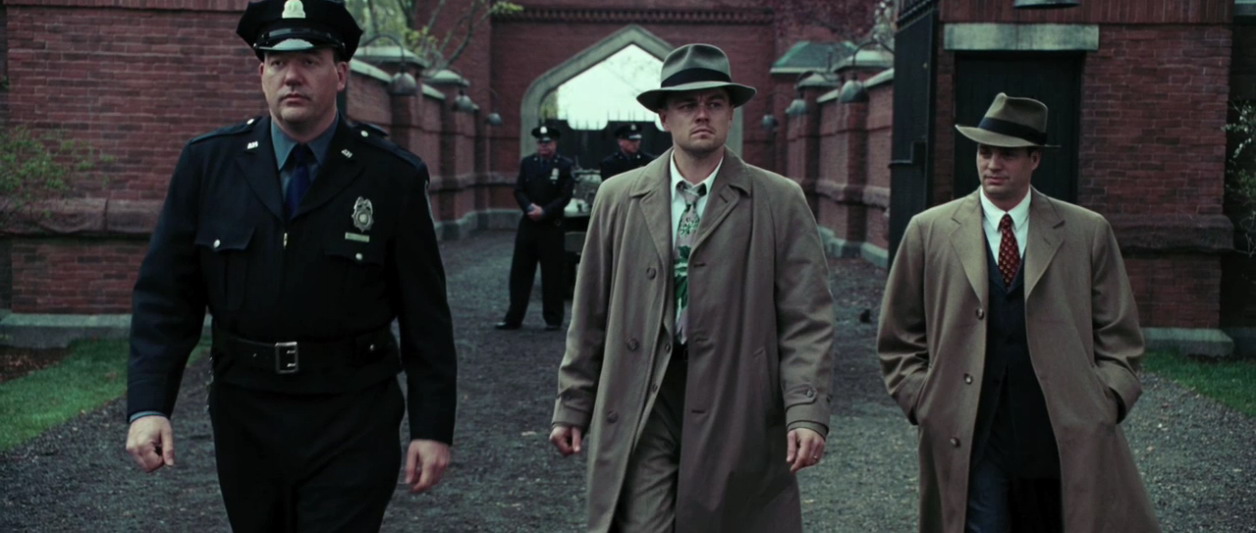
     It's 1954. Teddy Daniels (Leonardo DiCaprio) is a US Marshall with a dark past, leaving him on the hunt for his wife's murderer, Andrew Laeddis. Along with new partner Chuck (Mark Ruffalo), he heads to Ashecliffe, commonly called Shutter Island due to the Medical Institution that holds some of America's most dangerous mentally ill people. The centre is run by Dr. Crawly (Ben Kingsley), whose ideas about helping the mentally ill are years ahead of his time. As the two agents look for the missing Rachel Solando, Teddy becomes suspicious that the Island may have more secrets than he was led to believe. (Spoilers below).
    The main secret being, of course, that the entire film has been an elaborate role-play on the part of Crawley and his team at the hospital, who have been allowing the Teddy Daniels persona to play out until its logical conclusion. Teddy discovers that he is in reality Andrew Laeddis himself, who killed his insane wife after she drowned their three children, and then went mad due to his inability to accept a reality in which these things had happened.
     Essentially, DiCaprio and Ruffalo are both playing two characters each, and their performances are wonderfully subtle enough that from both contexts you can see each characterisation. The way that the institution takes Laeddis' fictioned imaginings of Rachel Solando and uses her as an analogue for his own experiences allows explanation for many of his dreams and hallucinations, themselves caused by withdrawl from psychiatric medication.
http://upload.wikimedia.org/wikipedia/it/0/09/Shutter_Island.jpg     I'll stop there, but I could go on. Shutter Island is a film student's dream - it's filled with so much imagery that can be taken in so many different contexts, and one of the film's most incredible feats is that ability for the plot to relate so closely to the viewer's perception. The view up there is the one we're meant to believe, but you could formulate dozens of other theories as well - maybe we're being double bluffed, maybe it's not from Teddy's viewpoint at all - etc. etc.
     Mention must be made, of course, of the film's score. Just like Hanna, the film's score ties it together perfectly, with most of the themes and variations coming from one of my favourite depressing strings pieces, On The Nature Of Daylight, which is a 2004 composition by modern classic composer Max Richter. It has this haunting, echoing string arrangement which makes it possibly one of the most poignant pieces of music I've ever heard, and it fits perfectly with the film and its appearances in the narrative.
     Shutter Island is a tremendously well made film. One may argue that a lot of the symbolism isn't for everybody, but as an experience it's unparalleled in the detailed nature of the worldbuilding and the level of emotional punch that is maintained despite that. Whether you're watching the story of Teddy Daniels or Andrew Laeddis, Shutter Island is a brilliantly made film that stands out as one of the best thrillers of 2010.

Thanks.

NEXT WEEK: We take a trip down to Pleasantville.
     

Saturday, 4 May 2013

Review: Doctor Who 7.11: The Crimson Horror

http://i2.cdnds.net/13/18/618x411/uktv-doctor-who-the-crimson-horror-10.jpg
Flashbacks are done in a show-reel style.
I was expecting something a great deal more offensive than what I read into the premise. The last time Doctor Who went to the Industrial North, in The Mark of the Rani, we got a cavalcade of accents and stereotypes that became hammy and silly. The Crimson Horror, the latest contribution from Mark Gatiss, continues his current streak of great episodes after Cold War, bringing together a number of unlikely elements into a fun historical for the modern age.
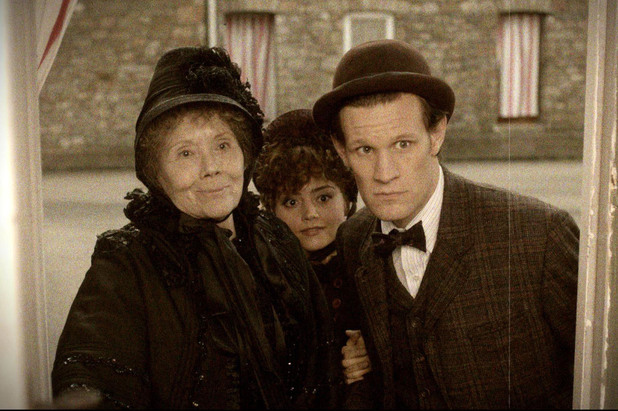
     This was something of a Doctor-lite story for the most-part, with The Doctor and Clara only appearing in Victorian Yorkshire half-way through the story, with their role instead being taken by the charming Paternoster Gang, composed of detective Silurian Madame Vastra (Neve McIntosh), her resourceful chambermaid wife Jenny (Catrin Stewart) and bumbling Sontaran Strax (Dan Starkey), investigating mysterious disappearances at the contructed factory town of Sweetville in Victorian Yorkshire, as run by the sweet Mrs. Gillyflower (Diana Rigg) and her blinded daughter Ada (Rigg's real daughter Rachel Stirling).
     The Paternoster Gang are welcome guest stars. The three, first introduced in the fluffier-than-a-feather-matress A Good Man Goes To War, initially felt a little gimmicky, but their more in-depth appearance in The Snowmen at Christmas convinced me of their worthiness. With Catrin Stewart's Jenny being the least developed of the three, The Crimson Horror allowed her the role of inquisitive companion for the vast majority, rounding off the group into a spin-off-worthy lineup.
     Gattiss' core tropes - incredible nostalgia for historical time periods, classical horror elements - were all here, but Saul Metzstein's direction took a few twists and turns that turned it into something more special. Diana Rigg's Mrs. Gillyflower was wonderfully demented, with the twist of her parasitic life-partner Mr. Sweet being both grotesque and slightly comical. The mother-daughter dynamic (almost method acting, I suppose) was remarkably well done and formed the cornerstone of the episode's drama.
https://blogger.googleusercontent.com/img/b/R29vZ2xl/AVvXsEhpA6ZMf57yHVPbq9r9lPRH6T6VbX4fGyWtJgrKr08B_y3EJNf1_zP5WSQbv7HLqZCnP7Qx_yEscIoDSh3wnhKVv8E3JG9B4FYpIYWaSC43A3QyVLDaiM9yzsj2WuGLRL_INzQVj6oFIo-D/s1600/vlcsnap-2013-05-04-18h48m55s218.png
The Paternoster Gang carry
most of the episode - and marvellously.
     As we head into next week's Neil Gaiman-written finale, Gattiss has delivered on every count - atmosphere, characterisation and concept. Ever since Cold War, it's like a shroud has been lifted and he's gained this extraordinary sense of balance. He's also the first person other than Moffat to write for the Paternoster Gang, who avoided 99% of their cliched traits and have left me waiting for what should be an inevitable spin-off. ("Madame Vastra Investigates" anyone?)

Thanks.

Friday, 3 May 2013

Overview: Doctor Who: Series Three

http://infinitecoolness.com/stuff/posters/doctorwhoseason3firerunningposter.jpgWritten 15/3/13

The boring one. Or at least, that's what a lot of Whovians seem to remember it as. There's a combination of factors as to why the fandom so often dismisses a lot of Series Three, not many of which I can fully understand. It is true that the series has one or two stories that don't exactly push the boat out, but there's also a lot of subtle character development that the series prior to it had really lost. The main reason for that? Martha motherfucking Jones, that's the reason. She defines this season and with very good reason, because she is (at least in her own season) one of the most interesting and emotionally complex companions of the New Series.
     Like Rose, Martha's journey begins at a humdrum life. However, unlike the previous insistence that normal life is quite obviously a fate worse than death, Martha is actually going somewhere in the world - she's a medical student. Her reasons for travelling with the Doctor are therefore less about getting away from her life and her family (who are admittedly falling apart around her) but rather for the sheer adventure of it all. That, and because she's got one hell of a crush. So many people use the fact that her character is underscored by her crush on The Doctor as a mark against her, whereas I see something different - something that eminently fresh in Doctor Who at the time. Fandom aside, the Doctor has only had a few previous relationships in the show, and all were mutual. Just because this series asks the question, "What would happen if the companion had a crush on The Doctor?" doesn't mean that it's bad.
     The key here is Martha's development. She doesn't just stay love-sick and heartbroken forever. Through the last few stories, she spends the equivalent of about two years doing nought but supporting the Doctor, fighting for The Doctor, even putting up with a version of him being incredibly racist. The Doctor himself is dismissive of the role her race plays in their advenures, shrugging it off in The Shakespeare Code as analogous to his alienhood, despite said alienhood rendering him with the body of a while, cisgender male with a British accent. Martha suffers through a hell of a lot of shit, is what I'm basically saying, and in the end she chooses to leave because that's the right thing for her to do. Because she's grown up, maybe not from a girl to a woman, but through the subtle emotional maturation that we all have to go though in our lives.
http://media.tumblr.com/tumblr_m1vi4eHk511r8aaiv.jpg
Ok, so maybe I gush about Martha a little too much in this
article. But I gotta.
     Aside from Martha, the season does have a selection of very good stories. My favourites are probably going to be Gridlock, whose mixture of well-executed sci-fi and subtle characterisation won my heart, and the Family of Blood two-parter, where a deep-probing examination of The Doctor's persona was blended nicely with some firmly anti-war allegories. Something key for me is the presence of a clear arc, but not the kind we've been thrown by Moffat - one similar to the one in the first series, a subtle but omnipresent movement of characterisations.
     I've really enjoyed watching Series Three. In general there's been a greater number of stories that have proved better than I rememebered, and up until the end (with all of the crazy jesus stuff that just makes me cringe) it's interesting even in its most dull or silly moments. It introduced us to one of RTD's best characters and it was, in my opinion, the last season of the new show before everything got real crazy, real fast. While it wasn't the end for Martha (as we'll see in coming weeks), it introduced her, defined her, and gave her a real chance to shine.

Thanks.

Thursday, 2 May 2013

Review: Torchwood 2.3: To The Last Man

https://blogger.googleusercontent.com/img/b/R29vZ2xl/AVvXsEgO74LyUIYy3PcOo-sZyiWd1MNBuRFSCoQ8UjHiotkhzO5wvgnuDikgMS7GbEqktqXZLNj2HxAOab-wBRw6QU1x7O5pOoHKNBylPSHnN4WTWqop9vMHA3svJUaQJAM5xpgw7WG5aEyFPbA/s1600/Tosh+&+Tommy.jpeg
Tosh and Tommy bridge the gap between times.
Torchwood - Series Two, Episode Three - To The Last Man
Written between 14th and 15th February

After writing the third episode of the first series about time-travel related ghosts, Helen Raynor brings us this third episode which focuses on a theme of time-travel related ghosts. I kid, I kid. To The Last Man brings a remarkable amount of depth along with that plotline, and manages to bring us a focus on Tosh that is both fun and more tragic than a box full of puppies sailing over a waterfall.
     In 1918, two Torchwood employees are told by an apparition of Tosh and a solider named Tommy Brockless that they need to take his past self and stick him in Torchwood's freezer. Fastforward to the present day, and it's Tommy's yearly wake-up, and the hospital where the apparition appeared has begun to see the appearance of ghosts from 1918. While Tommy and Toshiko go on a date, both faving feelings for the other, Jack reveals that it's time for Tommy to return to 1918 to save time, even if it means that Tosh must send him to his death.
     My favourite part of the episode was the central romance between Tosh and Tommy, which is treated in a way that only Torchwood can. She seeks solace in him because of his old-fashioned values and the fact that she doesn't have to put up a front in his presence, wheras he sees the pretty girl that wakes him up and looks after him every day. There's also some nice reinforcement of Tosh and Owen's relationship, as he seems genuinely concerned that she will get hurt when she has to send Tommy back.
http://www.bbc.co.uk/torchwood/videoexplorer/images/460x259/tw_episodes_s2_ep03_highlights.jpg
Amnesiac Tommy is confuzzled.
     The episode's concept itself was very well executed, making use of time travel in a way that Torchwood doesn't often get to. Tommy's perception of the majority of the 20th Century as the space of a few months allows for some interesting perspectives, especially when he laments the beginning of the Second World War "three weeks" after the First. The way that the time-travel element is used to push tragedy into the storyline can seem a little forced in places, but the overall effect is a great one and you do feel sorry for Tommy upon his return.
     To The Last Man, despite being deriviative of Helen Raynor's last script for the show, is an excellent one-off love story for Tosh that manages to combine an awesome set of sci-fi ideas with a tragedy that has a hell of a lot of punch. It's been rather odd to see how much of this series so far has relied a hell of a lot on shipping to make certain ideas hit home, but that's probably just me reading into things. Like usual.

Thanks.

NEXT WEEK: We introduce Rhys to the alien world in Meat.
P.S. Be careful when image searching for "To The Last Man" with the SafeSearch off if you're of a squeamish disposition about certain acts of male intimacy...

Wednesday, 1 May 2013

Review: Lost 6.15: Across The Sea

http://images1.wikia.nocookie.net/__cb20100512180630/lostpedia/images/b/b7/6x15_TheHeartOfTheIsland.jpg
Five and a half seasons, all for a hole in the ground.
Lost - Season Six, Episode Fifteen - Across The Sea
Written 10/3/13

The side of the Lost fandom desperate for answers had waited patiently to get some decent background for Jacob and The Man In Black and their long feud. A week after the painful events of The Candidate, the writers explored this with one of the series' few whole flashback episodes. Across The Sea contains no original material with any of the main cast, and instead takes us back 2000 years to give us a backstory that feels ripped straight from Biblical lore.
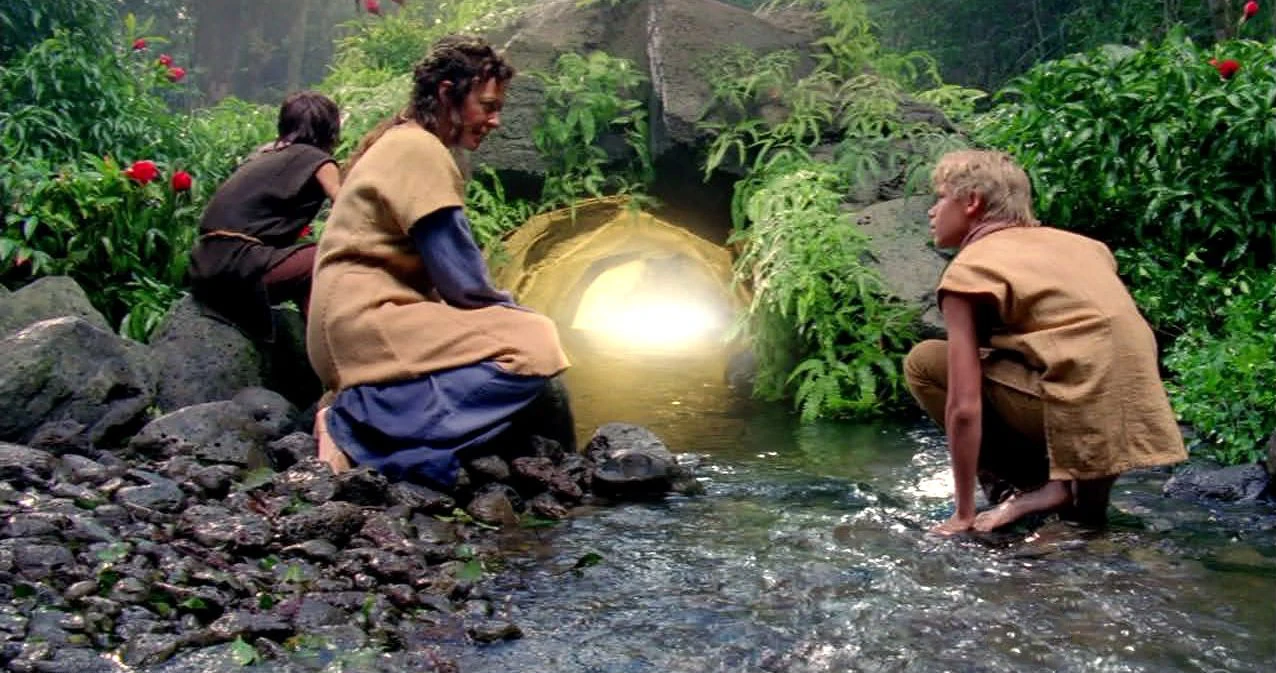
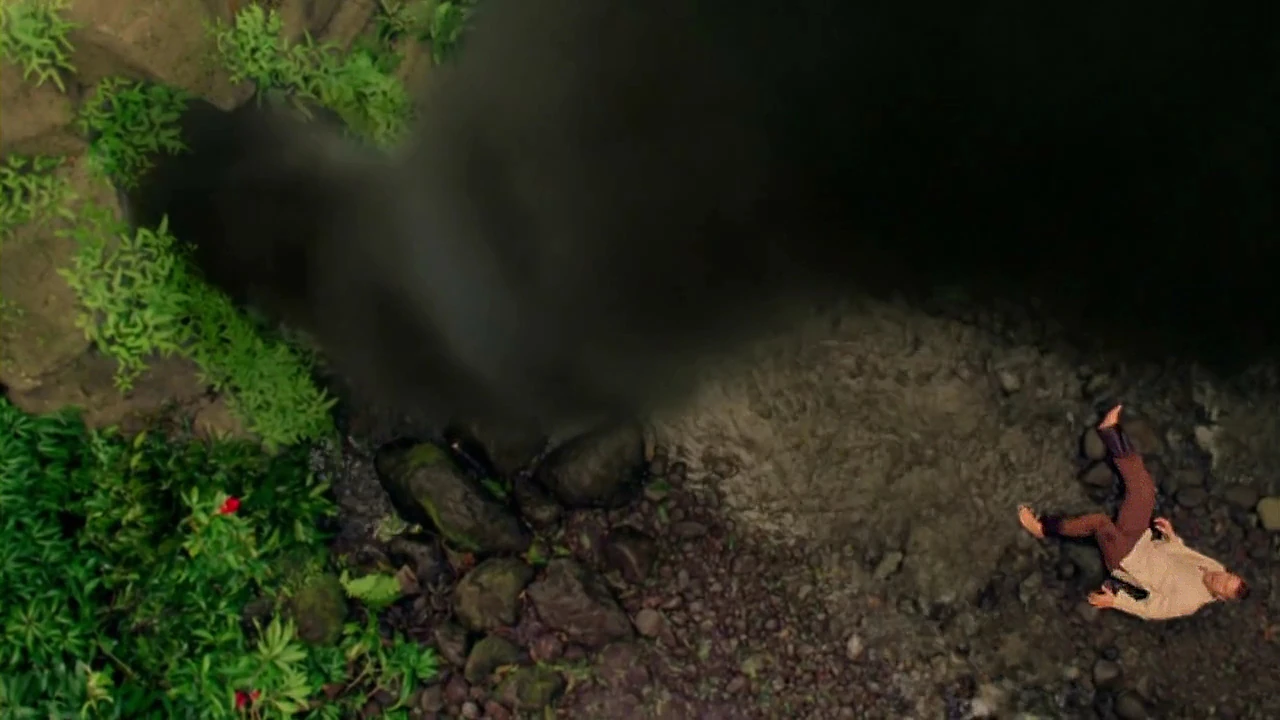
     A Roman woman washes up on the island, gives birth to twins, and is then brutally killed by a strange woman. The woman takes the two boys, Jacob and his unnamed brother (who likes to wear black), and raises them as their Mother. She tells Jacob and the Boy In Black that they're there to protect The Source, a light at the heart of the island in a magical cave. While Jacob is a certifiable Mommy's boy, his brother rejects Mother's attempts to smother the truth about his origins and wants more than anything to leave the island. He goes off to live with another group of crash survivors, and when he creates the Donkey Wheel to leave the Island, Mother is implied to go all Smokey and kills everyone besides him. Angry that his crazy mother has squandered his dreams, he kills her in a fit of rage. In retaliation, Jacob throws his brother into the Light, turning him into the Smoke Monster.
     To understand a lot of the reasons why the magic light at the heart of the island annoys me so much, you have to remember what Lost was originally about. It was a group of being coming together in weird and unusual circumstances - it was a battle between science and faith, between the explainable and the inexplicable. And after all this time, the reason why it all happened, was because Jacob wanted some people to replace him as the protector of a magical light in the ground. It's just... silly. So silly that it feels insulting - after five or so seasons of compelling storytelling, all of that anguish was fobbed off on a magic light?
     But it's more than that, too. At the time I didn't understand why, after the MIB's evil actions, we were given a story that so obviously made us sympathise with him in the past. The MIB is a dude who was denied the simple right of knowing about his past, his home. He's someone who has felt out of place for over 2000 years. He's also inqusitive, curious. He embodies all the traits in this episode that I can sympathise. Jacob is a gullible, gormless bastard who, despite having the same upbringing as his brother, doesn't question her once. There's not even the hint of teenage rebellion, he just goes on to be a psychopathic man-child who carries out his insane foster mother's beliefs to the letter because he wants to.
http://images4.wikia.nocookie.net/__cb20100512130960/lostpedia/images/d/dc/6x15_HereComesTheMonster.jpg
You're telling us that Smokey is because some guy
was thrown into said hole in the ground?
      Credit where credit is due to the cast of this episode, especially the recurring guest stars Mark Pellegrino and Titus Welliver. Welliver especially manages to portray an MIB that contains both the madness that he would later go on to inhabit and the frustration of his upbringing. It's hard not to think that that the actors were on board with my interpretation of the episode, especially as Pellegrino's Jacob is a lot more gormless without the 2000 years of chessmastery. Allison Janney's Mother also sells every line with a conviction that makes the silliness of the script shine through nicely.
     Across The Sea takes the mythology of this wonderful series and gives it an enormously silly bent while appearing to take it entirely seriously, not seeming to realise that it's painting the heroes and villains in very different lights. Thanks to Across the Sea, I sat through the final few episodes rooting for the MIB to win. Even if MIB getting off the island as Smokey would have caused a lot of problems, they were caused almost directly by the actions of both Mother and Jacob, and for me that just screwed the series up in quite a fundamental way. It was grandiose in its ambitions, but all it did was cause problems for the series that it didn't give itself enough buffer room to recover from.

Thanks.

NEXT WEEK: Jacob returns one last time to tell us What They Died For.