Showing posts with label DW29. Show all posts

Friday, 3 May 2013

Overview: Doctor Who: Series Three

http://infinitecoolness.com/stuff/posters/doctorwhoseason3firerunningposter.jpgWritten 15/3/13

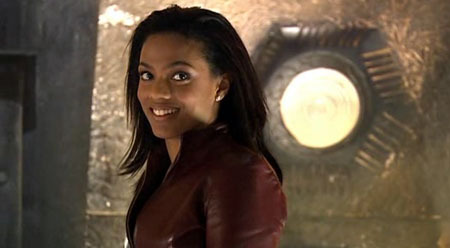
The boring one. Or at least, that's what a lot of Whovians seem to remember it as. There's a combination of factors as to why the fandom so often dismisses a lot of Series Three, not many of which I can fully understand. It is true that the series has one or two stories that don't exactly push the boat out, but there's also a lot of subtle character development that the series prior to it had really lost. The main reason for that? Martha motherfucking Jones, that's the reason. She defines this season and with very good reason, because she is (at least in her own season) one of the most interesting and emotionally complex companions of the New Series.
     Like Rose, Martha's journey begins at a humdrum life. However, unlike the previous insistence that normal life is quite obviously a fate worse than death, Martha is actually going somewhere in the world - she's a medical student. Her reasons for travelling with the Doctor are therefore less about getting away from her life and her family (who are admittedly falling apart around her) but rather for the sheer adventure of it all. That, and because she's got one hell of a crush. So many people use the fact that her character is underscored by her crush on The Doctor as a mark against her, whereas I see something different - something that eminently fresh in Doctor Who at the time. Fandom aside, the Doctor has only had a few previous relationships in the show, and all were mutual. Just because this series asks the question, "What would happen if the companion had a crush on The Doctor?" doesn't mean that it's bad.
     The key here is Martha's development. She doesn't just stay love-sick and heartbroken forever. Through the last few stories, she spends the equivalent of about two years doing nought but supporting the Doctor, fighting for The Doctor, even putting up with a version of him being incredibly racist. The Doctor himself is dismissive of the role her race plays in their advenures, shrugging it off in The Shakespeare Code as analogous to his alienhood, despite said alienhood rendering him with the body of a while, cisgender male with a British accent. Martha suffers through a hell of a lot of shit, is what I'm basically saying, and in the end she chooses to leave because that's the right thing for her to do. Because she's grown up, maybe not from a girl to a woman, but through the subtle emotional maturation that we all have to go though in our lives.
http://media.tumblr.com/tumblr_m1vi4eHk511r8aaiv.jpg
Ok, so maybe I gush about Martha a little too much in this
article. But I gotta.
     Aside from Martha, the season does have a selection of very good stories. My favourites are probably going to be Gridlock, whose mixture of well-executed sci-fi and subtle characterisation won my heart, and the Family of Blood two-parter, where a deep-probing examination of The Doctor's persona was blended nicely with some firmly anti-war allegories. Something key for me is the presence of a clear arc, but not the kind we've been thrown by Moffat - one similar to the one in the first series, a subtle but omnipresent movement of characterisations.
     I've really enjoyed watching Series Three. In general there's been a greater number of stories that have proved better than I rememebered, and up until the end (with all of the crazy jesus stuff that just makes me cringe) it's interesting even in its most dull or silly moments. It introduced us to one of RTD's best characters and it was, in my opinion, the last season of the new show before everything got real crazy, real fast. While it wasn't the end for Martha (as we'll see in coming weeks), it introduced her, defined her, and gave her a real chance to shine.

Thanks.

Monday, 29 April 2013

Review: Doctor Who 3.12-13: The Sound of Drums and Last Of The Time Lords

http://images3.wikia.nocookie.net/__cb20110724110404/tardis/images/4/4b/The-sound-of-drums.jpg
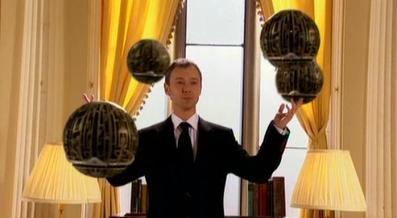
The Master reacts to being called insane.
Doctor Who - Season 29, Episodes Twelve and Thirteen - The Sound of Drums and The Last of the Timelords
Written 10/3/13

Charting RTD's relative rise and fall in popularity, one of the first massive fan outcries at something in his reign was the Series Three finale, which was filled with some of the standard RTD moves but which made rather a lot of people think that he'd gone a step too far. While I don't really object to it a lot, I do admit that there are a couple of problems with RTD's writing here that return from his previous finales, and in a way which is much more gradiose and ridiculous. The build-up is great, but I've still yet to see RTD ever deliver a truly satisfying conclusion to a story.
     Using Jack's wristband to teleport to Modern Day London, the gang discover that The Master has installed himself as Prime Minister Harold Saxon (this year's repeated meme) and has created a network of psychic satellites putting the world under his subliminal control. He reveals a race called the Toclafane which, after having a fake first contact situation on the UNIT airship Valient, he uses to take over the world. The Doctor in his posession, he rules over the world for a year before a trekking Martha arrives back in London, discovering that the Toclafane are the humans from the ship to Utopia and that the Master had used a cannibalised TARDIS to hold the paradox in place. Using the effect of the psychic network, The Doctor is returned to full power. The Paradox Machine is destroyed and time rewinds. The Master is shot, and dies in The Doctor's arms (with a silly hook afterwards). Martha, now seeing that The Doctor will never love her in the way she wants him to, leaves to look after her family, and Jack returns to Torchwood.
     John Simm's portrayl of The Master is one filled with a constant manic energy, less of a scheming archvillain and more of a mischevous schoolboy whose managed to convince his parents to let him throw a sickie. His is a character of paranoia and fear, obsessed with his own ego and making small petty victories over his enemies. I really don't know which of the Master's personalities I really prefer, because in a weird way Simm does manage to pull off the Moriarty spiel just as easily as any of his other incarnations. That said, I do think that there were some silly moments that resulted from this change in characterisation. When facing the President of the United States, Saxon was more annoying than anything else - weird for a guy operating under a pretty thin perception filter to be acting like a complete weirdo just for the sake of it. And then we get to the second half. A tenuous tie-in with The Lazarus Experiment lets The Master age The Doctor's body up by a few hundred years, resulting in a strange dwarf-like creature known to fandom as "Dobby Doctor".
https://blogger.googleusercontent.com/img/b/R29vZ2xl/AVvXsEi9xntydBdeZhr0eJPYQExKh7p4Oae32I3syjksKn4-eSBWRWz1ejaAiGz_ioO1KhrSuNfSZI_0qfZE5LXWWXvdnjREYlejyZ1KLvte-hMPdRmatMXZGIO_eKCFS7cdkTX-wtnL0lwL-j0q/s1600/TheSoundOfDrums.jpg
Spacetime tears apart over  the Valiant.
     But for balance, lets look at a few of the good things before I look at RTD's latest deus ex machina. The Doctor and the Master get a great number of scenes to play off one another, at least when Tennant hasn't been thrown in the age make-up, and there's a noticably different attitude to Ten than in previous incarnations. In the Classic Series, The Doctor could afford to make vaguely heroic statements about The Master's evil, whereas here Ten is desperate to ensure that he and The Master reach a peace, albeit on his terms. There's a sense that after all this time, their relationship has reached a point where it's very much love-hate. The Doctor relies on The Master's cowardice to never kill himself, and so The Master orchestrates his own death just to piss The Doctor off. The Doctor and the Master's slightly shippy relationship is one of the things I love about Simm's Master, and it pops up again in The End of Time.
     So, here's the trademark Disappointing Resolution Of The Series. The day is saved by every single person on the planet thinking The Doctor's title at the same time, which somehow translates into The Doctor being de-aged, incredibly strong and being able to float on a bright white fog, in what fandom has lovingly called, "Floaty Jesus Doctor". (Fandom has a lot of words for this episode, but I won't mention the others.) You could argue that of course the Archangel Network and the whole psychic field thing was introduced an episode or two ago, but turning The Doctor into a god based on the power of prayer (yes, the word prayer is used) is both silly and dangerously close to that whole Lonely God thing that I really don't like. It doesn't so much as stretch credibility as it does utterly shatter it.
     This isn't exacty Martha's last episode, but it does mark the end of her tenure as a continuous companion. The finale marks an important part in the development of her character, and with the love subplot that was built up throughout the series. The finale marks the point where Martha realises that she's in a bad scenario, where she takes the initiative and leaves the man who she knows will never feel the way about her that she does about him. In terms of Nu Who, it's quite a remarkable thing. Every companion except Martha has run with this "I want to stay with you forever" thing and have had to have their adventures stopped by circumstances beyond their control. I like that Martha was written with the maturity to leave when she didn't want to travel any more.
http://media.tumblr.com/tumblr_lphc2rOtTK1qhap1n.jpg
The Master and the Toclafane.
     I realise there are lots of words in this article, but I'll just throw out a few more. I'll cover this more on Friday when I do my series overview, but I've had a ton of fun reviewing Series Three. While this finale had a great number of problems, it never stopped being fun for me and the characterisations that have made this particular series so great still worked wonders. I think, on the face of it, that fun Doctor/Master shipping and watching Martha put The Doctor in his place are more than worth the silliness that comes with Dobby Doctor and Floaty Jesus Doctor. So there. It's not as bad as some in the fandom would make out, and it's the cornerstone on one of the best seasons of the revived series after the first.

Thanks.

Monday, 22 April 2013

Review: Doctor Who 3.11: Utopia

The last story of this series is really three parts long, but for my own sake I'm going to split Utopia off.

File:Chantho utopia.jpgDoctor Who - Season 29, Episode Eleven - Utopia
Written 9/3/13

Spoilers out the way first. If for whatever reason you've not seen Utopia, go away and watch it, because the episode and those following it rely on an awesome twist that won't be half as good if you know it's coming. That said, Utopia is really quite spectacular. It manages to shove a lot of high-scale concept and really fun sci-fi in alongside a whole heap of references to the past, within both NuWho and the series as a whole. RTD is good at build-up; we know this. It helps that in this series, we have this whole extra episode for him to do that build-up.
     Carrying straight on from The End of Days, Jack runs out of the Hub to find the TARDIS refuelling. Seeing him, The Doc tries to get away, but Jack clings to the outside, causing the sentient machine to travel to the end of time to try and shake him off. When he ressurects, The Doctor introduces Jack to Martha and they have a Rose-related catch-up session, before discovering a silo of humans sheltering from agressive, savage versions of themselves. Led by Professor Yana (Sir. Derek Jacobi), they're attempting to reach a place far off in the stars called Utopia. As The Doctor helps him, he realises too late that Yana has a Chameleon Arch pocket watch, which reveals him to be The Master - who, upon awakening, steals the TARDIS and strands them near the end of the Universe.
     The reveal of The Master was one of the first things in Doctor Who that I had spoiled for myself. I remembered Ainley's Master from the Classic Series, and was excited that the last of the Classic Series' most important villains was making his comeback. Jacobi is wonderfully unassuming in the role, and equally bitter and hammy once his identity is revealed. We didn't really get to see much of the Master in the episode itself, so I'll discuss my views on the Simm incarnation next week, but for now it's safe to say that we were pretty hyped for the return.
     The execution of the future concept was done in a way which gave it a uniquely bleak atmsophere that Who doesn't manage to pull off very often. The toothy "Futurekind" were a tad cheesy, what with their slightly anachronistic name ("Future" to whom?) and their narmy cries of "HUGH-MAN!". But that felt fairly inconsequential next to the rest of the setup. This episode's focus was never going to be on the sci-fi ideas, it was always going to be on the characters.
https://blogger.googleusercontent.com/img/b/R29vZ2xl/AVvXsEhUy3Hq9UnhfQU2Z1CmGJVs4iLhhUxJuFu_jX9_cwoWj3DNZPcgWpjmXqZAc-Xmdcl4c-RHVwit1y4uCj1YyvbAvLpfIA7uQS-NcA-MojcZ3E-1x71EuD_jwv22RkzMSx3yBY3oseHHro79/s400/Doctor+Who+-+Utopia+the+Doctor+and+Jack.JPG
Beginning to ship Jack/Ten. Just a lil bit.
     Jack's return is handled wonderfully, and Barrowman spices the series up no end. There's a scene near the end where Jack's immortality is used to help launch the ship (something to do with Radiation, don't ask me.) The chat between The Doctor and Jack that follows is a sign of how flexible RTD's writing became when discussing Jack's adventures outside of Who. RTD was adamant that Torchwood wasn't for kids, and thus he prevented The Doctor from ever crossing over. The episode manages to explain Jack absence in such a way as to both work with and without seeing the spin-off. Which is nice.
     Utopia is what I could call a perfect, archetypical episode of RTD's Who. It's got an action-packed plot that's balanced by high-concept sci-fi and somewhat intricate character work that never fails to push the audience's buttons. It often gets overshadowed by the finale and by Simm's barnstorming portrayl of the Simm Master, but it shouldn't. It's my favourite part of this trilogy, and it's one of RTD's best stories.

Thanks.

NEXT WEEK: It's essay time. We cover Simm's Master when we look at The Sound of Drums/ The Last of the Time Lords.

Monday, 15 April 2013

Review: Doctor Who 3.10: Blink

Carey faces the angels.
Doctor Who - Season 29, Episode Ten - Blink
Written 3/3/13

"Moffat!" I scream as I shake my fist into the sky. It's arguable that Blink is the story which won Moffat the role of showrunner, mainly because it's often voted one of the best stories in the history of the program. The love for Blink is immense from all corners - the public loved it, most of the fans love it, and it's won enough awards to make sure that it got the praise many felt it deserved. And, weirdly enough for a Doctor-lite story, it's a story often used to introduce new people to the show. I, however, am deeply conflicted as to whether Blink really does deserve its lauded reputation - mainly, of course, due to certain aspects of Moffat's writing.
     The story is an adaptation of one of Moffat's short stories from the 2006 Annual, "What I Did On My Holidays By Sally Sparrow." Here the pre-teen protagonist is sexed up a bit into the shape of at-the-time-up-and-coming actress Carey Mulligan. While investigating a spooky house, her friend Kathy (Lucy Gaskell) ends up being zapped back in time by the Weeping Angels. After the same thing happens to flirty police officer Billy Shipton (Michael Obiora), Sally discovers via Kathy's brother Larry that The Doctor has been trying to communicate with her via DVD easter-egg from 1969, where he and Martha are trapped. Following his instructions, she manages to send the TARDIS back in time and temporarily trap the Weeping Angels in the house. They then give info on the event to a time-travelling Doctor from before the events of the episode.
     Carey Mulligan's Sally Sparrow exudes a great deal of charm and she's an identifiable audience figure, but I really think this is more her acting than the script, which gives her rather blandly "weird" statements that don't really form cogent characterisations. Certain events, like Larry first meeting Sally while nude, feel like they've come straight out of a sitcom, and the characterisations reflect that. Sally is a hipster who thinks "Sad is happy for deep people" and takes pictures of abandoned buildings, whereas Larry is a harsh parody of Doctor Who fans that feels like a very bitter jab on Moffat's part.
Billy Shipton took the slow path.
    And that's the reason why it just doesn't feel as frightening or as wonderous to me as it does to others. I mean, I absolutely love the timey-wimey plot (and this is the origin of that term) and I think it's very well crafted, technically speaking. But when I watch, I can't help but see Sally and Larry as archetypes rather than people. There's nothing about Sally Sparrow that suggests to me that she's at all real - she doesn't seem to have a job, she doesn't have any family, and she has enough free time to go around taking photos of abandoned buildings on weekdays. 
     Now I'm not going to be mad enough to say that I think that Blink is bad, because it's not - as a piece of horror drama it's been shown that it scares the pants off of most people. But the gimmicky nature of the villain and the archetype-stuffed cast means that despite all of the love that people have for it, I just don't find it very memorable. It's nothing personal, just a simple matter of taste - Blink isn't my kind of Doctor Who. And, given what I've said on this blog about the parts of Who I have ended up liking, that shouldn't come as a massive surprise.

Thanks.

Monday, 8 April 2013

Review: Doctor Who 3.8-9: Human Nature and The Family of Blood

http://images1.wikia.nocookie.net/__cb20111028224259/tardis/images/7/72/Baines_(Son_of_Mine).jpg
The creepy Son of Mine leads the Family of Blood
Doctor Who - Season 29, Episodes Eight and Nine - Human Nature and The Family of Blood
Written 2/3/13

In the Wilderness years between the cancellation and the return, the only source of new Who were several series of books, running under various different companies - the most popular of which can be said to be the Virgin New Adventures. The thirty-eighth novel in that series was Human Nature, written by the erstwhile NuWho writer Paul Cornell. Like Blink next week, prose was adapted to screen and we got this rather interesting two-parter that juggles examinations of historical attitudes with a scathing deconstruction of who The Doctor really is. It has the moral ambiguity that the series held during the Wilderness Years, and that's probably one of its main selling points.
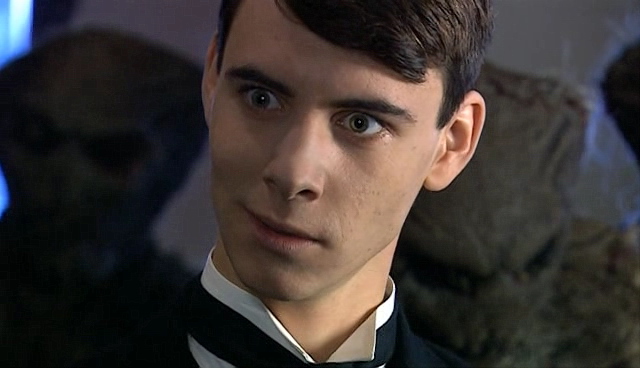
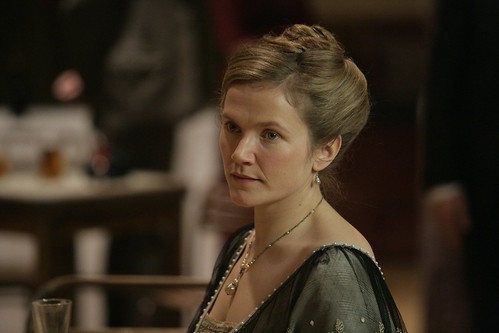
     The Family of Blood are an alien family of amorphous smoke who have been chasing The Doctor in order to adapt his Time-Lord DNA and live forever. Planning to let them die out, the Doctor uses a machine to change him into a Human and put his Time-Lord consciousness into a pocketwatch - a Chameleon Arch. Five months later, and The Doc is living as John Smith in a school in 1913, a product of his time who hires maid Martha to do his handywork for him. Martha is troubled when John falls in love with Nurse Joan Redfern (Jessica Hynes) and the Family of Blood catch up with them. With the Watch kept safe by young boy Timothy Latimer (Thomas Sangster), John Smith must face the reality of becoming The Doctor once again, losing his human identity.
http://farm5.static.flickr.com/4092/5150415610_55d097b6f6.jpg
Joan (Jessica Hynes) falls in love with John Smith and is
forced to put The Doctor in his place.
     The New Series has a massive habit of really pumping The Doctor up beyond his means. We know the Tenth Doctor has an ego, and it's one of that the series is very happy to stroke. But this episode sorta takes that down a level, by throwing all of this hype at a normal person and seeing a real reaction to it. John Smith isn't just scared by the idea of losing his life to become The Doctor - he also thinks that The Doctor is kind of a dick. This gets some concrete confirmation when Joan inquires to a flirting Doctor whether his presence on Earth caused so many people's deaths.
     The continuation of the Martha/Doctor dynamic is really well done, too. The show never pretends that their relationship is healthy one, and John Smith's rascist abuse of Martha only encourages that. She's put up with five months of abuse from the locals, especially with the imperialist attitudes surrounding colonial wars in Africa. The rest of this series is basically gonna see how much abuse we can put Martha through before she finally leaves - like, almost non-stop. And she still gets battered by fandom. Bah.
     Those colonialist attitudes underlined the story in many other ways, taking on the guise of a Wilfred Owen-style criticism of the dulce et decorum est attitudes of the Edwardian era and how they led to large numbers of casualties in the First World War. There's a wonderful sense of that impending doom that makes the attack by the awesome Family of Blood that more ominous. I do think that the episode goes an incy wincy bit over the top with this, with it ending on an aging Latimer attending a Remembrance celebration in the Present, but I do love the way the idea is implemented.
http://i301.photobucket.com/albums/nn41/sue_denimme/Family_of_Blood_542.jpg
David Tennant is awesome in this story, by the way.
     The question that Human Nature/The Family of Blood asks is simple: would you actually want to be The Doctor? It's an admission that the moment you lose the Classic Series' perception of The Doctor as a travelling magician who pops from place to place and enter this modern era of The Doctor being a universally famous action hero, then you must also accept that he's no longer the same kind of role model. The Doctor here is not someone that we (or, for that matter, John Smith) would want to become, and that is the kind of nuanced portrayl of the character that I so enjoy. The two-parter is complex and bold while still providing a fun narrative for the kids, and that is one definiton of perfect Who.

Thanks.

Monday, 1 April 2013

Review: Doctor Who 3.7: 42

https://blogger.googleusercontent.com/img/b/R29vZ2xl/AVvXsEhNStqJp6otVOXj64FWPg6YfyzmA9kEpIi_N12ihyHfDCOxG95ElLGTNetc7ZqxOxV2XNUvnCdSvRzk-ucBnvfMkGq_i3hwl9-kW2S9DCgYR8G3DNm2YzUWrNN_5iQEqB4cXVx3UfTQQI8b/s1600/42.jpg
It's a very Red episode...
Doctor Who - Season 29, Episode Seven - 42
Written 21/2/13.

Me and ol' Chris Chibnall have had a rough time. My main frustration comes from his inconsistency as a writer - there are a number of his works (mainly outside of Doctor Who) that I really do enjoy for many reasons - usually to do with strong characterisations and well-executed concepts. And then there are his real fuck-ups: every episode he's written in the Moffat Era, for example. While I do sometimes respect him as a writer, I don't want him anywhere near Doctor Who and I was very worried when he wrote not only two episodes of the September Season in 2012, but also wrote pieces bookending it. Despite my anguish, I'm of the opinion that 42 is... not bad.
     The core concept is sound if fundamentally stupid - the Doctor and Martha arrive upon a ship destined to fall into an alien sun, with a real-time countdown timer punctuating every scene. The sun turns out to be sentient, and has infected members of the crew and sabotaged the ship due to the Captain's use of illegal tech to scrape out the sun's core. There's a point where The Doctor gets possessed, Martha gets stuck in an airlock - it's a bit of a run-around. The idea of a sentient sun may be fun but is fundamentally quite silly, as a sun is just Hydrogen fusing into Helium, and there's not enough complexity for even simple metabolic processes. That doesn't really affect the episode's impact, though. We have the big guns, here.
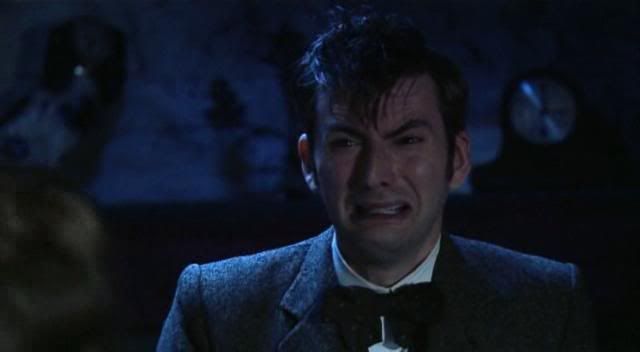
      And by big guns, I mean director Graeme Harper. Harper is one of the best directors the series has ever had, and directed two of my favourite Classic Stories (Caves of Androzani and Revelation of the Daleks). His sharp style and appropriation of the real-time element gives the episode a sense of constant action and tension that never really lets up, and is one of the episode's main saving graces. He takes what could have been rather bumpy bits in the script and turns them into great moments - my favourite of which is probably a moment of vacuum-induced silence as Martha's escape pod drifts away, The Doctor helpless. There's also a wonderfully primal scene when the Doctor is possessed, and Tennant's whimpering and screaming makes the whole affair seem more brutal than they're allowed to show.
http://newslang89.files.wordpress.com/2011/10/doctorwho42.png
I tried finding a good pun. Settled on,
"Turn around, Bright Eyes!"
     If there are some downsides, its the guest cast. Michelle Collins' Captain is yet another person to add to the "annoying guest cast" list, as Chibnall takes the stereotype of strong sci-fi captain and throws it in the wrong direction, turning her into a delusional idiot who is constantly soppy and can't recognise that her husband is no longer there even when he's burnt two people to death. Also rather terrible that the only crew members who get outright killed by the sun-possessed zombies are the women - nice vote for gender equality there, Chibbers.
     42 doesn't have anything new to offer the world, but what it does have it manages to process and package in a way which is consistently entertaining. In terms of Chibnall's career, this is pretty middle-of-the-road - by no means the worst thing he's ever done, but not his ultimate high either. Taken on its own, the script is fairly average, and it's a mixture of outstanding direction from an unlikely source and the sheer conviction of its main players that carries it forward into quite an underrated experience.

Thanks.

NEXT WEEK: Paul Cornell returns with an adaptation of a book that features living scarecrows, creepy immortal schoolboys and David Tennant's best performance in anything, ever. It's Human Nature/The Family of Blood.

Monday, 25 March 2013

Review: Doctor Who 3.6: The Lazarus Experiment

http://upload.wikimedia.org/wikipedia/en/4/4e/Lazarus_Experiment.jpg
I wanna imagine this scene being played out in-studio.
Doctor Who - Season 29, Episode Six - The Lazarus Experiment
Written between 20th and 21st February 2013

It really hits home in The Lazarus Experiment how different of an approach the show took towards Martha than it did Rose. At this stage, due to The Doctor's "one trip" business, it feels like she's still only just beginning. Rather an odd thing, considering we're half-way through the season. Most of The Lazarus Experiment felt very much like filler, but there was a swirl of ideas both wonderful and completely terrible to keep me interested. Like last week, we have to say goodbye to Biology for a bit - bigtime.
     The Doctor, after giving Martha her "one trip" (which he admits has somewhat escalated), takes her home. He's about to pop off, but he hears on a local news report about Professor Richard Lazarus (Mark Gattiss) and his groundbreaking experiment. The Doctor decides to attend the event, organised by Martha's sister Tish, and saves the day when Lazarus' machine almost explodes with him inside. When the machine is opened, the pensioner Lazarus comes out as a youthful Mark Gatiss, and claims that he has just enabled human immortality. However, Lazarus' machine has made his DNA unstable, and he periodically transforms into a massive pincered monster. After faking his death once, The Doctor and Martha guide him to a Church, where The Doctor uses sound waves to make him fall to his death. The Doctor offers Martha a permenant place as companion and they pop off.
     Mark Gatiss' character veers on the cliché at times, but I at least found him captivating. There's something quite Voldemort-y in his key motivation to avoid death at all costs, and his memories of cowering in war-torn London gave him a very human motivation for doing so. That theme of immortality was complemented quite well by The Doctor's role in the episode - not just blatantly against attempts at Immortality for the sake of it, but also sincere and heartfelt in his explanation of the loneliness that said immortality brings. Ten is really quite awesome in this series, and I can't for the life of me think why.
http://images3.wikia.nocookie.net/__cb20111011052224/tardis/images/c/c3/The_Lazarus_Experiment_160.JPG
I probably enjoy Gatiss' acting a little more than his writing.
     The main problem with the story, then, is soley down to its Monster-Of-The-Week nature. The Lazarus mutant may be very scary indeed, but it shatters my suspension of disbelief into a million tiny pieces. Genetics just doesn't work like that - DNA doesn't randomly sporadically jump around just cos you shake it up a bit, and changing someone's DNA doesn't automatically change what they look like, it's not like some crazy biological cheat code. Also, DNA doesn't "hide" past options - at worst, it can hold a few minor evolutionary throwbacks (like tails or hindlegs in whales), but they ease themselves out during adult growth. There's never been a stage in human evolution where we had the option to become a massive skeletal beast with a dislocatable jaw and a stinger that can suck the life out of people.
     Despite that, I actually quite enjoy The Lazarus Experiment. It's a fun adventure, and there's enough depth to its villain that it makes a decent watch, even if it isn't a masterpiece. I'm also loving the development of the relationship between Martha and The Doctor, which I find rather fascinating and is so far the main reason why I'm enjoying Series Three to the extent that I am. It ma have silly CGI and some sillier concepts, but the performances sell it and it's more than enough to make it fun.

Thanks.

NEXT WEEK: The first Who appearance of the dreaded Chris Chibnall... it's 42.

Monday, 18 March 2013

Review: Doctor Who 3.4/5: Daleks In Manhattan/Evolution of the Daleks

Dalek Sec, or, to the more immature among us,
"Brainy McPenis-Face"

Doctor Who - Season 29, Episodes Four and Five - Daleks In Manhattan/Evolution of the Daleks
Written between 14th and 18th February 2013

I really do not know where to start. The Dalek Two-Parter is uniquely weird and wonderful, in that I can't really tell what it was trying to do, and yet certain bits are very good and certain bits veer into So-Bad-It's-Good. The only analogy that I can think of is that of a Rembrant painting that's been scribbled over by a toddler; some pieces of compositional genius remain, but they're rather dwarfed by the glaring problems at the story's heart. That's not to say that I hate the story, but it's not exactly the easiest to love.
     The first half is better than the second for many varied and interesting reasons. The story's lack of true location flming (there were some greenscreen shots taken by the production team but the actors stayed in Cardiff) does at time threaten to kill the atmosphere the story is trying to create, especially when it's abundantly clear that none of the actors can do a convincing New York accent. However, for whatever reason, it's clear the Daleks In Manhattan is actually trying to say something about the state of New York and American society in the 1930s, especially in the anvillicious figure of Solomon. The second half, however, throws any trace of commentary aside and descends into pure batshit crazy.
     This story's mad plot holes earned it the number 2 spot on my Top Five Cases of Bad Doctor Who Science article, where I go into the story's conflicts with basic Biology in much greater detail. If we ignore the craziness of Dalek Sec shoving a guy into himself and that somehow allowing two completely different species to fuse together, we come to a much bigger plot hole when the planned hybrids look exactly like humans who just speak weirdly and have a predeliction for carrying silly guns. It destroys the episode's tension, and the story's solution (clinging onto the lighting rod) spits in the face of all suspension of disbelief.
The ol'  "cling-onto-the-rod" technique. I tried that once;
it ended badly.
     Helen Raynor acted as an unsung script editor for a lot of the new series. She is notable, really, for being the one and only woman to ever write for the new series, which considering modern attitudes to equality is actually quite shocking. It's something of a shame, really, that her two stories for Doctor Who have been rather lukewarm - her two stories for Torchwood (Ghost Machine and To The Last Man) were rather amazing by comparison, but it just seemed like in Who she got fobbed off with bringing back popular villains, which didn't give her much room to do anything with the same potency as her other work.
     Well, those are the main points. Two-parters always tend to mess me up - even though some Classic Stories are longer, it feels like the new series shoves much more into each story as a matter of simple concentration. The Manhattan two-parter has its own unique brand of logic that I just really can't comprehend, and that's why even if I look into the attempts at atmosphere and story, I just really wouldn't reccomend it to anyone. If you want Dalek craziness of the weirdest degree, this is the place to look. Preferably with some form of alcohol.

Thanks.

NEXT WEEK: More Biology abuse in the insanity of The Lazarus Experiment.

Monday, 11 March 2013

Review: Doctor Who 3.3: Gridlock

http://media.screened.com/uploads/0/4335/290857-dr_who_gridlock_01.jpg
You've obviously never seen the M6 at rush hour.
Doctor Who - Season 29, Episode Three - Gridlock
Written between 11th and 12th February 2013

Before we look at Gridlock, we in fact need to take a little sojurn to the wonderful black-and-white world of 1967, for the famous Patrick Troughton story The Macra Terror. The story featured a colony of humans in the future ruled over by a mysterious woman, who was in fact a front for the Macra, a race of hyper-intelligent giant crabs. It's often been very highly rated, if one ignores the rather thorny problem of the serial not existing any more. And, despite the hubub over JNT doing the same all those years ago, you'd be very wrong to think that RTD wasn't going to shy away from making references to a story that literally no-one has seen since transmission - what was, at the time, a gap of exactly 40 years.
     RTD's New Earth trilogy, which began with the okay The End of the World and continued with the amominably silly New Earth, ends here with a final appearance by the Face of Boe and a final trip to the city of New New York. As Martha points out, it's a tad suspect that one of the first places The Doctor takes Martha to is the place where his incarnation first took Rose, but I really don't want to have to think about that right now. While they're in the city, they discover that everyone's gone spooky on drugs, and then Martha is suddenly stolen away by a young couple, one of whom is played by a post-Sugar Rush but pre-Being Human Lenora Crichlow. The Doc, in his attempts to find Martha, discovers that most of New Earth was wiped out by a plague carried on the drug patches, and that the people of New New York have been kept in a never-ending system of Gridlock by the Face of Boe in the interest of their safety, not knowing that at the base level live the degenerated form of the Macra.
     I flipflop when it comes to Gridlock, really. There are times when I find it eminently forgettable, and that's something of a crime, really, because the rest of the time I think it's a bloody masterpiece. Well. That's a bit hyperbolic. It's more akin to several very good things stitched together in a way which doesn't necessarily complement each other, but which doesn't detract from the beauty of the original pieces. By that, I mean that the episode is very, very full with various different messages and ideas, and I'm not quite sure what we were meant to come away with. There's a strong anti-drug message, there's an obvious commentary on pollution and the environment, there's something in there about marriage equality (which for some reason Rusty chooses to make an issue in the 50-Million-and-first-Century). There's also a lot of mythology stroking, with Tennant getting to lament about Gallifrey a lot and making many references to both the Classic Series and to the present arc running up to the return of The Master.
http://gspn.tv/wp-content/uploads/2008/01/3x03gridlock-01412.jpg
The death of the Face of Boe, and a prophecy that doesn't
really get as tiring as the whole "four knocks" thing.
     The episode's main gimmick, and possibly its greatest strength, is its reliance on a single set (the inside of a hovercar) just jazzed up in many different ways. There's a sense of confinement to the character interactions that, while not completely getting across the sheer tedium of the 3D Gridlock, certainly makes The Doctor's search for Martha that more powerful. By this point with Rose, the two were ready to die for one another, while the progression here is a tad more natural, and The Doctor admits that Martha is practically a stranger to him. That's probably why I like Ten in this season - he may be moaning over Rose now and then, which can get irritating, but he seems to gain a sense of self-awareness to go along with the pizazz and the charm.
     So, overwhelmingly, I think that Gridlock is pretty good. There's a sense of intelligence hiding behind the standard adventure that manages to mix a few messages in with some pretty good character development. It's been argued that the slow pace of The Doctor and Martha's relationship at this stage maybe damaged the series, because it was half-way into her series before she felt like a true companion. I'm really not getting that in this run-through - Martha is a companion with a very different mindset to the ones before and after, and for the moment that's really quite fascinating. Next week, I'm afraid, I won't be so positive.

Thanks.

NEXT WEEK: The story that made all the Biologists in the world cry simultaneously - it's Daleks in Manhatten/Evolution of the Daleks.

Monday, 4 March 2013

Review: Doctor Who 3.2: The Shakespeare Code

https://blogger.googleusercontent.com/img/b/R29vZ2xl/AVvXsEgkE189IytKmTzdxUVC7408UCuxu7fsJ7CSfzz3xvj8ECYitzS2kBD61eM42kBrvWaQH9FTC6KWfrYdhe5wQd0WkWh50Szkcfhb_Rc0702fF-CGBiCGFTZCw6nXWu_1KJ1FlpZdQN2MynNT/s1600/shakespeare_code.jpg
The ruff suits you. I'd be wary of hair loss, though.
Doctor Who - Season 29, Episode Two - The Shakespeare Code
Written 9/2/13

It's NuWho standard (well, RTD standard) to begin a season with three adventures, one in the present, one in the past, and one in the future. This pattern was only really broken in Series Six, which went down swimmingly (cough cough). Series Three takes us first to the past, with a fun, pop-culture filled look at Shakespearean Culture from the pen of Gareth Roberts, later writer of the Craig episodes of Moffat's tenure and the odd Unicorn and the Wasp (which we'll get to in about four months, on my calendar.) Enough stalling, let's get on with it.
     The Doctor takes Martha to the time of Queen Elizabeth, where William Shakespeare is in the process of writing his famous lost play Love's Labour's Won. The Doctor shrugs off Martha's concerns about being a black woman in the time of the Slave Trade, and she's further surprised when Shakespeare (Dean Lennox Kelly, Being Human, Shameless) is distinctly more outspoken (and, perhaps, Northern,) than she expected. This soon becomes a distraction when someone objecting to the new play is found killed by impossible means, and Shakespeare is brainwashed into writing odd words. Investigating, The Doctor discovers the culprits to be the Carrionites - evil witch-like aliens able to harness the power of words. While they temporarily incapacitate him, The Doctor is able to help Shakespeare to foil the Carrionite plot.
     The use of magic is not new in Doctor Who, as I've shown when I reviewed Battlefield and several other Classic Stories. Roberts throws so many wonderful sci-fi references into the story that the presence of magic isn't really that much of an issue, especially as it's handwaved rather efficiently. This rather niftily allows the show to use Witches as a concept for what is strangely the first time. And they're pretty cool - lead witch Lillith (Christina Cole) is delightfully hammy, and the witches' reliance on words makes every scene they're in pretty verbose.
http://powet.tv/powetblog/wp-content/uploads/2007/04/doctor_who_302_the_shakespeare_code_04_pretty_witch.jpg

     The treatment of Shakespeare himself is rather interesting, with Kelly's performance highlighting the relatiely populist nature of the words of a man who is now regarded as the height of class. After Dickins' depression and Queen Victoria's bewilderment, Shakespeare is a relatively subtle portayl here that mixes all of the historical and popular interpretations into one, from the spontaneous verbosity to the mild bisexual flirtation. ("And 57 academics just punched the air.")
     The Shakespeare Code, while not the most memorable script in the world, is one whose script is subtley balanced between pleasing sci-fi references and interactions as well as a nuanced historical examination of the history of theatre and of Shakespeare's life. And, as you can probably tell from the brevity of this review, I don't have much else to say about it. Don't worry, I've got a ton more to say about next week.

Thanks.

NEXT WEEK: The power of faith singing, Thermoman as a housecat and a head in a jar that saves the World - it could only be Gridlock.

Monday, 25 February 2013

Review: Doctor Who 3.1: Smith And Jones

The Doctor and Martha. Running.
My captioning is a bit lazy this week, forgive me.
Doctor Who - Season 29, Episode One - Smith and Jones
Written between 27th January and 8th February 2013

So our first noble companion has gone, and a lot of the fandom are really, really sad about it. This is not the best way to allow our viewers to recognise Doctor Who's incredible habit of change. Luckily for the show, the opener to Tennant's second season is one of the best scripts that Rusty ever produced, and says a lot more about the quality of the previous season than it does about the projected quality of this one.While Smith and Jones may not be the perfect episode, it is certainly a very good introduction, free of any stress of having to reboot the series and simply allowing us to get in touch with our new regular.
     Martha Jones (Freema Agyeman) is a 21-year-old medical student working at London's Royal Hope Hospital. It's her sister's birthday, and the planned party is causing tension between her seperated parents. As she enters work, she meets stranger Mr. Smith, and they're present when the Hospital is lifted by backwards rain onto The Moon. There, Mr. Smith sees Martha's lack of fear and introduces himself as The Doctor. It turns out that the hospital has been lifted by Space-Mercenaries known as The Judoon, who are looking for blood-absorbing alien Mrs. Finnigan (Anne Reid, The Curse of Fenric). She initially disguises herself as human and adapts an MRI machine to wipe out one side of the Earth, but with The Doctor and Martha's intervention she is stopped and the hospital is returned to Earth before everyone runs out of air.
      I suppose you could say that the script is rather desperate to get across Martha's positive traits from the get-go. She's smart, inquisitve and unafraid of the unknown - all good qualities for a companion to have. Something that felt justified at the time but that doesn't really feel justified now is the few references and nods back to Rose - according to the Doctor, she's not even a companion yet (and she won't be for at least another six or so episodes). Like I said, it's a hangover - one that may indeed be touching for the characters involved, but one that doesn't help the show to move on and execute new ideas like having a new companion should help it to.
Rhino people. 'cos.
     As for the plot itself, it's a small curse of the RTD era that monsters from Premieres are rarely very memorable. Here we have weird Rhino creatures with funny names, creatures made of leather and a woman who drinks your blood through a straw. The peril is imminent and the episode is not without tension, but the fun comes from the novelty of the scenario rather than the strength of the individual villains.We're not exactly talking high-cocnept here. But I perhaps think that that wasn't really what this opener needed, and the lack of a strong villain character allowed us to focus more on the relationship between our core protagonists.
     I suppose its the fact that Smith and Jones isn't trying to be big and complicated that is ultimately its greatest success. The main plot is designed to be fun for kids and expose us as much as possible to our new character, who hasn't had a million years to get started. And, as you can probably tell, I'm running out of things to say. Smith and Jones is good at what it wants to be, and as a companion introduction it's probably one of the best, "this is why our companion is cool" episodes. Onto the past.

Thanks.

NEXT WEEK: The Shakespeare Code! Haha Dan Brown reference.

Thursday, 29 November 2012

Review: Doctor Who 3.X: The Runaway Bride

The Doctor and Donna meet unexpectedly.
Doctor Who - Season 29, Christmas Special - The Runaway Bride
Written 21/10/12

Ah. Yes. Erm, this is embarrassing. I had gone into The Runaway Bride expecting to have something deeply vitriolic to say. Hate to spread. Something really venemous to make good similies out of, like, "worse than an ameoba's painting skills" or "more tired than an out-of-shape flamingo" or something. But, er, no. I kinda like this one. Is it bad that I don't quite know why? The Runaway Bride presented something very strange in that it is in a way a companion introduction story that's about a season too early and feels a season too late. It isn't really special and there's nothing really that brings it above the rest of Season 29 in quality but there is something strangely rewarding about it in the long run that, for me at least, gives it a barrell of well-earned charm.
     Just after The Doctor has lost Rose Tyler to a parallel Universe, mouthy bride-to-be Donna Noble (Catherine Tate) appears in the console room, having literally disappeared from her wedding without warning. Disgruntled, he attempts to return her home, discovering that the bride worked as a temp for a firm known as HC Clements and has managed to miss all of the major earth invasions over the past few years. She's being chased by last year's robot santas, who are being attracted by the huon particles that are somehow inside her. They go to the reception, where they've started with out her, but it turns out that the robots can track her there and The Doctor destroys them. Heading to HC Clements to find out what's going on, they find that Donna has been spiked with Huon particles by her reluctant boyfriend Lance in order to serve the will of the Empress of the Racnoss, queen of a species the Time Lords destroyed in the Dark Times. Heartily pissed off, The Doctor uses the Robot Santas' bombs to blow up undersea base, drowning the Racnoss and only just getting out alive. The Doctor drops Donna off home and pops off on his merry way.
     I initially detested the way that Catherine Tate played the role, in a way which really reflects half of my attitude towards Donna in general - she's often loud and comedically sociopathic without rhyme or reason, and doesn't seem so much human as she does a walking sitcom cliché. As the episode progresses, though, we see something truley remarkable - RTD's first successful piece of Character Development, which takes loud oblivious Donna and turns her into a conscientious woman ready for a better life. This development would continue when she takes up the companion mantle in Season 30, and despite its ridiculous payoff in Journey's End (which will inevitably have to be reviewed someday) it stands as one of RTD's best-written characters. And that, fundamentally, is why, despite all of the things I've mentioned, I like Donna.
You may not like her characterisation, but you gotta say
this action scene kicks ass.
     But what was it about the episode that made it just right enough for me to actually like it? It wasn't the very, very ambitious villain design, which features Sarah Parish in the largest prosthetic the BBC ever made, nor was it the muddled but ingenious plot by the Racnoss to have the Human Race for Christmas Dinner. No, it was... it was Tennant. This is the first time since initial broadcast wherin, outside a Moffat episode, Ten hasn't done something I found annoying. He was quite brilliant here, actually. I think the general comedic feel of the episode certainly added great chunks to my appreciation, and the darkness that RTD so loves was given out in just a small enough quantity to actually mean something for a change. (Although I did notice that The Doctor is happy to let the British Army shoot down the Racnoss Web, killing the Queen... let's not dwell on it too much.)
     So... yeah. The Runaway Bride isn't anything special, I suppose. But what it does have is just this great feeling, almost like a buddy movie, of two great friends coming together for the first time. Add to that a great deal of decent humour, a hammy villain (MY KEY! MY KEY!) and a really quite good piece of Character Development, and you've got the recipe for a Christmas treat that does that and so much more. It introduced Donna, showed us a more subtle side of Ten and gave me a good laugh on Christmas morn and again when I rewatched it. Good on you.

Thanks.

NEXT THURSDAY: NuWho's first So Bad It's Good episode...