Monday, 29 April 2013

Review: Doctor Who 3.12-13: The Sound of Drums and Last Of The Time Lords

http://images3.wikia.nocookie.net/__cb20110724110404/tardis/images/4/4b/The-sound-of-drums.jpg
The Master reacts to being called insane.
Doctor Who - Season 29, Episodes Twelve and Thirteen - The Sound of Drums and The Last of the Timelords
Written 10/3/13

Charting RTD's relative rise and fall in popularity, one of the first massive fan outcries at something in his reign was the Series Three finale, which was filled with some of the standard RTD moves but which made rather a lot of people think that he'd gone a step too far. While I don't really object to it a lot, I do admit that there are a couple of problems with RTD's writing here that return from his previous finales, and in a way which is much more gradiose and ridiculous. The build-up is great, but I've still yet to see RTD ever deliver a truly satisfying conclusion to a story.
     Using Jack's wristband to teleport to Modern Day London, the gang discover that The Master has installed himself as Prime Minister Harold Saxon (this year's repeated meme) and has created a network of psychic satellites putting the world under his subliminal control. He reveals a race called the Toclafane which, after having a fake first contact situation on the UNIT airship Valient, he uses to take over the world. The Doctor in his posession, he rules over the world for a year before a trekking Martha arrives back in London, discovering that the Toclafane are the humans from the ship to Utopia and that the Master had used a cannibalised TARDIS to hold the paradox in place. Using the effect of the psychic network, The Doctor is returned to full power. The Paradox Machine is destroyed and time rewinds. The Master is shot, and dies in The Doctor's arms (with a silly hook afterwards). Martha, now seeing that The Doctor will never love her in the way she wants him to, leaves to look after her family, and Jack returns to Torchwood.
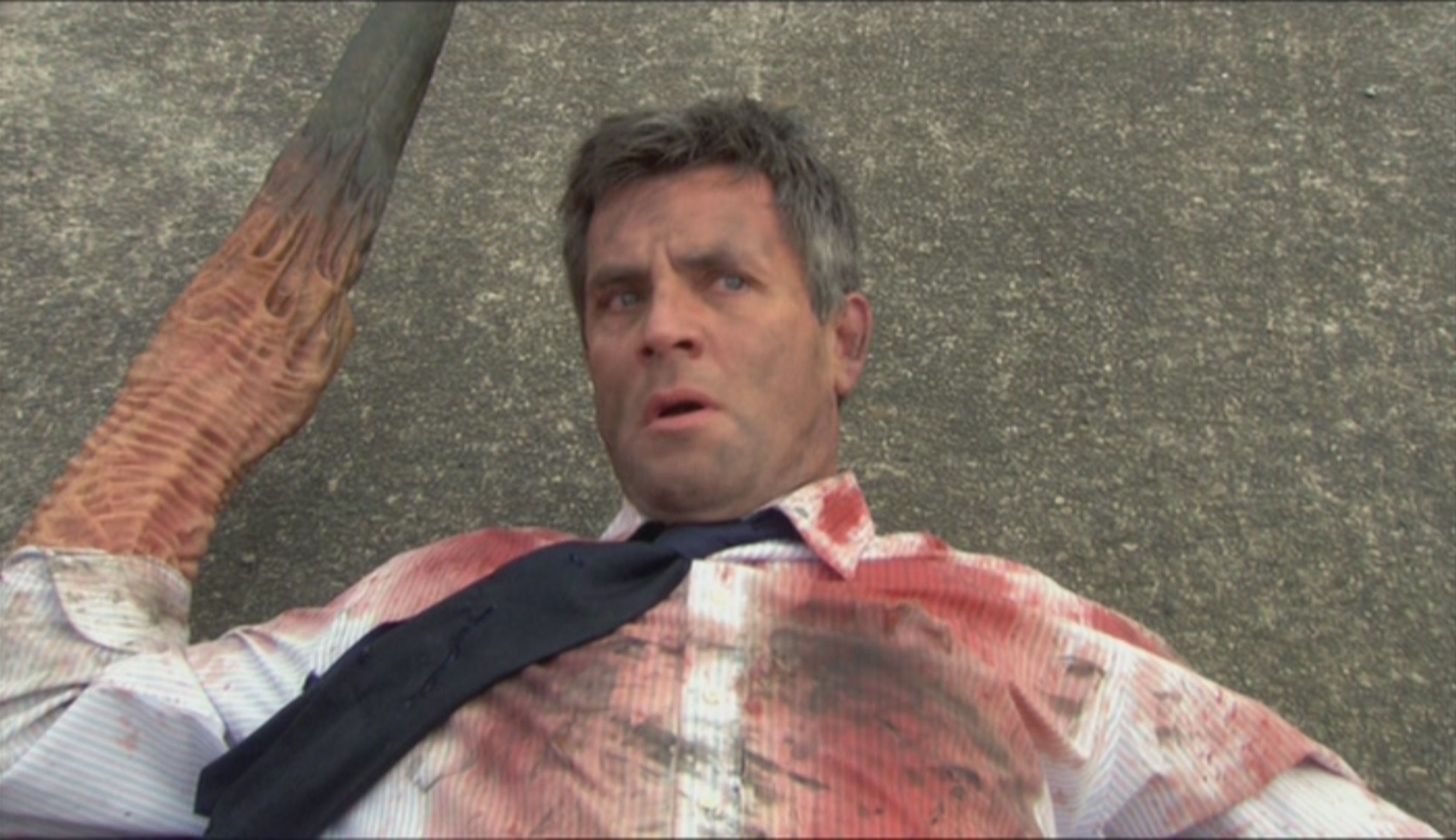
     John Simm's portrayl of The Master is one filled with a constant manic energy, less of a scheming archvillain and more of a mischevous schoolboy whose managed to convince his parents to let him throw a sickie. His is a character of paranoia and fear, obsessed with his own ego and making small petty victories over his enemies. I really don't know which of the Master's personalities I really prefer, because in a weird way Simm does manage to pull off the Moriarty spiel just as easily as any of his other incarnations. That said, I do think that there were some silly moments that resulted from this change in characterisation. When facing the President of the United States, Saxon was more annoying than anything else - weird for a guy operating under a pretty thin perception filter to be acting like a complete weirdo just for the sake of it. And then we get to the second half. A tenuous tie-in with The Lazarus Experiment lets The Master age The Doctor's body up by a few hundred years, resulting in a strange dwarf-like creature known to fandom as "Dobby Doctor".
https://blogger.googleusercontent.com/img/b/R29vZ2xl/AVvXsEi9xntydBdeZhr0eJPYQExKh7p4Oae32I3syjksKn4-eSBWRWz1ejaAiGz_ioO1KhrSuNfSZI_0qfZE5LXWWXvdnjREYlejyZ1KLvte-hMPdRmatMXZGIO_eKCFS7cdkTX-wtnL0lwL-j0q/s1600/TheSoundOfDrums.jpg
Spacetime tears apart over  the Valiant.
     But for balance, lets look at a few of the good things before I look at RTD's latest deus ex machina. The Doctor and the Master get a great number of scenes to play off one another, at least when Tennant hasn't been thrown in the age make-up, and there's a noticably different attitude to Ten than in previous incarnations. In the Classic Series, The Doctor could afford to make vaguely heroic statements about The Master's evil, whereas here Ten is desperate to ensure that he and The Master reach a peace, albeit on his terms. There's a sense that after all this time, their relationship has reached a point where it's very much love-hate. The Doctor relies on The Master's cowardice to never kill himself, and so The Master orchestrates his own death just to piss The Doctor off. The Doctor and the Master's slightly shippy relationship is one of the things I love about Simm's Master, and it pops up again in The End of Time.
     So, here's the trademark Disappointing Resolution Of The Series. The day is saved by every single person on the planet thinking The Doctor's title at the same time, which somehow translates into The Doctor being de-aged, incredibly strong and being able to float on a bright white fog, in what fandom has lovingly called, "Floaty Jesus Doctor". (Fandom has a lot of words for this episode, but I won't mention the others.) You could argue that of course the Archangel Network and the whole psychic field thing was introduced an episode or two ago, but turning The Doctor into a god based on the power of prayer (yes, the word prayer is used) is both silly and dangerously close to that whole Lonely God thing that I really don't like. It doesn't so much as stretch credibility as it does utterly shatter it.
     This isn't exacty Martha's last episode, but it does mark the end of her tenure as a continuous companion. The finale marks an important part in the development of her character, and with the love subplot that was built up throughout the series. The finale marks the point where Martha realises that she's in a bad scenario, where she takes the initiative and leaves the man who she knows will never feel the way about her that she does about him. In terms of Nu Who, it's quite a remarkable thing. Every companion except Martha has run with this "I want to stay with you forever" thing and have had to have their adventures stopped by circumstances beyond their control. I like that Martha was written with the maturity to leave when she didn't want to travel any more.
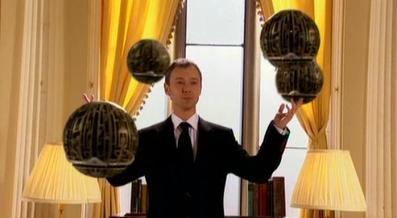
http://media.tumblr.com/tumblr_lphc2rOtTK1qhap1n.jpg
The Master and the Toclafane.
     I realise there are lots of words in this article, but I'll just throw out a few more. I'll cover this more on Friday when I do my series overview, but I've had a ton of fun reviewing Series Three. While this finale had a great number of problems, it never stopped being fun for me and the characterisations that have made this particular series so great still worked wonders. I think, on the face of it, that fun Doctor/Master shipping and watching Martha put The Doctor in his place are more than worth the silliness that comes with Dobby Doctor and Floaty Jesus Doctor. So there. It's not as bad as some in the fandom would make out, and it's the cornerstone on one of the best seasons of the revived series after the first.

Thanks.

Saturday, 27 April 2013

Review: Doctor Who 7.10: Journey To The Centre Of The TARDIS

http://doctorwhotv.co.uk/wp-content/uploads/DOCTOR-WHO-Journey-to-the-Centre-of-the-TARDIS-bbca-trailer.jpg
Dans le centre de la Tardis!
"Journey To The Centre Of The TARDIS" (or JTTCOTT as it's being affectionately known) is an interesting title. The second longest title in the series' history by syllable, and the first one to mention the Tardis by name. It's also a title that's as likely to bait fans as those classic "Doctor" titles where we were promised some insight into the show's rich backstory, insight that never usually comes, with a single exception. Steve Thompson, a writer who wrote both the forgettable "Curse of the Black Spot" and Sherlock's rather more brilliant "The Blind Banker" and "The Reichenbach Fall", attempts to pull a Doctor's Wife on our asses and hits his target a little far from expectations.
     While attempting to show Clara how to fly the TARDIS, the ship is attacked by a salvage vessel run by three brothers. The Doctor is chucked out, along with a load of engine parts, and when he notices that Clara is lost in the TARDIS he blackmails the brothers into helping him go through and find her. Being a sentient ship (and an angry one), the TARDIS rearranges rooms around for people she annoys. Clara finds a library where there is a history of the Time War, containing the Doctor's name. The corridors of the TARDIS is also being stalked by burnt zombies who kill anyone they touch, and The Doctor only just saves her. They end up in the Eye of Harmony room, where The Doctor reveals that the Zombies are Future Echoes of them, destined to burn up in that room. They manage to get out of the room by various means, but the TARDIS engine is beyond repair. Handy reset button in hand, The Doctor pops through a crack in time and changes the timeline.
     I suppose we were all expecting some massive plot revelations or something. The TARDIS is considered sacred ground, it's fanwank material and thus you really expect something that explores the ship to have a load of other goodies in there as well. Not to say that there weren't a few fun references - opening the new TARDIS console saw voices from the past spilling forth, as well as having Time Lord memories stored in the Library. There were a few moments that threatened to actually progress the series' mysteries - all wiped out now, of course, due to the surprising and rather disappointing reset button ending.
http://www.radiotimes.com/namedimage/Journey_to_the_Centre_of_the_Tardis.jpg?quality=85&mode=crop&width=580&height=327&404=tv&url=/remote/static.radiotimes.com.edgesuite.net/pa/27/76/webANXdrwhos7ep11.jpg
The Doctor and Clara have some heart-to-hearts, but they're
erased from history.
     What probably saved the episode was its tone, which balances the curiosity and wonder of the brand new Tardis environments (although unfortunately mostly confined to corridors without any roundels) with the dread of both the TARDIS' immient destruction and, if The Doctor was to be believed, Clara's third death. I initially had the crazy theory that the burnt people were what remained of the Time Lords, forever wandering the Doctor's TARDIS as his penance for their destruction. The actual resolution felt a bit more sinister than it ended up being... I just kept waiting for that twist, something to make it truly revelatory.
     I'm not as desperately disappointed as I could be - it is after all about the experiences along the journey rather than the final destination. I really enjoyed the character development that occured during the episode, and I also enjoyed seeing this production team's interpretation of the depths of the TARDIS interior. I just wish that they'd found a way to end it in a way which didn't involve pretty much eradicating everything that happened from the stream with the push of one button. Despite that shoddy ending though, I enjoyed the rest of the script and found it to be imaginative, intelligent and worthy of a lot of praise.

Thanks.

Friday, 26 April 2013

Review: Star Trek (2009)

Warning: This is probably going to devolve into an article about Trek vs. Wars, so bear with me on that.

Star Trek
2009, Directed by J.J. Abrams
Written 21/4/13

Later this year, I'll be reviewing some Star Trek on this blog. But, as the second of J.J. Abrams' adaptations makes it way into cinemas rather soon, I thought I'd take the time now to explain my feelings towards his first divisive film for the franchise, Star Trek (Or, as we say in Trek Circles, Star Trek XI.) Star Trek XI is the result of Lost's production team attempting to take on the long-running franchise, from producers J.J. Abrams and Bryan Burk as far as writer Damon Lindelhof and musician Michael Giacchino. The result can be foretold rather easily; Lostpedia has an entire page of Star Wars references, but a few lines of Trek ones.
     The producers seem to view Trek, especially in its earlier years, as something of a poor child trying to fight with the big boys. The level of contempt that they have for the special effects is perhaps understandable, especially in the American theatre where budgets shot sky high very quickly. However, as an advocate of Classic Who and an ardent lover of all things Trek, I really think that this is the wrong attitude to have if you're going to go in and make an adaptation. The reboot of Doctor Who after 16 years was only successful because the vast majority of the production team grew up loving and respecting the program, and Christopher Eccleston had never seen it, and so treated it as seriously as any other project. The producers of Star Trek XI looked at their new endeavor and immediately thought, and I quote, "What can we learn from Star Wars?"
     The result is a film that is not by its very nature bad, but which is as far from the spirit of Trek as cheese is from milk - both may have some superficially similar origins, but the experience of consuming one is vastly different to the other. If cheese is left to mature it simply becomes stronger tasting - if milk is left to mature it goes sour and inedible. The film attempts to pay homage to the series by maintaining an internal consistency through the creation of an alternate reality in which our main characters can do whatever they damn well want without affecting the continuity of the TV show, but simply referencing a show doesn't make up for the loss of its spirit within the work.
     What do I mean by spirit? Well, we again must look over at Star Wars. Lucas' creation is something that embodies a great number of religious and right-wing values. The universe is controlled by fate and destiny, by a force that unites all things. Morals are staunchly black and white, with the odd anti-hero to keep the viewers interested. The world can be changed by the actions of a few individuals - the tiny good defeating the all-encompassing evil, taken straight from David and Goliath. Star Trek was conceived as something distinctly different - something more humanist. Star Trek is about discovery and diplomacy - about learning lessons about how to improve the future of humanity, about hope and peace and compassion. There are no right or wrong answers - simply ways of getting on and forming a peaceful and constructive way forward. It was Gene Rodenberry's utopian vision.
Okay, so this is gonna be a caption rant. This is an actual
still from the film. The level of lens flare in every shot of this
film is ridiculous. I'm all for style, but when you've got guys
sat on the edge of your set with flashlights just to add lens
flare to your movie, I think you have to look at why you're
a filmmaker. Thanks.
     So let's compare the plot and structure of Star Trek XI with both of these things. Captain Kirk has been retconned into being a poor farmboy living on a desert planet who never knew his father. Maybe I'm just nitpicking, but that sounds awfully familiar. And, away from perhaps contrived parallels in plotting, we find him rising through the ranks on sheer skill alone after cheating the system. We find him piloting the last Federation ship, one small force alone against a massive, all-encompassing evil in the form of the Nerada. It's David and Goliath again, huh. And what a Utopian world where a cadet can be dismissed for cheating on a major piece of training, make his way onto the flagship as an illegal stowaway and then through circumstance rise to the rank of Captain because someone from a parallel Universe says that that's his destiny?
     I enjoy Star Trek XI in the same way that I enjoy Doctor Who's A Good Man Goes To War. As a feat of pure spectacle it's certainly impressive, and up there with the level we've come to expect from modern blockbusters. But as an entry into the world of its franchise it so goes against the core principles of what make that franchise what it is that it feels wrong to even associate it. It's like making a James Bond film where the agent wears his pyjamas everywhere and solves things over the phone. Still enjoyable in its own right, perhaps. But not the thing that we need from a film bearing the Star Trek name. And that's what I think of it.

Thanks.

P.S. Although Zachary Quinto is great, go Zachary Quinto.

Thursday, 25 April 2013

Review: Torchwood 2.2: Sleeper

Beth (Nikki Amura-Bird) has no idea what she is...
Torchwood - Series Two, Episode Two - Sleeper
Written between 9th and 10th March 2013

How often have you heard the question, "What does it mean to be human?" It's a typical sci-fi staple, really, something that you're bound to find anywhere you look. Hell, it's so ubiquitous in fiction that we have a series that is literally about Being Human. (I'm still mourning, go away.) This week, Torchwood takes a standard murder mystery plot and gives it a shake-up with another well-acted guest star and a set of moral dilemmas about the nature of humanity enough to satisfy any English Literature student.
     The team are called to a burglary where the two burglars have been stabbed brutally despite there being no knives in the room at the time. The second burglar dies with his deathbed words speaking of being afraid of the woman in the house, Beth (Nikki Amura-Bird, before Survivors), who Jack immediately brings into the Hub. Despite having her own electromagnetic field and inpenetrable skin, Beth is adamant that she is human. A mind-probe reveals that she is the first of a set of alien sleeper agents, implanted with false memories to blend in but constantly absorbing information in preparation for invasion. Beth gains enough control over her alien tech to help Torchwood stop a small invasion attempt, but she sets up a situation that forces Torchwood to kill her, prefering that death than losing her mind to her true self.
     Beth, for what could have been an undersaturated guest character, is surprisingly well characterised. The themes surrounding her loss of identity and the threat she poses to those around her is explored without her ever becoming anything less than a convincing human being. Her "death by Torchwood" demise is also pretty deep, and manages to bring an adult side to the series that doesn't rely on its old adolescent machismo. It's hard to see what we would do in that situation, and the show does its best here to represent that in a captivating way.
http://images2.wikia.nocookie.net/__cb20120420010514/tardis/images/f/f1/Sleeper_main_image.jpg
Having a sword-arm all the time can't be good for balance.
Or dexterity. It's why we tend to not have sword-arms.
     This week also managed to fit in a few pieces of horror in there as well, with some of the other re-awakened agents. Two of them effectively become suicide bombers, including one who was pretending to be a young mum, while the superior agent brutally murders a man in cold blood in front of his family before attempting to use nukes the blow up the world. (Although what any alien besides the Slitheen would want with a chunk of radioactive rock is beyond me.) On their own, the alien sleepers, with their in-build forcefield (I gotta get me one of those) are a really cool idea, and one that's properly executed.
     Sleeper always gets a tad faded over in my memory of the series, and that may be because it wasn't as immediately memorable as the two stories flanking it. But as a piece of science fiction it's a fairly well-execution exploration of the "what does it mean to be human" question, with some classic horror and a few very quotable lines thrown in. Torchwood has pretty much fully thrown off all predeliction towards its prior silliness, and it's operating as a piece of sci-fi for a mature audience. And that's awesome.

Thanks.

NEXT WEEK: I debate (jnternally) on whether I ship Tosh/Owen or Tosh/Tommy more... it's To The Last Man.

Wednesday, 24 April 2013

Review: Lost 6.14: The Candidate

http://images1.wikia.nocookie.net/__cb20100505235017/lostpedia/images/6/69/6X14abomb.jpg
You could say this episode was... explosive. (Sorry.)
Lost - Season Six, Episode Fourteen - The Candidate
Written 9/3/13

This is what we in the business call a Wham Episode. (Well, TV Tropes calls it that, anyway.) It is here that the MIB's main plan comes to fruition, and boy is it magnificent. There are times that I like the MIB because I sympathise with him and think that Jacob's a bit of an ass, but here I just admire the sheer badassery and forward planning that comes with his every action. If you torture a man for long enough, he learns a few tricks of his own, it seems. The Candidate was the make-it-or-break-it point of the season, and it was a powerful spectacle that for most fans probably ranks up there with the likes of Reichenbach and The Angels Take Manhatten for sheer pain and misery.
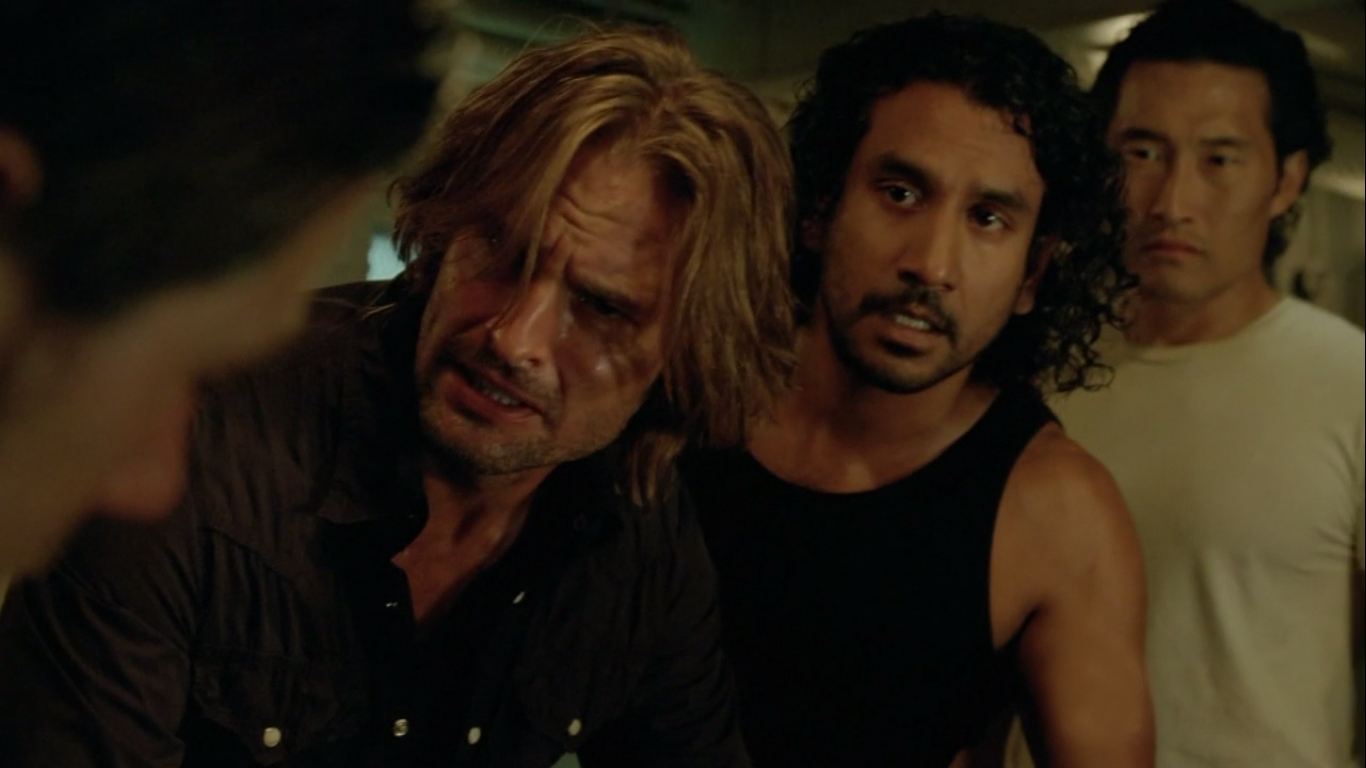
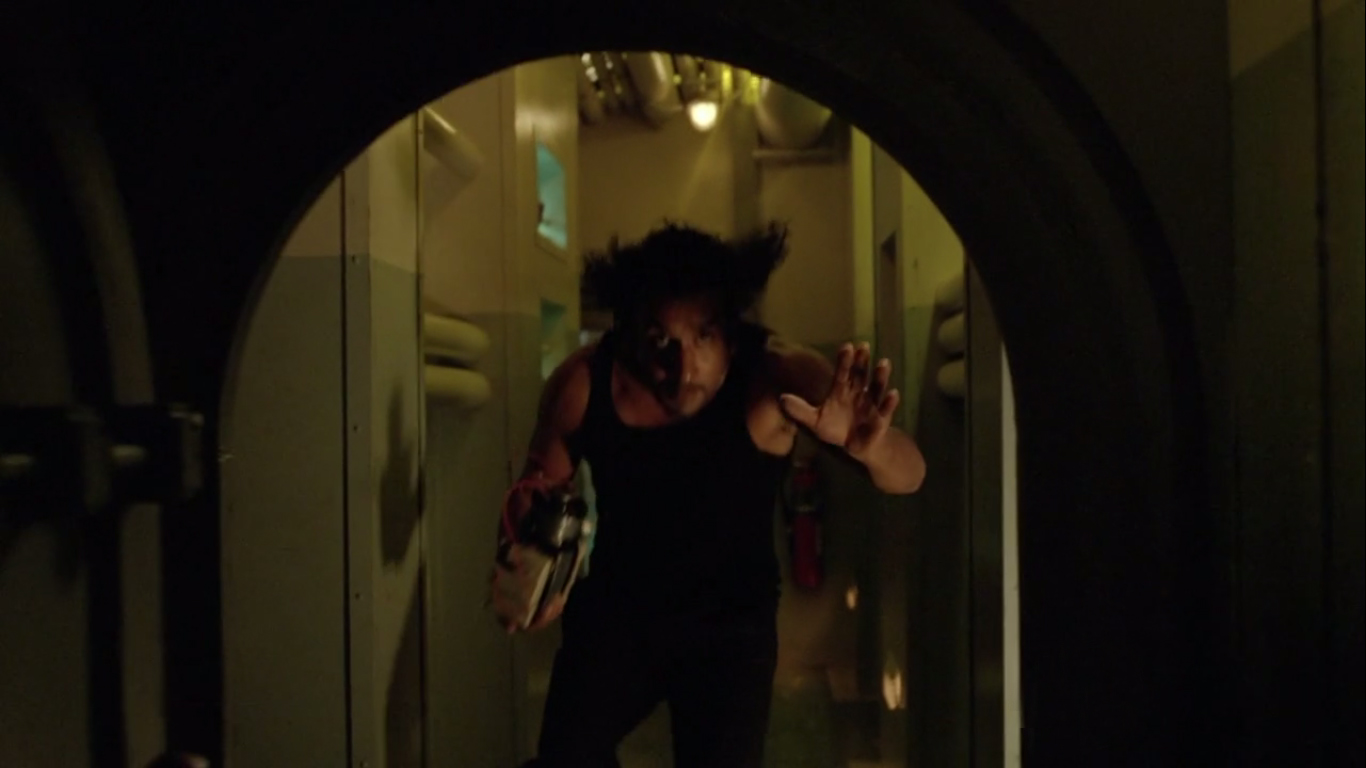
     In the Flash-sideways, Jack's curiosity over Locke's injury leads him to discover that in this Universe, Locke was involved in an accident and blames himself for his father's afterlife paralysis. He becomes unnerved when nearly everyone he talks to turns out to have been on the same flight in from Sydney. In the main timeline,Widmore's men put Saywer's group in the Cages on Hydra Island, before Jack and the MIB (taking his Smoke Monster form) came and busted them out. MIB met them at the plane, where he found a stash of explosives planted by Widmore, and then led the group to the Submarine. With Widmore's goons on their tails, Kate is shot and MIB tricks Jack into boarding the submarine and locking him out. Jack finds the explosives ready to go off in his bag, and Sayid is forced to sacrifice himself to save the others. While everyone else escapes, Jin refuses to leave a trapped Sun and they both drown together.
     One of my favourite moments in the episode is around the middle, when the gang meets up with MIB by the plane. He basically explains to them his own plan to kill them, while omitting just enough information to throw it into an entirely different and more trusting context. It's one of the most ballsy villainous moves I've seen since Moriarty's long game, and its MIB's capacity for such chessmaster-esque manipulation that makes me find him so interesting. For someone who is described in such blanket terms as "the embodiment of pure evil," there is a complexity to him that one wouldn't expect from the villain that the LOST writers paint him as.
     Talking about the writers, I did have to question a few of their decisions when it came to certain demographic representations in this episode. It may just be a complete coiincidence, but it just so happens that every named character who died in this episode was a person of colour. After the offing of main characters Ana Lucia, Eko and Michael in previous seasons, Sayid, Jin and Sun were the last non-white characters remaining from the cast of the first few seasons, leaving a cast with only one person of colour. (Miles). As if this wasn't awkward enough, it just so happens the person who chooses to sacrifice themselves by explosives was the only Muslim in the cast. I don't really see how the writers could have been blind enough for this to happen innocently.
http://images4.wikia.nocookie.net/__cb20100505235352/lostpedia/images/1/16/6X14goodbyeSayid.jpg
No Stereotypes Were Harmed In The Making Of This
Programme.
     I have a few other annoyances, as well. Jin and Sun, while never my favourite characters in the world, saddened me with their demise. Mainly because during their deaths, they neither spoke their native language nor appeared to give any considering for the fact that by staying behind, Jin was orphaning young Ji Yeon. As much as I've grown to the love the characters, it didn't have any emotional resonance with me because it was filled with too much silly "true love" spluge to render me completely and utterly cynical. They even through in a cliché, "Go! Save yourself!" line.
     So our remaining foursome has the unenviable task of finding out which of them will become the Island's protector, and finding some way of defeating the Smoke Monster once and for all. It was a well-written journey through the Man In Black's trap and out the other side, and despite my own quibbles with a few of the writers' decisions, it was an episode with a lot of punch. The fun and games are over, and the show is getting ready to pump out it's final few hours of amazing TV.

Thanks.

NEXT WEEK: Before we get to those aforementioned amazing TV hours... it's the less than amazing and quite infuriating Across The Sea. Worse than the damn midichlorians...

Tuesday, 23 April 2013

Review: Hanna

I've spoken about Hanna before, in one of my Films I Saw Recently segments. But here it is again, now that I've become thoroughly obsessed by it.

https://blogger.googleusercontent.com/img/b/R29vZ2xl/AVvXsEh62Y1fH5a4RohArSfJCgTx7EWvAylJUFfhmEyVT9hMsQEOkHTi55yxRKfGOleDHsd6QJJOQ-gEb_OK4_imkoIdqr8VP2oohSmfQ3iwdBA9QAWaVlJb3pbFE4EmYy7F5Linf9IYZy-W9iQ/s1600/hanna-poster-22.jpgHanna
2011, Directed by Joe Wright.
Written 17/4/13

Hanna is a film that combines several different genres and only just manages to get away with it, doing so in an unenviably slick style that aims to satisfy everybody. Initially presented as a sci-fi influenced action movie, the story opens out onto a cornucopia of fnatasy imagery and strong characterisations that are not only marvellously progressive (most of the time) but which create long-lasting and timeless figures.
     Hanna (Saoirise Ronan) is a young girl raised by former US spy Erik Heller (Eric Bana), hidden away in the Siberian woods and taught only the encyclopedia, several languages and how to survive and fight. The pair are being hunted by tough CIA agent Marissa Wiegler (Cate Blanchett) who has old business with Heller and is responsible for the death of Hanna's mother. Upon their agreement, Hanna is released into the world, and upon escaping the CIA's capture, she makes her way across Europe to meet up with her father again and discover not only the truth behind her conception, but also the joys of the human experience.
     To start off with, many kudos to The Chemical Brothers, the Mancunian (yay) electro group who created the film's incredibly detailed and action-packed score. When I bought this film online I had to buy the soundtrack as well - from the graceful African-influenced tones of Hanna's Theme to the creepy nursery rhyme feel of The Devil in the Details. The music ties the film together exceptionally well, and the way that it matches with the visual direction is often absurdly good - there's a chase scene where the pace of the actors' footprints matches that of the beat exactly.
     Both Hanna and Wiegler are strong characters, and are some of the strongest female characters I've seen in cinema. They both harbour many layers of compexity, and their roles as dramatic foils are exceedingly well-written. Hanna, despite her isolation from the modern world and her disorientation when faced with modern amenities, is immediately empathisable through her pragmatic attitude and her burning curiosity for something more to the human experience. Blanchett's Wiegler, despite a slightly out-of-place Southern accent, is captivating as the ruthless villain whose admiration and perhaps parental attitude towards Hanna is countered by her underhanded determination to pacify her and/or use her as a weapon.
http://www.expatica.com/upload/HANNA05.jpg
Saorise Ronan pitches the character perfectly - her every
action tells us a little something more about who Hanna is.
     One of the aspects of the film that makes it so memorable is the direction by Joe Wright, which is completely different to that of his previous films (Pride of Prejudice and Atonement) and is a great deal more ambitious, too. Disorientating chase scenes, epic fight sequences, a one-shot through the streets of Berlin down into the Bahnhof. I also love the way in which he incorporates some of the film's strong fairy-tale thematic imagery too, especially in the House of Wilhelm Grimm, which is a vivid recreation of Hanna's childhood dream worlds.
     Hanna's main criticism could be that the sci-fi idea running up its jacksy was executed in a lacklustre fashion. And while that could be said to be true, that concept is only a device, and is by no means the film's focus, which is on the struggle for freedom from the past's mistakes and on attempting to discover what it means to feel human. And in that regard, Hanna succeeds tremendously. It may have all the credentials of a forgettable thriller, but Hanna's subtle underlayers shine through to such an extent that it has quickly become one of my favourite films.

Thanks.

Monday, 22 April 2013

Review: Doctor Who 3.11: Utopia

The last story of this series is really three parts long, but for my own sake I'm going to split Utopia off.

File:Chantho utopia.jpgDoctor Who - Season 29, Episode Eleven - Utopia
Written 9/3/13

Spoilers out the way first. If for whatever reason you've not seen Utopia, go away and watch it, because the episode and those following it rely on an awesome twist that won't be half as good if you know it's coming. That said, Utopia is really quite spectacular. It manages to shove a lot of high-scale concept and really fun sci-fi in alongside a whole heap of references to the past, within both NuWho and the series as a whole. RTD is good at build-up; we know this. It helps that in this series, we have this whole extra episode for him to do that build-up.
     Carrying straight on from The End of Days, Jack runs out of the Hub to find the TARDIS refuelling. Seeing him, The Doc tries to get away, but Jack clings to the outside, causing the sentient machine to travel to the end of time to try and shake him off. When he ressurects, The Doctor introduces Jack to Martha and they have a Rose-related catch-up session, before discovering a silo of humans sheltering from agressive, savage versions of themselves. Led by Professor Yana (Sir. Derek Jacobi), they're attempting to reach a place far off in the stars called Utopia. As The Doctor helps him, he realises too late that Yana has a Chameleon Arch pocket watch, which reveals him to be The Master - who, upon awakening, steals the TARDIS and strands them near the end of the Universe.
     The reveal of The Master was one of the first things in Doctor Who that I had spoiled for myself. I remembered Ainley's Master from the Classic Series, and was excited that the last of the Classic Series' most important villains was making his comeback. Jacobi is wonderfully unassuming in the role, and equally bitter and hammy once his identity is revealed. We didn't really get to see much of the Master in the episode itself, so I'll discuss my views on the Simm incarnation next week, but for now it's safe to say that we were pretty hyped for the return.
     The execution of the future concept was done in a way which gave it a uniquely bleak atmsophere that Who doesn't manage to pull off very often. The toothy "Futurekind" were a tad cheesy, what with their slightly anachronistic name ("Future" to whom?) and their narmy cries of "HUGH-MAN!". But that felt fairly inconsequential next to the rest of the setup. This episode's focus was never going to be on the sci-fi ideas, it was always going to be on the characters.
https://blogger.googleusercontent.com/img/b/R29vZ2xl/AVvXsEhUy3Hq9UnhfQU2Z1CmGJVs4iLhhUxJuFu_jX9_cwoWj3DNZPcgWpjmXqZAc-Xmdcl4c-RHVwit1y4uCj1YyvbAvLpfIA7uQS-NcA-MojcZ3E-1x71EuD_jwv22RkzMSx3yBY3oseHHro79/s400/Doctor+Who+-+Utopia+the+Doctor+and+Jack.JPG
Beginning to ship Jack/Ten. Just a lil bit.
     Jack's return is handled wonderfully, and Barrowman spices the series up no end. There's a scene near the end where Jack's immortality is used to help launch the ship (something to do with Radiation, don't ask me.) The chat between The Doctor and Jack that follows is a sign of how flexible RTD's writing became when discussing Jack's adventures outside of Who. RTD was adamant that Torchwood wasn't for kids, and thus he prevented The Doctor from ever crossing over. The episode manages to explain Jack absence in such a way as to both work with and without seeing the spin-off. Which is nice.
     Utopia is what I could call a perfect, archetypical episode of RTD's Who. It's got an action-packed plot that's balanced by high-concept sci-fi and somewhat intricate character work that never fails to push the audience's buttons. It often gets overshadowed by the finale and by Simm's barnstorming portrayl of the Simm Master, but it shouldn't. It's my favourite part of this trilogy, and it's one of RTD's best stories.

Thanks.

NEXT WEEK: It's essay time. We cover Simm's Master when we look at The Sound of Drums/ The Last of the Time Lords.

Sunday, 21 April 2013

News: Assorted Stuff

As you may have noticed, Torchwood has started again on Nostalgia Filter. Woo! That's not all though. For this half-term (i.e. the next five weeks) I'll also be reviewing a different film every Tuesday, starting with some I've seen recently and moving onto some of my all-time classics.

As we come to the end of this run of Doctor Who, we'll also reach the end of this run of Lost, which will then go on a break for three weeks before I start reviewing its first season.

Oh, and this Friday (26th April) I'm also gonna be releasing an article about J.J. Abrams Star Trek before the sequel comes out in May. Fun times.

Thanks.

Saturday, 20 April 2013

Review: Doctor Who 7.9: Hide

http://www.radiotimes.com/rt-service/image/render/Doctor_Who__watch_two_trailers_for_ghostly_adventure_Hide.jpg?imageUrl=/uploads/images/original/28770.jpg&width=620&height=374&quality=85&mode=crop
Emma makes a portal to the pocket universe.
Neil Cross's last story, the Rings of Akhaten, was one that filled me with an abject joy and warmth. Considering that in his own terms Rings was something of a difficult second album, I was very much looking forward to Hide, his first written story for the show and the one that won him a second go. And, while the episode's spooky theme felt a tad out of place in the middle of springtime, I was most certainly not disappointed. Hide continues a string of hits for the show that I haven't felt since Moffat's first season.
     Landing in 1974, the Doctor and Clara investigate a house in the country owned by Professor Alec Palme (Dougray Scott) and his empath "assistant" (read: lots of UST) Emma Grayling (Jessica Raine, Call The Midwife.) The two have been looking into reports of a ghost at the house that only Emma, with her abilities, can feel. Intrigued, the Doctor takes a look at the house throughout all of recorded time, scarring Clara with knowledge of the Earth's destruction in the process, and proceeds to gather a series of photographs showing a woman running away from something. He explains to Alec and Emma that the woman in the house is in fact a time traveller trapped in an pocket universe echoing into our own. The Doctor pops through to save her but he gets trapped, forcing Clara to battle with the Tardis in order to go in and rescue him.
    It was an episode with so much that I just loved. The fun sci-fi explanation for a ghost felt very similar to Neil Cross' previous rationalist Doctor Who in Rings, and formed a solid backbone to the episode that also allowed him to work in all manner of references to Tom Baker and Jon Pertwee. I also loved the backstory between our two guest stars, which was immediately fun and identifiable. Scott and Raine are perhaps two of my favourite guest stars since... well, the last ones that I said were my favourite. I can't really remember.
http://i1.cdnds.net/13/16/618x348/uktv-doctor-who-s07-e04-hide-5.jpg
The Doctor sees the "ghost" at the Earth's beginnings.
      I keep worrying that Clara isn't being developed enough, but I needn't really do so. More so I feel than Moffat, Cross has made Clara his baby and it shines through in her scenes in the episode. She and the TARDIS have a visible animosity that I find quite intriguing, with Cross really playing up the idea of the box's sentience having a larger role by using Moffat's "voice interface" for some serious blue box snark. I actually like that the mystery Moffat initially defined the character with has been turned into something much more subtle, allowing Clara's personality to shine through.
     Neil Cross is just a genius, really, and in an ideal world he'd be lining up to take over the show. I know he has Luther, but that's always a four-episode deal and if Moffat and Gattis can write Sherlock then Cross can balance two shows as well. His themes and ideas, taking a focus both on the inherant value in reality and scientific principles and then also in the value of human relationships. It's clever and fun and... eugh, I just love it so much.

Thanks.

NEXT WEEK: We Journey To The Centre Of The TARDIS.

Thursday, 18 April 2013

Review: Torchwood 2.1: Kiss Kiss, Bang Bang

It's Thursday. Or "Torchwood Time", as I'm tempted to call it. (I probably won't, it's a bit crap.) Having moaned a lot through live reviews of Miracle Day and gone back and complained (and gushed) about the first series, I'm going to fill in the gaps on my Torchwood reviews. Not really a problem for me, though. These are the best two seasons of one of my favourite shows.

http://static.tvguide.com/MediaBin/Galleries/Shows/S_Z/Ti_Tp/Torchwood/season2/torchwood23.jpg
The "you, you, not you," scene is one of my favourite
Character Establishing Moments in TV.
Torchwood - Series Two, Episode One - Kiss Kiss, Bang Bang
Written between 5th and 7th March 2013

January 2008. A year gap since the last series, although with a lovely series of Doctor Who (that I'm coming to the end of reviewing at the moment) plopped in the middle. To say I was hyped wasn't really the word. After having a bit of adolescent Rose-rage after Series Three, I was probably more excited about the new series of Torchwood than I was about the uncertainly of having Catherine Tate as a new companion. I wasn't disappointed; Series Two is my favourite series of the show and its premiere more than sets it off on that path.
     A month or so after Jack disappeared in End of Days (and had all the adventures with The Doctor that I'll describe in my Who reviews next week), he reappears. Despite the team's curiosity about his absence, they are distracted by the arrival of handsome Time Agent John Hart (Buffy's James Marsters). Hart is a former lover and colleague of Jack's who claims to be looking for some dangerous artifacts that have fallen through the Rift. While searching, Hart sets up traps for the team and kills Jack on the roof, but Ianto saves Gwen, Owen and Tosh in time to catch Hart in the act. When Hart's treasure turns out to be booby trapped, Owen is forced to help him to remove the bomb, which is thrown into the Rift. Hart is sent off on his merry way, but not before giving Jack a mysterious message about someone called Gray.
     The episode's plot is fairly by-the-by, but it's carried by the phenomenal performance by James Marsters, who is probably my favourite Torchwood guest star by a long shot. Captain John Hart takes all of the personality traits we love in Jack and then puts them into a villain, allowing them a lot more free reign. But it doesn't end up boiling down to the stereotypes that Jack's character can often fall into, as John is given some decent characterisation - he's not just greedy and nihilistic, but he's bitter that his lover has rejected him for what he considers a humdrum life. I love every second that he's on screen, it's amazing.
http://www.flickfilosopher.com/flickfilos/art/twkisskiss.gif
Let the shipping commence! (Or continue...)
     And, rather nicely, the characterisations get spread out a bit more this series - the effect is rather immediate. The writers seem to be shipping Jack/Gwen fulltime now, while simultaneously shipping Gwen/Rhys just to torture the fanbase. To make up for that, the relationship between Ianto and Jack, hinted at in the first series, becomes a tad more open and explicit. I liked that the series touched upon Jack's motivations for coming back to Torchwood after meeting Ten, which could have been easily ignored otherwise. It's little details like that in the episode that I do rather like.
     Torchwood's return was handled spectacularly, managing to mix in a variety of quiet character moments with a decently tense plot and guest character that lights up the screen with his every appearance. It wasn't a masterpiece of the order that later episodes in this series would produce, but it was immediately fun and managed to avoid a lot of the mistakes of the first series while still maintaining that fun promiscuous spirit that made the series enjoyable.

Thanks.

NEXT WEEK: Nikki-Amura Bird is a frightened alien in Sleeper.