Wednesday, 10 April 2013

Review: Lost 6.12: Everybody Loves Hugo

http://images3.wikia.nocookie.net/__cb20100416020349/lostpedia/images/0/02/6x12_WhereIsJacob.jpg
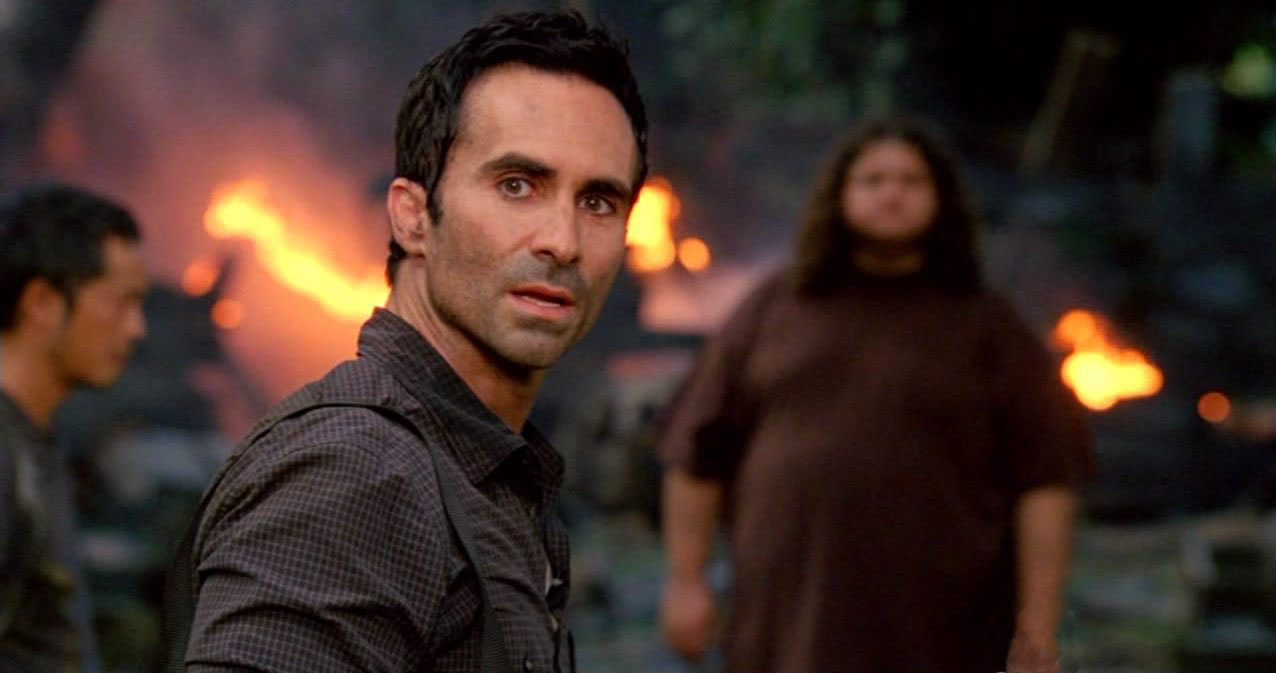
Richard and Hurley have a falling out.
Lost - Season Six, Episode Twelve - Everybody Loves Hugo
Written between 2nd and 3rd March 2013

It's turning into one of those seasons again, although my distaste here stems very much from personal opinion rather than massive leaps in logic. The flash-sideways storyline is stuffed with sufficient mushy love stuff that I am thoroughly tired of it, while the main story didn't really advance at the pace I liked. It felt very much like filler, moving from the mid-season arrangements to our final layout before the grand finale and the episodes preceeding it.
     Hugo was spoken to by the ghost of Michael, who told him to blow up the Black Rock and stop Richard from doing the same to the Ajira Plane. Ilana was blown up by dropping some dynamite, and Richard, Miles and Ben went off on their own to destroy the plane while Hurley, Jack, Frank and Sun went to Locke's camp. With Desmond in his position, Locke questioned him before throwing him into an ancient well. In the flash-sideways, millionaire philanthropist Hurley was accosted by a semi-awakened Libby, and despite his doubts he was able to awaken with very little prodding from Desmond. Oh, and Desmond runs down Locke with his car. That too.
      I will admit right here and now that I am perhaps affected by several different things here. Namely, this is one of the only episodes of Season Six that I missed on broadcast - we went to Wales on Holiday around that time and the Sky box didn't record it properly. Thus why it doesn't have as much impact on me as the rest of the season has the potential to. Furthermore, a lot of this episode hinges on the viewer's memory of the Hurley/Libby relationship... which I've never seen, having only seen the first and last three seasons. I am rather exposing myself here to how drastically unqualified I am,
     The core problem, I feel then, is that this is a centric episode of the style we saw earlier in the season with Sundown and The Substitute, etc, except that this has just come after last week's massive plot mover. Next week is a pretty big plot episode too, and so Everybody Loves Hugo feels very much out of place as the series' final single-centric episode. I mean, we've just been told that the main timeline and the flash-sideways are intimately connected, and that people from the flash-sideways can remember their time on the island. It was nice to see Hurley undergo that process, but it felt like we met his story much later than the other survivors. It's all very last minute.
http://images2.wikia.nocookie.net/__cb20100503044628/lostpedia/images/0/01/6x12_Let%27sGoOnADate.jpg
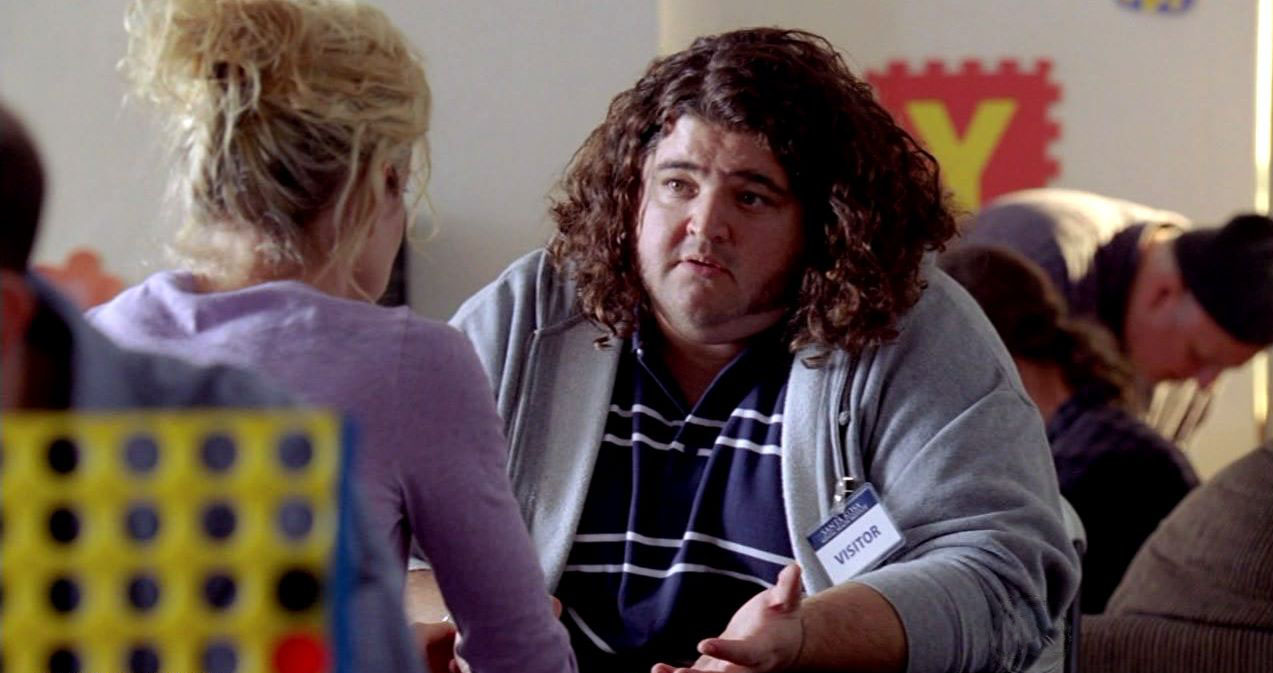
Hurley meets Libby in the Flash-sideways.
      There were a few positives in the main timeline, though. The Man in Black and Desmond had a great set of conversations, with The MIB utterly baffled as to why Desmond is so unafraid of him. The split between science and faith in Richard's camp felt very important thematically, especially when Jack explained that he felt he couldn't make up for causing Juliet's death (which endeared him more to me by far) and so had resolved to listen rather than try to lead people into disaster. That was really good for me to hear, especially after all the Jack-bashing I did last season.
     Everybody Loves Hugo, apart from one or two character changes, was fairly inconsequential. It was a movement of chess pieces around the board before some of the final moves, and although it explored some of the themes presented in the previous episode it did so in a way which failed to live up to it. And, probably because I've never seen Season Two, I didn't really care much about Libby and Hurley in the Flash-sideways. It felt rather unfortunately like filler, and that was my only real problem with it.

Thanks.

NEXT WEEK: Who will be The Last Recruit into MIB's camp?

Monday, 8 April 2013

Review: Doctor Who 3.8-9: Human Nature and The Family of Blood

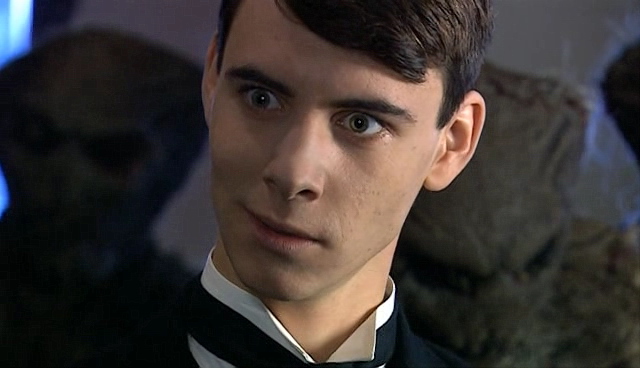
http://images1.wikia.nocookie.net/__cb20111028224259/tardis/images/7/72/Baines_(Son_of_Mine).jpg
The creepy Son of Mine leads the Family of Blood
Doctor Who - Season 29, Episodes Eight and Nine - Human Nature and The Family of Blood
Written 2/3/13

In the Wilderness years between the cancellation and the return, the only source of new Who were several series of books, running under various different companies - the most popular of which can be said to be the Virgin New Adventures. The thirty-eighth novel in that series was Human Nature, written by the erstwhile NuWho writer Paul Cornell. Like Blink next week, prose was adapted to screen and we got this rather interesting two-parter that juggles examinations of historical attitudes with a scathing deconstruction of who The Doctor really is. It has the moral ambiguity that the series held during the Wilderness Years, and that's probably one of its main selling points.
     The Family of Blood are an alien family of amorphous smoke who have been chasing The Doctor in order to adapt his Time-Lord DNA and live forever. Planning to let them die out, the Doctor uses a machine to change him into a Human and put his Time-Lord consciousness into a pocketwatch - a Chameleon Arch. Five months later, and The Doc is living as John Smith in a school in 1913, a product of his time who hires maid Martha to do his handywork for him. Martha is troubled when John falls in love with Nurse Joan Redfern (Jessica Hynes) and the Family of Blood catch up with them. With the Watch kept safe by young boy Timothy Latimer (Thomas Sangster), John Smith must face the reality of becoming The Doctor once again, losing his human identity.
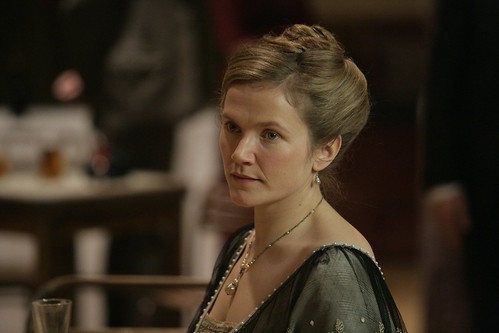
http://farm5.static.flickr.com/4092/5150415610_55d097b6f6.jpg
Joan (Jessica Hynes) falls in love with John Smith and is
forced to put The Doctor in his place.
     The New Series has a massive habit of really pumping The Doctor up beyond his means. We know the Tenth Doctor has an ego, and it's one of that the series is very happy to stroke. But this episode sorta takes that down a level, by throwing all of this hype at a normal person and seeing a real reaction to it. John Smith isn't just scared by the idea of losing his life to become The Doctor - he also thinks that The Doctor is kind of a dick. This gets some concrete confirmation when Joan inquires to a flirting Doctor whether his presence on Earth caused so many people's deaths.
     The continuation of the Martha/Doctor dynamic is really well done, too. The show never pretends that their relationship is healthy one, and John Smith's rascist abuse of Martha only encourages that. She's put up with five months of abuse from the locals, especially with the imperialist attitudes surrounding colonial wars in Africa. The rest of this series is basically gonna see how much abuse we can put Martha through before she finally leaves - like, almost non-stop. And she still gets battered by fandom. Bah.
     Those colonialist attitudes underlined the story in many other ways, taking on the guise of a Wilfred Owen-style criticism of the dulce et decorum est attitudes of the Edwardian era and how they led to large numbers of casualties in the First World War. There's a wonderful sense of that impending doom that makes the attack by the awesome Family of Blood that more ominous. I do think that the episode goes an incy wincy bit over the top with this, with it ending on an aging Latimer attending a Remembrance celebration in the Present, but I do love the way the idea is implemented.
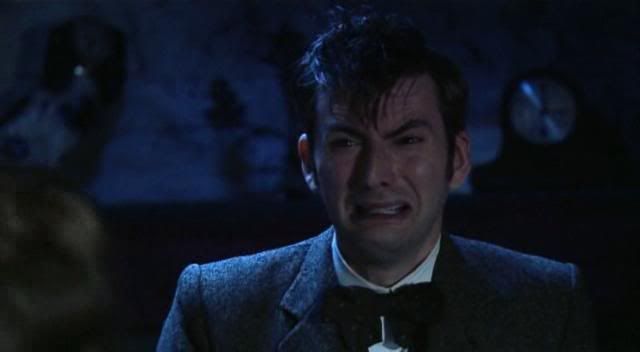
http://i301.photobucket.com/albums/nn41/sue_denimme/Family_of_Blood_542.jpg
David Tennant is awesome in this story, by the way.
     The question that Human Nature/The Family of Blood asks is simple: would you actually want to be The Doctor? It's an admission that the moment you lose the Classic Series' perception of The Doctor as a travelling magician who pops from place to place and enter this modern era of The Doctor being a universally famous action hero, then you must also accept that he's no longer the same kind of role model. The Doctor here is not someone that we (or, for that matter, John Smith) would want to become, and that is the kind of nuanced portrayl of the character that I so enjoy. The two-parter is complex and bold while still providing a fun narrative for the kids, and that is one definiton of perfect Who.

Thanks.

Thursday, 4 April 2013

Review: Survivors 2.6

Whitakker has Peter held captive.
Survivors - Series Two, Episode Six
Written 23/2/13

In the first series of Survivors, the problem came not with its core ideas but in the way it treated its characters, unable to escape their core tokenisms as created by the series' modernisation. The second series realised this and gave most of the characters more complex motivations, which is one of the reasons why it's vastly better than its predecessor. The only problem now comes in its simple lack of ambition - it doesn't know whether to carry on as a realistic examination of a post-apocalypse Britain or to go into full sci-fi conspiracy mode. The result is a finale that shoved a series of exposition into five minutes, and did very little for the remainder.
     Still in the PSJ facility, the gang found scientist Fiona Douglas, who revealed that Peter had been taken to the facility for a short time and has the same immunity against the virus as his mother. She explained that she had created from their blood a vaccine that targeted all forms of the flu, and that she needed a short amount of time to work on it. While Whitakker was captured by the group, refusing to reveal Peter's location in a local static caravan park, she finished the vaccine. Evidence on Whitakker's computer shows Greg that PSJ had a larger role in the virus' spread, with it beginning in China a whole year before the outbreak. The vaccine is tested on Al and it works. Fiona lets Whitakker go in exchange for a place on his plane; the group ends up in a confrontation with a man named Landry at the airfield, who explains that his company was attempting to create a vaccine for all forms of flu, and created a secluded paradise filled with chosen individuals when the experiments went awry. While Peter is returned to his mother and the vaccine heads off to be mass-produced, an injured Tom ends up hiding on Landry's plane.
     The final few minutes of pure exposition do tie up a lot of new ends, and had the ideas been explored fully (and perhaps hinted at from the beginning), then they would have real potential. The central arc with the mine seems to have distracted away from that, leading to this rushed conclusion to the central mythos, and that I feel is in part one of the reasons why the show was canned. It all goes a bit Lost, really, and not in a way that Survivors can support.
Landry comes out of the woodwork as the virus' creator.
     It's weird whenever I come to the end of a series. Especially when this is one of the first series that I long-hauled on the blog, and one of the ones I had the most fun tearing apart. Survivors suffered not from being inherantly bad, but from a lack of that spark the seperated it from all the rest. That, combined with the unintentional year gap between its series, meant that it sorta ran out of steam even when the writing wasn't half bad. It died because of mediocrity and public apathy, and because it made several mistakes in its first series that the second just couldn't fix. And that's a shame.

Thanks.

IN TWO WEEKS: I start reviewing the second series of TORCHWOOD! "cue cheers" And this time, I won't be unfairly ripping into it...

Monday, 1 April 2013

Review: Doctor Who 3.7: 42

https://blogger.googleusercontent.com/img/b/R29vZ2xl/AVvXsEhNStqJp6otVOXj64FWPg6YfyzmA9kEpIi_N12ihyHfDCOxG95ElLGTNetc7ZqxOxV2XNUvnCdSvRzk-ucBnvfMkGq_i3hwl9-kW2S9DCgYR8G3DNm2YzUWrNN_5iQEqB4cXVx3UfTQQI8b/s1600/42.jpg
It's a very Red episode...
Doctor Who - Season 29, Episode Seven - 42
Written 21/2/13.

Me and ol' Chris Chibnall have had a rough time. My main frustration comes from his inconsistency as a writer - there are a number of his works (mainly outside of Doctor Who) that I really do enjoy for many reasons - usually to do with strong characterisations and well-executed concepts. And then there are his real fuck-ups: every episode he's written in the Moffat Era, for example. While I do sometimes respect him as a writer, I don't want him anywhere near Doctor Who and I was very worried when he wrote not only two episodes of the September Season in 2012, but also wrote pieces bookending it. Despite my anguish, I'm of the opinion that 42 is... not bad.
     The core concept is sound if fundamentally stupid - the Doctor and Martha arrive upon a ship destined to fall into an alien sun, with a real-time countdown timer punctuating every scene. The sun turns out to be sentient, and has infected members of the crew and sabotaged the ship due to the Captain's use of illegal tech to scrape out the sun's core. There's a point where The Doctor gets possessed, Martha gets stuck in an airlock - it's a bit of a run-around. The idea of a sentient sun may be fun but is fundamentally quite silly, as a sun is just Hydrogen fusing into Helium, and there's not enough complexity for even simple metabolic processes. That doesn't really affect the episode's impact, though. We have the big guns, here.
      And by big guns, I mean director Graeme Harper. Harper is one of the best directors the series has ever had, and directed two of my favourite Classic Stories (Caves of Androzani and Revelation of the Daleks). His sharp style and appropriation of the real-time element gives the episode a sense of constant action and tension that never really lets up, and is one of the episode's main saving graces. He takes what could have been rather bumpy bits in the script and turns them into great moments - my favourite of which is probably a moment of vacuum-induced silence as Martha's escape pod drifts away, The Doctor helpless. There's also a wonderfully primal scene when the Doctor is possessed, and Tennant's whimpering and screaming makes the whole affair seem more brutal than they're allowed to show.
http://newslang89.files.wordpress.com/2011/10/doctorwho42.png
I tried finding a good pun. Settled on,
"Turn around, Bright Eyes!"
     If there are some downsides, its the guest cast. Michelle Collins' Captain is yet another person to add to the "annoying guest cast" list, as Chibnall takes the stereotype of strong sci-fi captain and throws it in the wrong direction, turning her into a delusional idiot who is constantly soppy and can't recognise that her husband is no longer there even when he's burnt two people to death. Also rather terrible that the only crew members who get outright killed by the sun-possessed zombies are the women - nice vote for gender equality there, Chibbers.
     42 doesn't have anything new to offer the world, but what it does have it manages to process and package in a way which is consistently entertaining. In terms of Chibnall's career, this is pretty middle-of-the-road - by no means the worst thing he's ever done, but not his ultimate high either. Taken on its own, the script is fairly average, and it's a mixture of outstanding direction from an unlikely source and the sheer conviction of its main players that carries it forward into quite an underrated experience.

Thanks.

NEXT WEEK: Paul Cornell returns with an adaptation of a book that features living scarecrows, creepy immortal schoolboys and David Tennant's best performance in anything, ever. It's Human Nature/The Family of Blood.

Saturday, 30 March 2013

Review: Doctor Who 7.6: The Bells of Saint John

http://www.radiotimes.com/rt-service/image/render/Doctor_Who__Steven_Moffat_s_episode_guide___The_Bells_of_Saint_John.jpg?imageUrl=/uploads/images/original/27551.jpg&width=620&height=374&quality=85&mode=crop
Eleven and Clara's chemistry is still sizzling and I love it.
The overbearing hand of cynicism does often grasp me tighter than I expect, but I don't think that was true this week. The valient return of the show after a frustrating break did not disappoint, and it did everything it promised to and more. The story's premise felt very thin on the ground and I felt that, like the previous story, the villain's plan wasn't explored to its full potential. But it was well-weaved into the character work - which, despite being the third time that we've met Clara Oswald, still feels as fresh and wonderful as the first.
     Having received a wifi helpline number from an anonymous source, the modern day Clara unwittingly calls The Doctor in 1207. As he arrives, he discovers that she has become embroiled in an alien plot that almost leads to her to being "uploaded" onto an alien wifi network that's been hiding on Earth and subconsciously controlling any humans nearby. The Doctor saves her and brings her with him as he investigates the organisation controlling the uploading, which is run by a mysterous woman (Celia Imrie) being controlled by the Great Intelligence (voiced by Richard E Grant).
     Moffat isn't keeping his cards as close to his chest as he was with his last arc - he used to keep them so close that I doubt even he could see them properly. Thus we got a few references to both the Victorian and Future Claras, with the Oswin middle name apparently coming from "Oswald to the win" and her future hacking skills apparently coming from her memories of being uploaded to the Internet. The three Claras are subtley different from one another in various ways, and I liked that, even if it did make Christmas's "introduction" episode that little less perfect.
     Celia Imrie was absolutely delightful as the sadistic villain, taking in her stride the rather Orwellian nature of the concept. I do have a small fear that we could have had something a little better than the Great Intelligence as this episode's resolution, and that Moffat's attempt at continuing his continuity drive may have come at the expense of a better original idea. Despite that, Moffat did the usual schtick of making the mundane scary, and the innate paranoia of being controlled through the Wifi was explored quite thoroughly.
http://www.radiotimes.com/rt-service/image/render/Doctor_Who__Celia_Imrie_as_Miss_Kizlet_in_The_Bells_of_Saint_John___video.jpg?imageUrl=/uploads/images/original/27633.jpg&width=620&height=374&quality=85&mode=crop
Celia Imrie's role was fun, but I felt that the true villain was
a bit of a cop-out.
     So not perfect. I'm not saying that to put a downer on the episode, though, because The Bells of Saint John was a fantastic ride from start to finish and it feels like the beginning of something beautiful. My hopes are rather high for this half of the series, and although this episode shared the same nitpicks as its immediate predecessor, there's room for development throughout the series and a lot of this series' new blood will form a major part in that. As it stands, it's a great start.

Thanks.

NEXT WEEK: I'll be a little late with the review, as I'll be in Wales when it's on. You can expect the review for the awesome-sounding The Rings of Akhaten some time in the middle of that week.

Thursday, 28 March 2013

Review: Survivors 2.5

Sarah makes the choice to maintain quarantine and
sacrifice herself.
Survivors - Series Two, Episode Five
Written 23/2/13

The character of Sarah was always one that, in the first series, I found innately annoying. Her experiences in the second series, despite playing on many "weak woman" stereotypes, did improve her character. This development gets its payoff in this rather well-done final story for her, as well as providing a moment of quiet before we storm towards the mythos-filled finale and that dreaded cliffhanger. The episode's main theme seemed to be depression and death, which is a wonderful thing to fill my Saturday afternoon with, but we'll roll with it.
     After saving two people on the street from a bunch of bandits, the gang is led back to a free commune, where people work the land. Tom gets jealous when bisexual Anya has the hots for the commune's organiser, leading him to admit his love for her. Sarah goes off for a walk and ends up trapped in a house wherin live three people who have become exposed to a new, more advanced strain of the virus capable of killing those previously immune. She chooses to sacrifice herself by shutting up the house, enforcing quarantine. Greg and Abby go to Greg's house, where he finds the postcard we saw in his flashback. The postcard contains co-ordinates to an airfield, where the two find a businessman claiming that the postcards were sent to the "chosen few", who would be whisked away to a safe haven. Sarah dies and Abby returns to burn the house down, with the group now heading off to the Scientist's Compound in order to seek a vaccine to the new strain. There they find only Whitakker, who has taken Peter.
     Sarah's act of bravery in the house provided a touching moment for both her and Al, two characters who in the previous series hadn't really been up to much. The only problem wiht that part of the storyline is that it was fighting with the other side, with Greg and Abby actually advancing some of the mysteries introduced in the premier and getting us closer to the finale. Atfer the last few episodes of running around the countryside shooting things, it felt rather sedated.
Greg and Abby find the postcard.
     2.5 was all about getting things ready for next week, and it did that in a way which upped the stakes in a way which felt sublte and nuanced. Sarah didn't exactly go out with a bang, but it was certainly a loss that we felt, as Al's single source of character development disappeared in front of our eyes. The build-up of mythos surrounding the mysterious postcards is feeling a little too late, but hopefully it'll all smooth itself out as we head into Survivors unintentional final hour.

Thanks.

Wednesday, 27 March 2013

Review: Lost 6.11: Happily Ever After

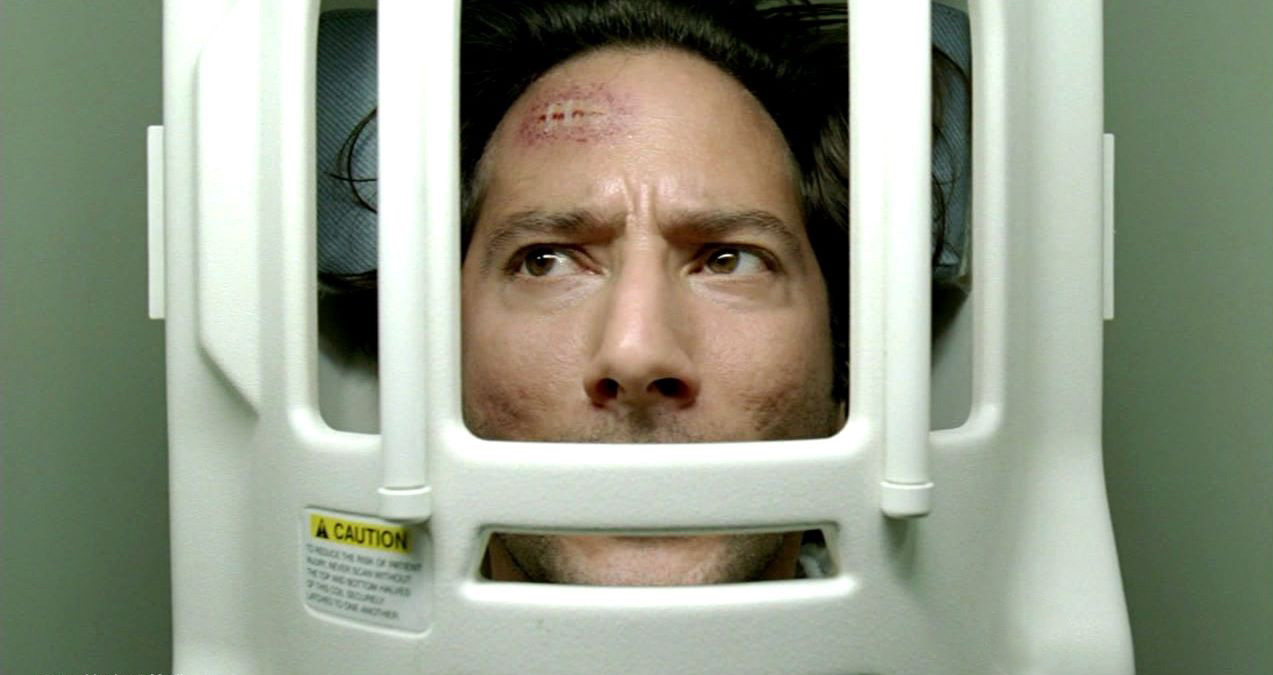
http://images4.wikia.nocookie.net/__cb20100503052720/lostpedia/images/3/36/6x11_ExaminingHume.jpg
Desmond's MRI helps his Flash-Sideways awakening.
Lost - Season Six, Episode Eleven - Happily Ever After
Written between 21st and 22nd February 2013
Spoilers for the end of Lost.

Six episodes away from the finale, and the Flash-Sideways are starting to reveal its true colours. Desmond episodes always involve topsy turvey time stuff, but this was something rather different due to the nature of the sideways dyamic. It's an episode that rather has me torn - do I admit the beauty of the episode's premise, no matter how soppy it is, or do I let my overall dislike of the Sideways mess that up? The latter, probably. We're getting to the more interesting parts of the season, where I get to have a really good rant about things. Not that that'll happen today, of course. Well. Let's just get on.
     Desmond, having been revealed as Widmore's Package, is woken up and placed inside a big Electromagnetism Chamber (what is that, a giant magnet? idk what their idea of electromagnetism is, but anyway) where he is knocked unconscious. In the few seconds that he's out, we experience (and Desmond apparently experiences) Desmond's flash-sideways story. In the Sideways world, Desmond is Widmore's right-hand-man, and upon his return to LA Widmore tasks him with taking Charlie to his wife Eloise's charity concert. Charlie explains to Desmond in a bar how while choking on the plane he saw a vision of his true love, and as proof he later drives Desmond's car into the ocean, where Desmond sees Charlie's "Not Penny's Boat" message. Getting an MRI scan at the hospital, Desmond sees images of Penny. While his search for Penny leads to a discouraging Eloise, her son Daniel introduces him to her. When Desmond returns to reality, his sideways self faints, and our Desmond is suddenly a great deal more cooperative.
     What's basically happening is that the peeps in the flash-sideways timeline have the ability to remember their lives in the timeline, and require certain circumstances to become "awakened". So far it appears that Charlie and Daniel are partially awakened, wheras Desmond and Eloise are fully aware of what happened before the timeline. For those smart-alecs at the time, this was the point where it became clear that the Flash-sideways was some kind of afterlife. And the events of this episode show one of the reasons why I really quite dislike the entire concept of the sideways.
http://images3.wikia.nocookie.net/__cb20100407073741/lostpedia/images/2/29/06X11DesmondMeetsDanielWidmore.jpg
Daniel Faraday Widmore has some theories about the
Flash-sideways world.
      It's shown quite clearly that everyone in the Flash-sideways has one true love. One person whom they're destined to end up with for all eternity - and, most of the time, that person is someone they met on the Island. Desmond and Penny, that's fine. I can believe that - they've spent most of their lives trying to be together. It doesn't help explain later examples like Kate and Jack (whose main relationship off the island was an incredibly abusive one) or the incredibly egregious matter of Sayid and Shannon. It's a personal matter for me, really - despite how romantic it may feel, I hate "true love" in fiction. I find it odd that these people, many of whom lived much longer lives than others, never had fulfilling relationships after their significant other on the Island coughed it.
     That's more reserved for what will be a collossal essay on The End in a few weeks, though, and for now we're left with what is a fundamentally well-constructed story that is, unfortunately, heavily laden with a level of sentiment that it can't maintain. It's very well written and it's one of Henry Ian Cuisick's best performances, but it's simply too soppy for my liking and it raises so many questions about the Flash-sideways that I start getting all frothy at the mouth.

Thanks.

NEXT WEEK: An episode of this series I didn't see on broadcast! (I think I was in Wales at the time, and the Sky Box didn't record. Anyway.) It's Everybody Loves Hugo.

Monday, 25 March 2013

Review: Doctor Who 3.6: The Lazarus Experiment

http://upload.wikimedia.org/wikipedia/en/4/4e/Lazarus_Experiment.jpg
I wanna imagine this scene being played out in-studio.
Doctor Who - Season 29, Episode Six - The Lazarus Experiment
Written between 20th and 21st February 2013

It really hits home in The Lazarus Experiment how different of an approach the show took towards Martha than it did Rose. At this stage, due to The Doctor's "one trip" business, it feels like she's still only just beginning. Rather an odd thing, considering we're half-way through the season. Most of The Lazarus Experiment felt very much like filler, but there was a swirl of ideas both wonderful and completely terrible to keep me interested. Like last week, we have to say goodbye to Biology for a bit - bigtime.
     The Doctor, after giving Martha her "one trip" (which he admits has somewhat escalated), takes her home. He's about to pop off, but he hears on a local news report about Professor Richard Lazarus (Mark Gattiss) and his groundbreaking experiment. The Doctor decides to attend the event, organised by Martha's sister Tish, and saves the day when Lazarus' machine almost explodes with him inside. When the machine is opened, the pensioner Lazarus comes out as a youthful Mark Gatiss, and claims that he has just enabled human immortality. However, Lazarus' machine has made his DNA unstable, and he periodically transforms into a massive pincered monster. After faking his death once, The Doctor and Martha guide him to a Church, where The Doctor uses sound waves to make him fall to his death. The Doctor offers Martha a permenant place as companion and they pop off.
     Mark Gatiss' character veers on the cliché at times, but I at least found him captivating. There's something quite Voldemort-y in his key motivation to avoid death at all costs, and his memories of cowering in war-torn London gave him a very human motivation for doing so. That theme of immortality was complemented quite well by The Doctor's role in the episode - not just blatantly against attempts at Immortality for the sake of it, but also sincere and heartfelt in his explanation of the loneliness that said immortality brings. Ten is really quite awesome in this series, and I can't for the life of me think why.
http://images3.wikia.nocookie.net/__cb20111011052224/tardis/images/c/c3/The_Lazarus_Experiment_160.JPG
I probably enjoy Gatiss' acting a little more than his writing.
     The main problem with the story, then, is soley down to its Monster-Of-The-Week nature. The Lazarus mutant may be very scary indeed, but it shatters my suspension of disbelief into a million tiny pieces. Genetics just doesn't work like that - DNA doesn't randomly sporadically jump around just cos you shake it up a bit, and changing someone's DNA doesn't automatically change what they look like, it's not like some crazy biological cheat code. Also, DNA doesn't "hide" past options - at worst, it can hold a few minor evolutionary throwbacks (like tails or hindlegs in whales), but they ease themselves out during adult growth. There's never been a stage in human evolution where we had the option to become a massive skeletal beast with a dislocatable jaw and a stinger that can suck the life out of people.
     Despite that, I actually quite enjoy The Lazarus Experiment. It's a fun adventure, and there's enough depth to its villain that it makes a decent watch, even if it isn't a masterpiece. I'm also loving the development of the relationship between Martha and The Doctor, which I find rather fascinating and is so far the main reason why I'm enjoying Series Three to the extent that I am. It ma have silly CGI and some sillier concepts, but the performances sell it and it's more than enough to make it fun.

Thanks.

NEXT WEEK: The first Who appearance of the dreaded Chris Chibnall... it's 42.

Thursday, 21 March 2013

Review: Survivors 2.4

Smithson is a mad History Professor.
Survivors - Series Two, Episode Four
Written 23/2/13

The second series is slightly weird in that it is collated into three duets with inner continuity - the Manchester arc, the "Justice" arc as I call it and then the finale arc. This episode was rather interesting, as we juxtaposed last week's focus on law and order in an organised society with a more antiquated examination of the role of slavery in the history of society. Albeit most of the time this meant that it was a standard runaround, but there were enough awesome moments to keep me entertained for the most part. Still doesn't feel like we're a few eps away from the end of the series.
     The gang track down Billy to his house, hoping to find Greg and Tom, who have been sent to the mining camp of local slave-driver Mr. Smithson. They are entertained by a woman named Sally, who reveals that she holds people for Billy while Smithson's men come to collect them. Greg pulls an escape attempt by claiming that there is a gas leak, and Smithson takes him to his mansion to offer him a partnership, while Tom uses his own methods to get away. While the rest of the gang's attempt to infiltrate Smithson's estate lead to everyone being locked up, Tom steals Billy's truck and arrives to save the day, leading to an uprising that helps them all to escape. In the coda, it's revealed that Billy has been set free by some of the kids he kidnapped, one of whom is Peter Grant, Abby's son.
     Smithson's character was a pretty blatant way of working in some examination of theme, being an Oxford history professor with a complex and an obsession with quoting Greek tragedies. He stole the episode, although he didn't exactly correlate with the more realistic feeling of the first series, which felt like an examination of what would really happen in a nation-wide extinction event. I did question the decision by the writers to have the only black member of the cast as the one speaking about putting people in chains, even if the slave trade isn't as raw an issue here as it is elsewhere, like the States.
Super-Tom to the rescue!
     The only problem with the episode is that is felt rather by-the-book - enjoyable, sure, but there was nothing really surprising about the course of events. We all knew that the gang's plan would cock up, and we all knew that Super-Tom would arrive to save the day at the last second. I am enjoying it and I think that the series still has a few good ideas, but there was a level of mediocrity present this week that made me worry a bit. I'm already a bit meh about the series' unfortunate cliffhanger ending in two weeks, and this hasn't improved my confidence that it will at all justify this series' existence.

Thanks.

Wednesday, 20 March 2013

Review: Lost 6.10: The Package

http://images1.wikia.nocookie.net/__cb20100331052539/lostpedia/images/6/64/JinSunHotelPackage.png
Jin and Sun have a better relationship in the other timeline.
Lost - Season Six, Episode Ten - The Package
Written between 18th and 20th February 2013

Jin and Sun - the eternal romance. The show's longest running couple often seems rather reptitive in the way that the only captivating way to draw drama from it seemed to be to have them seperate, be brought together again and then seperate with almost infinite progression. Adding to this slight tedium is that it has, at least for me, always been difficult to get a grasp of Jin as a character - my fault more than anything, probably, but I've never really found them that interesting.
     The flashsideways became, for me, rather more interesting with the second appearance this season of Flash-Sideways Martin Keamy, the episode running concurrently with Sayid's story in Sundown. In this universe, Jin and Sun's relationship isn't blessed by Sun's father, and instead of running away from her marriage, she's planning to elope with him against her father's wishes. The couple have a night of passion and are then caught by Keamy's operation. While Sun goes with translator Mikhail (who was a minor villain in Season 3) to her bank, Keamy ties Jin up in a freezer. Sayid kills Keamy and his gang, and frees Jin. Sayid gone, Jin is forced to shoot Mikhail, and accidentally catches a pregnant Sun in the process.
     In the main timeline, The Man In Black's camp got attacked while he was out, leading to Widmore's team holding Jin captive. The MIB goes to Sun and tells her that he has Jin, but she doesn't trust him and ends up hitting her head as she runs away. While the MIB goes back and discovers his camp waking up after being shot with sedatives, it's found that Sun has aphasia and has temporarily forgotten how to speak English. She reacts badly when Richard returns to the group and describes his plans to blow up the Ajira plane. Widmore is kind to Jin, and shows him pictures of his daughter Ji Yeon, telling him that they must stop the MIB and that they can do that using The Package. As MIB's spy Sayid finds out, the Package is in fact a kidnapped Desmond.
http://images1.wikia.nocookie.net/__cb20100331224516/lostpedia/images/2/23/6x10_TwoSideOfAFence.jpg
MIB confronts Widmore over Jin's capture.
     I can't quite describe how much I like Kevin Durand, especially in this role. Off-island Keamy is a lot less brutal than his unforgivable appearance in the main timeline, and I really do enjoy how much he enjoys being a villain. It's something rather refeshing in Lost - there's no soppy background story, no great belief system. Keamy is just a gangster who really enjoys being an asshole, and he improves every scene he's in.
     I am being incredibly and unashamedly biased when I say that this episode doesn't really have much for me to talk about, and that's soley because I find neither of the two characters this episode focusses around very captivating. Jin and Sun's arc ended a long time ago, and they've been stringing along on a series of wild-goose chases since the end of Season Four. The Package felt very, very padded, and didn't do much for me besides provide a fun final performance for Keamy and a hint towards next week's spectacular Desmond episode.

Thanks.

NEXT WEEK: With Desmond on the scene, will everyone live Happily Ever After?