Monday, 11 March 2013

Review: Doctor Who 3.3: Gridlock

http://media.screened.com/uploads/0/4335/290857-dr_who_gridlock_01.jpg
You've obviously never seen the M6 at rush hour.
Doctor Who - Season 29, Episode Three - Gridlock
Written between 11th and 12th February 2013

Before we look at Gridlock, we in fact need to take a little sojurn to the wonderful black-and-white world of 1967, for the famous Patrick Troughton story The Macra Terror. The story featured a colony of humans in the future ruled over by a mysterious woman, who was in fact a front for the Macra, a race of hyper-intelligent giant crabs. It's often been very highly rated, if one ignores the rather thorny problem of the serial not existing any more. And, despite the hubub over JNT doing the same all those years ago, you'd be very wrong to think that RTD wasn't going to shy away from making references to a story that literally no-one has seen since transmission - what was, at the time, a gap of exactly 40 years.
     RTD's New Earth trilogy, which began with the okay The End of the World and continued with the amominably silly New Earth, ends here with a final appearance by the Face of Boe and a final trip to the city of New New York. As Martha points out, it's a tad suspect that one of the first places The Doctor takes Martha to is the place where his incarnation first took Rose, but I really don't want to have to think about that right now. While they're in the city, they discover that everyone's gone spooky on drugs, and then Martha is suddenly stolen away by a young couple, one of whom is played by a post-Sugar Rush but pre-Being Human Lenora Crichlow. The Doc, in his attempts to find Martha, discovers that most of New Earth was wiped out by a plague carried on the drug patches, and that the people of New New York have been kept in a never-ending system of Gridlock by the Face of Boe in the interest of their safety, not knowing that at the base level live the degenerated form of the Macra.
     I flipflop when it comes to Gridlock, really. There are times when I find it eminently forgettable, and that's something of a crime, really, because the rest of the time I think it's a bloody masterpiece. Well. That's a bit hyperbolic. It's more akin to several very good things stitched together in a way which doesn't necessarily complement each other, but which doesn't detract from the beauty of the original pieces. By that, I mean that the episode is very, very full with various different messages and ideas, and I'm not quite sure what we were meant to come away with. There's a strong anti-drug message, there's an obvious commentary on pollution and the environment, there's something in there about marriage equality (which for some reason Rusty chooses to make an issue in the 50-Million-and-first-Century). There's also a lot of mythology stroking, with Tennant getting to lament about Gallifrey a lot and making many references to both the Classic Series and to the present arc running up to the return of The Master.
http://gspn.tv/wp-content/uploads/2008/01/3x03gridlock-01412.jpg
The death of the Face of Boe, and a prophecy that doesn't
really get as tiring as the whole "four knocks" thing.
     The episode's main gimmick, and possibly its greatest strength, is its reliance on a single set (the inside of a hovercar) just jazzed up in many different ways. There's a sense of confinement to the character interactions that, while not completely getting across the sheer tedium of the 3D Gridlock, certainly makes The Doctor's search for Martha that more powerful. By this point with Rose, the two were ready to die for one another, while the progression here is a tad more natural, and The Doctor admits that Martha is practically a stranger to him. That's probably why I like Ten in this season - he may be moaning over Rose now and then, which can get irritating, but he seems to gain a sense of self-awareness to go along with the pizazz and the charm.
     So, overwhelmingly, I think that Gridlock is pretty good. There's a sense of intelligence hiding behind the standard adventure that manages to mix a few messages in with some pretty good character development. It's been argued that the slow pace of The Doctor and Martha's relationship at this stage maybe damaged the series, because it was half-way into her series before she felt like a true companion. I'm really not getting that in this run-through - Martha is a companion with a very different mindset to the ones before and after, and for the moment that's really quite fascinating. Next week, I'm afraid, I won't be so positive.

Thanks.

NEXT WEEK: The story that made all the Biologists in the world cry simultaneously - it's Daleks in Manhatten/Evolution of the Daleks.

Sunday, 10 March 2013

Review: Being Human 5.6: The Final Broadcast

http://i2.cdnds.net/13/10/618x412/cult-being-human-s05-e06-6.jpg
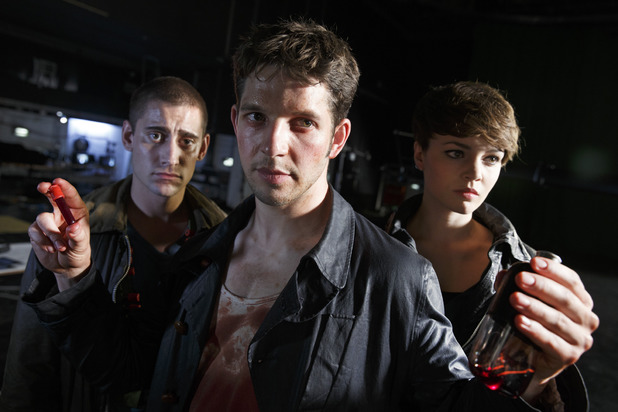
The trio get together to fight The Devil.
Five years ago, in February 2008, there was a TV pilot with a simple but unendingly fun concept. Now that concept has run its course, with the ominously titled The Final Broadcast bringing the series to its end after its shortened fifth series. Character changes and a lack of focus made this final season less epic than it could have been, but I still admired the commitment to characterisation that the show managed to balance with good humour and a mythos remarkably complex for a BBC Three sitcom. BBC shows have a habit of ending in very painful ways (looking at you, Merlin), but this was pretty much the best ending I could come up with.
     With the Devil telling everyone to kill themselves, the world is going very much to shit. Tom confronts an evil Hal and slaughters his newly recruited vampire army, but their confrontation is stopped by Alex, who reveals to Hal the Devil's presence. Deciding that they're willing to be peaceful while they fight the Devil, the three run into Rook, who reveals that Hatch has gone to a TV station to use emergency broadcasting to sweettalk the whole country. When the three try to carry out the ritual to destroy Hatch, he stops them and brings each into a parallel world of their own - Hal gets to die in the 1400s, Alex gets to live out her life with her family, and Tom gets to have a family with Allison. Despite being tempted, all three fight back because they're not with each other. Hatch inhabits Rook's body, setting the three unawares, but they finally cast the ritual at home and kill the Devil after all. They discover to their shock that with him gone, all Supernaturals have become Human.
     The finale was rather thorough in its identification of what all three of the characters were tempted with, and there were several nice summaries of what Being Human really means. Hal's musing towards Tom that their plan to be human had succeeded the moment they desired humanity really reached back to those first few episodes and the final scenario of the three finding humanity again (despite the inception-inspired twist shot) is just poetically perfect in a way which I couldn't really have imagined.
http://blogs.independent.co.uk/wp-content/uploads/2013/03/devil-2.jpg
Phil Davies gets an episode full of awesome monologues.
     What struck me was just how much of the original spirit still remains, even this far down the line. Our characters may have changed since the beginning, our setting, our understanding of the immediate power situation. But we still have our three characters, desperate to simply live a normal life that celebrates the excitation of the mundane. And it's still funny - it was the funniest episode of this series, certainly, even while trying to fit that around a lot of quite sad and dramatic stuff to do with our characters.
     I expected to be emotionally drained and sad and miserable. In a wonderful, wonderful way, Being Human delivered a finale that left me with happy tears rather than sad ones. It was a perfect culmination of not just the ideas in this last series, but of the themes that run through Being Human as a whole, and I am so glad that Whithouse was given the chance to write a series knowing it to be the last one. I loved this finale, I loved this series and I am just madly, deeply in mourning for what has been one of the most consistently inventive shows that BBC Three has brought us. Thank you so, so much, Being Human. I'm going to miss you.

Thanks.

Thursday, 7 March 2013

Review: Survivors 2.2

Tom gets supplies in his own way.
Survivors - Series Two, Episode Two
Written 16/12/12

The second episode was of similar quality to the premiere, and rather demonstrated the show's unwillingness to return to the mistakes of its past. I may have perhaps wished that we could have had our little eyewitness view into the scientists' compound for a little while longer, but Abby's escape did allow us a look into this series' overall mytharc - one that is, in hindsight, fundamentally pointless seeing as the show will be cancelled before we ever get a deeper look into it. Regardless, at this stage any new plot developments are like fried gold, and this three-episode mini-arc in the City has been rather fun, I think.
    Tom, having been excised from the group, robs a local group of Survivors for food and supplies, returning to his group with his plunder. Refusing to give up on her, Najid has been putting up posters around the city for Abby to follow should she ever return. A girl from the local group plays with Najid, and he unwittingly reveals to her that the food from her group has gone to his. While Tom, Anya, Al and Sarah go off to a Pharmaceuticals company to get a lead on Abby, the local group start to hunt Greg and Najid. At the Scientist's base, Abby is re-infected and it is discovered that her immune system can easily produce large amounts of an anti-serum. The scientists are planning to put her into a comatose state and harvest her antibodies for the rest of her life.
     Whittaker, however, accidentally gets jam on his fingers while playing with his son, which allows his wife, Lucy, to find out the code keeping her locked away in the facility. Lucy speaks to Abby, who tells her the truth about the Apocalypse, and she then allows Abby to escape. Despite this, when the gang turn up to find her, she's gone out of a different exit, and they return to the City to find Greg and Najid being hunted. Tom returns their food and they reconvene, finally finding Abby wandering the streets of Manchester.
Lucy doesn't know what she's in for.
     Pretty much the same as last week, really. Lots of decent character developments across the board, especially with Al and Sarah's relationship, Tom's criminal past and with what the facility was doing, with a shady pseudo-governmental figure on the other end of a computer screen. I think my favourite subplot was definitely with Whitaker's wife, as it showed us an insight into not just the facility but into different parts of his character. Whereas last week we were made to see the preservation of his wife and child as a mark in his favour, this week allowed us to see that he's essentially been psychologically abusing her in some misguided attempt to save her, while screwing over all of his close friends at the facility.
     I suppose on the face of it there isn't much to talk about with Survivors when I'm not being unnecessarily scathing to it, and that's a problem considering that so far, I've really quite liked what I've seen. We've had no screams of "PETER" to annoy me, no magic religious advice from Najid, no stereotyping of Anya's sexuality, it's all good. Our characters have yet to really evolve beyond the stereotypes that they were presented as, but they're coming damn close and I'm even beginning to feel for some of them. Can't really say much else besides, you know, keep up the good work.

Thanks.

Wednesday, 6 March 2013

Review: Lost 6.8: Recon

Lost - Season Six, Episode Eight - Recon
Written between 9th and 10th February 2013

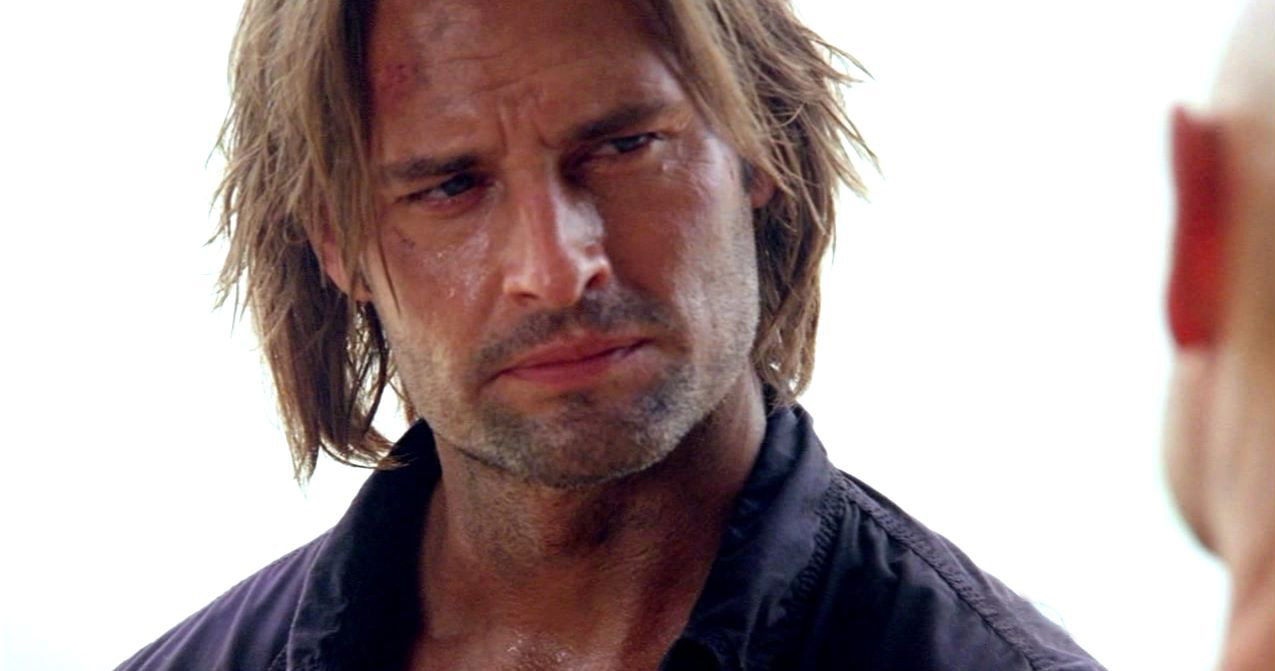
Recon, more than ever, makes an effort to mirror its Season One counterparts, "Confidence Man" and "Outlaws". Sawyer is one of the more interesting of the original cast, not just because he's tall dark and handsome but because he's someone who undergoes a noticable character arc in which he becomes a better person. He just hits all of those archetypal "bad boy" hero traits, and in Season Five he becomes a better protagonist than Jack is. There was the small, thorny issue of the flash-sideways becoming increasingly less relevant when played out on our original characters, but I'll get to that.
http://images1.wikia.nocookie.net/__cb20100503105945/lostpedia/images/f/f0/6x08_ADealIsADeal.jpg     After the Temple Massacre, the Man In Black sends Sawyer over to Hydra Island on a reconnaissance mission, aware that Charles Widmore has arrived. Kate meets Claire, finding her replacement baby doll and starting to get worried. Claire attacks Kate and tries to kill her, and with Sayid watching on, MIB is forced to intervene. Sawyer discovers the Ajira aircraft intact, and follows a trail to find a pile of dead passengers from the aircraft. Seeing someone running through the woods, he meets a woman named Zoe who claims to be the last survivor. He sees through her ruse, and Sawyer is cornered by Widmore's team. MIB talks to Kate and claims that his mother was crazy, and that now Aaron has a crazy mother. Sawyer talks to Widmore, and promises to lead MIB right to him in exchange for passage off the island. While he pretends to be loyal to Locke, he reveals to Kate that he plans to let the two sides fight it out while he steals the submarine.
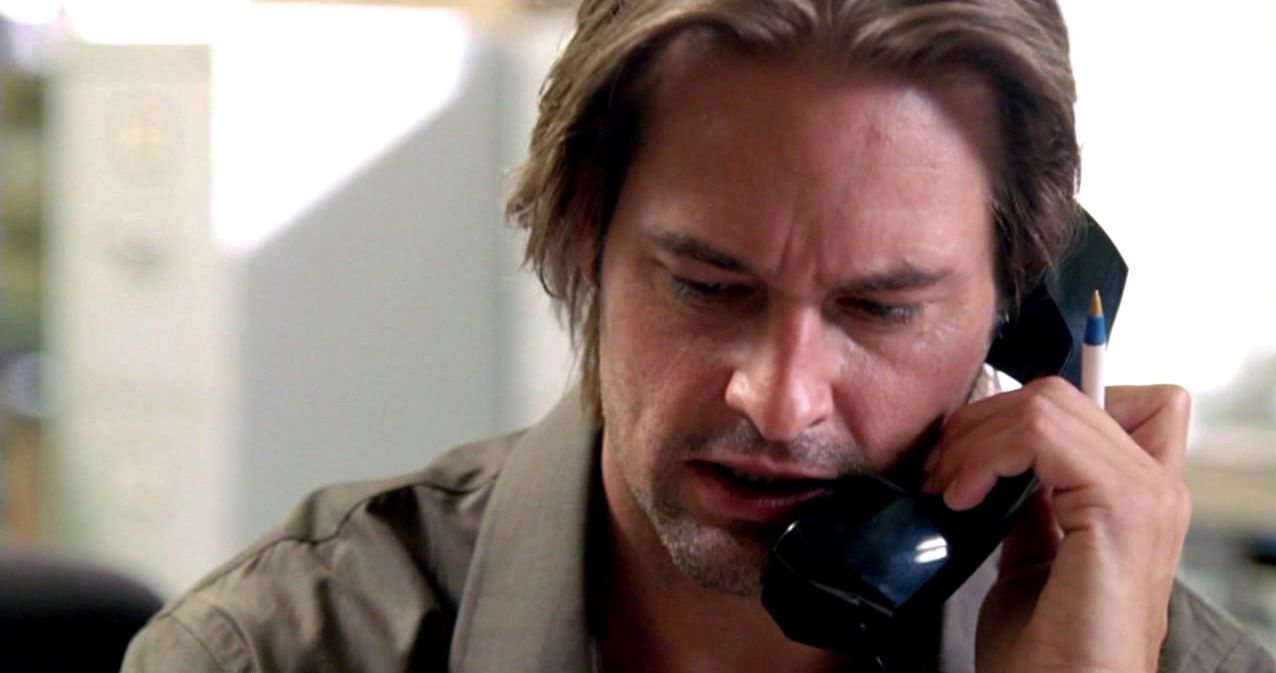
     In the flash-sideways, we see Sawyer carrying out his trademark con, only to find himself surprised when his victim is another conwoman, carrying a gun. He says a codeword and it's revealed that in this Universe he's a cop, albeit one that has still been following the trail of the conman that killed his parents. His co-worker Miles sets him up on a date with Charlotte, where she is apparently impressed and they sleep together. Looking for a shirt the morning after, Charlotte accidentally finds Sawyer's case files on the death of his parents, and he snaps at her - he's been searching for Anthony Cooper for most of his adult life. He watches an old romance film, and decides to go over to Charlotte's to apologise. She dismisses him, telling him she blew it. Revealing all to Miles about his past, they get caught in a police chase and the villain Sawyer apprehends turns out to be Kate.
     Usually, it's alright if an episode's flashbacks/forwards/sideways aren't 100% captivating. You can always miss them and not be any worse off the next week, because it's always gonna be the main plot that's more important. The Flashsideways are different, and the problem this week didn't come from bad acting, or a choice that later down the line won't make sense, but mostly from sheer boredom. Sawyer is a great character, and I absolutely love a lot of his backstory, but it's something we've seen so many times before. It's like... I'll hop fandoms for a second, it's like the repetitive nature of the various companion introductions in Doctor Who. Ooh, wow, Tardis is bigger on the inside. Moffat has had to make it more interesting because it's something we've got to get through, but it's not really very interesting. The same is true of having to re-learn Sawyer's backstory, which is pretty tedious when Flash-Sideways Sawyer is pretty much indistinguishable from our main storyline Sawyer apart from the fact he's a cop instead of a conman.
http://images4.wikia.nocookie.net/__cb20100317140502/lostpedia/images/b/b6/6x08_WhereIsCooper.jpg     That was an odd thing, really, when over in the main storyline so many damn-important things happened that weren't really treated as that big of a deal. The death of all of the Ajira passengers is never actually explained; the official explanation is that Widmore's team did it, but I don't really see the motivation nor the will for Widmore to kill that many innocent people. We got to sort out Kate and Claire's thing, we got to see Sawyer's plans in motion, we had nods to MIB's backstory... all this stuff happened and it never felt framed by anything meaningful. Sorta like the series groaning under its own weight, just trying to move the plot along another few inches.
      I did ultimately enjoy Recon, despite all the crap I've said about it. Sawyer is always gonna be an enjoyable character to watch, and the episode also allowed us to take a look at a lot of our characters in some very different lights. It's a penchent for quiet character moments that the series won't be able to maintain, as we slide slowly towards the finale in nine episodes' time.

Thanks.

Monday, 4 March 2013

Review: Doctor Who 3.2: The Shakespeare Code

https://blogger.googleusercontent.com/img/b/R29vZ2xl/AVvXsEgkE189IytKmTzdxUVC7408UCuxu7fsJ7CSfzz3xvj8ECYitzS2kBD61eM42kBrvWaQH9FTC6KWfrYdhe5wQd0WkWh50Szkcfhb_Rc0702fF-CGBiCGFTZCw6nXWu_1KJ1FlpZdQN2MynNT/s1600/shakespeare_code.jpg
The ruff suits you. I'd be wary of hair loss, though.
Doctor Who - Season 29, Episode Two - The Shakespeare Code
Written 9/2/13

It's NuWho standard (well, RTD standard) to begin a season with three adventures, one in the present, one in the past, and one in the future. This pattern was only really broken in Series Six, which went down swimmingly (cough cough). Series Three takes us first to the past, with a fun, pop-culture filled look at Shakespearean Culture from the pen of Gareth Roberts, later writer of the Craig episodes of Moffat's tenure and the odd Unicorn and the Wasp (which we'll get to in about four months, on my calendar.) Enough stalling, let's get on with it.
     The Doctor takes Martha to the time of Queen Elizabeth, where William Shakespeare is in the process of writing his famous lost play Love's Labour's Won. The Doctor shrugs off Martha's concerns about being a black woman in the time of the Slave Trade, and she's further surprised when Shakespeare (Dean Lennox Kelly, Being Human, Shameless) is distinctly more outspoken (and, perhaps, Northern,) than she expected. This soon becomes a distraction when someone objecting to the new play is found killed by impossible means, and Shakespeare is brainwashed into writing odd words. Investigating, The Doctor discovers the culprits to be the Carrionites - evil witch-like aliens able to harness the power of words. While they temporarily incapacitate him, The Doctor is able to help Shakespeare to foil the Carrionite plot.
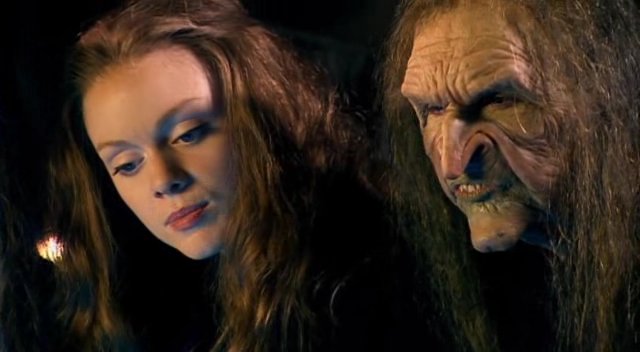
     The use of magic is not new in Doctor Who, as I've shown when I reviewed Battlefield and several other Classic Stories. Roberts throws so many wonderful sci-fi references into the story that the presence of magic isn't really that much of an issue, especially as it's handwaved rather efficiently. This rather niftily allows the show to use Witches as a concept for what is strangely the first time. And they're pretty cool - lead witch Lillith (Christina Cole) is delightfully hammy, and the witches' reliance on words makes every scene they're in pretty verbose.
http://powet.tv/powetblog/wp-content/uploads/2007/04/doctor_who_302_the_shakespeare_code_04_pretty_witch.jpg

     The treatment of Shakespeare himself is rather interesting, with Kelly's performance highlighting the relatiely populist nature of the words of a man who is now regarded as the height of class. After Dickins' depression and Queen Victoria's bewilderment, Shakespeare is a relatively subtle portayl here that mixes all of the historical and popular interpretations into one, from the spontaneous verbosity to the mild bisexual flirtation. ("And 57 academics just punched the air.")
     The Shakespeare Code, while not the most memorable script in the world, is one whose script is subtley balanced between pleasing sci-fi references and interactions as well as a nuanced historical examination of the history of theatre and of Shakespeare's life. And, as you can probably tell from the brevity of this review, I don't have much else to say about it. Don't worry, I've got a ton more to say about next week.

Thanks.

NEXT WEEK: The power of faith singing, Thermoman as a housecat and a head in a jar that saves the World - it could only be Gridlock.

Sunday, 3 March 2013

Review: Being Human 5.5: No Care, All Responsibility

http://i2.cdnds.net/13/09/618x412/cult-being-human-s05-e05-7.jpg
Kathryn Precott is the double agent Natasha
The penultimate episode of Being Human, eh? We're hitting the bigtime now, and the plot movements allowed us some fun before the finale. In true Being Human style, the big drama came in this week's story, but for some reason it felt like the least epic of the pre-finales so far. Even though we're threatened with Captain Hatch destroying the world if he ever comes to power, the drama came more from the interactions between the characters than anything else. Impressive, considering how little time we've actually had to experience this lineup.
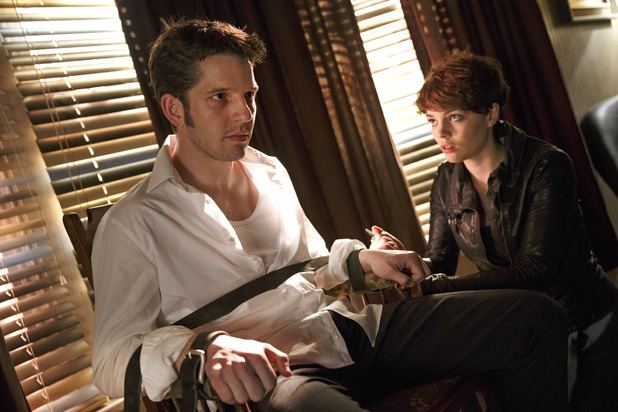
     We met new girl Natasha (Kathryn Prescott) who came to the Hotel after appearing to be chased by a bad ex. She was immediately fancied by Tom, whom she played along with, and recognised Hal's vampirism, offering him a little nibble now and then. While Alex was trying to investigate Bobby's death after last week, she also faced up to Hal and admitted that they still had the potential to have a relationship. It was revealed that Natasha is working for Rook based on him saving her from Vampires fifteen years prior, and she tells Tom that Hal has attacked her. Fearing that she's having second-thoughts, Hatch whispers to Natasha and makes her kill herself in a way that frames Hal. The trinity now divided, Alex faces Hatch, and is trapped inside her own coffin. Tom is getting ready to steak Hal, and Hal is recruiting en masse.
     Kathryn Prescott, aside from being ridiculously pretty, also provided what is probably Being Human's last Guest-Of-The-Week character, and one that made an instant impression. I did manage to work out that she was working for Rook before the reveal, but the way she wove herself into both Hal and Tom's stories really did work well. It reinforced a general sense that this trinity is not as tightly wound as previous ones, and Alex and Tom's final rejection of Hal felt more like the logical progression of their relationships' degredation.
http://i2.cdnds.net/13/09/618x412/cult-being-human-s05-e05-8.jpg
Alex tries to help Hal, to no avail.
     It was that gentle degradation that gave the episode a lot of its impact, and also what robbed it of a lot of the punch. The cliffhanger we were left with didn't scream, "oh shit" as previous years have - the things that happened were on the cards for a while, and there was very little to surprise. It certainly wasn't a weak episode, but I was expecting something with a little more wallop for what it the penultimate episode of the entire series. Hopefully next week's showdown with Satan will leave us at a satisfying end.

Thanks.

Thursday, 28 February 2013

Review: Survivors 2.1

These reviews are a bit late. The first two were written in December 2012 and were intended for the new year, but circumstance pushed them back a bit. Whatever, enjoy.

Survivors - Series Two, Episode One
Written 16/12/12 

Back in the glorious summer of 2010, I took advantage of a ridiculously underpriced boxset to review the first series of the 2008 reboot of Survivors, based on a story by Terry Nation that's best known for its far more popular adaption from the 70s. The new reboot did a lot of things rather differently, adding new characters and swapping a few ethnicities round to reflect Noughties Britain. While the second series had been planned for a while, the 2009 Swine Flu scare made the BBC reconsider broadcasting it, and while critical reaction was better the ratings for the second series suffered so much that the BBC threw in the towel.
Greg's life is on the line - and so are Anya and Al's when
they try to help.
     I'm going to turn around now and say that I was several million degrees too harsh on the first series of Survivors. It had its problems with characterisation and certain annoying acting decisions, but as a sci-fi concept it was fundamentally sound, and the direction and cinematography were always top-rank. Series Two starts off immeditately attempting to rectify the mistakes of the past by managing to flesh out all of our characters at once, and solidifying the dynamics between them.
     Stuck in Manchester after having to look for runaway Najid, the gang find themselves nursing a Greg whose been shot by Dexter. Stuck for medical supplies, Anja, Al and Tom head off to the Manchester Royal Infirmary, which is then collapsed by city-dwellers trying to eradicate what is essentially a disease hotspot. They all try to help, leaving Greg in the lurch, and Sarah has to sell her body for a jack. Meanwhile, Abby has been taken to the Evil Scientists' Lair, where she is told by David Whittaker (Nicholas Gleaves) that she's the only one to fight off the virus who wasn't immune and thus needs to be tested on to prevent the virus from mutating further and killing everyone. Anya and Al are rescued, and Greg recovers, but Tom is forced to leave the group when Greg denounces him as a murderer.
     One of the more surprising parts of the episode for me were the frequent flashbacks to life pre-virus for Greg, which felt very Lost-like. While they were certainly welcome, they did feel a bit belated and in the scheme of things it would have been wiser to have seen these back in the first series, when our characters were setting up. Meanwhile, Sarah, a character whom the writers seemed to spend the entire first series trying to get us to hate, gets some rather unpleasant character development when she is raped in  order to further the story. I don't know whether they were trying to be girtty or were taking her character to what they felt was a logical extreme, but it felt a tad unnecessary regardless. Worst of all was the fact that the guy playing the rapist is now on all those co-op ads. Eugh.
Abby's looking a bit worse for wear in the Scientists' compound.
     The scientist storyline was perhaps the most interesting part of this week's episode, with Nicholas Gleaves turning in another great performance as a troubled villain. The scientists, again, were a part of the first series that were very much left in the background, and that was a real shame. For all of the atmosphere and little personal stories that the first series gave us, it neglected to fill in on any of our actual characters or main villains. It felt very much like it'd been written like an American series and then they'd simply just forgotten that they only had six hours to work with.
     So, all in all, an improved start for Survivors. It feels very much like it's making up for lost time, and the result is an hour of compelling drama that both explores the post-apocalyptic world in a much more in-depth way but also advances a lot of our characterisations. I'm not sure that the flashbacks were well-placed and I really think that it's a little too late to be starting with that now, but I was glad for the character development they provided and it's certainly a trend that this series is going to continue.

Thanks.

Wednesday, 27 February 2013

Review: Lost 6.7: Dr. Linus

I've recently gone back to the first season on DVD for the first time, and boy is it weird. Good weird, though. It's not necessarily better than the later series in every way, but its certainly more accessible and the characterisation is just... by golly it's good. I don't know whether or not to review Season One for the blog, as everything I say will feel a tad redundant given that I'm going to be covering our characters' journeys as I examine their last few episodes. I'm rambling - onto Dr. Linus!

http://images1.wikia.nocookie.net/__cb20100331134909/lostpedia/images/7/72/DrBen.png
Ben begs for forgiveness and explains why he killed Jacob.
Lost - Season Six, Episode Seven - Dr. Linus
Written between 8th and 9th February 2013

Benjamin Linus. That's a sentence in and of itself - the show's most memorable, most entertaining character that only popped up in the third season. Michael Emerson's performance and simple good writing has made Ben Linus the symbol of all of Lost's potential, becoming a threefold hero, villain and expositional device. He is a character that you can never trust, that is always unpredictable and yet strangely predictable in his unpredictability. Dr. Linus, the last Ben-centric episode and one surprisingly early in the season, is about the character's redemption arc after two seasons of ruining his own life.
     In the main island storyline, Ben escaped the Temple with Ilana's group, including Miles. Desperate to discover what happened to her father figure, Ilana gives Miles Jacob's ashes, and he reveals to the group that Ben was his killer. Ilana has him shackled on the beach, and begins forcing him to dig his own grave. The Man In Black arrives to let him go, informing him of where he can find a gun, and Ilana ends up pursuing Ben through the jungle until a standoff, where Ben apologises to her and tells her that he will never come to terms with his actions. When he suggests he go off and join the Man In Black, she appears to forgive him. Richard meets Jack and Hurley at the Black Rock, and says that he's going to kill himself, but Jack talks him out of it by convincing him (with some pretty strong evidence) that it's impossible to do so. Out in the bay, a submarine appears on the horizon - it's Widmore's.
     In the flash-sideways timeline, Ben's life has taken a very different turn. He is a shy, unassuming high school History Teacher, bullied by the corrupt principal and more concerned for his students (especially Alex Rousseau, who was his adopted/kidnapped daughter in the main timeline) than he is for his own career. A conversation with Alex gives him the opportunity to blackmail the Principal and gain power in the school, but his plan is cut short when the Principal threatens to ruin Alex's chances of going to Yale like she wanted to. Unlike in the original timeline, he puts her interests before his own power, and the two come to an agreement.
http://images4.wikia.nocookie.net/__cb20100503111014/lostpedia/images/b/b0/6x07_PleaseRunDetention.jpg
Ben's flash-sideways counterpart is much less evil.
     Emerson gave another magnificent performance in this episode, with particular high points being his moment of decision in the flash-sideways and his final monologue to Ilana, which on first broadcast almost had me in tears. He was key ot the episode's success, allowing the script to fully break down the core essentials of Ben's character and push all of his buttons. In the main timeline, we got to see him punished for his deed and explain his regret over letting his power take precedence over his love for his own daughter, and in the flash-sideways we see him get to put this into practice as he sacrifices power for Alex. 
     Ben's journey through the series is one that I feel does peet off a bit at the end. It's always going to be a bit disappointing to see a character as ruthless and controlling as Ben come to terms with their own problems and try to become better people. In the end, Ben's parental-abuse-driven quest for power amounts to nothing, and I think it's fair to say that he spends the rest of this season following people around being unimpressing. However, I was glad for this episode, which gave Emerson one last chance to really go all out and take the character of Ben to its logical and very satisfying conclusion.

Thanks.

Tuesday, 26 February 2013

Review: Being Human 1.0: The Pilot

http://forbiddenplanet.co.uk/blog/wp-content/uploads/2008/05/Andrea%20Riseborough%20Russell%20Tovey%20Guy%20Flanaghan%20Being%20Human.jpg
The image you will find on all articles discussing the pilot.
Written 24/2/13

For the sake of completionism, seeing as Being Human is reaching its tragic and untimely end, I thought that I'd take a look at the Pilot that started it all. In 2008, BBC Three was undergoing a rebranding to appear less adult and more dynamic and cool. To facilitate this development, the channel chose to make three pilots for dynamic new series, two of which would be turned into fully fledged series the following year. These included the street-oriented West 10 LDN, the weird and wonderful Phoo Action and, as we see here, the original brief for a cheesy drama-comedy called Being Human.
     The only recognisable face in the cast (i.e. the only cast member to survive the crossover) is Russell Tovey, who is playing much, much camper version of himself. Mitchell actor Guy Flanagan is a much cooler and quieter take than Aiden Turner would later give it, feeling more like a stoner than a brooding heartthrob. Lenora Crichlow's position is taken by the much more Northern Andrea Riseborough, who I actually prefer in the role - she manages to capture the character's initial agoraphobia and loneliness in a way that's much more pulling than Lenora, whose Annie is much more awkward. There's little mention of her death, though, so it's debatable whether Riseborough could have gone forwards to work with that.
     Another interesting difference comes in the Vampires - the ones in the Pilot feel much more modern, hanging out in night-clubs and travelling by limousine, with Adrian Lester's much more subtle Herrick (I love Jason Watkins, before you all pounce on me) feeling rather weird. Lester's interpretation is much more of a PR guy, whereas Watkins' Herrick is called into so many other situations in which his madness and desperation are often brought to the fore. You believe that Watkins' Herrick is mad enough to try to take over the world from Bristol. Lester's Herrick... not so much. Elsewhere, and vampire Lauren (played here by Canadian actress Dominique McElliglott, Moon) goes from being this vulnerable and difficult woman in the main series to being the cheesiest performance I think I've ever, ever seen. (And that includes The Kandyman.)
The not at all scary and the scarily bad.
     It's a real shame, really, that the Pilot has been sorta hidden away for all these years. It has a feeling that's much more embryonic than that of the series proper, outlining a great deal of potential rather than developing anything too long term. It also doesn't have any predispositions - it works perfectly well on its own as an examination of humanity and our desperate desire for normality. It's also pretty funny, to boot. Simply put, it's as good an episode as any other and it more than justifies the lengths that many people went to in order to get the show a full commission.

Thanks.

Monday, 25 February 2013

Review: Doctor Who 3.1: Smith And Jones

The Doctor and Martha. Running.
My captioning is a bit lazy this week, forgive me.
Doctor Who - Season 29, Episode One - Smith and Jones
Written between 27th January and 8th February 2013

So our first noble companion has gone, and a lot of the fandom are really, really sad about it. This is not the best way to allow our viewers to recognise Doctor Who's incredible habit of change. Luckily for the show, the opener to Tennant's second season is one of the best scripts that Rusty ever produced, and says a lot more about the quality of the previous season than it does about the projected quality of this one.While Smith and Jones may not be the perfect episode, it is certainly a very good introduction, free of any stress of having to reboot the series and simply allowing us to get in touch with our new regular.
     Martha Jones (Freema Agyeman) is a 21-year-old medical student working at London's Royal Hope Hospital. It's her sister's birthday, and the planned party is causing tension between her seperated parents. As she enters work, she meets stranger Mr. Smith, and they're present when the Hospital is lifted by backwards rain onto The Moon. There, Mr. Smith sees Martha's lack of fear and introduces himself as The Doctor. It turns out that the hospital has been lifted by Space-Mercenaries known as The Judoon, who are looking for blood-absorbing alien Mrs. Finnigan (Anne Reid, The Curse of Fenric). She initially disguises herself as human and adapts an MRI machine to wipe out one side of the Earth, but with The Doctor and Martha's intervention she is stopped and the hospital is returned to Earth before everyone runs out of air.
      I suppose you could say that the script is rather desperate to get across Martha's positive traits from the get-go. She's smart, inquisitve and unafraid of the unknown - all good qualities for a companion to have. Something that felt justified at the time but that doesn't really feel justified now is the few references and nods back to Rose - according to the Doctor, she's not even a companion yet (and she won't be for at least another six or so episodes). Like I said, it's a hangover - one that may indeed be touching for the characters involved, but one that doesn't help the show to move on and execute new ideas like having a new companion should help it to.
Rhino people. 'cos.
     As for the plot itself, it's a small curse of the RTD era that monsters from Premieres are rarely very memorable. Here we have weird Rhino creatures with funny names, creatures made of leather and a woman who drinks your blood through a straw. The peril is imminent and the episode is not without tension, but the fun comes from the novelty of the scenario rather than the strength of the individual villains.We're not exactly talking high-cocnept here. But I perhaps think that that wasn't really what this opener needed, and the lack of a strong villain character allowed us to focus more on the relationship between our core protagonists.
     I suppose its the fact that Smith and Jones isn't trying to be big and complicated that is ultimately its greatest success. The main plot is designed to be fun for kids and expose us as much as possible to our new character, who hasn't had a million years to get started. And, as you can probably tell, I'm running out of things to say. Smith and Jones is good at what it wants to be, and as a companion introduction it's probably one of the best, "this is why our companion is cool" episodes. Onto the past.

Thanks.

NEXT WEEK: The Shakespeare Code! Haha Dan Brown reference.