Monday, 4 June 2012

Review: Doctor Who Classic: Attack of the Cybermen (Revisited)

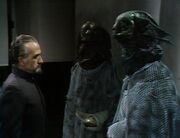
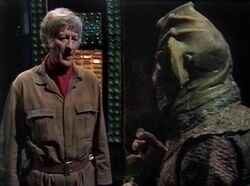
The Doctor takes a... hands on approach.
See here for my previous look at this story.

Doctor Who - Season 22, Story One - Attack of the Cybermen
Written 15/4/12

Saward didn't like Colin Baker, but he sure did love his Cybermen, as we see in Earthshock and in their large role in The Five Doctors, much to the other wrtiers' chagrin. When JNT called for a strong opener to Baker's first full series, Saward decided to deliver his magnum opus; a shining example of his style that will go down in the annals of Who history. For better or for worse. At its heart, Attack of the Cybermen is trying to be something a lot bigger than it manages to be, but that's not for want of trying. At the end of the day, it's still a great Cyberman story, and allows us an incite into both The Sixth Doctor and the Saward Cybermen.
     The Doctor and Peri, still reeling after the events of The Twin Dilemma, follow a distress call to 1985 Earth. There they find old soldier Lytton (from Resurrection of the Daleks) working with time-travelling Cybermen. Under duress, Lytton and The Doctor are transported to the far future on the planet Telos, where they join the Cryons in their attempt to revolt against the Cybermen and prevent temporal disaster. Along the way they meet undercover cop Russell (Davros-actor Terry Molloy), partial-Cybermen Bates and Stratton and the Cryon Leader. They also manage to fix the Chamelion Circuit, albeit temporarily.
This serial is obsessed with continuity - sometimes to its
detriment.
     The serials' ownership is the most complex and difficult to pinpoint in the series' entire history. The version I choose to believe is much-simplified; the serial is acreddited to "Paula Moore," a penname used by Eric Saward to hide his involvement in the script. Saward, as script-editor, was unable to commission his own work. Ian Levine, the infamous fan who was the show's unofficial continuity adviser, likely contributed a lot of details to the serial regarding the history of the Cybermen.
     As ever, Six is brash here, but he shows a more consistantly.... pleasant streak than in Dilemma. His character is erudite and witty, but there are a few moments where he's a little too willing to become violent. At the end of the day he doesn't really save the day; his presence is simply the catalyst for the Cryon resistance movement to start working. This is a key feature that you see a lot in this era, and for me it feels a lot more natural than some of the later stories where the Doctor is shoe-horned into the action in unrealistic ways. Sometimes The Doctor just doesn't get the big roles; much better than in, say, Midnight, where the evil invisible monster just happens to attack the tourists on the trip that The Doctor attends.
     All of the key Sawardisms are here. There are multiple storylines, all running along different streams which eventually converge. There's also a deeply entrenched dark humour absoutely everywhere, from the direction to the costumes, from the dialogue to the musical score. At times it feels almost inappropriate, but what it does do is create a memorable atmosphere. Wihout that humour, then this dark affair would be very bleak indeed. A key feature that sets Attack of the Cybermen apart is the mass of continuity references; it starts from the very beginning, with The Doctor landing in the original setting of the pilot for no reason, and then having to stop the Cybermen from changing things that were only seen twenty years prior to its broadcast. While I love some good continuity as much as the next person, the problem here is that it just doesn't feel relevant; it becomes overactive fanwank that most people at the time wouldn't have been able to appreciate.
Maurine Colbourne is great as the slippery Lytton.
     The story is the first exploration of the 45-minute format that would become common-place in the new series, but here it jarrs with the series' tone and makes it feel even longer, despite the fact that it's actually 10-minutes shorter than the average 4-parter. Despite this, I like the format for the same reasons I like it in Nu Who - it allows you to do a lot more with the characters, makes filler less viable and prevents some of the more silly types of cliffhangers that the show's seen.
     There are a few issues with this story's tone, and its fan-wank stuffed content feels a little overindulgent for what the serial ultimately becomes. But I love the story. It gives me a decent chuckle now and then, and the dark humour is just so consistant and so ubiquitous that it gives the story this deliciously thick tone. Attack of the Cybermen may not be the best story in the world, but it's certainly a hell of a lot of fun.

Thanks.

NEXT WEEK: I did Vengeance on Varos last November, so next week is The Mark of the Rani

Friday, 1 June 2012

Josh: Doctor Who Classic: Colony in Space

Jo takes her first trip in the TARDIS
Doctor Who - Season 8, Story Four - Colony in Space
Written between 6th and 7th May 2012
"I did a course in escapology...once."


Colony in Space is significant concerning Classic Who's history. It sees the first off-Earth colour narrative with a newly updated TARDIS interior and companion Jo Grant's first trip within it, the first of any companion to travel in it since Season Six's 'War Games'. Michael Briant makes his directorial debut for Who, soon going onto direct popular serials such as; 'The Robots of Death' and 'The Sea Devils'. The science fictional comment in the script by Malcolm Hulke is based on relations between European Settlers and Native Americans. Now let's explore this six part serial;
     The Master has stolen the Time Lord's secret file on the Doomsday Weapon so fix the Doctor's TARDIS so he and Jo materialise on planet Uxarieus in 2472. An excited Doctor free from exile and scared Jo off-world for the first time meet Ashe, the leader of a human colony who are struggling to survive. They have an uneasy truce with the Uxarien primitives, their crops are failing without reason and members are being killed by 'monsters'. They also fear losing their colony in favour of the Interplanetary Mining Corporation who want rid of the colonists so they can take the planet's rich source of duralinium. The humans not wanting to return to their repressive, polluted Earth object to IMC's wish for the much-needed mineral for profit. As Captain Dent from IMC calls for the Adjudicator to make a decision on who has rights to the planet, a man called Norton arrives claiming to be the last survivor of another colony attacked by the same monsters that are killing colony members. The Doctor investigates to find the monsters are actually holographic images produced by an IMC machine and the killings are a result of one of their employees. Norton's revealed to be an IMC agent who kills the colonist's chief scientists and vandalises their power supply as Dent tries to get the Colonists to evacuate.
Before Corrie, Helen Worth could act, and very well!
     As the IMC and the colony engage in armed hostility the Adjudicator, who's really the Master with falsified credentials, arrives secretly in search of the Doomsday Weapon. When Jo is taken hostage by the Primitives, the Doctor discovers the Guardian and the last of the ancient Uxariens. The Doctor, as long as he and Jo do not return to the Primitive city, manages to escape being executed. The Master rules in favour of the IMC which sees Dent threaten Ashe with execution for the colony's crimes unless they all leave. With no other choice, the colonists must leave in their spaceship whose conditions are so poor it explodes in flight before Jo and Caldwell, an IMC employee helping out the colony. Jo is then locked in a chamber in the Master's TARDIS and the Master threatens her death by gas if the Doctor doesn't help him find the Doomsday Weapon. So, the Doctor and the Master go to the Primitive city and in the Guardian's chambers find the Doomsday Weapon. The weapon can turn any sun supernova, and the Master wants universal control and offers the Doctor a partnership but he declines. The Doctor convinces the Guardian the weapon caused the fall of the Uxarien civilisation from greatly scientific to primitively religious. The Guardian lets the Doctor destroy him, the weapon and the city. Jo has been set free by Caldwell and the Master escapes in his TARDIS. Thanks to Ashe flying the ship alone, all of the colonists escaped and overpower the IMC. Confident the real Adjudicator will rule in their favour and the fact the radiation from the weapon caused their crop failure, the colony's future is now secure. The Doctor and Jo return to UNIT seconds after they left unbeknown to the Brigadier
     Colony in Space is one of season eight's more mixed serials. Whereas the previous three stories had the ability to be judged either as good or bad, Colony has some excellent moments balanced by scenes where I sat back thinking; 'Oh no...'. Colony is very clever and grapples with a challenging basis for a storyline excellently. The present day finds the concept of colonisation popular amongst scientists, to be seen as an option of what to do when things go wrong in the future. Though this serial was released in 1971, the script clearly identifies the possible problems humanity could face in the future. This is why I like Colony, because it delivers a brilliant exploration into the human agenda, how normal civilians behave when found in situations that cannot possibly control. Malcolm Hulke's script addresses an everyday, serious issue, merging the fiction of Doctor Who with what's going on in the real world. Colony's exposition of human nature is really what makes it satisfying to watch. Though, I can admit the usage of one of Classic Who's many quarries works well as the backdrop for this more, gloomy serial. Colony's adventurous attempts in CGI are very, well done for the time and because we're on another planet for the first time everything becomes very much more visually interesting.
The Guardian...the only Uxarien to speak...in a silly voice...
     So, though the aesthetics and examination of human nature makes Colony stand out from the previous three stories in this season there are several times where everything isn't going Who's way. Again, we were exposed to multiple use of Three's martial art skills. Yes, this can be acceptable when the character genuinely needs to escape a dangerous situation but several occurrences in this serial saw Pertwee's Doctor use of violence unnecessary on various occasions. His Doctor's violent attitudes to innocent Primitives and people damns his flamboyant image. Along with this, there seems to be a development of recurring ideas within this season. Each serial has seen a senseless array of gun-fights and takeovers from two forces alternately. After such an outstanding ending to season seven and the fantastically characterised introduction of the Time Lord villain the Master, season eight is letting itself down in this area. I'm become a little down-hearted that these stories are becoming to similar to one another and need more differentiation. With repeated storyline ideas all crammed into the same season, serial after serial, Season Eight becomes a little tiresome.
     Though I fully understand the integration of the character is essential, the Master's appearance for the fourth time in a row is becoming too predictable. His motive is usually the same and the coincidence of him and the Doctor meeting regularly is becoming most unlikely. Still, Roger Delgado's Master is great to watch. If there wasn't as many ridiculous moments such as Jo's claim to of done a course in escapology when she's tied up or the portrayal of the Guardian, then Colony could a much more enjoyable serial. I put off watching this for a while and there was a reason why. Colony isn't the most entertaining of Classic Who spectacles but it can be enjoyed in the sense that it's Pertwee's first off-world adventure. Not a very well executed but still a well-performed, gritty serial that leaves the Master available to reappear for the season's finale!

Thanks, Josh.

Wednesday, 30 May 2012

Review: Hit and Miss 1.2

Hit & Miss: Cast and Characters
Mia and Ryan share a similar character arc.
After the intense premier, the second episode of Hit And Miss continued on a good track. This week took a much more raw look at the nature of dysmorphia, while still continuing to work on these interesting and fulfilling characters. Some of the characters aren't developing in the way I thought they would, but the series still feels compelling despite that - mainly due to Chloe Sevigny's astounding performance.
     Understandably pissed off at having been beaten up and humiliated, the Landlord put the kids' cottage up for sale. The older kids blame this on Mia; Levi is broken by the fact that he can't keep his family together after his mother's death, and Riley, having been secretly having it off with the landlord to keep his favour, is shocked by his betrayel. Levi calls Mia a freak, which causes her to go into a period of gender dysmorphia; culminating in a dark scene where Mia stands naked except for a party nose in front of a mirror and begs to be real. At the same time, Mia's son Ryan tried to emulate his father and began to experiment with female clothing. The Landlord refusing to buy the house from Mia, her concerned employer Eddie offers to use his legal existence to buy the house with her money, allowing her to keep control. They hold a party in celebration, where Mia confronts Ryan about his attempts to emulate her, and where she finally feels she can accept her femininity.
     I loved the very clever thematic device regarding gender politics that this episode used, and it worked across all of the characters. Mia's harrowing scenes in front of the mirror, and her refusal to help Leonie dance at her recital, allowed Sevigny to really dig deep into the character's recesses. Her relationship with Ryan became awfully symbolic in this regard. Ryan, named after Mia's male identity, acts as a metaphor here - Ryan experimenting with feminity and Mia telling him to be himself instead of emulating her. Levi felt his masculinity being questioned by his inability to protect the household, but then accepted that he couldn't win all of the battles. Riley lost her motherly instincts as she grew to resent both the Landlord and Mia.
Hit_&_Miss_S1E2
Mia tries to balance her home life with cold-blooded murder.
     I was a bit weirded out by Riley's change of pace as a character, though. After the headstrong and responsible parental figure from the premiere, it felt like a drastically different character the moment she started to act like a grumpy teenager. The character spent the entire episode going off the rails, when she'd been the most mature of the kids last week. I suppose you could put this down to the clash between her twisted loyalty to the Landlord and her new mum Mia, but it was the one thing in the episode that struck me as odd.
     Hit and Miss is well on its way to becoming an absolutely brilliant drama. The way that it handled the concepts surroundng dysphoria were masterful, and Chloe Sevingy is a truly amaing actress for being able to do what she does in this episode. The script is absolutely superb and I'm enjoying this series on so many levels that other shows on British TV just aren't providing.

Thanks.

Review: Lost 5.17: The Incident (Part Two)

http://images.wikia.com/lostpedia/images/3/3d/5x16_JackWithTheJughead.jpg
Jack Shepard, selfish jerk, prepares to not change anything
at all due to his own stupidity!
Our final hour plays out very much like a retread of all the stupid decisions that have been made over these past four episodes. What's perhaps the enraging thing is that all of the tension, all of the character work that supposedly drove this more mature and complex season is revealed to boil down to the fucking Quadrangle. This plot device was the bane of my existance in Season Four, but it never directly influenced the plot, because we had sensible characters like Ben and Locke doing things of actual interest. Now we're left with the quadrangle, and we suffer because of it. Sorry if I get a bit ranty.
     Saywer has a chat with Jack about why he wants to erase the past four years of everyone else's lives. Jack eventually explains that he's butt-hurt about losing Kate. Newsflash, Jack - that's your fault. This isn't a justification for ruining the lives of everyone around you, it's self-pity. And that still doesn't explain why nobody can see that his plan will not in any way work. Sawyer starts to beat up Jack (which I'm enjoying more than I should) but Juliet stops him, having changed her mind for the eighth time in a row and now supporting Jack's cause. The reason for this? She thinks that she and Sawyer aren't "meant to be".
      Destiny is fine. Really. It's completely BS and it can cause some really horrible storytelling decisions, but it's fine. But these four episodes really take the biscuit in that destiny guides the paths of the main characters even when it doesn't. We're supposed to sympathise with Jack in this fight. And yet what is he, after this season? After five seasons? A whiny, self-pitying, selfish jerk who destroys everything he touches and then is prepared to destroy everyone else's lives on a pipe-dream that he might save his own. How this even qualifies as a protagonist is beyond me; he seems like the villain of the piece.
http://images.wikia.com/lostpedia/images/9/9e/S5finale-Jacob-touches-Hugo.jpg
Jacob tells Hurley what to do.
      Juliet's constant indecision feels less like realistic storytelling and so much more like the writers having to shift her into situations that just don't fit. Her excuse here, that they weren't meant to be, doesn't ring true now and it won't later in Season Six, where, guess what, they're soulmates. But even on a basic level, Juliet, like Jack, is a scientist. And yet she sprouts this destiny-driven meant-to-be crap like a teenage love poem. How can anyone empathise with characters stupid enough to believe that their lives are driven by destiny, which, in fact, is the exact opposite of what Faraday said?!
      Anyway, there's a firefight at the Swan and Jack drops the bomb down the borehole. Initially nothing happens, until metal starts getting pulled into the pocket of electromagnetism. Everyone tries to escape, but Juliet is pulled back by some chains and dragged into the borehole, letting go of Sawyer's hand and falling to her doom. At the bottom of the borehole, she strikes the core eight times with a rock, and the screen fades to white.
     In the past, Jacob touches both Jack and Locke. On the Island in the present, Richard, Flocke and Ben finally arrive at the Statue, where Jacob lives. As they enter, Ilana approaches with the crate, and reveals to Richard using Locke's body that Flocke is the Man In Black. Inside, Jacob tells the MiB that he found his loophole. Ben questions him on why he was ignored for all of his 35 years on the Island, and yet Locke got to visit him straight away. The answer is of course that he isn't a Candidate, but because the writers don't want us to know this, Jacob is unnecessarily mystical and deep. So Ben stabs him to death, and the MiB triumphantly burns his corpse.
http://images.wikia.com/lostpedia/images/4/49/5x17_DyingInBen%27sArms.jpg
Ben kills Jacob.
     A lot of The Incident (Part Two) is just excuses for the idiocy of what I dub the Faraday Fallacy storyline. I'd have loved it if these excuses had made real sense, but they really didn't and instead appealed to both the Quadrangle and Destiny themes that really have no right to be here. I loved the Jacob/MiB side of the storyline, but it was painfully short. Despite that, I prefer the one or two minutes of Michael Emerson's outstanding acting to this two hour horror story created by our supposed protagonists.

-----

This wraps up my Lost Reviews, pretty much forever. I had at one point considered going through Season Six, but as you can tell from my ranty posts for these past few weeks, I don't think that would be a good idea. Nevertheless, it's mostly been a very fun thing to do and I've enjoyed not only watching Lost but examining it like this. I hope you've enjoyed reading and if you haven't, then you're right and I'm wrong, as usual.

Thanks.

NEXT WEEK: Not Lost. Oh well. Ashes to Ashes. Funk to Funky.

Monday, 28 May 2012

Review: Doctor Who Classic: The Sea Devils

Sea Devil and Doctor face to face.jpg
The Sea Devils invade! Mwahahaha!
Doctor Who - Season 9, Story Three - The Sea Devils

What would happen if the Silurians was done again, with all of the soldiers as Navymen and with The Master as a spanner in the works? Malcolm Hulke's six-part sequel to The Silurians is by and large a much more consistently entertaining outing, if only by its comparative brevity. I wasn't looking forward to the Sea Devils because of my disinterest with this era of the show, but I was pleasantly surprised once the rather dull beginning gave way to a tale that most definitely surpassed its predecessor.
     Having been imprisoned by the authorities after Season Eight finale The Daemons, The Doctor and companion Jo Grant visit The Master (Roger Delgado). As they're about to leave, they discover that there have been a spate of killings in the area; boats going missing. As The Master conspires, The Doctor discovers that the killings are the fault of The Sea Devils, a soldier caste of reptiles that lived under the Silurians and had adapted for amphibious life. The Master reveals that he plans to help the Sea Devils, reviving their colonies and allowing them to commit Genocide upon humanity. When The Doctor attempts to make peace, human beaurocrats follow the orders given in The Silurians and try to destroy them with artillary. This fails, only making them angry. The Doctor sabotages their machinery and escapes, just as the base self-destructs.
     The most immediate thing you notice is the music, which is similar to that of its predecessor. It's jarring and often painful - sharp techno slurs at pitches usually reserved for the ears of small animals. A lot of the time it adds to the feel of the story, but quite often it just doesn't fit at all. However, nothing comes close to one scene in The Silurians where the already high-pitched beeping increases in pitch and volume for about a minute. Ouch.
Ol' Roger Delgado is helping the Devils.
     As for my opinion of the Delgado Master... this was somewhat of a new experience for me. The Delgado Master is a very different beast than the Ainley one I've been used to on my Five marathon, mainly because Delgado is the origin of all of Ainley's traits (at least in Season 19). He's suarve yet dirty, confident yet cowardly. A schemer of the more realistic kind. His presence here at least gives the six-parter something more to do, but it's a shame he takes over in a story called, "The Sea Devils." The eponymous creatures, in the end, only end up sprouting the same ideas from The Silurians but being a bit more aggressive about it.
     In this period of Doctor Who there are a lot of imperialist themes, and this story uses the Navy a hell of a lot. It helped that both producer Barry Letts and John Pertwee served in the Navy, and so they had the experience to go on. The presence is rather noticable, but it is to the story's benefit, as the eager Navy servicemen formed an army of extras for the team to use. It's a very sharp contrast for the anti-authoritatian attitudes of the Saward era.
     One of my problems is that the first half of the story is spent in the Prison environment, which is an interesting detour in the first part but then does drag a lot, considering that everyone there ends up dead anyway. This is still a four-part story that's had to be extended, and it drags. There's this one scene in Part Two where the the Doctor, out of nowhere, begins to have a swordfight with The Master. It made me giggle like mad, because it was completely over the top and clearly there just to bolster the story.
Sea Devilssss ssssay Byeeee Byeeee
      Still a little flabby around the edges, but The Sea Devils continues the Silurians' pedigree in theme and style. In parts it was a tremendously exciting piece of television. It may be from an era that isn't particularly my style, but it was very well made and performed by all those involved. The Sea Devils is yet another Doctor Who Classic to go down in the history of television.

Thanks.

NEXT WEEK: We start to look at the impressive Season 22, with Attack of the Cybermen (Revisited).

Saturday, 26 May 2012

Review: Hit And Miss 1.1

Mia (Chloe Sevigny) has a double life - in more ways than one.
"I don't know about the dick in your pants, but you've definitely got a dick in your brain - you're fucked in the head."

In anyone else's hands, the premise of this new Sky Atlantic drama would sound rather ridiculous. Big Love's Chloe Sevigny plays Mia, a transsexual hitwoman who discovers that she has a son and an entire family of kids left to her by her late girlfriend Wendy. Written by Shameless' Paul Abbot, the first episode of the series managed to escape any possible connotations of being a freak-show or a gimmick, which a witty script that combined powerful characterisations (especially from Sevigny) with humour and drama. Importantly enough for me, it was filmed in the city where I live, and so I got a lot of enjoyment from musing over the locations used.
     One of the things I loved was how easily it mixed a sort of Wild-West theme with a great deal of realism. At one point we see Mia undress for a shower, and we see some full-frontal nudity using a prothetic penis. Now while this is what every reviewer is going to be talking about, it speaks volumes that Mia's transsexuality is so realistically shown, and it doesn't form the entirety of her character. It helps that Sevigny is somewhat androgynous, and there have been some clever wardrobe decisions that highlight the character's former form. There's also a considerable lack of Northern stereotyping, although this is probably due to Paul Abbot's background. I was glad that it had humour; the premise is so stuffed that the series risked taking itself too seriously, and the Shameless-style humour highlights the characters' humanity.
     Sevigny is perfect for the role, and despite the actresses' controvertial comments about Manchester itself, she does a bloody good job here. I loved her in Big Love and she's even stronger here, as the broken woman who recognises what taking care of the family could do for her life. She insists that she used to love Wendy, and you can tell simply by the way that she acts around her kids and her bedroom. It was a performance that never reminded me of her American heritage, or of the actress' other works. It was a strange, strange casting decision, but it's had a great result.
Leonie, Levi (Reece Noi), Mia, Riley (Karla Crome) and Ryan.
  The children are a good selection of promising actors. Karla Crome (future Misfits star) is great as the abrasive Riley, who wants the kids to remain self-sufficient, as was Reece Noi (Waterloo Road) as troublesome Levi. Especially impressive were Mia's son Ryan and the youngest child, Leonie, both of whom managed to express their grief at their mother's death in several touching scenes - one where Mia teaches Ryan how to fight a local bully, or another where Leonie is left on her own and cuts the hair off of a Barbie doll to resemble her mother. It was a lot more raw and domestic than the advertising suggested, but that's really all for the better.
     Hit And Miss was almost nothing like I expected. It didn't use its unorthodox premise as an excuse but as a driving device and when mixed with the Shameless-style humour it was a fulfilling and empowering experience. As one of my friends commented, the series is, "Shameless, given emotional depth." Hit and Miss is like nothing on British TV at the moment and deserves to be seen as the start of something beautiful for Sky Atlantic's homegrown productions.

Thanks.

Friday, 25 May 2012

Josh: Doctor Who Classic: The Claws of Axos

The Time Lord enemies work together
Doctor Who - Season 8, Story Three - The Claws of Axos

The season long Master arc of Season Eight continues with the creators of K-9 and Omega; Bob Baker and Dave Martin writing our four-part instalment. The tag for this one is; 'The Axons promise Earth a golden age of prosperity and big frogs.' Let's hope it isn't as cheesy as it sounds.
     UNIT detect a UFO is heading towards Earth as the Brigadier, the Doctor, Jo, Yates and Benton are holding a conference with a security inspector; Chinn and an American agent; Bill Filer to discuss the threat of the Master. Chinn fails to destroy the craft with a missile, the craft then is detected to have landed nearby a power plant causing freak weather conditions, it then opens to reveal tentacles that bring a homeless man into the ship, scan him and consider him not usable so kill him. They also capture/scan Filer and keep him for further investigation along with fellow captive; the Master. The Doctor, the Brigadier, Chinn and two scientists from the power plant who shot the missiles go into the ship where the Doctor is also scanned but left alone. There they find the Axons whose world was destroyed by solar flares and now they need to refuel on Earth, in return they offer Axonite (a 'thinking' molecule that can replicate any substance). Seeing the possibility of unlimited food and power Chinn and the Nuton scientists are transfixed as they all overhear Jo's screams as she's followed them and met some kind of monster on her way to find Filer. The Axons blame her hearing on hallucinations which the Doctor agrees with, Jo doesn't accept this.
     Chinn accepts the gift of Axonite on behalf of the planet as his men put UNIT under security arrest and take control of the investigation into how Axonite works though the Doctor is allowed to assist one of the scientists; Winser. Elsewhere the Master and Filer fail at escaping and are reimprisoned for reasons unknown. The Doctor then tries to use a particle accelerator to discover Axonite's true meaning. The Master then strikes a deal with the Axons to help them distribute Axonite worldwide in order for his freedom but his TARDIS stays with them. The Axons duplicate Filer as they need a Time Lord and the duplicate goes to capture the Doctor but is killed by the real Filer who has escaped. Winser then interrupts and is killed by radiation from the Axonite which spawns monsters that turn into Axons. Axos, Axonite and Axons seem to be all the same thing as the Doctor and Jo are taken captive as the Master starts to hypnotise Chinn's men.
The Axons in one of their many forms...
     The Axons remove memory blocks the Time Lords put in the Doctor's head to allow him to reveal to them the secrets of space-time travel. The Axons plan to drain Earth and move through the universe for fuel. Meanwhile the Master has no intention of helping the Axons but tries to fix the Doctor's broken TARDIS to escape, he tries hooking it up to the power complex where he's caught by the Brigadier and troops. The latter had arrived as the Brigadier had spotted one of the Axons in monster form making its way there. Chinn has now begun to export Axonite worldwide under the UN's orders. The Axons having control of the power complex have the potential to cause a nuclear explosion but the Brigadier agrees on the Master's freedom if he helps to stop it. The Master plans to reverse the power of the Axonite against the Axons killing the trapped Doctor and Jo in the process. However the plan fails and the Doctor and Jo escape for the Master and the Doctor to work together but the Doctor plans to escape Earth and leave it to it's fate.
     As the Axons attack the power complex the newly fixed TARDIS materialises in the Axos where the Doctor makes a deal with the Axons to link ships and take on the Time Lords. They agree as the Master tries to escape in his own found TARDIS. The Doctor tricks the Axons and traps them in a time loop causing all Axonite to disappear worldwide, the Doctor just manages to break out the loop and escape a detonated power plant. The Master's fate is left unknown.
     With a predictable yet casual entrance for the Master the Claws of Axos delivers a serial with various surprising events. The Master himself isn't our main villain for the first time this season even though he has a moment where he nearly works with the Axons. Instead we're shown a different, interesting side to the Master which sees him willing to do anything to help him escape to freedom even saving UNIT and working with the Doctor. We also saw a different side to the Doctor which disappointedly turned out to be a total charade, or was it? The fact he was willing to let Earth be consumed by the Axons in order to escape for himself showed a selfish, darker side and what appeared to be the need for revenge against the Time Lord High Council who exiled him. This serial is also visually excellent with it's use of sets and costumes for the Axons, the grandeur of the serial in terms of CG work and directory is the best of the season. It also makes me wonder whether the budget had been bumped up considering the firing of the previous serial's director who overspent though compared to this Mind of Evil appears cheap.
...and in another one.
     The script for this serial is clever in many ways with it's multiple twists and turns as you never know really what's going to happen next. It was a shame we never got to see any more productive dialogue between the humans and the Axons as we saw in the first episode. I'm also happy that we've been slowly drawn to new ideas about time travel such as the time loop and the reintroduction of the TARDIS was a successful addition to the resolving of the problem. I also find myself admiring the slight political aspect to this serial that was eventually thrown out of the window with the plentiful amounts of gun-violence as per usual with Pertwee's stories. The fact we had some kind of satire was different to this season's previous two stories and made things much more interesting. The satire studied the human condition which sees the endless possibilities of power overthrow the potential negative outcomes of taking advantage of the opportunities. The Claws of Axos takes it's time to get going and has a brilliant satirical side to it's story which is sadly dwindled to an attack of monsters. However, we explore different aspects to our regular characters in a serial that eventually becomes exciting but fails to beat it's predecessing story in terms of enjoyment and creativity in plot terms.

Thanks, Josh.

Wednesday, 23 May 2012

Review: Lost 5.16: The Incident (Part One)

http://images.wikia.com/lostpedia/images/7/7f/5x16_HostileRoger.jpg
Rodger Linus. Bit of a dick.
One of the big changes for Season Six was the massive movement towards the spiritual. This was emodied by the characters of Jacob and the Man in Black, two semi-immortal brothers fighting for control of the Island (supposedly a fight of Good and Evil). We (unknowingly) first saw the Man In Black in the show's Pilot, but despite him being mentioned throughout the series this is the first appearance of the god-like Jacob (Mark Pellegrino). His presence is one of the only good things about this finalé's first half, which replaces tension with gunfights and hopes we don't know the difference.
       The mysterious Jacob visits our heroes in the past, making them his Candidates. He saves a very young Kate from the law, gives a pen to a Sawyer still mourning his parents, gives a blessing to Jin and Sun's marriage, asks for Ilana's help and then asks for Sayid's help just prior to Nadia's death. This is preceeded by a scene in which Jacob looks out upon the Black Rock, a ship approaching the Island in the 1800s. He is joined by the Man in Black in his original form, and they exposit for a while. Jacob doesn't do anything else until next week, so I'll discuss him more there.
S5-finale-Jacob-touches-Sawyer.jpg
Jacob hands Young Sawyer a pen
to write his vengeance letter with.
     In 1977, Jack and Sayid extracted the plutonium core from Jughead, Sayid placing it precariously in his backpack. Left on their own by Richard, they try to sneak through Dharma's high-security Barracks but are spotted by Roger Linus. In the ensueing gun-fight Sayid is shot, and the two are rescued by Jin, Hurley and Miles in a Dharma-van. On the Sub, Kate tells Sawyer and Juliet about Jack's plan. Sawyer, quite rightly, doesn't want to get involved - he's only likely to cause more deaths. But Juliet, blissfully ignorant of her death next week, sides with the stupid for what must be the fourth time in the past month. They surface the sub and send it on its way, rowing back to The Island, and managing to catch the Dharma van in time for a shitty cliffhanger.
      In 2007, the Man In Black continued his journey with the Others to kill Jacob. Aside from revealing to Ben that it was he who would be doing the killing, these characters really didn't do anything. That's for next week. Meanwhile, Lapidus was found by Ilana and Bram, who told him that they were the "Good Guys" - obviously working for Jacob against the Man in Black. They carry a crate taken from the plane's fuselage, which, as we'll see, is the real John Locke's corpse. Both of them seem very distressed to discover that the Man In Black may be out and about.
http://images.wikia.com/lostpedia/images/8/81/5x16-jacob-cabin-burnt.jpg
Getting on like a house on fire.
      In healthy comparison, There's No Place Like Home (Part One) tied up some of the themes of the season and left us on a cliffhanger that left us ready for the epic finale to come. The Incident (Part One) was so much of a simple set-up that there wasn't any real tension or excitement to back it up. So far, the finale has interested me purely in the Jacob segments, and everything else is just very, very slow buildup. There is the issue, again, that this was meant to be watched with Part Two, but if the hour isn't powerful enough on its own then it's a failure, regardless of context.
      The first half of The Incident rather ironically went by without much happening of any interest. There were a few flashback gimmicks that helped to catch my interest, but so far this finale only served to continue the stupidity from the past few episodes in really boring ways. Hopefully next week's final hour, heading into the disappointing Season Six, is enough to save it.

Thanks.

NEXT WEEK: The final hour of my Lost reviewing career.

Monday, 21 May 2012

Review: Doctor Who Classic: The Silurians

Silurian and the Doctor.jpg
The Doctor tries to reason with these strange reptiles.
Doctor Who - Season 7, Story Two - Doctor Who and The Silurians

Whatever you can say about JNT, there was one decision he had right on. Six and Seven part stories are too long. But I shouldn't let that cloud my judgement of today's story, The Silurians. The second colour serial, The Silurians took on a challenging set of themes concerning environmentalism and race issues by using the titular creatures as a proxy. The seven-parts are irritating for me, at least, but the story is incredibly well performed, written and directed - just as one would expect from a Season 7 story.
     Under the caves on Wenley Moor, workers are attacked, survivors reduced to a primitive state. Workers at the nearly Nuclear Plant suffer headaches. The Doctor and Liz, intent on discovering the source of these issues, discover The Silurians - ancient intelligent reptiles whose civilisation reaches back before the evolution of Man. A Silurian is forced up onto the surface, and The Doctor tries to reason with them. He speaks with the leader of the tribe, who is more than willing to co-exist with Man, but advances by UNIT into the caves incites the Silurian Lieutenant to take over and release a virus upon Humanity. It spreads out onto the Continant as an epidemic, as The Doctor races for time to try and find the antidote. He does so, but is captured by the Silurians. As he saves The Doctor, the Brigadier bombs and completely destroys the Silurians - much to the Doctor's dismay. Ultimately neither side comes out morally sound.
       In opposition to their later portrayal in Warriors of the Deep, the Silurians here have very distinctive characters and it's amazing how articulate these flimsy rubber costumes can be seen to be. Their heavy infantry, the Dinosaur, did give me Myrka flashbacks but at least its paint was dry. Notably, throughout the first two episodes the Silurians are only seen from their point of view, which is a wonderfully atmospheric move by director Timothy Combe which keeps the story's suspense throughout its first hour.
http://images.wikia.com/tardis/images/2/2f/It_begins.jpg
The Silurian on the surface.
     This story benefits from Season 7's stellar guest cast; notable performances include those of Peter Miles, Geoffrey Palmer and Fulton Mackay. Miles, a villain in two later stories (including the perfect Genesis of the Daleks) is the wonderfully anal and later deranged Dr. Lawrence who plays this story's Stahlmann - trying to look after his scientific institution and being beset by disease before dying painfully. Geoffrey Palmer... Geoffrey Palmer is just awesome.
     Compared to the Eighties, I will admit that the direction for this story is just on a different level. Not spending so much time in the Tardis or on alien spaceships, there's creative use of lighting, great cut-shots and an awe-inspiring sense of scale. Back in The Invasion you didn't really believe that London was being invaded by the Cybermen. Here you can understand why this disease has spread to the Continent and you do get the idea that this crisis is national rather than restricted to a field. The seventies' style is well-suited for the Third Doctor's requirement of sticking to Earth, and Season 7 is all the evidence you need to support this.
     If I have any criticisms, it's simply that the story is far too long. The plot can be condensed to four episodes, and you can see where the plot has been extended using extraneous plot lines. Inferno only really managed to avoid the problems of the seven-segment story because of the parallel universe dynamic, and even that comes out of absolutely nowhere. It's also a hell to review, because watching a seven-segment story twice is synonymous with watching the entirety of the Trial of a Timelord season!
     As an interesting note, this story is called Doctor Who and the Silurians because that was the name used on the production of the story. Usually the "Doctor Who and" would be removed, but this once the story ended up keeping its working title - to the consternation of many a fan, as the title implied that "Doctor Who" was the character's name. It doesn't really have any bearing on the quality of the story, but I thought I had to mention this unique mess.
http://images.wikia.com/tardis/images/f/f1/Fire_in_the_hole.jpg
The Doctor is forced to watch genocide - by the Brig's hands.
      At the end of the day, The Silurians is part of Season 7, a season that didn't get its extraordinary reputation for no reason. It's brilliantly directed in a true Seventies style, and its messages are portrayed incredibly well by a set of Silurians with much more fascinating characterisations than its successors. It may be far too long for its own good, but it's worth the watch

Thanks.

NEXT TIME: Two seasons later, we meet The Sea Devils and their Master.

Spearhead From Space Previous ------- Next Inferno

Friday, 18 May 2012

Josh: Doctor Who Classic: The Mind of Evil

The Doctor and Jo visit Stangmoor Prison
Doctor Who - Season 8, Story Two - The Mind of Evil

Jon Pertwee's second season as the Doctor becomes serialised as we meet the Master again in one of the darker tales of the Time Lord.
     We find the Doctor and Jo visiting Stangmoor Prison where Professor Kettering, in the absence of the inventor Emil Keller, is experimenting with the Keller Machine to enact the Keller process which removes negative thoughts in order to cure criminality. However, it causes some distress to it's test subject hardened criminal; Barnham whose reverted to a child-like state. At the same time both Kettering and a surveyor of the experiment both die of their fears when near the machine alone though neither were near anything. Jo just manages to save the Doctor when it appears he is enveloped in the memory of the 'Inferno'.
     Elsewhere, the Brigadier is heading security of a World Peace Conference where Captain Chin Lee of the Chinese delegation reports of missing papers, which she secretly burns, and of the Chinese delegate's death 30 minutes late on a secure line. As the Doctor and Brigadier investigate she manages to use the Keller process on Benton who follows her, where it fails, and then the US delegate who survives, before being deconditioned and found to be working for the Master. At Stangmoor a prisoner; Harry Mailer accesses a gun and temporarily takes control of the prison before hostage Jo allows the guards to take control. Then after hearing UNIT discuss the riots at the prison the Master supplies Mailer with gas bombs and takes control of the prison as the Doctor turns up. The Master plans to use the prisoners as a private army to hijack a Thunderbolt missile being transported by UNIT, in order to wipe out the conference and cause World War Three. He takes the Doctor and puts him into the Keller machine to experience his fear of Daleks and fire. However when the Master & the prisoners are affected by the machine too the Master switches it off, leaving the Doctor with Jo in a coma state whilst he experiences his fear of the Doctor and seals off the machine. The machine itself appears to be a life-form who feeds on fear.  When the prisoners hijack the missile Captain Yates is caught in the crossfire and taken hostage as UNIT investigate. The Doctor and Jo escape the cell as the Master leaves & the machine learns to move and starts to kill prisoners and then them.
     The Doctor and Jo are then re imprisoned and the Doctor is forced to try and control the machine by the Master which he succeeds in doing before the Master organises the set up of the missile at an aircraft hangar. Assuming the missile's at the prison the Brigadier comes to the rescue 'Trojan horse' style and UNIT takes back the prison killing Mailer in the process. As the machine becomes out of control the Brigadier heads to hangar after an escaped Yates informs him of the missile's whereabouts. The Doctor, Jo and Barnham are then attacked by the Keller machine however it appears as all the evil in his mind was removed that Barnham is immune to it when close. The Doctor then calls a meeting with the Master where he'll exchange the missile for his dematerialisation circuit from 'Terror of the Autons'. There Barnham and Jo are ready to use the machine on the Master and UNIT are ready to blow up the missile destroying both the Master and the machine. In a struggle the Doctor loses the circuit to an escapee Master who threats to destroy Earth one day and gloats about his freedom of the universe.
Benton goes undercover.
     With identical cliffhangers for parts one, three and four this six-part serial saw particular ideas repeated as the story progressed as well as many gaps. Season Eight already has begun to develop a familiar format just two stories in with recurring shoot-outs between UNIT and the bad-guys as well as the Doctor cancelling the Brigadier's raids just to meet the Master's needs. With this already been done in the previous story it doesn't feel as inventive or entertaining as it did the first time round. Continuity errors and a large hole in the plot of this serial really lets it down which is shame considering the standards it achieves. With the random disappearance of the entire police force and half the prison as well as an absent sonic screwdriver I'm left thinking this has been for plot purposes to the writer's advantage yet it leaves things messy. However, my main problem is the fact that the purpose of the Keller machine is never explained or what the Mind Parasite as it's called really is. It's like we've just been thrown an object that kills people yet as a heavily featuring and presumably important part of all six episodes I'd thought it'd have some significance.
     Nevertheless the story sagged at the beginning but soon picked itself up giving Jo Grant's character something to do and we finally got an exploration into the Doctor and the Master's relationship. It appears the Master isn't all he seems and is genuinely afraid of the Doctor and the Master becoming a regular in the show needs his character examined more and more as we progress as he's an interesting character study. Again for the second time around in the season we've got some brilliant CG work for the time but the thing was it was all well over budget! The great directorial work in this serial will never been seen in again in Classic Who's time as the director was fired and never seen again for his budgetary mistake. On the other hand we warmly welcome back writer Don Houghton who wrote 'Inferno'. Though it was a cop-out to use aspects of that serial we're given a truly chilling tone with a realistic and daunting prison atmosphere. With a jarring musical score that fits with the FX of the machine the Mind of Evil is one of the darker stories of the Pertwee era, clashing with the previous romp of the Autons. Ignoring Pertwee's incessant and pointless martial arts tricks on his fellows there's some superb acting and a cracking storyline to go forth with. I'm looking forward to seeing more of Captain Yates and the Master as I continue my journey of Seventies Who.

Thanks, Josh.
P.S. It's a real shame I couldn't access this in colour. Still, black and white's lovely.