Thursday, 27 February 2014

Review: Voyager 2.10: Cold Fire

http://images.wikia.com/memoryalpha/en/images/8/8e/Suspirias_array.jpg
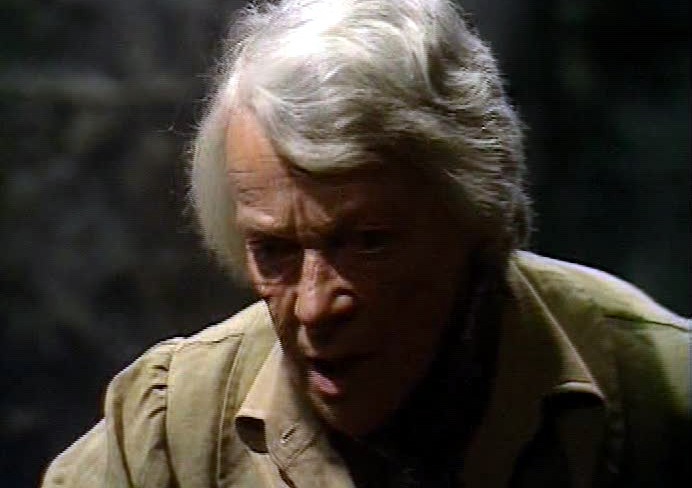
The second Array. From Wikia
Star Trek Voyager - Season Two, Episode Ten - Cold Fire
Written 15/7/13

Every plan needs to have a contingency. Should the first few episodes of Voyager have bombed so hard in the ratings that there was no hope of ever keeping it going, Cold Fire was outlined as a flexible story that would allow the production team to wrap things up after a respectable 26 episodes. As that obviously didn't occur (although God knows why not), this episode instead stands as a funky episode to develop Kes' character and pick up a plot point that's been hanging for a good six months.
     Ten months after the alien Caretaker brought Voyager to the Delta Quadrant, the ship begin tracing lifesigns in the alien's remains, which point them towards another array occupied by a bunch of Occampa that, unlike Kes' people on the homeworld, have developped into snooty and all-powerful being capable of transcending the laws of physics. The suspicious Tanis teaches Kes some nifty tricks, but Kes' lack of control only leads to her burning through her Hydroponics bay and accidentally boiling Tuvok's blood while it was in his face. The array's controller is The Caretaker's mate, Suspira, an equally powerful being who attempts to take revenge upon Voyager for "killing" her companion. When Kes fights Tanis off, and the crew manage to fight off Suspira, she leaves them alone and yet another chance to get home is pissed down the drain.
     Kes' character arc is continuing quite nicely, what with the development of her powers to be able to do funky shit. In the pilot her people were somewhat pathetic, with their ridiculously short lifespan and, as of Elogium, fucking bizarre biology which includes a swelling tongue and a uterus on their back. Not that these guys are any better, the only representatives channelling what I can only describe as Elven Snobbery with their pointed ears and professed greater understanding of reality above mere mortals. As if we didn't already have enough of that with the Vulcans, we get a wooden and slightly creepy Tanis to add to the mix. (Who would later play an important Vulcan in Enterprise.)
http://images.wikia.com/memoryalpha/en/images/3/32/Tuvok%27s_blood_boiling.jpg
Would copper-based blood have a higher or lower boiling
point than iron-based blood? idk. From Wikia
     I am of the opinion that the main plot with Suspira was bleedin' stupid, as the episode ran into a great number of contradictions surrounding the Caretaker, his powers and Voyager's reputation. It's unclear how Suspira and her band of merry men got the idea that it was Voyager who had killed the Caretaker, especially as he was a near-omnipotent being with the power to carry things 70,000 light years, teleport everyone off of a ship at once and maintain an entire underground civilisation. There's also the schtick about how Voyager is now seen by oncomers as The Ship of Death solely because they started a war with the Kazon, who I'm sure everyone in the Quadrant hates anyway.
     But Jennifer Lien's charm as Kes does manage to deliver the episode through some of its more misguided moments (even with the weird screams) and the joy of all that background exposition as to Kes' potential (which we eventually see at the beginning of Season Four and then to a ridiculous degree in Season Six) is enough to mark it down as something more notable than the end that never was. I'm both grateful that this wasn't the end of the series, as its highest points are yet to come (in their droves), but I'm also saddened that this is yet another episode where a promised way home turns out to be a depressing disappointment.

Thanks.

NEXT WEEK: We return to the Kazon plot as our lovely friend Seska returns in Manuevers.

Wednesday, 26 February 2014

Review: Lost 2.7: The Other 48 Days

http://images2.wikia.nocookie.net/__cb20070310194216/lostpedia/images/4/4b/Tailies.jpg
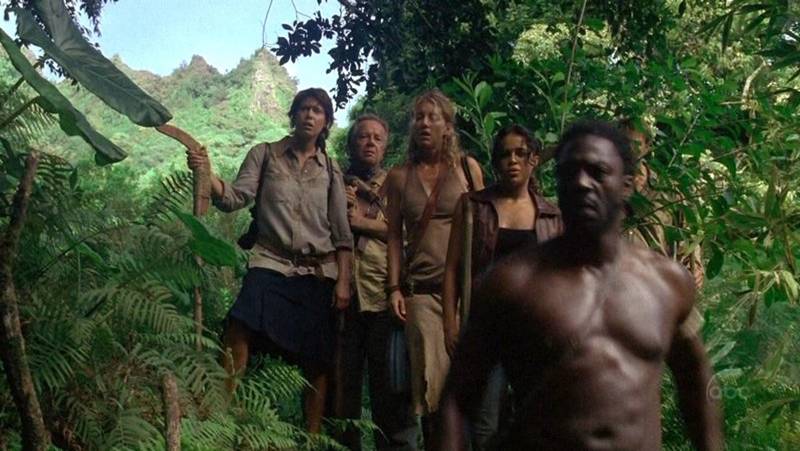
The Tailies group photo. From Wikia
Lost - Season Two, Episode Seven - The Other 48 Days
Written 16/7/13

And now we approach quite a few episodes which are on my favourites list. This is one of them - a comprehensive twist of the LOST formula to show what would have happened had our motley crue of weirdos had gotten everything completely wrong in every conceivable way. If Ethan won, if they didn't have Super-Jack to save the day every time. The Other 48 Days is the episode that made me fall in love with the Tailies, especially Ana-Lucia and Eko, and which made me really pissed that apart from minor character Bernard, no-one from the new cast has any sticking power in the series as a whole.
     The tail section survivors land and are attacked on the first night by The Others, who steal three people and fail to kill Eko, who manages to off two of them. Eko swears a vow to silence as the group is attacked yet again and de-facto angry leader Ana-Lucia begins to become suspicious of a spy within the group. As they make their way inland, they suspect Nathan, who is randomly conspicuous in everything he does. Ana also makes good friends with Goodwin, an old-timer who she has chemistry with. Ana throws Nathan in the Pit but Goodwin kills him in the dead of night to move the suspicion from him, leading Ana to discover that Goodwin is the Other spy and kills him in self-defence. As Eko's silence is lifted and Ana-Lucia finally takes the time to cry, they run into our mid-section characters and we montage forward to the cliffhanger we left on last week.
     The development of paranoia and fear as orchestrated by Goodwin is quite interesting to see, especially if like me you knew of his dark intentions beforehand. Suddenly Ana-Lucia's brash attitude in previous stories feels justified as a result of the hell they went through before they met the Mid-section peeps, and Ana-Lucia's already reactionary personality didn't exactly help matters. Nathan's character contributes towards it but because he's actually innocent in the end his character feels a little bit contrived - what was he doing in the woods for two hours, and why did he sit there silent when Ana was interrogating him? It's just... obviously shifty.
http://images3.wikia.nocookie.net/__cb20061109013804/lostpedia/images/7/7c/Oth4.jpg
Goodwin has a sharp exit. From Wikia
     The mood that the episode creates, with the brand new set of characters, is an odd one, and it's very easy at this point to forget that you're watching LOST at all - rather a back-door pilot for a spin-off series in which everything goes tits up very, very quickly. The parallels made between the two groups of survivors and clear to see, and as a parallel-universe type story of What If It Went Wrong, it's an opportunity to both get the fun from that as well as developping a new set of characters, no matter the relative brevity of their tenures on the show.
     It may feel a little irrelevant, and I am a tiny bit sick of the "lets drag the same cliffhanger out for two weeks" thing that happened in the season premiere, but I really enjoy this episode and the way that it's constructed to introduce an entirely new side to the show that feels creative and fun. It's not an easy task to make me like an entirely new set of characters within the space of 45 minutes, but this episode manages it and the second season is infinitely better off for this episode's mere existence.

Thanks.

NEXT WEEK: Ana-Lucia's development continues in her centric episode, Collision.
    

Monday, 24 February 2014

Review: Doctor Who Classic: The Androids of Tara (Revisited)

See here for my previous look at this story.

http://www.doctorwhoreviews.co.uk/5D_files/The%20Androids%20of%20Tara%203.jpg
Count Grendel "saves" Romana and carries her off.
From doctorwhoreviews.
Doctor Who - Season 16, Story Four - The Androids of Tara (Revisited)
Written 5/8/13
"Oh do stop being so tediously heroic, my dear fellow."

Well, I'm already biased. Then again, it's sorta the point of this site for me to be biased, so I guess that's fine. I just really see no way in which anyone could dislike this story. I mean, no offence, but unless you're a hardcore member of the Prisoner of Zenda appreciation society I really think that this story has everything you could ask for in a Doctor Who story, with heaps of charm to top it off. I think one of the reasons that I love it so much is that it's a proof-of-concept of sorts for what Doctor Who is - after a few seasons of alternating between grey spacecraft and scenes in southern England, we're thrown into a lush Medieval fantasy setting that takes itself entirely seriously.
     My love for the story has certainly grown over the years, and that's not due to any unforeseen subtlety in a script but rather an appreciation of how simply the story gets things done. The whole-plot reference to another work, The Prisoner of Zenda, fits the serial with a more conventional act structure, and as a result we actually get a satisfying beginning, middle and end instead of the typically rushed resolutions that are far too common in Classic Who. Of course I usually wouldn't abide by such a premise, but the simple fact is that David Fisher adapts it to the point where you'd be surprised that it's anything other than a standard Doctor Who runaround.
     And those adaptations are mainly to do with the way that one person can become two. Whereas the original story had the King replaced by his nigh-identical cousin, this serial uses the idea of androids and adapts that to the setting to create a rather wonderful society in which the peasantry are adept with futuristic technologies and the upper classes prefer electro-shock swords. Thanks to the presence of Romana, we do get a set of randomly identical characters, as well as their android doubles, meaning that all in all there are four roles for Mary Tamm to play and two roles for exquisite guest actor Neville Jason. Despite the overreliance on that one doppelganger trick, it never really breaks unless you look at it for too long, and carries the serial well.
http://www.bbc.co.uk/doctorwho/classic/gallery/monsters2/images/340/tara.jpg
Sorry, can't review this story without the Taran Wood Beast.
From the BBC.
     Talking of exquisite guest casts, this episode has one. While the aforementioned Neville Jason is tickety boo as the erudite and noble Prince Reynhart, the star of the serial is Peter Jeffrey's Count Grendel, who is without a doubt my favourite Classic Series villain for the sheer audacity of his bastardry. The part is played with just the right mix of ham and charm (not a good sandwich combination), and the script gives him some absolute crackers to work with. My favourite moment of his is either the finale scene, in which he finishes his epic swordfight with The Doctor with the line, "Next time, I will not be so lenient!" and then gracefully jumping into the Castle Moat, or the scene in which he casually informs his minister that he will need a wedding, a funeral for the groom and a second wedding for the widow.
     Just as The Doctor expresses his desire to take a break from the search, a break from the search he gets. The arc in this story has a very marginal role, with the finding and collecting done in the first five minutes and the rest of the story the result of being in the wrong place at the wrong time - taking these two intergalactic travellers and driving them to help solve the affairs of a single monarchy on a single, relatively primitive planet. It was more focused on enjoying itself with it's own concept, and with acting of this calibre and a script which manages to be both effortlessly epic and witty, I really can't find anything at all to fault with this story. Except the Taran wood beast. But I'm sure we've all forgotten about that.

Thanks.

NEXT WEEK: We meet a giant squid as we awe at The Power of Kroll.

Friday, 21 February 2014

Overview: Heroes: Volume Four - Fugitives

The tide turns and the wind changes and this season didn't. Despite still being in Season Three, we're now in Volume Four, where there are no real supernatural enemies at all. I know, pretty shit right. I want to watch people blow each other up with fire powers, not the fucking West Wing. But this, dear view... reader, is my favourite of the five volumes. Why? Let us see... Written between 16th and 17th July 2013.

Still in Season Three. From BuddyTV
The show turned a different direction after the crushing blow of yet another shitty volume, and created a story which surrounded government espionage and living in hiding instead of randomers from across the globe coming to fight/help one another.And, while at times it manages to be as effortlessly naff as its predecessors, there's a strange focus towards character development that reveals our characters as real people for the first time, giving them empathisable traits and taking the show to a higher level of sophistication.
     The volume's plot sees politician Nathan ask The President to set up a secret organisation working out of the mysterious Building 26 in order to round up, inprison and neutralise evolved humans for the benefit of the General Public. He does this with the reluctant help of Emile Danko (Željko Ivanek), a ruthless but tired individual who suspects Nathan's turncoatism from the very beginning. This breaks down rapidly as the evolved humans, with the help of what little remains of The Company, fight back against the project. Sylar tries to find his real Dad and eventually works with Danko to pick off Evolved Humans for himself, before the Petrelli Family come together to stop Sylar's plan to use a new shape-shifting power to impersonate the President of the United States.
Emile Danko From Wikia
     The Petrellis are the centrepiece of this Volume, even more so than usual as Angela Petrelli finally gets to come into her own as the wonderfully sassy old lady that she is. She is the centrepoint of my favourite episode from the Volume, "1962", where she and the Petrelli family she's managed to round up come together and uncover the Coyote Sands incident, a similar round-up in the 60s where evolved humans were accidentally massacred. Nathan and Peter are also more clearly developed than befor, even is Peter is still managing to hold the Idiot Ball with both hands on all occasions.
     Danko is quite a complex and interesting villain, personally obsessed with hunting down evolved humans for no reason other than he can - his apartment is empty, he has no personal relationships besides a strange Czech girl who only knows his by an alias. Ivanek gives him a strange prominence that makes one constantly wonder what his plans are, mainly because we see how far he's willing to go to get his point across. When he teams up with Sylar near the end of the season it's a classic odd couple scenario and Sylar's ability to understand his personality in depth makes their dynamic all the more entertaining.
    Sylar comes off a bit weird this season, although his path is more focussed as he tracks down his biological father on a long road trip and then seeks to exploit the situation with the Building 26 project in order to carry on his quest for power, including his second attempt in-story to become the president of the United States. At the end of the volume he gets mind-wiped by Matt Parkman, who uses Sylar's new shapeshifting ability to brainwash him into thinking that he's Nathan, whom Sylar killed in the series finale. It's an odd decision that, while theoretically sound given Angela's distressed mindset after the loss of her sister and her eldest son, is not very well planned out and it does come to a head in the next volume.
     Hiro's story, which is always considerably detatched due to his being in Japan and all, initially circles around his kidnapping by the Building 26 project, but it later develops, thanks to spy Rebel (revealed to be technopath Micah in his final appearance), into taking care of Matt Parkman's son, who rather hilariously has the ability to "turn things on and off," resulting in a deus ex machina where Hiro's powers are miraculously returned to him. Not that I can really call anything a deus ex machina in a show whose internal logic is as spotty as a leopard with the measles.
The Petrellis get the development they need.
From Fanpop
     Volume Four sees the first attempt to develop real complexity in the characterisations, and despite the fact that the show was clearly on borrowed time it managed to exude a strange sort of charm that makes me like it regardless. The drama in the second half of the volume and the development of Angela Petrelli into a total bad-ass old lady brings out some of the best episodes that Heroes has ever produced, and no matter what people think about the awesomeness of the first volume, this will forever be my favourite.

Thanks.

Thursday, 20 February 2014

Review: Voyager 2.9: Tattoo

File:Chahmoozee.jpg
Chahmoozee. Image from Wikia
Star Trek Voyager - Season Two, Episode Nine - Tattoo
Written 5/7/13

It's another Chakotay episode, and one that aims to break boundaries and dive to the depths of his home culture in the misguided and ultimately profundly racist way that only a writing team composed entirely of white people can ever really do. As well as spending the episode being incredibly offensive towards a culture that the US has trampled over and abused so many times they might as well just put themselves on trial, there was also a couple of interesting subplots that save the episode from being a complete putdown of Native American peoples.
     While searching on an alien moon, Chakotay finds the chamoozee, a native American symbol, and spends the rest of the episode sporadically flashing back to when his father took him through the Central American rainforest in search of their tribe's ancient ancestors, with young Chakotay employing fair skepticism that here is presented as being something to be ashamed of. They track the minearl deposits they need to a weird planet which seems to exactly resemble the central American rainforest. Chakotay finds it inhabited by a race of aliens who explain that they know him and his people because they came to Earth generations ago and gave the Native Americans their entire culture as a gift.
     Why is this offensive, you ask? The writers of Voyager claim that in the Trek Universe, everything that makes up Native American culture was given to them by a different sentient culture. That nothing in their self-identity is original, that they are simply copy-catting an alien culture. That's horrendous. That's like saying that the Japanese gained their culture from a race of anime-loving aliens who taught them swordplay, honour and work efficiency. Trek has always been about respecting different cultures, be they alien or at home. It seems so god-damn predictably bad that they'd manage to get this so wrong.
http://images.wikia.com/memoryalpha/en/images/7/78/Chakotay%2C_Sky_Spirit.jpg
"So, about that culture of yours..." Image from Wikia
     In a less offensive B-plot, The Doctor gave himself holographic flu so that he could experience empathy with the crew. While it was fun to see The Doctor making this concession in order to improve himself, it felt like a step backwards from some of the later stories of the first season where he was beginning to really learn how to feel compassion for others. The Doctor of Heroes and Demons and of Projections wasn't this blitheringly incompetant with other people's feelings, and surely as a Doctor he should be able to understand the concept of pain and suffering even if he doesn't have very good bedside.
     Tattoo them is an episode that begins the second season's selection of episodes that take the show to new lows. It had two things it wanted to do and in both of them it failed, neithe rmaking me feel closer to Chakotay or to The Doctor. I don't see why Chakotay was so in awe of his father when his father was basically a bigoted jerk that couldn't accept that his son, who had grown up in a secular 24th Century environment, didn't believe in his ancient myths. I also don't see what the writer's aimed to accomplish by telling ever Native American viewer watching that their culture doesn't even belong to them.

Thanks.

NEXT WEEK: The end of the series, had the ratings failed. We meet the second Caretaker in Cold Fire.

Wednesday, 19 February 2014

Review: Lost 2.6: Abandoned

http://images2.wikia.nocookie.net/__cb20070108010653/lostpedia/images/5/50/2X06_SayidShannonJungle.jpg
Ana-Lucia - Bang, and the Shannon is gone. From Wikia
Lost - Season Two, Episode Six - Abandoned
Written between 15th and 16th July 2013

As of writing, the first few reviews from Season One have gone up, and I can see now my early opinions of Shannon's character in a few words. Shannon is the character who's realistically had the highest to climb in my estimation, with her shallow, manipulative attitude for the first few months of the show. Even when this wore off she ended up becoming less than rounded, being a character for Sayid and Boone to fight over before his crushing but inevitable death, whom Season Two has so far seen fit to randomly give visions to. In this, her final story, we're hoping for some major character redemption overhaul. Let's see.
     The main Island storyline was surprisingly varied, covering a lot of ground. Shannon sees an apparition of Walt and Sayid doesn't believe her, so she strops off. We begin to see Charlie's possessiveness around Claire and Aaron, as he gets all jealous when Locke tries to help her out. The Tailies reunite and head towards the main camp, with Sawyer's infection getting worse and leading to him needing to be drawn by stretcher. Eventually Sayid confronts Shannon on her delusion and runs into the woods with her, seeing Walt before she wanders off and is shot by a hidden assailant, whom Sayid discovers to be a confused Ana-Lucia.
     In the flashback, we see how Shannon came to be in the situation she was in prior to boarding the plane, passing from boyfriend to boyfriend. Her father's death left her distraught and conned out of her money by her scheming evil step-mother, who despite telling Shannon to work refuses to fund her internship to join a prestigious college. When Boone acts out of his weird crush on her to offer her some cash to get started, she rejects him.
     I have a slight issue with the realism of Shannon's character. The transition between the character we initially saw and the slightly softer one of the present was worked out smoothly, revealing her deep-seated self esteem issues brought on by her father's death and her step-mother's manipulation. But I think it's the fault of the script that the character's initial appearance is so catty and shallow when to be honest the character feels more developed in her flashbacks - more compassionate, more basically good than she was in the first few episodes. For a show with such usual continuity in its characterisations, it didn't feel right.
http://images1.wikia.nocookie.net/__cb20061210082843/lostpedia/images/9/99/ShannonBooneFuneral2x06.jpg
Wake me up before you gogo. From Wikia
     This episode also sees the beginning of what I call Charlie's delusional love triangle. Charlie's story this season is going to piss me off big time in his centric episode, as all of the work that was done in the first season is thoroughly undone for the sole reason that there's very little to do with a happy relationship. It will luckily tie into Eko's centric later in the season, which is on my all-time favourite episodes list, but as it builds up I'm getting a weird sense of foreboding.
     So that was Shannon's final credited episode, and her contribution to the series hasn't really left the mark I expecte it to. The standard LOST thing os redemption and then death didn't really work, because it's difficult to associate with the trauma of seeing random children in the woods. and so the main island storyline only offered confusing scenes which will probably never be adressed again. However, the episode's cliffhanger leads into a series of episodes which are absolutely smashing, so I'm not that concerned.

Thanks.

NEXT WEEK: We see what the Tailies were doing for The Other 48 Days.

Tuesday, 18 February 2014

From The Archives: We Will Rock You (Schools Version)

In 2013 I starred in my school's production of We Will Rock You, a script that I'd had an open contempt for. Half-way through production, while things were still on the wrong side of bitterness, I wrote an article about how much I hated the script - this was that article. After the night itself I decided that the article contained too much bad blood and didn't reflect how much enjoyment I actually got out of the production when I actually did it, and thus I decided to take it down. But, since an article is an article, I have it here for your reading pleasure. May contain words unsuitable for children from the outset.Written 8/12/13.


Monday, 17 February 2014

Review: Doctor Who Classic: The Stones of Blood

http://images2.wikia.nocookie.net/__cb20100319054318/tardis/images/f/f6/AmeliaRumford.jpg
Amelia is more than capable of handling Rocks.
Doctor Who - Season 16, Story Three - The Stones of Blood
Written 5/8/13

Hurrah! We've reached the 100th Doctor Who story, even if we've gone about it in a way which is certainly topsy turvey. It's also by far the best story of this season, although with the levels of quality so far this is quite exciting. Seeing as I've seen next week's story before, I can now say that Season 16 is four-for-four. The Stones of Blood has a clever script which emphasises a few key characterisations very well to create a mixture of genuine mystery and appreciable humour. There really is no other story I can think of that could ever make me take lumps of rock seriously as enemies...
      The search for the third segment of The Key To Time brings an excited Doctor to 1970s England, where archeologist Amelia tells them about the mysterious set of "travelling" stones from an ancient stone circle, and the local cult that worships there. Amelia's friend, Miss Vivian Fey, is discovered to be 4000 years old, an alien fugitive who escaped her captors and has been using silicon-based life forms, the vampirific rock-shaped Ogri, to do her dirty work. The Doctor is forced to find her prison ship and then must argue for his life in order to halt his own execution and to find the third segment, which is the necklace which hangs around Fey's neck.
     Beatrix Lehmann's Amelia Rumford is a constant presence throughout the story, and delivers the vast majority of its charm as she is faced with The Doctor and Romana's world and is principle in helping them defeat Fey and the Ogri. The character created by David Fisher is one with an intangible sense of the personable, and along with the greats like Duggan and Jago, she is one of this era's best guest characters. Most of all, she provides the medium through which the story explores both The Doctor and Romana's interactions with Earth (this being the first real case where a visit to Earth isn't a "trip home" for the companion).
http://images3.wikia.nocookie.net/__cb20071105090849/tardis/images/2/20/Stones_of_blood_part3.JPG
The Doctor and Romana talk with shiny alien policemen.
     To be honest the serial isn't very even in tone, with the first half feeling a lot more similar to the gothic stories of old and the latter two feeling more of the contemporary style, not helped by the Megara, the justice robots who hold The Doctor's trial in the last two episode, turning what was initially a dark horror story about sentient rocks which feed off of human blood into a futuristic space opera in which The Doctor must prove the crimes of an alien responsible for grand espionage. That's probably what saved it though, as the blatant melodrama that trickles through the first two episodes' cult scenes is often a lot for me to take, even as someone who's usually all for chewing the scenery.
     The Stones of Blood is just enjoyable - everything is done right, and in a way that is still memorable and fun. A story like this in the previous seasons would have maybe left me rather bored, but a combination of good circumstances pulled it through - good use of K9 for once, a great guest character in the form of Amelia and the binding presence of the Key To Time arc to give our characters purpose and meaning. More amazingly, all of these things allowed me to like a story from a Doctor Who genre that I typically have no time for. And, you know, I love it when a story does something like that. I really do.

Thanks.

NEXT WEEK: We revisit Tara as we fight evil counts, okay split-screen effects and terrible Taran beasts. It's The Androids of Tara.

Saturday, 15 February 2014

Review: Star Trek Into Darkness

 For my friend Garrus' review of this film, see here. Sorry about that, buddy.

http://oyster.ignimgs.com/wordpress/stg.ign.com/2012/12/star-trek-into-darkness-teaser-poster1-610x903.jpg
From IGN.
Star Trek Into Darkness
2013, Directed by J.J. Abrams

If the Trek fandom was irked at J.J. Abrams' 2009 reboot/retcon of their franchise, last year's follow-up movie Star Trek Into Darkness was something of a declaration of contempt - and not just because of the awkward title. Three months after its release, fans were already calling it the worst Trek movie ever made, even behind Galaxy Quest, which is a parody flick. But what was it about Abrams' latest big-budget blockbuster that made it so hateful? Well, it could have something to do with the fact that Abrams and co. took their Star-Wars-esque philosophy and casual misogyny and used them to bastardise some of the franchise's most glorious moments.
     STID is the Nu!Trek adaptation of the second film in the franchise, The Wrath of Khan, as well as a straight up re-working of most of the elements from the 2009 movie. Following a terrorist attack on Earth by scary white man John Harrison (Benedict Cumberbatch), Starfleet Admiral Marcus (Enterprise guest star Peter Weller) sends the Enterprise off to the Klingon's home system to eliminate him and the threat he poses to humanity. Upon finding Harrison, the newly reinstated Captain Kirk discovers that his is none other than Khan, a genetically engineered tyrant from Earth's Eugenics Wars who was awakened by Marcus to fight a war with the neighbouring Klingons. As Khan takes his revenge on Earth and on Marcus, the crew of the Enterprise are forced to stop both of them from breaking the fragile peace between the two powers.
     The basic premise of Into Darkness is not a bad one on principle, with a lot of elements lifted from Deep Space Nine which certainly make the film more interesting than it might have been without them. But the devil comes in the execution, which sees several scenes from 2009 played out again - Kirk being convinced by Admiral Pike to join/rejoin Starfleet, before a sudden battlefield promotion sees Kirk in charge of the Enterprise and onto fight an immensely powerful enemy through guile, cunning, falling a long distance and getting cheat codes from the Prime Universe's version of Spock. Add in some glaringly stupid plot holes, and you've got yourself a very, very unsatisfying plot - especially as 2009's travel-anywhere-in-the-Galaxy technology has now been added to by an elixer of life which can bring anyone back to life
http://www.racebending.com/v4/wp-content/uploads/2013/05/startrek01.jpg
Despite the fact that in the Original Series Khan was
played by Mexican actor Ricardo Montalbain, it still doesn't
excuse the whitewashing on the part of Into Darkness's
casting managers. From racebending.com
     And, adding to that exponentially, is the film's treatment of women and minorities. While the main cast remains as diverse as it was in The Original Series, the only people who get anything important to do are the whiter-than-white Kirk, Spock and Khan. And yes, I said Khan - a character who originates from India, who was genetically engineered as a product of all the world's races, is played by a white man whose family's main source of wealth originated in slavery. While I'm not going to blame Cumberbatch himself for playing the role, which happens to be one of the highlights of the film all things considered, I am a little weary at the fact that he was considered for the role at all when there are dozens and dozens of Indian actors who could have had that role and who were instead ignored for yet another white cast member. Further, on a completely issue, the film does not handle its two female characters at all well - ignoring for a moment the fact that fourty-seven years hasn't changed the number of female members of the main cast, we find them reduced to wearing unnecesarily skimpier outfits than their male counterparts, and used for little beyond talking about their emotions, being abused by the bad guys and being attacked to provide motivation. Considering that Star Trek's philosophy is all about acceptance and progressiveness of all peoples, it strikes harder than ever when issues like this arise here.
http://www.startrek.com/uploads/assets/articles/st13.jpg
More or less the definition of "gratuitous", no?
From Star Trek.com
     Into Darkness did well with the majority of mainstream critics, and that's because on a basic level it's not a badly constructed movie. It's got a great sense of tension, cinematography to die for and enough of a balance between Abrams' trademark style and modern chic that it's a treat to the eyes. But like 2009's reboot, Into Darkness is a hollow imitation of the franchise it's supposed to be an entry in, even more so this time as Star Trek's core philosophies are repeatedly and brutally pushed aside for a blockbuster style which, while entertaining, is as far from Gene Roddenberry's idea of Trek as you're going to get. (Or that of any of the Deep Space Nine writers either, for that matter.) We're now left with something of a problem as, even though J.J. Abrams has gone off to direct the new Star Wars film (as he tried to do twice with this series), the future of Star Trek is still in Bad Robot's hands, and the scriptwriters of the currently untitled Star Trek XIII are those same writers from 2009. Yes, the ones who wrote Kirk as an orphaned farmboy on a desert planet. Yes, I'm not looking forward to it.
     Hey, at least there's still tons of Next Gen I haven't seen yet.

Thanks.

Thursday, 13 February 2014

Review: Voyager 2.8: Persistence of Vision

http://voy.trekcore.com/gallery/albums/2x08/persistenceofvision142.jpg
Janeway is trippin'
Image from Trekcore
Star Trek Voyager - Season Two, Episode Eight - Persistence of Vision
Written between 1st and 5th July 2013

Remember that Holonovel of Janeway's that I mentioned back in Cathexis? This week is the payoff, and boy is it a good one. While people being hypnotised/given delusions is nothing particulary, the typically Voyager way that the show goes about things makes for a very interesting episode which is both rather delightfully weird and one which further develops all of our characters, from the stressed and overworked Janeway to the developing confidence of Kes. Plus, everyone gets to do insane acting, which is fun to do and watch.
      Janeway is stressed when she has to organise a trip through Bothan space (a Star Wars reference) and she becomes so testy that The Doctor commands her to take some time off. She begins hallucinating images from her holodeck program elsewhere on the ship, and once they make contact with the Bothans everyone on the ship begins to hallucinate wildly. Paris sees the disappointment of his father, B'elanna apparently dreams about bonking Chakotay and while trying to fight to stop the hallucinations Kes sees a somehow scarier version of Neelix than we see usually.
     Janeway's relationship with Earth boyfriend Mark whom she left behind in the Alpha Quadrant gets its first real address here, and the way that she in partcular has dealt with losing the love of her life has been rather interesting. In fact, we haven't really been able to to tell - Janeway has kept that side of her rather under wraps, and seems happy to go off galivanting. This is interesting though, as it shows that Janeway is prepared to put her crew before her own interests, and she has been avoiding thinking about her fiancée because of her own self-inflicted guilt about said neglection.
http://www.startrek.com/legacy_media/images/200303/voy-124-voyager-surrounded-by/320x240.jpg
Hallucinatory Ships...
Image from Star Trek.com
     With that depth of character in mind, I do wonder what was going on with the rest of our cast this week. Paris' hallucination was understandable, but the raunchy scenes with B'elanna and Fantasy!Chakotay came out of the blue, with this being the only episode in which B'elanna expresses any sort of romantic inclination towards Chakotay at all. As such, it creates an uncomfortable five or so minutes. Kes is super-magical and so somehow is able to resist the hallucinations, seeing her having to fight off an evil(er) version of Neelix who somehow manages to be just as ridiculously controlling as the real one in what is a wonderfully ironic final set of scenes.
     Even if some of the character work was weird, this episode was fundamentally well constructed, and its central mystery that allowed for explorations of our characters and for quite a few what-the-fuck moments carried the episode over the bumps in its script. It was fun to watch, at any rate, and the way the episode's twists and turns played out certainly made it memorable.

Thanks.

NEXT WEEK: The famously not-racist program is astoundingly rascist. It's Tattoo.