Wednesday, 31 July 2013

Review: Lost 1.6: House of the Rising Sun

http://images2.wikia.nocookie.net/__cb20100328162757/lostpedia/images/2/27/1X06-SunIsland.jpg
The language barrier hurts when you run into it.
Lost - Season One, Episode Six - House of the Rising Sun
Written 28/4/13

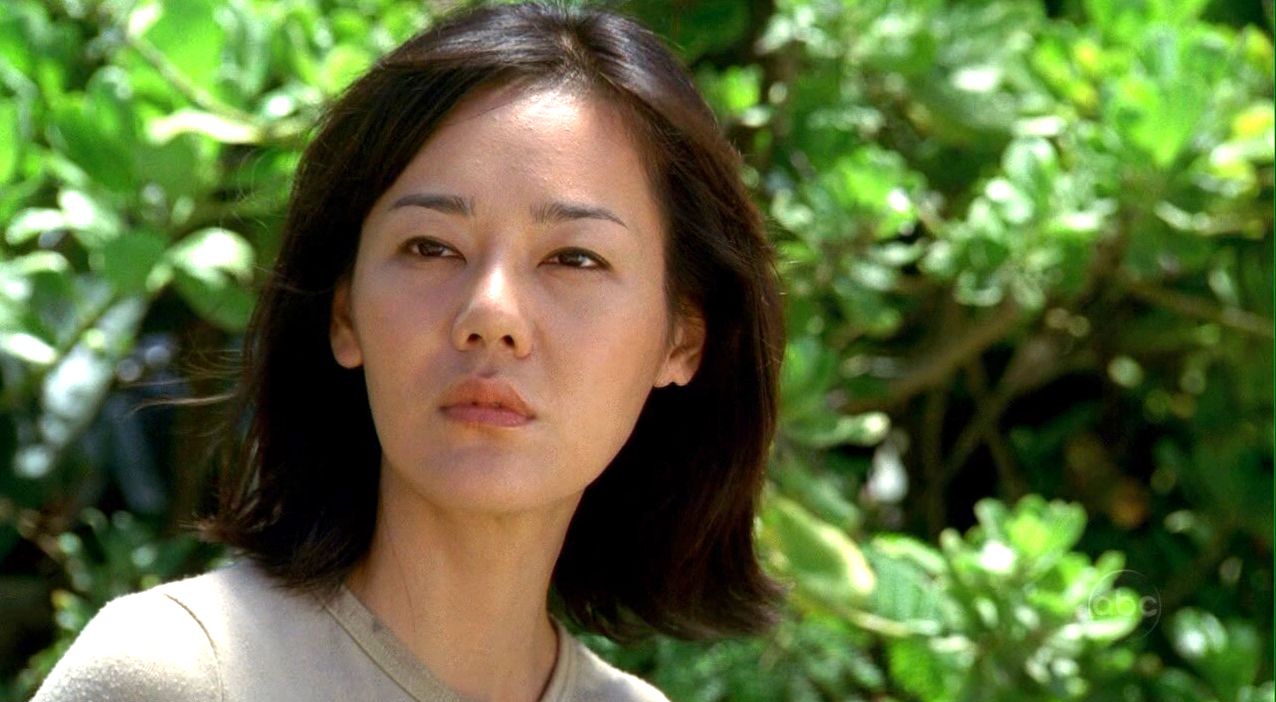
I'm not Korean and I've never really studied the culture, so I'm probably not the one to say, but I think that Lost does a pretty good job on not stereotyping Jin and Sun with typical Asian traits. (Well, except the whole organised crime thing.) It had however neglected to use subtitles for most of the first five episodes to add a bit of mystery and drama, allowing Asian-American actors Yunjin and Daniel Dae Kim (unrelated) to do a bit of dialogue-free acting. House of the Rising Sun doesn't focus on its centric character nearly enough, but the development as Jin and Sun as characters is good to see.
     For initially unknown reasons, Jin attacks Michael on the beach, and is handcuffed to a piece of wreckage while "sheriff" Sayid tries to find out the reason why. Jack, Locke, Kate and Charlie head off to the Caves, where Jack decides that they should move there. This idea divides the camp, with those willing to dig in at the caves against those who still hold out for rescue on the beach. Locke confronts Charlie over his heroin addiction, and gives him his guitar back in exchange for his stash. (Ready for next week's centric.) Sun meets Michael in private and reveals that she can speak English, and explains why Jin attacked him. Satisfied, Michael goes and rants at Jin before setting him free.
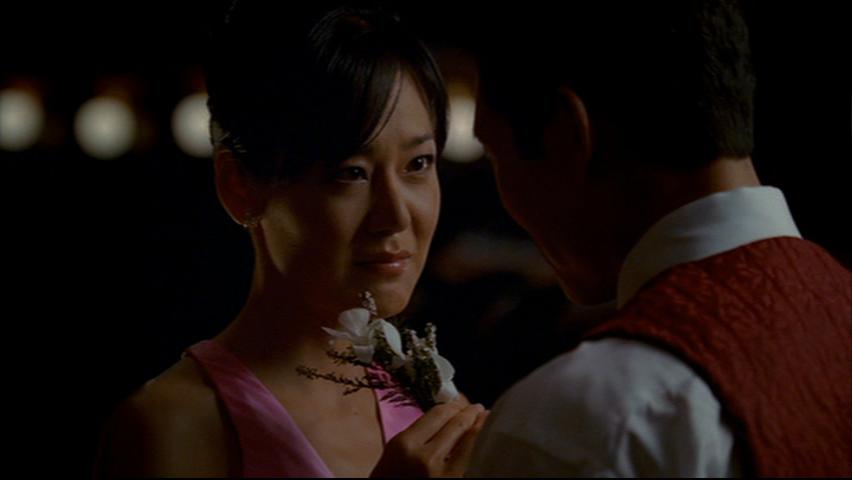
     In her flashback, Sun remembers when Jin and Sun first got engaged, thanks to Sun's criminal dad Mr. Paik giving him a job. (That we get to see for ourselves in Jin's centric episode later in the season.) At first things are fine, with Jin bringing home presents like a cute dog, but soon he's running through the door covered in blood and saying that he can't tell her what he does for her father. Distraught, she plans to leave her husband, faking her death by abandoning him in the airport at Sydney. When he reveals a lotus flower, she realises she can't go through with it, and boards Oceanic Flight 815.
http://images3.wikia.nocookie.net/__cb20061024034333/lostpedia/images/0/0c/1x06jinandsunflower.JPG
Sun's standards apparently set at, "Owns white flowers".
     For a lot of the episode, the flashbacks felt very much like an unnecessary add-on, with the central plot around Sun and Jin being only as a bookend to a larger plot that looked at the dynamics surrounding the Caves. As Sayid points out, Jack is quick to create a potentially camp-splitting idea so soon after his whole "Live Together, Die Alone" speech. Had it been me I would have elected a core group of people to remain behind on the beach and maintain the signal fire, with people going back and forth. This is however TV-land, and so the great strife that this creates makes for some decent drama.
     I just wish some of that decent drama had touched our centric characters. I mean come on, the Korean people who have been seperated from the group all this time, one of them can speak English. This should be a big deal, and yet that story doesn't carry the episode. We get some insight into their past lives and perhaps a reason why Jin's appeared to be such a dick all this time, but I'd much rather look at Locke and his attempts to help Charlie's heroin addiction. Which is lucky, really, because that's the focus of next week's story. This week lacked focus, and it shone of a lack of confidence that Sun was a footnote in her own centric story.

Thanks.

NEXT WEEK: You all everybody gonna see Charlie compared to The Moth.

Monday, 29 July 2013

Review: Doctor Who 4.16: The Waters of Mars

I guess we're here. The last aired episode of NuWho that I've yet to cover. It's really been fun looking over Ten's era again, and I think now that I've got a much clearer image of the way that he and his era were written. What went right and what went wrong. In a week or so I head back to 1975 to resume my runthrough of the Classic Series, but this is my last review of pre-broadcast NuWho. Here goes.

http://static.guim.co.uk/sys-images/Guardian/Pix/pictures/2009/11/11/1257966819535/DOCTOR-WHO---The-Waters-o-001.jpg
The Time Lord Victorius
Doctor Who - Season 30, Episode Sixteen - The Waters Of Mars
Written 27/4/13

Something rather wonderful about the specials is their variety. You would expect that five episodes written by the same person consecutively would have similar tones or ideas or levels of quality, but the span of episodes from The Next Doctor to The End of Time is instead frustratingly varied. After an okay Crimbo special and a lacklustre Easter special, this... 15th November special brought the quality up a notch and played with both old and new sci-fi ideas to create an awesome horror story.
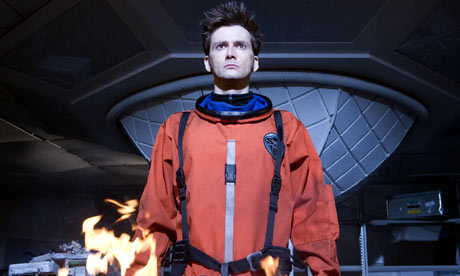
     The Doctor lands on Mars in 2059, where the first manned mission to the planet resides aboard Bowie Base One. The Doctor remembers that the base was destroyed by a nuclear explosion on the day he arrived, and that the death of leader Adelaide Brooke is a fixed point that inspired her daughter to be the first person to break the light barrier. Despite this, he can't stop himself from helping when a parasitic agent called The Flood arises from the team's Martian water supply, turning any member of the crew infected into water-spewing monsters. Enough crew members become infected to warrant exploding the base, but the Doctor is pissy about both being told he was gonna die last week and that Adelaide has to go too. He rescues three members of the crew, including Adelaide, and pronounces himself the Time Lord Victorius, ruler of all time. Just to put him in his place, she commits suicide. That showed him. The Ood call him off to the finale and the rest is history.
     The Doctor's attitude here as he wrestles with the fixed point is one that only really works within the context of the episode. In the Classic Series, given a few exceptions, The Doctor went around changing time willy nilly, and then after this in the Moffat era it's shown that preventing a fixed point makes all sorts of wibbly wobbly things happen. Doctor Who's core inconsistency catching up, I suppose. Given that Ten is already a bit of an anti-hero in terms of his stark arrogance and common selfishness, seeing him attempting to bend time itself to his will was simply an emphasised version of his regular personality, with that anger and confusion bubbling up to the surface. It feels like an acknowledgement of those traits by RTD, and the way that it's handled is brilliant.
http://www.bbc.co.uk/doctorwho/medialibrary/images/main-promo/the_waters_of_mars_the_story_so_far_1.jpg
The Flood infectees are brilliantly executed.
     Lindsey Duncan's Adelaide Brooke is an interesting temp companion, with a funky backstory and a temperment that made sure Ten was put in his place. I think that her being spared by the Daleks as a child due to her future importance was a little silly, especially as the Daleks were trying eradicate the Multiverse and so one child and her future shouldn't really matter. I also thought her "sacrifice" at the end, however nifty from a Time-travel standpoint, was completely out of character and quite frankly shocking. It's a continuation of a glorification of suicide that pops its head up now and then in the RTD era and it's really not a good thing.
     As a prefinale, The Waters of Mars shoves RTD's era into burgeoning new territory, and had the ideas set forth in this episode been followed up on I do get the feeling that The End of Time would be a much better set of episodes. There's a skill and an attention to detail in some of the aspects of Ten's "fall from grace" that ensure that The Waters of Mars stands out as the best of the Specials year. It's been fun reviewing Ten, but this is where it has to end. Ta ra.

Thanks.
    

Thursday, 25 July 2013

Review: Torchwood 3.1: Day One

http://images3.wikia.nocookie.net/__cb20091122164418/tardis/images/5/50/16j.jpg
"...among those dark, Satanic mills."
Torchwood - Children of Earth, Day One
Written 26/4/13

The third series never properly materialised. Despite plans for Freema Agyemen and Noel Clarke to pop over from Doctor Who and fill out the cast, both actors had other commitments (More important than Torchwood? Bah) and the planned thirteen episodes were cut down to five. Torchwood had left Episode Avenue and gone straight to Serial Junction, with the new planned series playing out over five consecutive days in the middle of 2009's Who-less Summer.
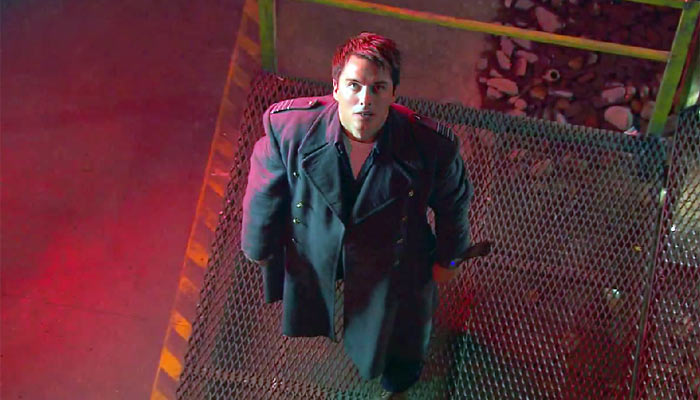
     One morning, every child in the world stops for a solid minute. Jack and Ianto come back from attempting to stealth-recruit Dr. Rupesh Patanjali and discover the scale of the problem. In Whitehall, admin woman Lois Habiba starts her job as assistant to Bridget Spears, herself the assistant to civil servant John Frobisher. Around breaktime, all the children stop again and scream, following it with an ominous "We are coming". Frobisher is told by the techy Mr. Dekker that the 456 are coming back. Torchwood notices that the transmissions were focussed around Britain, being in English and scheduled for times when children are out in the open. Gwen meets an old man who is also being affected, who tells her that she's pregnant. Before they learn any further, Rupesh reveals his position as a spy, and Jack has a bomb placed in his chest by government agent Johnson (Liz May Brice, Bad Girls). Ianto and Gwen get out alive but the Hub is blown up and Torchwood is now on the run.
     The shift to BBC One came with a shift towards a more adult drama in terms of setting and the way that the show treated the titular organisation. Children of Earth immediately treats Torchwood like a real political entity that poses a threat in a governmental crisis rather than a merry band of outcasts hunting aliens across Cardiff. I don't really know whether I like the change or not - it's gone all explody and secret agenty. It feels a little more like Spooks now than it does the ballsy cult show it was before. I suppose I'm saying it's all gone a bit mainstream. Dear lord, didn't think I'd ever end up using that argument. But they did blow up my precious Hub, and I really can't forgive them for that.
http://images4.wikia.nocookie.net/__cb20091121193834/tardis/images/e/e6/JackinHubCOE.jpg
Jack gets a serious case of indigestion.
     I appreciated the look into both Jack and Ianto's pasts - Jack's daughter Alice and his grandson Steven, Ianto's sister and her family. Jack's personal mythology is large enough and complex enough that it was often hard to get a good grasp on anyone he might call family, so I think that was well done, and Ianto's family are immediately fun due to comedienne Katy Wix in the role of his sister.
     Children of Earth certainly gets off to a strong start, with the changes both bad and good making themselves firmly known. There's enough left of the old style for it to feel fairly continuous, but it's quite clear that this is a very different beast to what we once called Torchwood. I had to really question whether I could do this week-long story in five bits, but so far it's looking pretty good.

Thanks.

NEXT WEEK: Day Two, naturally.

Wednesday, 24 July 2013

Review: Lost 1.5: White Rabbit

http://images1.wikia.nocookie.net/__cb20061022225336/lostpedia/images/c/c4/1x05ChristainShephardinJungle.jpg
Get 'im, Lennie.
Lost - Season One, Episode Five - White Rabbit
Written 26/4/13

Jack Shephard. My attitude towards our conflicted hero has rather shifted through my time with Lost - beginning with mild annoyance, through complete hatred, into a sort of grudging respect and finally the acceptance that maybe basing your views of a character upon his actions 60% of the way into a series won't give you the full picture. As it goes, my chances of liking Jack are higher the earlier you get in the series, and so this first centric episode (kinda) for the character hits all my buttons as a simple tale of a character learning a lesson.
     The pressures of leadership are getting to Jack, as he fails to save one of the survivors due to Boone having gone in after her and encountering difficulties. Tired, and remembering his father telling him that he didn't have what it takes to save everyone, he escapes Boone's douchebaggery (shouting at him for saving his life) and runs off into the woods after a man he's been hallucinating since last episode. He nearly falls off a cliff, but is luckily saved by Locke, who was looking for fresh water after the final reserves were stolen by Boone. (He's being kind of an arse this episode, really.) Locke tells him to finish what he started, and after flashing back to learning of his father's death he discovers a fresh source of water at The Caves. He finds his father's coffin but it's empty. Returning to camp, Jack breaks up a fight between Boone and the rest of the survivors and gives an inspiring speech about having to live together or they'll die alone.
     Jack's crisis of faith is a typical storyline for a heroic lead, especially with the nice details of his father's heavy-set confidence drain throughout his childhood. Matthew Fox plays it out very well, with the episode really acting as a test of character for someone who really did elevate himself to the leader position through sheer utility. Despite the douchey situation in which he said it, Boone's cries of "Who made you Leader?" do ring true, at least at the beginning of the episode, and the rest of the episode is Jack's core struggle in accepting that his father was wrong and that he can be the man in charge.
https://blogger.googleusercontent.com/img/b/R29vZ2xl/AVvXsEi9Sm-hMAXhnw_vSUavkfFBdiB732fwymHosDnr9ZcWfhoFjSklNyYesxUNDS2SgkXdGNIqSuMwFpDG1o2M8JnJWD44vPBLB7-tUSGV_3qUri3Ii4NuYVBwDv8TyIF9GNfMYjwcYibj3Thz/s1600/Saving+Boone.jpg
Boone's a lifeguard who nearly drowns trying to save people.
Cool guy.
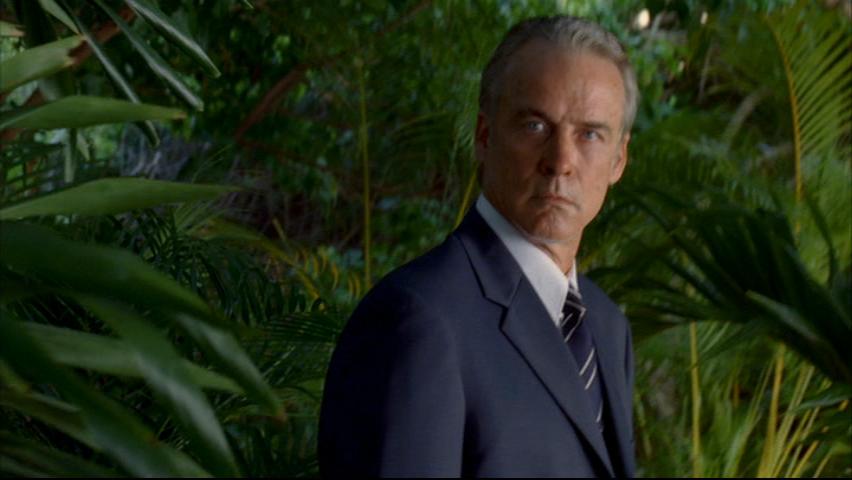
      This is the first proper appearance of John Terry's Chrstian Shepherd, who is one of my fonder minor characters thanks to Terry's outstanding performances. Like last week, the surprising element was kept very well hidden throughout the episode, with Christian's ability to walk around the island only being explained a couple of episodes from the end of the show. As we'll see later in the series, the character of Christian is also remarkably well developped for one who only pops up in flashbacks now and then.
     White Rabbit proves what I said last week dead wrong. I was very much comparing Lost to shows like Heroes when I said that Walkabout's pace was too slow for me to handle. But that's always been the case with Lost - except that it doesn't matter. What we get instead is very much a chance to soak everything in - specific attempts, like this, to expose us to our characters before the seasons' major dramas start so that it's that much more epic with that context. White Rabbit brought Jack out of the darkness, and it's a winner for me.

Thanks.

NEXT WEEK: We finally learn about those Krazy Koreans... it's House of the Rising Sun.

Tuesday, 23 July 2013

From The Archives: Four More Cases of Bad Who Science

A rather long-winded article that ended up being held back when I originally started writing it. I realised part way through that I was being a bit too anal for words, and I couldn't bring myself to finish it off. I've cleaned it up a bit just to get it out of my hair. Here's my looky at Four More Cases of Bad Who Science.

Monday, 22 July 2013

Review: Doctor Who 4.15: Planet of the Dead

http://www.bbc.co.uk/doctorwho/medialibrary/s0/images/800/s0_06_wal_23.jpg?size=800&promo=/doctorwho/medialibrary/s0/images/main-promo/s0_06_wal_23.jpg&purpose=Computer%20wallpaper&summary=Sitting%20down%20on%20the%20job.&info=&tag_file_id=s0_06_wal_23
Hipsterrrrrrs.
Doctor Who - Season 30, Episode Fifteen - Planet of the Dead
Written 26/4/13

I was in Wales on the Easter of '09. I was still recovering from the fact that for the first year since 2005, we weren't gonna have a full series of Doctor Who on our TV screens. I really didn't need my one small consolation prize to be Planet of the Dead, a story executed so haphazardly at such a cost that I'd rather they hadn't bothered at all. Seriously, the expense that went into making this thing just went completely to waste, and it's nothing to do with the acting or the design - it's just a mediocre script that translates to a mediocre episode.
     The Doctor ends up on a bus with the world's thickest art theif Lady Christina (Michelle Ryan) as the bus pops through a wormhole onto a desert planet. Stuck and needing the bus to get through the wormhole, they try to organise their way out, with UNIT assembling on the terrestrial side. The Doc calls through to UNIT and talks to scientific advisor Malcolm (Lee Evans) who scans the wormhole, while Doc and Christina run into some fly people, who reveal that they arrived to trade with the planet, which used to be flourishing before it was devoured by a race of wormhole-making metal stingrays. They get back through by turning the bus into a hovercar, the stingrays get fried and The Doctor allows a career criminal to escape.
     We'd already had the first of our temporary companions in Jackson Lake, but as the first of the 2009 companions, Lady Christina de Suza doesn't really measure up. She's probably one of the least likable companions of the new series - I think I even prefer Adam Mitchell. Being a criminal is one thing - there's always the whole "steal to survive" motive to iron that out morally. But Christina is a fricking aristocrat, and she's stealing because she's bored. No amount of lax flirting will allow me to like a member of the corrupt aristocracy, especially with the current government. The hokey dialogue doesn't help either.
http://1.bp.blogspot.com/_yKAxZm9Y_wg/ScTWAsCMtMI/AAAAAAAADFk/FoihXMaTodI/s400/PlanetOfTheDeadPromos-0015.jpg
Thankfully the last of the animal-themed aliens of RTD's tenure.
     The idea behind the plot was okay, with the Dubai location looking absolutely smashing, and the damage the bus obtained during shipping being nicely worked into the plot at the last second. I wasn't a big fan of Malcolm; the character himself was harmless, but I wasn't really wowwed by Lee Evans in this role or in his stand-up, which consists of screaming vulgarities and making absurd noises as substitute for any wit or talent. I think that if that's RTD's idea of decent comedy then it explains rather a lot of things about some of his earlier scripts.
     There's nothing particularly offensive about Planet of the Dead on its own; it passes by with a few lumps of stupidity stuck to the plot, and by the end it feels little more than a light-hearted Easter romp. Which I suppose is what it was aiming for, really. But when your plot is one that shows us world-devouring aliens, a civilisation reduced to dust and a dumb-ass prophecy predicting The Doctor's death, you'd want it to feel a little more serious than the antics of Malcolm and Lady de Suza ever allow it to be.

Thanks.

Saturday, 20 July 2013

Review: Brave

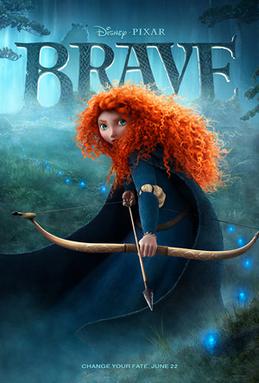
http://upload.wikimedia.org/wikipedia/en/9/96/Brave_Poster.jpgBrave (2012)
Written 19/7/13

Pixar's progression over the past five or six years has been rather worrying. After producing hit after hit throughout the Noughties, culminating in the successive masterpieces of Wall-E, Up and Toy Story 3. In 2011, however, the studio hit its first critical bomb with the horrid Cars 2, a blatant cash-grab movie which left me slightly shocked. Brave was the follow up to that and, while the studio is still nowhere near to reaching its former heights even in 2013, this folklorish tale of mother and daughter marks a change for Pixar in a number of different ways.
     Despite the dazzling beauty of their animation, the depth of their characterisation and the skill with which they meld messages for kids with those for adults, the studio's ingle biggest failing across its history has been the representation of women and minorities. Until Brave, the studio's films had all focussed on primarily male dyanmics - those of the father, the son, the... suspiciously male racing car. The fact that it took 17 years for a female protagonist is astounding, but Brave does not disappoint in the way it represents women, even if the rest of the plot is fundamentally lacklustre.
    Spoilers in this plot summary, so be careful. The story follows Scottish princess Merida (Kelly Macdonald) in the early Medieval period, determined not to be driven by her mother Elinor (Emma Thompson) into marrying one of the unattractive heirs of the other three Clans, believing that her life should be free. Going against her mother's wishes, she escapes the meeting of the Clans and meets an old witch (Julie Walters), who gives her a spell which inadvertantly turns her mother into a bear - dangerous in a land where the story of Merida's father fighting the bear Mor'du is legendary. The two are forced to reconcile their differences to save the day.
     Pixar is used to working with fundamentally non-human things, from stylised toys to Monsters. Different studios and animators tend to have their own signature styles when making Human beings, but Pixar have always mixed it up and so Brave has its own signature style. The humour feels slightly more Dreamworks (minus the pop cultural references) due to the antics of Merida's triplet brothers, and the plot feels similarly humdrum as well. As much as I think the characteriations in the film are well thought-through, it's hard to see mother/daughter reconciliation happening when the mother is in the form of a bear for half the god-damn film.
http://cf2.imgobject.com/t/p/original/ivj3r7wE564ddiovbXh04VnAT2s.jpg
Bear with me for a second.
     As for the film's place in the world of feminist media... I don't know. A lot of the drama is about Merida fighting the traditional gender roles that are being forced upon her by her mother, so in that respect the film manages to pretty progressive. After about ten minutes though this opens up into a larger conflict about the nature of fate versus free will, stifling the film's civil message. It was nice to have women finally represented in Pixar's line-up after playing very minor roles in previous films as love interests, mothers or as device characters, but the film's setting still gave it a very male atmosphere and also meant that Merida and Elinor were still stuck in what is fundamentally an excessively patriarchal society.
     While certainly Brave in its pioneering representation of women in the studio's films, the film unfortunately offers very little in any other department to surprise the viewer. As a standard unthoughtful children's film it's perfectly fine - the skill of Pixar's animators is undenyable, with the film's gorgeous aesthetic and engrossing tone being its memorable aspect. But Pixar films tend to deliver in other departments as well, be they emotional or in the messages that they present. There's certainly a set of messages in Brave, but I think their story is too personal and not quite as identifiable as I think it wants to be, and that for me was the main reason that my praise wasn't as glowing.

Thanks.

Friday, 19 July 2013

Yet More (Other) Shows I Love

Written between 27th June and 13th July 2013

Following happily in the footsteps of my posts talking about the shows and films that I like but would (probably) never review in full, this post is for me to talk about the shows I've discovered recently and that I absoutely adore, but will most likely never write about at any great frequency. From the crazy adventures of MJN Air to the wastes of Zombified Georgia, I've been having some real fun.

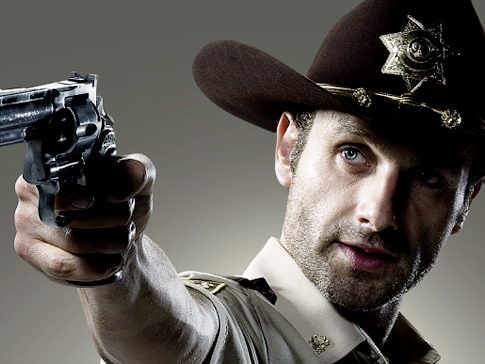
http://images2.wikia.nocookie.net/__cb20130304173308/deadliestfiction/images/9/97/Rick_Grimes_.jpeg
Protagonist Rick Grimes.
From Wikia
The Walking Dead.

I was already familiar with Robert Kirkman's expansive Walking Dead franchise, following various groups of people in the US State of Georgia as they survive after a world-wide Zombie apocalypse. The show is a loose adaptation of the comic series, taking certain liberties with the plot for better and for worse. What drew me to the show was probably just wanting to know what all of the damn fuss was about. I wasn't disappointed when I got here.
     The thing you immediately notice about the show, especially in its first two seasons, is how much it bathes in its own atmosphere, tending to keep background music to a minimum and spending a great deal of time on simple talk between the characters as they struggle under constant threat. The characters feel like real people, and for the most part issues are sorted out as they would be in real life - issues are actually discussed and not held back for cheap dramatic tension, and as a result the way the characters react to the bigger and more important developments paints a much more detailed picture of who they are.
     The series' arguable protagonist is Rick Grimes, played by British actor Andrew Lincoln (that creepy guy in Love Actually who films Keira Knightly and then has those signs and the CD player) who seamlessly pulls off a Southern accent to the extent that I forgot who he was and thought he was an American actor to begin with. Like a certain Mr. Shephard from another US show, his story is probably not the most interesting, but it's still damn good - we see the slow progression from just optimist to delusional opportunist, as the politics surrounding his family life, which initially appear to have improved post-Apocalypse, go into meltdown.
     The pacing of the show is admittedly all over the place, and that comes with the territory of having such a variation in season length - six episodes for the first season, thirteen for the second and sixteen for the third. But despite that, even when not a lot is going on, there's something rather uniquely engrossing about the show's atmosphere and the way it treats both its characters and its world. We've barely seen what the effects of the apocalypse are outside of the state of Georgia, but we don't need to - because these feel like real people, doing real things in a difficult scenario. And that's why I love it.
     I keep making mental comparisons to Survivors. Which I really shouldn't.

Cabin Pressure.

http://ichef.bbci.co.uk/images/ic/640x360/legacy/brand/b00lmcxj.jpg?nodefault=true
Arthur, Douglas, Carolyn and Martin.
From the BBC.
A Radio show! On this blog! Radio comedian John Finnemore began his BBC Radio Four sitcom Cabin Pressure in 2008, surrounding a small charter airline called MJN Air. The show has an impressive core cast, utlising Benedict Cumberbatch (Sherlock, Star Trek Into Darkness), Roger Allam (Ashes to Ashes Series Two) and Stephanie Cole (Tenko, Waiting for God) as well as starring himself. The show's character-based humour is exemplary and the writing between the leads is better than most of the sitcoms I've seen on television.
     Thanks to the radio medium, the vast majority of the comedy comes from the interactions between characters, whose complicated characterisations develop vastly across its alphabetically named 25 episodes. I especially love protagonist Martin, played by Benedict Cumberbatch, whose insecurity about not being a natural pilot (but being someone who loves it so much that he's just had to learn how to be one) gives him a great massive dollop of charm. A close runner-up is classic sitcom snarker Douglas played by Richard Allam, whose constant slimy wit makes the show what it is.

http://img1.ak.crunchyroll.com/i/spire2/654681f8eefdc13ad8dee196ff2a74f71366329524_full.jpg
You can watch all episodes of this anime
legally, and for free, on Crunchyroll. (Here)
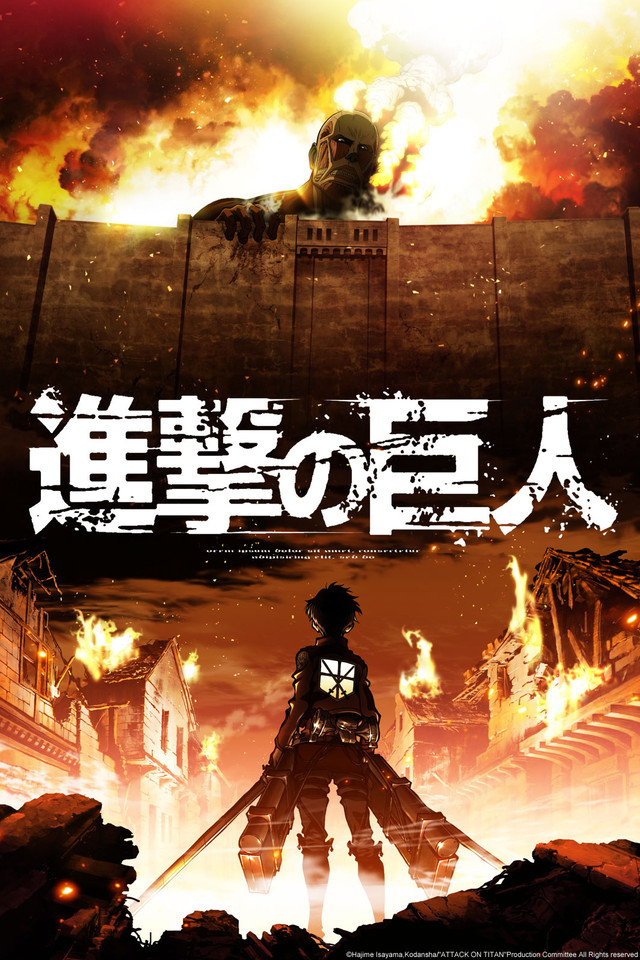
Shingeki no Kyojin (Attack On Titan)

As well as listening to my first radio show this year, I also started following my first Anime. I'd resisted the genre for a while, feeling unable to associate with the cultural associations and tropes from that part of the world. However, after some subtle browbeating from my friends, I decided to give it a go, and it appears that my choice was a good one. (Although not one for those with a delicate disposition...)
     Set in a crapsack dystopian world where mankind is menaced by nigh-immortal Giants, humanity is forced to live behind a set of three giant walls until one faithful day where a really big one comes along and provides our protagonists with their primary motivation. The series' depressing edge is only tempered by its gruesome imagery and its rather fascinating interest in a world where corruption in the system is obvious and unchallenged and where a person's primary concern is whether their death serves the Human cause.
     The series takes a lot of its mythology from Norse and Greek legend, which I suppose is what made it easy for me to get into. I feel as though the anime avoids many of the stereotypes that I'd associated the genre with in the past, such as excessive and problematic fanservice as well as soap-esque twists. While the plot does twist and turn, it does so in a spectacular fashion that only seeks to build upon its engrossing ontological mystery. It's bloody good, and I'm personally a little impatient for the next episode to come out.

Thanks.

Wednesday, 17 July 2013

Review: Lost 1.4: Walkabout

http://images3.wikia.nocookie.net/__cb20061024234011/lostpedia/images/c/c8/1x04lockeincubicle.JPG
Locke's paralysis is cleverly hidden.
Lost - Season One, Episode Four - Walkabout
Written 24/4/13

This is where it gets good. The first three episodes are all nice and cinematic n' all, but it takes this first contribution from Terry O'Quinn to really show us just how heartbreaking and well-written Lost can be. After three episodes of being presented as the weird old man with tons of survival skills, the focus shifts onto a more rounded Locke that presents his tragic backstory in a way which, if you haven't been spoiled (which I obviously was) is superbly managed.
     The food is running short, and so Locke finally introduces himself and takes a party into the jungle to hunt a wild boar. Shannon tries to show Boone that she can fend for herself by getting Charlie to catch her a fish. As Jack prepares to burn the fuselage, ensuring that the bodies within don't become a beacon for wild animals, Claire gathers together notes and messages in commemoration of the dead. After seeing the Monster up close and living to tell the tale (although we dont get to see it), Locke returns just after the fuselage is burnt, with a boar on his back.
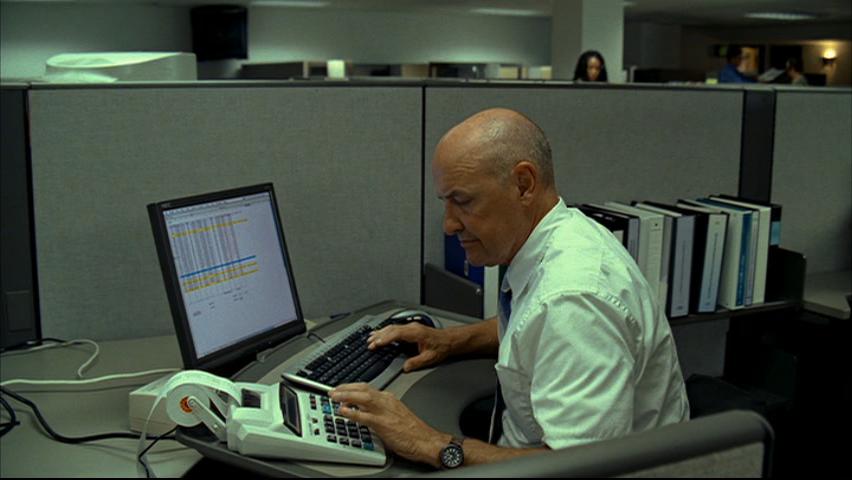
     As Locke less than fondly remembers, before the crash he was a cubicle worker at a box company, tired of his monotonous life and constantly belittled about his hobbies by his boss Randy. He tells a woman named Helen that he has booked them two tickets to go on a Walkabout in Australia, and we discover that she is merely a phone-sex operator whom he's been paying to talk to him. In Australia, the rep denies his application just as the bus leaves - and we discover, to our shock, that Locke was in a wheelchair before the crash, and was miraculously healed.
http://images1.wikia.nocookie.net/__cb20100328162631/lostpedia/images/c/c7/1x04lockesfoot.JPG
Locke tries to re-enact that scene from Kill Bill.
     In general thus far into my runthrough, I've finally come to accept that for me, Lost is one of those shows that you have to watch in lumps at a time rather than one a week. I get that it's early days, and the lack of centricity goes towards the worldbuilding, but it's feeling a little soap-opera-y in that the plot didn't really advance that much. It's a pace I really should have come to expect by now, and I suppose I feel a little silly for having not seen that before.
     Terry O'Quinn's first centric performance, however, struck a delicate balance between the survivalist weirdo we're presented with in the first few episodes and the deeply tragic and vulnerable core at the heart of who John Locke is. Especially telling for me was the scene with the phone-sex operator, where the desperation of his situation is rendered out in all the ways it possibly can. O'Quinn is just perfect for the role, and I love the way that the show builds mystery around this premise that this Island is more special than we may think while still connecting it to something human and empathisable. That's probably what the show does best.

Thanks.

Monday, 15 July 2013

Review: Doctor Who 4.12/13: The Stolen Earth/Journey's End

http://tvmedia.ign.com/tv/image/article/895/895510/the-stolen-earth-20080801011855745.jpg
Davros sounds a lot like that Circus guy...
Doctor Who - Season 30, Episodes Twelve and Thirteen - The Stolen Earth/Journey's End
Written 23/4/13

I'm gonna get this out of the way quickly. This two parter is one that I have a whole bucketload of contempt for, and unlike The End of Time, I don't even have the kind of grudging respect for it earnt over time and battles hard fought. As far as I'm concerned, this is one of the worst season finales that the show has ever done. Maybe not fundamentally, catastrophically bad by itself, but as a matter of opinion I just find it to be complete and utter tosh. And, with that in mind, we can begin.
     RTD had already informed Moffat of his decision, and while the public remained unawares we did get a small clue when this finale had cameos that basically summarised the entire RTD era to date. Fresh from the first series of Sarah Jane Adventures and the second series of Torchwood, Rusty incorporated his spinoffs into the main show, as well as bringing back all of his past companions save Adam Mitchell and giving us our fourth finale return with Julian Bleach's stab at Davros. It was, at the time, a fan's wet dream. To me, right here, right now, it feels a lot more like a bad fan-fiction, with the expected level of coherancy.
     Let's not bother with the semantics - let's get to the beefy issues. After a moderately coherant first half, disappointingly not-epic Shadow Proclamation and irritating attempts by Rose to be badass aside, we reach the pinacle of our story, where our thoroughly deified lovers finally meet, and Rusty gets a twitch and decides to cash it in on the ratings by pulling a joke regeneration sequence. I wasn't just shocked, I was pissed. It's one thing pulling that shit back in 1984, but this is the Noughties, the tabloid press sticks their nose into every nook and cranny. We knew there wasn't going to be a proper regeneration, so all it amounted to was unnecessary hysterics. This is Doctor Who, Rusty. You don't abuse the tradition of Regeneration like that, he doesn't get to frivolously pop one out when he feels like it.
http://suuuz.files.wordpress.com/2012/08/4x12-the-stolen-earth-screencaps-doctor-rose-badwolf-tenth-rose-3543632-624-352.jpg
"I tried being a Call Girl for a while, didn't work out."
     And that of course leads on to the horrendous 10.5. But we'll leave that for now, that's gonna come later, no, we've gotta talk about the whole Children of Time thing. See, mad Dalek Caan from New York popped back into the Time War (idk how, it's never explained) and came out a little worse-for-wear, but with a Dalek cruiser strapped to his jacksy. Ever since he's been prattling about the Doctor, his return and the way that he turns his companions into weapons, which is adequately displayed through the use of two magical Macguffins which his companions use to threaten the Daleks, including the Osterhagen Key (a German invention, featuring a perception of Germany straight out of Cold War propaganda with actual German language that's as shoddy as you can really get). The Osterhagen Key is a worldwide suicide bomb that destroys the planet when two people turn a key somewhere. Cos that's clever.
     Threatening the Daleks leads onto Davros' little tyrannical speech against The Doctor, telling him about how really he's a total douchebag, uh huh, and that ending the Time War and having such violent companions is totally the same as destroying everything in reality and he should totally feel bad about it. Sorry, not buying it - despite the lovely teary montage of every almost every guest character who's died since The End Of The World, The Doctor doesn't really have much of a role in their deaths. That's why it's a heroic sacrifice, it happens anyway, and it's to save lotsa people instead of just him, this isn't some kind of Doctor Who fan club in space who are jumping in front of buses and then saying he inspired them to do it. I'm all for talking down the Doctor, especially when we have the most deified Doctor ever surrounded by his cringey girlfriend and his supercute companions, but this just wasn't the way to go.
http://blogs.discovermagazine.com/badastronomy/files/2008/07/doctorwho_donna.jpg
Ta-ra, pet.
     Did I just call Ten.5 "supercute"? Probably. The creation of a human clone from The Doctor's severed hand thanks to a single touch to the glass of the casing by Donna was the point in 2008 where I began to question my devotion to the show that I'd followed like a religion for several years. It was too whack for me to jack. While duplicates would later become rather sickeningly common in the Moffat era, in the RTD Era it still stunk of the lowest kind of sci-fi silliness, and reduced the finalé to this otherwise okay series into soap opera mush. The ending, where the human Ten is banished from this world for the genocide of the Daleks (i.e. destroying the hateful killing machines whose only continual purpose is to destroy the universe) and then used as a human sex toy for Rose to bonk until she dies just cemented what a ridiculous turn of events had just transpired. (I apologise if that came out a little crass, I'm looking into it.)
     Plus, it meant that what happened to Donna actually, you know, happened. Just like in Doomsday, Rusty spent the whole episode repeating that someone was gonna die, and then he chickened out at the last second and instead of dying we just had Donna's memory wiped. This wasn't some great avant-garde decision, or some striking dramatic blow. It was an attempt at tragedy, sure, but instead of empathy I just felt wronged. Donna's entire character, her entire damn story, was about the transformation from someone who focussed on the trivial into someone acutely aware of her own being and self-importance. A woman who screamed at the world finally hearing it echo back. To erase her memories is to defile Donna's character, to stain the memory of what was one of the best companions of NuWho for the sole reason that she was the only female companion who hasn't at one time wanted to bonk him.
http://img.gawkerassets.com/img/17mtr3x3n4m0qjpg/ku-xlarge.jpg
The point in Friends where the audience gasps.
     I often find myself comparing this finale to Dimension In Time, and the comparisons are, I feel, warranted. It's all very well and good having a massive cross-over, and it's a fun thing in general. But if your mechanism for doing that creates a script with such stupid leaps in logic and really abuse of what the show stands for, then you change your script and you cull the strays. As a last outing for our continuous Who series, following a consistent run over four years, it was a fittingly epic finale, but in acheiving that atmosphere it sacrificed common sense. The following year would see the four specials, the end of RTD's tenure, the series of Torchwood that never was, and the transition to the current showrunner. This isn't quite the end of my RTD reviewing, but it's damn close.

Thanks.

NEXT WEEK: The audience wishes they could have been on the Planet of the Dead!