Wednesday, 8 February 2012

Review: Lost 5.4: The Little Prince

MeetAgain.jpg
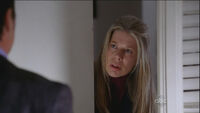
Carole knows nothing.
The Little Prince is a Kate episode, but despite that it's filled with enough other interesting plotlines to keep it worthy. It helped that because of this series' dynamic we didn't really focus in on her, and half the episode was devoted to the continuing Time-Flashes storyline that I love so much.
      In 2008, Kate tried to investigate into the client that was trying to have Aaron put into care. At the hospital, Sayid is again attacked, this time by an assassin with Kate's address in his pocket. Jack heads to Kate to make sure that she's safe, and they track the lawyer to the house of Carole Littleton, Aaron's biological grandmother. However, Carole knows nothing about Aaron and so Jack takes Kate to Ben, who has also gathered Sayid. Kate is angry when it is revealed that Ben employed lawyer Dan Norton, and Sun descides to exact her revenge on Ben for killing her husband.
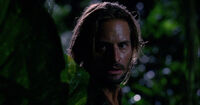
     On the Island in 2004, the survivors wait for Charlotte to wake up and head towards the Orchid. They pass through several time-flashes, including the event in Season One where Kate delivered Claire's baby, Aaron. Sawyer, as one part of the love triangle, is shocked to see Kate again. They head towards the beach, and find a set of outriggers. During their trip they are momentarily attacked by unknown people in another outrigger, but a time-flash delivers them to safety. As they land on another beach, they find the wreck of a boat called the Besixdouze. Meanwhile, out in the ocean, a rigger full of French people discovers Jin. As they land, one of the French women reveals herself to be Danielle Rousseau, and that the year is 1988.
5x04 SeeingKate.jpg
Sawyer witnesses Aaron's birth.
      Tom Iriwn gives a deviously slimy performance as Ben's lawyer Dan Norton, even when he doesn't need to be. Rebecca Mader also got to do a bit more with Charlotte's character, although certainly not as much as she will next episode. I also thought that it was a little weird that Sawyer got some development, although it is nice to see and it sets the groundwork for his centric episode in a month's time.
     The Little Prince covered Kate's struggles, but because of this series' intention to rush its early plotlines, we didn't really become too bored with her. It's also good to finally see Jin again, and his side of the storyline will stroke some mythos that's been missing since Series One. Till next week.

Thanks.

IN TWO WEEKS: A Jin and Sun episode! How fabulous.

Monday, 6 February 2012

Review: Doctor Who Classic: Time-Flight

Timeflight title.jpg
"Khalid"
Doctor Who - Season 19, Story Seven - Time-Flight

Timeflight is simply... a disappointment. The final story of the season promised an adventure utilising the modernistic Concorde, finally returning Tegan to her contempory time. It also saw another visit from The Master, although the reasons why he's here don't really make sense. Time-Flight, in the proud tradition of serials with "Time" in the name, suffers from shoddy production value, a nonsensical and hole-filled script AND from a general sense of Hubris.
     One of the serial's biggest faults is the design on the main set, based in Jurassic England. It looks incredibly fake, even by 1982 standards, and this is so contrasted by the really quite lovely modern filming around Heathrow Airport. The use of concorde itself is so gimmicky and yet never really gets a decent hearing. This is made worse by horriffically bad special effects. One consistant effect used is very clearly a filter of soapy bubbles, which just makes it look like the character is having a nice bath. Another part of the story is The Master's use of illusions, which is applied inconsistantly and is used, as it would later be in The Five Doctors, to provide flashbacks for previous characters - including Adric. 
     At first it appears that the villain is a terribly made-up character called Khalid, who is written as a thin Arabic stereotype. He's then revealed to be The Master, and one has to wonder why the hell he's disguised at all other than to fool the audience. It's a collossal waste of time. The character would go on to use a similarly useless disguise in his next story, The King's Demons. I don't know. Maybe he's a cosplayer? Regardless, the disguise means that the actual Master doesn't get as much time to interact with The Doctor as we'd like, which is sort of the main point of his character. They interact more than they did back in Castrovalva, but it's still not good.
The Xeraphin
     After all of the kerfuffle with Khalid, The Master reveals that he needs a power source for his TARDIS, and over time it is shown that he wants to use the remains of an alien race known as the Xeraphim, whose lone survivor has been split into two morally polar beings. The idea behind these powerful creatures is at least interesting, but it isn't really excercised in any decent way. The characters' background is rushed into an info dump in the third episode, and the full extent of the story isn't explored.
     Time-Flight is a very poor end to what is otherwise an excellent season of the science fiction giant. It used sets that were terrible for the time, a story that made little to no sense and a series of events that directly contradicted each other. Even worse, it wasn't horrifically bad in a way that I can enjoy. It was simply terrible, in the dullest way imaginable.

Thanks.

IN TWO WEEKS: I begin Season 20 with the Arc of Infinity.
P.S. "The Master has finally defeated me" is the worst line of Season 19, even with Adric.
   

Sunday, 5 February 2012

Review: Being Human 4.1: Eve of the War

Eve. In 2037. They went there. And it's awesome.
A lot of change happened since Series Three of the rather troubling comedy-drama Being Human. That series took it so far from its original comedy roots that it's often difficult to know how to approach the series. Series Four is now faced with the evacuation of three-quarters of the cast, with vampire Aiden Turner having left at the end of Series Three and werewolves George and Nina tleaving too. The question on everyone's lips is whether Being Human can survive this near-catastophic change, or whether it can stay the course.
     Funnily enough, whereas previous premiers in the series have been quick to establish a new formula, this episode managed to deal with all of the previous themes of the series while setting up this series' arc. Previously it felt like the characters fought against common sense to establish their main character groups, but Eve of the War took a very, very different path that was almost like its cousin The Fades.
     There were a lot of sudden cast changes in between the series, but not of the sort that Being Human is alien to. Nina (Sinead Keenan) is suddenly dead, five-minute character Wyndam (Lee Ingleby) is dead and everyone has been affected as a result. George (Russell Tovey, who's being a bit more sedate) is resigned to sitting in front of his daughter's cot with a stake, and Annie is tired and depressed, despite help from werewolf friend Tom (Michael Socha). The Vampires, waiting for the Old Ones to arrive and begin a mass invasion, kidnap the baby believing that it's the first Organic Werewolf.
Griffin leads the Vampires.
     The full-moon arrives, and the baby doesn't change. Vampire leader Griffin, the one responsible for Nina's assassination, locks up George as a consolation - before the local historian, the Vampire Recorder (Mark Williams), realises that the child is the War Child - a human messiah, born of werewolves, who will kill all of the Vampires. Sacred to his prophecy, he helps Annie and Tom save the baby as George triggers a half-transformation to break out of his cell. He kills Griffin, but they soon realise that the half-transformtion has fucked up George's internal organs. He dies, but not before naming his daughter Eve.
      One part of the episode that was distinctly exciting for me was a side of the plot set in the future of 2037 - a world where Vampires rule and Humanity is a resistance movement serving under Eve.When Eve finds the manuscript to the final part of the Vampire prophecy, she asks to be killed and then she heads into the Afterlife, announcing her intention to kill the War Child. And, finally, in Southhampton, our new Vampire Hal worried with his ghost friend Pearl about his long-time werewolf buddy. He survives his penultimate transformation, but they realise that something has to change.
     When I expected Being Human to have changed, I didn't really expect this complete turnaround of themes and ideas. Since Series One, the series has been about humanity; the original brief had very human character with problems like drug abuse and agoraphobia. Where there the Vampiric prophecies were treated like the doctrines of madmen, Here they are embraced as part of the series' fabric, and that's fine. It really is. But I'm really hoping that the series can still portray human characters like it usually should do.
Eve isn't a werewolf at all.
     Am I sure about the futuristic elements of the premier? Not really. But they were incredibly fun, and I would have loved it if we could have spent more time there. It's not really a logical place for Being Human to go, but any nods towards a more Sci-fi-oriented show is music to my ears. It added to an atmosphere that managed to build upon layers and layers of dark atmosphere that have been increasing since Series Two.
    Eve of the War had the balls not to rush into finding somewhere comfortable for the series to go. It may be claimed that it was just killing off old characters so we could get some frash blood in, but even so it was executed in a way that left me wanting more. The series' new direction may be slightly shakey, but so far I'm confidant that if it can pull this off, it will become one of the most revolutionary shows on TV. If it can't, then at least we have new actors to cushion the blow.

Thanks.

P.S. Playing a particularly dickish recurring character is Dexter from Survivors.

Friday, 3 February 2012

Josh: Music: Submarine

Alex Turner promotes 'Submarine'
Submarine is a beautiful film and part of its beauty comes from it's soundtrack. When it came down to music for this British made film, none other than Alex Turner was acquired for the job. The Arctic Monkeys lead vocalist, guitarist and main songwriter managed to produce six original songs for Submarine and the following is my opinions on how effective the album was in relation to the film and in general.
     The Submarine soundtrack is a combination of five unique pieces of music with the exclusion of the dreamy introductory theme. All the songs are consistent in style and all share a woozy feel which fits well with the dewy-eyed romantic sequences of Oliver and Jordana's 'lovemaking'. There is a superb focus on knotty, absurd lyrics that are tailor-made as pathetic fallacy for running events on screen.
     With underplayed, soft sounding instrumentation and the quirky magical tone to Turner's voice there isn't much going wrong for the music of this film. The best songs of the bunch have got to 'Piledriver Waltz' and 'Stuck on the Puzzle' which are colourful, swooning pieces which expose the qualities of Turner's guitar skills and the genius of his lyrics. The lyrics themselves cleverly relate to events on screen and are powerful on their own, the emphasis added with Turner's purr in voice is soothing. Also, Stuck on the Puzzle sticks out compared to the other songs with it's catchy rhythmical beat at the beginning and more modern feel. Whereas the rest of the album feels like one suite of music piled together as the four other tunes are very alike in their melody and exposition.
     Though the songs sound similar when listened in one go they do all still have their mark and are special in their own way. Submarine's soundtrack is a mix of folky, romantic-esque songs that dreamily drift to set the scenes and bring another aspect of vibrancy to this already outstanding piece of art. Alex Turner is a very clever man and deserves to be given all the praise available for such a inventive, colourful collection of brilliantly, unique songs. Job well done.

Thanks, Josh.

P.S. You can see my review of 'Submarine' from last week here.

Wednesday, 1 February 2012

Review: Lost 5.3: Jughead

http://images.wikia.com/lostpedia/images/4/40/Surrounded.jpg
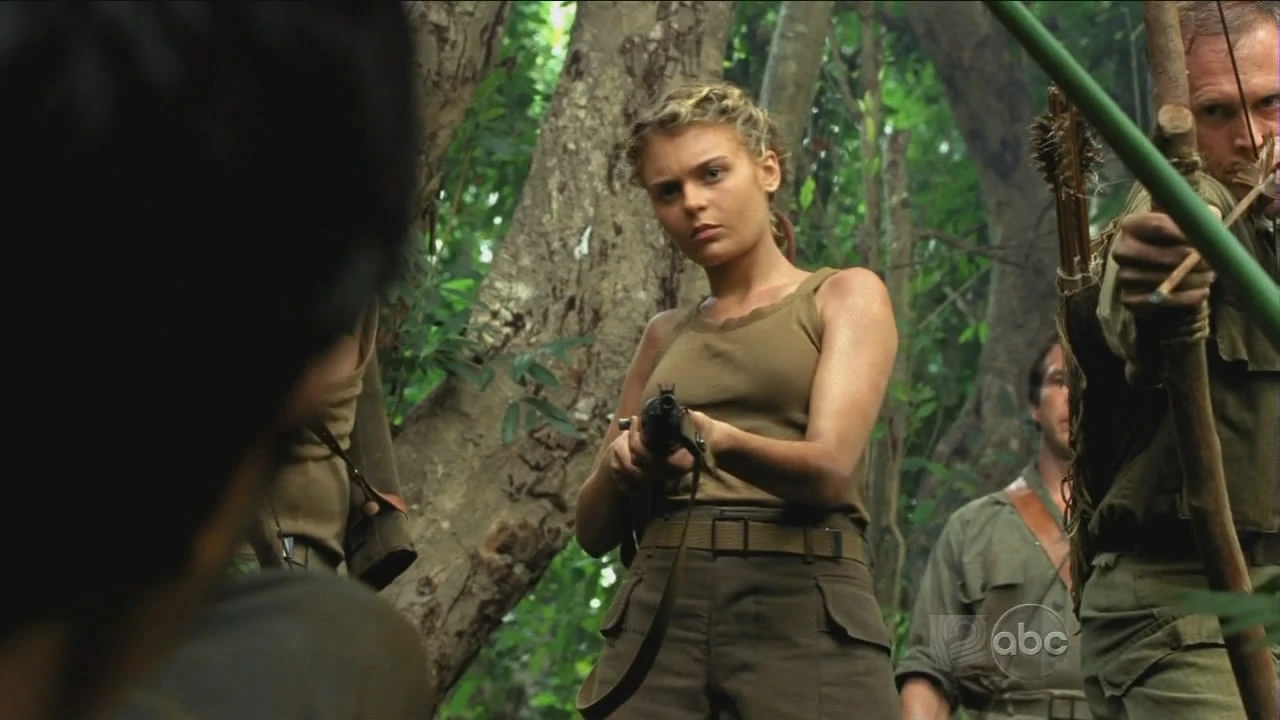
Ellie holds the Science Team hostage.
Often, I find myself judging Lost based on content rather than quality. Jughead is a perfect example, in that it soley features areas of Lost's plot that I find interesting. No Kate/Jack shenanigans, no Hurley clumsiness. Jughead is a mixture of pure sci-fi and really entertaining mythos. That's probably because it's in part a Desmond episode, a breed of Lost episodes that are always good no matter the subject.
      In 1954, the Science Team were led back to the Others' camp by Ellie, an Other. Daniel talks to Richard, who believes that they are part of a US army exhibition that stored a Hydrogen Bomb on the island. Discovering that the bomb's casing is broken, Daniel offers to secure the bomb in return for their safety. At the bomb, he is forced to reveal to Ellie (who, unbeknownst to him, is his Mother) that they are time-travellers. Juliet's team arrive, and Locke goes bursting into camp, demanding to see Richard Alpert. He explains to Richard what he must do to complete the time-loop, but Richard is unable to tell him how to leave the Island as Ben did. They begin to head to The Orchid, but Charlotte collapses with a bloody nose, due to her becoming displaced in time.
     Daniel and Charlotte didn't get much character work in Season Four, and so this was a welcome addition to their characters; Daniel's understanding of science was shaken and his love for Charlotte confirmed. Charlotte herself showed a more human side, although her character is still on the irritating side. She dies in two episodes though, so that's fine.
http://images.wikia.com/lostpedia/images/8/8d/Adress.jpg
Desmond talks to Widmore
     A few months before the present, we saw Desmond help deliver he and Penny's son Charlie. After Desmond has remembered Daniel's temporal message, he heads to Oxford and finds that Faraday's research into temporal mechanics had been rejected by the college after he permenantly left his girlfriend in a displaced state. Desmond goes to Widmore and demands information; reluctantly, Widmore gives him the address of Eloise Hawking.
     Desmond doesn't actually get much done in this episode, but Henry Ian Cusick's charm is inescapable. Yet again the episode shed light on Daniel Faraday, exploring a very different side of his character than the main story. I also love the variety that this part of the storyline sheds on the series; it's a lot more interesting to see these beautiful locations in England (or at least a mock of Enlgand) instead of America and the island.
     The first episode not to feature any of the Oceanic Six, Jughead is a great examination of characters that didn't get enough time, as well as characters that did. It had a lot of fun sci-fi, and the time-flashes concpt is one that has the potential to work beautifully for this type of show. It's unfortunate that we only have three more episodes of flashes left, but it'll have to do for now.

Thanks.

NEXT WEEK: Getting further into things with The Little Prince.

Monday, 30 January 2012

Review: Doctor Who Classic: Earthshock (Revisited)

Cybermen! Awesome!
See here for my initial look at this story.

Doctor Who - Season 19, Story Six - Earthshock (Revisited)

If one follows only the Dalek and Cybermen stories from the 80s, you get the impression that the era was filled with futuristic space scenarios. My look in context tells a very different story. Season 19, at least, exploits mainly cerebral stories (Castrovalva, Kinda) and historicals (The Visitation, Black Orchid). Hard science fiction is surprisingly hard to come by, and ignoring the weird Four to Doomsday the first real glimse of it comes with today's story, Earthshock.
     Earthshock, as you should know from the image there, is a Cyberman story, but the main attraction in 1982 was that for one of the last times in Who, people had no idea. The fact had been hidden from the press, kept secret from the Radio Times and even missed out of test screenings. Understandable for me, maybe, but at the time it didn't really make sense to hold the big surprise angle; in 1982 only one Cyberman story was believed to remain after the Sixties tapes were wiped, and this had been broadcast in 1975 - a good seven years before this story's audience had been born.
     The story is also known for its final cliffhanger, with the death of Adric. Only two companions had ever died before, during "The Daleks' Masterplan" in 1965. The companion killed would have been Nyssa but for the insistence of Peter Davison, who believed that Nyssa was the best companion for his Doctor. JNT instead decided to kill off Adric, who had been earning a significant amount of hatred in the fan community for his irritating attitude and his constant appearance of siding with the villain. In all honesty, I think that Matthew Waterhouse was set up from the beginning to be hated, and his lack of acting experience didn't help.
Bye Bye! Don't come again.
     The plot sees The Doctor and crew happening across a scout team searching for a lost team of archeologists in the 23rd Century (on Earth, for the third time in a row). After they are accused of killing the team, they are attacked by a pair of androids controlled by The Cybermen. Tracking the signal back to a space-freighter headed for Earth, the Cybermen soon reveal themselves and explain their plan to crash the Freighter and invade the planet, stopping a peace conference designed to organise an alliance against Cyber forces. For whatever reason, the alien computer system travels back in time to the Cretatious period. As everyone escapes the crashing freighter, Adric randomly decides to stay behind and is killed when the Freighter causes the death of the Dinosaurs.
     There's just something about Earthshock that rubs me the wrong way. I know it isn't Davison's performance, at least, which is brilliant. After the fresh-faced enthusiasm of Black Orchid, Davison's Doctor takes a turn for the serious and you can see his anguish at the return of his most persistant adversaries. Even the usually irritating Adric doesn't get much to say past the first episode. I think, then, that my beef comes with the Cybermen themselves. Earthshock was the first story that I actually asked for; I'd seen other classic stories on UK Gold and had been given them by older family members, but Earthshock was really the first. The JNT Cybermen have a nifty design that moulds together all of those that came before it, but they've become far too anthropomorphic and camp to seem threatening. I still enjoy their performances, but they're not at all initimidating in the way that the story needs.
     The script itself is written by the arguable creator of the JNT Cybermen, Eric Saward, who first met back in The Visitation. To his credit, the first part is very tense and the buildup to the reveal of the Cybermen is spetacular. The dialogue with Adric does strike a little odd in context, though, behaving like a clingy girlfriend. That, and The Doctor and crew don't really get in on the action for a while; they isntead find some fossils and have a lengthy chat about the extinction of the dinosaurs. It's also tiring to see The Doctor accused of committing murder repeatedly, especially after the debacle in Black Orchid. It happens twice in this serial alone.
Silence for... a great man?
      Earthshock is as it has always been; an attempt to make Doctor Who more up to date. It doesn't really do what it wants to do because of sloppy writing and a low budget, and the epic cliffhanger to the first part falls flat in the context of the average 1982 viewer. After that, the story hangs off of a tired Aliens-esque scenario and the finalé feels more of a relief than it does a tragedy. Earthshock should have been so much more than it is, and while it is entertaining it fails in all of its other goals.

Thanks.

NEXT WEEK: The end of Season 19 with the off-key Time-Flight.
P.S. No more Adric! Woo! My viewing experience has improved dramatically.