Friday, 27 January 2012

Josh: Film: Submarine

Craig Roberts as Oliver Tate in a promotional image
'Here's to us and a wonderful night of love-making.'
     Written and directed by E4's 'IT Crowd' star Richard Ayoade, with US comedian Ben Stiller as executive producer and specially recorded music by Artic Monkeys' lead Alex Turner, child stars Craig Roberts and Yasmin Paige bring us; 'Submarine'. The coming-of-age romantic comedy set in Wales during the 80's is based on the 2008 novel by Joe Dunthorne,a virtually unknown poet and writer. With such a diverse multitude of persons behind it what can we expect?
     15 year-old Swansea schoolboy Oliver Tate is unpopular, shy and alienated by everyone. He can't hold down a hobby and falls in love with Jordana Bevan. To get back at her cheating boyfriend Jordana gets Oliver to meet her where she kisses him, takes photographs and makes him write a false diary entry. She leaves the evidence of their meeting in school to make her ex jealous but it sees Oliver beaten up for refusing to call Jordana a slut. On the way home from school she kisses him again and Oliver makes Jordana his girlfriend. Meanwhile at home; Oliver's parents Lloyd and Jill's sex life and relationship is falling apart. With Lloyd depressed working as marine biologist after a failed TV career Oliver assumes his mother is having an affair with her ex and new age guru Graham who lives next door.
     Oliver and Jordana's relationship then blossoms until Jordana reveals her mother has a potentially fatal brain tumour. Oliver considers poisoning Jordana's dog in order to stem her grief when her mother dies but the dog is hit by a train. By Christmas time Oliver meets Jordana's parents where her father breaks down and Oliver becomes unsettled in his and Jordana's relationship. Without competent social skills Oliver decides cutting off contact with Jordana will help her. However when Oliver follows his mother and Graham down to the beach at New Year he sees Jordana with a new boyfriend. In response to seeing to seeing his mother get into Graham's van Oliver vandalises the guru's home and finds out his mother did give Graham a hand-job but Oliver's parents begin to reconcile. In the meantime Oliver becomes suicidal about losing Jordana until he makes his point clear and sees her on the beach they spent their time on. The film ends with a hint that the couple have resumed their relationship together as they walk into the sea.

Oliver admits that he feels suicidal.
     For the first time in reviewing anything I'm finding it difficult to find any fault with this film. With no continuity errors, silly moments, bad direction or poor acting we're delivered instead something which is simply mesmerising. Oliver Tate is a remarkably clever character study who is easy to relate to ourselves and yet so vastly different. His characterisation is realistic and pure brilliance and Craig Robert's performance deserves all the praise that he receives for what he does here. Considering this is his first major project outside the BBC and children's television he doesn't make one mistake and instead portrays endless potential and superb acting qualities. To match we have his co-star Yasmin Paige who though is slightly more experienced in the film-world still isn't as well-known and yet, just like Roberts, should have her agent's phone ringing non-stop with job offers. Together their on-screen chemistry, which is potentially the most important thing about this film, is believable and heart-wrenching. I'm struggling to come to terms with the fact that two of my childhood favourites have bonded to expose unlimited potential and this film could be there spring-board to stardom in the film and television industry.      This film is stapled with the label of a comedy about a teenage boy desperate for sex. But that's incorrect. It isn't just comedic but it's a heart-warming sometimes tear-jerking exploration into the world of an ordinary teenage boy. With a perfect examination of recurring problems with the teenage generation this rom-com as it could be called is similar to that of an in-depth documentary. I'm proud of this film for also dealing with potentially difficult subjects such as adultery, suicide and depression which are complex and yet Submarine masters them and portrays them excellently. All of this heavy subject-matter needs to be carried by it's cast and predominantly it is that of Roberts and Paige who pull it off but couldn't be done without the rest. Sally Hawkins, Noah Taylor and Paddy Considine are the unbreakable back bone to this film and are all on their best form.
'You'd be mad not to cast us!'
     Plot-wise the script for Submarine is witty and intelligent at the same time and is easily capable of capturing the imagination and attention of the audience. As a first-time viewer of the film I only paused it when necessary because frankly the story is one of those that you can go around and delay knowing what's going to happen next. Now, with excellent cinematography and memorable imagery this film is bright and colourful with picturesque scenery and touching setting. A vacant effort sees a successful homage to South Wales tipped off with nostalgic uses of the Polaroid and the type writer. Both the score and musical content for Submarine is colourful and loud and helps construct the sheer vibrancy of the film.
     All in all, Submarine is a powerfully moving picturesque romp with an intelligent script and award-winning material acting especially from it's inexperienced teenage leads. With moments that are innocent and hilarious to moments that are courageously mature in content this has got to be one of my new favourites. An excellent piece of what the British film industry are able to achieve. Though I'm still struggling to understand Ben Stiller's involvement as according to his message on the extras he didn't do anything to contribute whatsoever, he didn't even bother to fly over to Cardiff to watch filming. Nevertheless, a must-watch.

Thanks, Josh.

Wednesday, 25 January 2012

Review: Lost 5.2: The Lie

Hurley is in trouble.
"Why is there a dead Pakistani on my couch?"

After the relatively sedate premiere, The Lie stepped things up a gear and had a lot more action to chew on. Unlike most premieres, this episode took a larger focus for Jorge Garcia's Hurley, and with that storyline really examined the entire history of the show. It was a fun episode, but it had it's share of poignancy as well - just as Lost should be.
     The suvivors left on the island end up in 1954. After an attack from the primitive version of The Others that decimates all of the none-main characters, Sawyer and Juliet are ambushed by Others. Soon after they meet John Locke. Hurley, trying to take care of Sayid while framed for his actions, sees a vision of Ana Lucia (from Season 2) who tells him what to do; change his clothes and get Sayid to safety. He goes home, explaining The Lie to his parents and then getting Sayid into Jack's care. Later that day, Ben comes to collect Hurley to take him back, but Hurley rejects Ben completely and hands himself over to the police. Kate, worried about the men trying to find her, meets up with Sun who tells her to do what she must do. Ben goes to an old woman, who informs him that they have 70 hours to bring the Oceanic Six back to the Island.
     Rather intentionally, the character of Neil "Frogurt" is perhaps one of the most irritating single people on television. He really is just Adric on steroids, it's frighteningly similar. The character was an in-joke by the producers in response to viewer speculation about new characters, and it's fitting that his inclusion allows for some of the most annoying Lost this side of Eggtown. On the other side of the coin, acotr Jorge Garcia was perfect as the slightly unstable Hurley, and his storyline allowed him to express all the sides of his character; apprehension, improvisation, optimism and sheer naivity. Kate and Sun had some nice moments together, but their little scene only really served to remind us that Jin is supposed to be dead (and, as we'll see in a forthnight, that's not strictly true.)
Damn you, Neil. Damn you.
      It was a little odd, from my point of view, hearing the characters regret telling the eponymous lie when for me they only conceived it two episodes ago. It's a problem that we'll encounter again and again in Season Five; due to the disparity of time in Season Four, there's a huge chunk of it that just falls from our perceptions. I can't appreciate the four years between the Oceanic Six leaving and Ben trying to return with them - that happened last season.
     The Lie was the archetypal Lost episode, stymied by some deliberately irritating performnces and a plot that didn't feel right in context. But, as usual, it was compelling to watch and helped to set up this season's key themes and characters. And that's no lie.

Thanks.

NEXT WEEK: The US Army make an appearance in Jughead.

Monday, 23 January 2012

Review: Doctor Who Classic: Black Orchid

http://images.wikia.com/tardis/images/1/1b/From_atop.jpg
Lord Cranleigh, The Doctor and Nyssa mourn George.
Doctor Who - Season 19, Story  5 - Black Orchid

There's a show that I mentioned during the Summer called Jeeves and Wooster, a wonderful period drama-comedy based on the works of P.G. Wodehouse and set in the Edwardian era. Its running time, funnily enough, is fifty minutes long. Today's serial was an experiment by JNT, shortening the length of the serial and returning to a type of story not seen for 15 years and never seen again afterwards. Black Orchid is a rare example in Doctor Who of a story known as the Pure Historical, a story without any aliens or science-fiction influences besides the TARDIS and crew.
     This story gets a lot of derision from the Who community because of this format, which leads many to accuse the story of being boring. Poppycock, I say. Black Orchid is a visual and audible delight, bolstered by brilliant acting the BBC's absolute love of period drama. I often wish that we could have a modern-day Historical story, just to mix things up - the last time anyone came close was the pseudo-Historical "The Unicorn and the Wasp," which then ruined it all with a massive alien bumblebee.
     The Doctor and crew, having come from the events in London, arrive in 1920s rural England. Despite The Doctor's irritance that the TARDIS brought them to England once again, they head off from their train-station landing site and run into a cricket game hosted by one Lord Cranleigh. The Doctor, already wearing cricket whites, is a natural. They further travel to Lord Cranleigh's estate, where they are invited to their annual fancy-dress ball. Lord Cranleigh's fiancĂ©, Ann, is a dead-ringer for Nyssa and they have fun at the fancy-dress party by wearing identical costumes.
     Meanwhile, The Doctor has happened upon a passage where he finds a corpse in a cupboard. After a strange figure uses The Doctor's costume to commit a murder, the gang find themselves framed. Luckily, The Doctor shows the Constable his TARDIS, and as they travel back to the Estate the lord reveals, reluctantly, the secret that he has been hiding - his disfigured brother, George, who committed the murders and whom was set to mary Ann before his accident. George is accidentally killed, and on a bittersweet note the foursome leave, with a copy of George's book on the Black Orchid.
http://images.wikia.com/tardis/images/d/da/This_one_will.jpg
The Doctor proves his innocence.
     I'll admit that the story is fluffy; very fluffy. But it's not boring in the least, quite the opposite. Our characters, people that we (should) care about, are simply having a break and a fun time. It works better in context, I suppose. The story comes between The Visitation, in which the gang fights aliens and starts the Great Fire of London, and Earthshock (a revisitation next week!) in which Adric dies. This series has a great sense of continuity, and the only episodes that aren't linked by a narrative thread are the first two, and that was because of their splintered scheduling. I don't mind our characters having a break once in a while, and I found the period drama and environment an acceptable method of showing that. It's inoffesive, it's comforting.
     There's not a lot to say about Black Orchid, but it's not the horror that the fandom so often portrays it as. It's light and fluffy, but it's the enjoyable kind of fluff and it's a light 50 minute break in what is otherwise a rather busy season. The BBC is brilliant at period drama and even though it's not a genre that I particularly enjoy, Black Orchid is a pleasant detour from Doctor Who's norm.

Thanks.

NEXT TIME: We revisit a certain Cyberman story that saw the end for the series' biggest annoyance... meet me next week, for Earthshock Revisited.
P.S. The weather continuity is terrible.

Sunday, 22 January 2012

News: Josh Is Back.

Although he's been working behind the scenes for some time now, many of you won't know that my former co-writer Josh has left his blog and is now writing for Audenshaw Reviews. Expect his first review, of Submarine this Friday, as well as some other work later on in May.

Thanks.

Wednesday, 18 January 2012

Review: Lost 5.1: Because You Left

Sawyer questions Faraday about the Time Skips.
Season Five of Lost is where I began. Where I first took any interest into the series. However, I never really saw any of the series on initial broadcast, only a few repeats later on. It's a season that took the sci-fi leanings of Season Four and ran with them exponentially, taking the idea of time-travel and using all of its various interpretations. Because You Left is as you'd expect a Lost premiere to be - interesting, teasing and so wonderfully tense.
     Following directly on from the finale, the people left on the island suffered time-flashes as the island "skipped" through time, depositing them in different time zones as they went. Locke was shot by early-Other Ethan and then later helped by Richard. The rest of the team was accompanied by Daniel Faraday, who worriedly realised that they were travelling in time and then sent a message to Desmond (via his time-sensitive brain) to go to Oxford.
     Off the Island, Kate had to run from authorities trying to genetically link her and Claire's son, Aaron. Jack accompanied Ben, who was trying to bring the survivors back together. Hurley and Sayid tried to head to a safehouse but were ambushed by Widmore's men, leading to a firefight. Sun was detained by Widmore himself as they discussed terms on how to get at Ben.
Sayid tried to get Hurley to safety.
      I can't be critical. I simply can't. Because You Left was simply a brilliant episode that, despite a somewhat more sedate tone, left me really excited for what was to come. The sci-fi concepts are really intriguing and are presented in an easy to understand way, setting the tone of the series early on. All of the acting is top notch, the script is brilliant and that's really all I can say.
      Because You Left is a better opener than The Beginning Of The End, and it needs to be because of the topics that it needs to broach at the start of Series Five. It wasn't as energetic as that opener, but it was equally as enjoyable and I loved it.

Thanks.

NEXT WEEK: The survivors deal with the consequences of The Lie.
P.S. This is my 400th Post!! Woooooooooooooooooo!!!!!!!!!!!!! Onwards with another hundred!

Monday, 16 January 2012

Review: Doctor Who Classic: The Visitation

The Doctor talks to the Tereleptil.
Doctor Who - Season 19, Story Four - The Visitation

Saward. We meet at last. Eric Saward is one of the most controvertial script-writers and script-editors in the program's history, especially from Seasons 20 to 23. The Visitation was his first script for the program, and it was off the strength of this story and a later one, Earthshock, that he was made Head Writer. At its heart the story is a straightforward pseudo-historical, but it has even greater significance - it sees the end of the Sonic Screwdriver during the original run, having been hated by producer JNT.
    In 1666, strange Androids appear at a country house after a meteor shower. Still recovering from the events of Kinda, the TARDIS crew find themselves at Heathrow Airport - three hundred years too early. After being chased by plague-fearing villagers, the foursome find themselves assisted by highwayman Richard Mace (Michael Robbins). The Doctor, fearful that aliens have landed, finds suspicious tech in a local house - same house from before. They're assaulted by the androids, and they manage to kidnap Tegan and Adric. The aliens interrogate them about their identities and the identity of The Doctor.
     The alien reveals that he can control the local villagers through the use of a mind-control device. Richard Mace wears one such device, albeit with its power source removed. Mace, Nyssa and The Doctor discover the aliens' escape pod - he identifies them as the Tereleptils. Adric manages to escape, as Mace and The Doctor are nearly executed by the plage-fearing villagers. They are instead apprehended by other, Tereleptil-controlled, villagers.Tegan is controlled using a bracelet also.
Richard Mace is amazed by technology.
     Mace and The Doctor are accused of witchcraft, and are saved from burning by the Android, which takes them to the Tereleptil. The Tereleptils, having crash-landed, reveal that they will use a genetically-altered plague rat to kill everyone, taking Earth for their own. It destroys the Sonic Screwdriver before heading down to London with its servants to release the infection upon the world. The Doctor is guarded by braceleted Tegan and Mace, but The Doctor disables the bracelets.
     The weapon Nyssa has been working on mages to destroy the Android, and together they travel, using the TARDIS, to the Tereleptil's base in London. As they face down the Tereleptils, the aliens' weapons overload and the building explodes, the fivesome escaping just in time. The fire spreads throughout London as the TARDIS gang leaves for another adventure.
     I really love the dialogue in this story, especially for Richard Mace whose characterisation is perfected by Michael Robbins affable performance. The Tereleptil is at first rather silly and rubber, but once we get to hear more of its dialogue it really feels like a prison-ravaged outlaw. Because of the BBC's love of period drama, the environment and local characters are very realistic and bring with them a rustic sense of charm. All the companions are pretty much as they usually are; Tegan is whiney, Nyssa is brilliant and Adric is damn irritating.
The final showdown.
     A lot of the time this story is referred to as, "that Fire of London story," or the end of the Sonic Screwdriver is over-emphasised. In truth, The Visitation isn't really anything to write home about. It's a straightforward pseudo-historical with some nice dialogue, a great guest character and an ok villain, but it doesn't really shine off the screen. Eric Saward's first script is not the disaster that his later works on the program would suggest, and for that we can be thankful.

Thanks.

NEXT TIME: 50 minutes of fun in the 1920s. Join me as we look at the Black Orchid.

Sunday, 15 January 2012

Review: Sherlock 2.3: The Reichenbach Fall

Sherlock squares up to Moriaty, who brings him down.
Based on, "The Final Problem", this series' end-story was certainly epic in scale, taking on the battle between Holmes and Moriaty much unlike many had before it. Ultimately I felt rather unsatisfied by this tryptic, but Falls was more tense and character driven than its two predecessors and did leave me wanting more from the series. It's such a shame that the 90 minute format reduces the story number to a mere three, as there's so much that Sherlock could have done in the space of 6 unique, 45 minute affairs.
     Jim Moriaty is seemingly able to steal the Crown Jewels, break into the Bank of England and organise a prison break-out at the same time from one place, getting the attention of the criminal world. Upon his arrest, a blackmailed jury allowed Moriaty to walk off scott-free, but not before planting some seeds. Soon assassins are poised around Sherlock, and doubt from a Moriaty-set-up kidnapping leads the Police to suspect Sherlock of being a fraud. Despite how he denies it, Sherlock and John are forced to run from the police. They find that Moriaty has created an alias, Richard Brooke, claiming to be an actor whom Sherlock hired to play Moriaty, and that the story has gone to the national press. Sherlock, realising that Moriaty is playing him, heads for a rooftop confrontation. Jim tells Sherlock to jump to his death; if he doesn't, then his men will kill all of the people he cares about. Sherlock admits that he could easily read the safeword from Moriaty as long as he stays alive, and so Jim shoots himself. With no other option, Sherlock jumps from the building - or appears to. After his public shaming and funeral, Sherlock is revealed to still be alive, his future uncertain.
      Sherlock stories usually sag in the middle, but this story surprisingly sagged in the beginning despite the intrigue of the Moriaty storyline. Things only really got going once Sherlock's validity was being questioned after a victim seemed to recognise his face, and the slow transformation from this series' rise to fame, to the public shaming and disregard was almost, dare I say it, Batman-esque. His fake death also felt typically Moffattian, as it was this exact tactic that resolved the arc in 2011's series of Doctor Who. I admit that it felt a little irritating, but the scene was well done and there was serious doubt in my mind as to whether the series would continue. (Irene Adler spinoff, anyone? Although not written by Moffat, preferably).
Moriaty blackmails a jury.
      Something that struck me was how much of an actual finalĂ© this felt like. I had the strangest niggle that the past two series had been written as one six-episode story, and thus why the last episode here felt so out of the norm. Sherlock usually has a bit of beef to it - a continuing mystery, something to chew on. Falls was very, very different from that and it's perhaps why I found the story quite jarring in places.
       The Reichenbach Fall was a tragic tale of a man's collapse from fame to infamy through his own mistakes, but that doesn't fit with what we want from Sherlock. We want a decent mystery and characterisations to make that less easy to work out; we only received the latter here, leaving it feeling devoid of any of its regular substance. Sherlock may have been terribly well-acted and performed, but there was something in the writing this year that threw it off course. Great thing it's coming back next year, then, eh?

Thanks.

NEXT WEEK: Nothing, unless Being Human starts sooner than I anticipated. Until then, look out for weekly reviews of Doctor Who Classic and Lost.

Wednesday, 11 January 2012

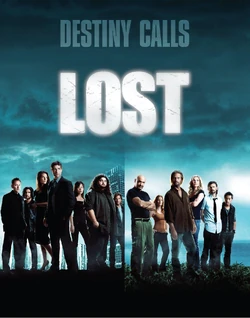
Prologue: Lost: Season Five

LostSeason5Poster.JPGNext week I begin reviewing the fifth season of Lost, one of the most well-produced dramas on US TV in the Noughties. I'll be reviewing it at the same time as the Nineteenth and Twentieth seasons of Doctor Who, which I'm doing not only for the sake of organisation but also because I think that comparing attitudes to science fiction across a 25 year divide will be interesting for you.
       Season Five doesn't have as big of a reputation as Season Four, mainly because it spent a lot of its time in timey-wimey situations. It managed, in its own way, to be paradoxical - not only in content but in that it featured more spiritualist elements while definitely heading in a more sci-fi direction. The first half of the series dealt with the Oceanic Six having to return to the Island for untold reasons, as well as the rest of the survivors jumping around in time. The second half of the series decends into stupid somewhat as both sides end up in 1977 with the Dharma Initiative, and evil demon The Man In Black takes on the appearance of the deceased Locke.
      I started watching Lost at the end of Season Five, after an extended Wiki Walk around Lostpedia got me interested in the series. Season Six, the final season, was not the best place to start. For me it was a total let-down; the ending was a load of spiritualist bull that had been masquerading as science-fiction for three months of my life. To have that turned around, to just have it melt away into something as vapid and as stupid as that ending... it didn't seem real. These problems in the series began here, in Season Five. I'm covering the series not only to continue on from the brilliant Season Four, but also to salve myself and find the exact point where it all went awry.

Thanks. See you next week.

Monday, 9 January 2012

Review: Doctor Who Classic: Kinda

The Mara as Dukkha taunts Tegan in her mind.
Doctor Who - Season 19, Story Three - Kinda

Kinda is that wonderful story that only comes along once in a blue moon that focuses on more spiritual and metaphysical ideas without being preachy about it. One of Davison's best, this Buddhism-influenced tale is quite unlike any Doctor Who at the time. There are a few aesthetic issues here or there, but the episode is best appreciated on a thematic level and the performances are so above-par that there's little to no point in quarrelling over the little things.
     Notably, this episode didn't at all feature Nyssa in the middle two episodes due to writer Christopher Bailey's lack of knowledge about the character's sudden companion status. The result is a little contrived; Nyssa is out of action, as is the Sonic Screwdriver, which is being used as part of a machine to sooth her headaches. However, this doesn't affect the story in too big a way, and the good thing is that greater focus can be placed on Adric and this episode's star, Tegan. Janet Fielding is on top form here and her character's emotional rollercoaster in the first two episodes is perfect.
     The episode surrounds the planet Deva Loka, where a human colonial team have identified the local tribe, the Kinda, as primitive beings. Traditional Sanders bullies on-edge Hindle, while female scientist Todd ( Nerys Hughes) calls for order. As The Doctor and Adric become embroiled with the Survey team, Tegan enters a dream state where her very existence is questioned by white-clad figures. One such figure, Dukkha, appeals to Tegan, forcing illusions upon her until she agrees to be taken over by the illusion's master, The Mara.
The Mara expresses itself in many ways.
      Hindle, in Sanders absense, goes completely power-mad and takes over the base, using mind-washed Kinda to form a miniture totalitatian regime. The Doctor and Todd manage to escape after a brainwashed Sanders returns, but their regime continues. The Mara posesses Tegan's body and then posesses a male Kinda called Aris. Kinda men are mute and only communicate via telepathy; they live in a matriachal society, and so Aris becomes a deity-like figure amongst the Kinda and leads an attack against the Colonists. As Tegan comes round, The Doctor pacifies the situation in the base by using Kindan technology. He then uses mirrors to trap the Mara within itself, sending it back to its own world. And Nyssa's fine.
     The nightmare sequences in the first two episodes are, despite coming totally out of the blue, incredibly powerful pieces of television. Tegan's initial bolshiness is crumbed and crubled as she first questions her own existance and then her individuality, culminating in her total and utter surrender to The Mara. Tegan is too often stereotyped as gobby and poorly acted, and this serial (plus its Season 20 sequel Snakedance, which I'll be covering in two months) stands as proof of Janet Fielding's extraordinary acting ability.
     Hollywood actors Richard Todd and Mary Morris weave their magic as Sanders and the Kinda's female leader Panna respectively. Simon Rouse, who went on to be in The Bill, is a wonderfully professional actor who gives the role of Hindle a powerfully insane edge. With Tegan away and Adric stupid, Nerys Hughes' Todd is a nice companion-esque character who's a tad more realistically written than the regulars are the rest of the time.
The insane Hindle talks to Adric.
     Kinda is wonderful from start to finish, both contemplative and exciting episode on episode. Janet Fielding is on full form and delivers her best performance so far, and the Mara and his related themes are some of the most interesting in the Eighties. Kinda continues a good streak for Davison's Who, and I love every second.

Thanks.

NEXT WEEK: Goodbye Sonic Screwdriver! We visit the Great Fire Of London in The Visitation.
P.S. This story invented the fan phrase, "Not-We," which is infinitely amusing. For me, anyway.

Sunday, 8 January 2012

Review: Sherlock 2.2: The Hounds of Baskerville

In front of a full moon. Classic. No sense of subtlty there, guys.
Based on, "The Hounds of the Baskerville", Mark Gatiss delivered a slightly calmer adaptation that took a more traditional route and followed the more conventional Sherlock Holmes format as established by the written stories. It was a lot slower than the Moffation pace had left me expecting, but that didn't stand to its detriment as a lot more time was given forth to character development. It just didn't feel as clever as the series usually allows itself to be, and instead relied on what the titular character would call, "Cheap tricks".
       Sherlock is off cigarrettes cold turkey and is thus highly erratic. The only case he can find is One about a rabbit that has disappeared after turning luminescent. When Henry Knight (goddamnit, Russell Tovey) turns up and offers his testimony about a "gigantic hound" that roams Dartmoor near a science laboratory called Baskerville. Sherlock is immediately enthused, and once out on the moors he sees the Hound himself and is shaken by his own self-doubt. However, further investigations into Baskerville reveal the truth; Henry, Sherlock, and later John, saw the Hound because of a hallucinogenic gas which was specifically designed to cause people to go mad. They return to the sight, battling their own hallucinations as they finally corner the killer, who used the gas to cover up a murder.
       Russell. Tovey. I don't like him. He's irritating, his screechy, unconvincing acting style that was acceptable in the Being Human 2008 pilot but that slowly begins to gnaw away at my insides. Casting Tovey to play a man afraid of large dogs showed that at least the Sherlock team has a sense of irony, but it did nothing to enhance the episode and his scenes are by and large the worst part.
       The use of more modern, sci-fi elements leads this to be a little on the simple side, and any attempts at complexity come off like disposable red herrings. The story spent a lot of time on set pieces and ideas that never went anywhere - the moor, while atmospheric and great for, say, trailer shots, was over-emphasised over plot. Likewise there's a long scene where John believes he is being stalked by the Hound in a Lab, one that has no bearing on the actual mystery but seems just to be Sherlock uncharacteristically dicking about. More importantly, there were scenes added that made little to no sense whatsoever, such as hallucinations at Toby's home actually cause the lights to turn on and off.
        The Hounds of Baskerville was still enjoyable, but it didn't live up to the standard that I've become accustomed to in Sherlock. It replaced the usual fast paced conundrums with a slow walk around the British countryside, something that failed to tickle my fancy entirely. And, after his less than impressive Who record, Gatiss is still in my bad books for the moment.

Thanks.

P.S. Nice chap though. Lovely chap.