Sunday, 1 November 2015

Review: Doctor Who 9.7: The Zygon Invasion

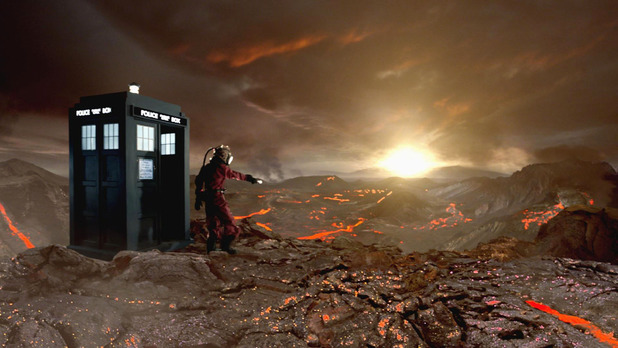
This promotional image does not happen within the episode.
The last time Peter Harness tried to stick a message into his sci-fi, we were rewarded with the embarrassment that was Kill The Moon, 45 minutes of anti-abortion propaganda wrapped up in a shitty and unbelievable plot. This time, the concept has come straight from the mouth of Moffat himself, and this time Doctor Who is actually trying to be relevant - most notably surrounding issues in the Middle-East, the increasing criticism of immigration around the world, and the refugee crisis currently dominating Europe's headlines. Like Harness' last story, it's dangerous ground to be walking on, because mixing those discussions with standard Doctor Who tropes can often lead to an unintended message at the end of it.
      Apparently, after the events of the attempted Zygon takeover in The Day of the Doctor, 20 million Zygons were allowed to take human form and were distributed within the human populace to live peacefully with Mankind. However, there has been a Zygon uprising with the ranks who insist on the desire to live out their lives in full Zygon form. The Doctor and "Clara" are called in to help maintain the peace. Osgood, who was believed to have died in Death In Heaven, is revealed to have been twinned with her Zygon copy ever since The Day, and hence one half of the pair is here, having been kidnapped by the Zygon radicals. Kate Stewart heads for the town of "Truth and Consequences" in New Mexico, The Doctor heads with a UNIT taskforce to the fictional country of "Turmezistan" and Clara stays behind in London. After investigating, Kate Stewart is replaced by a Zygon, and the UNIT forces in the UK and Turmezistan are replaced as well. As The Doctor attempts to return to the UK on a private plane, "Clara", who was a Zygon the whole time, fires a rocket-launcher at him.
     The Zygon Radicals are a group who give themselves the name "Truth and Consequences". They are described as terrorists, they have an white-text-on-black-background flag, they release hostage videos and they want to radicalise all of the other Zygons into uprising against Humanity. Subtle, you two. I was made quite uncomfortable by a lot of the discussions that went on in this episode - especially because a lot of the comparisons made directly alienate their real-world counterparts. The most direct comparison one can make is that the Zygons are Muslims and that "Truth and Consequences" are some variation on ISIS, al-Qaeda and the variety of other radical groups - although there are some comparisons to be made with immigrants both in Europe and on the US-Mexico border ("They just turned up. No jobs. Nowhere to live. No money.") It's all very well and good expressing that there are good Zygons living somewhere, but like a lot of the right-wing press this episode criticises, they're never shown to us. The only peaceful Zygon in the whole episode is Alien!Osgood, and by the time we reach the present she's dead.
Osgood's return is actually quite welcome, and her actress is
allowed to be more than a walking joke.
     Dodgy attempts at a political message aside, there were some good moments. The episode's main sense of tension was built upon its clone plot, with evil doppelgangers and enemies hiding in plain sight and manipulating people. This works amazingly thanks to a single performance in the second half of the episode where a Zygon manipulates a soldier into dropping his weapon by pretending to be his mother, but parts of it fall down elsewhere. Little tip for Harness on writing a plot about clones - if you want us to believe that Clara hasn't been cloned, don't have her randomly wander into a flat, come out appearing completely out-of-character (now that Clara has one) and then spend the rest of the episode saying weird shit. The whole "Clara was a clone!" thing was a complete non-surprise, and it made the end of the episode feel a bit naff.
     Had this been penned by the hand of Moffat himself, I think it would have been a hell of a lot more openly offensive, but somehow Harness has learnt from his mistakes in Kill The Moon and is keeping his political discussion very heavily in allegory. Not so heavily hidden that you can ignore it, though, and I think that the way that next week concludes the question of the Zygon Terrorists will really determine whether this week's episode comes with good or bad intentions. I was a little distracted during my first watch, and that did affect the way I viewed the episode, but it did have a fair share of really intense moments which made for good television though. Although, of course, that does not necessarily mean it makes good Doctor Who. We'll have to find out next week.

Thanks.

NEXT WEEK: The ridiculous title which we've been laughing at for about two months - it's The Zygon Inversion.

Wednesday, 28 October 2015

Review: Voyager 3.16: Blood Fever

Rated M, Lemon, Paris/Torres hurt/comfort, a little smut.
Star Trek Voyager - Season Three, Episode Sixteen - Blood Fever
Written 24/9/15.

Star Trek, as a rule, is not very open about sex. It was supposed to be teatime viewing, after all, and despite the show's tendency to fight back against injustice and inequality, the executives at the top were fairly conservative in terms of their censorship of the show. However, the writers still wanted to discuss sex and sexual things, and so there arose an uneasy middle-ground where certain episodes would be more sexual and fanservicey than others, even if it didn't usually make sense. This is the reason why you sit here today, reading a review of Blood Fever, one of the most sexually uncomfortable stories in Voyager, joining the ranks of Elogium and 25% of everything to do with Seven of Nine.
     Voyager has a great need for the made-up mineral... "spins wheel"... galicite! Upon ordering an exhibition of a planet stuffed to the gills with the stuff, recently appeared recurring character Ensign Vorik propositions B'Elanna, accidentally mind-melding her. Vorik has entered the Pon Farr, a period in a Vulcan's life whereby every seven years he must have sex or die. With The Doctor being tactlessly fascinated by the idea of treating him, Vorik is left out as B'Elanna, Paris and Neelix go on the away mission. While away, however, B'Elanna starts becoming aggressive, and all hot-and-bothered. Investigation by Tuvok and Chakotay reveals that the accidental mind-meld transferred the Pon Farr to B'Elanna too, so now she must mate or die. She gets locked in a cave-in with Paris, where despite her attempts to mount him, he resists for the sake of preserving their friendship. Upon leaving the cave-in, Tuvok orders Tom to have sex with her, which is only broken up when an enraged Vorik engages B'Elanna in a ritual mating dual for her own sexual agency, which somehow ends up curing both of them. On the abandoned planet, Chakotay and Janeway find a body - a dead Borg.
   The Pon Farr originally existed in order to give Spock a storyline in which he was emotional and irrational, in contrast to his usual composed self. In Voyager and Enterprise, however, the Pon Farr moved much more into the area of fanservice, and this more or less the first time this appears. Given the intimate nature of what telepathy means to Vulcans, the episode from the start hits on some decidedly rapey tones - Vorik enters B'Elanna's mind, and through the power of inception manages to alter her behaviour. The episode essentially then works as a huge metaphor for an abuse victim repeating the actions of the abused, with the caveat that both of them will die if they don't get their mack on.
Jeri Ryan inches ever closer. (Always a good mental image.)
      That perpetuates itself throughout the episode, as things are prone to do when dealing with the Pon Farr - an idea which collates sex with life-and-death necessity gang aft agley. Throughout the story, several people are robbed of their sexual agency, and it's mostly just paved over as a quirk of the sci-fi universe. B'Elanna is assaulted by Vorik at the beginning of the story, and the end, with intent to essentially rape her. B'Elanna spends a good chunk of the story doing the same thing to Tom, although at least she has enough self control to not do anything more than nibble him. (Klingon mating is weird.) Later, in a bizarre out-of-character moment, Tuvok orders Tom to "help" B'Elanna. In the alien culture of the show, I'm sure this can be explained away as a "logical" move, but for the viewer, we're shown one of the most rational guys on the show basically pulling rank to declare Tom's sexual agency forfeit.
     What this episode does foreshadow is the main canon relationship of Voyager, Tom and B'elanna. There have been hints to it before-hand, but the focus in the first production season seemed to be trying to set Tom up with Kes, and driving B'Elanna through her anger issues. Here in Season Three, the relationship is a great idea for the both of them - Tom grounds B'Elanna, and B'Elanna excites Tom. She loves fixing spaceships, and he loves flying them. (Alongside being a Doctor-Biochemist-Archeologist-Historian). It's such a shame that this is the first episode where they actually discuss having any feelings for each other, especially given all the rapey subtext. There's a nice scene closing out the episode where Tom makes an odd if rather sweet comment, and that almost saves it, but it's a bit of a pointed stick in a gunfight.

Thanks

NEXT WEEK: We finally meet The Borg, after I've made a million references to them. It's Unity.

Monday, 26 October 2015

Review: Submarine

For another look at this film, why not read my friend Josh's review here?

Submarine - Directed by Richard Ayoade (2010)
Written 24/10/15.

I tried my absolute best to despise this film for five years. My impression from promotional images was that this was a piece of twee, misguided faux-Andersonian dreck plastered across a British background and filled to the brim with the pretentious, "quirky" mannerisms and stupid quotes to be mass-produced on moody Tumblr posts. And, for my part, I was more or less completely correct. Now now, don't go away. I was far too harsh on Submarine - I judged the book by the cover, and I was mad to do so, because this film is one of the most refreshingly realistic romantic comedies I've seen in a long time. Simultaneously managing to be sweet, witty, and just a little bit weird, Submarine uses art-film techniques for a remarkably accessible experience.
     Directed by comedian Richard Ayoade (The IT Crowd, Was It Something I Said?), the film follows Swansea teenager Oliver Tate (Craig Roberts, Being Human) and his strange, creepy obsessions with both his parents' love life and with Jordana Bevan (Yasmin Paige, The Sarah-Jane Adventures), a cold pyromaniac that he is desperately in love with. Tate narrates the film with a fast-paced string of sometimes-witty sometimes-cringey teenage observances about the world he lives in, and charts his efforts to both save his parents' flagging marriage and to woo Jordana. Obstensibly opening as a quirky romantic comedy, the film wanders through several shades of surrealism before settling in on our own reality, where Oliver must take responsibility for the stupid decisions he made trying to achieve both of his goals.
     The film's Welsh aesthetic is breathtaking and feeds into the overall feel of the film, tying in loose, Andersonian references to French New Wave and classic Hollywood into maritime folklore. Ayoade spends a great deal of time deliberately muddying the waters between love and grief, and there are a few scenes which deal with certain characters' experiences with depression and hopelessness. Despite this bleakness, the film also feels quite warm - stoked with nostalgia of our own childhood mistakes, and eventually triumphant when despite cocking up massively, Oliver is implied to get everything he wanted. It's a bittersweetness which ends up falling very much on the side of sweet, and the film takes you through so many peaks and troughs of feeling that it really earns that final one-sidedness.
I mean... you can tell why I thought this film was hipster trash,
right? Look at this stuff. It's not, though, you should totally go
and see it.
      A lot of this is down to the likability of the leads. Craig Roberts, at this point trying to move away from his time in Tracey Beaker and that one Being Human episode with a gimp in it, manages to create a wonderful duality within Oliver Tate - a character who is clearly selfish and pretentious, but whom you end up loving regardless because of the genuine good intent behind a great deal of what he does. Despite sporting a dodgy accent, the same is also true of the wonderful Yasmin Paige, presenting Jordana as effortlessly cool and distant one moment and gentle and fragile the next. It really pisses me off that the most work she's had since this film is effing Pramface (although I have yet to see Glue, so there's always time).
       One thing that makes Submarine work is that it isn't trying to be clever with its direction - it occasionally uses title cards and other stylistic flourishes, but these are all heavily functional and serve to enhance the film's mood. It's a story of two strange but highly identifiable characters, engaging with the rest of the world and attempting to find solace in their idea of "okay". I've been tempted throughout writing this review to call Submarine, "the British Moonrise Kingdom". But I've got a much different idea now, one that surprised even me when I decided I was going to write it.
       Submarine is better. And that's the best accolade I can give.

Thanks.

NEXT WEEK: We discuss the artsy-fartsy Jim Jarmusch film, Broken Flowers.

November is Cybermen Month!

You will become like us....
Hundreds of years ago, Earth was not alone in the sky. Its twin planet, Mondas, contained a race of humans far advanced of their Terran counterparts, and when Mondas was knocked out of its orbit, this race turned to technology in order to survive. They replaced parts of themselves with cybernetic alternatives, until a society arose which enforced their use in the name of survival. The products of this society became known as the Cybermen, beings stripped of all emotions, with only the imperative to survive and proliferate their kind across the galaxy.
      The Cybermen are my favourite Doctor Who villains by a country mile. The first Classic Who episodes I talked about on this blog were Attack of the Cybermen and Earthshock - reviews which I later revisited when my writing style became a little more focused. I've reviewed eight of the ten stories of the original run which feature the Cybermen as one of the main villains, leaving out only their first outing, The Tenth Planet, and 1968's The Wheel In Space. Having recently received the former on DVD, I had the idea to go back to those 60s Cybermen stories and give them another go, this time filling out the gaps.
      Back in the 1970s and 80s, a lot of the black and white episodes were burnt. By the end of the show's run in 1989, the vast majority of the stories I'll be reviewing this November were missing. Thankfully, over time we have recovered lost episodes, and for all but one of these stories, the stories exist in their completion - either in episodes as recorded or in animated reconstructions using the original audio. In four weeks, when I review The Wheel In Space - I'll effectively be attacking my first reconstruction . How exciting!

Thanks.

NEXT WEEK: William Hartnell bows out as the Earth is attacked by mysterious, cloth-faced beings... it's The Tenth Planet.

Sunday, 25 October 2015

Review: Doctor Who 9.6: The Woman Who Lived

She may not look it, but Maisie Williams is terrifying in this
episode. Phenomenal actress. Last week was just a crap script.
Ladies and gentlemen, I bring to you something which so very rarely happens on Doctor Who, even rarely in NuWho - a story written by a woman! And it's a woman that isn't Helen Raynor! The woman bringing you this revolution in storytelling is Catherine Tregenna, who previously wrote a few good episodes of Torchwood and who now swoops in to finish off last week's loosely dangling plot thread - namely, the existence of the now-immortal Ashildr, still played by Maisie Williams. Williams was much better this week, and she seems to react very well to the more sci-fi heavy, philosophical material than last week's silly fluff with Vikings. As did I, in fact.
       Seeming to have dropped off Clara on some adventure or another, The Doctor stumbles upon a highway robbery in 1651 being comitted by "The Knigtmare", who turns out not to be an 80s kids show but instead to be Ashildr, now apparently over 800 years old. She explains to the Doctor that her immortality has come with the ability to master new skills over time but not to hold many memories of actual events, a fact she makes up for by keeping a library full of her own diaries. Tired by grief and contempt at the ephemeral nature of humanity, she employs the Doctor's help to steal from a manor an alien jewel - a jewel which, she reveals after the fact, will allow her to go along with her leonine alien pal and escape Earth, provided she kills someone with it. Despite The Doctor's attempts to stop her, she goes through with it, but upon seeing that her alien associate only wishes to invade the Earth with his people, she foils his plot. The Doctor explains to her why he can't take her with him, and they go their separate ways.
      After Williams' relatively lacklustre acting last week, this week was a breath of fresh air. Tregenna, unlike a lot of her compatriots on the writing team, focuses a lot of her writing on the consequences of people's actions. Here we find Ashildr as a genuinely fascinating character - a dozen times widowed, mother to dead children, forgetting the names and the faces but remembering all of the pain and grief by choice. She embodies the consequences of one of The Doctor's rash decisions, and she herself faces similar decisions as The Doctor slowly tries to teach her how to live "amongst the Mayflies". It was wonderful, and touching, and it really felt like I was watching Doctor Who again. Maybe that had a little more to do with Clara's absence than I really thought it would.
Leomon, use "Fist of the Beast King"!
      There were a few things here or there that missed the mark. The leonine alien (whose name I am too lazy to look up, sue me) seemed very tacked-on and his appearance overhyped, much like the unfortunate monster from back in Before The Flood. I've heard many comparisons to Thundercats. There was also this season's "celebrity cameo you almost didn't notice" from Rufus Hound in the form of highwayman/stand-up-comic/inter-dimensional portal Sam The Swift, who filled a good ten minutes of the episode with atrocious puns. Aside from that though, there wasn't much to complain about - there was some comic relief within the plot, but it worked itself so seamlessly into the story that it didn't feel that bad at all.
       The biggest and most important difference that this week brought was in the writing style. You could feel the difference while watching it - instead of last week's Moffat-co-written episode, which jumped from showpiece moment to showpiece moment, Tregenna gave the characters some time to breathe. Characters talked to each other about what they wanted to do, about what they were going to do, and about what they had done. It is these things which lets us define characters and empathise with them. All we learnt about Ashildr last week was that she was a brave but foolhardy child - here we get given a much deeper, much better character that feels like she really deserves her place here instead of just being some shoddy excuse for continuity. It's the pacing and the character development that allows good science fiction to work its way under the skin, and that's exactly what we got tonight.
      Tregenna for showrunner?

Thanks

NEXT WEEK: The universe conspires to remind me that the atrocity that was The Day of The Doctor was in fact broadcast as the show's 50th Anniversary Special. It's The Zygon Invasion.

Wednesday, 21 October 2015

Review: Voyager 3.15: Coda

There's a frame where he's giving her the Kiss of Life and the
title card "Written by Jeri Taylor" appears.
Star Trek Voyager - Season Three, Episode Fifteen - Coda
Written 21/09/15

Sit down, kids. We need to have a serious talk about Jeri Taylor. The dichotomy between Deep Space Nine and Voyager did not come from indecisive scriptwriters. Near the end of the run of Star Trek The Next Generation, the writers going off to their respective series separated into two factions - Ronald Moore and Ira Steven Behr for DS9, Brannon Braga and Jeri Taylor for Voyager. There was of course a lot of overlap, but the important thing here is Jeri Taylor, who conceived of The Maquis, Janeway and several other important aspects of the show. While her influence on the show is very important, there came a point where her writing for the show was developing certain... themes. Mainly, long speeches about how people love Janeway, and especially about how much Janeway and Chakotay are deeply, madly in love with each other.
     It is because of this that this week's episode, Coda, ends up being a bit of a wet mush. The Braga-esque sci-fi plot, in which Janeway seems to die recursively until she is confronted by her father's spirit, does not as you might expect have anything particularly to say about the nature of human mortality. Now, I am an ardent Janeway/Chakotay shipper, as you will have seen over these many weeks. But here it seems really out of place. Every time Janeway "dies" we are shown character upon character lamenting her death with great prose, culminating in a lengthy funeral scene where each characters gives a loving eulogy for her. Then, she fights off the spirit of death by sheer will alone, and once recovered goes off to the Holodeck with Chakotay.
     The episode is crippled by the fact that, as it keeps telling us, Janeway is the brilliant main lead character that all the other characters love. There's no tension surrounding her actually being dead, because she's the main character of the show, and because temporary deaths on Voyager are like people being sent home on Top Chef. I mentioned Brannon Braga - this episode's beginning reminded me of Projections from the second season, where the layers of realtiy around our characters seemed to be fading away fast. But the episode doesn't really crank out it's main premise (Janeway is supposedly dead and in the afterlife) until the last fifteen minutes, leaving just under half an hour of confused plot, mad editing and everyone gushing about how beloved Janeway is.
I do most of my own screencaps now. Some are better
than others.
     I won't lie - I did enjoy this episode. Whether or not you agree with the politics behind Janeway and Chakotay, I believe that they work as a couple, and I love all of the little hints spread through the series (mainly by Jeri Taylor herself). But this episode, without that, is just a mess - a splattering of broken plot segments, leading up to a plotline which could have had some really fun sci-fi intricacies - themes on the nature of death like in Emanations, and later in Mortal Coil. Instead, this episode is content to be nothing more than the Captain Janeway show - and that's just not enough.

Thanks,

NEXT WEEK: B'elanna gets really horny and needs to Tom Paris to bonk her now. It's the teenage fanfic that is Blood Fever.

Tuesday, 20 October 2015

FTA: Doctor Who: A Town Called Mercy and Hide

This tenth and final volume of articles from Celebrate, Regenerate! covers stories from Series 7, which was the most recently aired season when these articles were written. I hope you've enjoyed these articles. (See here for more on this project's origins.)

A Town Called Mercy
(Main article.)

Not since the McCoy era has the show tackled moral questions like we saw in A Town Called Mercy. While it did remind me a lot of Star Trek in its composition, I saw that as no bad thing – it’s a very Doctor-Who-y format. Certain parts of Fandom often like to analyse episodes to their very deepest minutiae, and this was certainly one for them. The Doctor and Amy both meet their mirror images – The Doctor in the war criminal trying to atone for his atrocities and Amy in the Cyborg experimented upon and changed into something less human.
     The pace was slower, but I liked that very much – it gave the story time to ferment, for the actors to work their piece, for the setting to get under the skin. I’m unashamedly biased towards the Classic Series, and I felt that like those old stories, this slower pace gave the time to actually think about the story’s messages and dilemmas instead of speeding through at a million miles an hour and not knowing really what just happened at the end of it. Call me a pensioner, whatever you like, but A Town Called Mercy is the first story in a while that’s given me the chance to breathe.
     And breathe I did, and what I got was a brilliantly shot Western town that, like Enlightenment and The Greatest Show before it, managed to combine an imaginative and thought-provoking script with a beautiful backdrop. In a way, the Western setting provided a medium for all of the story’s arguments to transpire in – a land of freedom, of choice, of second chances, of second airings. Mercy gave Jex a second chance as their Doctor, The Doctor one as their Marshall, and the Gunslinger one as their Protector. It was about re-muddying the lines between black and white, not just making The Doctor darker but making his world more ambiguous as well. No more swinging in to save the day from the dreadful villains who don’t know how evil they’re being, no. The Doctor is dealing with actual people, with consciences and guilt and pride and honour and desperation.
     And what people they are. This episode’s cast is vital in helping it along, especially veteran Adrian Scarborough, who practically sells the episode on his performance alone. When the truth about his history was revealed, I initially groaned at what I thought would be a typical “twist” that saw us switch sides and watch as Jex became a maniacal scheming villain. I was incredibly, incredibly pleased to see what came instead – a pair of characters, both damaged by the things they’ve done, both seeking justice – either through redemption or retribution. The Doctor, since the Time War, can identify with both, and this episode more than most managed to press his buttons in an enlightening and entertaining way.

Hide
(Main article.)

Neil Cross is a writer for whom I have a large amount of admiration. In two episodes he’s shown what NuWho has the potential to be – a magnanimous force for good. His only ideology seems to be that love and happiness saves the day, with enough scientific realism to stop that falling into the slushy mess that the beginning of this sentence would make it out to be. I had planned to start this article talking about ghost stories, but as the Doctor himself says, this isn’t a ghost story – it’s a love story.
     Although there’s no love lost between Clara and the TARDIS, who after spending a season being rather less talkative than she was in Neil Gaiman’s The Doctor’s Wife seemed to gain a rather snarky streak this week. At times Clara threatens to become little more than a mystery and a puzzle – an enigma wrapped up in a pretty Blackpudlian girl. Neil Cross isn’t gonna have any of that – he’s made the storyline around her into something more subtle, and has more than any writer at this point made a deliberate effort to develop her into something completely different to her predecessors.
     And talking about completely, how about this story, eh? No real villains, just star-crossed lovers who, despite their garish appearances, are no different to our guest stars, Alec Palme (Dougray Scott) and Emma Grayling (Jessica Paine). The two are some of my favourite guest stars from this series, and their sweet little love story (with a Professor and his assistant) also feels strangely like a parallel for our two main leads.
     I’m not going to deny it – I really like the chemistry between Eleven and Clara, and in certain circles I’d be called a “shipper” – but it’s not like the series hasn’t presented me with some serious evidence. In this episode alone, we have the fact that the TARDIS seems jealous of how much The Doctor is attached to her, and the way that he tries to keep her out of harms way when he goes investigating through time.
     Hide had everything that I love about Doctor Who in spades, and wasn’t afraid to push a few of the boundaries to make it happen. Episodes like Hide are ones that make me glad to still be a Doctor Who fan, that reward me for all of those times where I’ve gone off on fanboyish rants about episodes and still tuned in the next week. I loved it, and I really do hope that Neil Cross writes more episodes in the future.

Thanks.

Saturday, 17 October 2015

Review: Doctor Who 9.5: The Girl Who Died

We've just rolled upon the hundredth NuWho story - the new series having accomplished in ten years what took the Classic Series sixteen. Not bearing in mind this particular anniversary, we're presented with a welcome return this week of the pseudo-historical, and to Jamie Matheson, whose two scripts for the last season helped Doctor Who to make a triumphant return to form after the horrendous Kill The Moon. The Girl Who Died's publicity ran along two stands - the ridiculous name which brings back memories from Moffat's more arsey period, and the fact that the titular girl is played by Maisie Williams of Game of Thrones fame. Despite the latter being the main thing I was looking forward to, the writing actually held itself up on its own - albeit in the strange, barely recognisable way that only Capaldi's Doctor Who can. Spoilers will follow.
They don't use these swords, btw. It's just to look cool.
     After the ending of some other adventure, The Doctor and Clara end up landing in medieval Scandinavia, and come across a group of warriors calling themselves Vikings. Upon reaching their village, an alien voice appears in the sky, and warriors come down to pick-and-choose the most war-worthy among them. Clara and a girl, Ashildr (Maisie Williams) are accidentally sent up with them, and get to see the blokes mushed into adrenaline for an alien warlord to drink. When Ashildr declares war on the Mire, The Doctor is the only one who can help the town get into shape, with the aliens declaring that they will return in a day's time to kill everyone in the town. After a lot of thought, the Doctor eventually discovers the town's electric eels, and use's them in combination with the Mire's own technology to humiliate the warlord. In the process of saving the town, Ashildr dies, but using Mire technology The Doctor brings her back to life. There's one snag, though - she's now immortal.
     Moffat said that this episode would stretch the definition of a two-parter, and I can see why - next week's episode is written by someone completely different, and seems to be set in Revolutionary France. To be fair, that assessment has been true of a lot of this season, although I get the feeling that the first two two-part stories did so for much more unintentional reasons. Given that Maisie Williams is the only thing holding these two episodes together, I would have thought that she would have been... more impressive? I don't know whether it was her or just certain odd lines given to her, but I never really got any special vibes from her performance beyond the fact that she's a guest star. The fact she ended up being the main focus of the episode's recurring philosophical debate on the nature of Time Travel came with a bit of a whimper.
     The Vikings in the story were fairly anachronistic, although the episode tried to avoid that by getting rid of the horny-helmeted warriors in the first act and focusing on the Norse people as farmers and craftsmen. You could argue, if you're being generous, that this story is a Base-Under-Siege story, but if that's true then the character archetypes weren't all that deep. The main characterisations that we got to see this week were the main duo, and right now I'm really noticing that difference - Classic Who develops the guests of the week, NuWho develops the mains. That unfortunately means that we're not really inclined to care about anyone else than The Doctor and Clara, and if you don't care about them there's not much left to care about. #
GORDON'S ALIVE!!!!
      One of these moments included the beginning/conclusion/mention of a point which Moffat has been bandying about for ages, which is attempting to give an in-plot reference to the reason why Peter Capaldi has played characters in the Doctor Who Universe before. While I was glad that this explanation wasn't given ages of runtime, the explanation here was given very suddenly and quite underwhelmingly - that he picked this face to remind himself of the events of The Fires of Pompeii, that he can always save someone, to make him go and save Ashildr. While it was nice seeing actual continuity with the RTD era, I had perhaps expected something a little more interesting done with it than a retread of "Time Lord Victorious" thinking - especially with the whole "hybrid" arc rearing its head like yesterday's gone-off porridge. 
      Matheson knows what he's doing with these characters, and I enjoyed Twelve and Clara's dynamic this week a lot more than I have the past four weeks. He makes it feel like they're Doctor and companion going on adventures all the time, and they trust each other, and care about each other, like normal. One thing that Matheson is particularly good at is balancing ongoing arcs with his own stories, and developing The Doctor and Clara in a way which is new and fun, but which doesn't make me want to smash the screen. The Girl Who Died did all of that to the tee, and I really enjoyed it - but the fact that it's a two-parter and there are hints that Moffat is planning to drop yet another retcon bomb in the near future is putting me a little on edge. Just a little.

Thanks.

NEXT WEEK: No, Blackadder, I am the Scarlett Pimpernel! We fast forward seven hundred years to look at The Woman Who Lived.

Wednesday, 14 October 2015

Review: Voyager 3.14: Alter Ego

No-one will convince me that the "Paxau Resort"
holoprogram wasn't just an excuse for skimpier out
Star Trek Voyager - Season Three, Episode Thirteen - Alter Ego
Written between 13th and 19th September 2015

Last week, I described this episode as a Kim episode, which was half right, as this is a Tuvok episode which uses Kim as a plot device. This is an important distinction, because rather than singling out the magical mind of Harry "I remember being in my mother's womb" Kim, we're instead given focus on Tuvok, who Tim Russ employs with a brilliant mixture of comic Vulcan mannerisms and something hidden deep beneath the surface. It's that fact, along with a scattering of little character bits pointing towards future episodes in this season, that raises this episode from something run of the mill to something... well, slightly less run of the mill, but I'm trying to give some credit here.
   As Voyager heads into a volatile but stable nebula, Harry Kim goes to Tuvok for help, interrupting his game of Kal-Toh, a Vulcan logic game which makes its first appearance here. He wants Tuvok to teach him how to control his emotions, as he's fallen in love with a charismatic and buxom woman called Marayna - who exists solely on the holodeck. While Tuvok assists Harry in his endeavors, he soon finds himself drawn to Marayna, who in return seems to start falling in love with him. Kim gets pissy at Tuvok for this, and to resolve the situation Tuvok deletes Marayna from the system. It's later found, however, that Marayna isn't any old hologram - she's a projection being transmitted in from an external source, which is now preventing Voyager from leaving the nebula. Tuvok tracks her down and finds the real Marayna - an alien on an invisible ship, ensuring the nebula doesn't explode. He tells her that he cannot reciprocate her love, and that she should request a replacement so she can go out and meet people.
     As I've mentioned before, the love-interest-of-the-episode formula comes with a lot of its own particular ups and downs - it allows you to give a character a romantic subplot without major plot reprecussions, but it's hard to truly get a sense of why the relationship exists. This episode presents a nice twist on that theme, and works around the problem - Marayna falls for Tuvok so strongly because he's an outsider who actually engages her, and she's been alone for a long time. I also liked the way the episode created a red herring by making a reference back to some of the "Holodeck Character Comes To Life" episodes of TNG.
This episode is not about J/C. And yet, here it is. I love it.
     My problem with this episode on a base level is in its choice of characters. Tim Russ is fantastic and it was great to see Tuvok's mind work, but overall it comes back to a point about character development. By this point in the show, there have been some important character changes - Paris is more mature and less rebellious, Chakotay has fallen head over heels for Janeway (leave me and my shipper heart alone :P), B'elanna has become more sure of her abilities and less prone to anger. Harry "We were warned about the Ferengi at the Academy" Kim has not changed - he is just as naive and reckless as when he joined aboard, and Tuvok, as a pure-blood Vulcan, doesn't really have the capacity to change much as a character beyond learning to passively tolerate the rest of the crew. With no change in these characters, how are we meant to follow them on their journey through the show? Tuvok rides through the series on pure charisma and the immense talent of Tim Russ, while over time you start to just pity Harry and hope he feels better. (Although no disrespect to Garrett Wang, he's awesome.)
     Alter Ego marks the start of a point in Harry Kim's personal story (yes, he does have a personal story) in which from now on, all of his love affairs will be listed by Paris as a warning at the beginning of such episodes. The final list comes in somewhere in Season Six as "a hologram, the wrong twin, an ex-Borg and a girl from a xenophobic species". This is an odd trend, for, as we will discuss in a few months, this was meant to be Harry's last season on the show. Maybe those references in seasons after this one were just Harry counting his lucky stars that Kes got fired instead. Either way, it's perfectly representative of what Alter Ego is - ultimately, just another name on the list.

Thanks.

NEXT WEEK: Bestill my shipper's heart! Kathryn Janeway must perpetually die in Chakotay's arms as he screams her name... it's Coda.

Tuesday, 13 October 2015

FTA: Doctor Who: Dalek and Boom Town

This ninth, penultimate volume of articles from Celebrate, Regenerate! covers stories from the Ninth Doctor. (See here for more on this project.)

Dalek
(Main article.)

Picture the scene. It’s the 30th April 2005, and you’re a nine-year-old boy whose only previous experience with the Daleks was seeing one of them blow up in The Five Doctors. I had spent the entire week prior being incredibly excited, discussing with my not-we friends what was to come. When the time arrived, and I saw this wonderful new design, I really felt that New Who was here. Not only did Robert Shearman’s script return the Daleks to our screen, but it also managed to make up for 16 years of public mockery. In short, he managed to make Daleks cool again.
      At the story’s heart, it’s a very basic base-under-siege setup. The museum is the high-security base, Henry Van Statten is the project’s misguided leader, Diana Goddard is the smarter underling and the lone Dalek is the monster attacking them. But this is no ordinary Dalek. Shearman’s script not only reintroduces the Daleks and makes them cool again. He manages to take the most genocidal species in the Universe and makes them sympathetic.
     Dalek provides Eccleston’s most powerful performance in his painfully brief time as The Doctor. The first interaction between the Doctor and the Dalek showcases not only the Time-War backstory that Russell T Davies had woven into the series, but also the depth of the Ninth Doctor’s characterisation and the levels of hatred and anger still locked away inside. It also contrasts Rose’s infectious humanity, and it the first time that we really see the Nine/Rose companionship work in a way that compliments them both.
     The character of Adam Mitchell does seem like it doesn’t really belong in the story, but in reality Bruno Langley’s character feels like a clever parody of 80s companion Adric – a young boy genius with a penchant for ruining the Doctor’s plans through his own incompetence. Adam Mitchell is a statement by RTD: he’s not going to make the mistakes of the past, and especially those made in the JNT era.
     Dalek isn’t just entertaining, but it’s also RTD’s mission statement for the new series. He’s gonna bring back those old monsters, he’s gonna make them awesome, and he’s not gonna mess it up. And what a mission statement that is, because it works, and Dalek is one of the best stories in Season 27. I think that today and, more importantly, I thought that as an excited nine-year-old boy waiting for his first Dalek story.

Boom Town

Written in place of a Cartmel-esque story about how Rose was a custom-made companion, Boom Town is often put down by fandom simply for how unassuming it is. It may at first glance appear to be a rather dull story, seeing the return of an unpopular villain lambasted for being too silly. But the story of Blon Fel Fotch Pasameer-Day Slitheen is one that proves, in its way, that RTD was better than his detractors gave him credit for. Instead of an adventure written for the kids, Boom Town presents us with a surprisingly adult examination of how the show treats morality, looking not only at the effect that companions have on those left behind, but also at the nature of heroes and villains.
      My favourite scene in all of NuWho is this episode’s café scene. Filmed on the quick, due to Annette Badland’s other filming commitments, the scene not only cuts into the core of Blon Fel Fotch’s motivations, but also looks at why The Doctor does what he does and why this incarnation in particular feels such a weight of guilt. Even though he is easily able to shoot down Blon’s transparent attempts at moralising, he is affected by her accusations against his character. Even though we know that he is a far superior being morally, his own guilt from the Time War arc prevents him from believing it. Eccleston and Badland manage to portray two conflicted alien beings, both of them grappling one another morally and spiritually.
     Elsewhere, the characters get a chance to do a Black Orchid and just goof around for a bit. After the absolute scare-fest of Moffat’s Empty Child two-parter and the devastating series finale, Boom Town is the perfect break to give our Tardis team (plus Mickey) a chance to get their character development in before the end. The episode is a concession, an admission that character and story have to sometimes take precedence over action and romance. Boom Town is 45 minutes of character drama that both lets our characters breathe and puts them in greater personal pressure than they’d seen for the entire twenty-seventh season.

Thanks.