Wednesday, 3 December 2014

Review: Lost 3.21: Greatest Hits

http://img1.wikia.nocookie.net/__cb20070517061519/lostpedia/images/8/88/Clist1.JPG
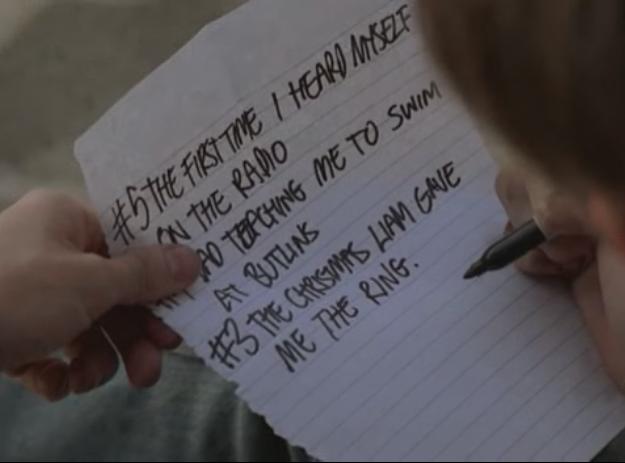
Charlies writes his list of Greatest Hits. From Wikia
Lost - Season Three, Episode Twenty-One - Greatest Hits
Written 22/3/14

Charlie Pace - a character whose three season journey went from brilliant to disappointing and then back to okayish with a side of "that's not how you say Aaron, omg shut up". As a Manc myself, it's fantastic to see somewhere other than London actually mentioned in the rest of the world, and especially in a character who began life as complex and difficult as Charlie. The inevitability of his death and the show's constant signposting of it makes him a very interesting exception to the usual rules of TV - but that by no means diminishes the quiet poignancy that his acceptance of his death brings to this last pre-finale episode.
      There's a sense of pre-finale fever as Jack reveals his plan to defeat The Others - by planting dynamite (courtesy of a returned Danielle Rousseau) in marked tents, the Survivors can blow The Others to kingdom come without them even knowing. Sayid reveals that Naomi's phone signal is being blocked; Juliet chirps in with the fact that all signals to and from the Island are blocked by an underwater station called The Looking Glass. Desmond has revealed to Charlie that Claire and Aaron will be rescued - but only if Charlie descends to The Looking Glass and disables the blocking frequency. Charlie thus says his goodbyes and writes a list of the five greatest moments in his life - his Greatest Hits - for Desmond to give to Claire once he is gone. Karl arrives, revealing that Ben has brought the plan forward by a day, thus meaning that three things must happen at once - the spoiling of The Others' raid, a trek to the Island's radio tower and Charlie's underwater adventure. Charlie reaches The Looking Glass, but once there he is held at gunpoint by an Other.
      In previous reviews near the end of a season I've oft talked about episodes whose sole purpose is to shift the characters into the right positions for the season finale, and while they might have had quite a while to do this, the end of Season Three has been so full of character devleopment and mytharc stroking that we're only just getting to it. Considering the fact that we're only an episode or two away from where I started Lost, it's strange to think about how little the atmosphere of the show is to that - the Writers' Guild of America Strike really did a number on the show post-Season Three, and I'll be talking about that more in my overview of the whole show
http://img2.wikia.nocookie.net/__cb20070518160202/lostpedia/images/b/b0/3x21_charlie_hug_hurley.jpg
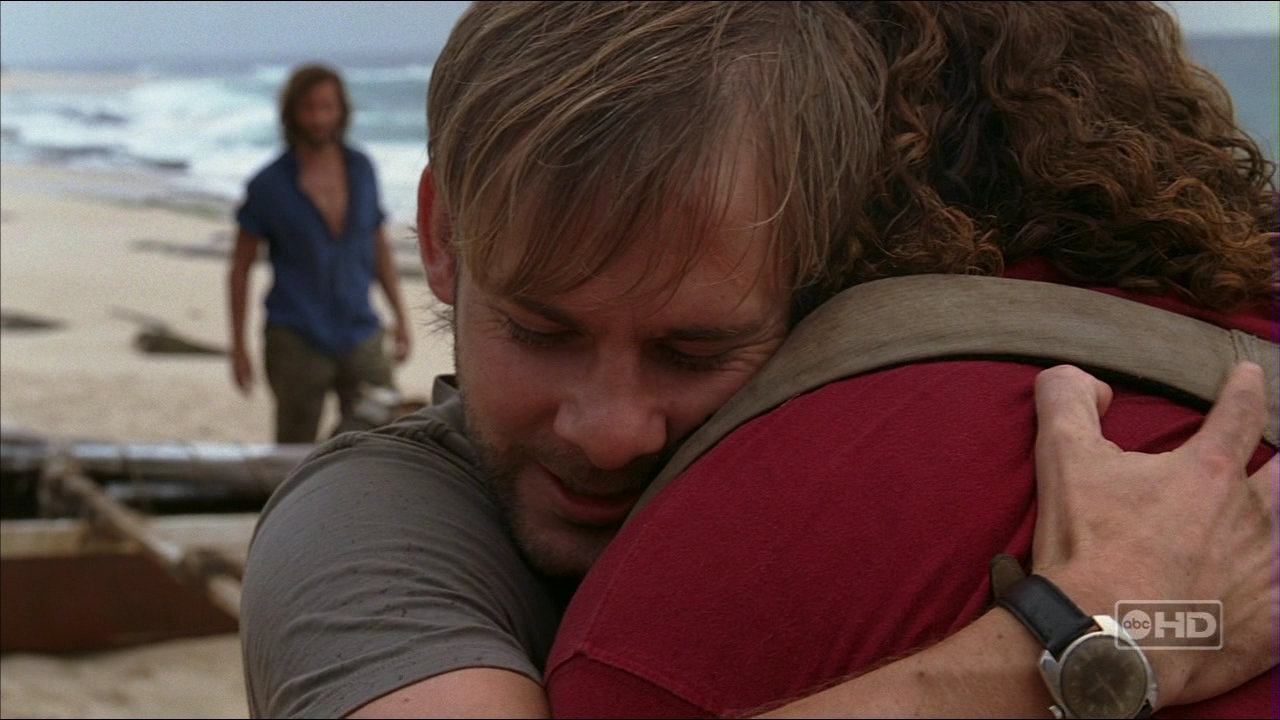
Charlie's death, while poignant, is kinda stupid. But I'll save
that for next week, eh? From Wikia
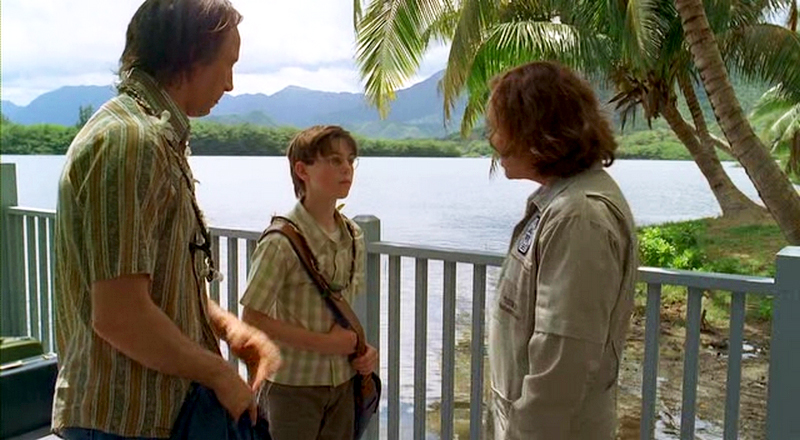
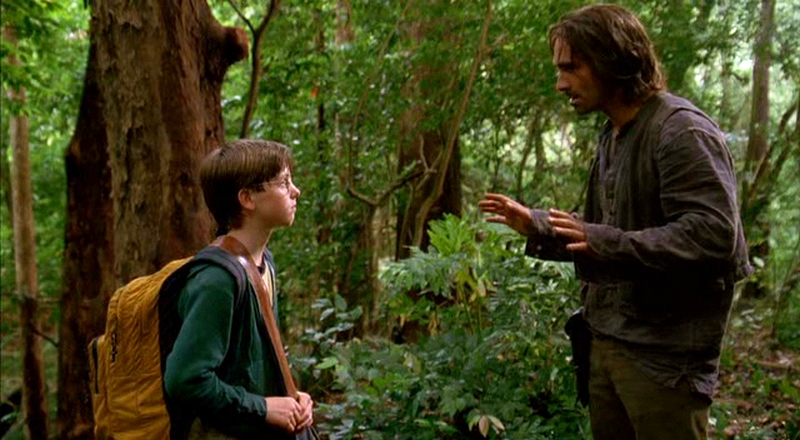
      This week's flashbacks were split up into five unrelated segments, charting the Greatest Hits on Charlie's list. On a rainy Clitheroe road, Charlie hears his band's one-hit-wonder "You All Everybody" on the radio for the first time. At Butlins, a young Charlie learns to swim with his Irish dad. Charlie's brother Liam gives him his family heirloom "DS" ring. Outside Covent Garden, Charlie saves a woman (Sayid's belle Nadia making her once-a-season appearance) from being attacked, and she calls him a hero. Finally, #1 on Charlie's list, is the moment when Charlie and Claire first meet, and he reassures her that rescue is on the way. I always get a little weary when the show tries to use Hawaiian locations for English locales, especially as it's very rarely accurate at all, but this style of flashback meant that such discrepancies were minimal and their distribution throughout the episode made them quite touching as counterpoints to Charlie's decision.
     Like Charlie, and myself, this episode felt very much like it was getting ready for the end. There was so much manoeuvring going on with the characters, elaborating on plotlines which for the past few weeks have been mere one-scene hints. But through all that busybodying, there was still room to feel something for a character whose storyline has been at times both brilliantly inspired and completely misguided. And, seeing how much he was loved by the fanbase, this was a stroke of absolute genius. Greatest Hits is an episode whose strange kind of contention in sadness is something that makes it very, very worthy of its own title.

Thanks.

NEXT WEEK: My last Lost review. Really, this time. We see the final showdown between the Survivors and The Others before the impending Writer's Guild of America strike looms and we're presented with Lost's most wtf cliffhanger ever - we go Through The Looking Glass.

Wednesday, 26 November 2014

Review: Lost 3.20: The Man Behind The Curtain

http://img2.wikia.nocookie.net/__cb20100517070952/lostpedia/images/2/26/3x20BenRogerHoraceArrival.jpg
Ickle Ben meets Horace Goodspeed in 1972.
From Wikia
Lost - Season Three, Episode Twenty - The Man Behind The Curtain
Written 21/3/14

Benjamin Linus has, until this point in the series, been more or less portrayed as an all-knowing entity whose power of manipulation over the Islanders reaches near superhuman levels. Every time it's appeared that he was ignorant of something, it turns out that he's factored it into his plan. He lies, he bluffs - everything he does is part of his grand plan to maintain power and control over those around him; a common theme this season. This, Ben's first centric episode, shatters that illusion almost entirely. Not only do we see the origins of this disturbed little man as a young member of the DHARMA initiative (lots of Season Five cameos here :D), but we see John Locke so thoroughly tear him apart that he loses all sense of calm. It is a tour-de-force for Michael Emerson and one of this season's most powerful episodes.
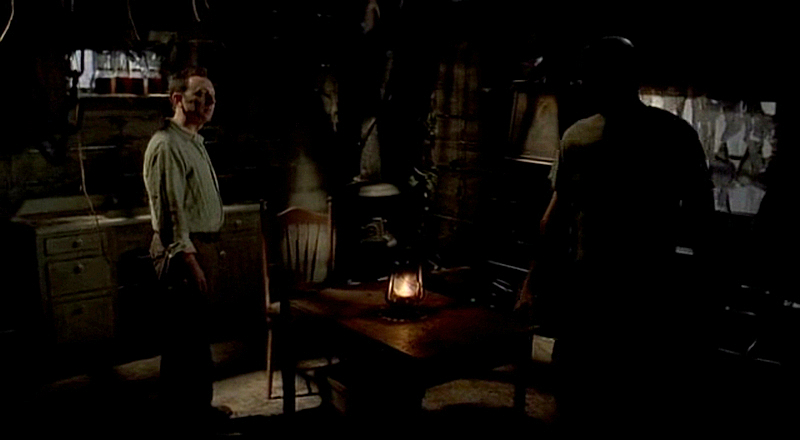
      Locke returns to The Others' camp with his dad's body and demands to see Jacob, the man whom the Others revere as a leader. A returning Mikhail gives Ben time to make excuses, but Locke is not having any of his bullshit - he beats Mikhail to a pulp to make that very point. Ben takes Locke out into the jungle, and along the way Locke questions his knowledge about the Island - he thinks that he's a fraud. A visit to a mysterious cabin in the jungle sees Ben initially appear as a complete actor - but then there's a voice in the cabin that only Locke can hear. Ben briefly explains his DHARMA initiative origins as he takes Locke to the mass-grave of victims from The Others' purge of the DHARMA society and shoots him in the side, explaining that "Jacob" has never spoken to him. In the Survivors' camp, Jack reveals that he knows about Juliet's secret mission and that together they have orchestrated a plan to prevent them from taking the pregnant women.
       Through flashbacks, we see Ben's history, as well as the fact that Richard Alpert doesn't age. His mother died in childbirth in a small forest outside Portland, Oregon, and his father has blamed him for his mother's death ever since. A chance encounter with DHARMA high-up Horace Goodspeed on that fateful day brings Ben and his father Roger (whose body Hurley found in Tricia Tanaka Is Dead) to the Island. As a child, Ben is friends with a young girl named Annie, and after a particularly depressing birthday he runs out into the jungle and, following an apparition of his dead mother, he runs into Richard Alpert and asks to join The Others. Twenty years later in 1992, and an adult Ben orchestrates The Purge, poisoning the DHARMA initiative using toxic gas, with only those in The Swan left alive.
http://img1.wikia.nocookie.net/__cb20100517075949/lostpedia/images/4/44/Benandrichard.JPG
Richard looks exactly the same in 1972 as in 2004.
From Wikia
     The deconstruction of Ben as a character begins in the flashbacks, certainly. Sterling Beaumon, who would come back to play Ben again in Season Five, presents a timid yet curious little boy driven to frustration by his father's abuse. His mother's death in childbirth provides a root for his drive to prevent the Island's pregnant women from dying. But the fact that they are dying exposes something crucial about Ben's character - he thinks he's the chosen one, and The Others did for a while, but he's wrong on all counts. The visions he sees are probably manipulations by The Monster, especially as once he becomes leader of The Others, nothing but misfortune befalls him. He's shot in the stomach, Annie has to leave, pregnant women start dying (his exact phobia), and despite the fact that the Island heals everyone of all its illnesses, Ben develops cancer.
      This development of Ben as an even more tragic dark counterpart to Locke and his journey is exposed a lot more given information in the fifth and sixth seasons. We find out that the being who occupies Jacob's Cabin is not the very real Jacob, but is in fact his nemesis, The Monster. (Aka The Man In Black.) In Season Five, Ben reveals something that confirms all of my suspicions during this episode - Ben's actions in the Cabin (talking to an empty chair and claiming it to be Jacob) are a complete act. The brilliance of Michael Emerson's performance in this episode is the way that he manages the performance in such a way that it can be interpreted in either way - in hindsight it's obvious that he's really desperate during that scene, but without that hindsight there is a fantastic level of ambiguity and that provides the scene's crucial tension.
http://img1.wikia.nocookie.net/__cb20100517094131/lostpedia/images/4/4d/3x20InsidetheCabin2.jpg
This'd be funny if it didn't remind me of this.
From Wikia
     Ben-centric episodes are typically fantastic, and this first outing is the most successful. Even though I wouldn't say that his character is the most developed of our characters, or even my particular favourite, Emerson's performance is one of such subtlety and grace that it's hard to ignore the presence he holds onscreen. And this episode plays into his hands in a number of ways, taking the Ben we know and more explicitly outlining the fact that contrary to previous appearances, he is vulnerable. He's not quite yet on the path to being the show's Dark Horse character, but he is a fantastic villain and more than worthy of this tremendous episode.

Thanks.

NEXT WEEK: Charlie must decide whether to follow one of Desmond's prophecies as he contemplates his Greatest Hits.

Wednesday, 19 November 2014

Review: Lost 3.19: The Brig

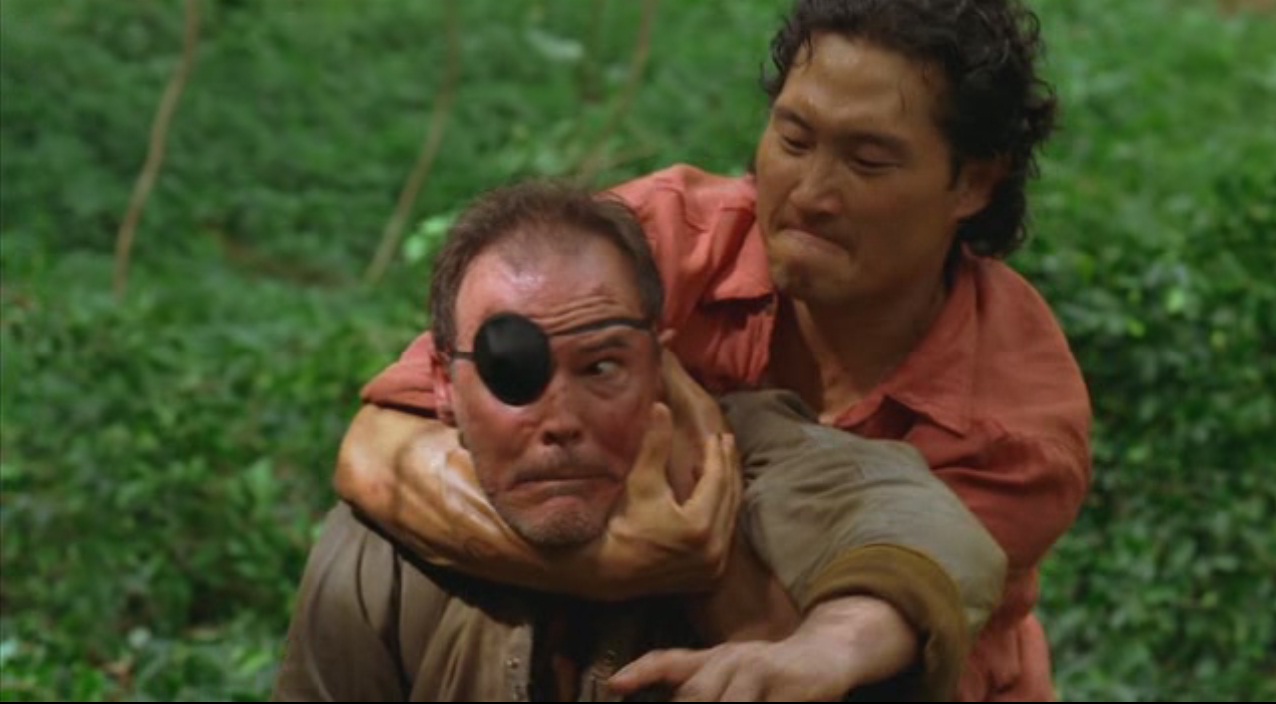
http://img1.wikia.nocookie.net/__cb20111202021507/lostpedia/images/d/d3/Normal_thebrig-caps008.jpg
Obscure character connections that make good sense.
From Wikia
Lost - Season Three, Episode Nineteen - The Brig
Written 20/3/13

Locke's third centric this season, the last Locke centric I have left to cover, is quite understated for a story which both takes his current plotline into new territory and settles a score as old as the show itself for him and Sawyer. In that way it was quite wonderfully dark, as Locke first considered whether he should exact revenge on his evil, evil father, and then seeing him embrace his "destiny" by manipulating someone else to do it for him, in a set of scenes which were eerily similar to those in the Sixth Season. There are also hints of the season's finale creeping up upon us, with secret hidden plans and a confrontation between the survivors and The Others which is gonna be spectacular.
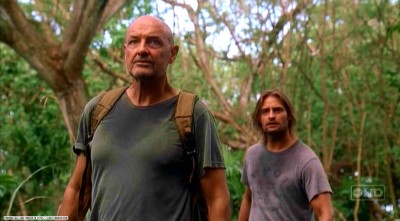
     We discover through flashback the events since Locke met his dad in The Man From Tallahassee - they were moved to a old Island monument, where Ben told Locke that he had to kill his father to achieve a special status amongst The Others, whom Locke now considers his people. When Ben, knowing Locke's attachment, uses it to show Locke up in front of his people, Richard Alpert gives Locke the file of one James Ford and suggests that Locke take a look. In the present, and Locke guides Sawyer away from camp with the proviso that he's captured Ben and that he wants Sawyer to kill him. When they reach the hiding place, the brig of the Black Rock, Sawyer instead finds Anthony Cooper, who reveals while blabbering that he was the conman who led to his parents' deaths. After Cooper tears up his special letter, Sawyer kills him there and then. Back at camp, and word goes round about Naomi - except to Jack, who is informed at the end of the episode by Kate, and then proceeds to reveal that he and Juliet have something up their sleeve for the next few days anyway...
     Dropping the spoiler bombshell here for a second (skip to the next paragraph, you strange people who haven't seen Season Six), the way that Locke and Sawyer interact in this episode is very, very reminiscent of the interaction between Sawyer and The Man In Black, also played by Locke actor Terry O'Quinn. Locke here has adopted Ben's own strategy - anything he doesn't want to do himself, he manipulates into doing himself, While it's fairly cack-handed (Sawyer is not the hardest man to fool, at least at this point in the show), it still shows a devious ingenuity which certainly did not exist before Island-times. He still can't bring himself to kill his father - the man who so many years of his life were spent obsessing over - but that doesn't mean Locke doesn't want him dead.
http://img4.wikia.nocookie.net/__cb20100516045451/lostpedia/images/6/6b/3x19RichardManipulatesLocke.jpg
There are so many lines in this episode which become
brilliantly ironic in the last two seasons that I'm not sure
if it wasn't completely intentional. From Wikia
      While it was a Locke episode, the lack of an off-Island story meant that we got a lot of time to look at Sawyer too - this is sorta his episode as well, especially as him getting to face the man who killed his parents is something of a climactic step along his character development. And I gotta give the writers credit - it didn't feel as contrived as I thought it would that it just so happens that Locke's dad is the original Sawyer. Kevin Tighe's Anthony Cooper is a deliciously evil shit-eating villain, insults and indignities oozing out of his character like an oil slick. He's vastly, incredibly hateable as a villain, and yet all the same he is in no way cartoonish - people like Cooper really exist, and that's what makes him so brilliant.
      While not as mind-blowing as next week's Ben-centric episode, The Brig had a lot going on beneath the skin in terms of Locke's development - his capacity to manipulate others. I mentioned a few weeks ago how a lot of the character arcs in this season have been about attempting to take control of one's life and one's circumstances, and I think it's particularly funny that on Lost this means that Locke effectively becomes, as Sawyer has, the man he despises. The fact that Sawyer and Locke are more similar than previously thought it not only genius, but it's also a pointer towards the friendship they'd develop across Seasons Four and Five. And Anthony Cooper's dead. That's enough to make anyone happy.

Thanks.

NEXT WEEK: We see how Ben became the man he is today. Richard Alpert hasn't aged since 1973? Who's Annie? And if not Jacob, who is the man living in his cabin? All these questions and more to be asked in The Man Behind The Curtain.

Wednesday, 12 November 2014

Review: Lost 3.18: D.O.C

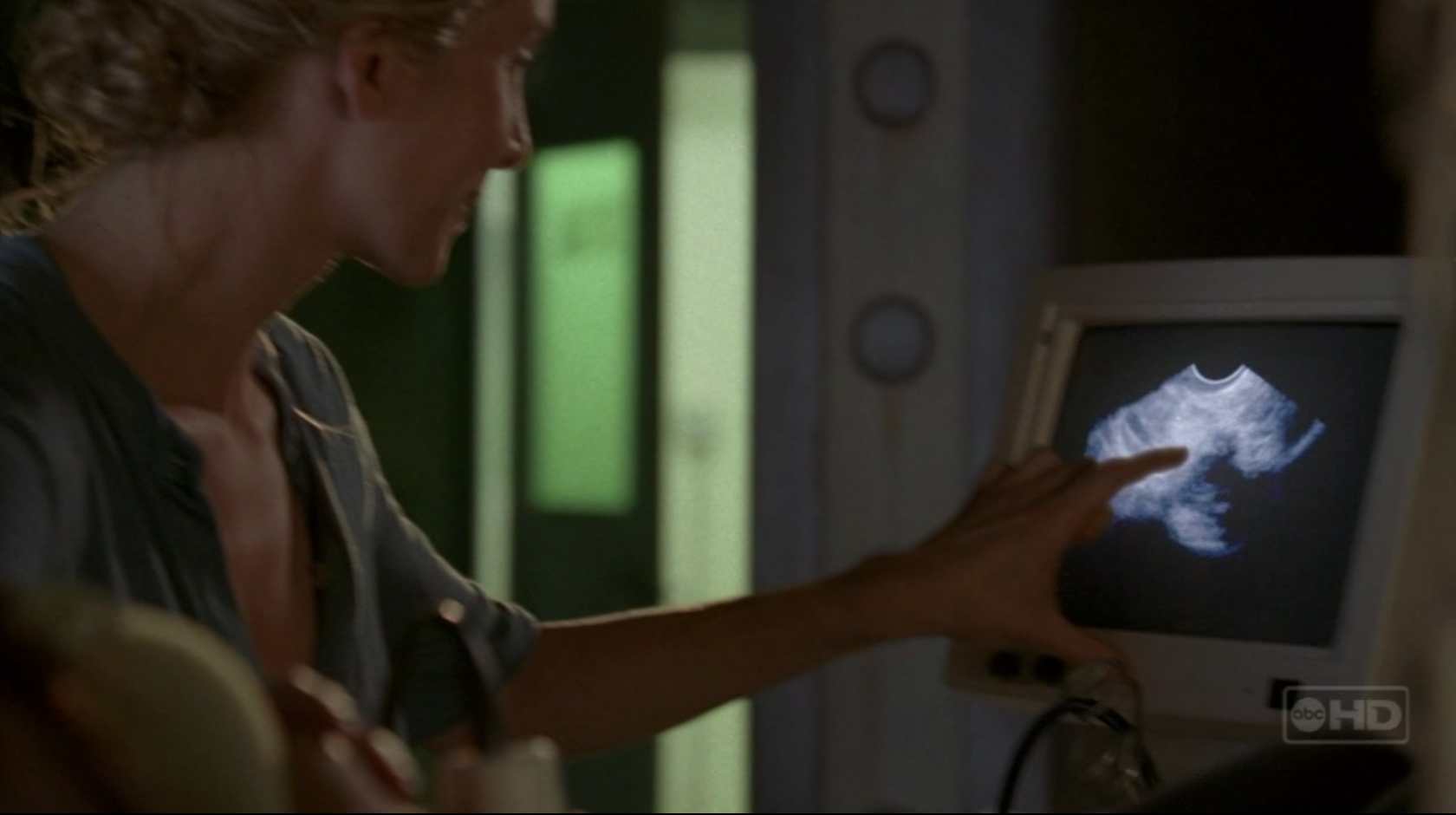
http://img3.wikia.nocookie.net/__cb20070426034757/lostpedia/images/8/87/Sun_Ultrasound.jpg
The first appearance of Ji Yeon Kwon. (Awww.)
From Wikia
Lost - Season Three, Episode Eighteen - D.O.C
Written 19/3/14

I was musing to myself earlier about some obscure Lost trivia - this episode is the last one to feature flashes which are entirely in a language other than English. It was then I stumbled upon a rather big piece of trivia - this is the last normal off-Island flashback episode in Lost's entire run. No more looking into the pasts of our survivors, no more tracing their steps from mediocrity through calamity and onto the fateful flight which brought them to us. And it's funny to me that this last swansong for the format of the first three seasons comes as a Sun/Jin episode - their story was always a tad more interesting in flashback than it was in present, even if it followed a lot of clichés along the way.
     Trying to help an injured Naomi, Desmond's band ran into Mikhail, who survived his apparent death in Par Avion and is quick to offer his experience as a Soviet field medic to help heal Naomi's punctured lung. He helps them and gets away, but not before Jin stops him from stealing Naomi's satellite phone. Naomi, once sufficiently recovered, reveals to Hurley that as far as the outside world is concerned, Flight 815 has been found and all the passengers are dead. Meanwhile, Sun is ruffled by Jack's extra concern, and talking to Juliet reveals why. Juliet offers to help Sun, and in the dead of night she takes her to The Staff for an ultrasound. Despite her fears, the time of gestation points to Jin as the father and not Sun's pre-Island lover Jae Lee - but all the same, the baby's conception on the Island means that Sun has two months left to live unless she leaves its shores.
      Our flashback (our last segmented off-Island flashback ever) took us, as usual, to Seoul, where Jin and Sun are newlyweds moving into their first apartment. A woman comes up to Sun and blackmails her, saying that if she doesn't receive $100,000 by a set date, then she will reveal to the world that Jin's mother was a prostitute. She speaks to Jin's fisherman papa and he reveals that it's the truth, and this drives her to request the money from her rich Mafioso dad. He agrees for her sake, but on one condition - Jin has to work as one of his thugs. (As we saw in ...In Translation.)
http://img3.wikia.nocookie.net/__cb20100323084115/lostpedia/images/5/5f/RushinTheRussian.jpg
South Korean Army Training > USSR Army Training
From Wikia
      Yet again, this week gave some more time for Juliet to develop, but unlike in Left Behind, she didn't outshine Yunjin Kim's by now brilliantly nuanced performance as Sun. It's quite striking how much her character has come on - in the first season, I feel now as though there was a certain sense of stereotyping -  the quiet, submissive asian woman. Now Sun is far more three-dimensional - moral enough to stand against her father's corruption, not naiive enough to ignore the influence it gives her, and deeply loving towards a husband whom she, given in her place in society, wouldn't be expected to look at twice. This episode is an examination of how much Sun's character has changed - both on the way to her subservient state, and far, far away from it.
      As much as I'd love to stay and chat, this is still a Sun/Jin episode, and despite the fact that the Naomi storyline which is gonna be so crucial in about a month rattled along nicely, I don't have that much to say about the main meat of the episode that I haven't said before - Sun has developed well, Juliet is both morally gray and yet infinitely connectable, Kate was in this episode apparently at some point. I've no disrespect for D.O.C at all, I'm really loving the momentum this season has even during this downtime, but in the next few weeks we've got much bigger fish to fry, and it's gonna be amazing.

Thanks.

NEXT WEEK: So, er... what happened with Locke meeting his dad? That was five weeks ago and we got no resolution. Oh, we're having on-island flashbacks? Oh goodie. :D It's time we saw Locke head to The Brig.

Wednesday, 5 November 2014

Review: Lost 3.17: Catch-22

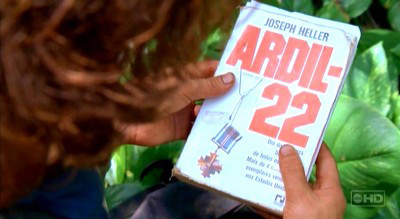
http://img1.wikia.nocookie.net/__cb20090106034956/lostpedia/images/f/f1/3x17_Ardil-22.jpg
Este episódio foi cheio de de viagem
no tempo
momentos de diversão.

De Wikia
Lost - Season Three, Episode Seventeen - Catch-22
Written between 16th and 18th March 2014

Lost is a big fan of writing entire episodes around literary allusions, and this week's eponymous plot-grab comes from a book by Joseph Heller in which there arises a no-win situation in which there are two given choices, both of which will lead to unpleasant consequences. As well as making English Majors wet themselves, this episode followed the trend of Desmond-centrics, providing us with some exciting sci-fi conundrums to do with time-travel, predestination and, funnily enough, whether Superman could beat The Flash in a foot-race. (He can't, by the way.)
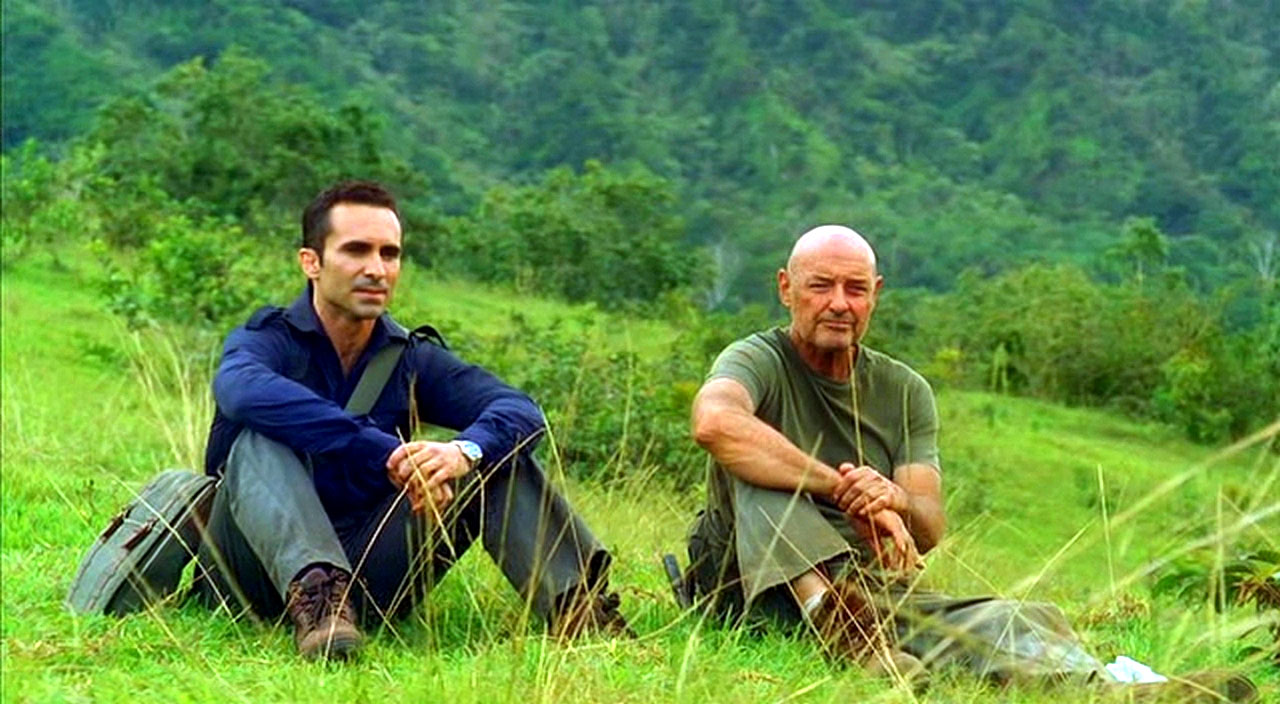
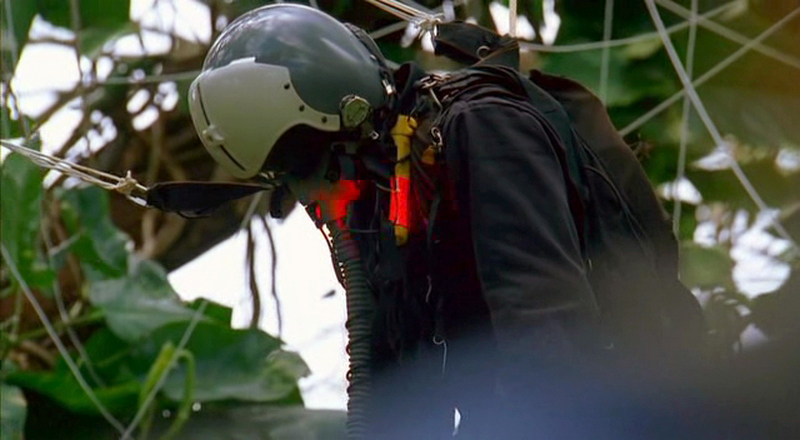
      Desmond receives a new flash - He, Charlie, Hurley and Jin are walking through the jungle, looking for a parachuter who has bailed out of a helicopter. Charlie accidentally steps on one of Rousseau's traps, and is killed. Hoping that the parachuter in his vision is his long-lost lover Penny Widmore, Desmond gathers the four of them together in order to follow the events of his vision exactly, afraid that if he doesn't follow it (and if he doesn't let Charlie die) that he will never see Penny again. When it comes down to it, he saves Charlie, who isn't too happy to hear about the real contents of the flash. The parachuter comes down, and has a satellite phone to hand, but it isn't Penny - it's a Manc woman named Naomi. Elsewhere, and there is some minor Love Rectangle shenanigans. In Desmond's flashback, we see him as a Monk, having left his previous girlfriend in a sudden moment of fear. He is forced to leave the Monastry after a night of drunkenness, yet on the way out he meets a beautiful English girl named Penny.
     The appearance of Naomi means that we're getting frighteningly close to the endgame of these reviews, as she was someone I mentioned quite a bit (but didn't see very much of) in Season Four. Her appearance does however faciliate the episode's interesting main-island subplot, which is more about the morality of acting of pre-destination than anything else. This is the first flash where Desmond had to explicitly cause what he was seeing to happen, and that leads to the inevitable question - given that we can assume that Charlie is gonna die anyway through Flashes Before Your Eyes' course-correction, is it wrong to let him die if it leads to the rescue of everyone else? This question will get examined in greater detail in a few episodes' time, but it raises a little nitpick about this entire plotline - the idea that Desmond's flashes only pertain to Charlie's death. It all seems a little too specific to fit into the mythos. A bit convenient.
http://img3.wikia.nocookie.net/__cb20100514104448/lostpedia/images/b/b2/3x17parachutisthangs.jpg
I'd try to insert another falling pun, but I've used them twice
already this season so I'll leave it. From Wikia
     The love rectangle segments, in which Kate angrily sleeps with Sawyer as a means of getting back at Jack for hanging around with new belle Juliet, were mildly entertaining but rather distractingly tangential to the main plot. I don't need to really elaborate on my feelings about the Love Rectangle - especially as we're six episodes from the end of these reviews and there are much more fun things to talk about. If anything it damaged Kate's character - the pettiness with which she sorta jumped on Sawyer as a direct act of jealousy against Jack, when really by this stage they've both betrayed each other enough times to not warrant this level of emotional control. Maybe I just don't understand relationships or something, I don't know.
      Catch-22 was an interesting use of Desmond's time-travel, which worked in a significant move forward for his storyline while simultaneously introducing us to a development in the main plot which, as they're currently bogged down in the laziest kind of romantic writing, our "main" characters aren't able to provide. It wasn't the perfectly orchestrated Lost gold that typifies this half of the season, but all the same it was an adequate distraction. Next week we get to see The Staff again and Juliet's cover gets blown. So that's fun.

Thanks.

NEXT WEEK: We find out who Sun's babypapa is and Juliet helps out in D.O.C.

Wednesday, 29 October 2014

Review: Lost 3.16: One Of Us

http://img3.wikia.nocookie.net/__cb20100511092342/lostpedia/images/3/3b/3X16BensRelevation.jpg
Ben's smelt something and Juliet's not happy about it.
From Wikia
Lost - Season Three, Episode Sixteen - One of Us
Written 14/3/14 (Happy Pi Day!)

Juliet is a very interesting character. It sounds bland when I put it bluntly like that, but it's nonetheless true in a way which marks her out almost immediately. Out of all the new introductions to the show, Elizabeth Mitchell's portrayl won we over in the least amount of time, and within the space of half a season, her episodes have become events as big as Locke episode or, as would later happen, a Ben episode. And that's because Elizabeth Mitchell and the writing team imbue Juliet's character with so many varying layers that you simultaneously sympathise with her and have no idea what she's really feeling. We don't trust Juliet... but we want to. And that's a distinction worth making.
     This week's flashbacks followed on from those in Not In Portland and followed until the present day, watching as Juliet turns slowly from the timid woman who was browbeaten by her ex-husband into the hard woman we see on the island. She is brought to The Island and Ben refuses to let her go, even as she discovers the hard way why they needed her - women who conceive on the Island always die of pregnancy complications if not taken off the Island. It is explained how Claire was a test case to prove their theory, and how Ethan took matters into his own hands. Ben manipulated Juliet by telling her that her sister had cancer, and then claiming that if Juliet stayed, then Jacob would heal her. This is then counteracted when, the day before the crash of Oceanic 815, Ben's tumour is discovered - the stories about healing cancer are a lie. We cut to just before The Others' leave The Baracks, and discover that Juliet's actions since Left Behind have all been part of one of Ben's masterplans.
      The Others' manipulative nature all seems to come from Ben (ignoring Jacob and all that Season Six crap, for those in the know), and we see throughout Juliet's flashbacks just how she is manipulated to follow his every whim - although clearly it's not as perfect as they'd like. Through this manipulation, through the despair and anguish it brings to her, she develops a rage and desperation which is clear throughout this episode. Part of the appeal of her character comes from a similar to Ben - you never really have any idea of what she's going to do or why, but the difference is that Ben is overall more malicious and petty in his true intentions, wheras Juliet has been driven to this personality by his destructive manipulation.
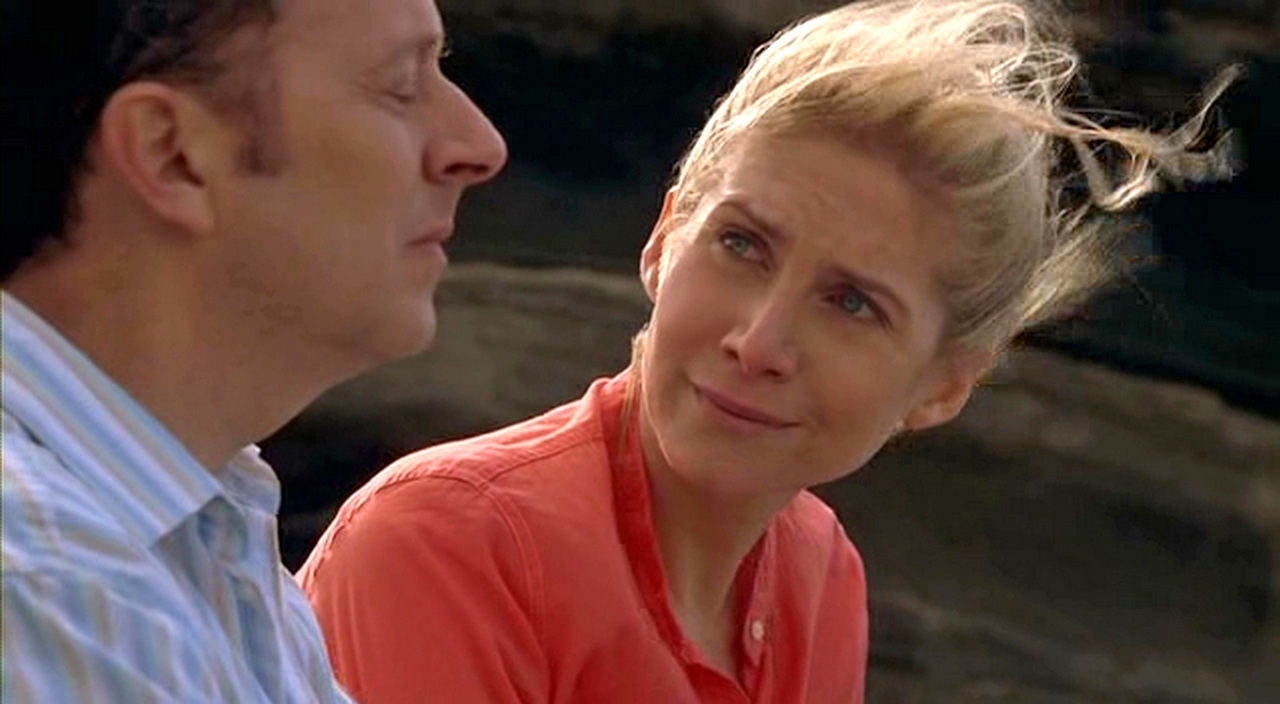
http://img2.wikia.nocookie.net/__cb20100511105315/lostpedia/images/f/fb/3X15JuliethasHurleycheckherout.jpg
The camp watches the "ocean waves" relaxation
video on loop. From Wikia
     On-island, and Juliet was marched back to the beach camp with Sayid, Kate and Jack. She's immediately distrusted by everyone and the dog, and it soon happens that Claire falls dreadfully ill. Juliet immediately claims responsibility, and goes to fetch medecine, leading to a confrontation where Sayid and Sawyer attempt to interogate her and she shuts them down due to her knowledge of both of their murderous and torturous acts off-island. Under Jack's protections, she gives the medecine to Claire, and earns the slight respect of the group. Of course, now we cut back to that flashback we mentioned - this scenario was set up a while ago, and nearly all of Juliet's heartfelt pleading was complete porkies.
      I'm very sorry if I've waffled at all today; I'm quite tired and out of it and all sorts of other things. It's strange to me that I am now only six reviews away from finishing this project, one I started four years ago in the Summer of 2010. My bafflement is helped slightly by this episode's quality, while by now I'm sure I've waffled on about with enough self-repeating procrastination that you stopped reading after the first paragraph. So, that considered, I'm off to go and watch the next episode. Have fun.

Thanks.

NEXT WEEK: Desmond finds himself in a Catch-22.

Wednesday, 22 October 2014

Review: Lost 3.15: Left Behind

Lost - Season Three, Episode Fifteen - Left Behind
Written between 11th and 12th March 2014

In Lost's history, there have been episodes which tied together a central, specific theme and applied it a wide range of characters, with varying levels of applicability and success. This week, however, it's all spot on. The character beats are quite subdued on the whole, but the roundness of the episode's theme of being afraid of abandonment is quite profound, especially when none of it seems particularly contrived. It was a decent character focus for both Juliet and Kate, as well as developing Sawyer in both of the stories, thanks to a recurring guest star that connects some of this season's plotlines together quite well.
http://img3.wikia.nocookie.net/__cb20100510082202/lostpedia/images/6/60/3X15_KateCassFlashback.jpg
"eyefucking ensues" From Wikia
      Locke tells Kate that he and The Others are abandoning the Baracks - two minutes later, and Kate finds herself in the jungle, handcuffed to Juliet. Neither of them happy about the situation, they work their way back to The Baracks, encountering The Monster on the way. Juliet makes several revelations - that Jack knows about Kate and Sawyer doing the do, and that the only reason the two were handcuffed together was so that Juliet didn't have to feel alone. They meet up with Jack and Sayid, and together they head back towards camp. At the beach camp, Hurley cons Sawyer into being nice to everyone by convincing him that the other survivors will banish him if he doesn't improve.
     Juliet's character and how much it's compared to Kate in this episode still continues to astound me in how detailed each and every scene is. Juliet is, like most good characters, a study in contradiction - tough, trained and ruthless but at the same time desperate and emotionally vulnerable. She seems to quietly pride herself on how she knows more about Jack than Kate does - even though we know that she gained her information for the wrong reasons. I think the point is supposed to be that she knows this as well - her Love Rectangle boasting towards Kate comes as her most recent attempt to, like Locke before her, take control in her life. Most importantly for me, I think the fact that I left this Kate-centric episode feeling more for Juliet's situation is very, very telling.
     In Kate's flashback, we saw her meet Cassidy - Sawyer's victim and later babymama, just before she turned him into the feds to provide his imprisonment in Every Man For Himself. Kate, who's a good year or so into her life on the run, helps her out when a con starts to go wrong, and in return Cassidy agrees to help her with her mission - to get close enough to her mother Diane to ask why she turned her into the cops. After posing as Kate to see the strength of Marshall Mars' surveillance, Cassidy comes up a with a plan, allowing Kate to sneak into the diner where her mother works and ask her why she handed her in. Her mother replies that you love who you love, yada yada, and Kate barely makes it out. She thanks Cassidy for her help, and tells her to hand over the scumbag who conned her. (Sawyer, in this case.)
http://img3.wikia.nocookie.net/__cb20100510092723/lostpedia/images/8/8e/3X15JulietfacesSmokeybehindfence.jpg
Juliet casually stares down The Monster. Because
she's just that badass. From Wikia
     Kate's mother and the frustration Kate feels over the hold her now deceased father still holds on her was hard to watch, especially given that the confusion she feels is very apparent. I like the fact that what she did has very mixed moral implications - there's no denying that Wayne was a scumbag, and the world really is a better place with him dead. I think the more important thing to note is the kind of society that would force two women in an abusive relationship (he beat his wife and felt up Kate, who last season we discovered was his biological daughter) to have to resort to murder in order to feel safe. While my first instinct would be to complain about how ungrateful Diane is being to her daughter (she isn't being beaten any more, and she's filthy stinking rich from Wayne's life insurance), I recognise that there are aspects of abusive relationships that this show is trying to cover, and doing so with some mild sensitivity.
      If I recall correctly, then this is the last Kate episode I will ever have to write about. Which, frighteningly, means I'm seven reviews away from finishing my run-through of Lost alltogether. I feel like I should have been making grand, sweeping statements - more than I do usually, anyway. It's hard to focus on the long-term milestones in this project when the individual episodes, even when they're a bit off, are so captivating in their themes and performances. This episode was made by Juliet and Cassidy, the way that they interacted with Kate, and by the way that all of the interlinked characters were facing the same problem in very different ways. Kate chose cunning, Cassidy imitation, Sawyer repention, Juliet deception. It was a fascinating study of our characters - and that's usually a sign that Lost is doing something right.

Thanks.

NEXT WEEK: Another step in Juliet's story comes alive as we wonder if she's One of Us.

Sunday, 19 October 2014

Review: Doctor Who 8.8: Mummy on the Orient Express

From The BBC
It would be unfair of me to say that I didn't enjoy this week's episode, even if I'm still a little tired of the show's whole setup at this point. Initially I thought this episode would be another nod towards Agatha Christie, but despite some aesthetic similarities it was more of a fascinating execution of a sci-fi idea, littered with some interesting side characters and strained painfully through our two leads like a concrete enema. And, while it was nice to see a sci-fi idea not completely and totally butchered like last week, I'm feeling something missing in the core dynamic which sours the whole experience.
      As their "last trip" (not this bs again, please...), The Doctor takes Clara to The Orient Express, in Space. The train is being haunted by The Foretold, an ancient alien mummy who appears only to his victims and then kills them exactly 66 seconds later. The Doctor is intrigued, Clara is not, she ends up spending half the episode off-screen anyway so idek. As the ship's population slowly decreases, the mummy picking people off based on physical and psychological weakness, The Doctor realises the journey's true purpose. The ship's intelligent AI takes over and explains that the passengers are there to experiment upon and aim to capture The Foretold, at least until everyone on board is dead. This pisses off The Doctor, who takes it upon himself to fool The Foretold into thinking he's the next victim. He works out in his 66 seconds that the mummy is an ancient soldier, and by surrendering he frees it from its servitude. The AI says he's going to finish up by killing everyone on board but we suddenly cut to a beach and The Doctor tells Clara all is well. She ends up going away with The Doctor on more adventures.
     I got a little tired of "last adventures" back in the Amy and Rory years, where that came up every other week near the end. It reached the point with them where I no longer cared whether they stayed or went, and despite the attempts to give Clara some personality, I'm almost at that stage with her. She comes across as someone who consistently doesn't want to be in the TARDIS, and the show as a whole is presenting travelling with The Doctor as something nobody in their right mind would want to do. That seems antithetical to everything Doctor Who should be about - the popular appeal is that escapism, the idea that The Doctor could arrive and whisk us away from our lives at any moment. Plus, if you're going to address the disconnect between Doctor and companion as it does with Clara, then you could at least have the two together for the majority of the episode instead of literally shoving Clara in a cupboard until the end.
Oh yeah, Frank Skinner was in this episode.
From the BBC.
     The idea behind the episode brushed again with the theme of soldiers and devotion to a cause, but rather more namechecking it than actually examining it or deconstructing it in any particular detail. More focus was put onto The Doctor's sherlockian cleverness than on the themes presented. One such avenue that the episode could have focused on was the choosing of the victims from weakest to strongest, and the way that psychological issues were just as much as a weakness as physical infirmity. While this was addressed in the episode, the mechanism of the episode's artificial tension meant that these issues disappeared within a minute of them arising. And the rubbish ending certainly didn't help. It felt silly, like a lot of this episode's explanations, and it rendered a lot of the episode hollow as a result.

Thanks.

NEXT WEEK: Someone dingled the whatsit dangle and the thingy is happening! It's Flatline.

Wednesday, 15 October 2014

Review: Doctor Who 8.7: Kill The Moon

This is gonna be a long article, folks.
From the BBC
When you strip away the era's misogyny, prejudice and the incompetance of its head writer, the one thing I really wanted from the Moffat Era was a story with political and/or scientific undertones. Good science fiction blends a straightforward main plot with themes which relate the story to real-world issues, but in a way which maintains our suspension of disbelief. Kill The Moon is a story which addresses a lot of science and has one clear, bludgeoning political message - Abortion is bad, anyone who supports it is bad and there is no possible reason anyone should not have a child. Now, while I personally think this opinion is despicable, it would be remiss of me to damn the episode on that alone. No, instead I'm going to damn the episode on more or less everything else. This level of crap is the reason I started writing, folks, so hold onto your belts.
How was the moon alien growing? Where was it getting its
energy and sustenance from? The moon has no organic matter:
from whence did it gain the material for the "bacteria"? What
was their purpose? From the BBC
     After The Doctor apparently called troublesome teenager Courtney "not special" last episode, Clara chews him out and the subsequent argument leads to them taking Courtney to the Moon. They arrive in 2049, on an old Space Shuttle sent to the Moon with mankind's remaining nuclear weapons in order to discover why our natural satellite has apparently gained weight. There they discover the last expedition dead and covered in cobwebbs, killed by hordes of spider-like creatures which The Doctor says are like bacteria. Eventually The Doctor, Clara, Courtney and one survivor, Lundvik (Hermione Norris, Spooks) discover the reason for their trouble - The Moon is in fact an egg for a planet-sized organism, and it's about to hatch. Lundvik wants to kill the creature using her arsenal of nukes, reasoning that if the creature awakens The Earth will be tormented by both catestrophic climate change and by continent-sized chunks of moon-rock. The Doctor and his fellowship spew out pro-life arguments, and The Doctor buggers off, forcing Clara to make the decision on whether to kill or not. She eventually decides not, and the Moon hatches, with the remains of the planet magically disappearing and a new "egg" being layed in its place.
     Now, Doctor Who should be a forum in which a variety of political avenues are discussed - in the Classic Series alone we had drug addiction, the taxation system, the British Political system, the effectiveness of Thatcherism, the Cold War, the Gay Rights Movement, whether Britain should join the EEC, and many, many more. Abortion and its ethics are not an untouchable ground to walk on. However, and I stress that I do speak from the perspective of a white cisgender male, this is not a topic that you discuss through outlandish metaphor. This is what is referred to as a Space Whale Aesop, and its use in actually discussing Pro-Choice versus Anti-Abortion is close to none. Instead, the effect is a very blunt and very tiring presentation of the Anti-Abortion position as an absolute moral right, with none of the actual consequences that such a decision can entail in the real world. And don't just think I'm drawing conclusions out of metaphor here, there is no god-damn metaphor. "Why do you want to kill it, it's a little baby?", "It's not been born!", "You can't blame a baby for kicking!", "I'm gonna need more than that if I'm gonna kill a baby." The truth is, it doesn't even make sense in-universe - the creature lays an egg directly after it hatches, so it must be in a state of physical maturity, and the Moon is made of large chunks of rock that would cause a major catastrophe upon its destruction.
     That very neatly brings me onto the other thing about this episode - the bad science. This one is a cracker - I almost wish I could finish writing that "5 More Cases of Bad Doctor Who Science" article now, because this episode offends nearly every discipline. This episode's premise, a planet which turns out to be a gestating creature, is not a fundamentally bad one - exobiology allows for all sorts of possibilities. The Moon, however, is something we know about. Like, we know what the Moon is made of. It's got a molton outer core and a liquid inner core, like Earth. (But at a much smaller scale.) The temperature at the centre of the moon is about 830°C (1) - the point is, Mankind has looked inside the Moon, we didn't just hop about on the surface and hope for the best. Alongside other claims like "there are no minerals on the moon" (The Moon is made principally of "minerals") and "there's no water on the moon" (there totally is (2)}, there's no explanation given as to where this majestic creature came from, just that "it's always been there". I don't want hard science here (this is after all a show about a time traveller), but I would expect the writer to spend a minute on the god-damn Wikipedia page. (Also, those giant spiders are certainly not "prokaryotic" organisms. That was embarrassing.)
No giant space aliens. From Wikimedia
     The episode's main problem, then is in its suspension of disbelief. Now it can be said that as someone who's been dissecting TV for a good 5 years or so, my suspension of disbelief is pretty thin - of course I see the tropes, of course it's harder for me to be carried along by the universe. But that's a pretty poor excuse for what's going on this week. On the one hand, we have a set of characters who are forced into opposing sides of a debate on Abortion, where one side is advocating the continued survival of the entire human race and the other is going "but the ickle giant space baby!" That is not a natural dilemma that we can get behind - it's a complex issue both in and out of universe, and not one that the episode should make a fundamental decision on. On the other hand, we have the entire concept of The Moon being a giant alien which hatches and simultaneously lays an egg the size of itself. This episode didn't just kill my suspension of belief, it pulverised the corpse, cremated it and ejected the remains into the sun.
     And, to finish, I think the thing I hated the most about this episode was the allusions it made to The Waters of Mars, a fantastic story. Walking in that same orange space suit across a barren yet familiar world, charting the history of space travel and mankind's progression. A guest star in a respected female actress playing a future astronaut. Except, where The Waters of Mars told a story of the understanding of necessary sacrifice and hard decisions, Kill The Moon inverts it and shows that taking hard decisions has no consequences as long as you follow naive, child-like reasoning and black-and-white morality. That is a very common theme with Moffat's era. That and, I've noticed this season, making Capaldi do something un-Doctorish and then having Clara shout at him as though he's always been like that. There were times when Clara was screaming at The Doctor where I felt she summed up my feelings towards the character (and the series) with more clarity than I ever could.

Thanks.

NEXT TIME: Because RTD didn't do Agatha Christie well enough, I suppose. We take a train-ride in Mummy on the Orient Express.

Review: Doctor Who 8.6: The Caretaker

I moved into Uni three weeks ago, and since watching The Caretaker I've stopped watching Doctor Who regularly. However, since I don't want to leave the show forever, I've decided to catch-up on these episodes in the vain hope that they get any better. The Caretaker review was mostly written after broadcast.

Because this isn't forced or laboured at all.
Doctor Who - Season 34, Episode Six - The Caretaker

Do excuse the lateness of this thing, I spent last night moving into University. Very hectic. Somewhat like this week's episode, which took the boring present-day segments from the past few episodes and stretched them out to 42 minutes. It's abundantly clear to me that at this point it's probably easier to stomach Doctor Who if you ignore the years of history behind it, because this era of the show has no intention of keeping the same tone or base characters. Add in an excuse sci-fi plot hiding some fairly dull character beats, and it starts to become obvious that this season's arc isn't as clever as it thinks it is.
     The episode felt a strong familiarity to The Sarah Jane Adventures, no doubt due to writer Gareth Roberts connection to that series. Like the last two Roberts episodes, this week shifted action to the present day and had a sharply comedic bent, but unlike his last episode I wasn't left frothing from the mouth. The main conflict was the first interaction between The Doctor and Danny Pink, and both of their characterisations clashing against one another. Which would have been fine, if there weren't problems inherent in those characterisations. The Doctor was presented as occupying an officer class in comparison to Danny's soldier, and in conjunction he reprised his hatred of soldiers, both of which seem against The Doctor's characterisation. Previous incarnations tended not to agree with military methods, but respected experience and personality over the stigma of that occupation. On the other side, Clara and Danny are said to be in love with each other. That would be easier to believe if their relationship wasn't shown to mainly consist of deep personality clashes.
Who to side with when I hate everyone?
     The rest of the episode was "comedic" attempts by The Doctor, posing as a caretaker at Clara's school. The problem for me with Capaldi's characterisation is that he seems neither fit for comedy or drama, hanging as his predecessor did on an edge whose proximity makes both a very distant possibility. I can't get to like Twelve at all, because I don't see The Doctor any more. And while it's certainly possible to watch the show like it's a 90s BBV series, I shouldn't have to. The Caretaker was a bad sci-fi story which thought it was being a lot cleverer and a lot deeper with its characters than it actually was. No change here then.

Thanks.

NEXT TIME: Anti-abortion politics and bad science make for an uncomfortable and infuriating time in Kill The Moon.