Friday, 23 May 2014

Review: Voyager 2.22: Innocence

http://images.wikia.com/memoryalpha/en/images/3/39/DrayanKids.jpg
Kids and Senior Citizens rolled into one! From Wikia
Voyager - Season Two, Episode Twenty-Two - Innocence
Written 18/10/13

Voyager manupulates sci-fi ideas into many shapes and forms, sometimes for the sake of character development as here, sometimes because that's the only way it worked, and sometimes because well, why the fuck not? Here, to showcase what a cuddly pumpkin Tuvok is capable of being, he gets stranded with three kiddy-winks on a jungle planet which happens to render all of the show's magic tech useless. We gain a small insight into what Tuvok would be like as a parent back on Vulcan, and are also led by a childlike mystery which anticlimaxes in a way which is both brilliant and slightly confusing, like a banana-skin tea cosy.
     The episode's rather standard plotline follows Tuvok being forced to help three children who claim to have crashed Lord-of-the-Flies style and who are petrified of going to sleep for fear that a giant monster will take them, as it already has done to members of their group. Tuvok can't sense anything, and as he bonds with these children he tries to teach them to be little logical machines like him. Soon the two boring kids get taken, leaving Tuvok and the one interesting kid left behind. Meanwhile, Voyager are talking with the kids' people, the Drayvans, who are a religious and sacred and proper sorta people. They're pissed when they find out where Tuvok's landed for unspecified reasons, until it's revealed that their species is one of Benjamin Buttons and all the kids who are sent there are in fact that species' elderly who go there to die. So it's fine.
     The episode's main focus is on Tuvok's parenting skills, which are mainly played for some very light humour as the kids misbehave and Tuvok remains the eternal straight-man to the Universe that he is. It's all very uninspiring stuff, especially as the writers try with difficulty to walk around the difficult line that Star Trek has set itself up with as to whether Vulcans actually feel things or not. And whether Tuvok actually feels things or not. That's your problem, really, when one of the most consistant and interesting characters on your show is one who supposedly can't express any emotion beyond smug superiority.
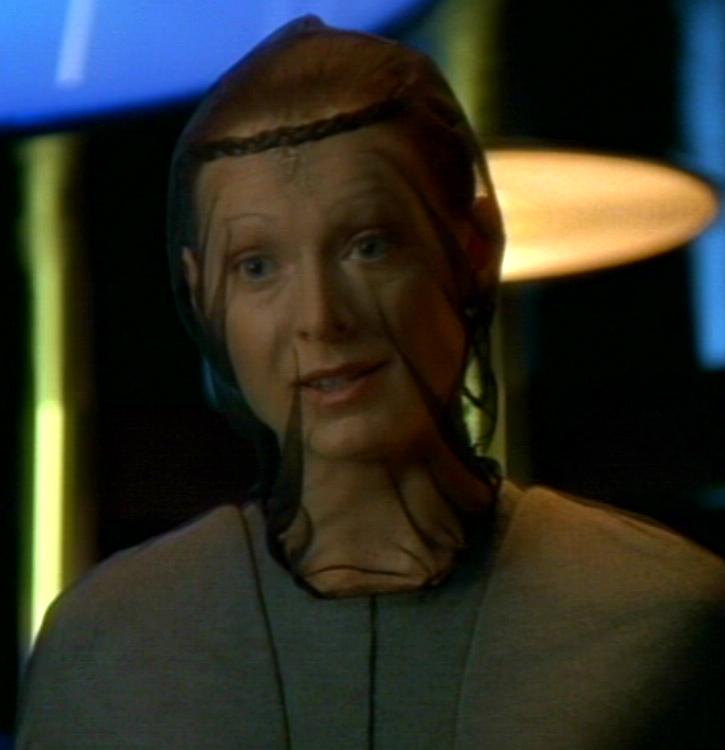
http://images.wikia.com/memoryalpha/en/images/5/55/Alcia.jpg
Our species is lazily designed so we'll wear this veil
to look cool. From Wikia
     Yeah, so... not one that knocked me out of the park. I've probably been away from this show for far too long, but Innocence gave me nothing that I haven't seen elsewhere, and there was nothing to draw me in. No captivating drama, an idea whose execution is deliberately half-baked, a guest cast consisting mostly of child actors. It's not the best shopping list of ingredients that I could have come up with, to be honest. Of course, that could just be my present mood, which at the time of this article actually being published will no doubt feel strange and alien to me. So, to the future me and to you, the reader of this blog in the World of Tomorrow, I wish you a happy day and that this season gets interesting before I pack it in and move to Wales for a life of quiet contemplation as a mad hermit in the mountains of Snowdon.

Thanks.

Wednesday, 21 May 2014

Review: Lost 2.19: S.O.S.

Lost - Season Two, Episode Nineteen - S.O.S
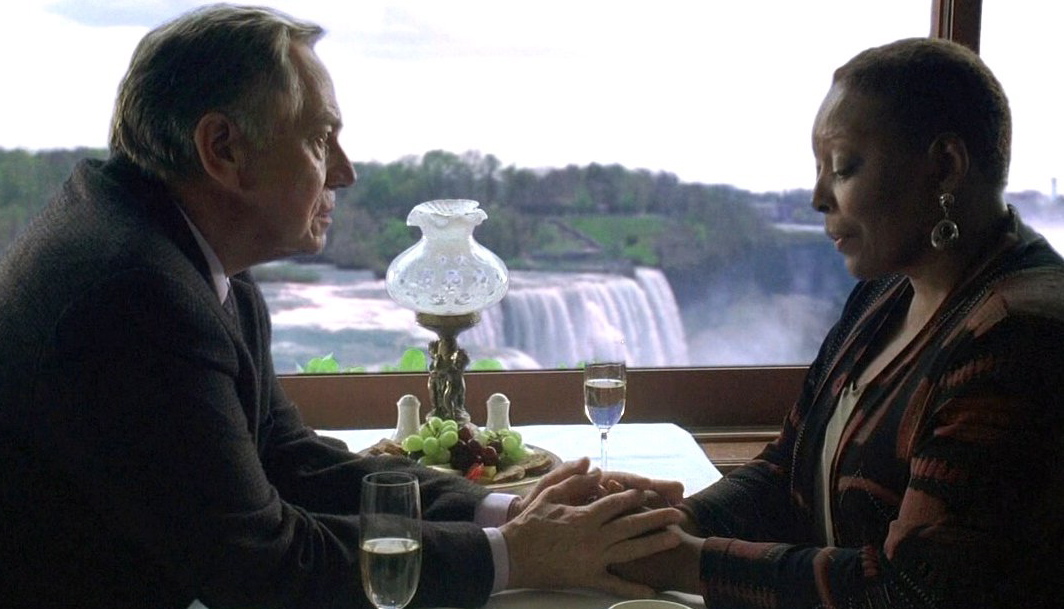
http://images1.wikia.nocookie.net/__cb20100630065825/lostpedia/images/c/c8/2x19_RoseBenrardFlash.jpg
Bernard proposes to Rose and discovers her secret.
From Wikia
Written 8/11/13

Just before the plot kicks into gears for the last few episodes of the season, Lost treats us to a unique centric episode focussing on those two background characters who get the odd word in now and then. It was a rigamarolle for all of the main characters, giving them a little bit of buffing before the action and giving us some soppy fluff in the centric plot for us to be going on with. Although it wasn't exactly the massive tour-de-force of television that Lost has the potential to be, it was thick on atmosphere and it was certainlty more pleasant than last week.
      Jack and Kate head out into the jungle to try and organise a trade - "Henry" for Michael - and after temporarily getting caught in one of Rousseau's traps, they reach the clearing where they last met the Others and find Michael alive and well. Meanwhile, Bernard is dismayed at the fact that everyone else on the island has gone native and tries to organise a group together to make a massive SOS sign on the beach. His wife doesn't support him in this endeavor, and in flashbacks we see the two meet, Bernard discovering her terminal cancer and wanting to marry her anyway, and then taking her to Australia on their honeymoon to get a faith healer to help her. In the present, Rose admits to Bernard that it was the Island, not the faith healer, that had healed her - that she didn't want to leave for fear of it ever returning. He breaks down and promises that they'll never leave. (And, as of Season Six, they never do. Aww.)
     Rose has a continued objection to her husband's proactivity in trying to help her, something understandable from both sides of the coin. For Rose, it's because she's accepted her fate (and then her miraculous blessing) and doesn't see the point in trying to change it. Bernard's desperation is clearly reasoned - he proposed to someone after 56 years of bachelorhood only to find out they had a terminal disease, and then crashed on a desert island on the way back from an unsuccessful honeymoon. It's the comedic level of tragedy that Lost seems to enjoy dishing out, even if with Rose and Bernard it's all executed in a single episode and a lot of the time it comes off a little soapy.
http://images3.wikia.nocookie.net/__cb20100629184758/lostpedia/images/4/4b/2x19Michael.png
I'd totally forgotten that Michael even existed, sorry.
From Wikia
     The rest of the episode played around a few of the meagre developments between characters in this season, especially in the development of Locke's malaise. Last week Ben told him that he hadn't pushed the button, and even though he's been lying for the past two months of the show, Locke takes this on board and starts becoming despondant, this time obsessing over a map he saw drawn on the Blast Door when it came down and crushed his leg. We also saw more awkard love triangle stuff, with Kate apologising to Jack for randomly snogging him a few weeks ago, and then him totally non-creepily replying, "I'm not sorry."
     Much ado about not very much, then. SOS has a lot going for it and it's a fairly charming little story once you sit down and watch it, but as television and as another piece of Lost's puzzle it seems fairly impotent. Rose and Bernard are two lovely characters, but as characters in the twisty turny and slightly stupid world that this season lives in, they feel too domestic, too unambitious. That's not necessarily a bad thing, though, because the show gets to relate to normal issues for the first time since the first season instead of posing such stirling moral dilemmas as, "should I push this button ever two hours?". And, while that isn't Lost's intended direction, it sure as hell made a nice change here.

Thanks.

NEXT WEEK: My precious gun-toting badass Ana-Lucia bows out in the tragic and brilliant and wait they made her fuck Sawyer? Well that's just silly... Ana Lucia offers us Two For The Road.

Friday, 16 May 2014

Review: Voyager 2.21: Deadlock

http://trekcore.com/gallery/albums/harrykim/deadlock_494.jpg
Alternate!Harry and Alternate!Naomi are brought over to
replace their counterparts. From Trekcore
Star Trek Voyager - Season Two, Episode Twenty-One - Deadlock
Written 15/10/13. "Mr. Kim, we're Starfleet officers. Weird is part of the job."

Deadlock puts me into a state of great disquiet. It holds quite an important position in this season, as it sees the birth of Naomi Wildman, a character who would later go on to act as a funny sidekick to both Neelix and Seven of Nine. It's a big point of canon, is what I'm saying. And aside from that point of canon, this episode is about as batshit crazy as Voyager gets, with temporal-spacial duplication, the return of the Vidiians, another miraculous reset button and the third death of Harry Kim, for good this time. (Don't worry, Garrett Wang wasn't out of a job. Not yet, at least.) This of course means that I can initiate Kim Death Count - 3. Hurrah.
      Voyager is caught in an Anomaly Of The Week and their fuel reserves cut in half. While preparing to analyse the problem, Voyager seems to come under attack from an unknown source, leading to a series of complications including the death of Ensign Wildman's baby post-birth and the unfortunate loss of Harry Kim to the cold void of space, minus the expected cartoon-like explosive decompression which in hindsight would have made it even funnier. Kes wanders through a portal and finds a second Voyager, almost identical to her own, except that their analysis has been causing the "attacks". The two Voyagers attempt to work together, but the "good" Voyager is attacked by a ship full of Vidiians and the "good" Janeway is forced to send her Harry Kim and Naomi Wildman through the portal so that the damaged Voyager can escape unscathed.
     The birth of Naomi Wildman feels very oddly placed, and the dilemma of the two Voyagers places a rather awkward and somewhat black-humoured spin on the entire episode. Long-story short, a baby dies. Despite all of the awesome medical tech of the future, Star Trek has to make up new conditions, and one of these conditions killed that baby dead. Ensign Wildman? She's just experienced something ridiculously traumatic, something that I don't think a show like Voyager is equipped to deal with. The way that the baby is brought back from the other ship and the whole death thing was just glossed over made me feel very uncomfortable, because despite the fact that these quantum doubles are very useful, there's still a god-damn corpse in sickbay, the corpse of Ensign Wildman's real daughter. That's a bit sick.
http://www.startrek.com/legacy_media/images/200303/voy-137-voyager-finds-itself-i/320x240.jpg
The two Voyagers seperate. From StarTrek.com
     That said, the idea of two "quantum" Voyagers existing in the same space at the same time was quite a fun one, and the practical aspects were executed well enough, even if the split screening for the two Janeways looked incredibly tacky, and I'm talking about a franchise which does duplicates more than it does same-sex romances. This proficiency is the execution of the concept did give the writers an excuse to throw in some of Voyager's astounding technobabble along the way. Luckily David Livingston's direction keeps it all together and despite a yard of extra material that had to be bolted onto the episode, the pace is fairly well-done. There are no points in the episode that I could call boring.
     And that's the thing, do I get to harp on an episode like this? Early Voyager has an atmosphere that takes getting used to, and right now I'm a few months out of the loop. Was this episode boring? Did it do anything to really annoy me beyond a few problematic elements? Not really. And that's why Deadlock gets me a little rattled, because I do enjoy it, even though its silliness and the sheer oddity of its premise stinks to high heaven of things that I've berated Voyager for in the past. And that makes it, if not entirely perfect, certainly memorable.

Thanks.

NEXT WEEK; Tuvok gets some lessons in parenthood when he fights for the Innocence of three alien children.

Wednesday, 14 May 2014

Review: Lost 2.18: Dave

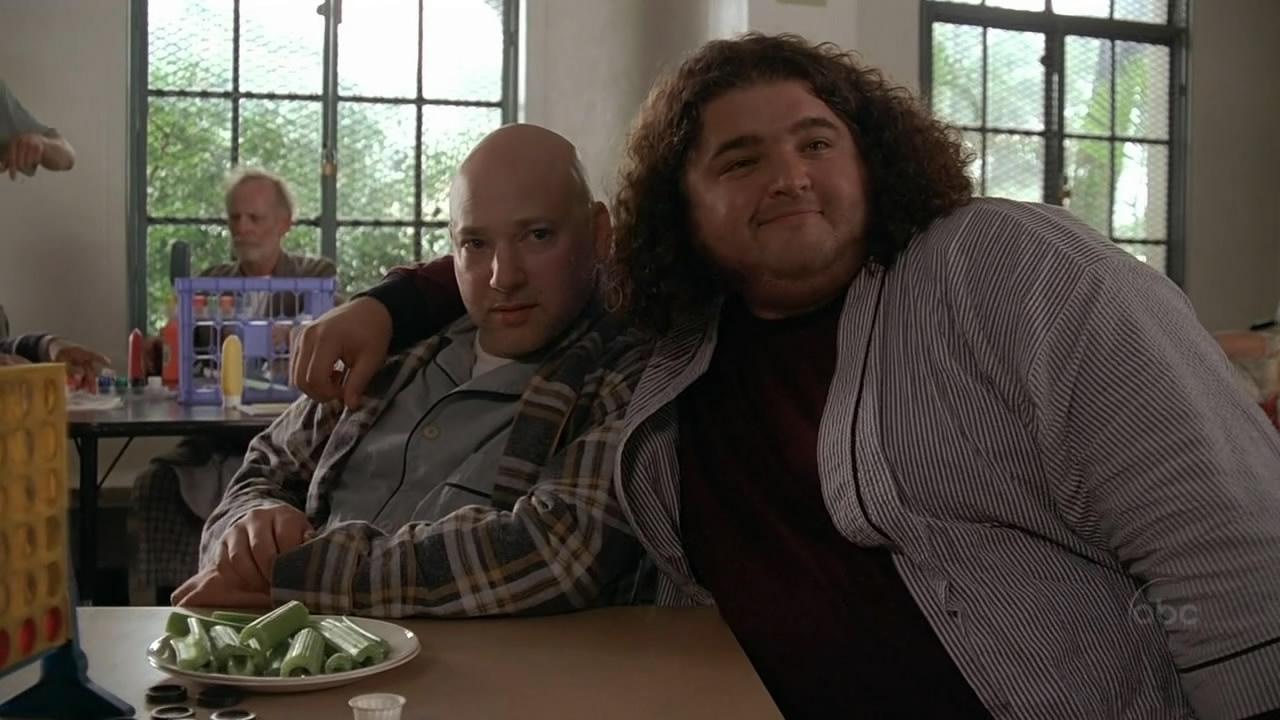
http://images1.wikia.nocookie.net/__cb20090219170836/lostpedia/images/f/f2/Dave-Hurley-Posing.jpg
Dave and Hurley in the Mental Hospital
From Wikia
Lost - Season Two, Episode Eighteen - Dave
Written 5/11/13

Fat shaming and negative portrayls of mental issues - this show has it all! Sorry to be cynical, but Jorge Garcia's performance as Hurley has been a walking fat joke from the moment the series began, and this episode's attempt to make drama out of Hurley's mental illness wanders between the tasteful and the offensive, and I struggle at times to tell which is which. Its internal messages are contradictory and its character development is all over the place regarding our central character, who is becoming less and less relatable by the episode. Meanwhile, Michael Emerson toils away in the background, still being brilliant.
      After being fat-shamed by girlfriend Libby, Hurley leads her to his secret stash of food left over from The Swan, which they destroy together. Discovering an entirely new source of temptation in the food dropped last week, Hurley begins seeing a bald figure in a dressing gown - Dave, man who we discover through flashbacks is a figment of Hurley's imagination which encouraged his self-destructive behaviours after an accident which collapsed a stage and killed two people. Hurley is taken in by Dave's schtick and feels guilty about eating and wanting to eat, and is led by Dave to a cliffside where he is convinced that he can kill himself in order to "wake up." Libby comes along at the last second and talks him out of it.
     Mental illness and the public perception of it is a very difficult issue, and one used far too often willy nilly in some armchair-psychologist fashion in order to extract easy drama from a situation. In this episode, we're told that Hurley's continued obesity derives from forced eating brought on by guilt at the deaths of two people in an accident that he believes he caused. This builds and builds to the point where Hurley seriously believes the idea that Libby's affection for him is a sign that the Island is a Life-on-Mars-style coma dream. Hurley never shows any signs of having continued mental illness elsewhere in the series; he returns to the mental hospital upon leaving the island, but that's because he's got magic powers and actually can see dead people. Here it just feels like deliberate manipulation of the issue for cheap conflict.
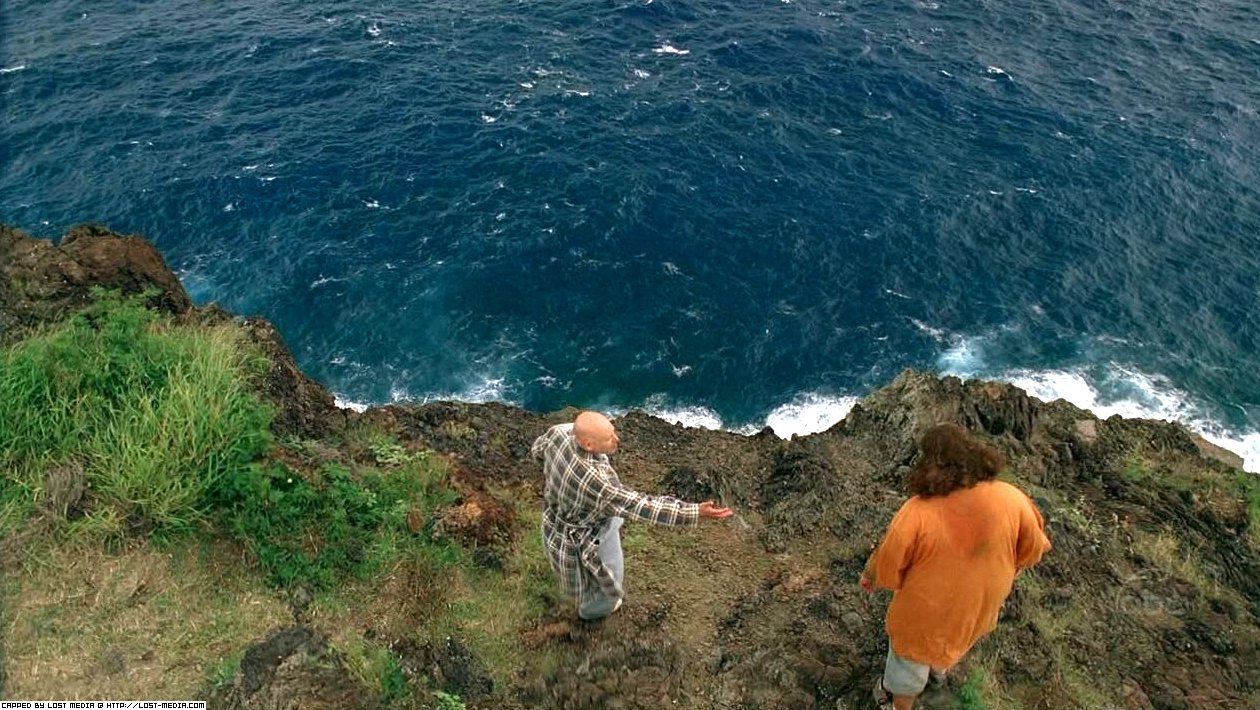
http://images4.wikia.nocookie.net/__cb20100425120235/lostpedia/images/c/cb/Dave_Leads_Hurley_Cliff.jpg
Dave convinces Hurley to jump. From Wikia
     I really don't know what Dave was trying to acheive. Any comic relief provided by the titular character is underlined by a bitter sting surrounding the treatment of mental illness, and the rest of the episode seems to look in disdain upon Hurley and continually demonises his weight. Hurley is in remarkable shape for someone of his weight - this guy treks across the island and spends all day in the beating sun and goes spear-fishing, this is not a man whose weight is giving him such trouble that he's at any immediate risk. It's a societal thing - although Libby loves Hurley, she still spends a good half of her time indulging his self-loathing and "helping him" by shaming him about eating. Now, being selfish and keeping a stash, that's wrong. But that part of the situation is never actually mentioned.
     And that was just it. Dave offended my sensibilities, yeah, but beyond that the plot just felt lazy. If you ignore the heaps of subtext, then it's easy to see the various ways in which Dave's personality compliments and mirrors that of his progenitor, and the way that everything is shot to allow Dave's unreality to come as a genuine reveal at the episode's mid-point is fairly impressive. But I do not ignore heaps of subtext, and I can't ignore the fact that when you look at this episode from an external standpoint, it doesn't have many nice things to say about mentally ill people. And that's something that marks the episode down in my estimations, no matter how good it may be technically.

Thanks.

Monday, 12 May 2014

Review: Ghost World

http://upload.wikimedia.org/wikipedia/en/c/c3/Ghostworldposter.jpg
From Wikimedia
Ghost World
2001, Dir. Terry Zwigoff, Written by Daniel Clowes. Written 25/4/14.

Teenage cynicism. It's not surprising that we all face a part of our lives in which we question the world around us to the extent that we doubt that anything good will come of our endeavours. Much like it's 90's colleague Daria over on MTV, Ghost World, adapted from the graphic novel of the same name by Daniel Clowes, follows two teenage girl who embody the deadpan cynicism often associated with the teen demographic - taking the time to, of course, deconstruct those associations and examine them for all of theirt worth. At it's heart it's a film about loneliness and disconnect from society, but it's also a fantastic look at all sides of teenage mindsets without doing much stereotyping.
     Having just graduated from high-school, eternally-deadpan friends Enid (Thora Birch) and Rebecca (Scarlett Johansson) are planning to get a house together, having chosen not to go to college. While Rebecca is work conscious and has a workable if not that promising idea of her future, Enid is a dreamer whose abrasive personality disconnects her from almost everyone around her - everyone, that is, except Rebecca and Seymour (Steve Buschemi), a lonely jazz-fan who the two meet when Enid decides to prank him by answering his desperate lonely hearts ad and then standing him up. Enid begins to obsess over Seymour, to the point that she and Rebecca's friendship slowly disintegrates - meanwhile, Seymour gets into a relationship and she can't seem to cope. After a misguided one-night-stand with Seymour, Enid makes the choice to run away for good, with her fate left up to the viewer.
     The film uses Enid and Rebecca to contrast stages of maturity and development. The start of the film sees Rebecca as more dismissive and irreverant than Enid, but as the film develops she is the one who develops. Enid stagnates; she never tries to connect with the people around her, instead dismissing the entire human race as beyond her ken and blaming them for her isolation. This is also seen in her remedial art class, where the teacher is a comical figure who is more obsessed with deep, abstract art rather than other, less pretentious forms of expression, culminating in her borrowing a racist caricature as a "statement" on racism which leads to any small hope of a career being removed along with it. It's quite interesting to look at the reactions to this film; a lot of the audience left the film not just invested in Enid's story, but deeply in tune with her views of the world. (Hint: you're not supposed to share Enid's views about the human race.)
http://videovortex.files.wordpress.com/2014/02/enid-ghost-world-2813176-900-599.jpg
Enid and Seymour are bonded by obsession.
From videovortex
     Part of the film's key statement is to take this deadpan attitude and show how it is fundamentally a great exaggeration, to the extent that Enid cannot really operate. She believes that the adults around her are useless, that society can only bring her sadness; yet society keeps trying to help her. She's on the scholarship but she fucks it up by being ridiculously insensitive, she rejects a pretty decent job offer from her step mother, and she completely fucks up her friendship with Rebecca due to her obsession with Seymour. (There are also some minor characters that steal the show a scene at a time, but they're more for window-dressing.)
     Ghost World is an assault on its premise - and one that's done in a thoroughly world-shattering way. Enid and Rebecca are both parodies and accurate representations of the attitudes they embody - such paradox is usual when it comes to matter of the teenage persona. At the same time, we're forced to examine what society does to people - both in the expectations that are put on Enid and Rebecca in their slow road to adulthood, and in the loneliness which Seymour feels due to his obsession and anger. It's quite telling that just as Seymour explains this to Enid, she can't see those same properties in herself and her obsession with him. The fact that we can is the reason for this film's tremendous success, even if it makes you examine a few uncomfortable home truths.

Thanks.

NEXT WEEK:We learn about the fabled Leopard Shark in The Life Aquatic with Steve Zizzou.

Friday, 9 May 2014

Review: Voyager 2.20: Investigations

http://images1.wikia.nocookie.net/__cb20050709182551/memoryalpha/en/images/6/60/A_briefing_with_neelix.jpg
Hating Neelix keeps me young and fresh. From Wikia
Star Trek Voyager - Season Two, Episode Twenty - Investigations
Written between 21st August and 14th October 2013 (Mainly on the latter.)

Voyager's writers did their best over the years to make me hate a certain Mister Neelix, a character whose boundless annoying enthusiasm, nosiness, cowardice and general stupidity have led Voyager both in and out of universe into a world of pain. However, despite the fact that this arc-centric episode places him at the very centre of what's going on, it works somehow. Mainly because, apart from a few agonising scenes here or there, the focus is very niftily shifted onto those running plotlines we've been wondering about - Jonas talking to the Kazon in secret, and Tom Paris acting like a douchebag for no appreciable reason.
      Neelix launches his cheesy daytime show, which leads Harry to tell him about the power of "real journalism". Stumbling upon something he wasn't supposed to stumble upon, Neelix uses his show to advertise the fact that Tom Paris, after a month or so of behaving weirdly, has been sent off the ship to work on a Talaxian Mining Colony. After a moving edition of his show saying goodbye, Neelix finds planted evidence that Paris was a traitor, leading Janeway to clue him in on the real plan, which was to allow Paris to be captured by the Kazon in order to allow him to find the spy currently operating aboard Voyager. Of course, they find that it's Michael Jonas - he cocks up, and Jonas ends up getting incinerated by accident. Tom is back on good terms, the spy is gone and Neelix gets to claim all the credit for it.
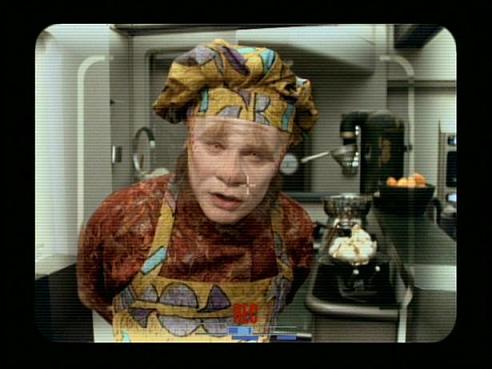
      "A Briefing With Neelix" is endlessly crappy in all of its incarnations, with Neelix' blundering both playing into the crew's master plan and, in the true Neelix style, hindering it at every step. In this interim where I've not been writing much, I've been watching some more of Deep Space Nine, and compared to the more serious atmosphere over there, Voyager's second season feels laughably trivial. We're supposed to be feeling the strain of the continued battle with the Kazon, of a crew still coping with being on the other side of the Galaxy. It still feels far too early for everyone to feel so acclimatised to their new environment, and Neelix's cheap and cheerful breakfast show.
Neelix badgers a good character.
     While the culmination of Paris' plot was fairly clever, it did fall into the status quo, with the end result being that the possible character development he could have had has been thrown away for the sake of the plot. Michael Jonas, in his final episode, continues to occupy a cartoon villainy which Voyager is particularly adept at delivering, to the point where there are several scenes in which he can be found rubbing his hands together in glee. It's a neat way to tie everything together, but the overall effect when coupled with the larger role given to that hairy-faced yellow-eyed motherfucker Neelix is greatly diminshed. What should have been a tremendous end to an arc came down with all the epic proportions of a graceful butterfly.

Thanks.

NEXT WEEK: Harry Kim dies again, this time for real. Not that anyone will mention it after the fact. Two Voyagers are caught in a Deadlock.

Wednesday, 7 May 2014

Review: Lost 2.17: Lockdown

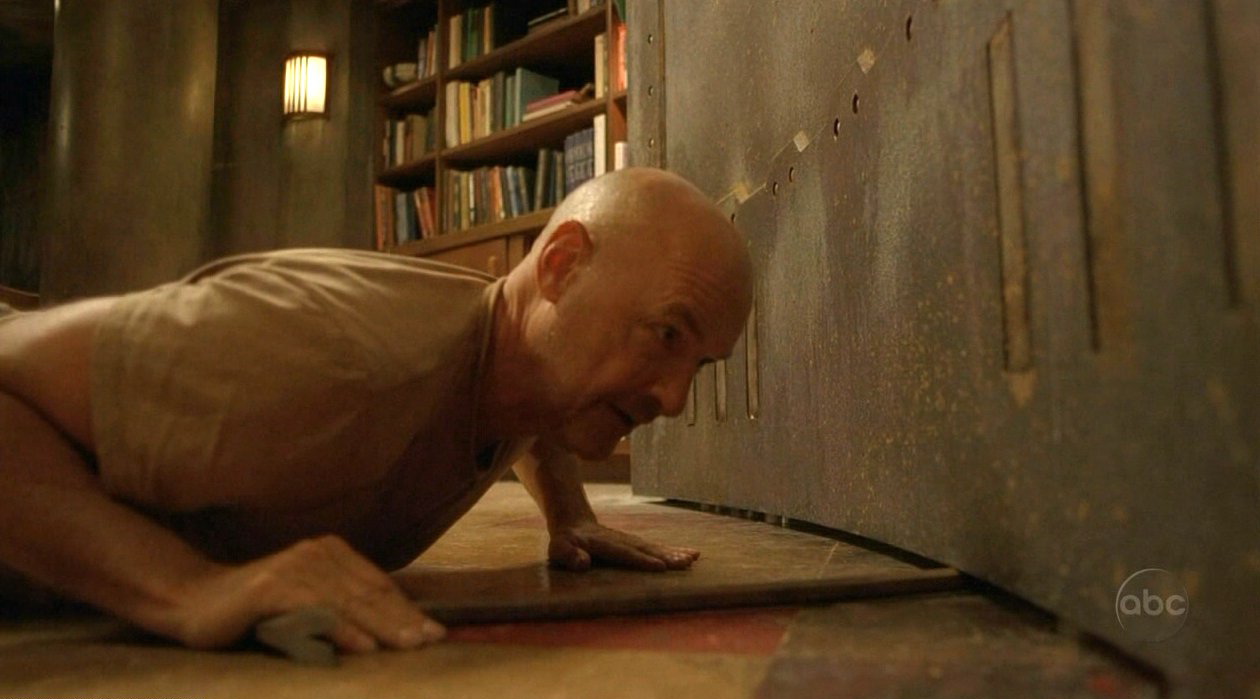
http://images1.wikia.nocookie.net/__cb20090619022757/lostpedia/images/d/db/2x17_LockeDown.jpg
Locke plans on using a crowbar to open a
nuclear blast door. Clever. From Wikia
Lost - Season Two, Episode Seventeen - Lockdown
Written 5/11/13

How do you capitalise on your show's best asset when at best it's a side-plot that's been happily rumbling along in the background for a month? Well, you shove it to the front, that's what you do, with a few nifty sideplots underneath for packaging, a semi-relating flashback and the overall sense of desperation and sadness that only a John Locke episode can really bring us. That is Lockdown in a nutshell, and while Michael Emerson's performance feels a bit less omigosh amazing for the most part, the relationship between Henry Gale and John Locke continues to be a tragic and interesting one.
     On the Island, and an unsuspecting "Lockdown" event sees Locke and Henry sealed in the habitat room of the Swan, which makes Locke paniccy at not being able to reach the station's apocalyptic timer. He employs Henry's help to try and lift up one of the station's blast doors, but on attempting to get through he manages to become trapped beneath it. Time ticking (as it is in every episode of this season, it seems), he sends Henry through the vents to push the button. Meanwhile, Jack wins the meds back from Sawyer in a game of Poker. And Sayid, Ana-Lucia and Charlie find Henry Gale's balloon. As a mysterious package drops in the jungle, the three return to the Swan and reveal that Henry Gale - the real Henry Gale - was buried underneath that balloon, and that all of "Henry"s protestations of innocence had been lies.
     In Locke's flashback, we saw him attend his own father's funeral before discovering that he had in fact faked his death, and wanted Locke to help him out in a final scam before he left for good. To this end, Locke lies to Helen. Refusing to take a cut of his ill-gotten gains, Locke delivers the cash to his father on schedule, but they're discovered by Helen and she leaves him, tired of the his paternal obsession and the destructive effects it had on their relationship.
     Now, it's been a good three months or so since my last Lost review, so I'm probably not in the hokey pokey immersive mood that I usually am. I get that. But Locke's outspills of depressing durges usually incorporate some element of tragedy or catharsis or something that I can grab a hold of. And there's actually quite a lot of that going on at the moment - Henry (hereafter called Ben because I keep defaulting to it and fuck you it's my blog I'll spoil if I want to) is manipulating him into being standoffish towards Jack and feeling like he's being cuckolded, while he faces constant doubt over whether the timer in the Swan is real or just another pipe dream. But the episode doesn't focus on any of that - rather, it's a very, very elaborate-feeling setup for one simple revelation - that Ben is lying, of course. The episode's method of building up the "Henry Gale" persona until it's almost a certainty and then smashing it from beneath your feet probably works well when you don't know who he is, but I'm forever lost in the weary land of hindsight.
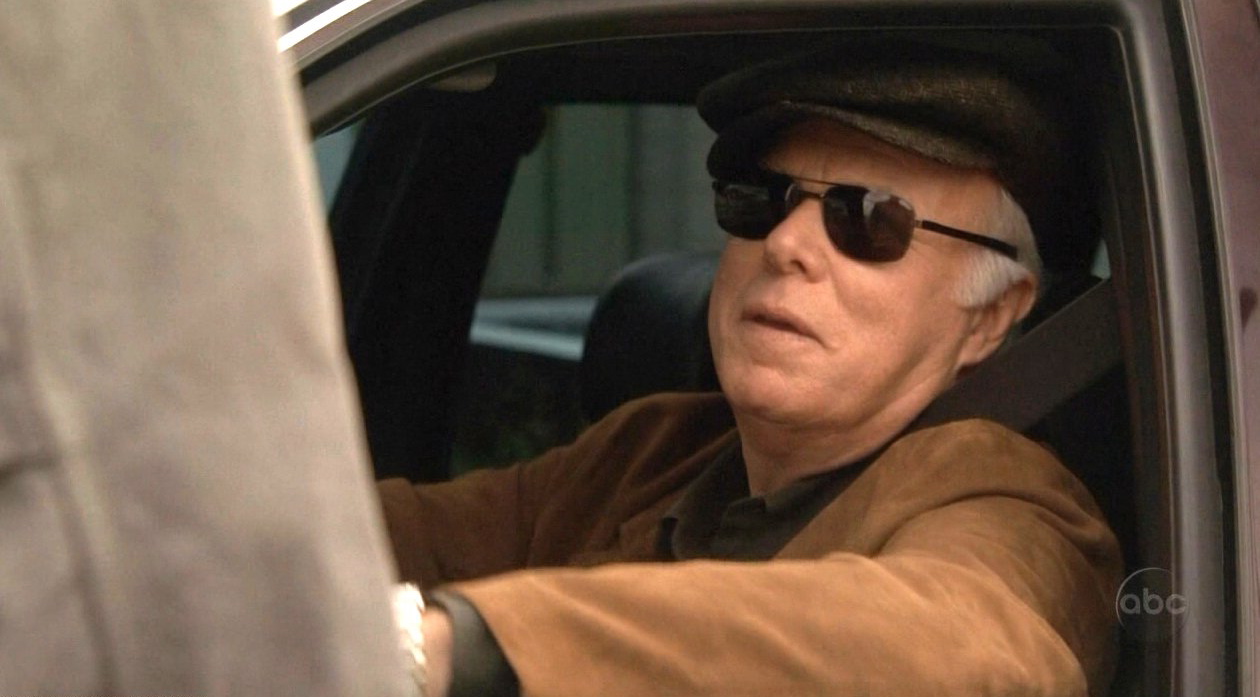
http://images2.wikia.nocookie.net/__cb20090617222552/lostpedia/images/9/9d/2x17_Cooper%27sBack.jpg
Anthony Cooper is more of an asshole than Jacob,
and that's really saying something. From Wikia
     Locke's dilemma in Orientation was quite well developed, with Locke being unable to reconcile his desire for affection (both parental and romantic) with the loathing and indignation that he held for his father. This episode has that too, except in nowhere near as clear a fashion, meaning that we can do nothing but blame Locke for the stupid shit that he does in this episode. When the Mafioso guys turn up on his doorstep, he should have pointed them towards the bank vault and told Helen the absolute truth from the off, instead of lying out of a lingering sense of misplaced loyalty to the man that ruined his life twice already and will continue to do so twice more before this show's end.
     I think in my head I hyped up Lockdown to be a bit more than it was. It introduced a few more elements to the series' mythology and it finally settled the debate surrounding the honesty of Henry Gale in the only way that a series like lost conceivably could and carry on the mystery. While its revelations were grand and well done, for whatever reason the characters were working on clockwork and outside of the interactions between Jack and Sawyer, there was very little at stake in terms of character development or progression - which, if I remember rightly, is one of the things that Lost should be good at.

Thanks.

NEXT WEEK: We related Hurley's obesity to mental illness because this show likes picking on fat people, in Dave.

Friday, 2 May 2014

Review: Voyager 2.19: Lifesigns

The Doctor studies Denara's sick body.
Star Trek Voyager - Season Two, Episode Nineteen - Lifesigns
Written 12/8/13

Romance is a difficult genre to get right. The way that people are paired up in fiction is a tricky process and it's not easy to characterise one-episode guest stars to the point where them having a relationship with your already-developed main character feels realistic. This is the first real case of a one-off romance in Voyager, with our guest character being the dying Vidiian woman Danara Pel. The question is, does the episode manage to pull of a fair romance without it feeling forced?
     Voyager comes across a shuttle, empty but for a dying Vidiian woman. The Doctor does his best, putting her body into a coma and then placing her mind in a hologram of her own healthy body so he can communicate with her. The result is a hologram of Vidiian scientist Denara Pel, who becomes attatched to an oblivious Doctor within record time. The Doctor himself, while completely clueless on how to express it, falls in love with her, and rom-com misunderstandings follow. Eventually they are happy together, but Denara doesn't want to go back into her original body and so tries to halt The Doctor's treatment. The Doctor convinces her that it's better to live a longer life, because he'll love her no matter what she looks like, and that even though she'll have to return to her home planet, they still have two weeks left together.
     You know my attitude towards romances. They're not very interesting to talk about, really. I did think the romance in this episode was done well - Denara being attracted to the Doctor's wealth of medical knowledge and skill as well as the compassion which led him to give her a healthy appearance once again, while The Doctor being attracted to someone with the same physical limitations as him who shared and appreciated his profession. I think there was also an element of god-to-honest awe there for both of them - for Denara, it's the thought of someone looking past her usual appearance and then giving her the normality that she always craved, while for him it's his first crush ever and it wasn't even in his programming to be able to feel that way.
http://3.bp.blogspot.com/-_YzlUyCblA8/Thg_Rrp6lYI/AAAAAAAAMKw/rWRvCFuMw2s/s400/Lifesigns.jpg
Two holograms in love. Aww.
From jeffords
     There was a secondary story that followed a number of recurring plot points from the past few weeks. Tom Paris' repeated tardyness at the Bridge (last seen in Dreadnought) led to him having an angry altercation with Chakotay that resulted in him being stripped of his duties as pilot for the time being. Jonas also got another scene talking to the Kazon (which have been identical these past two weeks) in which Seska revealed her end-of-season gameplan to take over Voyager and use its infirmary to have her baby. Compared to the first season, this feels a lot mroe devoted to its multi-episodic storylines and does, if I'm honest, make the season feel a lot more whole. (Even if at least one Jonas conversation is stripped from canon thanks to being part of Threshold.)
     Lifesigns was an entertaining 45 minutes with very little new to say apart from the fact that The Doctor can very easily go from being Forest Gump to being Casanova in terms of romantic prowess - thanks, of course, to the fact that he can just download more shit to be getting on with. It was an okay relationship and here or there it had some vaguely positive things to say about relationships and getting over people, but there was no drama, no tragedy. The Doctor may have learnt to understand what it feels like to be happy, but frankly, happiness is easy. Not to be too depressing, but what we needed was some Loss. And Loss was sadly quite absent.

Thanks.

NEXT WEEK: Jonas gets found out and shit hits the fan in Investigations.

Wednesday, 30 April 2014

Review: Lost 2.16: The Whole Truth

http://images1.wikia.nocookie.net/__cb20090213182056/lostpedia/images/5/54/2x16_jin.JPG
Jin gets to be a complete arse in the first five minutes.
From Wikia
Lost - Season Two, Episode Sixteen - The Whole Truth
Written 14/8/13

Yep, guilt. Thought I'd hitched on a theme there. Just as all of the episodes since Collision have hinged their character progressions on guilt in one form or another, The Whole Truth gets out a big basket of guilt for Sun as she struggles with having to tell the truth. The Whole Truth, in fact. Hehe. Whereas, in something that I hadn't realised was pretty much unique in Lost up until a few weeks ago, a fair chunk of the character plot is shoved aside to deal with progressing the season's arc, with Henry Gale getting to be manipulative again and deliver another great speech and basically be such a terriffic actor that it's hard to put into words.
     In her flashback, Sun and Jin are trying to do the do and have been failing to get preggers for about a year. Jin gets her to go to a fertility doctor with him, who tells her that she has blocked Fallopian tubes. Meanwhile, she's been learning English from her former not-suitor Jae Lee (whom we met back in ...And Found) and begins an affair with him. The doctor who told her the news catches up with her and reveals that, scared of Jin's connections with the underworld, he lied because it is he, not Sun, who is really infertile. In her main island story, Sun gets morning sickness and has to barter with Sawyer for a pregnancy test. She is scared of telling Jin because she believes that since he is infertile off the island, that Jae Lee must be the father - not talking about the affair, she tells Jin about the baby anyway, hoping it'll all wash over. (Hint: it won't.)
     In the Hatch, Locke gets the upper hand on Jack and convinces Ana-Lucia to interrogate Henry Gale. She actually manages, despite her track record, to use the nicley-nicely approach, affording her with a map to the supposed site where his balloon crashed. Along with Sayid and a recovering Charlie, they go off along the path set out and find all the landmarks - but don't find the balloon. Yet. In the Hatch, Jack allows Henry to eat some serial in the main room of the Swan for "good behaviour," and in a very creepy scene he implies that the search party has been led into an ambush - all the while still denying his involvement, cheerfully.
http://images3.wikia.nocookie.net/__cb20090213182017/lostpedia/images/8/81/TWT4.jpg
Beautiful cheeky manipulative bastard. From Wikia
     Like I think I said last time, I don't realistically see Jin and Sun as a couple - they're two people with very different needs, and while the star-crossed lovers thing is all well and good, I don't see anything in their personalities which would be complementary - to the point where I wonder why they got together in the first place. The genius of writing a relationship through its highs and lows is to see how changing characterisations over time hit and miss with the other persons' - but the personality changes in this relationship come out of nowhere, with this episode supposedly set very soon before Sun's first centric flashback, in which she is a weak and very downtrodden wife almost scared of leaving her husband. Here she's more fierce willed and she's having an affair with her English teacher and it's all howdy doody.
     I'm enjoying the continuing plot with Henry Gale a lot more than I am the rest of the plot, although this episode did add in some more development for Ana-Lucia over in that department. I really do think that while this episode did manage to capitalise on a lot of cool ideas surrounding Jin and Sun's relationship, that the core of their interactions still feels somewhat empty to me overall, and that really for me is part of the reason why Jin and Sun episodes just don't grab me at all with their centric characters. The Whole Truth, however, was saved from its watery boring fate by a strong script which incorporated well the season's ongoing arc.

Thanks.

NEXT WEEK: We find out about whether Henry Gale is telling the truth (guess) and Locke gets a bit trapped in the process. It's Lockdown.

Monday, 28 April 2014

Review: The Eternal Sunshine of the Spotless Mind

As in its beginning, work on the blog has basically come to a complete standstill. I've finished the Lost reviews, but if I do finish Voyager Season 3 then it will be far after it's due, probably in the Summer. As for now, I've got a few films to talk about, so without much ado...

eternal-sunshine-of-the-spotless-mind-1
POSTER SHOT!!! From thefilmchair
The Eternal Sunshine of the Spotless Mind
2004, Written by Charlie Kaufman, Dir. by Michel Gondry. Written 24/4/14.

There's a certain set of a assumptions that come with cult films - a very specific number of tropes that tend to get played out over and over again. This is especially true in romance - there is, after all, only a certain number of ways that two hetereosexual cisgender white people can interact with each other romantically. It's a genre which has very much been done to death - but then again, that's something that doesn't seem to really bother Charlie Kaufman (Being John Malkovich, Adaptation), who excels and taking genres and tearing them apart at the seams. While the film starts out as a conventional if odd romance, it soon develops deeper science-fiction roots which serve not only to offer some questions about human nature, but to bring the entire romance genre crashing into the real world.
     The film follows the quiet, unassuming Joel Barish (a straight-faced Jim Carrey) as he bunks off work and ends up meeting the excitable Clementine Kruczynski (Kate Winslet), with whom he finds an immediate connection. Flashback to a day prior, and we learn that both Joel and Clementine have chosen to erase their memories of a prior relationship which went sour due to their innate incompatibility. The film then follows Joel inside his mind, reliving the memories of his relationship with Clementine while a host of minor characters (doing the erasing) undergo their own, distracting plotlines. The film's structure works to force the secondary characters into as much dramatic limelight as the two leads, and as a result it's that much richer.
     By going backwards through Joel's memories of his relationship with Clementine, the film both mirrors and parodies the conventional US rom-com format - the cute meeting, the argumentative stages, and then slowly growing closer to the point of intimacy. Except that it points out at every step of the way the problems which come with their relationship, from their personality clashes to their irrational complaints about one another - culminating in the ending of the film (spoilers hur hur) in which both Joel and Clementine in the present receive the tapes they made before their memory wipe, and decide to proceed with their relationship even knowing that they may end up explosively breaking up. And then there was some weird recursion thing, but I ignored that.
eternal-sunshine-of-the-spotless-mind-3
Clementine and Joel. That mug looks painful.
From thefilmchair
     The film's secondary character sinclude a host of faces which for 2004 is quite impressive - faces like Kirsten Dunst, Elijah Wood, Mark Ruffalo and Tom Wilkinson. They engage in a storyline running through the other one, in which they are all involved in erasing Joel and Clementine's memories of each other. (By choice.) Each of them is equally fucked up: Wood's character uses Joel's memories of Clementine to attempt to seduce Clementine and steal her underwear; Dunst is pursuing a relationship with Ruffalo's character in order to get in with her boss Wilkinson; Wilkinson has already had an affair with Dunst but keeps wiping her memory of it; and Ruffalo knows about Wilkinson's plot but bangs Dunst anyway. It's the potatoes to Carrey and Winslet's meat, and manages to probe all of the unhealthy relationship archetypes which romance films tend to gloss over as good.
     The film's writing is what makes it a good film, and Kaufman is three for three, but the film's acting is what takes it to the next level, especially between Carrey and Winslet. This was in the short string of movies where Carrey was attempting to be serious, and unlike the similarly brilliant The Truman Show, Carrey's characterisation is about as far from the norm that he can get. There's no gurning, no catchphrases - the film hangs on the fact that this is a shy guy with deeply fucked up internal problems. The same for Winslet, even if quality for her is a little more expected. Those two make a surprisingly fun double-act, even when they're screaming random shit at each other. ("You're trying to figure out, did she fuck someone tonight?" "Clementine, I assume you fucked someone tonight. Isn't that how you get people to like you?") And it's that, as much as this film's novel approach to storytelling, that makes The Eternal Sunshine of the Spotless Mind so fantastic.

Thanks.

NEXT WEEK: Charlie Kaufman write about Charlie Kaufman writing Adaptation in Adaptation.