Wednesday, 6 February 2013

Review: Lost 6.5: Lighthouse

http://images2.wikia.nocookie.net/__cb20100224113253/lostpedia/images/c/c7/Lost.s06e05.hdtv.xvid-xii.avi_000266849.jpg
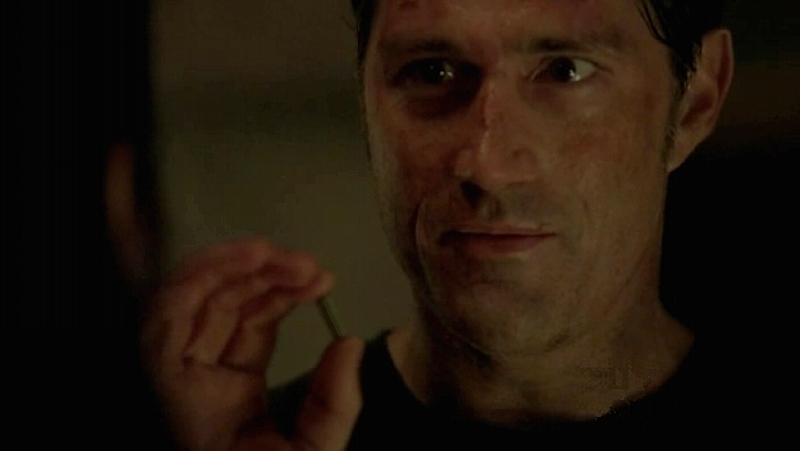
Jacob's a bit of a creeper.
Lost - Season Six, Episode Five - Lighthouse
Written between 19th and 20th January 2013

Jack is a character that, during the last season, embodied one of the worst possible paradoxes in character design and function. As our blessed hero protagonist dude, he was also one of the less interesting characters in the cast and almost every decision he made was at the detriment of those around him, culminating in his failure to understand very basic logic and the subsequent death of Juliet. Season Six, rather remarkably, pacifies the problems surrounding Jack by turning him into a follower instead of a leader, and a willing follower this time. The episode very much benefited from this development, and the character managed to shine through most of the muck I've spread about him on this blog.
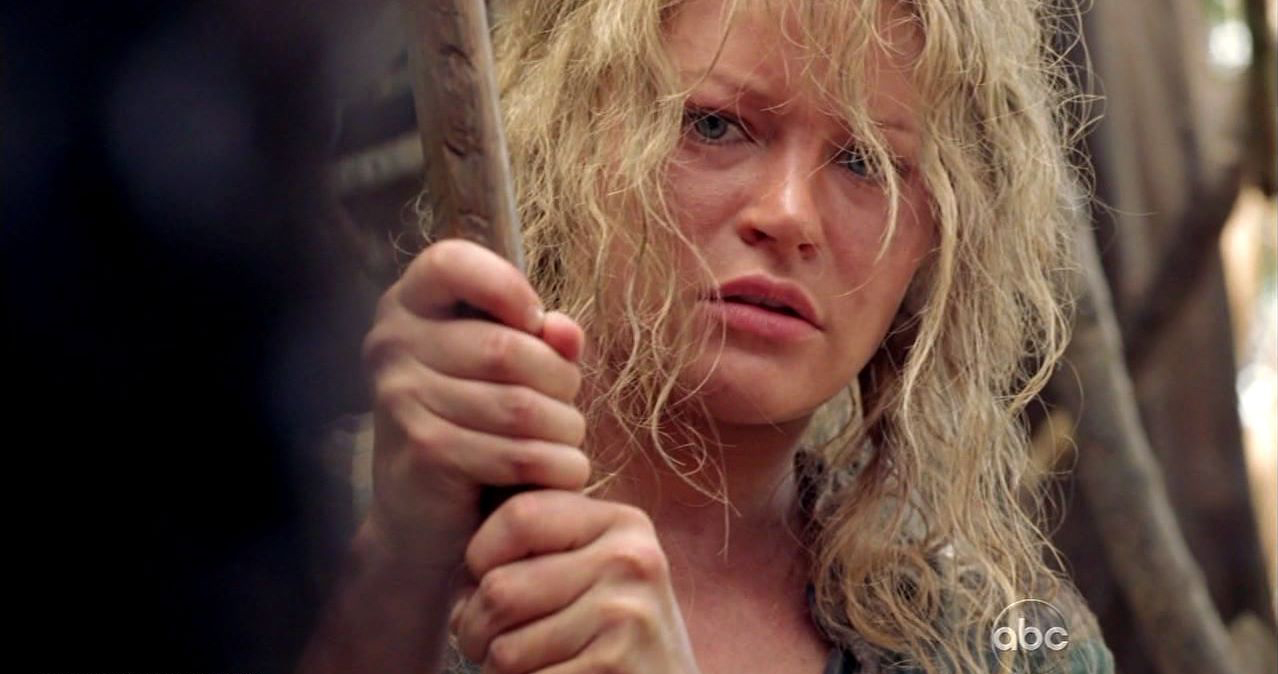
     On the island, Jacob appears once more to Hurley and gives him instructions to leave via a secret passageway with Jack and take him to the Lighthouse, in order to supposedly guide some people to the Island. While initially reluctant to go, Jack agrees when Jacob pulls out a phrase that Jack's father Christian used to use to belittle him. They get to the Lighthouse, where there is a massive compass wheel with 360 names on it, lined up to each degree. Turning the lighthouse to each degree shows an image of that candidate's childhood home; this causes Jack to become angry at the fact that Jacob has arguably been using the Lighthouse to stalk him for his entire life. He smashes the mirrors, and Jacob tells Hurley that this was intentional; he's giving Jack a sense of purpose in his life. Elsewhere, and Clare returned, holding both Jin and one of the Others hostage. She appears to have gone insane, cradling a cow skull as a baby and believing that the Others have taken Aaron. Jin tries to tell her that Aaron is off-island with her mother, but she gets angry and kills the Other anyway, believing now that Jin was lying to her to save the other man's life. He is shocked to discover that the friend who has been feeding her all of these lies is in fact The Man In Black.
     In the flash-sideways timeline, Jack returns home and we find that in this world he has a son, called David. David is emotionally distant from his father and Jack, the product of a bad father himself, is at a loss as to how to deal with him. Jack goes to visit his mother, who despite Christian's body being missing has managed to find his Last Will And Testament, which mentions as one of its benefactors Claire Littleton. When Jack gets home, David is gone, causing him to worry. He goes over to David's mother's house, and using a spare key he is able to enter. Once inside, he discovers that David has gone to a Piano recital - travelling there, Jack discovers that David is still playing, and is a master. David later explains to Jack that the reason he didn't want Jack to see him play was because, like his father before him, he didn't want to appear a failure.
http://images1.wikia.nocookie.net/__cb20100224143429/lostpedia/images/b/b6/6x05_SheDidWhat.jpg
Claire is more paranoid than a noid that's been para'd.
(I'm running out of funny similies, people).
     As I said last week, there are a few things in the flash-sideways that we'll come to question once we reach the end of the series, this week's thing being the existence of David. I liked what the writers were going for here, and it was a neat idea to show how Jack deals with his own paternal issues by trying to be a better dad to his own son - a matter for closure that the Jack in our timeline never got. It's a real exploration of the things that the Flash-Sideways timeline can do, and completes a lot of our character arcs without having to lose drama in the main plot.
     It's probably the wrong attitude to have, but early in the series, I'm not finding much to harp on about and that's at least somewhat disappointing. So far, the only real issues have been a few random touches of mystique where none was needed. Lighthouse had some of that, with Jacob's Jesus-esque plan being well and truly in effect, but it's still caught in this apprehensive, "where is this all gonna go" haze that smoothes over any cracks. Lighthouse was entertaining and intriguing, and while it wasn't as powerful as every episode of a final season should be, it helped me to finally come to like a character I've had problems with for a long time.

Thanks.

Monday, 4 February 2013

Review: Doctor Who 2.11: Fear Her

Much like Queen Bess, this blog has two birthdays - December 7th, which denotes my first published review, and today, which denotes the actual creation of what was then Audenshaw Reviews. I usually put less pathos on the second for various stupid reasons, but this year it's happened to fall on one hell of an episode. So, as we celebrate my three-year-long hobby, we also take a look at one of the most universally hated stories in NuWho this side of Love and Monsters. (Which I reviewed last Summer, so no complaining.)

The real ceremony somehow managed to be cooler
than this.

Doctor Who - Season 28, Episode Eleven - Fear Her
Written between 13th and 18th of January 2013

It's hard to put a finger on what exactly went wrong with Fear Her. The concepts, at least at the beginning, are fundamentally sound, but they tap into several things which are quite risky - mainly making reference to future cultural events and by having a large part of the episode revolve around a child actress. Fear Her's irreverent jabs at the 2012 London Olympics, and Matthew Graham's "Power of Love" solution, push a story that was already pretty lightweight into the dark, demonic depths of mediocrity. And that's pretty much the worst crime you can come up with for a show like this.
     Because really, there's nothing that's too bad about this episode. Ten and Rose are still a little smug here or there, but they're generally tolerable for the most part, especially with some small moments between them discussing The Doctor's past. The main beef of the episode comes from Abisola Agbaje, who plays Chloe Webber. While I'm sure that she's a lovely girl in reality, her acting is piss-poor and it's no surprise that Fear Her was the only thing she ever did. Her line reads are unconvincing and she turns what could be the rather scary prospect of an alien-possessed little girl into something innately laughable. It's probably a fault of the direction and just the general environment, but this story hinged around having a competent child actor and unfortunately that just wasn't the case.
     The story follows The Doctor and Rose as they land in 2012 London, on a small cul-de-sac in which children have been disappearing. It's the run-up to the Olympics, which will be passing the street in a few days. They find in one of the houses a small girl named Chloe Webber, with the power to absorb people into drawings. She's been possessed by an isolus, a space-dwelling plant that has been seperated from its mother and its four billion brothers and sisters, and so is using its amazing reality-bending powers of loneliness to get new friends. Just when they think everything's sorted, a series of stupid mistakes gives Chloe the chance to draw The Doctor, leaving Rose to have to stop her from drawing the entire world. Eventually, Rose is able to use the passion and spirit of Olympic fever to restart the Isolus' pod, and the creature returns home.
      The idea at the core of the story is one that I'm not very happy with, if only, ironically, for its lack of imagination. We're supposed to accept that these tiny little wisp-like creatures have the power to morph reality in quite a profound way, and yet can't even get a tiny spaceship off the ground. I suppose the idea of it all is that this is an alien race powered by love, which is a nice thought but doesn't exactly help me to maintain my suspension of disbelief. It's a bad idea, badly executed, and next to the sub-par acting it causes the story to spiral into the mess that it becomes.
Klow-ee Webbah
     Three years ago I started this blog because I wanted to have a place to write about things without feeling like I was being one of those annoying Facebook people. Now, I’m still here, still writing, perhaps not what I thought I’d be writing about, but regardless at the end of a mountain of work which is longer than most short books. (And, in hindsight, I wish I’d used the time to do that instead.) When I look back, I wonder whether it’s all bee worth it. Nobody has really ever read any of my reviews except out of a strange feeling of pity, and the only commenters here are few and far between. It is simply, in the end, a question of whether I should continue writing even when I know that nobody is ever going to injest it. And the answer, resoundingly, is yes. Because it lets me contribute something, no matter how small. And for me, at least, that's important. Fear Her wasn't the worst story in Who history, but it had such flaws on every level that at the end of the day, it might as well be.

Thanks.

This review is dedicated to my friend Asher, who passed away on the 17th January. She was someone whose extraordinary kindness and good humour made me the man I am today, and my sympathies are still with her family and closest friends. May she rest in peace.

Sunday, 3 February 2013

Review: Being Human 5.1: The Trinity

Imagine the conversation at the writer's table. They had to try and find a way to set up their new season's plot while trying at the same time to establish a cast that's barely had any chance to settle in. None of the original cast is here, the brand identity for the show is practically demolished and it's all looking like a cruel, Fantasy-adapted metaphor for the Sugababes. I think it's a little early for me to call time on Being Human as I did with Misfits, as it can still do a lot to surprise me, but this premiere felt at times as if it was struggling to fit everything into place. I'm also a bit wary of the direction that the show is taking mythology wise, as there's very little sense of continuity of tone between seasons.
http://i2.cdnds.net/13/05/618x412/cult-being-human-s05-e01-15.jpg
Flashbacks show an older Trinity.
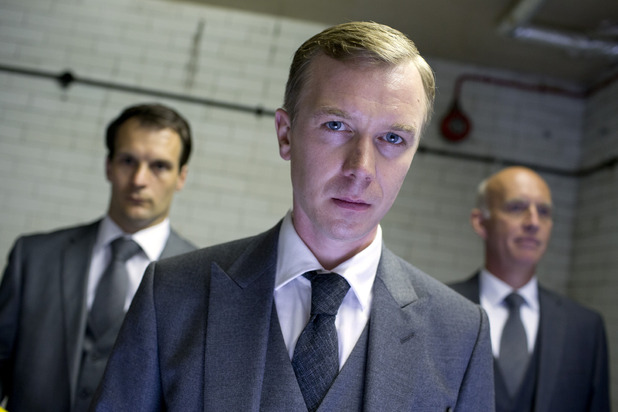
     A few weeks after Alex was killed and Annie passed on after blowing up the Old Ones, the main trio have forced to look into new job opportunities after Hal and Tom have been fired from the Diner. They go to a Hotel, which is hiring new staff after an incredibly high suicide rate, implied to be because of a strange old man known only as The Captain (Phil Davies). As flashbacks to the 1800s show Hal summoning the Devil in an attempt to end a Vampire/Werewolf war, present Hal accidentally kills a man named Ian and locks him up in the basement after turning him, trying to make sure that he doesn't become a killer. When Alex and Tom find him tied up, Alex lets him go and the shady, government-led (but apparently not for very long) organisation led by Dominic Rook (Steven Robertson, Ashes To Ashes, Luther) has to pick up the pieces.
      I was afraid that Rook's organisation would end up being a carbon copy of Series Two's CenSSa - an organisation who looked into and tried to control the activites of Supernaturals. The Men In Gray, as they're called, have an all-the-more interesting layer of satire relating them to the Civil Service, which gave the enigmatic Rook a lot of great lines. At the moment I think he's probably my favourite character, and I keep looking forward to seeing him again. There's just something about his Reggie-Perrin-esque outlook on life and yet his sheer audacity in the face of centuries-old-monsters that endears him to me.
     That doesn't say much, I'm sorry to say, about our main cast. There are a few good lines here or there, and they're trying their best, and I'm probably just being unfair, but they didn't stand out. Tom is as bland as I've always found him, and Alex barely gets chance to do anything. Hal gets the most runtime as he attempts to control the delightfully insane Ian Crom (who for some reason appears to be a recurring character), and the exploration of vampire psyche is covered in a way which is remarkably subtle and nuanced. Damien Moloney is just fantastic, and he's doing a good job as the show's main vampire. The problem for me is that the rest of the characters just aren't as strong in the moment.
http://i1.cdnds.net/13/05/618x412/cult-being-human-s05-e01-13.jpg
What could have been a boring government organisation
is improved drastically by a layer of satire.
     The show's mythology, also, is odd. The show's beginnings as a small-scale comedy that used supernatural elements as a funny framing device are by this point not just dead, but buried, exhumed, buried again and then used as a fashionable hat. Wheras last series decided to take the sci-fi ideas and put them into a very strong sci-fi scenario with time travel and alternate futures and ray guns (maybe not ray guns, my memories of Series Four are hazy), this series appears to be doing in the scientist and going straight for the Biblical, with The Captain being revealed at the end of the story to be the modern incarnation of The Devil himself, who has been making people kill themselves by telling them the Secret That Only The Dead Know.
     The show took a blow with the removal of its last original cast member, but it seems to be limping towards something fairly strong. My priority at this point really is to see that Alex becomes as developed as her contemporaries; Kate Bracken is a fantastic actress, but so far she hasn't been given anything to do as a Ghost. After four seasons of heralding Annie as the "most powarful goast evor", I struggle to see where her characterisation can go. That's got to be the show's main focus, as everything else in this new story has a lot of potential, be it shady government organisations or old Nick himself.

Thanks.

Wednesday, 30 January 2013

Review: Lost 6.4: The Substitute

File:6x04 LovingLife.jpg
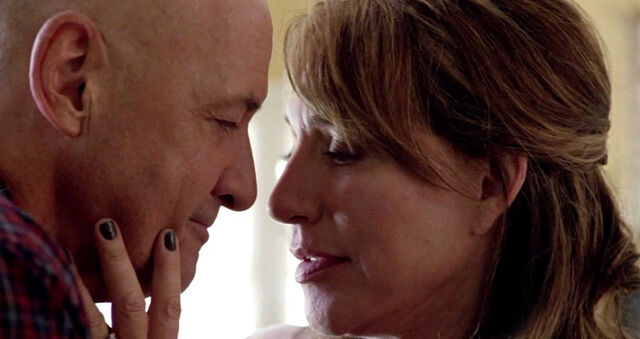
Locke and Helen are together in the Sideways timeline.
Lost - Season Six, Episode Four - The Substitute
Written between 12th and 13th of January 2013

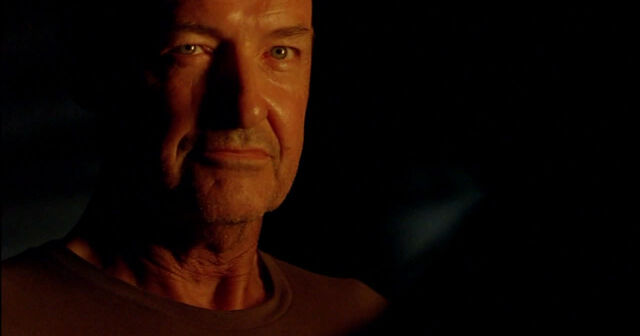
The problem with the two-season long "let's kill Locke" arc was that the show essentially lost one of its most well-written characters. Terry O'Quinn is, alongside Michael Emerson, the show's best actor and consistently brings in the best performances of day. Now he's been relegated to the new role of The Man In Black, and luckily the Flash-Sideways allows us to compare both of O'Quinn's characters while doling out some of the season's most important and impressive exposition. Its main problem came in that outside of that exposition, it relied a little too much on O'Quinn to do all the heavy lifting for it.
     In the flash-sideways, Locke is still in a wheelchair, and unlike in reality is planning to marry his long-time sweetheart Helen. His boss Randy fires him from work when he finds out that Locke's trip to Sidney wasn't for the reason he said it was. On the way out, he runs into Hugo who now owns Locke's company, and Hugo hooks him up with a temp agency. At the agency, Rose tells him that the only position she has open is as a substitute teacher; at the school, he meets Dr. Benjamin Linus, who is currently a History teacher. At home, Locke reveals to Helen that he doesn't want to speak to Jack about getting surgery, and that he went on a walkabout, because he's tired of trying to be someone he's not.
     On the main island, The Man In Black went off on his merry way, off to recruit people towards his cause. He released Richard, who seemed to be well-aquainted with him and ran off. Ben told Ilana of Jacob's demise, and she took his ashes before revealing that the Man In Black can now only shape-shift into The Monster and into the form of Locke. They hold a funeral for Locke (after 34 episodes) and The Man In Black visits the Barracks where Sawyer has been drinking his sorrows away. Sawyer agrees to follow the Man In Black, trusting him to help him get off the island, and they go to a cliff-side cave wherin the names of 360 people are written in chalk. All are crossed out except for six - Locke, Reyes, Ford, Jarrah, Shephard and Kwon - aka Locke, Hugo, Sawyer, Sayid, Jack and either Jin or Sun. The MIB explains that these are the last of Jacob's Candidates to replace him.
File:6x04 SetInMotion.jpg
The Man In Black sets his plan into motion.
     The idea that Jacob has subtly been manipulating the lives of up to 360 people for over what can be assumed to be a few hundred years may seem to stretch credulity, but that's what we're working with here. After a season of showing us that fate can take the form of extended, Whatever-Happens-Happens-style time loops, we get the new idea that our characters have basically been pushed by God to their current positions. This gets a bit ickier in the finale, so I'll wait until then to talk about it in its entirety,but at the moment it does seem rather odd that it's implied that Jacob giving Sawyer a pen when he's nine years old is enough to steer his life towards Oceanic 815.
     So far, the flash-sideways seem like something of an entertaining side-project. After the initial awe of wondering about possible timelines and alternate worlds, it's becoming clear by this point that so much is different that this all being caused by the prevention of the Incident is rather impossible. It's still rather interesting though, and it tugged on my heartstrings to see Locke finally getting to plan his wedding with Helen when that relationship in the original timeline went rather more tragically. It was just nice to have Locke back in general, really, but I do think that O'Quinn very much enjoyed the chance to chew into an entirely different character. I certainly enjoyed seeing him bounce the two different characters back and forth, and The Substitute became so much the better for it.

Thanks.

Monday, 28 January 2013

Review: Doctor Who 2.8-9: The Impossible Planet/The Satan Pit

Toby is possessed by The Beast.
Doctor Who - Season 28, Episodes Eight and Nine - The Impossible Planet/The Satan Pit
Written between 9th and 11th of January 2013

Religion. Religiony widgiony. It's a topic that I've talked about to various degrees of controversy on this blog, mainly because I don't like it when writers shove religious themes into the finales of otherwise secular stories. Doctor Who itself hasn't shyed away from examining the subject, and while this week's story has certainly been done before by Who, it's not exactly what I'd call deriviative. The Impossible Planet two-parter is distinct in its sheer ability to summon the deepest and darkest of scenarios from what it a basic base-under-siege plot, invoking not just crazy new aliens but the bloody Devil himself.
     The episode comes from writer Matt Jones, who is a big fan of evil devil-like figures (especially if you look at his next story for this universe, Dead Man Walking.) The setting is one immediately different in new Who - an entirely new planet, orbitting around a black hole. The Doctor and Rose land on Sanctuary Base Six, a base positioned on the planet to discover whatever's keeping the planet steady, as well as the source of a gravity funnel into space. They have the telepathic, Zoidberg-esque Ood as willing slaves, and for a while have been finding out that the planet's former civilisation is ridiculously old. When the TARDIS falls into the centre of the planet, The Doctor is forced to stick around and help them, descending their mineshaft into the planet's heart. As he decends, an entity known as The Beast possesses archeologist Toby Zed, who kills one crew member before spreading his possession to the Ood's hive-mind. As The Doctor discovers the ruins of the old civilisation, Rose and the remaining crew battle to stay alive. The Doc finds that the creature controlling the Ood, and sitting at the centre of the planet, is a giant demon who was locked away at the Dawn of Time but who has since subliminally inspired the rest of the Universe's devil stories.
     This isn't the first time that Doctor Who has done The Devil; Season Eight story The Daemons had a slightly similar character in the demon Azal, but this takes a much bleaker and certainly more tense position. Despite obviously having a maximum of what looks like three or four sets, the base feels surprisingly large and the atmosphere is well-crafted. There's the right mix of desolation and loneliness, with the crew members of the base remaining proffessional while at the same time in a state of permenant awe at their current situation. It felt so serious and dark that Series Two's odd habit of having Rose make inappropriate jokes throughout the exposition just felt off. She had recovered by the cliffhanger, however, and managed to maintain a rather odd scenario in which she drove the majority of the action while The Doc drove the exposition.
How Ood?
     I know I've spoken bad of Tennant's Doctor in certain places, but his performance here is just unbelievably good in its sincerity. Jones shows us another side of The Doctor's faith, seeing how he puts his trust in science in all cases except the grand myths from his home period. Despite the way that the episode sets up The Doctor as the saviour of the Universe chosen by the elders to defeat Satan, it's rather odd how humble he comes out of the whole deal, especially as RTD's team would continue to up the "Lonely God" crap as he went through the series.
     Like most of this season, there were a few nitpicks here or there. But the overarching mythology and the well-crafted tone of the story overrode that immediately. The Impossible Planet two-parter is by far the best story of Season 28, and that's not just because it has The Devil in it or the funny Ood guys, but also because it takes a hell of a lot of old ideas and manages to fit them into a story that is not only interesting, but that also maintains a brilliant sense of tension. It was one that managed not just to make our leads come into their own in a way they haven't for a while, but that also managed to introduce a whole host of minor characters and have us feel for their stories.

Thanks.

Friday, 25 January 2013

Review: Pramface 2.3

Laura tries to get a job, but her body disagrees.
Pramface - Series Two, Episode Three - Supermum and Hardguy2000
Written between 23rd and 25th January

I caught this late. I'm sorry. Usually when I catch something late (or write a late review) it's usually because I don't particularly care for the program in general, and I did it several times during the first series. But missing the show this week gave me a real sense of sadness. Perhaps it's just the day; Tuesday is so unassuming, I completely forgot. Anyway. Enough about me. Was the show worth the wait? Yes, it was. Except for a single nitpick that demonstrates nothing more than my own obsessive tendencies, I found this episode pretty much perfect in every conceivable way.
     Laura, trying to get back into work, leaves Emily with Jamie on the basis that he has insisted that he would make a better parent. Unbeknownst to her, he's cocked up and has an exam on the same day. Not willing to mess up his A-Levels, he dumps Emily on his friends Beth and Mike, who treat the responsibility of looking after the child like an old married couple. At Jamie's house, Keith tries to take a serious look into a job search and somewhat inadvertantly ends up as the headliner of a gay phone-sex company owned by Tracy-Ann Oberman. When Sandra finds out, she is initially calmed by the £50-an-hour rate but is soon icked out when listening in on one of the calls.
     Not taking the baby-care well, Beth and Mike leave Emily with Alan, who is still a bit off, and who takes to turning the entire house into a child-free zone by removing any sharp objects and by covering things in bubble wrap. I love how subtle Angus Deayton plays his character's lunacy, and that's what makes his part of the episode so funny. At work, Laura is under a feisty supervisor and keeps messing up, especially as she's still lactating and has an embarrassing incidient. Her supervisor manages to prevent her from further embarrassment and, as a mother herself, tells her to stop working and get back home. Despite flouting exam rules about mobile phones, Jamie learns of this, and runs home to find that Laura has caught him out.
Angus Deayton's subtle madness is what makes his scenes
cross over the line into comedy genius.
     Everyone was strong this week, although as last week the strongest players were most definitely Angus Deayton and the surprising up-and-comer Ben Crompton, both of whom bring in quite different and yet subtle performances that often make me wish the show was about them and their parallel ways of treating the main scenario instead of having to anchor the story around Laura and Jamie. Laura's storyline was much more satisfying this week, if only for a touching moment with the supervisor, but the protagonists' bits of story still feel like necessary padding more than the focus of the show. Despite that, I really can't fault the episode and it's probably the first that's had me laughing all the way through.

Thanks.

Wednesday, 23 January 2013

Review: Lost 6.3: What Kate Does

http://images3.wikia.nocookie.net/__cb20100210151117/lostpedia/images/d/db/Jack-takes-dogens-pill.jpg
Jack doesn't trust Dogen's pill.
Lost - Season Six, Episode Three - What Kate Does
Written between the 7th and 13th of January 2013

It's well-known (or at least I thought it was) that Kate-centric episodes ar enot exactly the most popular episodes of the show, mainly because the character had developed quite a sizable hatedom by this point in the show's history. Whereas Jack managed to get away from the quadrangle by working his way into the show's mythology, there were times when Kate felt like nothing more than a love interest to provide rivalry between Jack and Sawyer. Rather more wisely, this episode focussed on the character's relationship with Clare (Emilie de Ravin), whose character's return in this season is something we've been waiting for since she randomly disappeared at the end of Season Four.
     In the flash-sideways, Kate escaped from LAX by stealing a pregnant Clare's taxi, almost running over Arzt in the process. She escaped to a scrap yard where she persuaded a guy to cut her free from her handcuffs, and later she notices that Clare is still stood by the side of the road. To make up for stealing her cab at gunpoint, she takes Clare to her destination, where they discover that the foster parents for her baby have seperated and can no longer go through with the arrangment.Clare gets pains and Kate takes her to the hospital, insisting to Clare that although she's on the run from the law, she's innocent of her crimes.
    On the island in the present, Sawyer decided to leave the Temple, with Kate and Jin going after him to try and persuade him to come back. Temple leader Dogen, astounded by Sayid's Lazarus-style recovery, tortures him and pronounces him as "taken" by the "sickness." In private he asks Jack to give Sayid a pill, which Jack forces him to reveal is poison. Out in the woods, and Kate and Jin are confronted by some Others. Kate escapes, but Jin is saved by some traps set up by Clare, who has been living wild in the jungle for the past three years.
http://images4.wikia.nocookie.net/__cb20100516104403/lostpedia/images/d/da/6x03_ClaiRousseau.jpg
Now guess who's back with a brand new track that got
everybody on this island going maaad.

     Like the last two Kate episodes, it's been much more a vehicle to look at other characters, the writers seemingly realising that there's very little to actually do with Kate. Through her relations with them, we got looks at Jack, Sawyer and Clare in much greater detail than we thought we would have, and surprisingly little at Kate herself other than discovering that in the Flash-Sideways Universe, she is genuinely innocent of her crimes. I think the pressure of the premier also brought a few things to the fore that a standard Kate episode really isn't built to deal with, specifically the resurrectionof Sayid which poses so many questions that to not take a look at that would be something of a crime. Unfortunately, what that means for What Kate Does is that it feels more like a less exciting follow-up to the premier than just a standard episode.
     Maybe I'm being too harsh. But the second week in, Lost Season Six gave us its first rather meh episode. On its own, it's a fairly average episode that doesn't really do much to advance the plot, but when compared to the premier it followed it's a very disappointing continuation, and one that robbed the series of most of its forward momentum. It was by no means a downer, and it did nothing to particularly frustrrate me - But I think that in the end, that made it slightly more depressing. Onto next week.

Thanks.

Monday, 21 January 2013

Review: Doctor Who 2.7: The Idiot's Lantern

Jamie Foreman has "angry cockney" down pat.
Doctor Who - Season 28, Episode Seven - The Idiot's Lantern
Written 4/1/13

From the pen of the great Gattiss himself, this mid-season story is strangely disliked by the fandom. In my experience it's always been one of those ones that are not as bad as everyone thinks they are, mainly due to its outstanding sense of tone. Gattiss has always had a grasp for getting the feel of the past right even when the script itself isn't top notch - his most out-of-touch and weird script was the one he tried to set in the present, Night Terrors. The Idiot's Lantern is otherwise rather mediocre, but don't let that fool you - there's some good potatoes here.
     Aiming for the height of New York Americana, the Doctor and Rose instead land in 1950s London, where they find a mysterious conspiracy by which people are being abducted from their homes by the police. The disappearances seem to be coinciding with the sales of local Magpie Electronics, who is selling cheap televisions in the run-up to the Coronation of Elizabeth II, the most watched television event in history. As Rose investigates Magpie's, The Doctor discovers that the police are in fact hiding people whose faces have been absorbed, leaving them mindless husks. Rose discovers that Magpie is being controlled by an entity who communicates via a face in a television screen known as the Wire, who steals her face. When The Doctor discovers this, he goes after the Wire and manages to stop her from transmitting herself across the country by recording her onto a betamax tape.
     I love Gattiss' appeal to the domestic, which arrives in the form of the Connolly family. Their brash father figure Eddie Connolly is played by character actor Jamie Foreman (known to modern viewers as Derek Branning) who is channelling his role from the previous year, Bill Sykes, to create a loathsome secondary villain. In an odd way, Eddie Connolly feels more villainous than The Wire herself - the latter just attempting to survive while Connolly sells out his neighbours and abuses his family. That was one of the episode's biggest disconnects, because you've got this magnificent human figure and then a main villain that's basically a ranty TV screen.
Face-off!
     That's probably my only beef with it, really. The tone is absolutely spot on, and the extension of the metaphor of the "TV that sucks your brains out" is rather cleverly executed. I could have done without Maureen Lipman screaming "FEEEED ME!" and I suppose the Doctor's weird rants are a bit off, but everything's here that should be here for a really good story. Any problems regarding people's appreciation of that comes soley down to the way it was executed, which wasn't necessarily wrong - rather more with the wrong focus. Gattiss took it back to the family in Night Terrors and for all of its faults that worked a lot better than this for what it was trying to do.
     The Idiot's Lantern works as a period piece, an examination of the stereotypical family dynamic and the attitude towards a fast-evolving media presence. It takes fears and urban legends of the time and puts them into a monster which is actually quite scary - people being turned into empty shells. It fails in one simple regard - as an adventure, it's 90% buildup. There's no real flow of narrative, it's exposition until a rush at the end. But, despite it's flaws, it's still an entertaining hour and it contains some of my favourite guest characters in this season.

Thanks.