Wednesday, 16 January 2013

Review: Lost 6.2: LAX, Part Two

http://images2.wikia.nocookie.net/__cb20100514142254/lostpedia/images/3/33/6x01_PregnantAndHijacked.jpg
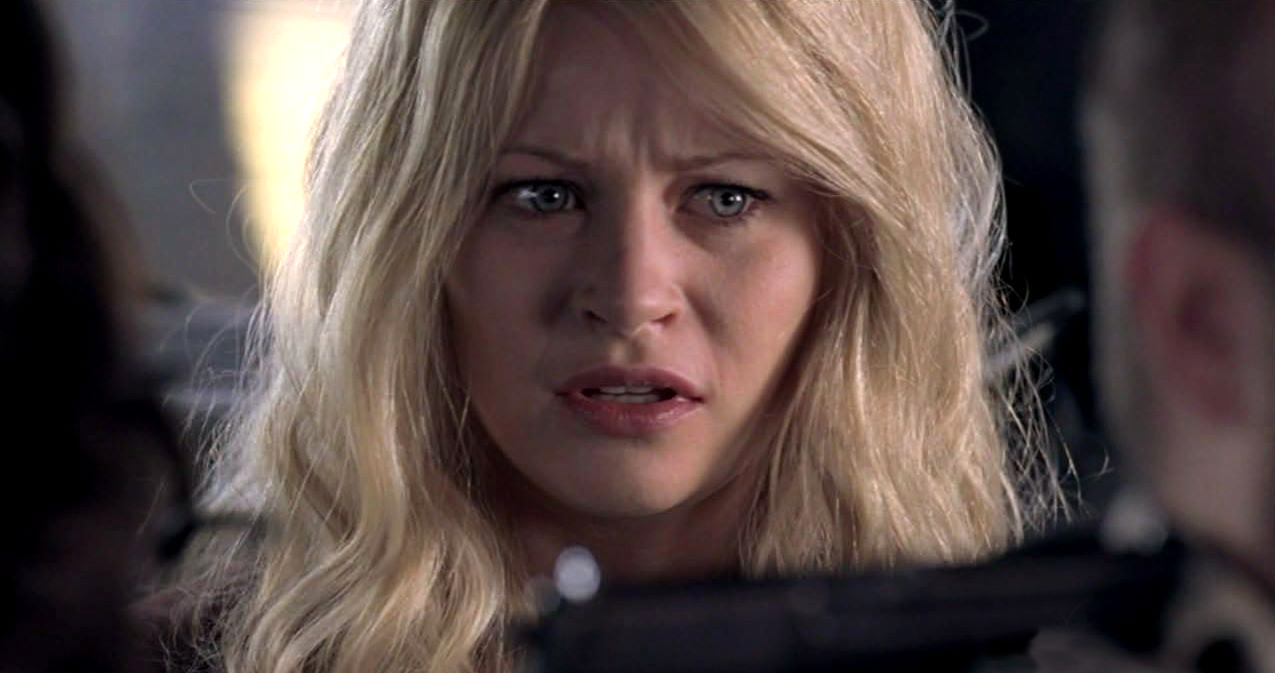
Oh, look, Emilie de Ravin's back.
Lost - Season Six, Episode Two - LAX, Part Two
Written between 2nd and 4th January 2013 

I don't know what I'm doing. I expected to be here sprouting vitriol - having fun. And yet I'm stuck with these first few episodes, which are pretty much 100% golden. It feels like a bit of a backhanded complement, but the beginning of Season Six is just too good. LAX Part Two built upon the premiere well, and as well as getting us comfortable with the idea of the Flash-Sideways and with the Man In Black, it left us with one of the series best cliffhangers ever. (And one of its funniest line deliveries, Naveen.)
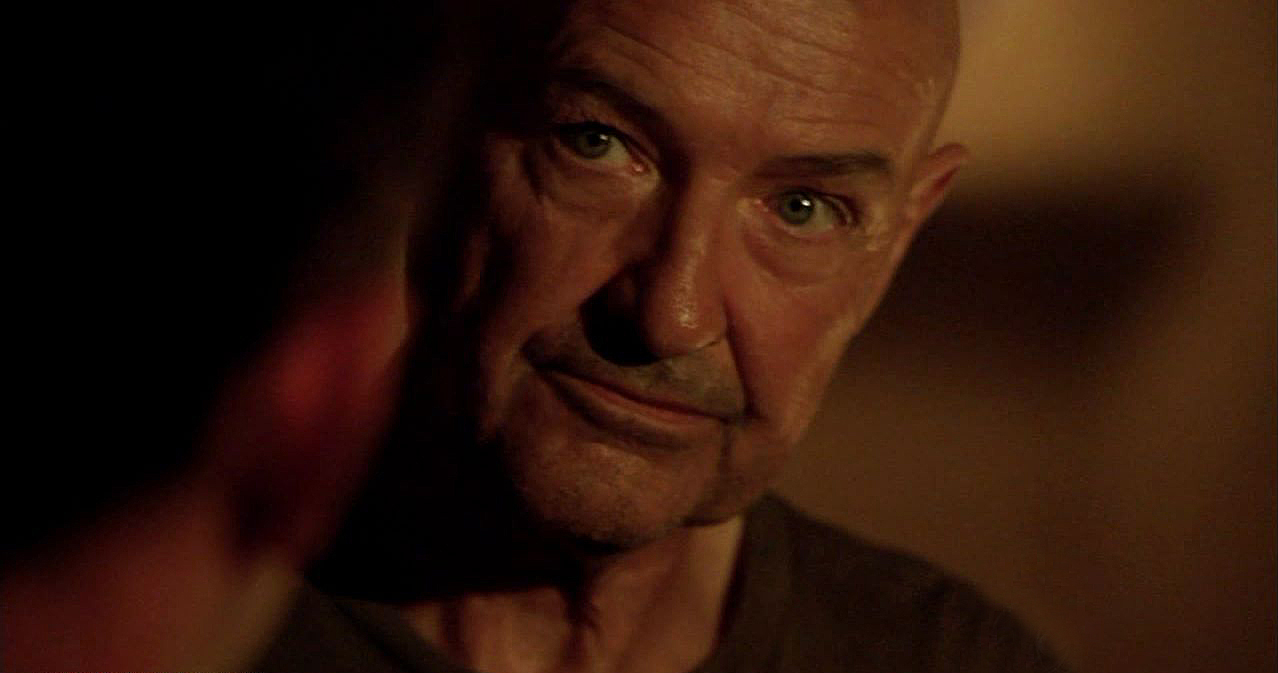
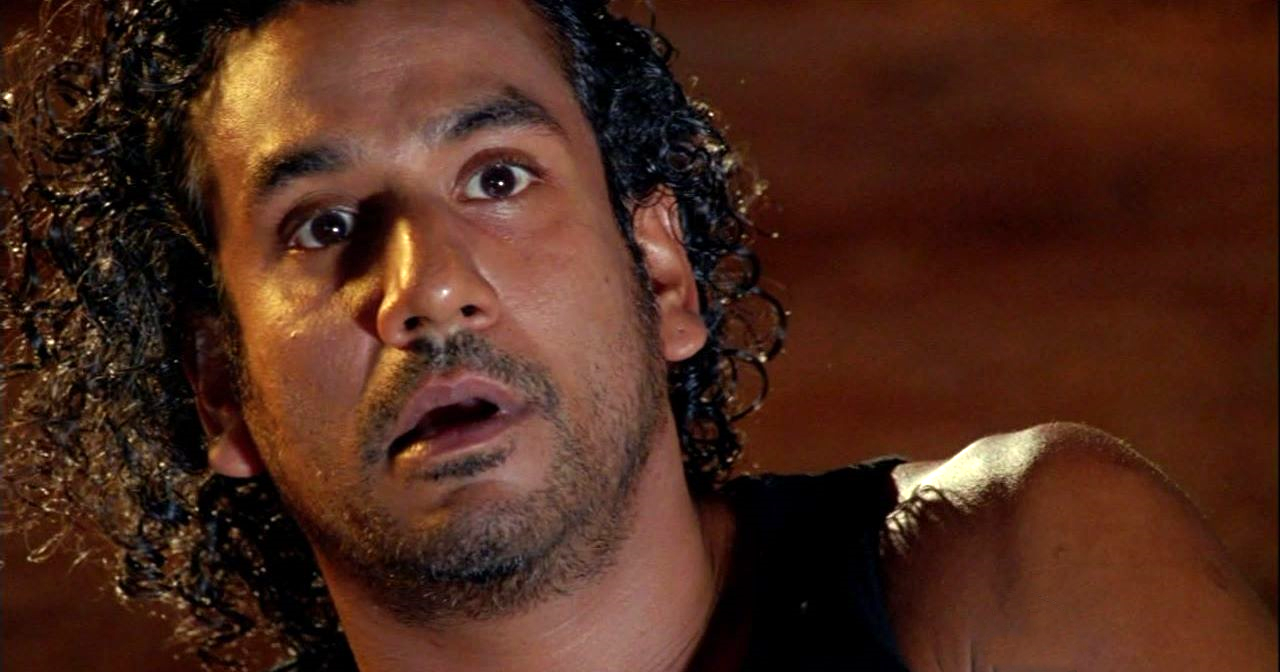
     While Sawyer stays behind with Miles to bury and communicate with the dead Juliet, the rest of the 1977 team go over to the Temple, where they are assaulted by The Others. Hurley manages to convince Temple Leader Dogen and his translator Lennon of his credentials using a list of names that is found inside the guitar case he'd been carrying. Sayid is taken to a spring where he's held underwater, and even though he regains consciousness in the water, he seemingly drowns to death. While the others have a lot of questions for the temple Others, they are alarmed when Hurley informs them of Jacob's death. On the other side of the island, The Man In Black knocks out Richard and gives Ben a talking to, telling him that John Locke was a weak man and that unlike him, the Man In Black wants to return home. At the Temple, the Others are about to restrain Jack and Sayid magically comes back to life, uttering the immortal words, "Wot hoppon?"
     The focus was a lot more on the present this week, with the flash-sideways being put to the side somewhat. We saw a few scenes that were necessary to set up the next episode, but it rather wisely put the focus onto the Temple. I question the wisdom of throwing a lot more backstory in our faces at once what with the Temple and this other sect of The Others, but from hindsight I know that none of it will get a lot of depth so I'm not worrying too much. Dogen and Lennon are cool character designs in themselves, and I really wish that they had a bigger role in this series. After Ben basically spilled the beans on a whole gamut of The Others' mysteries, Dogen brings back their former mysticism if in a somewhat cheaper and more directly obstructive form.
http://images2.wikia.nocookie.net/__cb20100421065846/lostpedia/images/8/83/6x01_What_happened.png
WOT HOPPON?
     Since this is from hindsight, I do have to point out that a lot of the mystic stuff from this episode is never explained. We don't know why the Temple Springs have darkened in colour, or how it works, and we certainly never get an explanation as to why they drowned Sayid and were then surprised when he woke up again. It presents an interesting parallel for Sayid's character - previously he had shot Ben Linus, who was then healed at the same spring, and now he had a similar wound inflicted by Roger Linus. But despite the clever character arrangement, it has just basically robbed Sayid of any further development this season outside of the Flash-Sideways, until his eventual unfortunate sacrifice.
     Despite me being annoyingly picky, I do think that LAX as a whole is a really good opener to the series. As possibly one of the first episodes of Lost I actually saw on transmission, it blew me away and it set the series up in a really interesting direction. The many mysteries it presented, despite the vast majority of them going unheeded later on, set the fandom alight and as a viewer experience it was a perfect way to start things off. Top notch.

Thanks.

Tuesday, 15 January 2013

Review: Pramface 2.2

Alan Derbyshire
Deayton brings Alan a strange mix of bumbling incompetance
and, at the same time, unending pretension.
And it's wonderful.
Pramface - Series Two, Episode Two - Stay At Home Losers
Written 15/1/13

I had expected, maybe even hoped, that Pramface had blinded me with some lights and that it would return to its normal self. That way, I could sit here and write a review that completely and utterly destroyed it, which would have, I assure you, been very entertaining on my end. But something in the great machinery at Pramface HQ has obviously snapped into place, and this episode was pretty much flawless on every level. I've never seen a series go from such a rock bottom to becoming something that I actively look forward to, and while there's still a few problems, none of them poked their heads up here.
     The main tack seems to be running as many competing subplots at once, which allows for a lot of hits and misses. Jamie and Mike didn't get a lot to do, but strangely that felt like it was a very positive thing as it allowed the writers to better put to use other characters like Beth (Yasmin Paige) and the two dads. Keith (Ben Crompton) and Alan (Angus Deayton) got to spend the episode only with one another, and their characters had a weird complementary factor that made them a perfect comedy double act. Keith hasn't really had much character development over the series, and so for me at least it was surprising how well they actually worked together, culminating in a series of very funny, very shippy scenes where they both effectively reject their wives for one another. Beth, on the other hand, got to lampoon her own hyperbolic characterisation in going out with a male version of herself, with Jamie and Mike's only purpose in the episode seemingly being to be her back-up team.
     Laura's storyline was a bit lax in the funnies department, if only because it relied more on the old-style, "people not acting like real human beings" awkwardness. In an attempt to get over her temporary post-natal depression and loneliness, Laura tries to get out there and meet fellow Mums. She's mugged in the park by some working-class teen-mums, and then stalks a pair of "yummy mummys". After being consoled by them and taken to a café filled with pretentious, middle-class mums, she is taken off by the owner of the café, who is a single mother working several jobs. It felt more plot-centric than the other two, giving Laura some worthwhile character development, but there's something about the character's delivery that always makes me lose most of my sympathy with her. 
Keith Prince
Keith/Alan 4ever
      Is it a bad thing to say that the show is best when not focussing on its protagonists? Probably. But quite frankly, I don't care with a show like this. This second episode has taken a show which I despised and made it required viewing, by fully utilising the freedom that Emily's birth gives to the show. Our characters now can do anything, be anything, and it's that very freedom which is bringing the show up from its humble, humble beginnings into a comedy great. I very much look forward to more next week.

Thanks.

Monday, 14 January 2013

Review: Doctor Who 2.5-6: Rise Of The Cybermen/The Age Of Steel

Doctor Who - Season 28, Episodes Five and Six - Rise of the Cybermen/The Age of Steel
Written 15/12/12

I love the Cybermen, at least as a concept. For me as a kid, the idea of a race of people driven by adversity to their complete loss of humanity was incredibly fascinating, and a somewhat viable exploration of the mankind's future. In the 60s, this idea was mainly inspired by the fear around artificial organs - if we can make a man's heart out of metal, what else will we find to replace? The Classic Series' continuity regarding the Cybermen got a convoluted with JNT's tenure, and thus to avoid any of that, Rusty chose to completely reinvent them. The result is a two-parter that, while flawed, is still one I rather enjoy.
Alright, dave?
     The Doctor, Rose and Mickey accidentally fall through a gap in the Universe and end up in a Parallel World, in which Rose's father Pete (Shaun Dingwall) is still alive and working for the ridiculously powerful Cybus Industries, headed up by Davros-expy John Lumic (Roger Lloyd-Pack). While they wait for the TARDIS to recover after her stressful trip, they find themselves forced to investigate Cybus Industries' activities. Mickey gets abducted by a terrorist group known as the Preachers, led by his parallel counterpart Rickey, who are investigating Cybus' Cybernetics programs. When The Doctor and Rose investigate her parents' houseparty, they find that Lumic has created a terrestrial version of the Cybermen with which he plans to take over the world. The Doctor, Rose, Pete and the Preachers meet up and head to the central Cybus factory where the brainwashed peoples of the UK are being converted. The Doctor confronts Lumic and, using Mickey's help, manages to destroy the factory and all of the UK's Cybermen. With Rickey dead, Mickey and the last of the Preachers go off to fight the Cybermen elsewhere as The Doctor and Rose return home.
      I'm actually quite glad that Rusty allowed this two parts, because what we get for that time is a quite thorough exploration of the Cyberman concept as applied to the Modern Era. These Cybermen aren't about the primal thirst for survival, they're something much more modern - a commercial idea, a brand, the latest accessory for your existence. Lumic's primary motivations are to remove sickness and difference from the world, but there's that undercurrent of power-madness the allows us to see why the mechanism for such a change comes in the form of telecommunications and the media. We also see a lot of the humanity behind the converted faces; an especially effective moment is when we see the Parallel Jackie Tyler in Cyber-form, and hear an emotified-Cyberman talk about her wedding day. It's all nice seasoning.
     As for the Cybermen themselves... I don't know. In this story, at least, their incredibly robotic and militaristic design seems to work rather well for them, and they fit right in with the corporate image of Cybus Industries. It's a bit unfortunate that this is seemingly the only place where this is true, as elsewhere these particular Cybermen seem a bit too stiff, a bit too robotic. Simply not Human enough. The JNT Cybermen may have looked like people in costumes, but the simple little things like a visible chin made you believe that this could have been a person converted into one of them. Here, the idea is simple brain transfer, and so it's much more of a consciousness thing. How much can we say that a Cyberman is a "person" if all that's happened is that your brain's been put in one? I don't know, I'm not a philosopher.
The Cybusmen make their first appearance.
     Tom MacCrae, the writer, gives us quite a few secondary characters, and they're all actually quite well-written. The Preachers are an interestingly silly group, wanted for petty crimes and all bitter against Cybus Industries for one reason or another. Angela Price (whose nickname, Mrs. Moore, is likely a cheeky reference to the "writer" of Attack of the Cybermen), played by Helen Griffin, is given a surprisingly long period to exposit, and when she dies a few minutes later we actually feel something. CBBC presenter Andrew Hadyn-Smith (another doppelganger of mine) has a weird turn with Jake Simmonds, a character supposed to gay in the script but who subsequently had all of these references written out. Weird, considering the show-runner's openness for such things.
     It's the little touches here or there that make the Rise two-parter so successful. As an execution of concept, it works to its full potential and is an incredibly thorough application of the Cybermen to Noughties Britain. But it's more than that. Its minor characters, and its little explorations of the concept where you wouldn't expect them, they give this two-parter a real soul that's quite inescapable.

Thanks.

NEXT WEEK: We watch an episode of a long-running television program that makes jokes about the dangers of watching too much television.  

Saturday, 12 January 2013

Review: Pramface 2.1

Don't ask.

Pramface - Series Two, Episode One - The Edge of Hell
Written between 11th and 12th January 2013

I think it's fair to say that I didn't like Pramface in its first series. It was stuffed to the gills with as many clichés as is physically possible, and took what could have been an interesting series and made it dry, humorless and crude. The show improved drastically with its final episode, in which the premise of the series was actually fulfilled to its potential. While I was quite annoyed at the Beeb's decision to re-launch Pramface in exchange for the wonderful The Fades, this week's hour-long return blew through all of my expectations and, while still stuck with a few of the series' problems, felt a lot less tired than it used to.
     It's the preparation for the Christening, that strange thing that all British sitcoms insist must happen to a child regardless of their parents' religious beliefs. While Laura and Jamie are just trying to settle on a name, the circumstances of the event is setting everyone alight. For a reason I can't remember, Laura's dad (Angus Deayton) has got memory problems which his wife (Anna Chancellor) is exploiting to steal his job and regain some control over her life. Wanting to be best man, Jamie's friend Mike (Dylan Edwards) tries to find his religious side, while Beth (Yasmin Paige) is yet again used ineffectively as an atheist stereotype. Jamie's father gets a job to try and get more responsibility, but Jamie ends up having to fire him. It all culminates in the Christening, where Jamie tells everyone that the baby's name is Emily, and that he doesn't care what anyone else thinks anymore as long as the baby and Laura are happy.
     The episode did feel a little unfocused, but I think that the ridiculous number of subplots is what it needed to get through the hour. It certainly allowed it a lot of different scenarios from which to draw comedy, many of which actually managed to make me laugh. My favourite scene was probably the culmination of Mike's storyline, in which a possible sexual encounter is stopped by the everwatchful eyes of Jesus Christ. I also loved the impossibly brief cameos by Sara Stewart (Stella from Sugar Rush) and Fiona Button (Tess from Lip Service) as two of Laura's aunts, who I want to see more of in the future. Overall, the main thing was that the characters were just better written, and fell into less of the annoying cubbyholes that the series had in the past - especially Jamie.
Jamie and Laura feel like the sane ones for a change.
     Pramface's return has actually tempted me to watch it, and given my reaction to the first series that's rather remarkable. It was by no means perfect, and there's still this lingering stench of what came before hanging around in the atmosphere. But it felt like the series has really upped its game in terms of what it knows how to do, and I'm getting the feeling that now that we've got our family unit in place, there's gonna be a much wider potential for comedy in areas other than the cliched pregnancy and baby jokes that I've been expecting. So, luck willing, I'll be continuing these reviews on Tuesdays, which is when the series returns. I only hope that it can live up to this premier.

Thanks. 

Wednesday, 9 January 2013

Review: Lost 6.1: LAX, Part One

http://images2.wikia.nocookie.net/__cb20100514142648/lostpedia/images/d/db/6x01_ManipulatingOnceMore.jpg
The Man In Black reveals himself.
Lost - Season Six, Episode One - LAX, Part One
Written between 30th December 2012 and 2nd January 2013

Lost, I'm sorry. I was nasty to you last year, I know, and I really shouldn't have been. Well. You did give me plenty of reasons to be angry, what with your characters acting like idiots for no reason and a plot strand that blatantly contradicted all logic. But I'm prepared to throw all of the criticism away for now. Season Six of Lost is unlike all the series that came before, to the extent, in my opinion, that it feels more like a shadow of the old show than the final series. That isn't to say that there isn't any good in it, however, but rather that I'm going to have to look at it less with a critical eye and more with a kind of gentle supervision.
     LAX Part One brings the series into its final season with a series of powerful revelations and plot twists, as well as removing the flashback/flashforward dynamic and replacing it with the flash-sideways, an interesting if ultimately disappointing concept wherein we see our characters lives play out in a parallel universe. At the time, the flash-sideways both excited and confused the fanbase, leaving us wondering exactly why this was relevant and where it would all end up. As a publicity tool it was probably the most clever thing they could have done, and kept the debate going in fandom for a while.
      On the island, our intrepid heroes have not in fact reset the timeline but have instead been transported by the electromagnetic energy to the present, where they're all rather pissed off that their harebrained scheme hasn't worked. While they try to tend to the gunshot wound that Sayid received off of Roger Linus, they discover Juliet still alive in the rubble and they try to free her. She dies in Sawyer's arms. Jacob appears again to Hurley, telling him that the only way for them to save Sawyer is to take him to the Temple, a mystical home for The Others, the island's native inhabitants. Over at the Statue, and Ben discovers Locke's body, and the Man In Black reveals himself to be the evil Smoke Monster. In the flash-sideways timeline, flight Oceanic 815 hits turbulence on its flight, but it's fine and the flight goes on to land in Los Angeles. The Island is underwater for some reason, and Desmond is now on the plane with them. Sun doesn't speak English, and she and Jin aren't married.
http://images4.wikia.nocookie.net/__cb20100203231925/lostpedia/images/4/43/6x01_SafeLanding.jpg
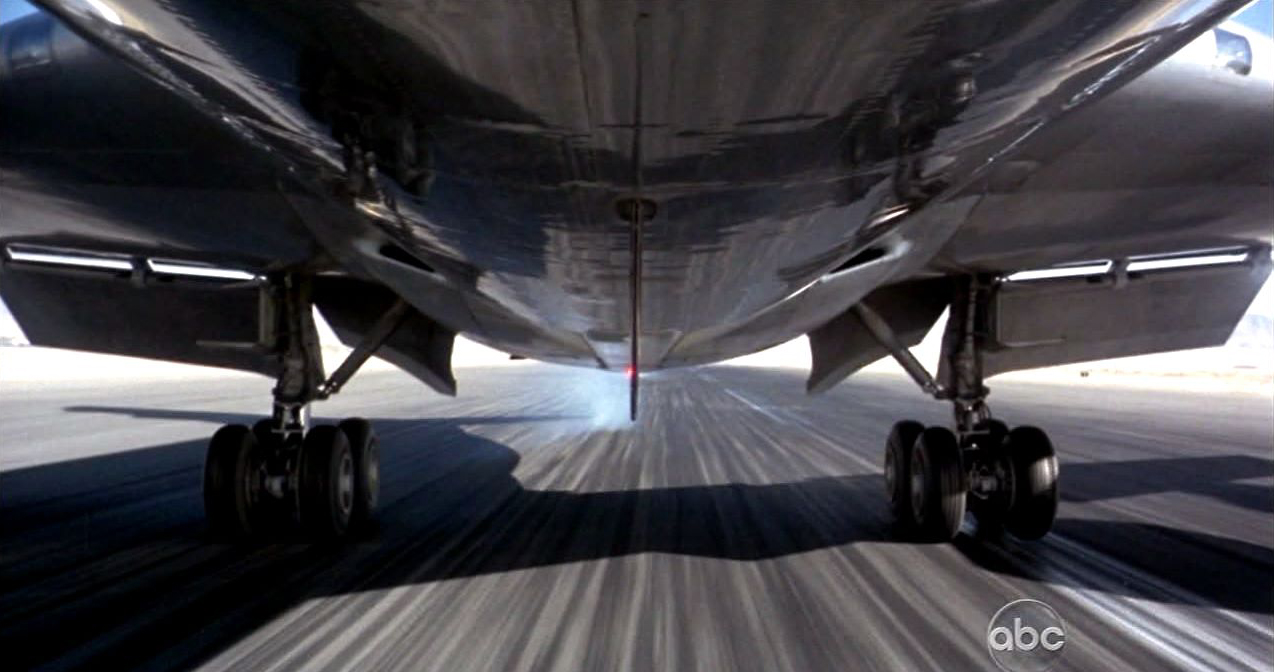
Oceanic 815 lands safely at LAX.
    One thing I very much appreciated was that the writers developed Jack a bit more and actually made him regret his actions at the end of the last season. That made up for a hell of a lot, and Jack's humility in this season, while playing into the whole faith thing, makes him a much more pleasant presence on screen. It was very necessary for Jack to take the background here - mainly so that Josh Holloway and Elizabeth Mitchell could come to the forefront as Sawyer and Juliet, allowing the latter a chance to say goodbye.
       I felt that it was a theme of this opener that was actually quite wise, setting right the wrongs of the previous season while setting up a few initial mysteries. Of course the beef of the season will be set up next week, but I for one bloody enjoyed this premiere and it left me impatient for more. On the face of it, this season might not be so bad after all.

Thanks.

Monday, 7 January 2013

Review: Doctor Who 2.4: The Girl In The Fireplace

Why are there clockwork robots in the 51st Century
anyway? The power involved for that is immense.
Doctor Who - Season 28, Story Four - The Girl In The Fireplace
Written 14/12/12

There's something rather ironic about starting my run-through of the RTD era with a story written by the current showrunner, Steven Moffat. As a writer, Moffat initially seperated himself from the then-incumbent by having an approach to storytelling that appealed not only to nerd culture but also to primal fears and desires. At this stage, though, his various calling cards were still fresh and new, which is why this week's episode became a fan-favourite pretty much instantly. The Girl In The Fireplace reads, to the modern viewer, like a checklist of all of Moffat's favourite tricks. Whether that diminishes its appeal is up to the viewer, but it certainly does colour a few things.
        In Moffat's first (serious) look at Timey Wimey messes, the Doctor, Rose and Mickey land on a spaceship from the ultra-sexualised 51st Century (another Moffat favourite period) and discover the crew dead. The Doctor investigates a 18th Century fireplace and discovers that it, like many other parts of the ship, is a portal to said century - specifically to the life of Reinette, the real name of famous French aristocrat Madame Du Pompadour (Sophia Myles). The Ship is now crewed only by a set of Clockwork Androids disguised to fit into 18th Century France, who are obsessed with finding and harvesting Reinette's brain. The Doctor, by passing through various different portals, manages to form a relationship with Reinette over her lifetime and after he saves the day, he tries to return through the fireplace, only to find that he has skipped too far and that she has died awaiting his return.
      Moffat's key mechanic here borrow very, very heavily from The Time-Traveller's Wife concept, which is either an amazing coincidence considering the book had just hit shelves or was a total and blatant ripoff that was mangled enough to seem original. I'll leave that for you to decide. Luckily for Reinette, and the viewer, The Doctor's interactions with her are fairly linear, the focus being on the gaps between their meetings. The romance takes definite precedence, contrasting rather deliberately against the general Rose/Ten ship that this season presents, and it works because Myles and Tennant have a natural chemistry together.
Reinette, otherwise known as "Rose Rival of the Week".
     But those characterisations do cause a few problems in the long run, and one can't help but wonder whether Moffat knew what he was doing in presenting a character whose singular goal seems to be to act as a man's posing pouch. When she's not being the mistress of the King of France, she's lusting after the Doctor and waiting for him to return to her. Sure, we're told about the stuff that the real Madame Du Pompadour did in her lifetime, but she never seems to do any of that stuff in the episode. On the home front, and Mickey reads like an audition for Rory while Moffat's writing of Rose, similar to that in his previous story, takes her completely out of the action for the majority of the story. The Doctor here is a swaggering action hero who boasts of his sexual prowess and flirts with every passing woman, something that seemed so strange at the time but is almost typical now.
       Perhaps I'm focussing a little too much on the similarities with Moffat's Tenure. By itself, the narrative of The Girl In The Fireplace manages to balance an interesting concept and a relatively well-done love-story that is in many ways better than Moffat's later timey wimey romances for virtue of sheer brevity. It is, fundamentally, an incredibly enjoyable story simply from the way that the story is woven. I do however wonder whether beneath its beautfiul tapestry of star-crossed lovers there lies something a little more tired, a little more hollow and, perhaps, a forgetfulness for who our characters really are.

Thanks.

NEXT WEEK: I let my inner fan take over as I discuss the rights and wrongs of Cybus Industries in Rise of the Cybermen/Age of Steel.

Friday, 4 January 2013

Overview: Doctor Who: Season 17

Also known as, "The main actors are bonking Season."
Written 7/10/12

I hated Season 17. Not entirely, not a vicious burning hatred like I feel whenever Ten does that weird "hoyes" thing, but certainly I didn't like it in a way that's a tad odd for me to comprehend. I mean, surely I like bad Doctor Who, so what's the problem when it's as bad as this? Well, it's the type of Bad that's the problem. Because I can't tell whether Douglas Adams was trying or not. Trust me, I love the Hitchhiker's Guide to the Galaxy, but I just couldn't stand the way that this series went at all. The reason why I wanted to do Season 17 before popping back to Season 12 as I had planned to is simply that I wanted to know why JNT made Season 18 the way he did. Season 17 has provided me with more reasons than I really wanted.
     Firstly, the Bidmead issue. While Bidmead's attempts to add more science to the series were ultimately laughable in how far they fell from reality despite using semi-realistic jargon, they are a million miles closer than this season. Even when it comes to things that have been in the series forever, Season 17 has such a weak grasp on reality that it's clear to see why that was the first thing that Bidmead and JNT jumped on in their attempts to "fix" the series. The Daleks aren't robots, life didn't start 400 million years ago (t'was muchas earlier), you can't really eat cholorphyll and for goodness sake, if you keep a bunch of paintings locked up in a dusty cellar, they're gonna get ruined. I don't mind things not being 100% scientifically accurate, but when it gets to the point where it affects the story, you have to draw a line.
     The worst story of the season by far was either The Creature From The Pit or The Horns of Nimon. The first had a decent sci-fi idea that could have been awesome if it came anywhere close to being executed correctly. The latter is absolutely dreadful in a way that's very easy to udnerstand - poorly made, poorly executed, poorly written and fucking poor on every level. I could at least laugh at some of the ridiculous phallic stuff in Creature From The Pit, Horns of Nimon is 100 long minutes of boring as shit story, punctuated by terrible production mistakes and some of the worst line reads in the show's history.
Nimon fucked me over. It was the last straw, and I
had very few straws reserved for Season 17
in the first place.
     The only redeeming story in the season is probably, and I didn't think I'd be saying this down the line, Destiny of the Daleks. It's imbued with a sense of fun that the rest of this series tries to emulate but ends up lacking drastically. All of the weird jokes and bad humour - they just seem to work better here. Romana comes out better because Lalla's got the character right, the Doctor comes out better because I'm not tired of him yet, and despite the shoddy production and weird attacks upon Dalek history, there's never a dull moment. That was this season's biggest failing. Instead of being dull with lots of great ideas, like Season 18, it was dull with a lot of bad ideas, and so many stories left me with no impact whatsoever.

Thanks.

Wednesday, 2 January 2013

Prologue: Lost: Season Six

I spent a hell of a lot of time complaining about this one, didn't I? To the point at which I said that I would never, on any condition, go back and discuss Season Six. This season was the only one I saw on original transmission, and it was also the one I was the most looking forward to. Everything I'd read about, everything I knew about the series - this was the culmination of it. I could see these characterisations unfold and then climax in the most powerful way. All of those excellent sci-fi ideas would surely come to a head and this would be the best and most fun piece of US TV ever!
     Perhaps my expectations were too high, but that doesn't excuse the direction that Season Six took into the lazily supernatural. I find nowadays that this annoys me more than Ashes To Ashes because, despite the precedent in LOST for weird and wonderful things happening that defy normal physics, it did all of these rather god-y things and expected us to like it and accept it and embrace it with open arms as if this had been a series about a quaint little church group from the South Downs.
     I find LOST hard to review, as I do most American TV, because it is so different from my normal fare and the serialised nature means that it's hard to find something new to say each week beyond the superficial. Hopefully Season Six will be different, as I examine the paths that our characters have taken over the past six seasons and see whether the series did them well, or let them down. There will also probably be lots and lots of Jack-hate, because that's how I roll now. See you there.

Thanks.

Tuesday, 1 January 2013

Welcome to 2013

2012 saw "Audenshaw Reviews" transform into Nostalgia Filter, and it's also seen me looking at Doctor Who, Being Human, Ashes To Ashes, Lost, Misfits, Pramface, Hit and Miss, Red Dwarf and Merlin. It's been a busy year, all in all.

Because I'm absolutely crazy, I've decided that 2013 will be rather different. I plan to finish off the New Series of Doctor Who, going through and perhaps re-assessing the Tenth Doctor's era. At the same time, I'll be picking up Lost once again and finishing it off, ranting my way through the painful Sixth Season and picking on all of the things which annoyed me while trying to salvage something positive from it. Plus, other goodies should pop up here and there, like the rest of Torchwood and the second series of Survivors.

And of course, I'll hopefully be reviewing live the rest of Season 33, as well as the 50th Anniversary Celebrations that I've really been waiting for. Once that's done... I suppose, when everything is done and dusted, that's all I've got to write about. I doubt I'll be covering the rest of the Classic Series here, and I'm still unsure as to Doctor Who's future after the anniversary. So I think what I'm saying is that while 2013 will certainly be a busy year here on Nostalgia Filter, it'll probably also be my last.

Thanks. Happy New Year.