Thursday, 8 March 2012

Review: Pramface 1.3 and White Van Man 2.3

Jamie's a dick. Beth agrees.
Pramface - Series One, Episode Three - Edinburgh... in Scotland
"You're such a weak, pathetic man!" Beth, after Jamie stands her up. On her birthday. I cheered.

The BBC describe Pramface as "heartwarming." Tonight's episode couldn't be further from it. It continued to be continually irritating, but there were a few moments that made me very, very happy, and I'm not really sure that they were supposed to. Like Merlin, it's got to the point where I'm actively against the protagonists and hate their every stupid, thoughtless action. Strangely, Thursdays on Three is verging closer and closer to falling under the Opinion tag, but I'll keep it like this for consistency.
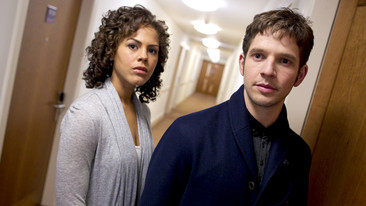
    To Jamie's surprise, Laura moves off to university. Unlike any University student that I've ever seen (and I've moved my sister in and out of University rooms four times now) she's able to carry all her stuff in one small plastic box. And Edinburgh's not very far away, either, as Jamie and Mike are able to follow in a car (standing up a night with Beth in the process). Laura rejects him, again, and she soon begins to feel the effects of morning sickness. Beth rings up Jamie and rightfully blasts him over the phone for being such an idiot. Laura gets it on with her friend's boyfriend Glynn, but has to let him go. Jamie hides in her lecture theatre and causes a public outburst. Because Jamie found out where Laura was by claiming to be her brother, rumours of incest abound the campus.
     Jamie, like a dick, takes Beth to Disco-Bowling, where really silly jokes show the desperate tragedy of Beth's characterisation in a way that at least feels deliberate. Laura appears to go through the abortion, with no real reason at all for keeping it, but that's just a bait and she's really having a scan. Facepalm. I suppose this sorta stupidity is necessary for the program to survive conception (pardon the pun) but it's really, really, annoying.
    So far, every character besides Beth, Laura's friend Danielle (Emer Kenny) and Laura's parents is completely and utterly stupid. It reads less of a comedy and more of an episode of the Twilight Zone where the universe is fundamentally corrupt and everyone is stupid aside from those with actual personalities who instead are treated like nonentities. I hate it. I cheer when people attack the characters' stupidity and I am bored in the worst way by the horrifically unrealistic main characters. I don't know why I even watch this show.
    Oh yeah. It's decent reviewing material. See you next week.

It was funny. That's all I've to say.
White Van Man - Series Two, Episode Three - Cupboard

It was good. It was funny. Nice turn from Mark Benton. Plot was a bit wibbly wobbly but I liked that. Unlike last week, where Pramface's shittiness brought White Van Man up, this week dragged it down.
     Darren is trapped in a cupboard, but Ollie and the gang don't believe him. Ollie and Liz try and find him; while Ollie gives up, Liz discovers that Darren is still having an affair with his baby's mother, the chavvy Joanne. Liz is convinced of Darren's fate when he discovers that Joanne has told her boyfriend Steve, who is an army-crazed nutjob. While Emma is back at the flat trying to unpack, Ollie, Liz, and Tony are at Joanne's house. It turns out that Darren is in Ollie's cupboard (a revelation spoilt by all of the trailers).
     It had characters that are likeable, funny and have genuine character arcs that one can identify with despite it being a comedy-oriented series. The exact opposite of Pramface, which is inevitably what these Thursdays On Three segments are about.

Thanks.

Wednesday, 7 March 2012

Review: Lost 5.7: The Life And Death Of Jeremy Bentham

http://images.wikia.com/lostpedia/images/1/1e/Locke507.png
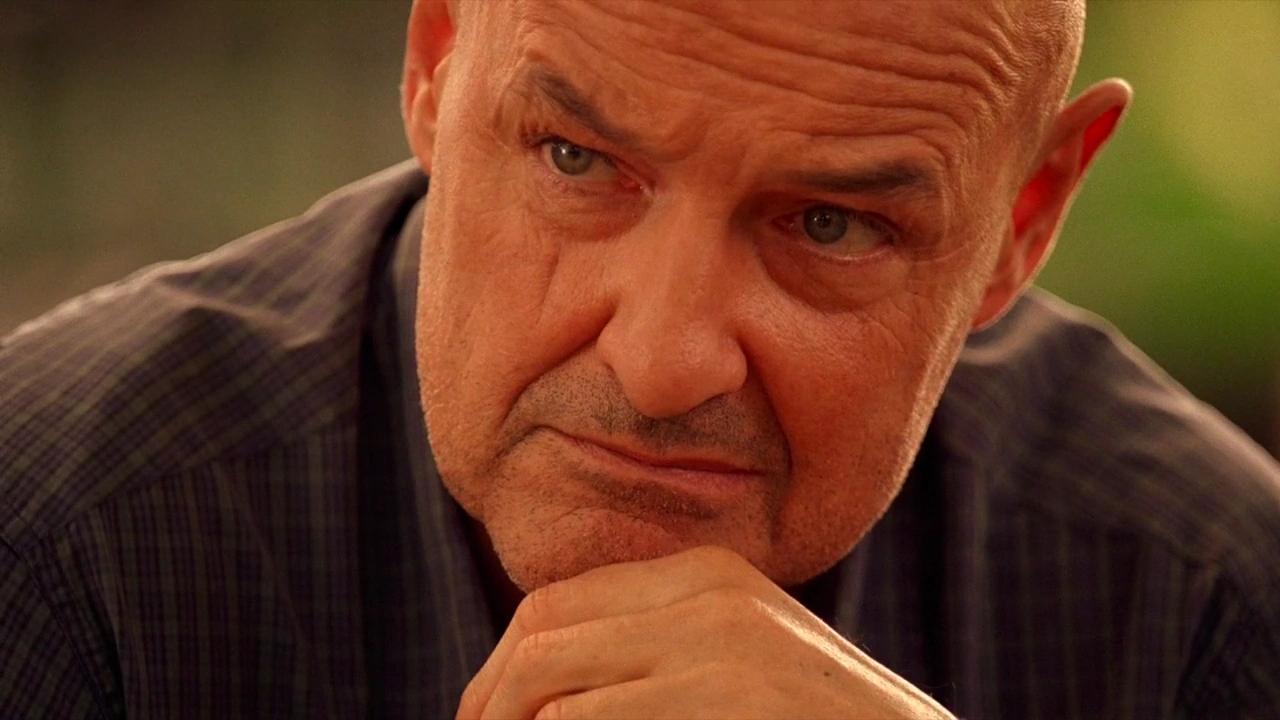
Locke faces his task ahead.
Aside from Ben and Desmond, John Locke is perhaps the series' most interesting character by far. He's a man who, due to time-travel, has been marked over his entire life to commit one action - stopping the very thing that did so. Ignoring the Faith aspect of the series, this makes Locke incredibly interesting from a sci-fi point of view - a man who unintentionally causes all of his own inner turmoil, a living ontological paradox. Technically Locke died in Series Three, but here we see the full story behind Jeremy Bentham and Locke's early demise.
     Locke pushes the Donkey Wheel, afixing The Island on a straight course in time. He wakes up in Tunisia as Ben did, although this time he has a compound fracture to go with it. At a Tunisian field hospital, Locke is taken care of by Charles Widmore, who Locke met as a young Other back in The Lie. Widmore, aware of Locke's task because of the Time-Travel thing, employs agent-of-Jacob Mr. Abbadon to chauffeur Locke around to the members of the Oceanic Six. He visits Sayid, Hurley, Kate and Walt, with no success. When he gets around to visiting Jack, he finds the drug-addled man from after the events of Something Nice Back Home, who tells John that he is in no way special and that his plan will fail.
      In quite a powerful scene, John prepares to committ suicide - his fiancé died of a brain tumour, and Abbadon has been assassinated. Ben interrupts him, helping him down from his noose and claiming to want to help him. However, when Locke speaks of Eloise Hawking, Ben takes the cord Locke was preparing to hang himself with and strangles him to death. This action by Ben is not totally out of character, but it really has little-to-no motivation and it still isn't explained by the end of Season 6.
http://images.wikia.com/lostpedia/images/2/23/CrazyEyes.jpg
Jack rejects Locke entirely. Bit of a douche.
      Back on the Island, two surviors of the second crash, called Ilana and Ceasar, question a strange man on why he isn't on the crew list. The man reveals himself to be John Locke. Now, spoilers, he isn't. He's in fact an entity called The Man In Black, a demonic man turned into The Smoke Monster by his brother, the Island's God, Jacob. This isn't revealed until the finale, but in true Lost style the MiB's trickery is evident from the off - amongst his mannerisms, his behaviour. Eventually the MiB (hereafter Flocke) identifies Ben as "his" murderer.
     There's nothing much else to say, really. Terry O'Quinn's Locke is consistantly good as Locke and his characterisation shines off the screen even when he's playing a demon. Even during his final moments, Quinn gives Locke an air of desperation and hope that makes his death all the more tragic and unsettling. This episode is a tragedy that is bolstered by brilliant acting from two of the best actors on television today, and that's what makes it so effective.

Thanks.

NEXT TIME: We see how the Leftovers get on in LaFleur.

Monday, 5 March 2012

Review: Doctor Who Classic: Mawdryn Undead

The Brigadier. Awesomeness.
Doctor Who - Season 20, Story Three - Mawdryn Undead

Mawdryn Undead holds a special place in my heart. When I was much younger, I'd run downstairs at dawn and watch the omnibus of Classic Who on UKGold. Mawdryn Undead is the first complete story that I remember. Fittingly enough, it's actually a very dark story, as well as one that has to juggle a lot of elements and doesn't always suceed. However, its quality does live up to my memories of it and it's a thoroughly enjoyable- and intelligent - watch.
     One day, John Nathan Turner gave editor Eric Saward a set of intructions for a story to introduce the character of Turlough, an alien masquerading as a public schoolboy. Saward decided to combine this plot with a script he received from writer Peter Grimwade as a consolance for his previous story, Time-Flight. In order to provide something interesting, the team decided that Turlough would be influenced by the entity known as The Black Guardian, who was last seen in Tom Baker's "Key To Time" season. Also, because of the Anniversary Season, JNT also insisted that an old companion be brought back.
     The story initially follows Turlough as he meets The Black Guardian, who offers him the chance to return home in return for his service in killing The Doctor. The school is also home to The Brigadier, who has retired from UNIT and now works as a mathemathics teacher. The Doctor, Nyssa and Tegan end up on a strange ship on a fixed orbit, passing Earth for six years at a time. The ship has a dimensionally transendental pod attatched to it that just happens to be near Turlough's school.
Spaghetti-headed Mawdryn
     Turlough pops up to the ship, and runs into The Doctor, who heads back down with him to disable a signal preventing the TARDIS' movement. Before he tries to kill The Doctor with a rock, the transmitter explodes and due to some spatial timey-wimey event, the Tardis is sent six years back in time to 1977, where a younger Brigadier helps Nyssa and Tegan out. The Doctor follows the action in 1977 via the 1983 Brigadier's memories - Nyssa and Tegan find a regnerating mutant called Mawdryn, who they believe is a deformed regeneration of The Doctor. Mawdryn returns them to the orbiting ship, and using the Pod, The Doctor, The Brig and Turlough arrive on the ship at the same time.
     Mawdryn is soon revealed to be part of a race that stole technology from the Time-Lords, intending to give themselves eternal life. Instead, the eight beings now undergo constant mutation and change, in constant agony. They ask the Doctor to give them his remaining lives in order to end theirs. The Doctor tries to refuse, but they have infected Tegan and Nyssa with a disease that will kill them if The Doctor tries to escape. He prepares to give up his lives, thus killing him, but the two Brigs meet and the resulting energy burst is enough to allow the mutants to die. Turlough, still affected by The Black Guardian, joins the Tardis crew.
     This story's costumes aren't very good. The mutants' costumes appear out of nowhere, Turlough's shoes are for some reason bright red, the Black Guardian has a dead bird on his head and Mawdryn's spaghetti-like head dress is... odd. However, that didn't do a lot against the story, where the focus is very much on the twisting turning plot.
The Black Guardian controls Turlough.
      The story juggles three or four different plots at a time. It wasn't like Doctor Who had done nothing to do with the concequences of Time Travel before, but Mawdryn Undead was the first time in a while that exploited that plot device in a Moffatian way. Events in one time clearly effect events in the later in a way that's only fully clear after the episode, and it's fun to try and focus on the exact aspects that change. Turlough's machinations aren't that interesting in the long run, but they'll come to a fore a few weeks down the road.
      Mawdryn Undead is quite dark for what it was - an effective juggling of many, many different plotlines and aspects that by rights shouldn't have been there. But despite this hodgepodge, the story is really enjoyable and hits on a lot of thematic levels - about change, for better and for worse. It's got a lot of visual problems on the surface, but beneath that there's a lot to enjoy.

Thanks.

NEXT WEEK: Nyssa... leaves? Let it not be so.

Sunday, 4 March 2012

Review: Being Human 4.5: Hold The Front Page

Annie and Hal discover a murder.
Becoming Human notwithstanding, child-star Craig Roberts' most recent contribution to the Being Human world was last series' "Adam's Family". I still see that as the worst thing in the series' history, and I stand by that. Luckily, without BDSM vampire orgies, Hold The Front Page was a perfect extrapolation of the character we saw in the aforementioned spin-off, and had both powerful character work and a fun new contribution to the mythos. It was a shame that this turned into a Merlin-esque, "brainwashed characters" storyline, but it was different and still provided some great entertainment.
     Adam, after the events of the spinoff, is seen to meet the headmistress of a posh public school, the middle-aged Yvonne (Selina Griffiths). The two then arrive in the present day, hounded by the press over their apparent toy-boy-style relationship. Despite her long-standing relationship with Adam, the visit to Hollywood Heights is an attempt by him to introduce her to the supernatural world, something which she rejects. Vampire-obsessed reporter Pete (Sacha Dhawan) catches some shots of Adam outside and matches them up with the tapes of Tom from last week, bringing them to Cutler - the man who released him. As part of his anti-werewolf pro-vampire PR campaign, he admits freely that vampires exist, but insists that Werewolves are the real threat.
     Soon, it becomes noticable that every man who comes in physical contact with Yvonne falls in love with her, the suspicions culminating in a dream-within-a-dream of Hal's in which he kills Tom and then baby Eve under her orders. This was a bit of a time-waster, but it was quite tense and because of Being Human's unpredicatability we really didn't know whether this was the intention all along. Pete meets Cutler in his hotel room, and reveals his hatred for Vampires - trapping Cutler in the room with a cross on the wall. When Hal and Annie investigate, they find that Cutler has mauled Pete and used him as a shielf. After all the boys have locked themselves in, Annie forces Yvonne to admit to herself that she is a Succubus, a fifth type of Supernatural. Adam leaves the house in order to decide for himself whether or not he loves Yvonne or is simply brainwashed, but he finally admits to her that he loves her. They move away to an Island, and Cutler spreads his werewolf video on the internet.
Craig Roberts and Selina Griffiths.
Adam (Craig Roberts) and Yvonne (Selina Griffiths) are
in love. Or so they think.
     Most of the humour came from the characters' interactions. Selina Griffiths' continually stuck-up and aristocratic personality is a perfect comedy archetype, but there were some issues. I got the feeling that we were supposed to get some humour out of seeing Tom and Hal's fetishes as expressed by the relatively conservative Griffiths, but like in Adam's Family I really wasn't feeling it. Instead, her more emotional moments showed how both she and Craig Roberts were perfect for their roles, and this episode, with its themes about the manipulation of emotions and the ability to distinguish what is genuine in your own mind, was incredibly emotionally charged.
      The Cutler storyline is looking more and more interesting, despite how little time it's had to shine amongst the rest of these subplots. Andrew Gower's portrayl is a little unnervingly stilted at times, but that adds to his rise as a villain. His subtle manipulation of PR is actually quite innovative and I love that even on three wheels Being Human can still bring up this kind of clever subversion.
     Hold The Front Page was a masterpiece of character moments and drama. A few of the laughs went awry, but this is the first time that I have felt total confidence in our main trio and the dynamic between the characters was a joy to behold. It's certainly not perfect and we've still got a long way to go, but Being Human Mark Two is at an all time high and I'm really loving it.

Thanks.

Thursday, 1 March 2012

Review: Pramface 1.2 and White Van Man 2.2

Angus and Anna are the only decent things here.
Pramface - Series One, Episode Two - Pregnant Rapist

It was slightly more clever in its plot than last week, and avoided a lot of the problems in tone and audience, but Episode Two continued a lot of the issues that I took fault with. They feel as if they're tied to Pramface's core concept; that in its subject matter of a teenage relationship, it hits all the clichés and, even worse, does them badly.
     So carrying straight on from last week (despite a time-card of six weeks, for some reason) with Laura ignoring Jamie due to his age, for some reason stereotyping him as a pre-teen. Laura goes to get an abortion, but she doesn't go through with it (for reasons that aren't and probably never will be explained). He, for some reason, gets the sudden idea to stop her from ignoring him by proposing to her. He does so, and she breaks down his proposal spectacularly in the only well-written scene in the episode. Later on, there's a misunderstanding between Jamie's parents that inadvertanly reveals Jamie's actions.
     The exchanges between Alan and Janet Derbyshire (Angus Deayton and Anna Chancellor) were as brilliant as they were last time, but they were very much concentrated away from the main plot. With some snappier writing, I would have loved to have seen their segments become a show of their own. The main problem is again the horrific cliché, but the two do their best to work with the tired "upset because of an affair" plot.
      Everywhere else? Exactly the same. Mike is Nathan but boring. Beth is brilliant but hated for no reason. Laura is concerned but stoppy to a degree that defies belief. The only development was a proof of Jamie's inherant stupidity and ignorance, which doesn't make my thoughts about this series any more hopeful. I did laugh this time, because of Deayton and Chancellor, but there wasn't much else.
       I don't know whether Pramface will lose me through sheer boredom, or simply because the abuse of cliché becomes unbearable. Apart from the excellent older characters, there's not a single person who I really care about here. Deayton and Chancellor spinoff show, anyone?

http://www.bbc.co.uk/pressoffice/proginfo/tv/2011/wk12/images/446_white_van_man.jpg
Generic photo to the rescue!
White Van Man - Series Two, Episode Two - The Breakup

White Van Man was so brilliant this week that it really made Pramface appear more tragic. It also addressed a cliché, but it executed it in such a way as to make it incredibly, incredibly funny in all the best ways. In some ways it exercised a change in format that made the half-hour feel more refreshing than ever before.
      Envious of his Polish rival, Ollie is shocked to discover that Darren has joined the Pole's company. It's treated very much like a break-up, and played entirely serious. This is great British comedy, and this entire sequence had me in tears. Ollie, with Emma's over bearing help, tries to find a new assistant and ends up hiring Liz - his perfect assistant; she's punctual, attentive and is willing to share the driving with him. Meanwhile, Darren finds that the Polish workman is a strange cult-master, who gives him a flourescent work-jacket and later drugs him before forcibly tattooing the company logo onto his arm. Darren calls Ollie up, and with Liz's permission he goes and saves him, claiming back his man.
     My main problem with Thursdays on Three is that half-hour comedies usually aren't varied enough to warrant a review. Red Dwarf was a valid exception. White Van Man, unfortunately, isn't. But I think I'll reserve this space, every week, to gush about my favourite currently-broadcasting show on television. Long Live White Van Man!

Thanks.

Wednesday, 29 February 2012

Review: Lost 5.6: 316

Wereback.jpg
They're back.
The first six episodes of Season Five contain a plot that should have been able to stretch over the entire season. The Time-Travel plot was good enough to show us a hell of a lot of mythos while the Temporal Misplacement still provides drama. The modern day story could have been an epic quest, as the Oceanic Six resolved their demons in the outer world and returned to the Island willingly. But, instead, we rush the story and thus, after only six episodes of being off the island, the Oceanic Six finally return.
     In true Lost fashion, the return of the Oceanic Six doesn't necessarily prevent us from seeing all of their story. 316 is Jack-centric, and follows him meeting Eloise Hawking. She tells him that he must replicate the circumstances of 815 as closely as possible, and therefore must make sure that Locke's corpse is carrying something of Jack's father's. Jack at first is driven to drink, but soon he finds a pair of his father's old shoes and puts them on Locke.
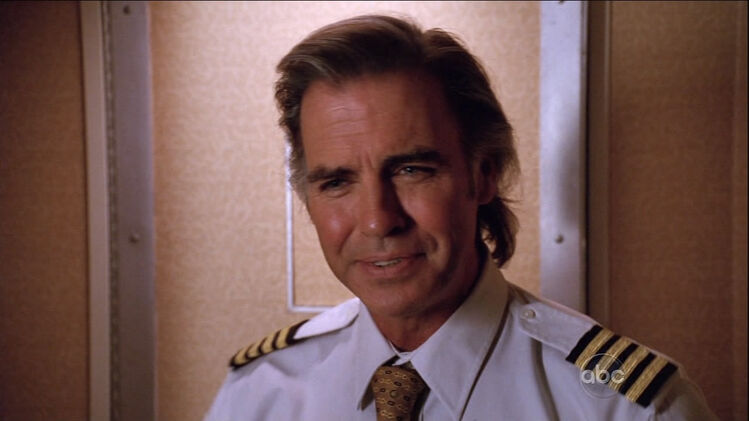
      All of the Oceanic Six, bar Aaron and Desmond, are on the plane. Hurley is on the plane for an unknown reason and carries a guitar case that he never had before. Ben has been severely beaten up and has broken his arm. Sayid is under the guidance of a law-enforcer. Jack also discovers that the pilot is Frank Lapidus, the pilot that took them off of the island those years ago. (Or, for us, six episodes ago.) When Ajira flight 316 crashes, a strange thing happens; Jack, Hurley and Kate flash back to the same time as Jin and the rest of the survivors. The rest stay where they are.
     Jack stories are generally uninteresting because Jack is not, and has never been, a compelling character. He represented the Science half of Lost's supposed Science Versus Faith divide, and unlike the Faith side he never really lives up to his side of the bargain. He spends the vast majority of his dramatic moments getting stoned off of his head and none of his other storylines (like the Quadrangle) are of any interest. 316 spent more time looking at the circumstances of the 316 crash around Jack rather than giving the character any depth himself. So he's upset at the death of his father, so what. That's been the same since day one. This leads into a real problem for me, which is that this story has a huge Faith undercurrent that would continue until the unashamedly Christian finale of Season Six. There's even a point where Ben tries to teach Jack a lesson using a parabe from the Bible, one that makes little sense and only adds to my disdain on Lost's general thematic direction.
Sober.jpg
"We ain't going to Guam, are we."
     And there we have it. In terms of, "The Present," whatever that means any more, the Oceanic Six are back after only six episodes off. 316 wasn't perfect, and it had a few undertones which uneased me, but it was soldily constructed and portrayed the Oceanic Six's return with some much-needed grace.

Thanks.

NEXT WEEK: What exactly did Locke do when he left the Island? Find out in The Life and Death of Jeremy Bentham.

Monday, 27 February 2012

Review: Doctor Who Classic: Snakedance


Lon (Martin Clunes) is possessed by The Mara.

Doctor Who - Season 20, Story Two - Snakedance

While Kinda was brave and experimental, its plot wasn't necessarily that action-packed. It was certainly very deep and touched upon a lot of themes that Who doesn't look at usually. But, like the Kinda of Deva Loka, Kinda feels a little primitive when compared to its sequel, Snakedance, which formed the second story of the anniversary season. Arranged much more like a regular Who story, Snakedance takes the main themes of Kinda and beefs them up into an exciting, tense piece of science fiction.

     Unusually for the Anniversary season, JNT decided that Kinda needed a sequel and so asked writer Christopher Bailey to return to the series. Now that editor Eric Saward had a much bigger grasp on the series, Bailey's abstract style was channeled into something more fitting the programme's usual setup. Snakedance follows The Doctor and Tegan as they find that The Mara still inhabits Tegan's mind, and has guided them to its home planet of Manussa, where the Federation (very Trek) believe that the Mara was destroyed 500 years prior, and celebrate its destruction decennially. While The Doctor tries to convince the head of the local Museum that the Mara has returned, it manifests fully in Tegan and plots its full return.
     A much frowned upon rumour on Manussa is The Legend of the Return, in which The Mara will re-manifest at one of the anniversary festivals. This intrigues spoiled Prince Lon (a pre-Men Behaving Badly Martin Clunes), until he too is posessed by The Mara's charms. Their efforts revolve around The Great Crystal, which The Doctor realises will focus the mind energy of all those looking at it, allowing a strong mind to conjure energy and matter from pure thought. The Doctor consults with Dojjen, an elder who escaped the city to try and prevent The Mara's return, and upon its manifestation The Doctor is able to break The Mara's hold and kill him once and for all.
The Mara shows off its powers.
     Like Kinda, this is primarily Tegan's story, and Janet Fielding gets a lot more to do as The Mara. The performance is much more toned down than it was in her erotically charged Kinda scenes, but it's still genuinely creepy and The Mara's backstory makes it much more interesting than the seemingly random apperance on Deva Loka made it out to be. Importantly, The Mara feels like it has more of a presence - like the villain's promise of false fears and mental torture, the entire culture that we address in Snakedance has this creature on his mind.
     One thing to really love in Snakedance is the humanity expressed in the characters. There are some camp archetypes, but they stem from very real personalities. Lon, played by Martin Clunes, is despite his camp demeanor, incredibly subtle in his teenage lust for excitement, to the extent that he would not mind being possessed by an evil demon. All of the characters, from the Researcher to a five-minute-wonder of the Fortune Teller.
     Plus, this story is visually awesome. It's remarkable. The lighting is perfect, moody and atmospheric instead of the bright washout of some other Eighties stories. The set design is great, as is the subtle maniulation of film and video to provide us with some great atmospheres. At times I completely forget that the marketplace, reminiscent of Morocco, was in fact a set.
The Mara is finally defeated.
     Snakedance, while maybe not as outwardly ambitious as its predecessor, is still incredibly enjoyable due to great performances and a stellar script. In my little marathon, this is my favourite Five story so far, and this is true for many others. Snakedance takes Kinda and makes it work like a regular story, and does so in a spectacular fashion befitting the anniversary season.

Thanks.

NEXT WEEK: We begin the Black Guardian Trilogy as we remeet The Brig in Mawdryn Undead. 

Sunday, 26 February 2012

Review: Being Human 4.4: A Spectre Calls

Kirby arrives from the other side.
Much better. A Spectre Calls didn't, like the previous two weeks, commit the cardinal sin of being boring. In fact, I could see a lot more promise from this week despite my niggling feelings about the series' future. The truth is that Being Human doesn't have a lot of potential left. What it did have left, A Spectre Calls pushed to the max and delivered an episode that, while flawed, was a vast improvement.
      Following on from last week's teaser, ghost Kirby (James Lance) arrived at the house claiming to be a friend of Nina's, as help for the baby Eve. However, our fascade was soon destroyed as we saw Kirby slowly manipulate each member of the household individually, turning them against each other. When Eve gets a temperature, they have to ring a GP and for the sakes of normality Hal and Tom have to pretend to be gay couple. And it's treated with all the sensitivity you'd expect from a BBC3 comedy. Bad form, Being Human, bad form. Soon Kirby's efforts escalate; he drives Tom off in a fit of adolescent anger, sets-up Hal as an uncontrollable monster and then manages to vanquish Annie by reducing her self-esteem to the point where she simply fizzles out.
     In the vampire storyline, Hal investigated newspaper claims that the decoy killer in the Box Tunnel 20 case, Jason Healy, had human blood in his system, tracking them down to a coroner being harassed by vampires. After Tom had been arrested for beating up a vampire, Cutler used CCTV footage to break him out, before killing the coroner to stop her from talking. Tom and Hal returned to the house, where Kirby gave his (lampshaded) expository speech: he was a 70s serial killer who would befriend children and then murder their mothers. He came to kill Eve on the orders of The Woman, who makes another TV appearance. Through the power of Deus Ex Machina, Annie's power was strong enough to return from being ghost-dead and destroy Kirby once and for all.
Kirby manipulates Tom.
     James Lance's Kirby was incredibly skilled in his intense and unrelenting creepiness, often appearing like one of David Walliams' deranged Little Britain caricatures. He was so creepy, in fact, that I didn't see why his character worked. I knew there was something wrong with him from the moment I saw him; the voice, the demeanor - the serial-killer glasses. This is a man whose entire career relies on seducing women, and he's so unsettling that you can't see him being invited into someone's home let alone being there long enough to murder them. Also, as Annie notes, this is not her first relationship, and, as she was the ability to read people's intentions via their auras, she should have seen this coming. What's more, his manipulation feels a little limp because these people don't need a lot to turn against one another. This plot type usually relies on the manipulation of people's idiosyncracies to see them wrenched from each other; at the moment they aren't truely together.
     I was glad that we finally got another wink to the main storyline, but that was balanced very nicely with the development of the main characters. I suppose the reason why there were so many one-off characters in Being Human's past is because the premise requires them to be there. So while I saw that A Spectre Calls did fall back on an old formula, it was only to strentgthen the characters to a point where they can fly on their own merits. At this half-way mark, things are slowly beginning to pick up for Being Human Round Two. And I'm enjoying it.

Thanks.

NEXT WEEK: Oh dear god, it's Craig Roberts. Bugger off.

Thursday, 23 February 2012

Review: Pramface 1.1 and White Van Man 2.1

So it happens that there are two series of comedies, aimed at my age range, premiering on BBC Three tonight. Might as well review them.

As lame as its advertising? No, but it comes close.
Pramface -1.1: "Like Narnia But Sexy"

I hate the Inbetweeners. I detest it. It's juvenile to the extreme, and paints an extremly negative perception of British youth that, as a member of said demographic, I find as distorted as Kevin and Perry. I had hoped that Pramface, with its excellent cast, would avoid the trap that writers for the teenage demographic do and not fall into this juvenile stupidity. And, like usual when I describe my hopes and dreams, they failed spectacularly. It has the potential to be something good, but Pramface fell into so many stereotypes and clichés that it felt, at times, unbearable.
     After completing his final exam of Year 11, naive Jamie Prince (Sean Michael Verey) was led by his friend Mike (Dylan Edwards) to crash a party, with the intent to lose their virginity - against their friend Beth's (the wonderful Yasmin Paige, who is the only sympathetic character) advice. Meanwhile, posh girl Laura Derbyshire (Scarlett Alice Johnson) escaped from her grounding to attend the party, where she got spectacularly drunk. Beth arrived at the party in time to conveniently get trapped in a room while drunk Laura seduced and bonked Jamie. The next morning Jamie leaves his number and we fastforward six weeks, where Laura finds out that she is pregnant. Upon meeting him, she is shocked is to find out that he is only 16.
      All the characters were pretty much blank caricatures. Jamie showed that he was.. pleasant, but as a protagonist he wasn't very strong. His friend Mike was almost an exact copy of Misfits' Nathan, except with less wit and charm. There were good turns by Laura's parents, played by Angus Deayton and Anna Chancellor, but their segments were painfully short. The only character that I felt actually worked was Yasmin Paige's Beth, who through some awful writing was turned into this incredibly powerful sympathetic figure even when she was being a stereotype of morally-concerned youth.
     There were a few giggles now and then from Pramface, but for me it is fundamentally problematic because of its attitude towards its audience. BBC Three usually avoids ripping off other shows, and this felt like its inspiration was ripped straight from Channel Four - and not in any of the good ways. The potential is clearly there, but I need a lot more before I'll love Pramface as I do BBC Three's other output.

Emma Keeley and Liz Brown
The Girls have a more prominent role in this series.
White Van Man - 2.1: "Charity"

White Van Man is a comedy series written by stand-up comedian Adrian Poynton, following the comedic adventures of straight-man handyman Will Mellor and his friends Joel Fry, Georgia Moffet and Naomi Bentley. Despite my low expectations, the first series proved to be incredibly good and funny in a way that British TV hasn't seen in a long time. The series excells from its quaint character comedy blended against the absurdity of modern life, and parodying some of the stereotypes associated with handymen.
     After an organisational fuck-up, Ollie (Will Mellor) is left with the task of fixing up a house due to be occupied by the Mayor and a group of orphans. While Ollie tries to find a way to afford the renovations, facing bureaucracy along the way, he discovers that assistant Darren (Joel Fry) has maxed out his credit card. Ollie's love interest, ambitious small-time businesswoman Emma (Georgia Moffat) accidentally hires envious friend Liz (Naomi Bentley). The two end up in compeition over tips, as Ollie is forced to sell his father's old possessions. Stretched, they find their father's old canalboat and decide to sell that. Ollie's dad Tony (Clive Mantle) returns off of Holiday and is furious, going out of his way to try and get the boat back. Emma and Liz go to the Home and start fighting. Ollie, discovering that they've wrecked the home, is incredibly angry to the point of despair. He returns on the day of the opening to find that his embarrassed friends have done the work for him overnight.
     The dynamic between the central handymen is fundamentally unchanged between the series, with Will Mellor as the good-natured but often mis-led straightman Ollie and Trollied's Joel Fry as nigh-insane assistant Darren. The new dynamic between Emma and Liz was the most interesting addition to the format, with them fighting over Ollie, but it provided the episode's final reveal that much more bang. Charity ended up being a brilliant start to the second series, as hilarious and heartwarming as it ever was.

Thanks.

Wednesday, 22 February 2012

Review: Lost 5.5: This Place is Death

This-place-is-death.jpg
Jin doesn't want Sun to return.
Jin and Sun are dull. So dull, in fact, that the writers had to rip them apart to provide any interesting story for them, and even that didn't work - they died the moment they met up again. This has irritated me since they did so near the end of Season Six, and so seeing this earlier episode doesn't really help me. This Place Is Death's only draw, really, is the exploration of Danielle Rousseau's history on the Island, something that's been boiling away since the sixth ever episode.
     In 1988, Jin found himself with Danielle Rousseau and her expedition, having crashed on the island in a storm. Jin is unable to help as he witnesses the expedition slowly picked off by The Smoke Monster. After a time-flash, we see that all of the stories Rousseau told was true; she believed that her expedition had caught A Sickness, and so executed the rest of her team. Melissa Farman is great as Young Rousseau, her character believably moving from cautious optimism to deap-seated paranoia. The events in this story would come to be much more important in Season Six. Jin goes through another time-flash as he runs from Rousseau, and ends up with the rest of the crew left on the Island. This is also a strong episode for Rebecca Mader, whose character Charlotte only seems to be useful at translating Korean. Her character's illness causes her to die, and her time-confused ramblings do provide her with her best performance in the series.
    After Charlotte's death, the team finally make it to The Orchid, and John travels down a Well to get to the Donkey Wheel that will set the Island back on a straight passage of time. Here he meets Christian Shepard (John Terry, Of Mice and Men) who often appears at these times. I've seen Season Six, and so I know that Sheperd is in fact The Smoke Monster, the embodiment of all evil. I think that his speech is so much more interesting in context; on the surface, it appears that Sheperd is encouraging Locke to bring back the Oceanic Six because that's what needs to happen, but from a Season Six perspective we can tell that Sheperd wants to bring back The Candidates (of which every member of the Oceanic Six is) so he can kill them.
PlaceDeath.jpg
THIS PLACE, IS DEATH!
      The present timeline is excruciatingly boring here, and it only feels worse because of the fact that it's all happening too soon. Here Ben gathered together the survivors that he could; only Jack and Sun eventually going with him, and took them to Eloise Hawking, who has discovered a way to return to The Island. This is a plotline that by rights should envelop an entire season's worth of storyline, and yet it's so painfully condensed into six or so episodes.
     This Place Is Death was a Jin and Sun episode that, for a lot of its time, forgot Jin and Sun. It interested on a variety of levels, and saw some great turns by Charlotte and Daniel, but the two characters in question didn't really make any impression. However, out of all things, I can say that Lost is the only show that can make me care about the death of a character as whiny and irritating as Charlotte Lewis.

Thanks.